15,162  PAGES BROWSED TODAY PAGES TODAY 24  ANTIQUES UPLOADED TODAY NEW ARRIVALS
ID #SA1217631
FOR SALE
£4,800
Email
Save
Important George III Period Carved and Painted Gainsborough Chair
Webberley Antiques
for sale €5,616     $6,096
£4,800
Webberley Antiques

Webberley Antiques

Sellingantiques Verified Since Nov 2008
View Dealers Stock Page
  • About Us
    Specialists in 18th century and earlier furniture for more than 45 years
Id #SA1217631
PDF SHARE
SAVE

Important George III Period Carved and Painted Gainsborough Chair

18th century
Description

Attributed to Paul Saunders (1721 – 1771)

.

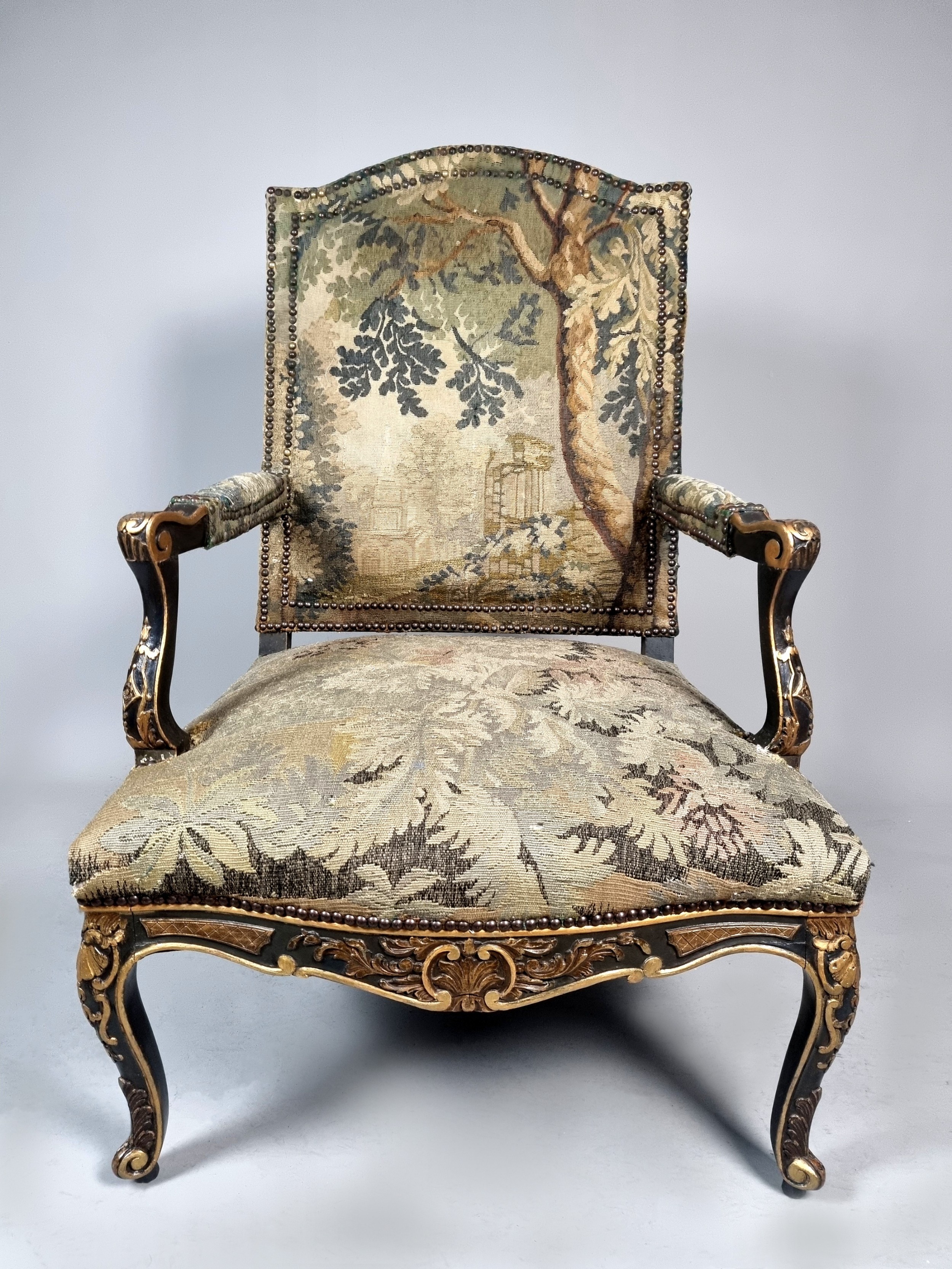
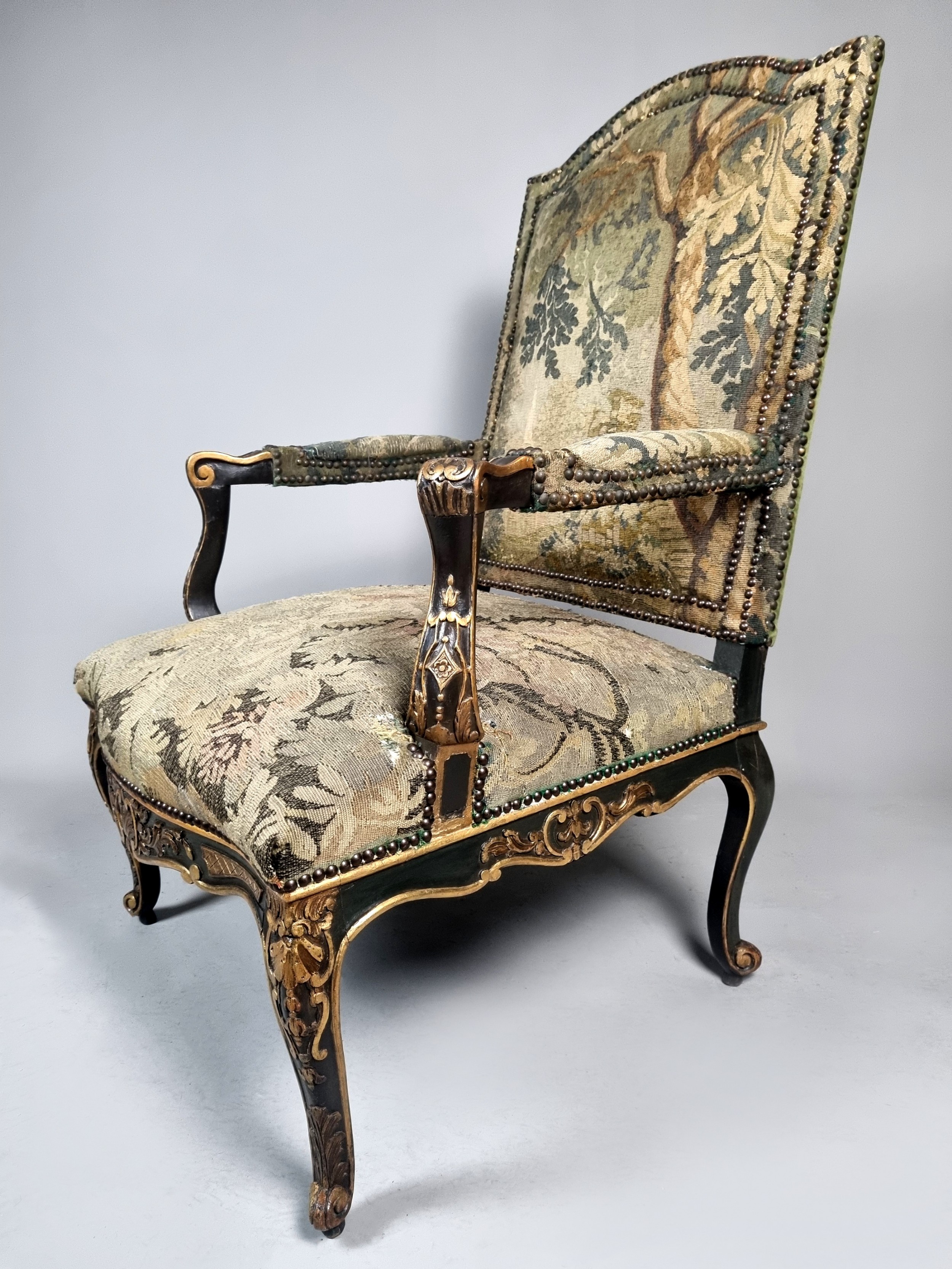
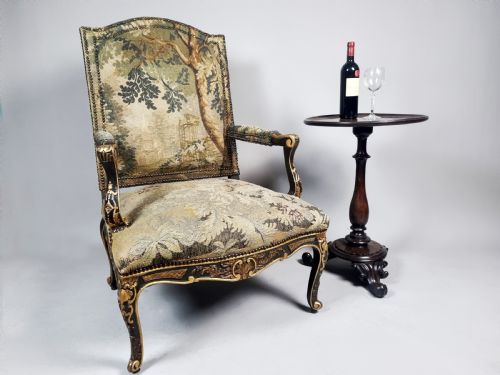
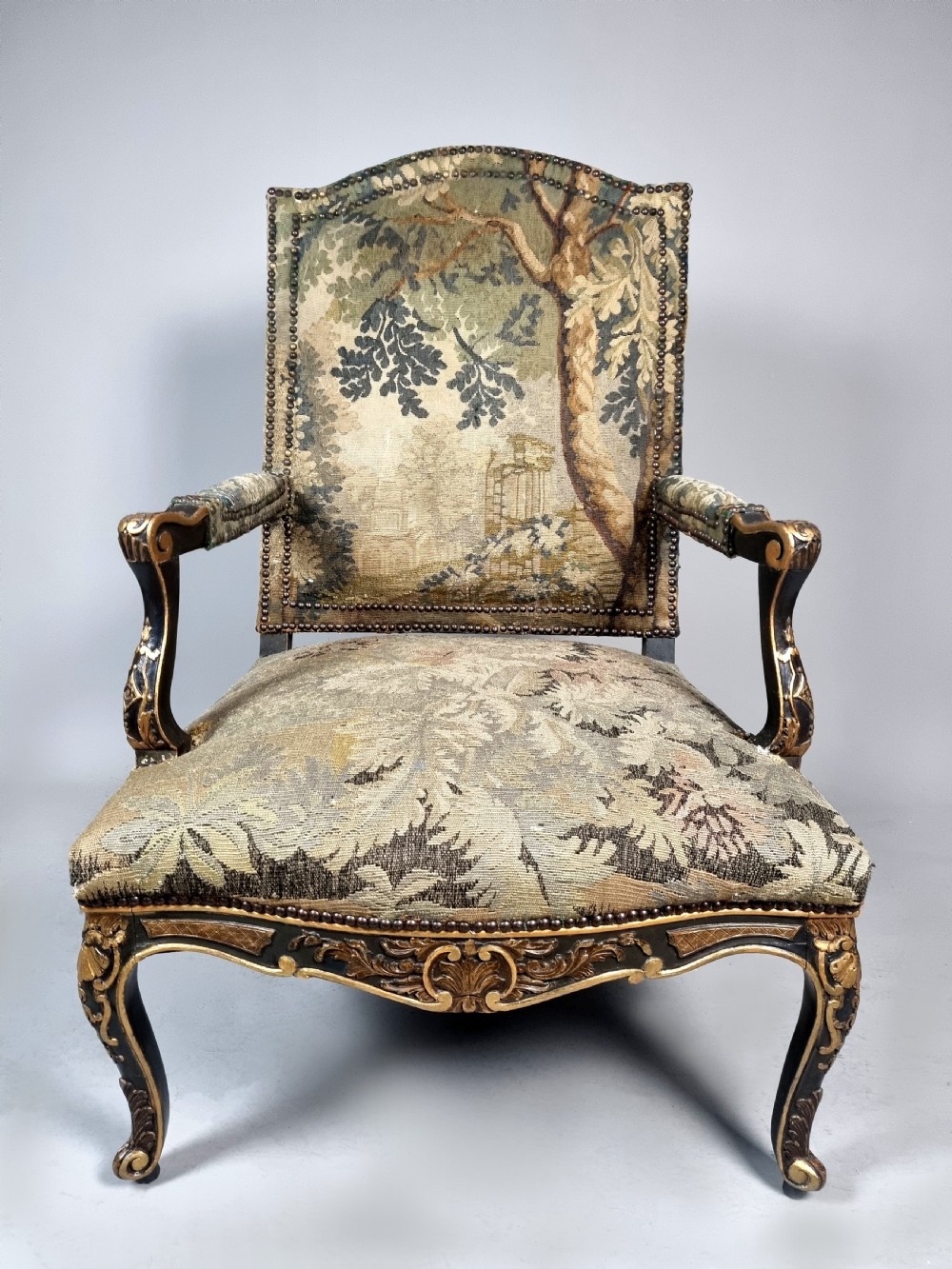
An absolutely exceptional English George III period carved birchwood Gainsborough armchair retaining its original tapestry covers and original paintwork and gilding.

.

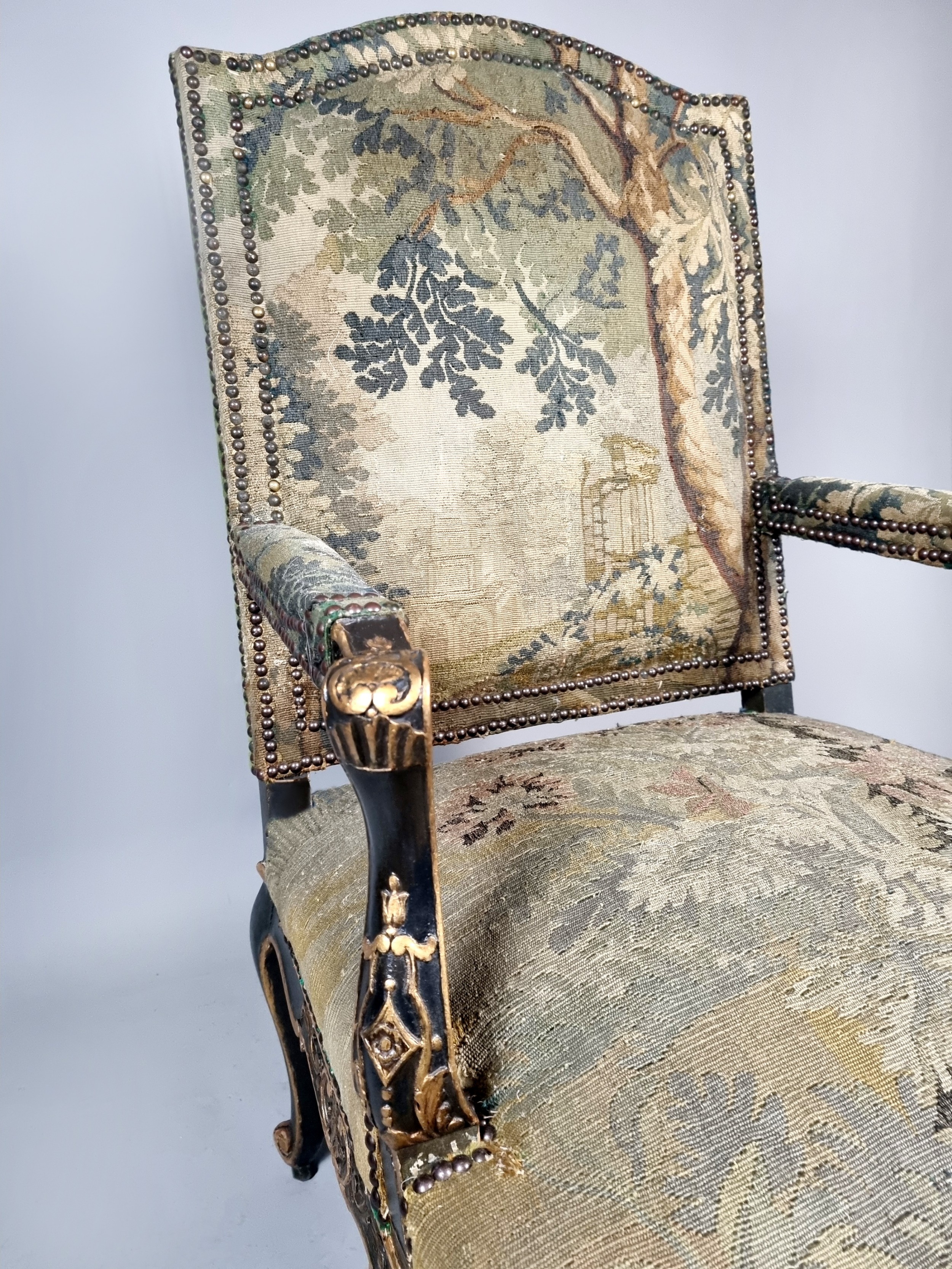
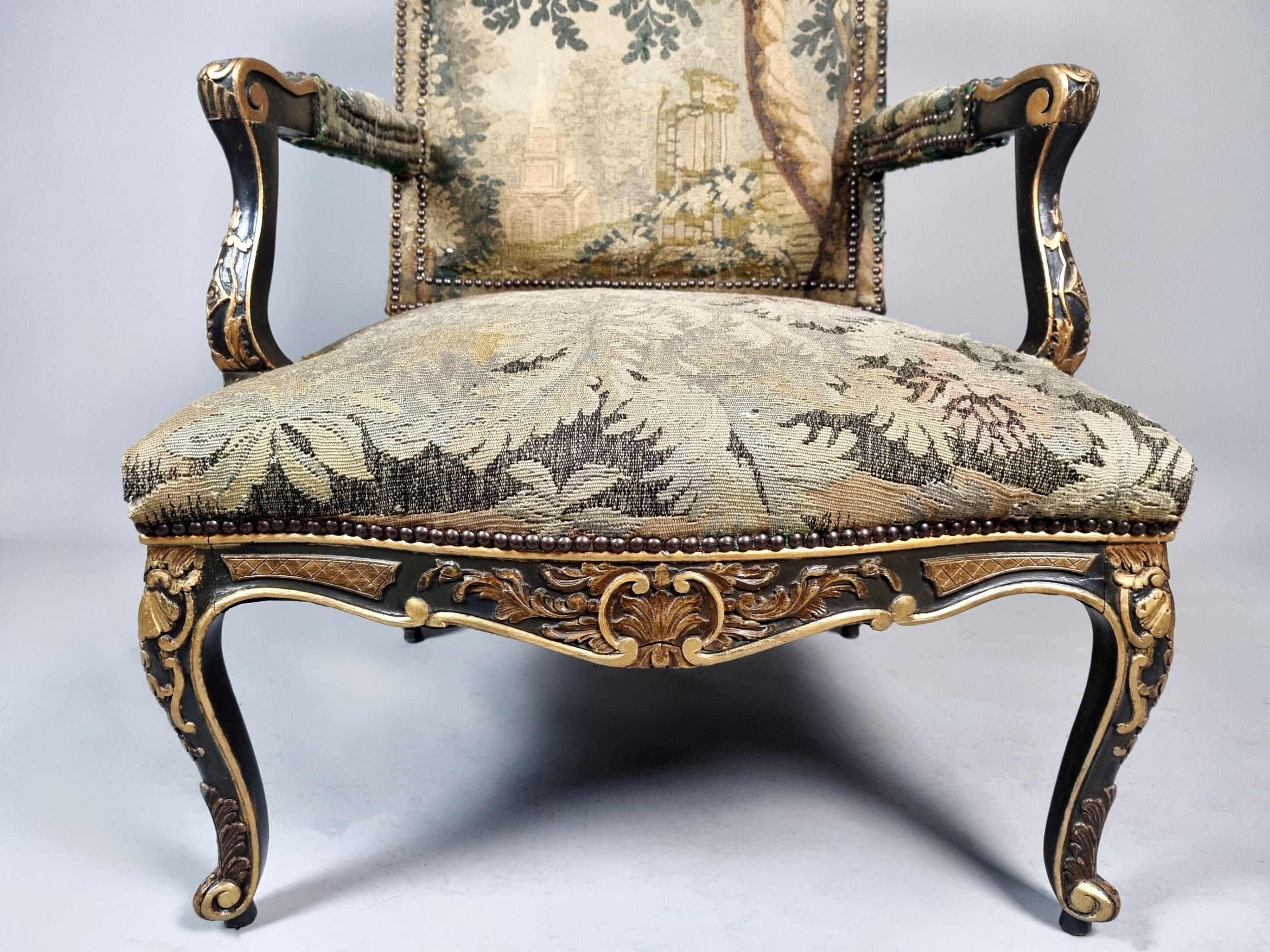
The upholstered back with serpentine top rail, over the similarly shaped seat, and the padded armrests supported on finely carved scrolled arms with cabochons. The painted show wood seat rails carved with scrolls, trelliswork and acanthus. The cabriole legs similarly decorated with acanthus leaves and cabochons, terminating in scrolled pegged feet.

.

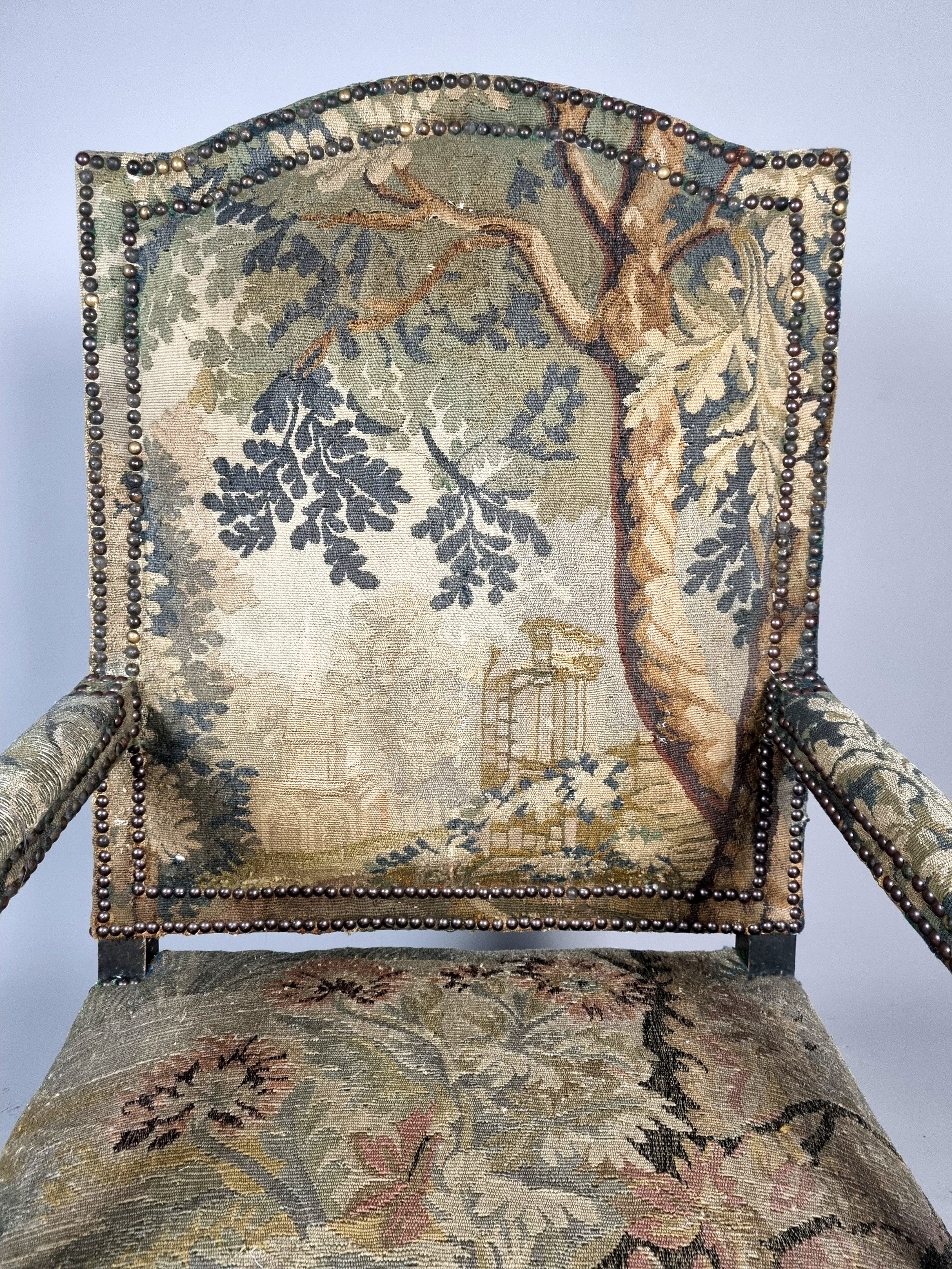
The carving exceptionally intricate and fine and the tapestry covers original and depicting a leafy landscape with distant ruins and oriental temple structures.

.

Paul Saunders’ clients were the wealthiest London and country houses and he was held by Royal Appointment as ‘yeoman arras-worker to the Great Wardrobe’ and yeoman tapestry tailor.

.

His workshops, known as ‘The Royal Tapestry Manufactory’ contained a special ‘tapestry room’ and from 1755 until his death he was the main tapestry producer in London. After Saunders's death in 1771, his firm carried on until 1794 from his last premises in Charlotte (now Bloomsbury) Street with his eldest son, Hugh, and his clerk, John Bracken, forming a partnership.

.

Paul Saunders was apprenticed for seven years to Michael Bradshaw – who was almost certainly related to William Bradshaw and George Smith Bradshaw with whom Saunders later formed a partnership. Carlisle House on the east side of Soho Square was leased by Saunders and George Smith Bradshaw, described as ‘upholsterers of Greek Street’, in May 1753.

.

The British Chronicle, 30 September 1757 announced that ‘Mr. Paul Saunders of Sutton Street, Soho is appointed Tapestry Maker to His Majesty and on Thursday was sworn into office’. Saunders and Bradshaw's partnership had already been engaged in supplying tapestries to Holkham and Petworth, continuing William Bradshaw's established position in this field, although as was typical of most Soho Tapestry makers, the partners were primarily “upholders" (the 18th century term for upholsterers and decorators) and “cabinet makers”.

.

The dominant role in the tapestry side of the business seems to have been assumed by Saunders who rose to a position of prominence as a tapestry worker. Known for depictions of Oriental-style landscapes with soft trees and picturesque ruins, his most famous design is ‘The Pilgrimage to Mecca’ of which examples survive at Alnwick Castle, Petworth and Holkham.

.

In May 1761 Saunders received a second Royal appointment in the Great Wardrobe as Yeoman Tapestry Taylor. Thereafter, holding the two positions concurrently until his death in 1771. Both appointments were chiefly concerned with repairing and cleaning royal tapestries, but new hangings were also supplied, and his connections with the Great Wardrobe were undoubtedly, partially responsible, for the entry referring to Paul Saunders, undertaker, being paid for the funeral of the Duke of Cumberland in 1765.

.

Throughout his career, Paul Saunders seems to have had clients of extremely important stature — perhaps beginning with early contacts made in William Bradshaw's workshops. The Petworth archives contain a Saunders' letter of September 1748, demonstrating both a high degree of literacy and a familiarity with Petworth and the Duke's health.

.

Saunders died in 1771 his will dated 23 April 1770 included the following important provisions: ‘to John Bracken £100 if living with me either as a clerk or partner’ whilst ‘the lease of the said dwelling House, workshops, warehouses and premises’ were left in trust to his wife Ann Saunders, his eldest son Hugh, and his ‘worthy friend’ Theodosius Forest.

.

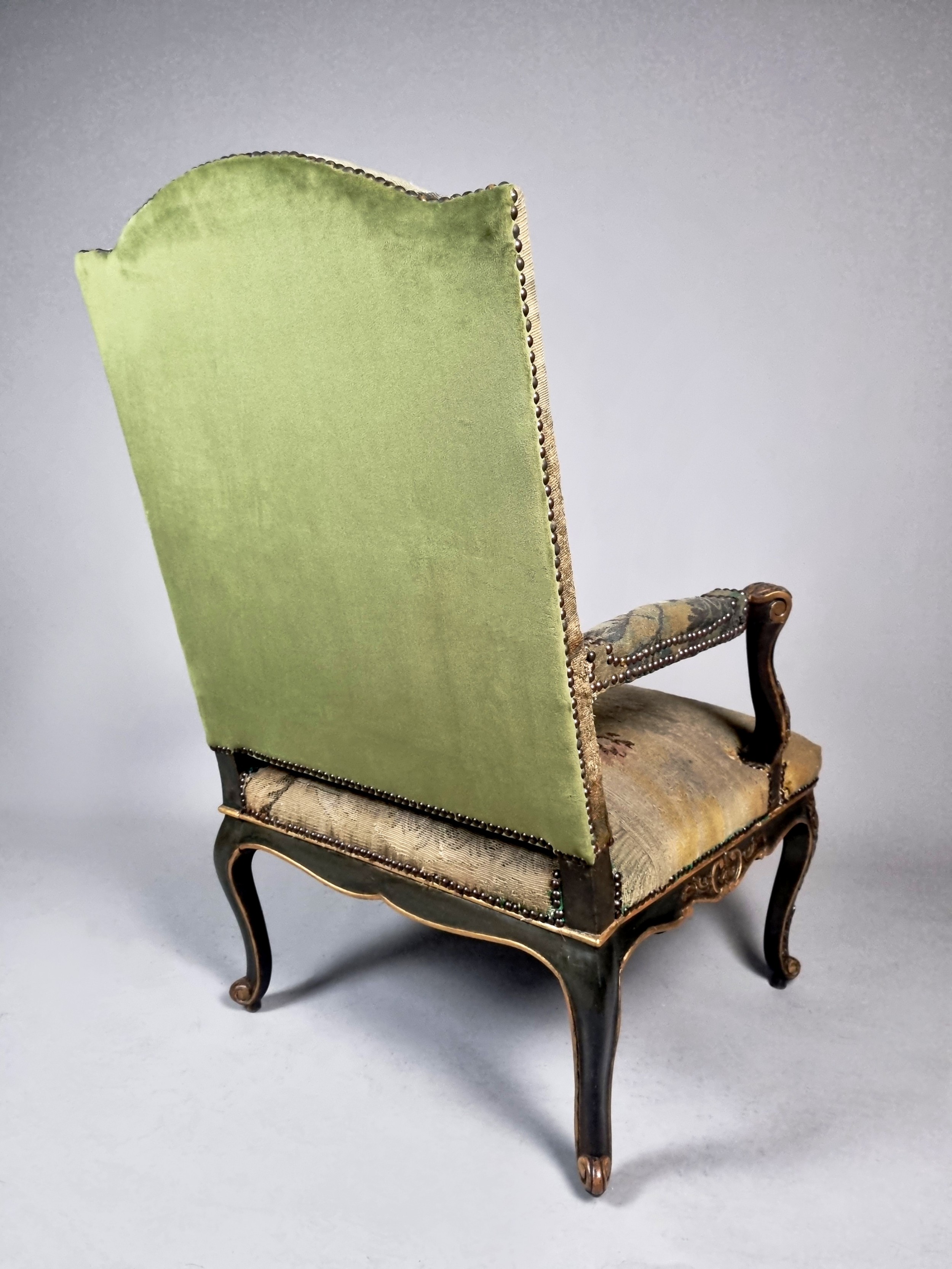
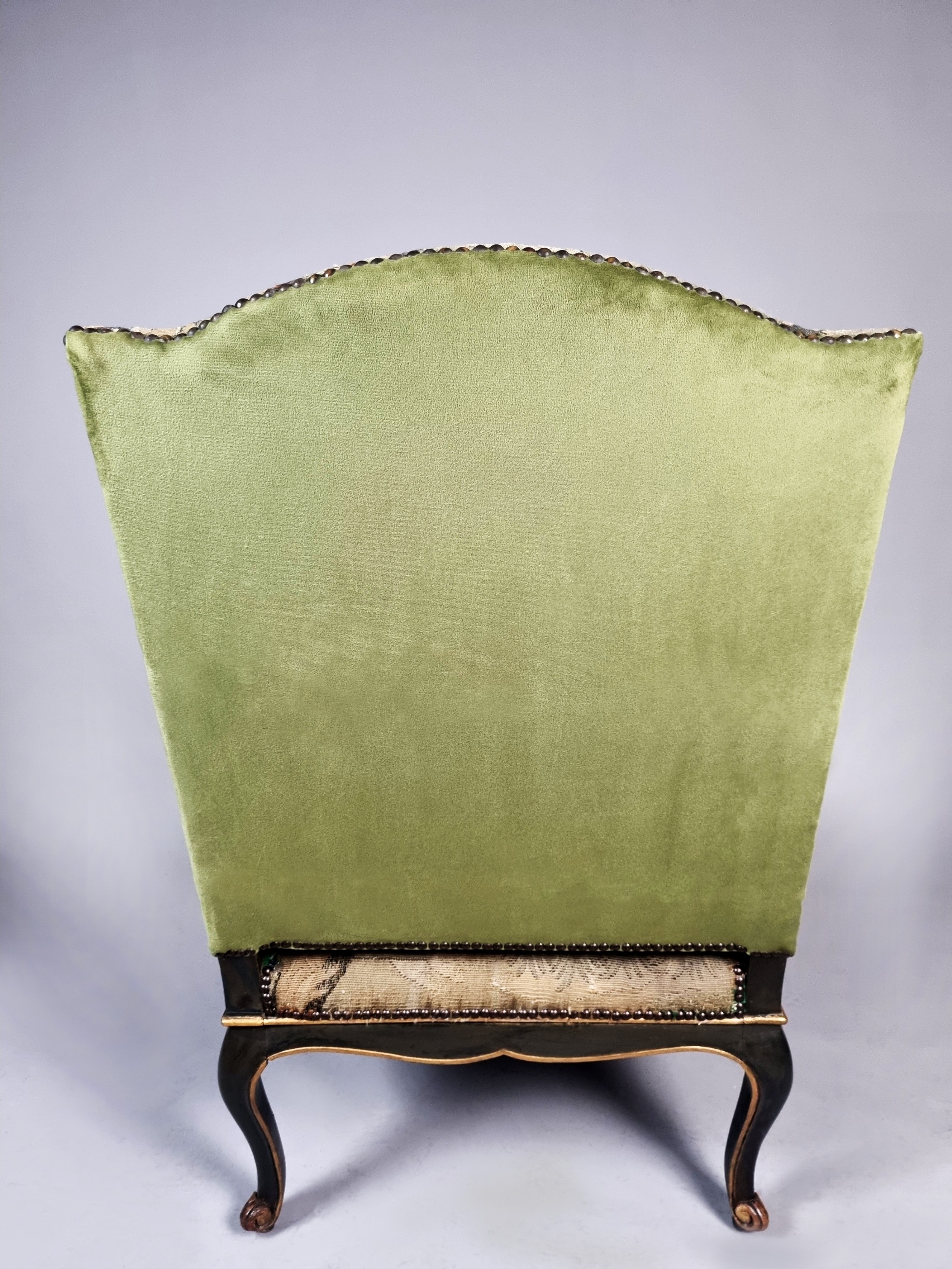
This amazing 18th century chair has survived for more than 250 years in superb original condition with only minor dings and tiny losses, light typical wear to the tapestry seat. Later green velvet fabric panel back.

.

Declaration

Webberley Antiques has dated this George III Gainsborough Chair to the 18th Century.
Reference Numbers
Sellingantiques Reference
SA1217631
Dealers Notes

I describe and photograph my pieces accurately and with the aim that on arrival each will exceed your expectations.

I operate a full refund guarantee and am always happy to give free, honest and friendly advice.

Description
Attributed to Paul Saunders (1721 – 1771)
An absolutely exceptional English George III period carved birchwood Gainsborough armchair retaining its original tapestry covers and original paintwork and gilding.
Webberley Antiques
fig 1. A George III Gainsborough armchair with carved cabriole legs, parcel gilding, and green landscape tapestry upholstery trimmed with brass studs.
fig 1. Important George III Period Carved and Painted Gainsborough Chair

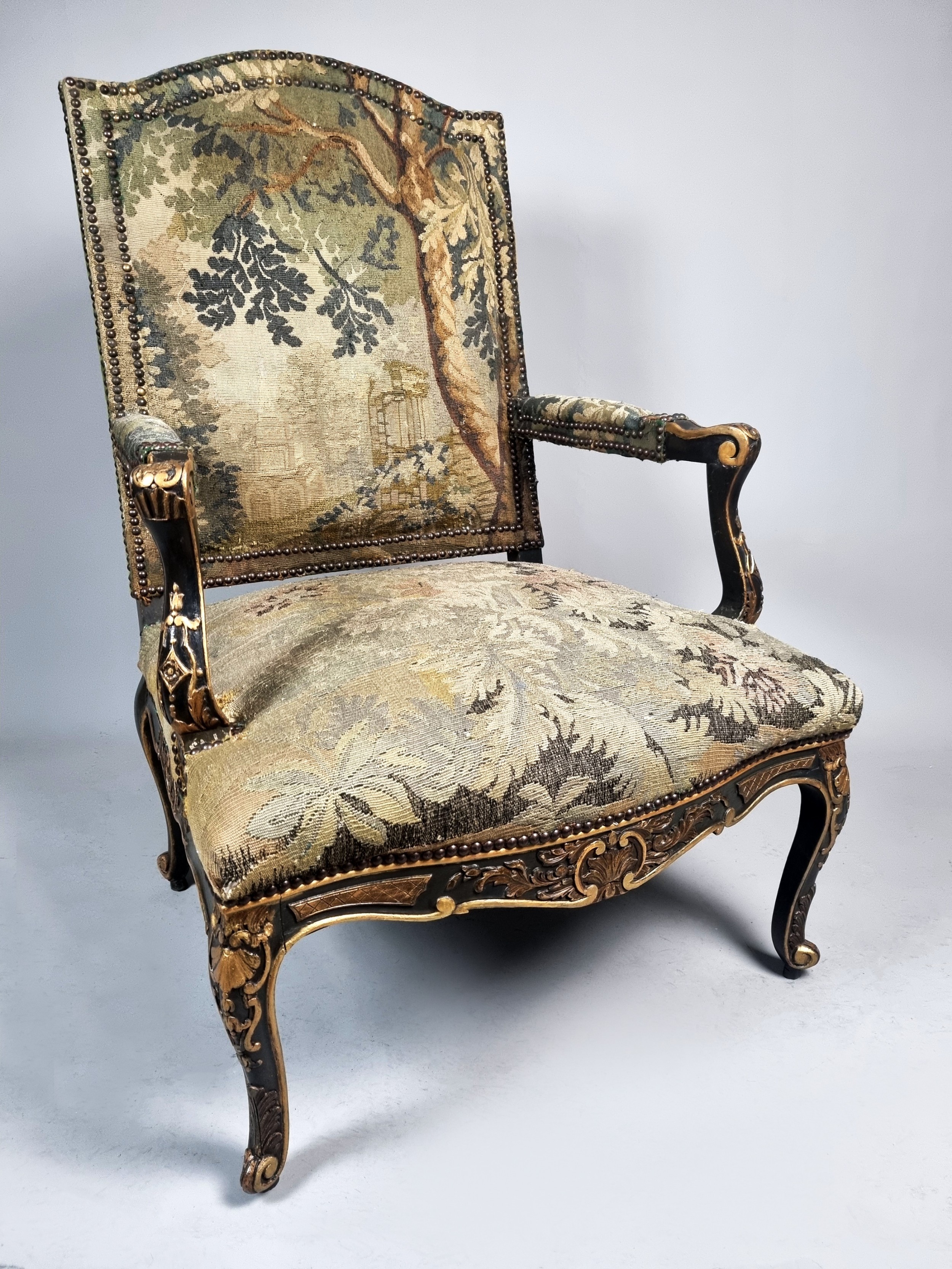
The upholstered back with serpentine top rail, over the similarly shaped seat, and the padded armrests supported on finely carved scrolled arms with cabochons. The painted show wood seat rails carved with scrolls, trelliswork and acanthus. The cabriole legs similarly decorated with acanthus leaves and cabochons, terminating in scrolled pegged feet.
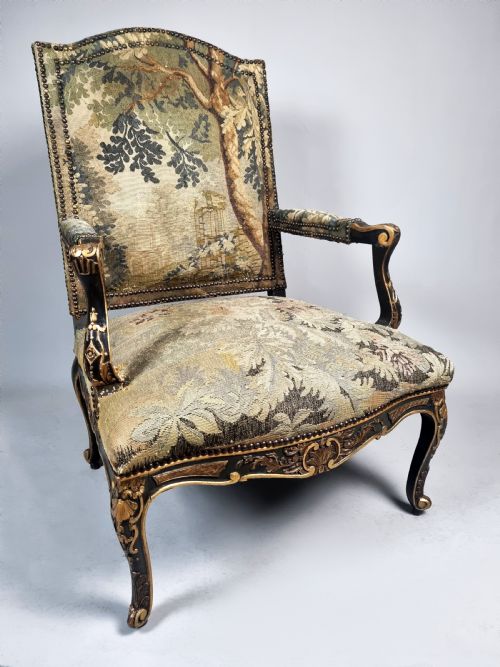
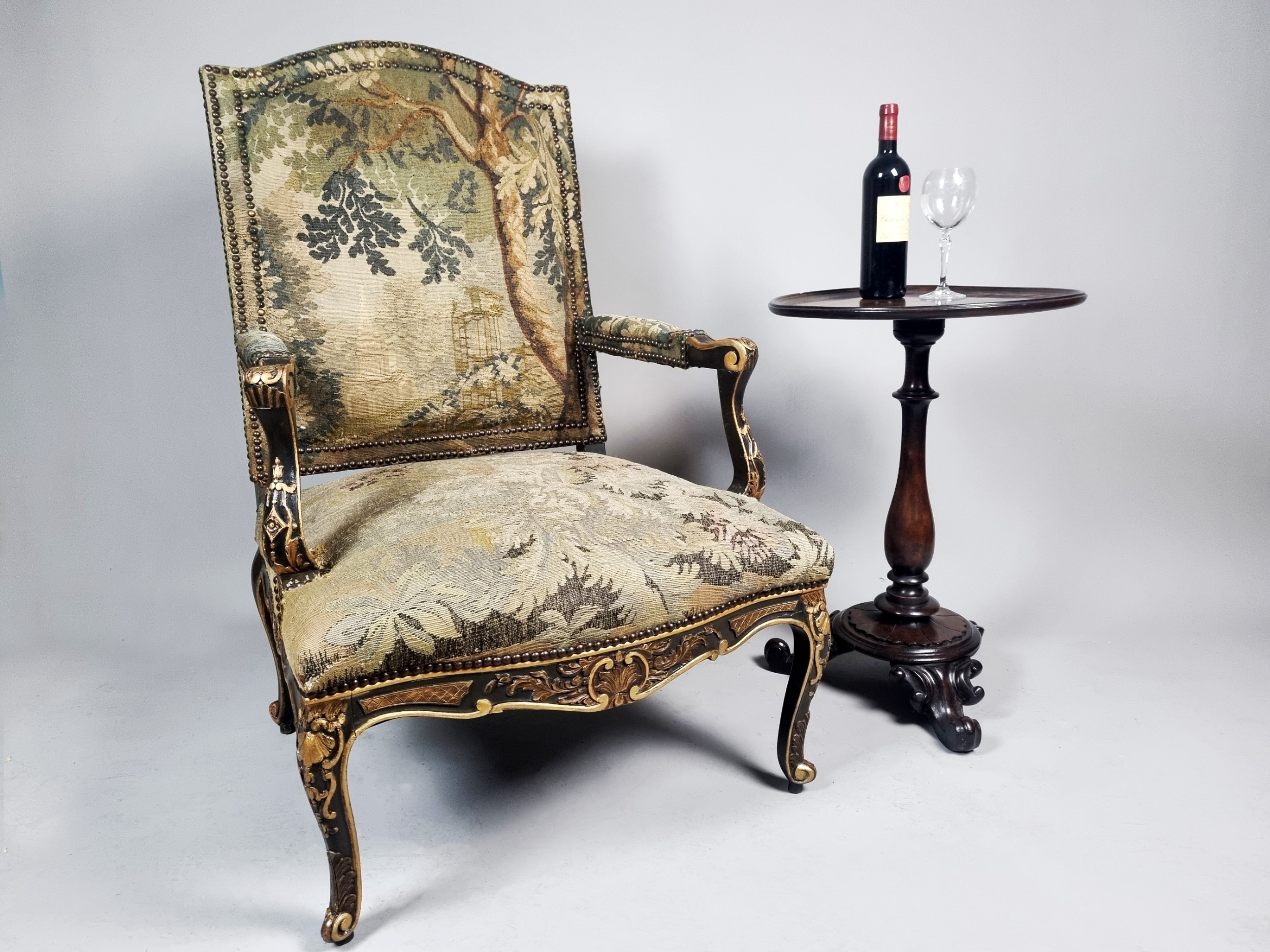
fig 2. A George III Gainsborough armchair with carved cabriole legs, parcel gilding, and green landscape tapestry upholstery trimmed with brass studs.
fig 2. Important George III Period Carved and Painted Gainsborough Chair

The carving exceptionally intricate and fine and the tapestry covers original and depicting a leafy landscape with distant ruins and oriental temple structures.

Paul Saunders’ clients were the wealthiest London and country houses and he was held by Royal Appointment as ‘yeoman arras-worker to the Great Wardrobe’ and yeoman tapestry tailor.
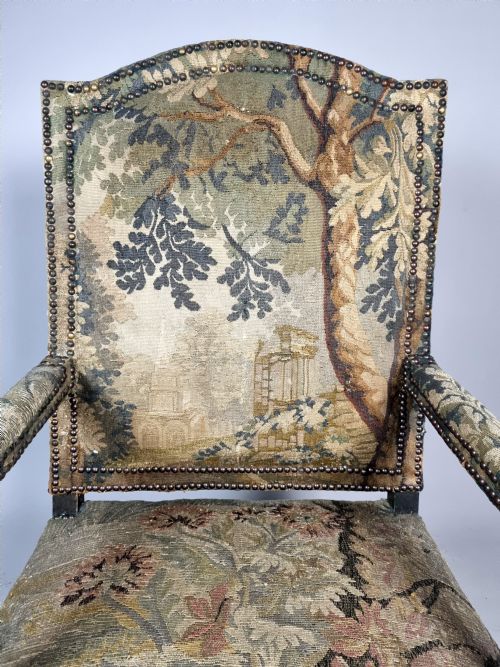
fig 3. A George III Gainsborough armchair with carved cabriole legs, parcel gilding, and green landscape tapestry upholstery trimmed with brass studs.
fig 3. Important George III Period Carved and Painted Gainsborough Chair

His workshops, known as ‘The Royal Tapestry Manufactory’ contained a special ‘tapestry room’ and from 1755 until his death he was the main tapestry producer in London. After Saunders's death in 1771, his firm carried on until 1794 from his last premises in Charlotte (now Bloomsbury) Street with his eldest son, Hugh, and his clerk, John Bracken, forming a partnership.
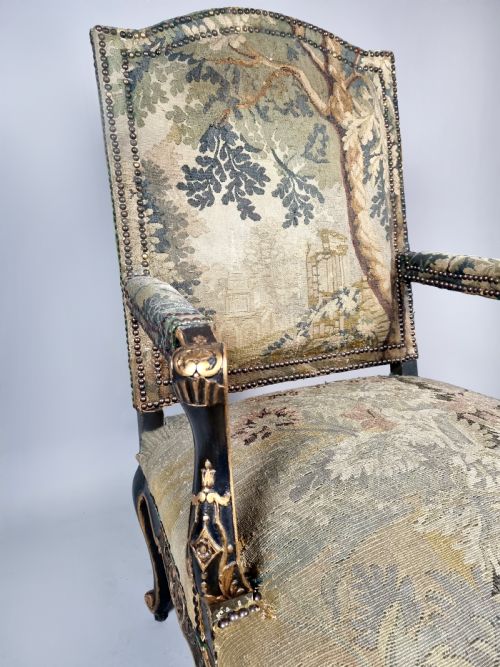
fig 4. A George III Gainsborough armchair with carved cabriole legs, parcel gilding, and green landscape tapestry upholstery trimmed with brass studs.
fig 4. Important George III Period Carved and Painted Gainsborough Chair

Paul Saunders was apprenticed for seven years to Michael Bradshaw – who was almost certainly related to William Bradshaw and George Smith Bradshaw with whom Saunders later formed a partnership. Carlisle House on the east side of Soho Square was leased by Saunders and George Smith Bradshaw, described as ‘upholsterers of Greek Street’, in May 1753.
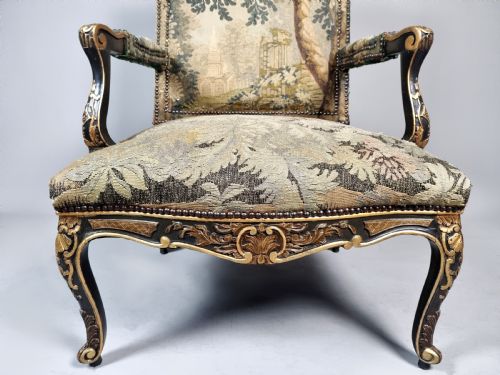
fig 5. A George III Gainsborough armchair with carved cabriole legs, parcel gilding, and green landscape tapestry upholstery trimmed with brass studs.
fig 5. Important George III Period Carved and Painted Gainsborough Chair

The British Chronicle, 30 September 1757 announced that ‘Mr. Paul Saunders of Sutton Street, Soho is appointed Tapestry Maker to His Majesty and on Thursday was sworn into office’. Saunders and Bradshaw's partnership had already been engaged in supplying tapestries to Holkham and Petworth, continuing William Bradshaw's established position in this field, although as was typical of most Soho Tapestry makers, the partners were primarily “upholders" (the 18th century term for upholsterers and decorators) and “cabinet makers”.
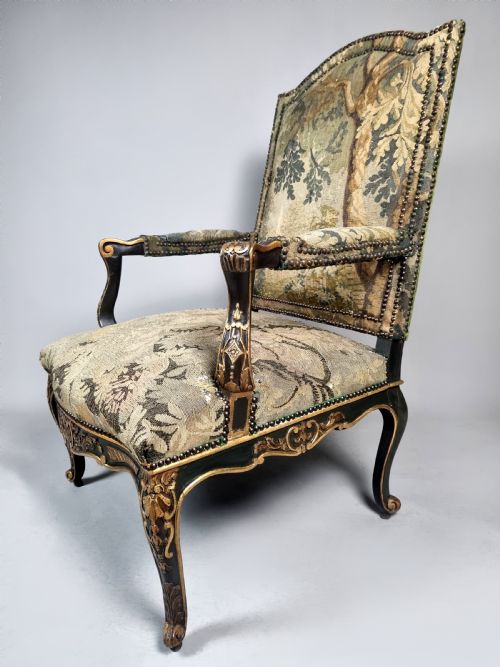
fig 6. A George III Gainsborough armchair with carved cabriole legs, parcel gilding, and green landscape tapestry upholstery trimmed with brass studs.
fig 6. Important George III Period Carved and Painted Gainsborough Chair

The dominant role in the tapestry side of the business seems to have been assumed by Saunders who rose to a position of prominence as a tapestry worker. Known for depictions of Oriental-style landscapes with soft trees and picturesque ruins, his most famous design is ‘The Pilgrimage to Mecca’ of which examples survive at Alnwick Castle, Petworth and Holkham.
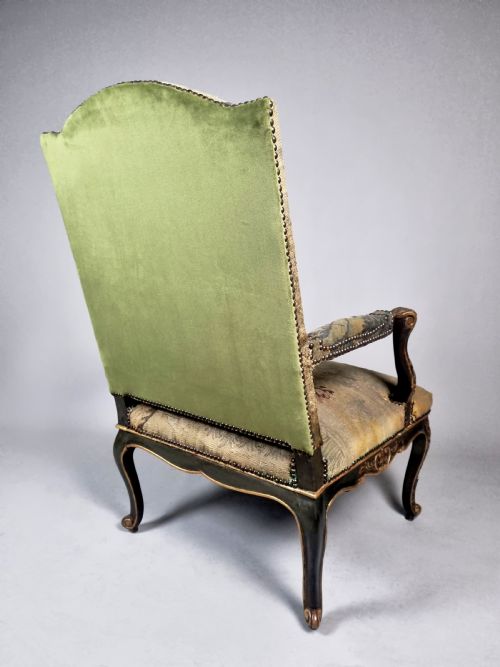
fig 7. A George III Gainsborough armchair with carved cabriole legs, parcel gilding, and green landscape tapestry upholstery trimmed with brass studs.
fig 7. Important George III Period Carved and Painted Gainsborough Chair

In May 1761 Saunders received a second Royal appointment in the Great Wardrobe as Yeoman Tapestry Taylor. Thereafter, holding the two positions concurrently until his death in 1771. Both appointments were chiefly concerned with repairing and cleaning royal tapestries, but new hangings were also supplied, and his connections with the Great Wardrobe were undoubtedly, partially responsible, for the entry referring to Paul Saunders, undertaker, being paid for the funeral of the Duke of Cumberland in 1765.
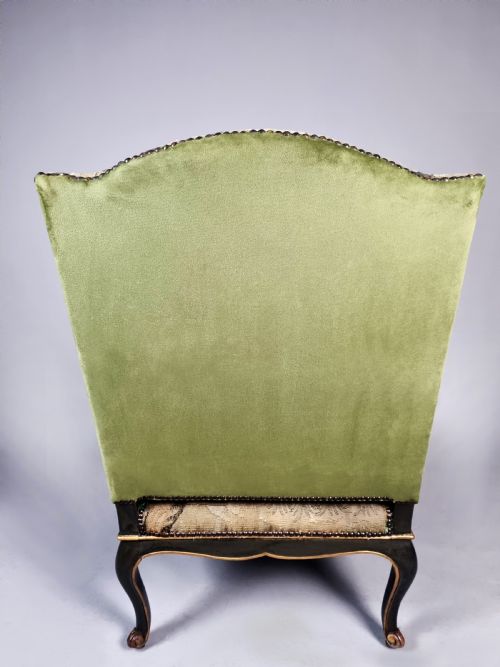
fig 8. A George III Gainsborough armchair with carved cabriole legs, parcel gilding, and green landscape tapestry upholstery trimmed with brass studs.
fig 8. Important George III Period Carved and Painted Gainsborough Chair

Throughout his career, Paul Saunders seems to have had clients of extremely important stature — perhaps beginning with early contacts made in William Bradshaw's workshops. The Petworth archives contain a Saunders' letter of September 1748, demonstrating both a high degree of literacy and a familiarity with Petworth and the Duke's health.

Saunders died in 1771 his will dated 23 April 1770 included the following important provisions: ‘to John Bracken £100 if living with me either as a clerk or partner’ whilst ‘the lease of the said dwelling House, workshops, warehouses and premises’ were left in trust to his wife Ann Saunders, his eldest son Hugh, and his ‘worthy friend’ Theodosius Forest.

This amazing 18th century chair has survived for more than 250 years in superb original condition with only minor dings and tiny losses, light typical wear to the tapestry seat. Later green velvet fabric panel back.

Date of Manufacture

Webberley Antiques has dated this George III Gainsborough Chair to the 18th Century.

Reference Numbers
Sellingantiques Ref
SA1217631
Webberley Antiques
Webberley Antiques
Sellingantiques verified Since Nov 2008

Specialists in 18th century and earlier furniture for more than 45 years

Dealer Profile

You can view the stock and full dealer information on the Webberley Antiques Profile Page
PDF SHARE
SAVE
A George III Gainsborough armchair with carved cabriole legs, parcel gilding, and green landscape tapestry upholstery trimmed with brass studs.
1 / 9
Archive I A George III Gainsborough armchair with carved cabriole legs, parcel gilding, and green landscape tapestry upholstery trimmed with brass studs.

Important George III Period Carved and Painted Gainsborough Chair
Archive II A George III Gainsborough armchair with carved cabriole legs, parcel gilding, and green landscape tapestry upholstery trimmed with brass studs. View II
Archive III A George III Gainsborough armchair with carved cabriole legs, parcel gilding, and green landscape tapestry upholstery trimmed with brass studs. View III
Archive IV A George III Gainsborough armchair with carved cabriole legs, parcel gilding, and green landscape tapestry upholstery trimmed with brass studs. View IV
Archive V A George III Gainsborough armchair with carved cabriole legs, parcel gilding, and green landscape tapestry upholstery trimmed with brass studs. View V
Archive VI A George III Gainsborough armchair with carved cabriole legs, parcel gilding, and green landscape tapestry upholstery trimmed with brass studs. View VI
Archive VII A George III Gainsborough armchair with carved cabriole legs, parcel gilding, and green landscape tapestry upholstery trimmed with brass studs. View VII
Archive VIII A George III Gainsborough armchair with carved cabriole legs, parcel gilding, and green landscape tapestry upholstery trimmed with brass studs. View VIII
Archive IX A George III Gainsborough armchair with carved cabriole legs, parcel gilding, and green landscape tapestry upholstery trimmed with brass studs. View IX
FURTHER BROWSING

Visitors also looked at these ⇣

Enlarged Archival View
Telephone 07765 233266
Location
East Sussex
United Kingdom

By appointment only.
Verified Since Nov 2008
Items For Sale 75
Items Sold 415
Webberley Antiques
Webberley Antiques
Verified Since Nov 2008
View Dealer Info
Location: East Sussex, United Kingdom, , By appointment only.
Verified
Nov 2008
For Sale
75
Sold
415
A George III Gainsborough armchair with carved cabriole legs, parcel gilding, and green landscape tapestry upholstery trimmed with brass studs.
Important George III Period Carved and Painted Gainsborough Chair
Ref: SA1217631
A George III Gainsborough armchair with carved cabriole legs, parcel gilding, and green landscape tapestry upholstery trimmed with brass studs.
Detail View 1
Detail View 2
Detail View 3
Detail View 4
Detail View 5
Detail View 6
Detail View 7
Detail View 8
Archival Detail
Every single antique dealer on our platform is individually approved by our internal team. We verify their professional trade history, ethical standards, and photographic quality to ensure a secure, high-standard buying environment. Upon joining, every dealer agrees to a strict 9-point code of conduct. While issues can occasionally arise, our dealers typically resolve them swiftly and directly with the buyer. In fact, since our founding in 2002, Sellingantiques has only had to step in to help resolve an issue on roughly five occasions—a true testament to the quality of our dealers and their dedication to your happiness.
Our dealers are highly experienced in packing and shipping fragile, high-value antiques. Because you are in direct contact with the dealer, you will be able to easily go through all available shipping and insurance options together to ensure your item arrives safely.
Antiques are the ultimate green purchase. By choosing historical pieces over newly manufactured goods, you completely eliminate the carbon footprint of modern mass production while preserving exceptional, timeless craftsmanship.

A Gainsborough chair is a wide-seated, high-backed English armchair featuring open padded arms, originating in the 18th century. Named after the painter Thomas Gainsborough due to similar designs appearing in his portraits, it was historically designed for use in libraries and drawing rooms.

These armchairs were traditionally constructed with solid timber frames, frequently carved from mahogany or walnut, and sometimes decorated with paint or parcel gilding. Upholstery was executed in needlepoint, woven tapestry, or silk damask, secured with brass studding.

Authentic period examples display hand-carved details on the legs and seat rails, hand-pegged mortise and tenon joinery, and natural wear patterns on the wooden timber. The proportions typically feature a broad, gently angled backrest and hand-stitched upholstery.

Place the armchair as a singular statement piece in a study, library alcove, or living room. Pairing it with contemporary linear furniture and neutral wall shades creates a balanced contrast that highlights its detailed woodwork and textile pattern.

Keep the chair away from direct sunlight and artificial heat sources to prevent thread fading and timber drying. Clean carved wooden surfaces with a soft, dry lint-free cloth and vacuum needlework upholstery gently using a low-suction soft brush attachment.
items
Add keywords to the filter
Price
£100
£250000
Era
Movements
Material
Origin
Stock Location
Freshness
Online Payments
Categories