23,959  PAGES BROWSED TODAY PAGES TODAY 36  ANTIQUES UPLOADED TODAY NEW ARRIVALS
ID #SA1216136
FOR SALE
£2,300
Email
Save
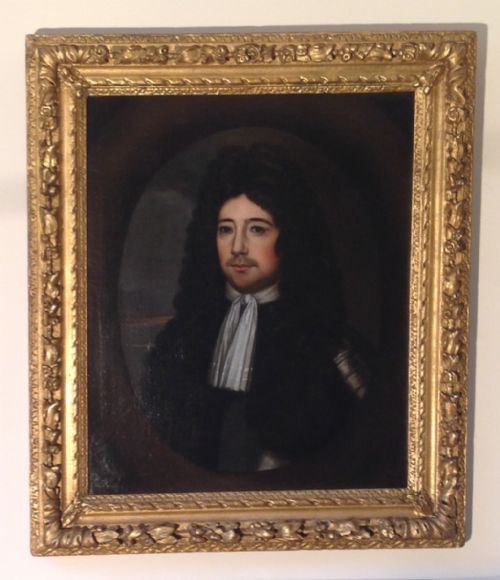
Late 17th-century English School, Portrait of Robert Bedford, Yorkshire - Antique Oil Painting
Brave Fine Art
for sale €2,691     $2,921
£2,300
Brave Fine Art

Brave Fine Art

Sellingantiques Verified Since Nov 2018
View Dealers Stock Page
  • About Us
    Exquisite antique paintings that capture the imagination.
Id #SA1216136
PDF SHARE
SAVE

Late 17th-century English School, Portrait of Robert Bedford, Yorkshire - Antique Oil Painting

17th century
For Sale by Brave Fine Art
Description

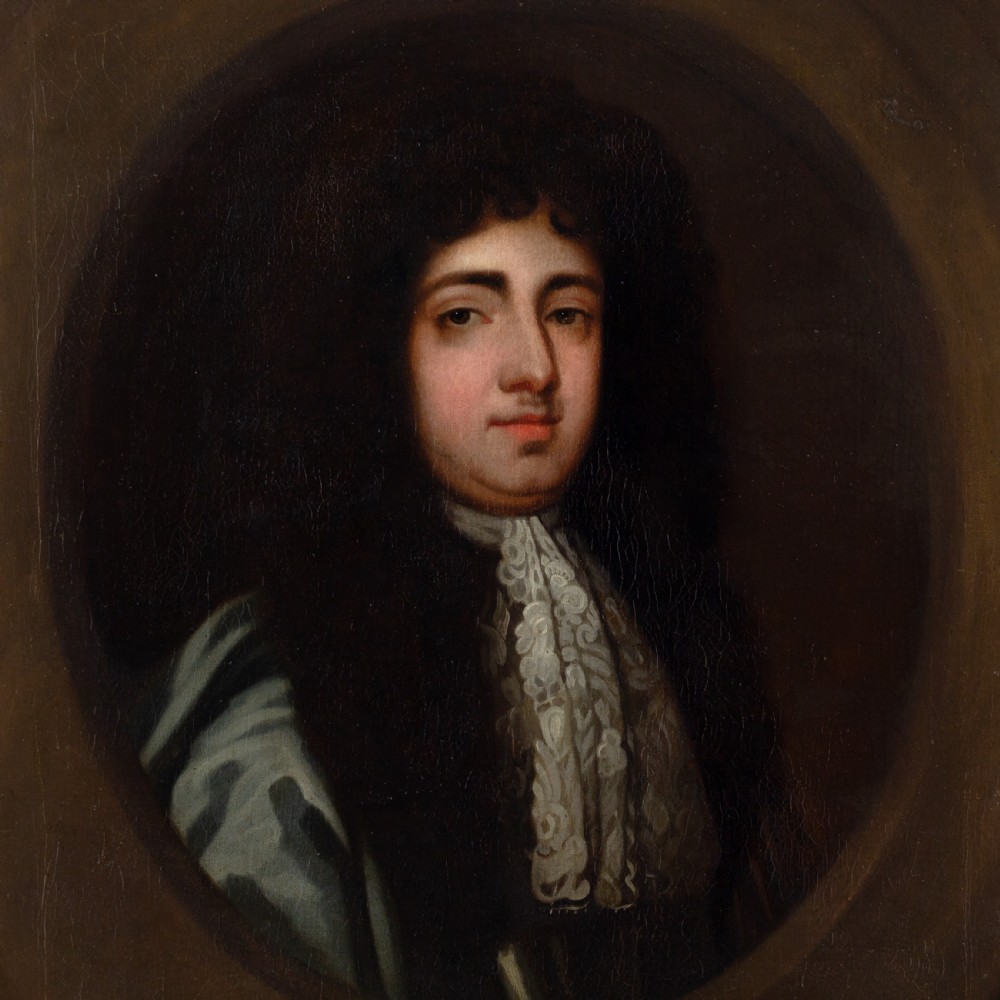
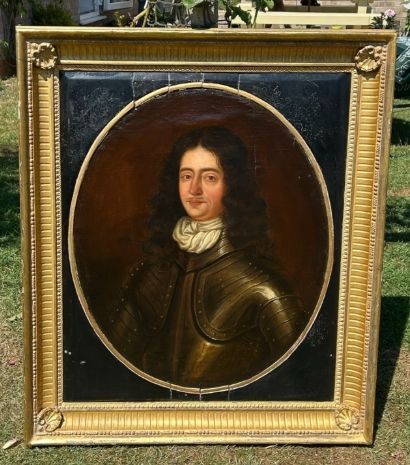
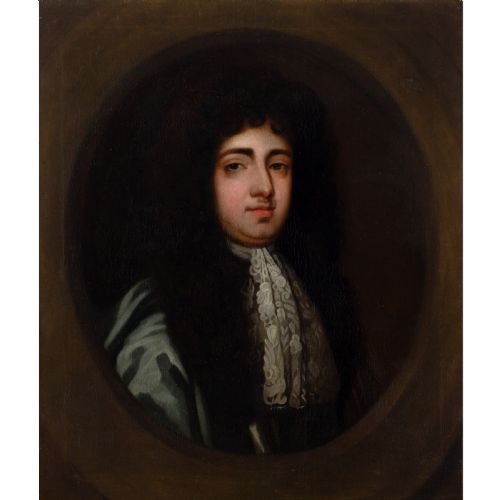
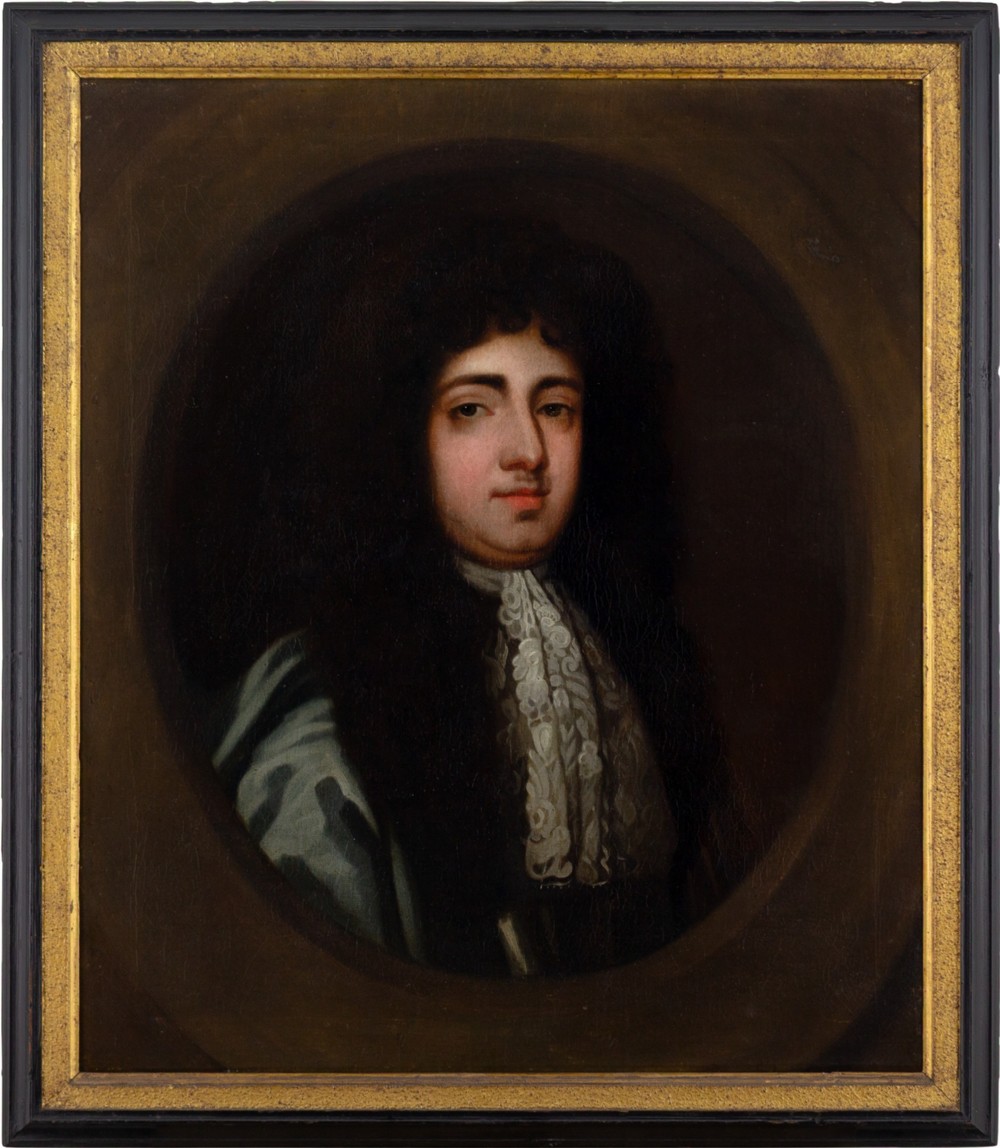
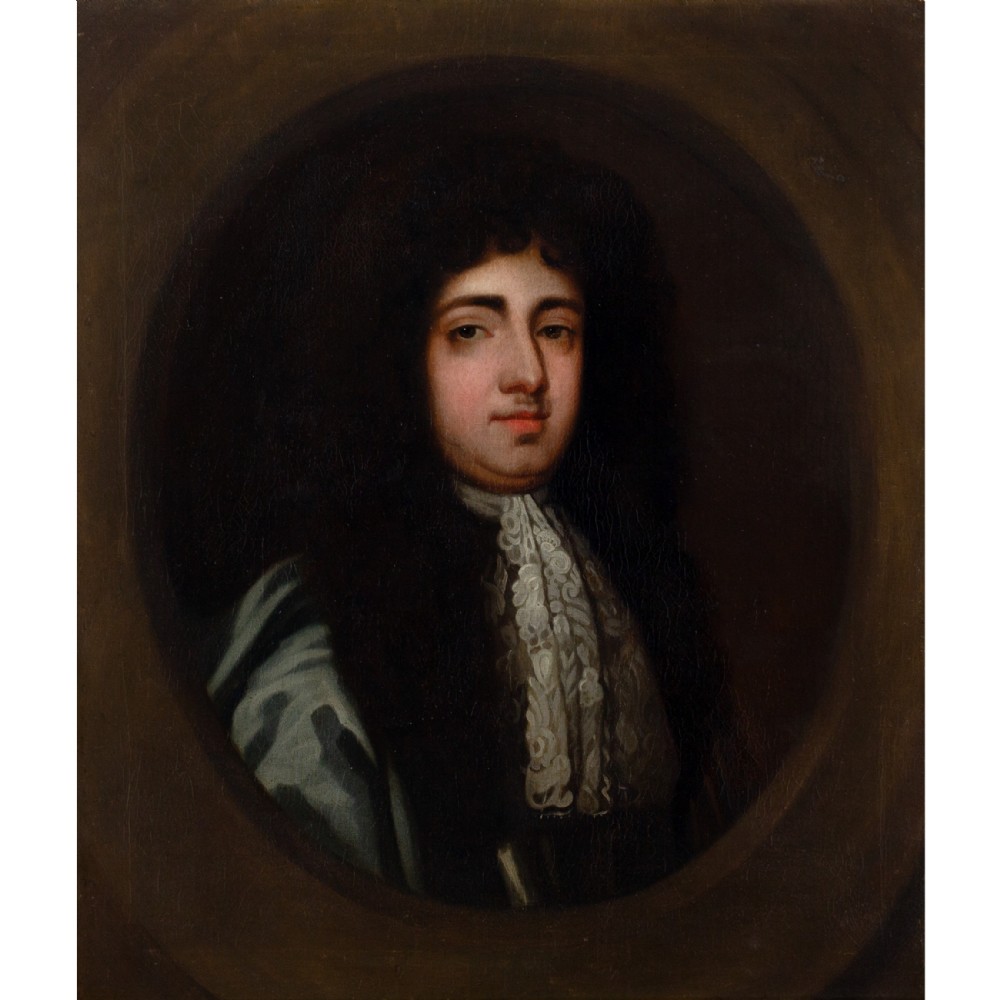
This late 17th-century English oil painting depicts Robert Bedford of Crow Nest, Dewsbury, Yorkshire, a man who appears to embody a fascinating moment in English social history - when inherited land, provincial gentility, and expanding commerce began quietly to overlap. Painted around 1695, when Bedford was likely in early middle age, the work presents him as a thoughtful, self-made provincial gentleman navigating a changing world.

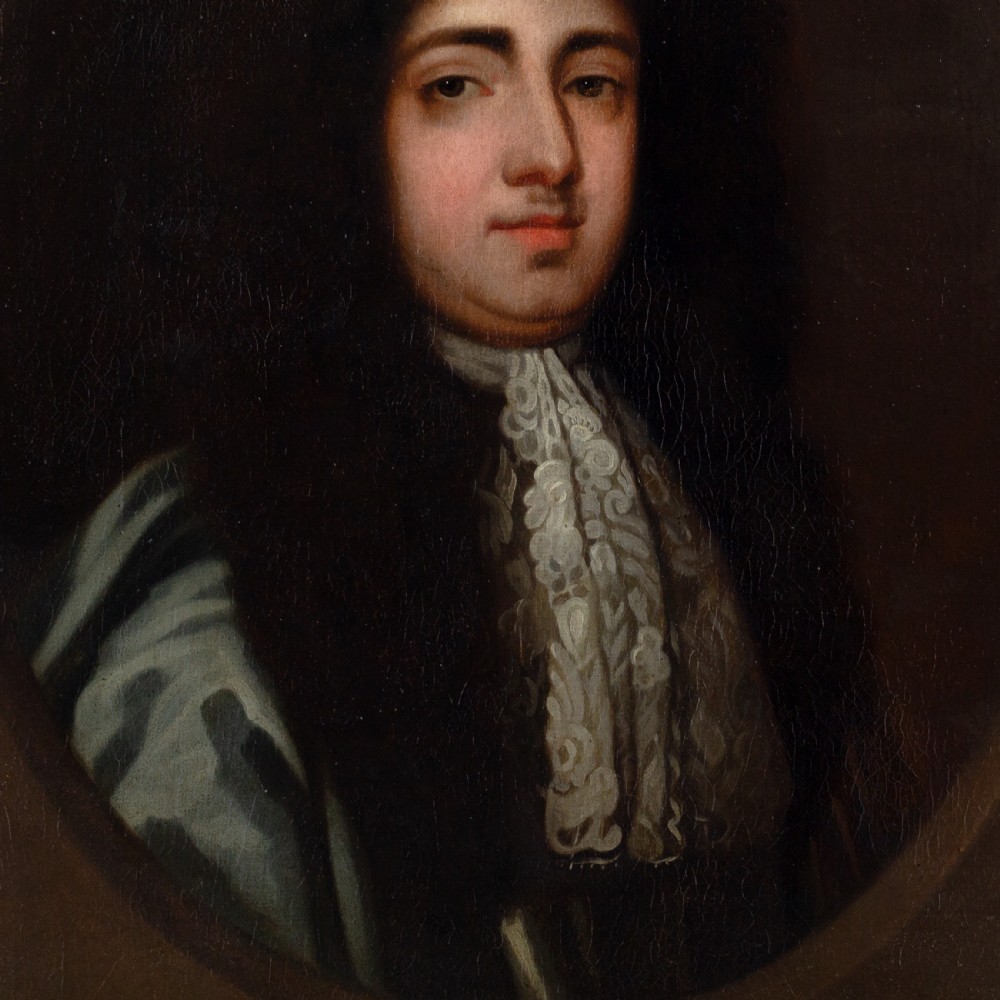
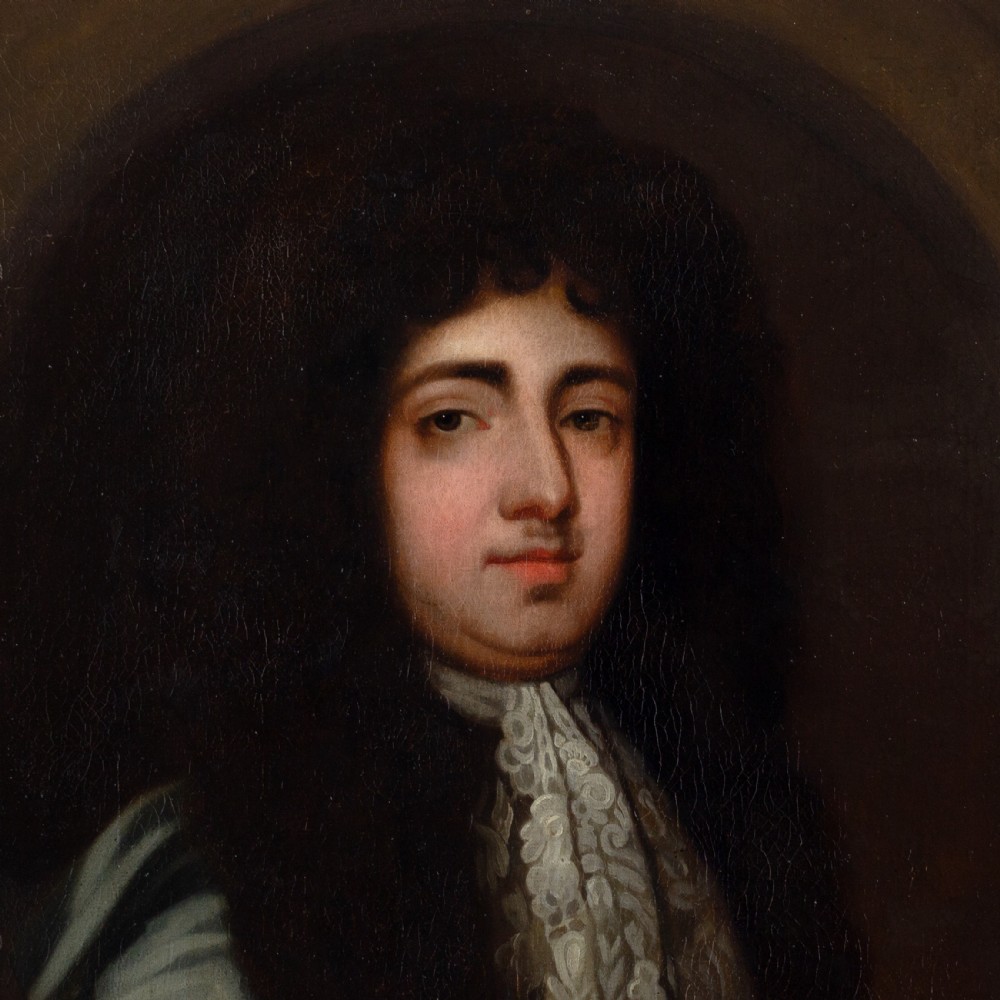
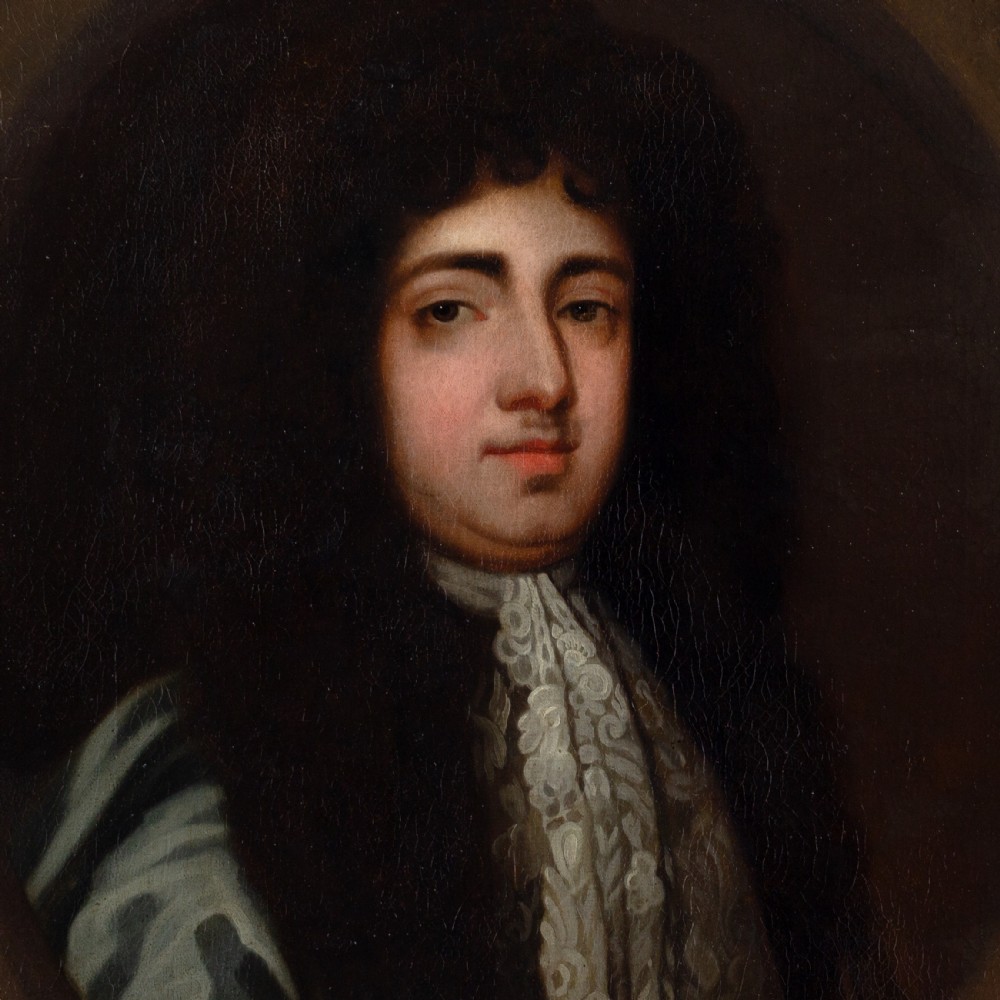
In this quiet portrayal, the artist has focused almost entirely upon Bedford himself, the pale intelligence of the face and the heavy dark curls of the fashionable periwig falling around his shoulders. His lace cravat, delicately rendered in soft whites and silvers, signals refinement, yet, importantly, the portrait avoids excess. One senses a man not consumed by vanity.

The surviving archival records suggest a figure actively involved in estate management. By the early 18th century, Bedford was living in Leeds and described as a salter - e.g. a merchant operating within the vital commercial networks of northern England. Salt, indispensable to preservation, underpinned much of daily economic life. Our sitter, therefore, belonged to that increasingly important class of provincial men whose wealth and identity were shaped through enterprise.

It's tempting to imagine the world he inhabited. Yorkshire in the decades after the Restoration was a place of gradual transformation. Roads improved, markets expanded, and towns such as Leeds were growing rapidly through trade and manufacture. Yet much of life still retained an older rhythm.

Crow Nest itself would likely have been a modest but substantial vernacular building. It was described as an "exceedingly pleasant house" and "fit for a Gentleman’s family", complete with gardens, orchards and pasture. It left the family in 1733. Bedford’s days were probably divided between estate concerns, pawing over legal documents, travelling between market centres, and negotiations.

Although the artist is unknown, it's evidently executed by a capable provincial painter, likely working within the broader influence of Sir Godfrey Kneller. The handling of the face is psychologically attentive, while the costume and wig are rendered convincingly. The dark oval surround enhances the sense of introspection, drawing the viewer inward.

More than three centuries after its inception, the portrait survives today as the trace of a particular human presence - a Yorkshire gentleman standing at the threshold of modern Britain, shaped by land, commerce, ambition, and inheritance.

Held in a simple later ebonised frame with a gilt slip.

Medium: Oil on canvas

Overall size: 28” x 32½” / 71cm x 82cm

Year of creation: c. 1695

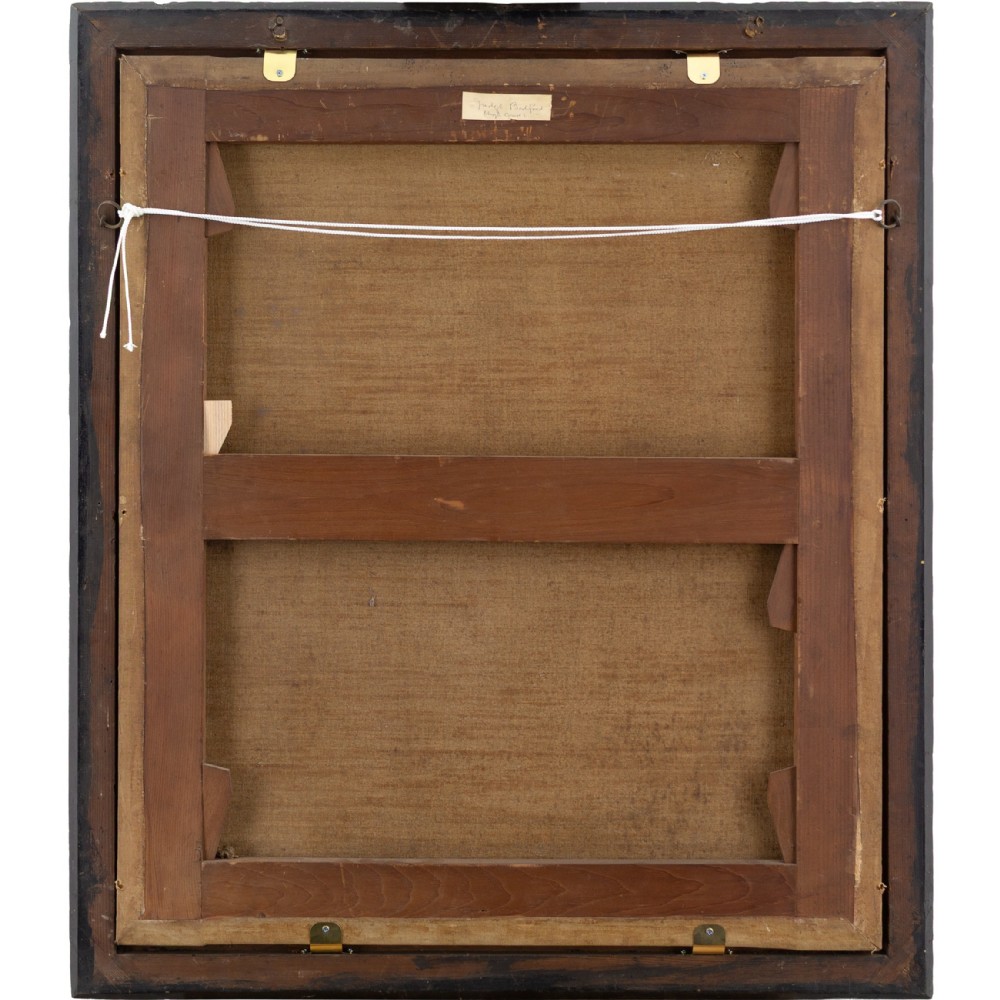
Labels & Inscriptions: Labelled on the reverse 'Judge Bedford, High Court'.

Provenance: Private collection, UK.

Condition: Cleaned. Revarnished. Frame in good condition with minor age-related wear.

Our reference: BRV2304

Physical Dimensions
Height
82cm (32.28")
Width
71cm (27.95")
Depth
5cm (1.97")
Declaration

Brave Fine Art has dated this 17th Century Oil Portrait to the 17th Century.
Reference Numbers
Sellingantiques Reference
SA1216136
Dealers Internal Reference
BRV2304
Description
This late 17th-century English oil painting depicts Robert Bedford of Crow Nest, Dewsbury, Yorkshire, a man who appears to embody a fascinating moment in English social history - when inherited land, provincial gentility, and expanding commerce began quietly to overlap.
Painted around 1695, when Bedford was likely in early middle age, the work presents him as a thoughtful, self-made provincial gentleman navigating a changing world.
Brave Fine Art
fig 1. A late seventeenth-century oil portrait depicting a gentleman with a dark periwig and white lace cravat set inside a rectangular dark frame with a gilt inner edge.
fig 1. Late 17th-century English School, Portrait of Robert Bedford, Yorkshire - Antique Oil Painting

In this quiet portrayal, the artist has focused almost entirely upon Bedford himself, the pale intelligence of the face and the heavy dark curls of the fashionable periwig falling around his shoulders. His lace cravat, delicately rendered in soft whites and silvers, signals refinement, yet, importantly, the portrait avoids excess. One senses a man not consumed by vanity.
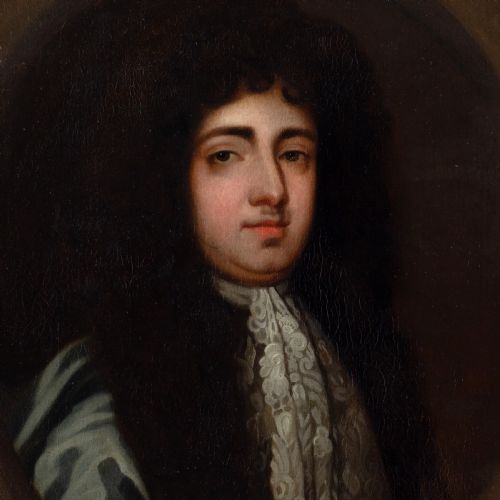
fig 2. A late seventeenth-century oil portrait depicting a gentleman with a dark periwig and white lace cravat set inside a rectangular dark frame with a gilt inner edge.
fig 2. Late 17th-century English School, Portrait of Robert Bedford, Yorkshire - Antique Oil Painting

The surviving archival records suggest a figure actively involved in estate management. By the early 18th century, Bedford was living in Leeds and described as a salter - e.g. a merchant operating within the vital commercial networks of northern England. Salt, indispensable to preservation, underpinned much of daily economic life. Our sitter, therefore, belonged to that increasingly important class of provincial men whose wealth and identity were shaped through enterprise.
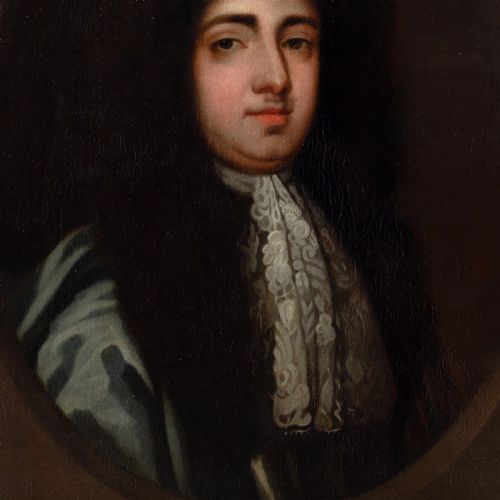
fig 3. A late seventeenth-century oil portrait depicting a gentleman with a dark periwig and white lace cravat set inside a rectangular dark frame with a gilt inner edge.
fig 3. Late 17th-century English School, Portrait of Robert Bedford, Yorkshire - Antique Oil Painting

It's tempting to imagine the world he inhabited. Yorkshire in the decades after the Restoration was a place of gradual transformation. Roads improved, markets expanded, and towns such as Leeds were growing rapidly through trade and manufacture. Yet much of life still retained an older rhythm.
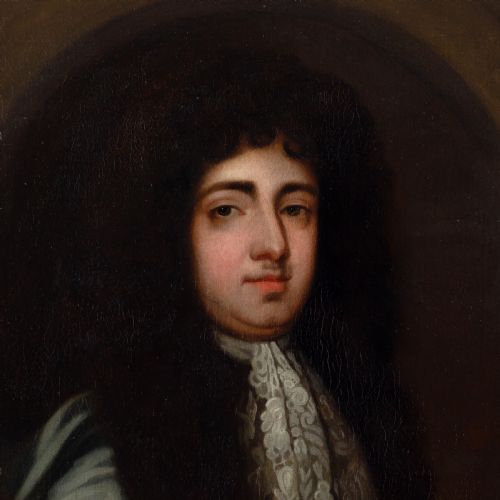
fig 4. A late seventeenth-century oil portrait depicting a gentleman with a dark periwig and white lace cravat set inside a rectangular dark frame with a gilt inner edge.
fig 4. Late 17th-century English School, Portrait of Robert Bedford, Yorkshire - Antique Oil Painting

Crow Nest itself would likely have been a modest but substantial vernacular building. It was described as an "exceedingly pleasant house" and "fit for a Gentleman’s family", complete with gardens, orchards and pasture. It left the family in 1733. Bedford’s days were probably divided between estate concerns, pawing over legal documents, travelling between market centres, and negotiations.
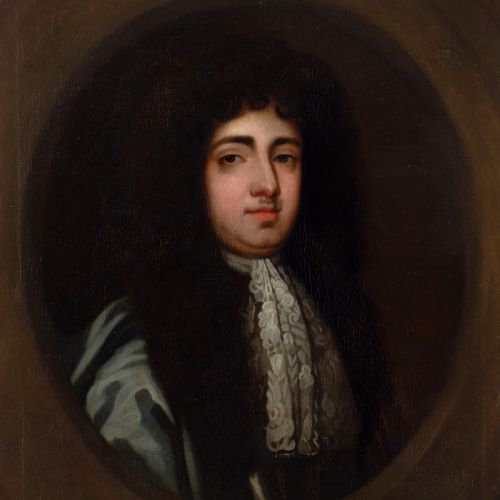
fig 5. A late seventeenth-century oil portrait depicting a gentleman with a dark periwig and white lace cravat set inside a rectangular dark frame with a gilt inner edge.
fig 5. Late 17th-century English School, Portrait of Robert Bedford, Yorkshire - Antique Oil Painting

Although the artist is unknown, it's evidently executed by a capable provincial painter, likely working within the broader influence of Sir Godfrey Kneller. The handling of the face is psychologically attentive, while the costume and wig are rendered convincingly. The dark oval surround enhances the sense of introspection, drawing the viewer inward.
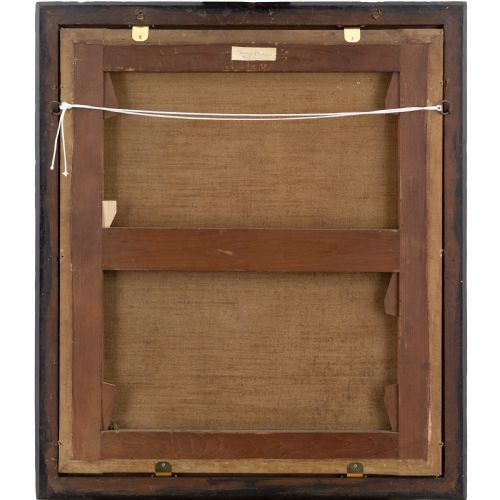
fig 6. A late seventeenth-century oil portrait depicting a gentleman with a dark periwig and white lace cravat set inside a rectangular dark frame with a gilt inner edge.
fig 6. Late 17th-century English School, Portrait of Robert Bedford, Yorkshire - Antique Oil Painting

More than three centuries after its inception, the portrait survives today as the trace of a particular human presence - a Yorkshire gentleman standing at the threshold of modern Britain, shaped by land, commerce, ambition, and inheritance.

Held in a simple later ebonised frame with a gilt slip.

Medium: Oil on canvas

Overall size: 28” x 32½” / 71cm x 82cm

Year of creation: c. 1695

Labels & Inscriptions: Labelled on the reverse 'Judge Bedford, High Court'.

Provenance: Private collection, UK.

Condition: Cleaned. Revarnished. Frame in good condition with minor age-related wear.

Our reference: BRV2304

Height
82cm (32.28")
Width
71cm (27.95")
Depth
5cm (1.97")
Date of Manufacture

Brave Fine Art has dated this 17th Century Oil Portrait to the 17th Century.

Reference Numbers
Sellingantiques Ref
SA1216136
Dealers Internal Ref
BRV2304
Brave Fine Art
Brave Fine Art
Sellingantiques verified Since Nov 2018

Exquisite antique paintings that capture the imagination.

Dealer Profile

You can view the stock and full dealer information on the Brave Fine Art Profile Page
PDF SHARE
SAVE
A late seventeenth-century oil portrait depicting a gentleman with a dark periwig and white lace cravat set inside a rectangular dark frame with a gilt inner edge.
1 / 7
Archive I A late seventeenth-century oil portrait depicting a gentleman with a dark periwig and white lace cravat set inside a rectangular dark frame with a gilt inner edge.

Late 17th-century English School, Portrait of Robert Bedford, Yorkshire - Antique Oil Painting
Archive II A late seventeenth-century oil portrait depicting a gentleman with a dark periwig and white lace cravat set inside a rectangular dark frame with a gilt inner edge. View II
Archive III A late seventeenth-century oil portrait depicting a gentleman with a dark periwig and white lace cravat set inside a rectangular dark frame with a gilt inner edge. View III
Archive IV A late seventeenth-century oil portrait depicting a gentleman with a dark periwig and white lace cravat set inside a rectangular dark frame with a gilt inner edge. View IV
Archive V A late seventeenth-century oil portrait depicting a gentleman with a dark periwig and white lace cravat set inside a rectangular dark frame with a gilt inner edge. View V
Archive VI A late seventeenth-century oil portrait depicting a gentleman with a dark periwig and white lace cravat set inside a rectangular dark frame with a gilt inner edge. View VI
Archive VII A late seventeenth-century oil portrait depicting a gentleman with a dark periwig and white lace cravat set inside a rectangular dark frame with a gilt inner edge. View VII
FURTHER BROWSING

Visitors also looked at these ⇣

Enlarged Archival View
Telephone 01684 215986
Location
21 Enterprise Way
Arle Road
Cheltenham
Cotswolds
GL51 8LZ
United Kingdom

Under appointment only.
Verified Since Nov 2018
Items For Sale 68
Items Sold 1,832
Brave Fine Art
Brave Fine Art
Verified Since Nov 2018
View Dealer Info
Location: 21 Enterprise Way, Arle Road, Cheltenham, Cotswolds, GL51 8LZ, United Kingdom, , Under appointment only.
Verified
Nov 2018
For Sale
68
Sold
1,832
A late seventeenth-century oil portrait depicting a gentleman with a dark periwig and white lace cravat set inside a rectangular dark frame with a gilt inner edge.
Late 17th-Century English School, Portrait Of Robert Bedford, Yorkshire - Antique Oil Painting
Ref: SA1216136
A late seventeenth-century oil portrait depicting a gentleman with a dark periwig and white lace cravat set inside a rectangular dark frame with a gilt inner edge.
Detail View 1
Detail View 3
Detail View 4
Detail View 5
Detail View 6
Detail View 7
Archival Detail
Every single antique dealer on our platform is individually approved by our internal team. We verify their professional trade history, ethical standards, and photographic quality to ensure a secure, high-standard buying environment. Upon joining, every dealer agrees to a strict 9-point code of conduct. While issues can occasionally arise, our dealers typically resolve them swiftly and directly with the buyer. In fact, since our founding in 2002, Sellingantiques has only had to step in to help resolve an issue on roughly five occasions—a true testament to the quality of our dealers and their dedication to your happiness.
Our dealers are highly experienced in packing and shipping fragile, high-value antiques. Because you are in direct contact with the dealer, you will be able to easily go through all available shipping and insurance options together to ensure your item arrives safely.
Antiques are the ultimate green purchase. By choosing historical pieces over newly manufactured goods, you completely eliminate the carbon footprint of modern mass production while preserving exceptional, timeless craftsmanship.

17th-century English portraiture frequently features formal depictions of aristocracy and gentry, incorporating distinctive elements like full periwigs, intricate lace cravats, and dark feigned oval surrounds.

Paintings from this period were primarily executed using oil pigments on hand-woven linen canvas or wooden panels, typically framed in carved or moulded timber with gilded details.

Authenticity is evaluated through examining natural craquelure patterns, evidence of hand-loomed canvas weave, period-appropriate timber stretchers, pigment composition, and age-related oxidation on the canvas reverse.

An antique portrait can serve as a anchor piece in a contemporary setting when mounted on a dark-toned accent wall or integrated into an eclectic gallery wall alongside contrasting art styles.

Preservation requires maintaining consistent humidity and temperature levels while avoiding direct sunlight, with surface cleaning and varnish treatment undertaken solely by an accredited art conservator.
items
Add keywords to the filter
Price
£100
£250000
Era
Movements
Material
Origin
Stock Location
Freshness
Online Payments
Categories