60,930  PAGES BROWSED TODAY PAGES TODAY 103  ANTIQUES UPLOADED TODAY NEW ARRIVALS
ID #SA1212499
RESERVED
Email
Save
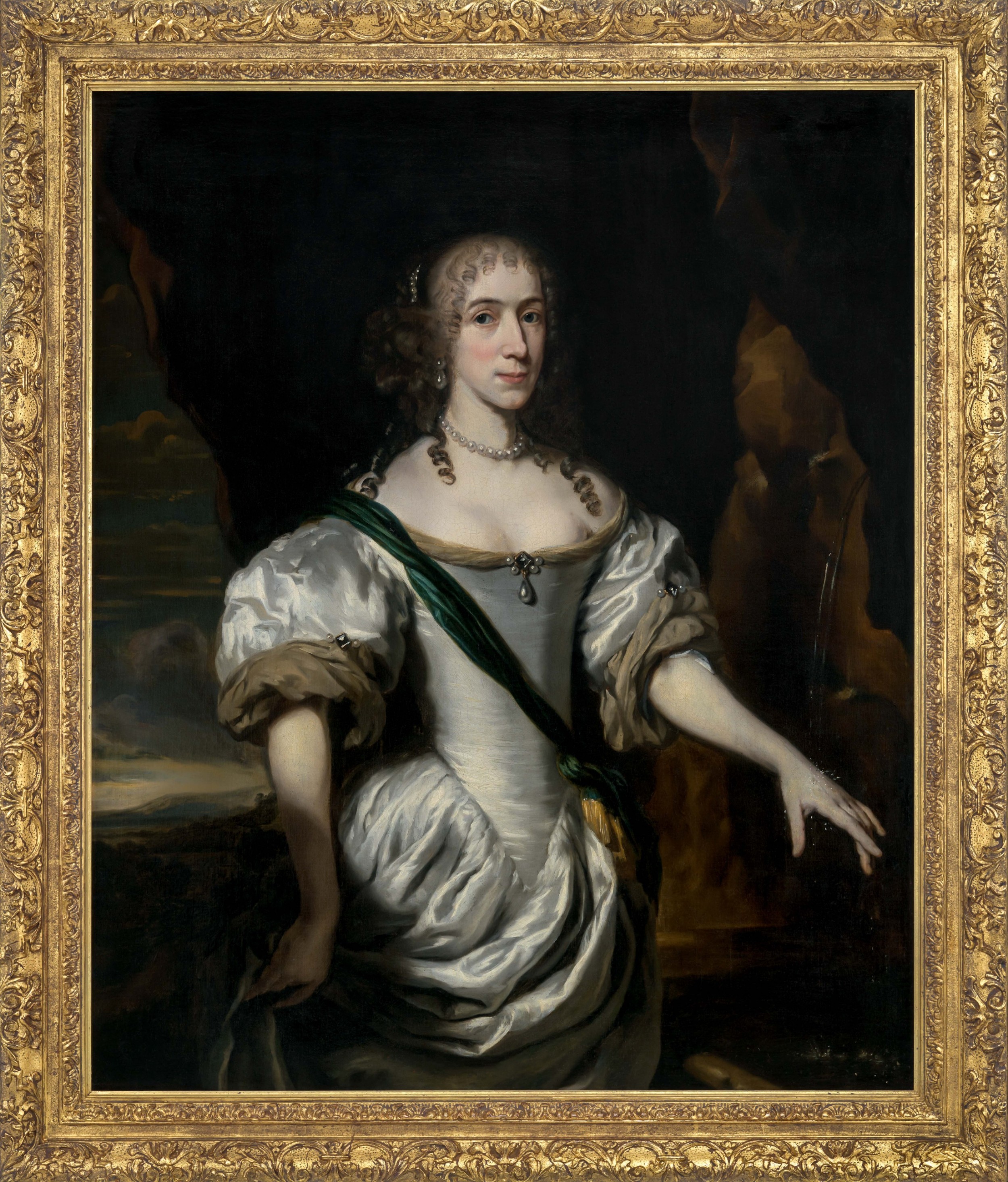
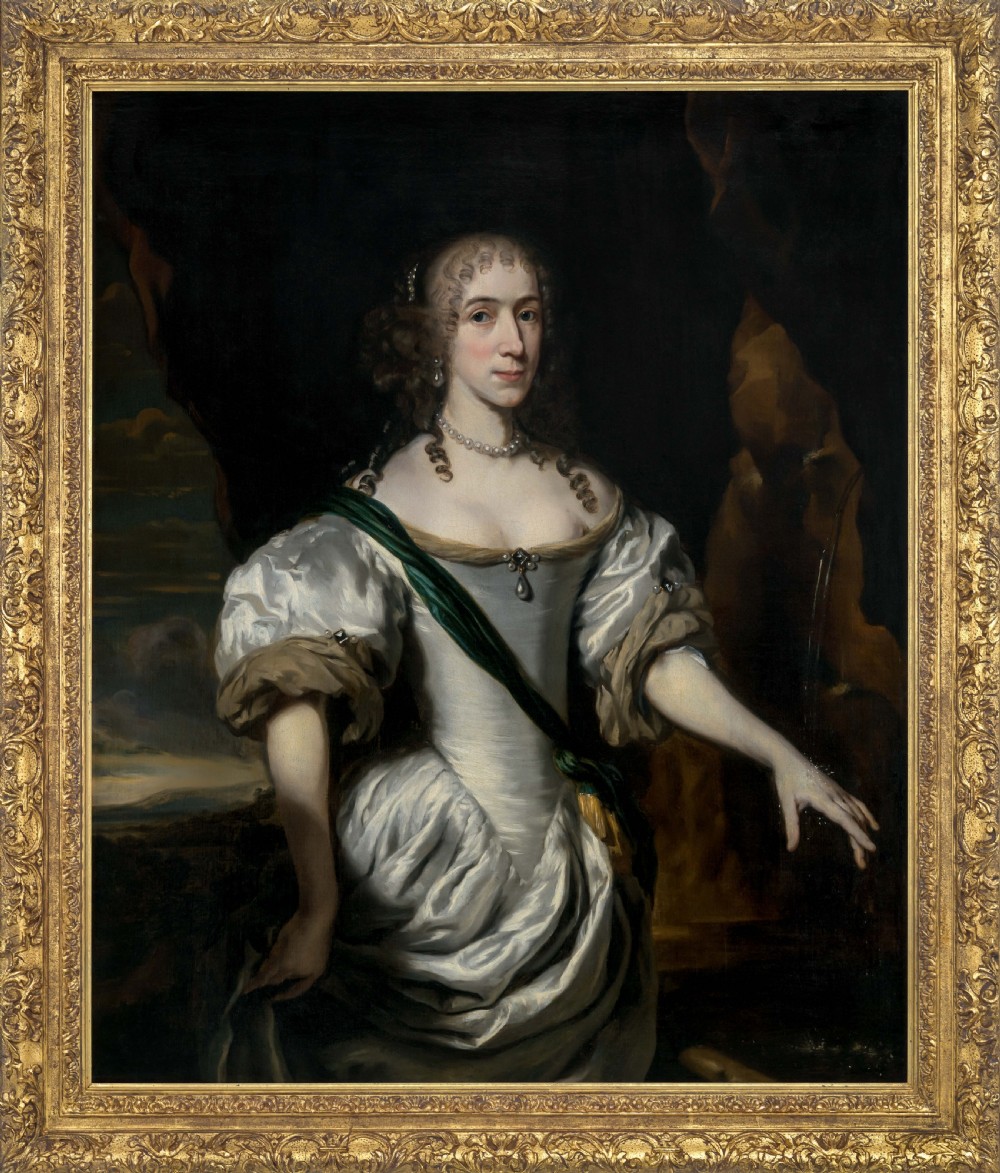
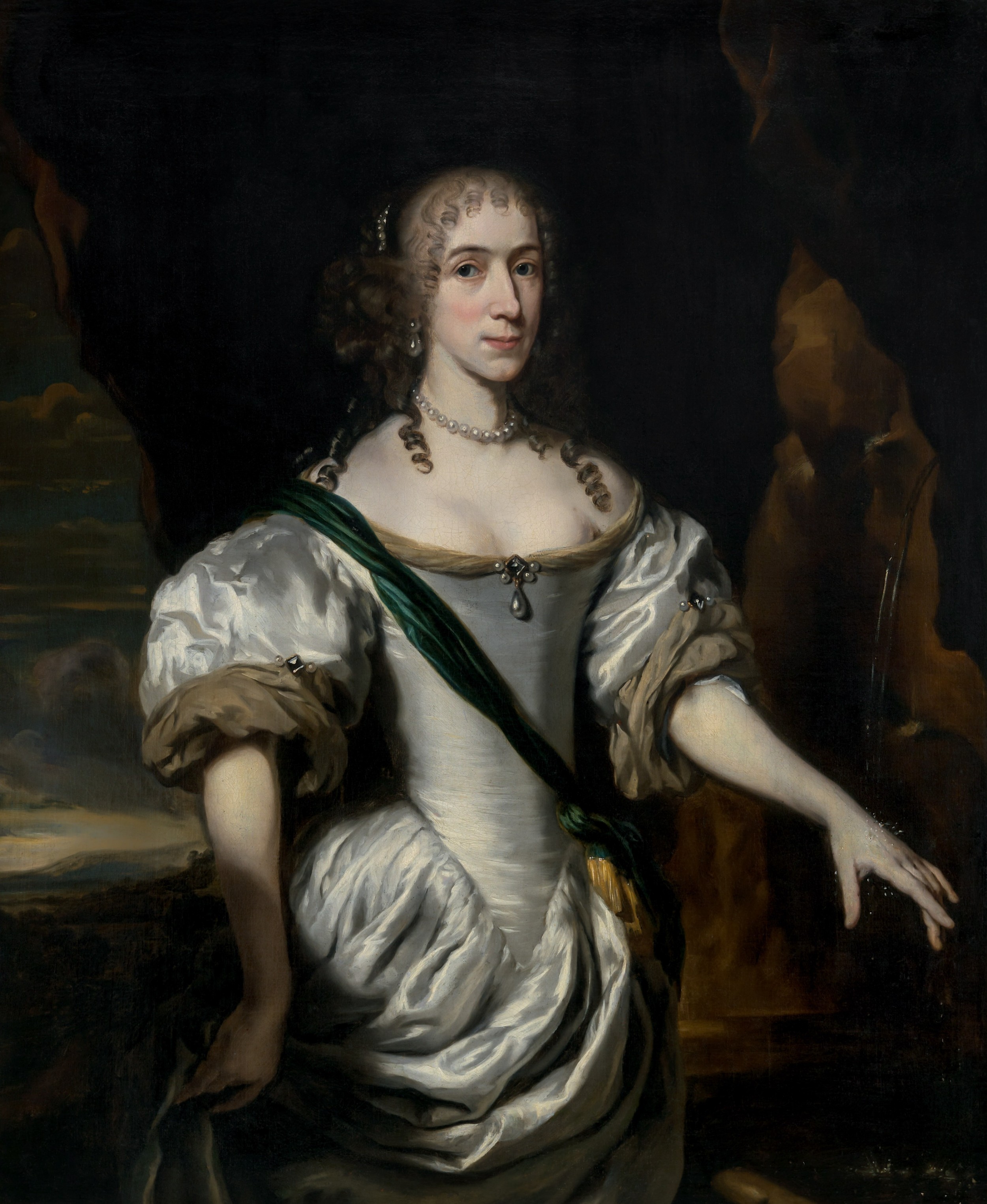
Portrait of an Elegant Lady in a White Satin Dress, Signed and Dated 1669; Attributed to Nicolaes Maes (1634–1693), Oil on Canvas Painting
Titan Fine Art
reserved SA1212499
RESERVED
Titan Fine Art

Titan Fine Art

Sellingantiques Verified Since Jul 2016
View Dealers Stock Page
  • About Us
    Specialist in 17th & 18thc portraits. Highly curated selection, museum-level research & pro conservation. Exceptional art, expertly vetted.
Id #SA1212499
PDF SHARE
SAVE

Portrait of an Elegant Lady in a White Satin Dress, Signed and Dated 1669; Attributed to Nicolaes Maes (1634–1693), Oil on Canvas Painting

17th century
For Sale by Titan Fine Art (Reserved for a buyer)
Description

With special thanks to Dr. León Krempel for confirming the attribution to Nicholaes Maes on the basis of photographs.

This refined three-quarter-length portrait of a lady retains exceptional clarity and freshness: the silvery satin is articulated with crisp, controlled highlights; the flesh tones are smoothly modelled and luminous; and the landscape setting remains atmospheric and intact.

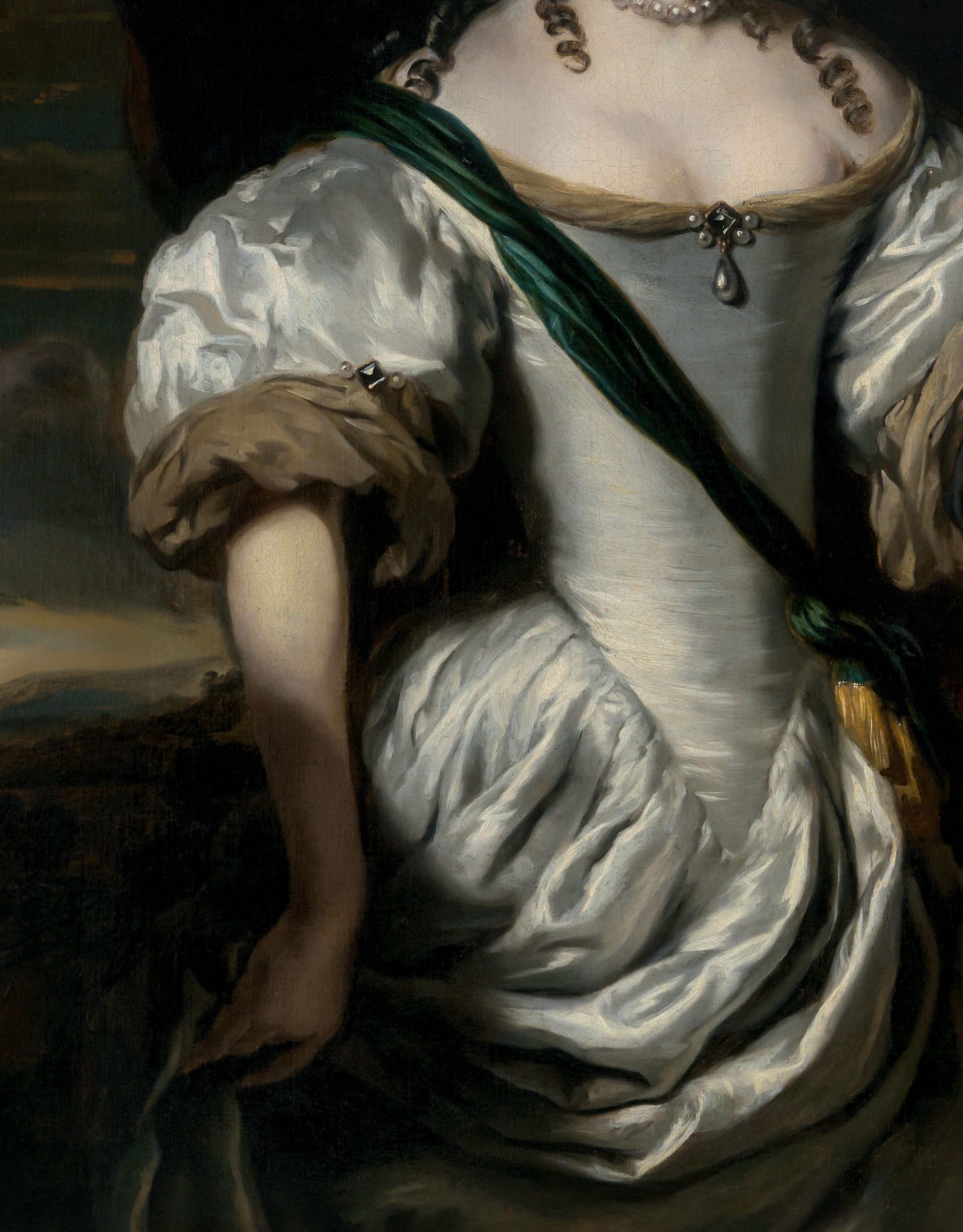
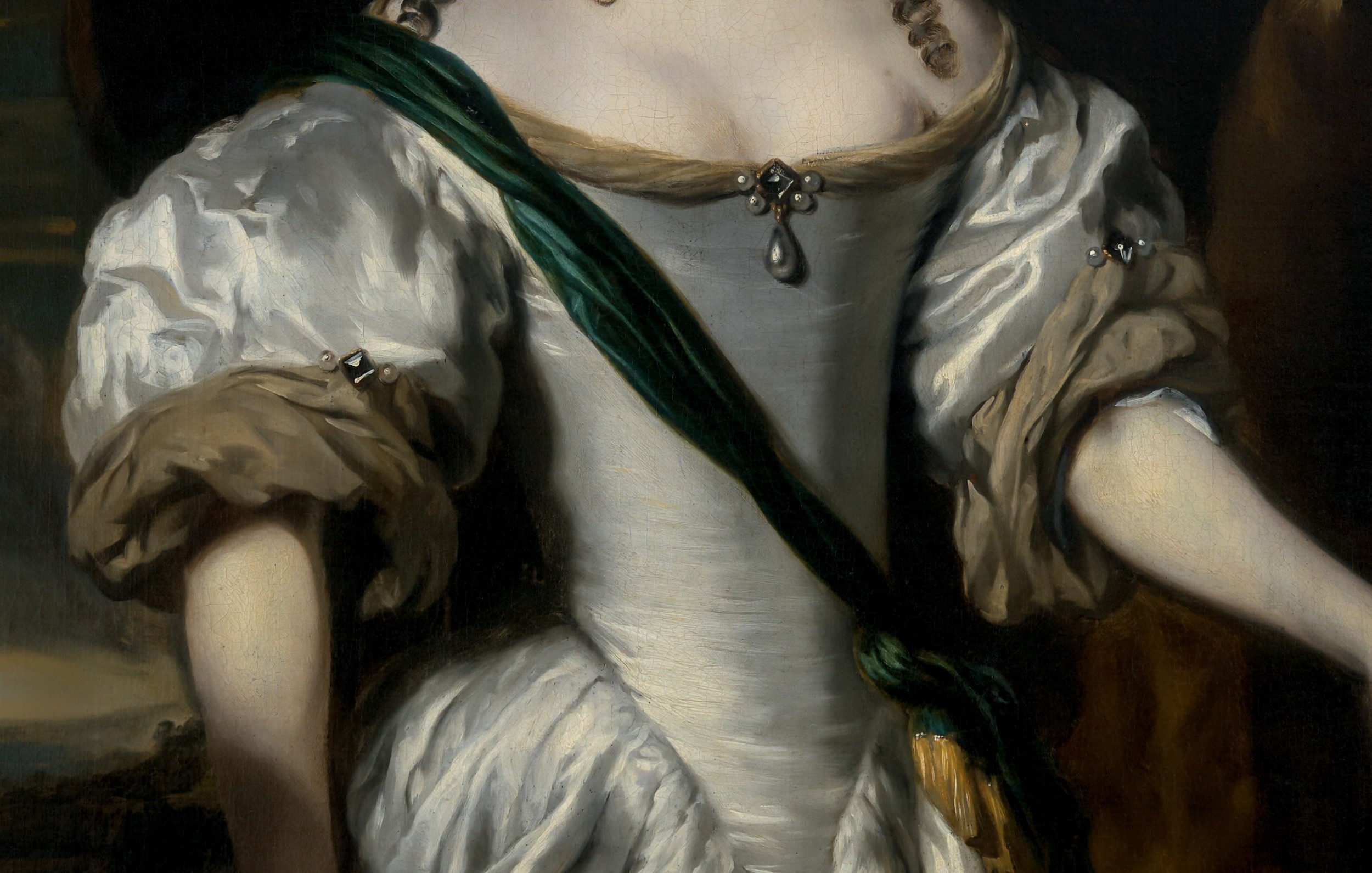
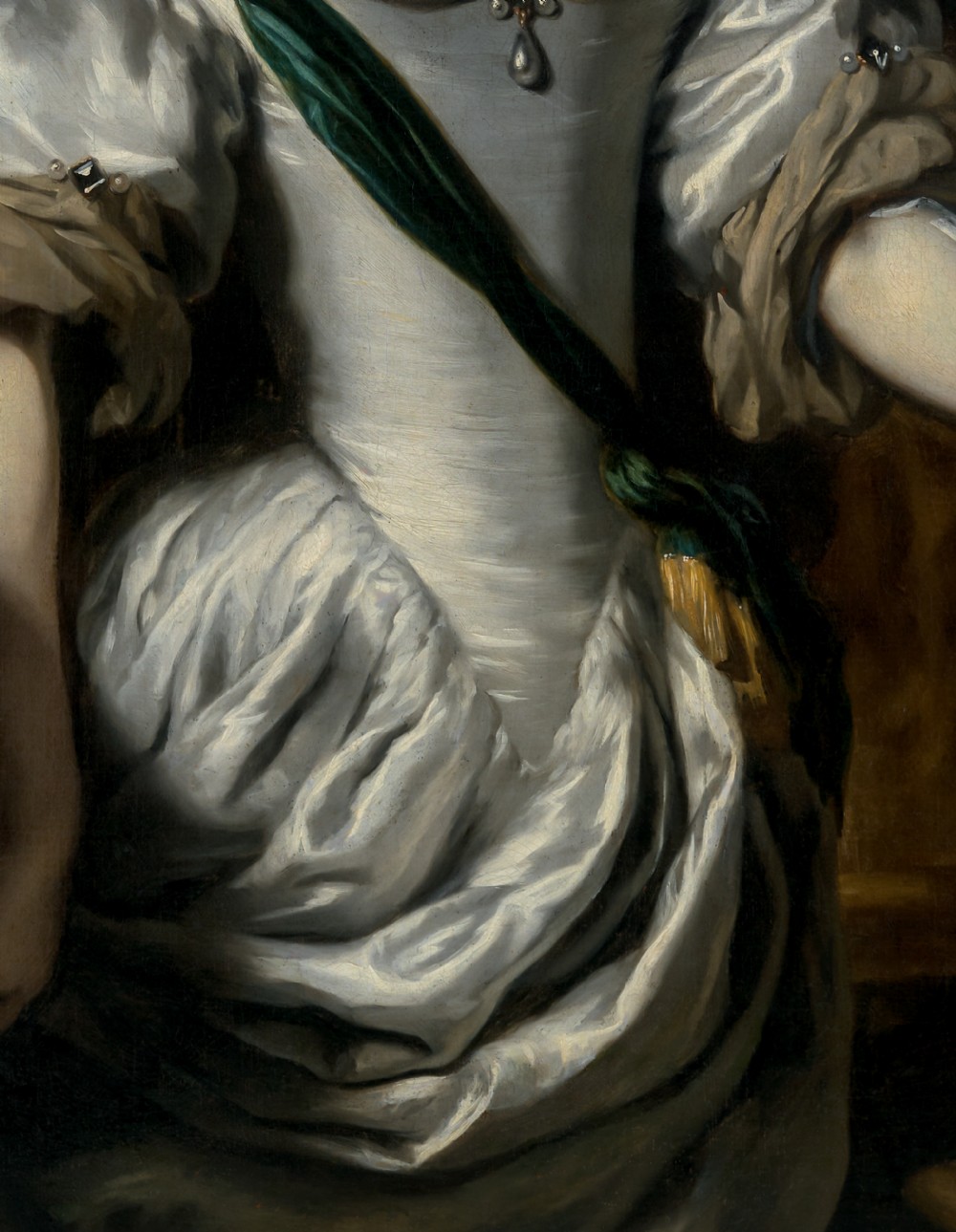
The lady is depicted in the height of late 1660s fashion. She wears a lustrous pale satin gown cut with a broad oval neckline, the sleeves gathered and softly structured above the elbow. A rich green sash is knotted at the waist and falls in controlled folds. Pearls at the neck and ears provide restrained brilliance, signifiers of cultivated rank rather than ostentation. The controlled balance between elegance and composure reflects the international court style shared between England and the Dutch Republic in the later Restoration decade.
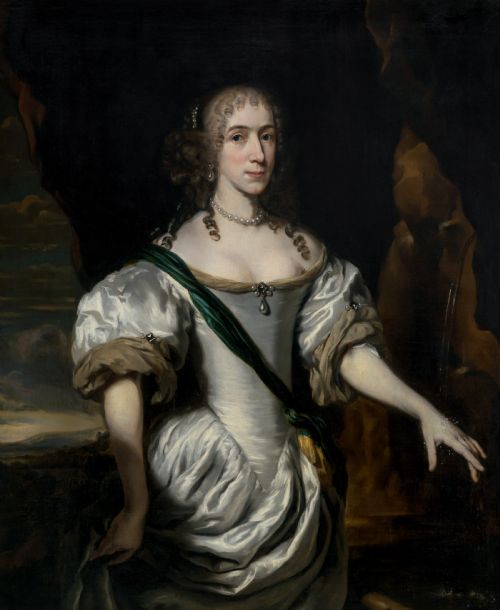
The sitter's physiognomy suggests established social standing — perhaps a woman already secure within her family or dynastic position. Portraits of this scale were typically commissioned not only for marriage, but also to affirm lineage, consolidate inheritance, or mark continued status within landed or mercantile elite circles. The garden setting, with its classical fountain motif, reinforces associations of cultivated estate life and continuity.
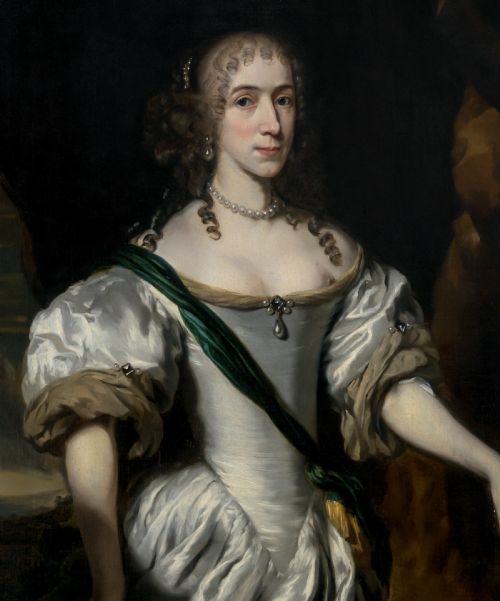
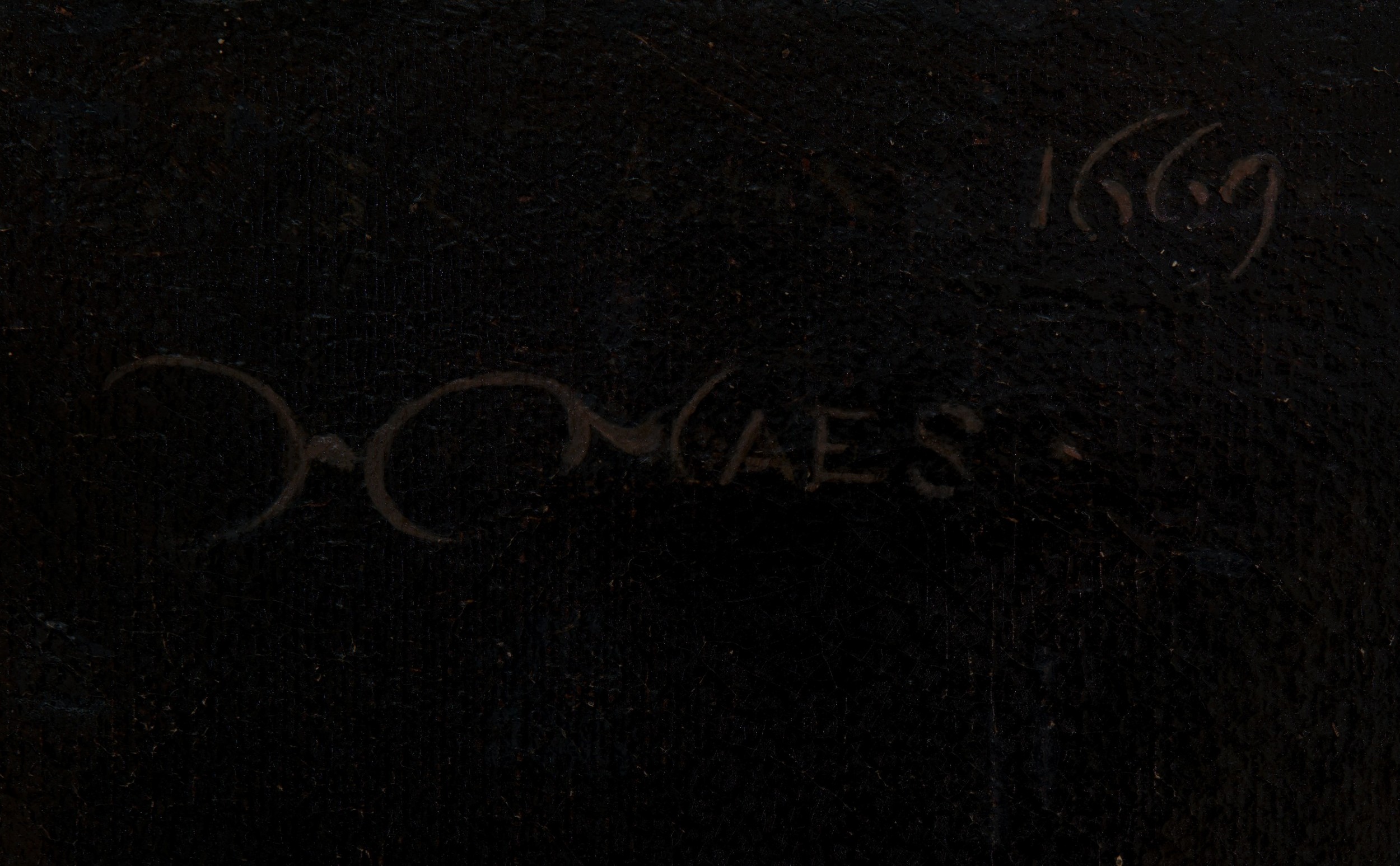
The painting was previously catalogued as “Follower of Sir Peter Lely” and identified as Sarah Churchill, Duchess of Marlborough, with faint upper inscriptions reflecting that tradition. However, conservation treatment revealed beneath later surface accretions a painted signature reading “MAES” and the date 1669 at upper right. The earlier Marlborough identification cannot be sustained as the dukedom of Marlborough was not created until 1702, and the costume and stylistic language here are firmly rooted in the late 1660s rather than the early eighteenth century.
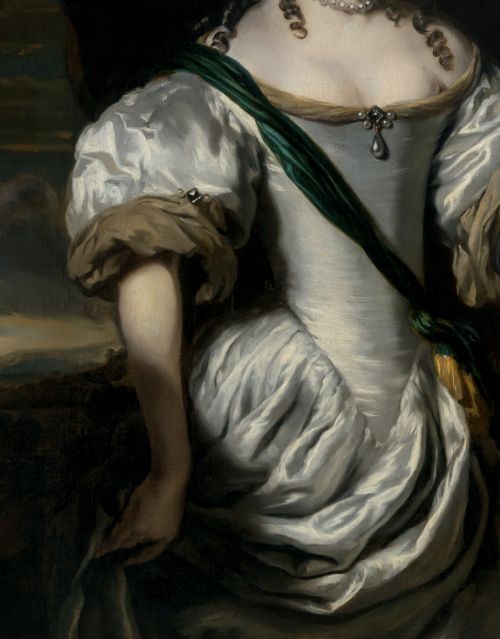
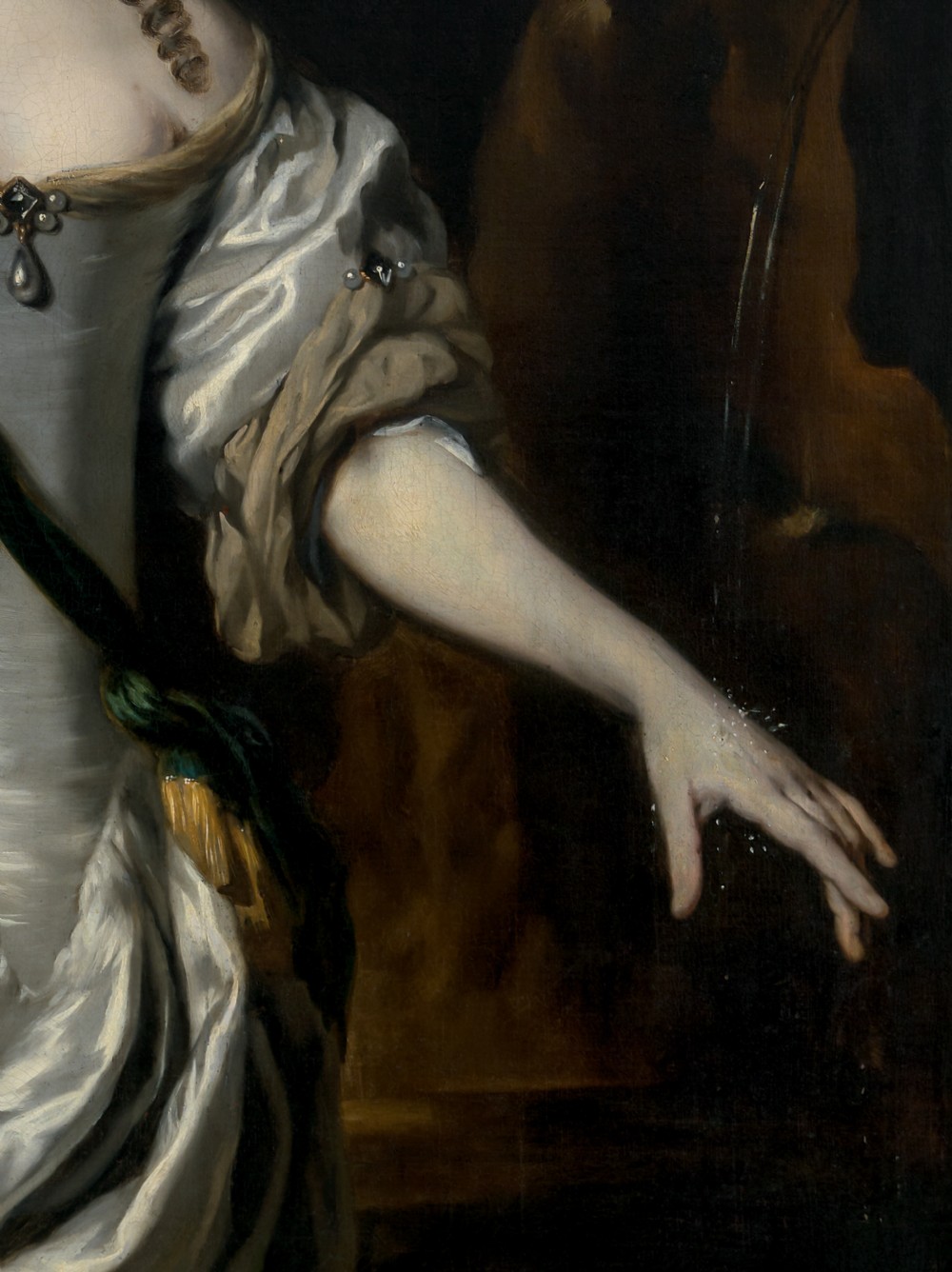
The present attribution to Nicolaes Maes rests on both the signature and the stylistic character of the work. By the later 1660s Maes had established himself as a leading portraitist of the Dutch Republic, developing a polished and courtly manner distinct from his earlier Rembrandtesque genre scenes. The handling of satin — broad, confident strokes defining volume, sharpened by precise highlights — corresponds closely with Maes’s mature portraits. The smooth modelling of the face, the subtle elongation of the hands, and the compositional framing with drapery and landscape align with his established vocabulary of the period. The coherence between signature, date, and stylistic execution supports the present attribution.
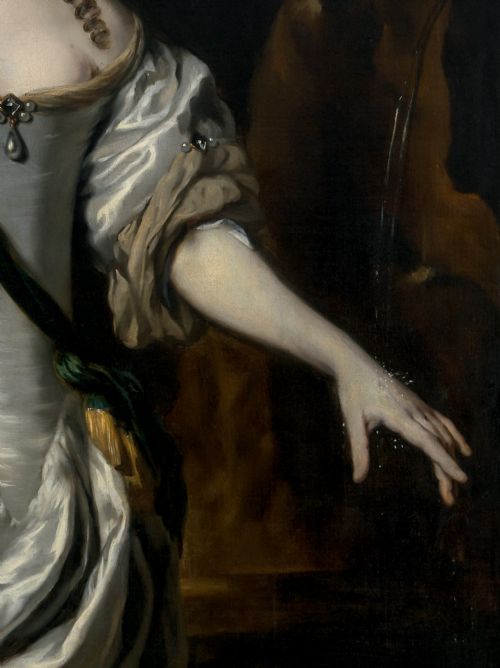
In 1669 England was less than a decade into the reign of Charles II, and the cultural climate was defined by renewed appetite for Continental refinement. Anglo-Dutch artistic exchange was vigorous; portraiture served as a vehicle of identity, status, and international sophistication. This painting sits precisely within that milieu, reflecting the shared aesthetic language that linked Amsterdam, The Hague, and London.
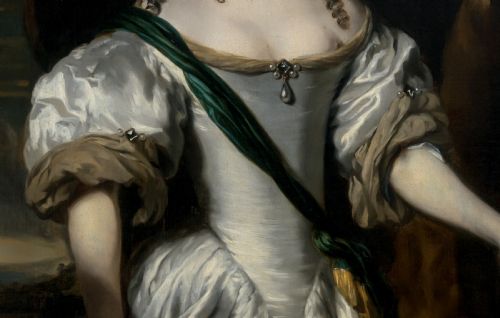
Large-scale female portraits of this date, particularly those retaining a visible signature and date, are uncommon in today’s market. This work stands apart through its condition, scale, and confident painterly execution. It offers a compelling and visually commanding example of late seventeenth-century court portraiture, attributed to one of the most accomplished painters of the period, and represents a rare opportunity to acquire a substantial and distinguished work of the Restoration era.
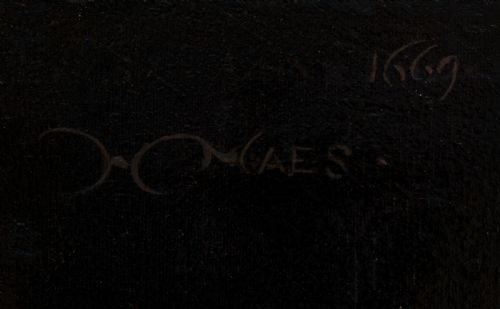
Nicolaes Maes (1634–1693) was one of the most distinguished Dutch painters of the seventeenth century. Born in Dordrecht, he trained under Rembrandt van Rijn in the early 1650s, absorbing his master’s rich tonal modelling and psychological sensitivity....

Full description at: www.titanfineart.com

Physical Dimensions
Height
133.5cm (52.56")
Width
113cm (44.49")
Depth
7cm (2.76")
Declaration

Titan Fine Art has dated this 17th Century Oil Portrait to the 17th Century.

Reference Numbers
Sellingantiques Reference
SA1212499
Dealers Notes

Much more info about this item at: www.titanfineart.com

In a market saturated with available paintings, Titan Fine Art offers a distinct advantage: we sift through thousands of works to provide a specially curated selection. Each piece is meticulously chosen based on technical merit, provenance, and decorative appeal, ensuring our clients view only the finest examples of British and European art.

With over 20 years of expertise and 1,000+ works placed with collectors and institutions, we are one of the most prolific specialists in 17th and 18th-century portraiture. We combine a scholarly approach with museum-level rigor to replace the uncertainty of the open market with absolute confidence.

Why Buy From Titan Fine Art?

• Expertly Curated Selection

We act as your expert eye, selecting only high-quality works that offer genuine historical and artistic value.

• Museum-Level Research

Each portrait is supported by extensive academic research, often exceeding 40 hours, to establish attribution, sitter identity, and historical context.

• Professional Conservation

All paintings are carefully cleaned and stabilised by professional conservators, and are presented ready to hang.

• Transparent Pricing

No buyer’s premium or hidden fees—unlike auction houses, where additional costs can add 25–35%.

• Export Pricing Advantage

Reduced pricing is available for works exported outside the UK.

• Specialist Global Shipping

We manage the entire process, including custom crating, export documentation, and fully tracked delivery worldwide.

• Buy with Confidence

A 7-day return policy and the option to pay in GBP, USD, or EUR for convenience and transparency.

• Original Period Frames

Many works retain their original carved and gilded frames, which are works of art in their own right and enhance both historical authenticity and decorative impact.

• Personal Advisory Service

We work directly with collectors and interior designers, offering guidance on selection, scale, and placement—including bespoke room mock-ups on request.

Subscribe to our monthly 'new item alert' to be the first to hear about new works

Description
With special thanks to Dr. León Krempel for confirming the attribution to Nicholaes Maes on the basis of photographs.

This refined three-quarter-length portrait of a lady retains exceptional clarity and freshness: the silvery satin is articulated with crisp, controlled highlights; the flesh tones are smoothly modelled and luminous; and the landscape setting remains atmospheric and intact.

The lady is depicted in the height of late 1660s fashion.

She wears a lustrous pale satin gown cut with a broad oval neckline, the sleeves gathered and softly structured above the elbow.
Titan Fine Art

A rich green sash is knotted at the waist and falls in controlled folds. Pearls at the neck and ears provide restrained brilliance, signifiers of cultivated rank rather than ostentation. The controlled balance between elegance and composure reflects the international court style shared between England and the Dutch Republic in the later Restoration decade.

fig 1. A three-quarter length oil portrait depicting a woman in a white satin gown with a green sash, set within an ornate carved gilded frame.
fig 1. Portrait of an Elegant Lady in a White Satin Dress, Signed and Dated 1669; Attributed to Nicolaes Maes (1634–1693), Oil on Canvas Painting

The sitter's physiognomy suggests established social standing — perhaps a woman already secure within her family or dynastic position. Portraits of this scale were typically commissioned not only for marriage, but also to affirm lineage, consolidate inheritance, or mark continued status within landed or mercantile elite circles. The garden setting, with its classical fountain motif, reinforces associations of cultivated estate life and continuity.

fig 2. A three-quarter length oil portrait depicting a woman in a white satin gown with a green sash, set within an ornate carved gilded frame.
fig 2. Portrait of an Elegant Lady in a White Satin Dress, Signed and Dated 1669; Attributed to Nicolaes Maes (1634–1693), Oil on Canvas Painting

The painting was previously catalogued as “Follower of Sir Peter Lely” and identified as Sarah Churchill, Duchess of Marlborough, with faint upper inscriptions reflecting that tradition. However, conservation treatment revealed beneath later surface accretions a painted signature reading “MAES” and the date 1669 at upper right. The earlier Marlborough identification cannot be sustained as the dukedom of Marlborough was not created until 1702, and the costume and stylistic language here are firmly rooted in the late 1660s rather than the early eighteenth century.

fig 3. A three-quarter length oil portrait depicting a woman in a white satin gown with a green sash, set within an ornate carved gilded frame.
fig 3. Portrait of an Elegant Lady in a White Satin Dress, Signed and Dated 1669; Attributed to Nicolaes Maes (1634–1693), Oil on Canvas Painting

The present attribution to Nicolaes Maes rests on both the signature and the stylistic character of the work. By the later 1660s Maes had established himself as a leading portraitist of the Dutch Republic, developing a polished and courtly manner distinct from his earlier Rembrandtesque genre scenes. The handling of satin — broad, confident strokes defining volume, sharpened by precise highlights — corresponds closely with Maes’s mature portraits. The smooth modelling of the face, the subtle elongation of the hands, and the compositional framing with drapery and landscape align with his established vocabulary of the period. The coherence between signature, date, and stylistic execution supports the present attribution.

fig 4. A three-quarter length oil portrait depicting a woman in a white satin gown with a green sash, set within an ornate carved gilded frame.
fig 4. Portrait of an Elegant Lady in a White Satin Dress, Signed and Dated 1669; Attributed to Nicolaes Maes (1634–1693), Oil on Canvas Painting

In 1669 England was less than a decade into the reign of Charles II, and the cultural climate was defined by renewed appetite for Continental refinement. Anglo-Dutch artistic exchange was vigorous; portraiture served as a vehicle of identity, status, and international sophistication. This painting sits precisely within that milieu, reflecting the shared aesthetic language that linked Amsterdam, The Hague, and London.

fig 5. A three-quarter length oil portrait depicting a woman in a white satin gown with a green sash, set within an ornate carved gilded frame.
fig 5. Portrait of an Elegant Lady in a White Satin Dress, Signed and Dated 1669; Attributed to Nicolaes Maes (1634–1693), Oil on Canvas Painting

Large-scale female portraits of this date, particularly those retaining a visible signature and date, are uncommon in today’s market. This work stands apart through its condition, scale, and confident painterly execution. It offers a compelling and visually commanding example of late seventeenth-century court portraiture, attributed to one of the most accomplished painters of the period, and represents a rare opportunity to acquire a substantial and distinguished work of the Restoration era.

fig 6. A three-quarter length oil portrait depicting a woman in a white satin gown with a green sash, set within an ornate carved gilded frame.
fig 6. Portrait of an Elegant Lady in a White Satin Dress, Signed and Dated 1669; Attributed to Nicolaes Maes (1634–1693), Oil on Canvas Painting

Nicolaes Maes (1634–1693) was one of the most distinguished Dutch painters of the seventeenth century. Born in Dordrecht, he trained under Rembrandt van Rijn in the early 1650s, absorbing his master’s rich tonal modelling and psychological sensitivity....

Full description at: www.titanfineart.com

Height
133.5cm (52.56")
Width
113cm (44.49")
Depth
7cm (2.76")
Date of Manufacture

Titan Fine Art has dated this 17th Century Oil Portrait to the 17th Century.

Reference Numbers
Sellingantiques Ref
SA1212499
Titan Fine Art
Titan Fine Art
Sellingantiques verified Since Jul 2016

Specialist in 17th & 18thc portraits. Highly curated selection, museum-level research & pro conservation. Exceptional art, expertly vetted.

Dealer Profile

You can view the stock and full dealer information on the Titan Fine Art Profile Page
PDF SHARE
SAVE
A three-quarter length oil portrait depicting a woman in a white satin gown with a green sash, set within an ornate carved gilded frame.
1 / 8
Archive I A three-quarter length oil portrait depicting a woman in a white satin gown with a green sash, set within an ornate carved gilded frame.

Portrait of an Elegant Lady in a White Satin Dress, Signed and Dated 1669; Attributed to Nicolaes Maes (1634–1693), Oil on Canvas Painting
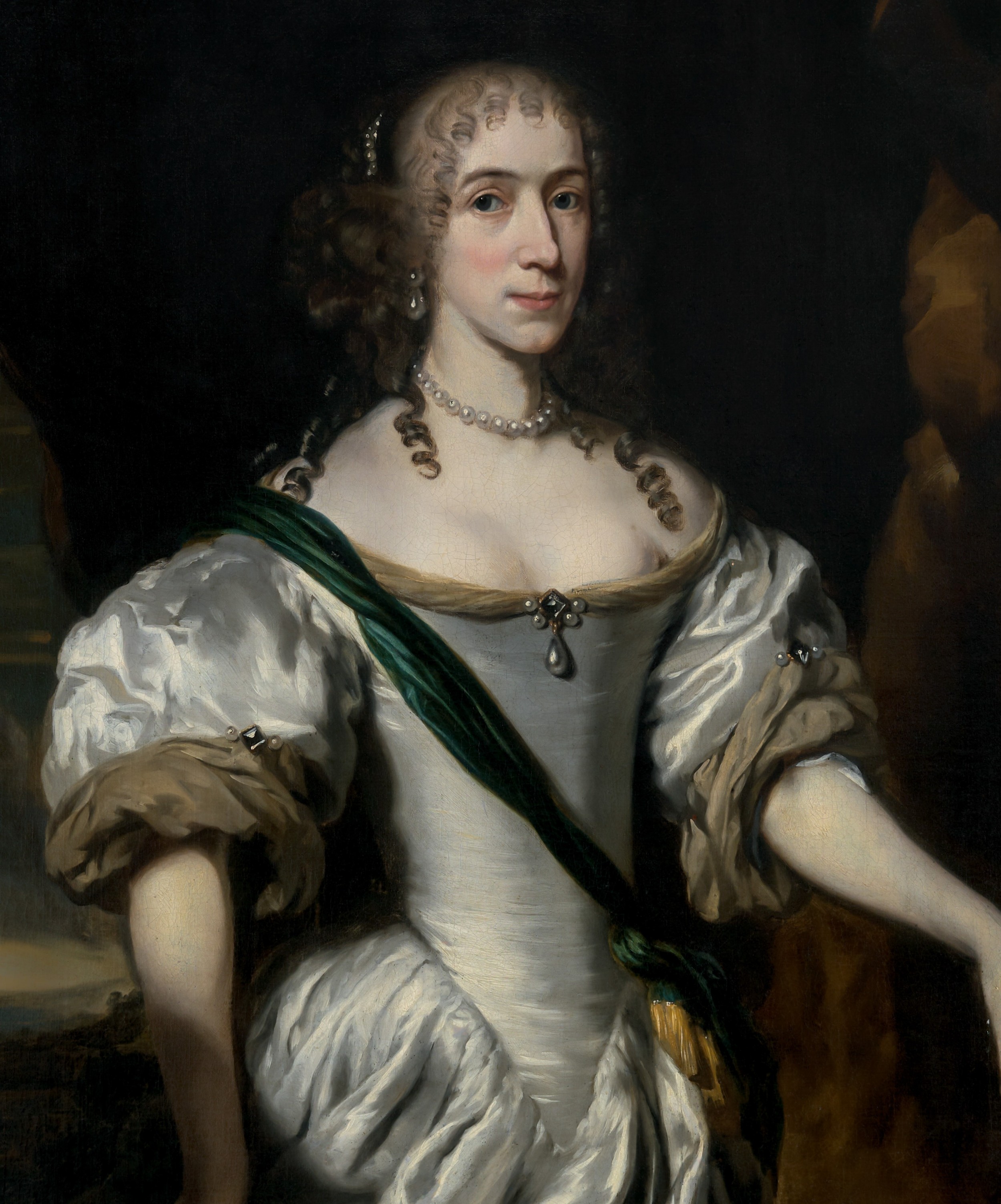
Archive II A three-quarter length oil portrait depicting a woman in a white satin gown with a green sash, set within an ornate carved gilded frame. View II
Archive III A three-quarter length oil portrait depicting a woman in a white satin gown with a green sash, set within an ornate carved gilded frame. View III
Archive IV A three-quarter length oil portrait depicting a woman in a white satin gown with a green sash, set within an ornate carved gilded frame. View IV
Archive V A three-quarter length oil portrait depicting a woman in a white satin gown with a green sash, set within an ornate carved gilded frame. View V
Archive VI A three-quarter length oil portrait depicting a woman in a white satin gown with a green sash, set within an ornate carved gilded frame. View VI
Archive VII A three-quarter length oil portrait depicting a woman in a white satin gown with a green sash, set within an ornate carved gilded frame. View VII
Archive VIII A three-quarter length oil portrait depicting a woman in a white satin gown with a green sash, set within an ornate carved gilded frame. View VIII
Enlarged Archival View
Telephone 07875 412 111
Location
London
United Kingdom
Dealer Profile Page sellingantiques.co.uk/titan
Verified Since Jul 2016
Items For Sale 17
Items Sold 400
Titan Fine Art
Titan Fine Art
Verified Since Jul 2016
View Dealer Info
Location: London, United Kingdom
Verified
Jul 2016
For Sale
17
Sold
400
A three-quarter length oil portrait depicting a woman in a white satin gown with a green sash, set within an ornate carved gilded frame.
Portrait of an Elegant Lady in a White Satin Dress, signed and dated 1669; Attributed to Nicolaes Maes (1634–1693), Oil on canvas painting
Ref: SA1212499
A three-quarter length oil portrait depicting a woman in a white satin gown with a green sash, set within an ornate carved gilded frame.
Detail View 1
Detail View 2
Detail View 3
Detail View 4
Detail View 5
Detail View 6
Detail View 7
Archival Detail
Every single antique dealer on our platform is individually approved by our internal team. We verify their professional trade history, ethical standards, and photographic quality to ensure a secure, high-standard buying environment. Upon joining, every dealer agrees to a strict 9-point code of conduct. While issues can occasionally arise, our dealers typically resolve them swiftly and directly with the buyer. In fact, since our founding in 2002, Sellingantiques has only had to step in to help resolve an issue on roughly five occasions—a true testament to the quality of our dealers and their dedication to your happiness.
Our dealers are highly experienced in packing and shipping fragile, high-value antiques. Because you are in direct contact with the dealer, you will be able to easily go through all available shipping and insurance options together to ensure your item arrives safely.
Antiques are the ultimate green purchase. By choosing historical pieces over newly manufactured goods, you completely eliminate the carbon footprint of modern mass production while preserving exceptional, timeless craftsmanship.

Dutch Golden Age portraiture from the mid-to-late 17th century typically features realistic depictions of patrons dressed in rich textiles like satin and velvet, often framed against dark backgrounds or natural landscapes to emphasise light and texture.

Artists during this period painted with hand-ground mineral pigments bound with linseed oil on linen canvas stretched over wooden strainers, frequently housed within carved giltwood frames.

Authentication involves examining canvas weave patterns, pigment composition via technical analysis, historical artist signatures or dates, craquelure patterns within the varnish, and documented ownership history.

Position the framed oil portrait above a mantelpiece or console table as a focal point, pairing it with modern architectural elements or clean-lined furniture to create a balanced contrast between historic artwork and contemporary space.

Keep oil paintings away from direct sunlight, extreme temperature fluctuations, and high humidity, dusting gently with a soft dry brush and consulting an art conservator for varnish maintenance or canvas stabilization.
items
Add keywords to the filter
Price
£100
£250000
Era
Movements
Material
Origin
Stock Location
Freshness
Online Payments
Categories