9,327  PAGES BROWSED TODAY PAGES TODAY 36  ANTIQUES UPLOADED TODAY NEW ARRIVALS
ID #SA1209217
FOR SALE
£2,200
Email
Save
Antique French Louis Revival Parquetry Display Cabinet C1870 19th C
Regent Antiques
for sale €2,574     $2,794
£2,200
Regent Antiques

Regent Antiques

Sellingantiques Verified Since Sep 2016
View Dealers Stock Page
  • About Us
    We specialise in english and continental furniture, silver, porcelain and decorative items.
  • Trade Associations
    Regent Antiques is a registered member of LAPADA  CINOA
Id #SA1209217
PDF SHARE
SAVE

Antique French Louis Revival Parquetry Display Cabinet C1870 19th C

19th century
For Sale by Regent Antiques
Description

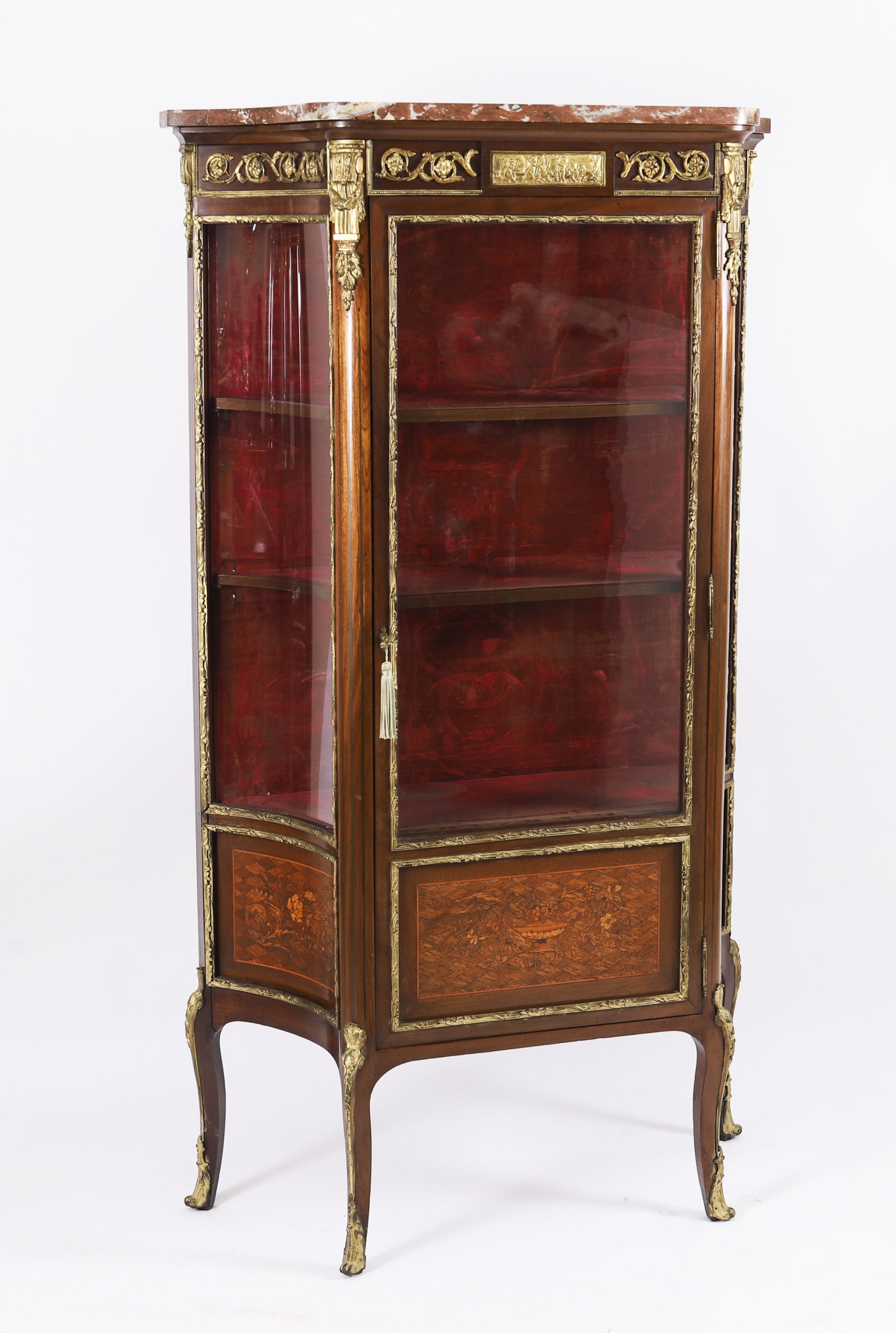
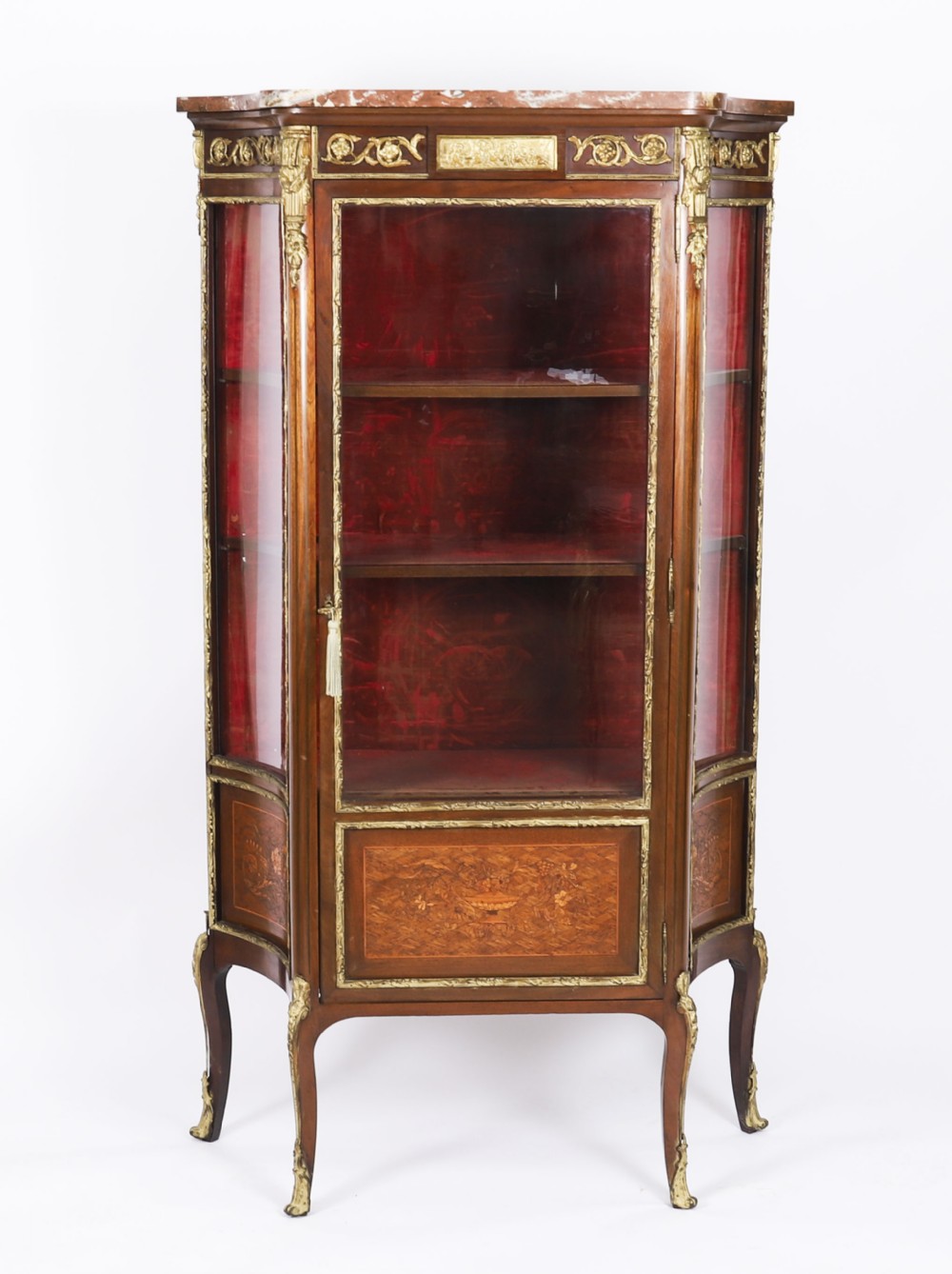
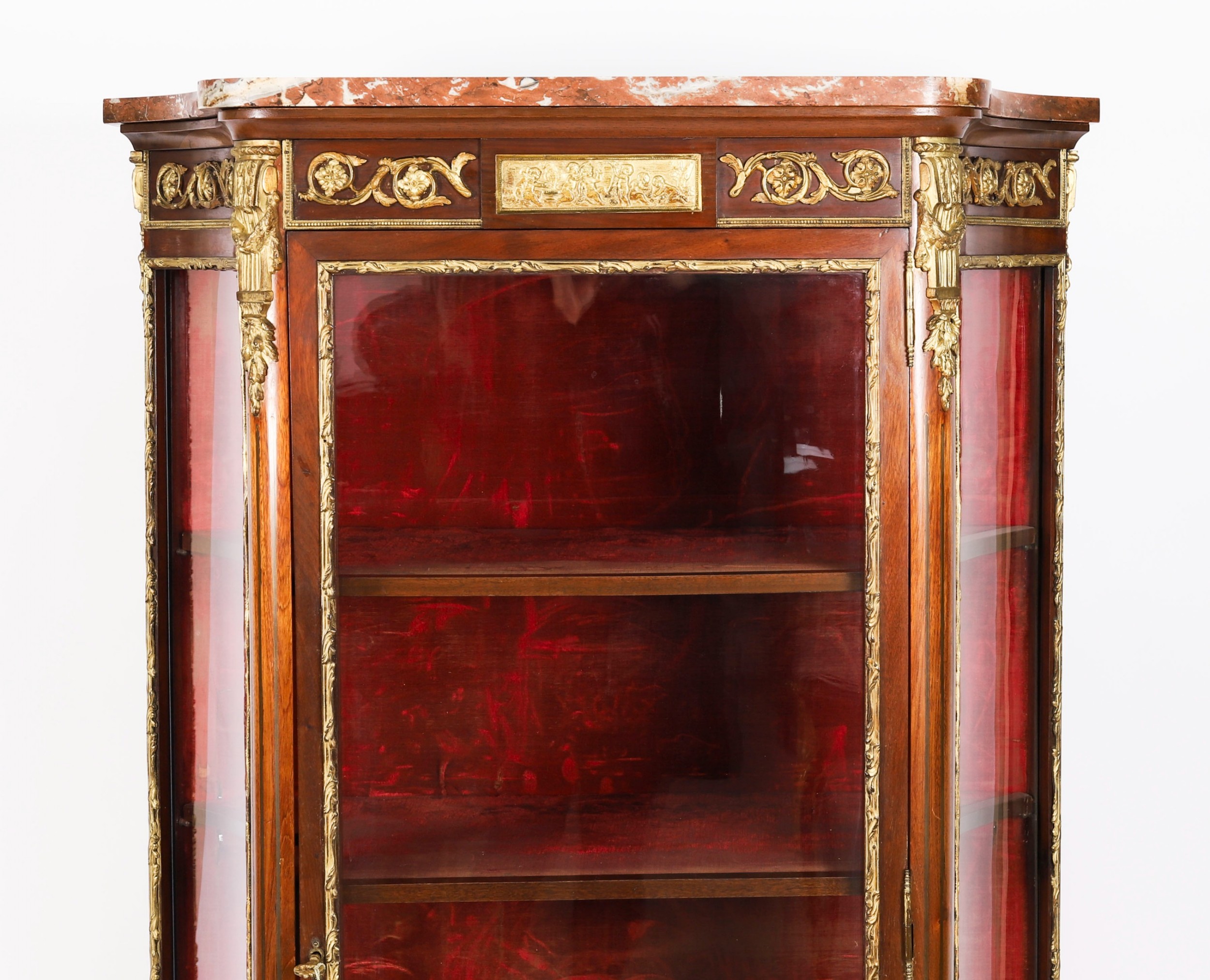
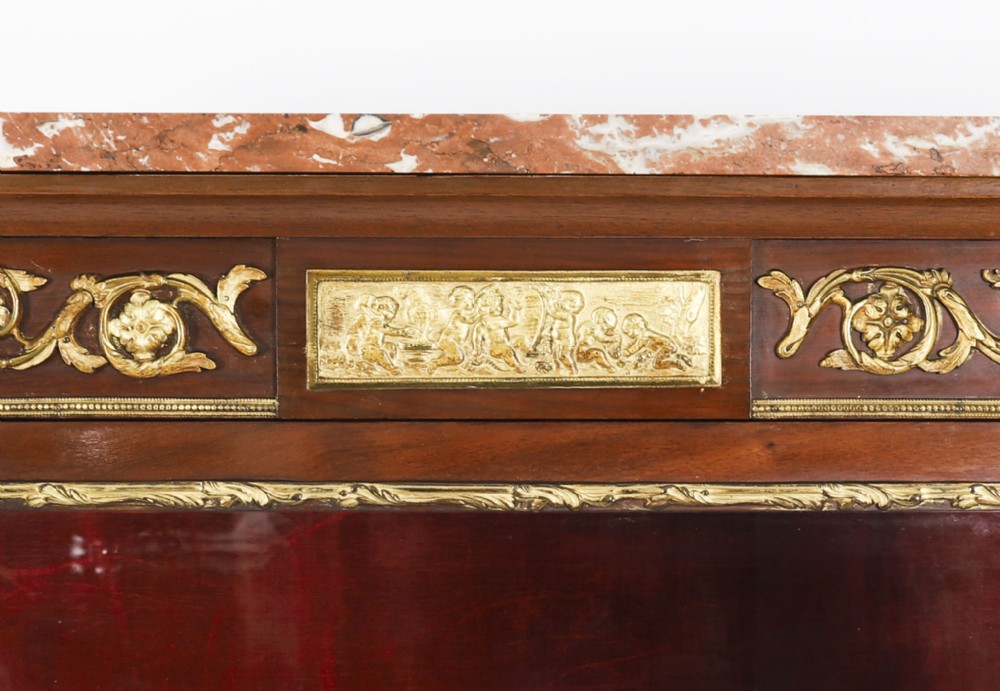
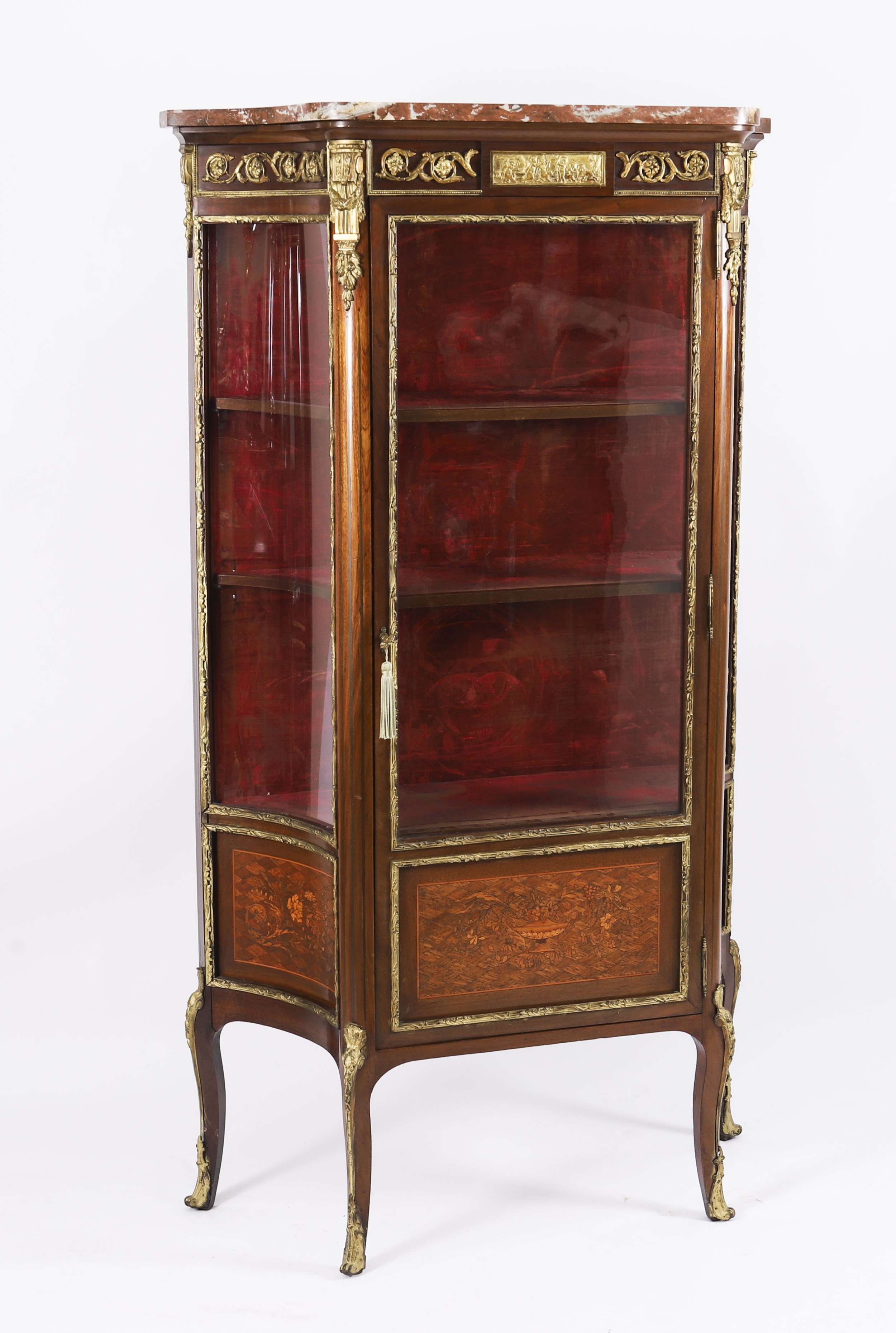
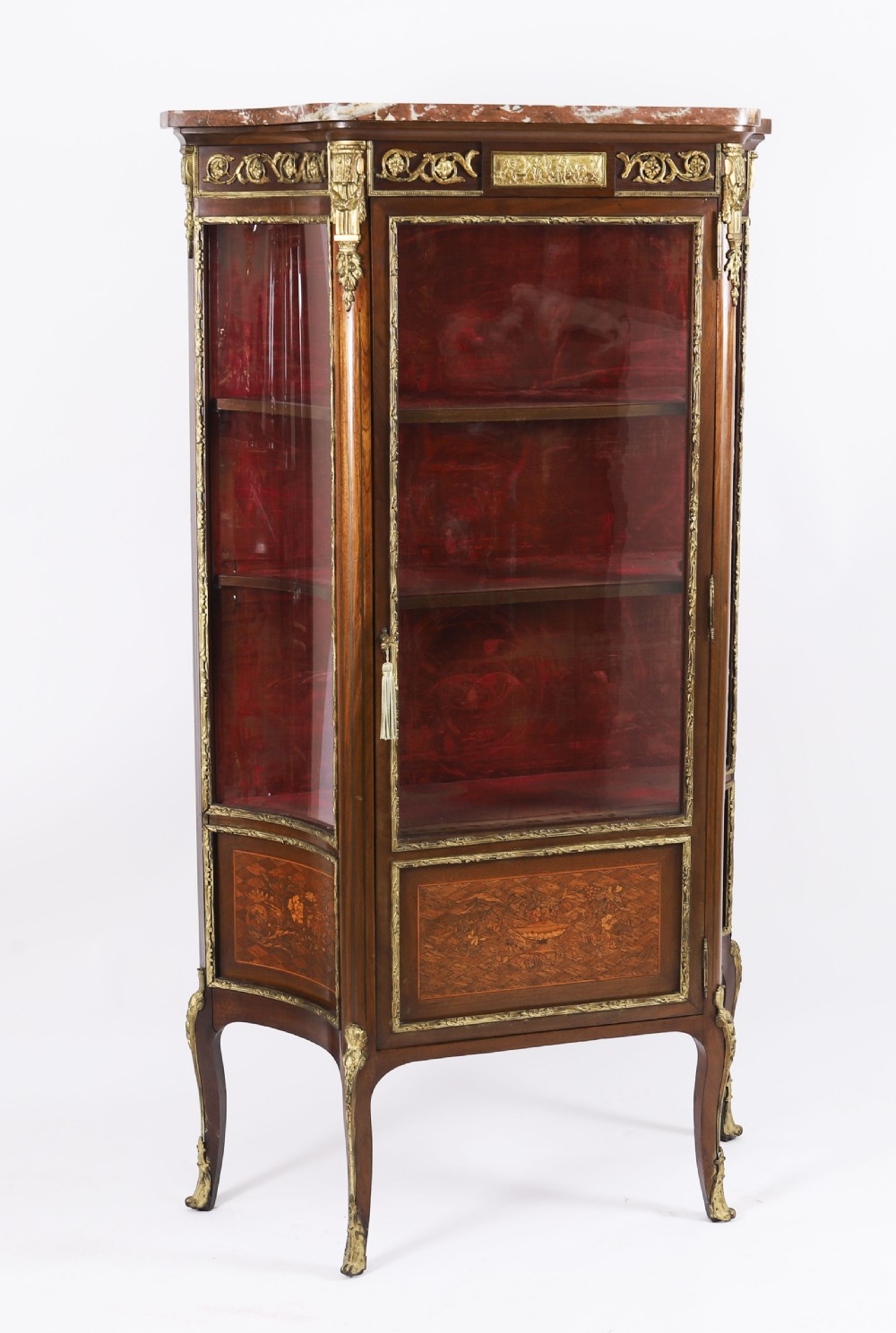
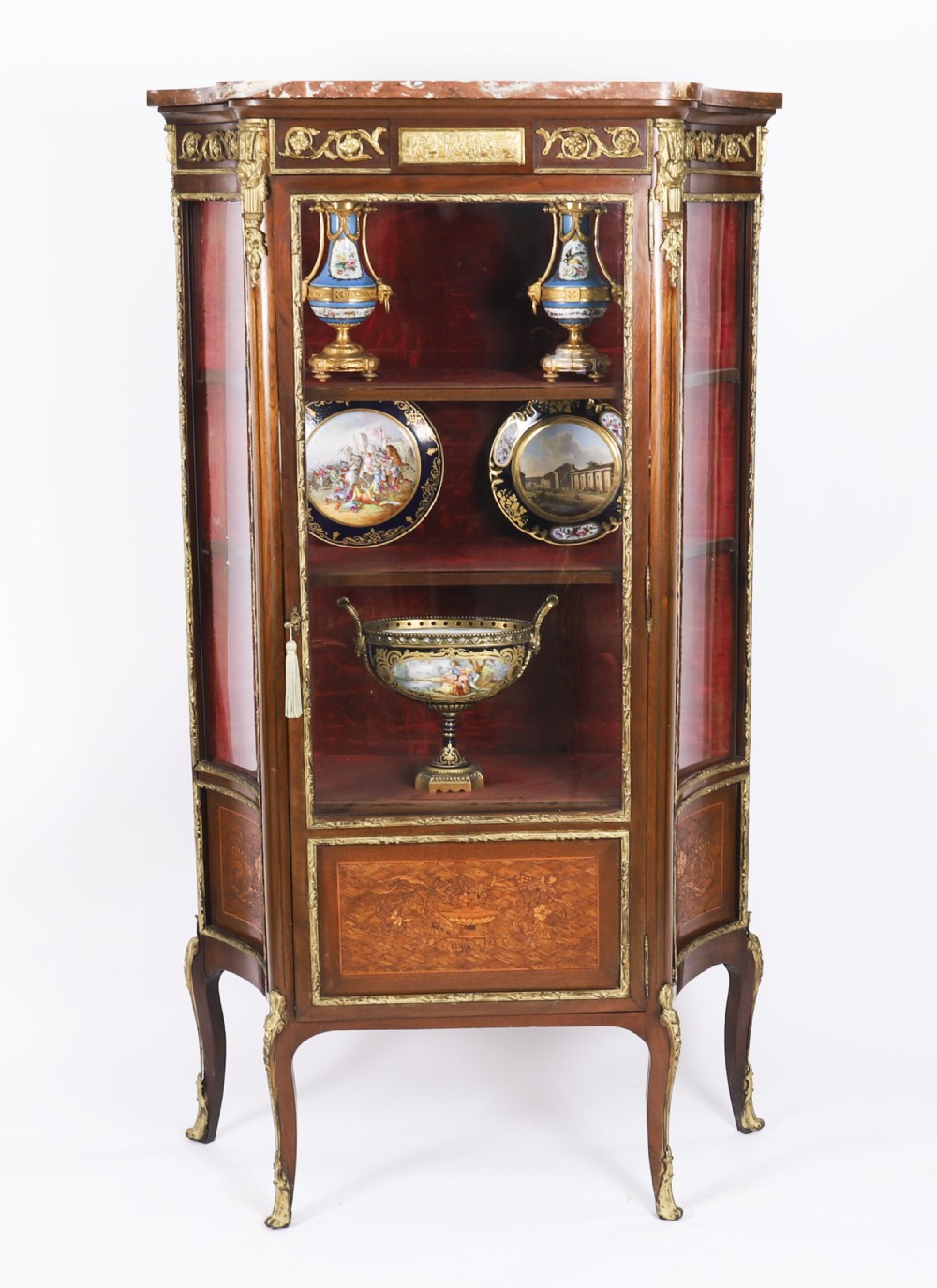
This is a beautiful antique French ormolu-mounted Louis Revival walnut display cabinet, circa 1870 in date.

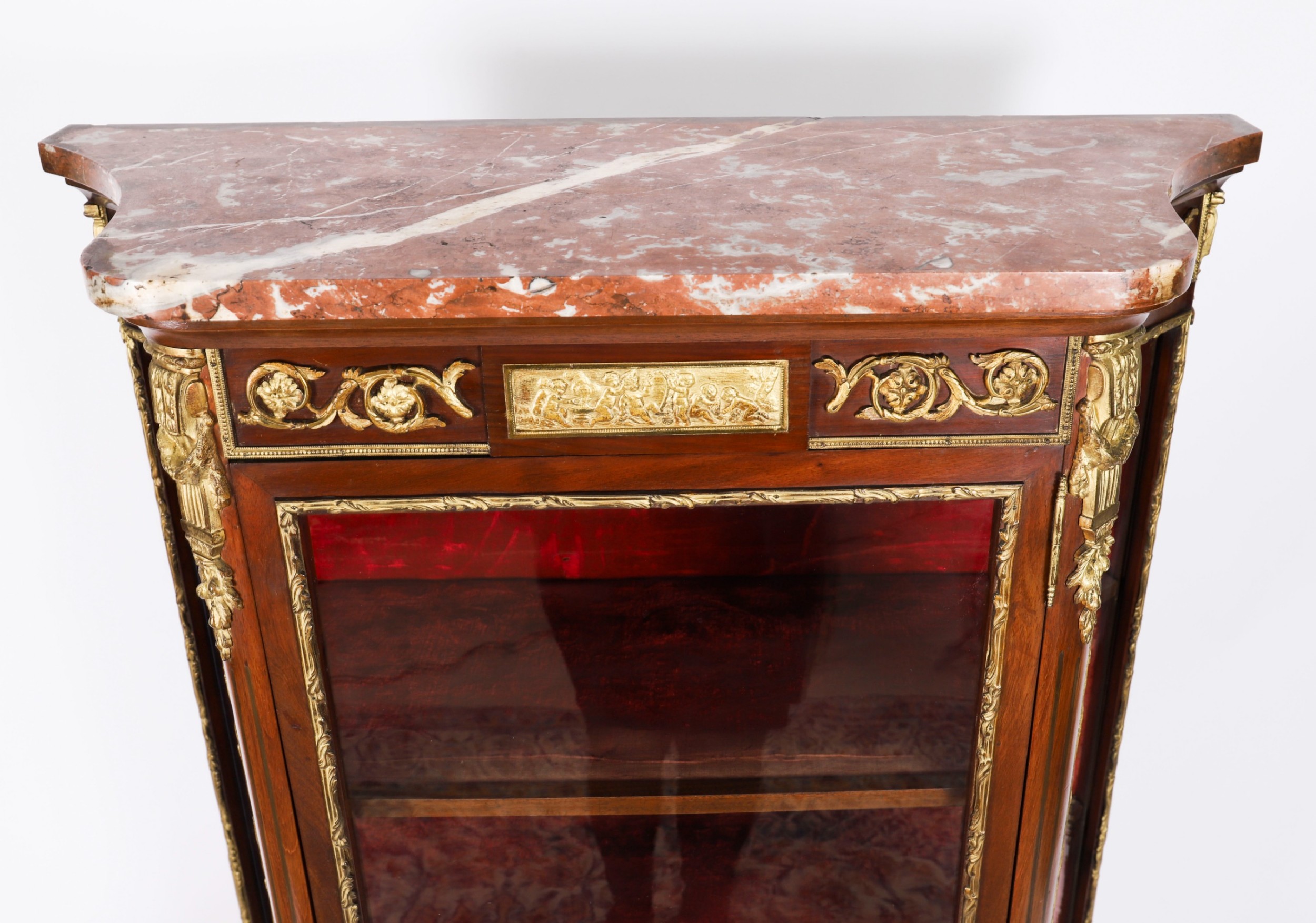
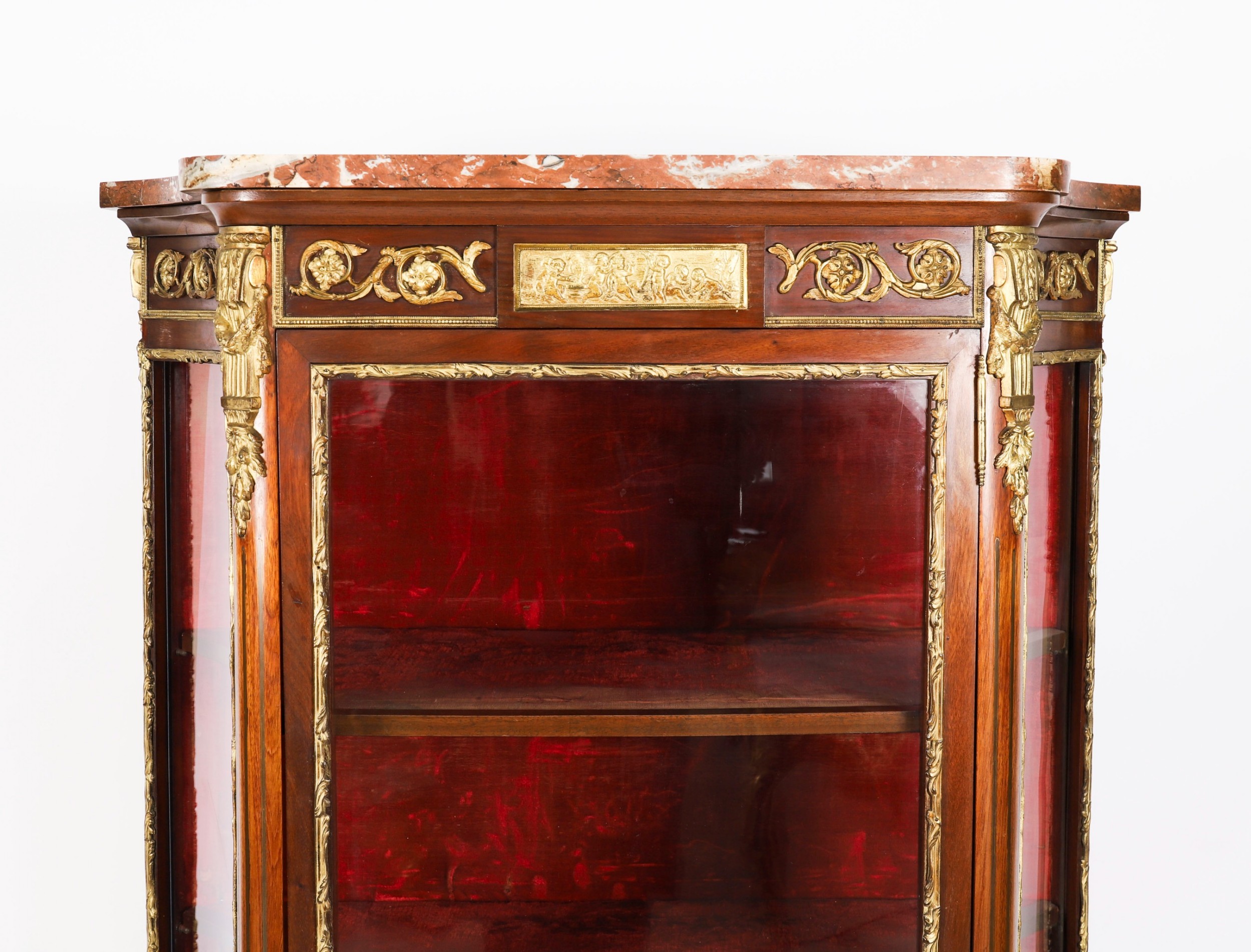
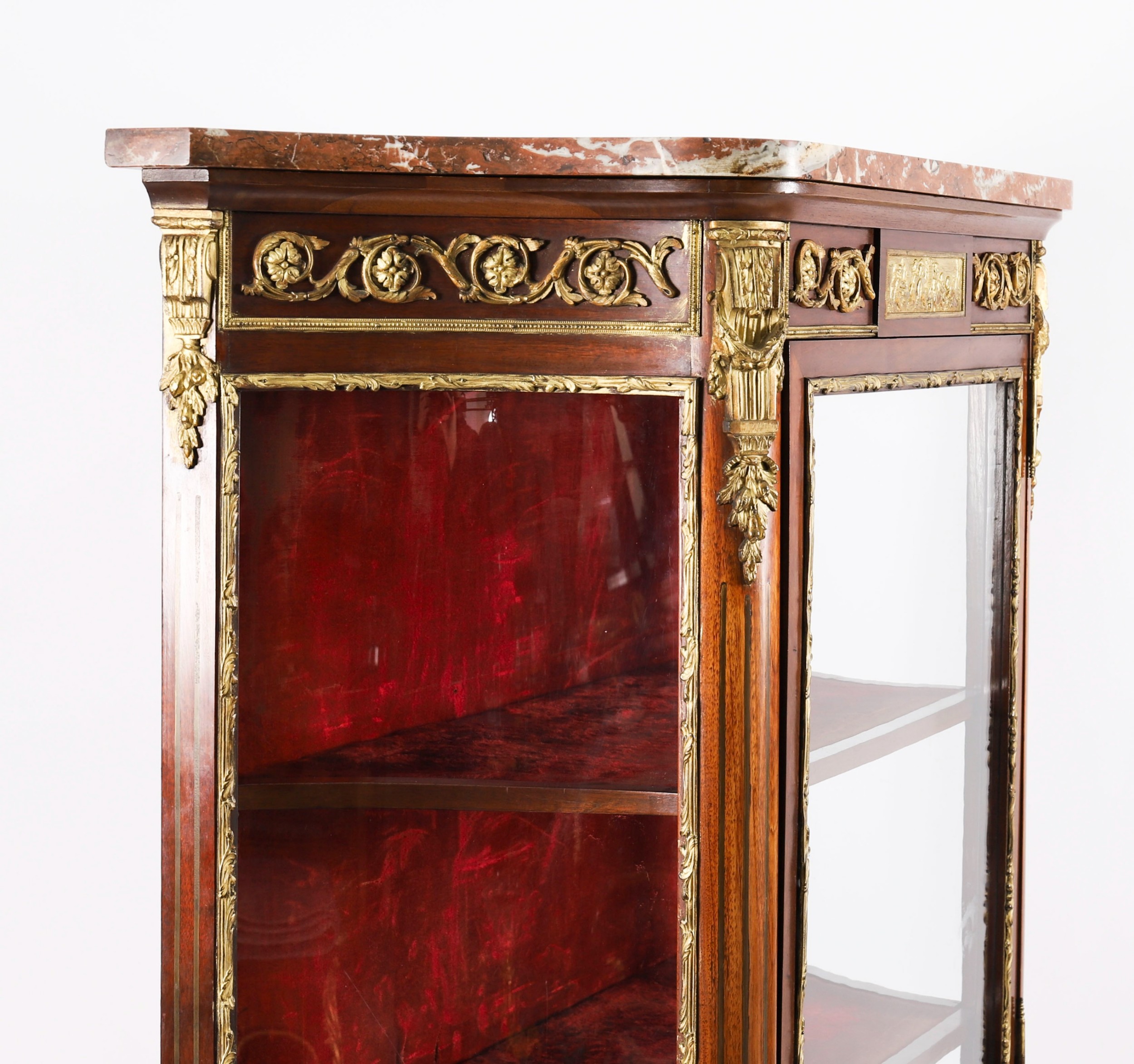
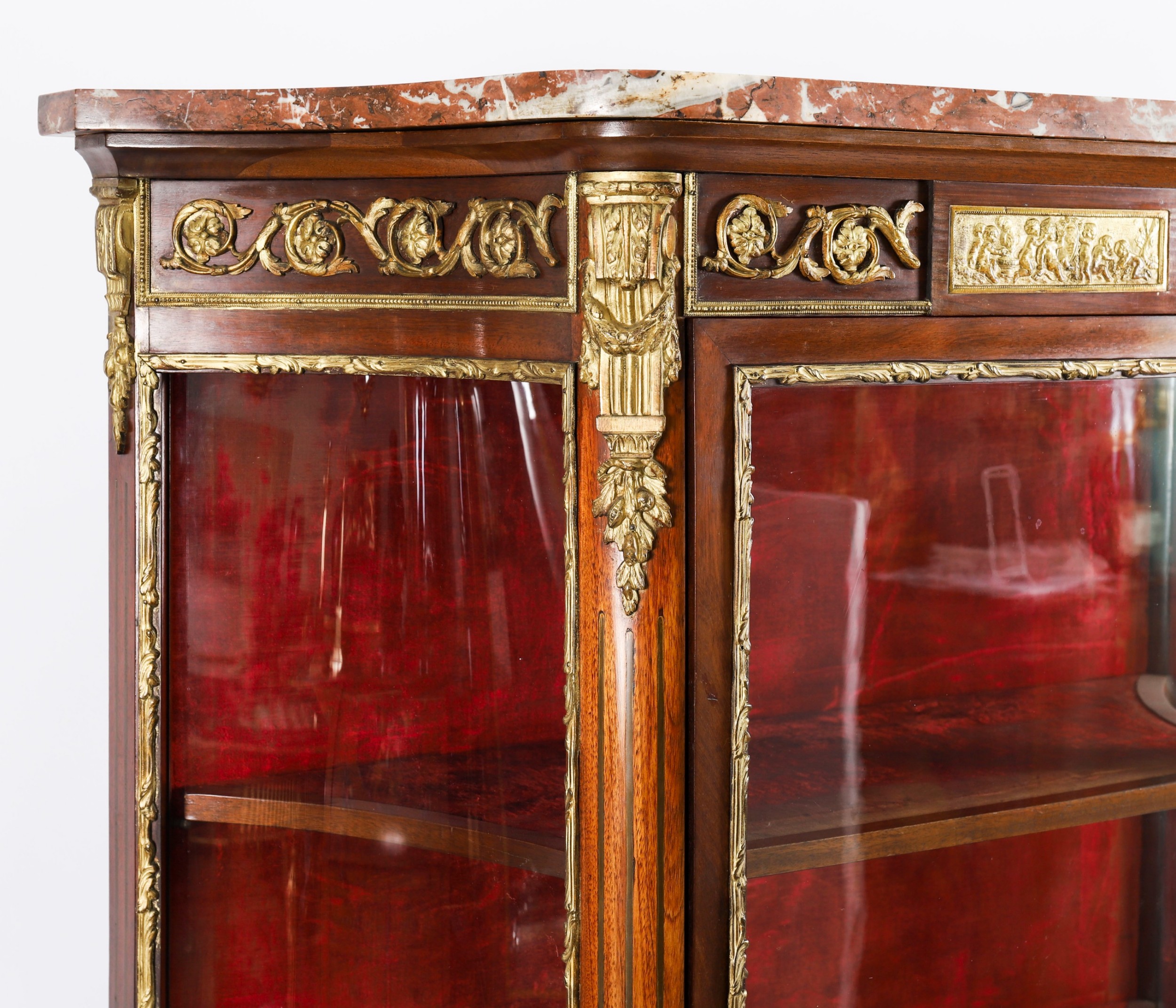
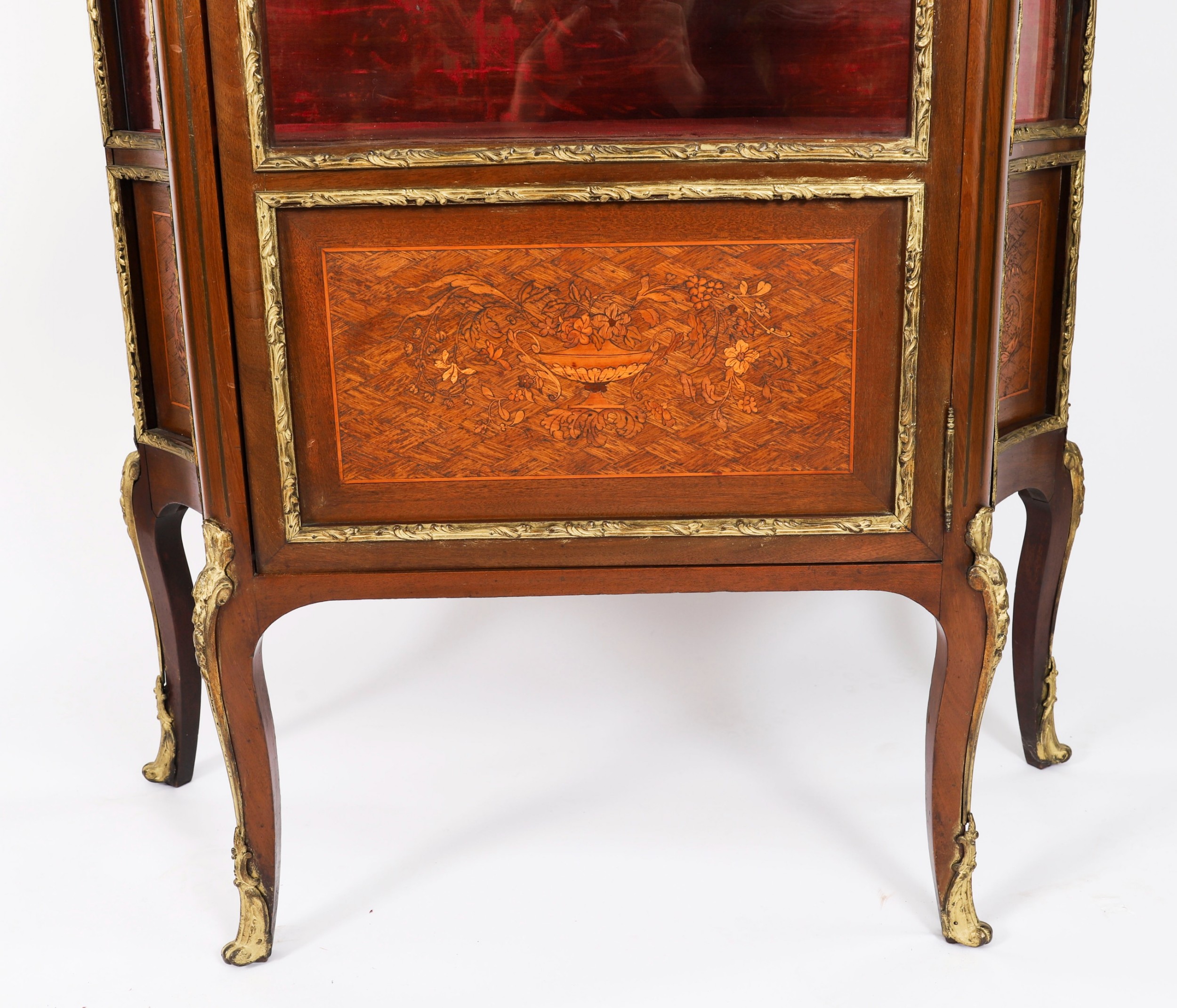
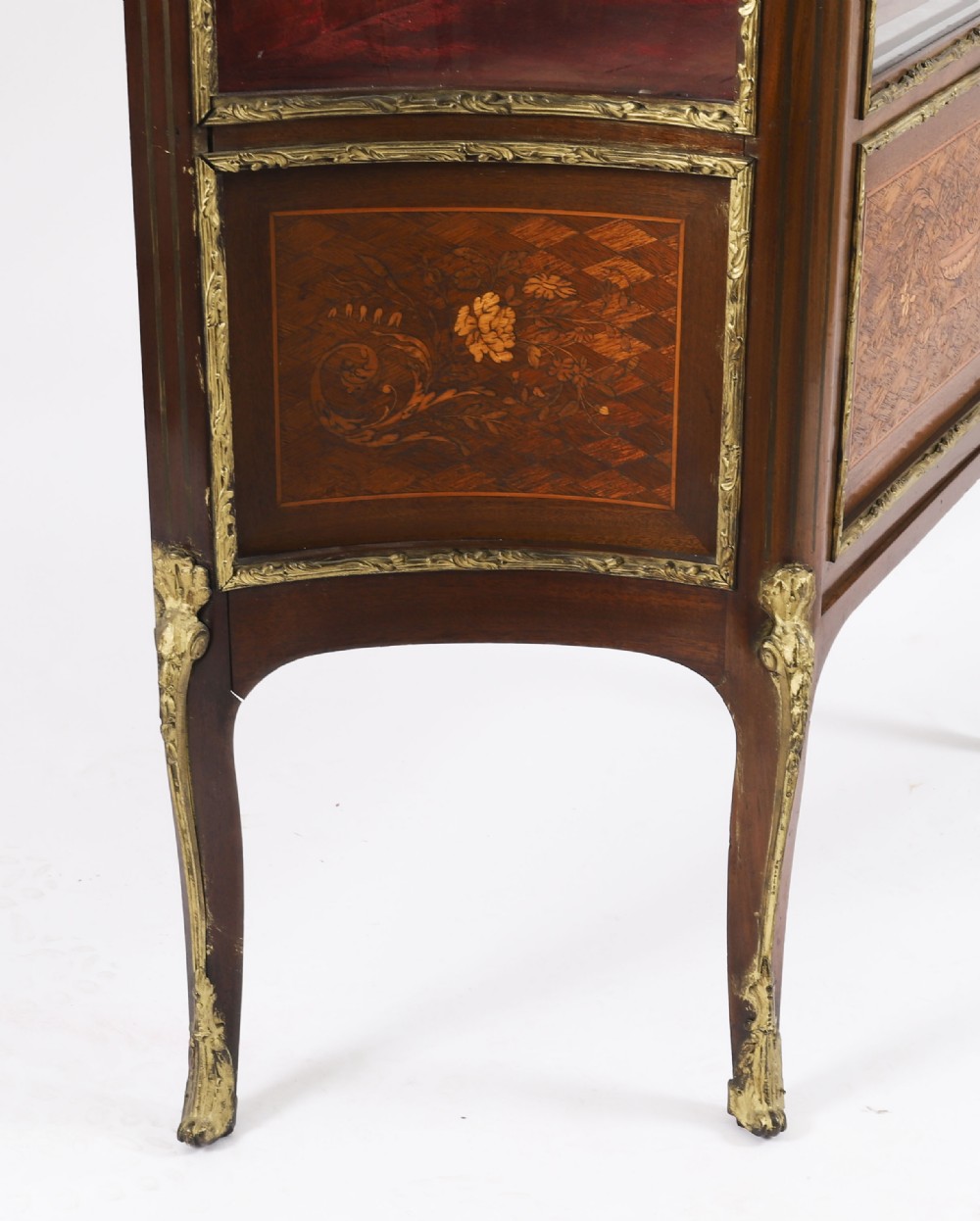
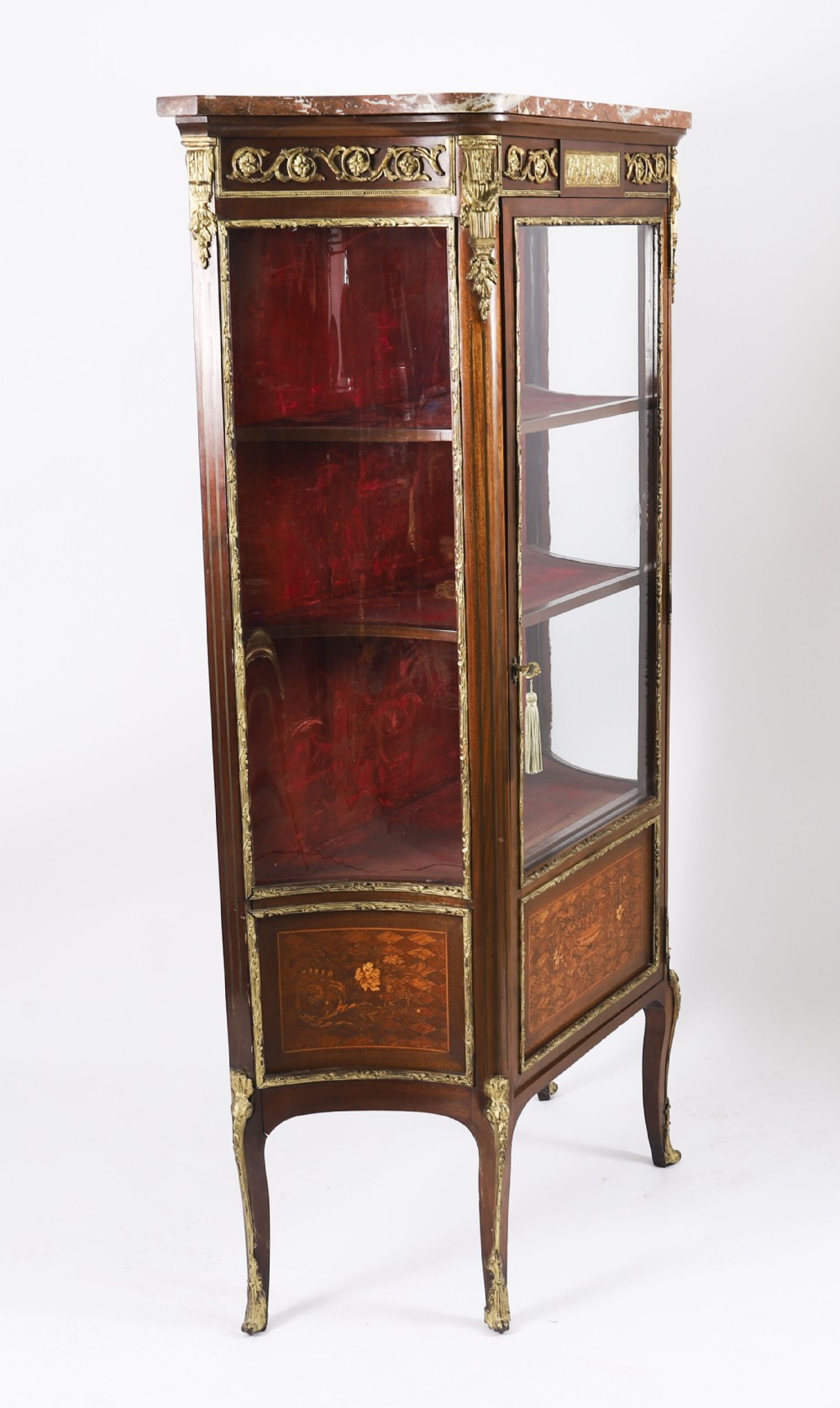
This beautiful cabinet has an abundance of exquisite ormolu mounts as well as intricate inlaid parquetry and marquetry decoration.

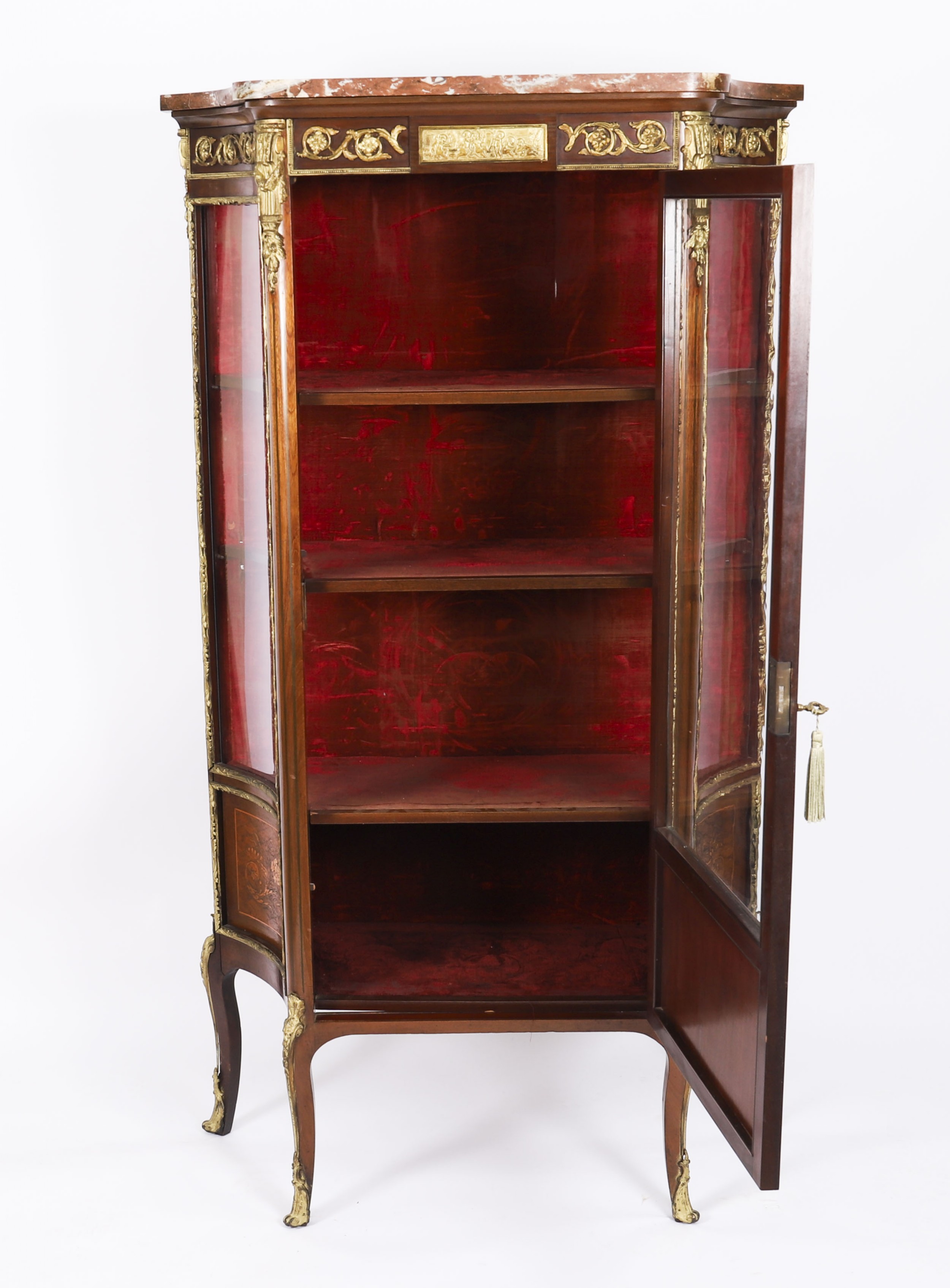
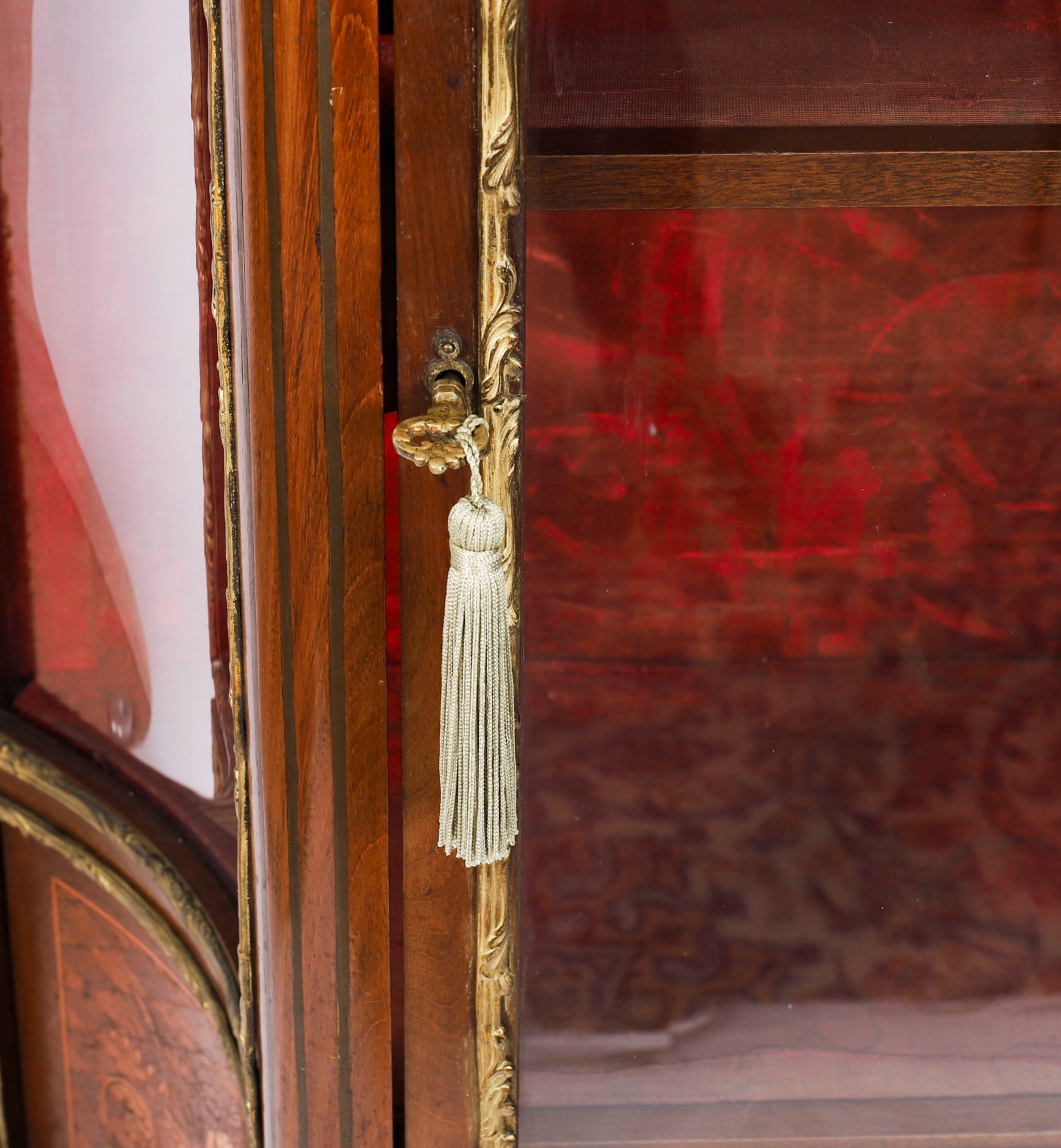
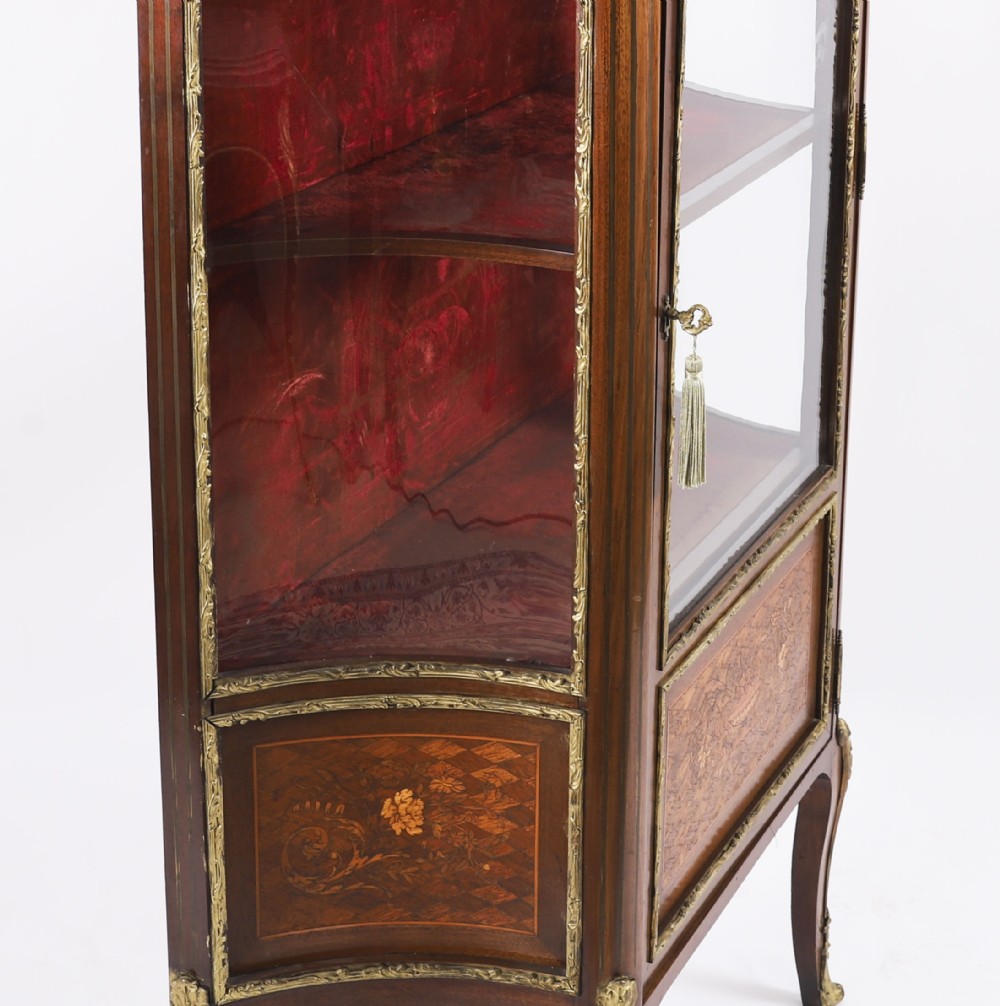
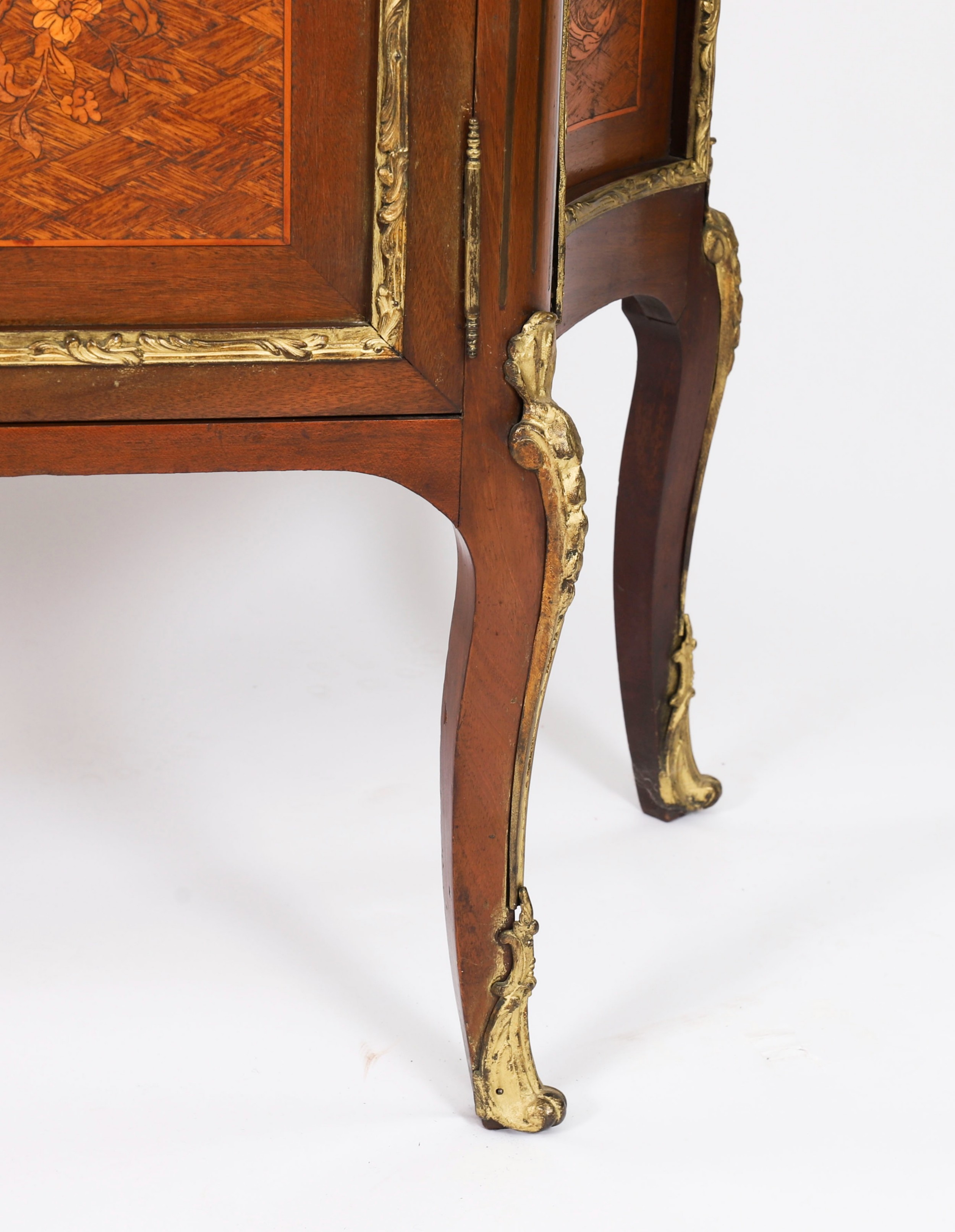
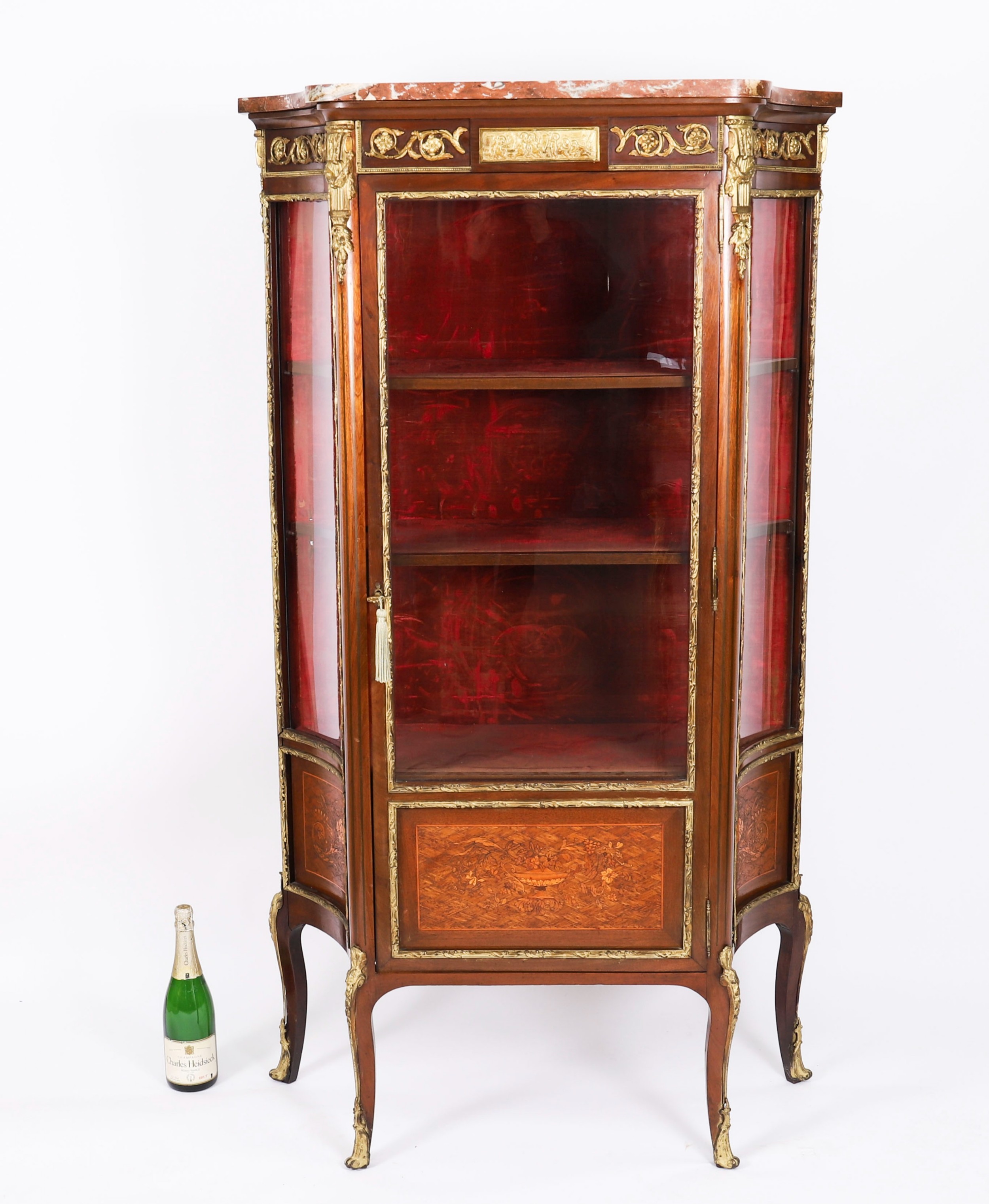
It has shaped glass to the front and sides, stands on elegant, slender cabriole legs and has three shelves to display your collectables.

It is surmounted with an exquisite "Rosso Carpazzi" marble top and will add a touch of unparalleled style to your home. It is perfect for displaying your collection of silver or porcelain.

Complete with working lock and key.

Condition:

In excellent condition, having been beautifully cleaned, polished, waxed and the interior relined in our workshops, please see photos for confirmation.

Dimensions in cm:

Height 160 cm x Width 90 cm x Depth 38 cm

Dimensions in inches:

Height 5 foot, 3 inches x Width 2 foot, 11 inches x Depth 1 foot, 3 inches

Marquetry

is decorative artistry where pieces of material of different colours are inserted into the surface wood veneer to form intricate patterns such as scrolls or flowers.

The technique of veneered marquetry had its inspiration in 16th-century Florence. Marquetry elaborated upon Florentine techniques of inlaying solid marble slabs with designs formed of fitted marbles, jaspers and semi-precious stones. This work, called opere di commessi, has medieval parallels in Central Italian "Cosmati"-work of inlaid marble floors, altars and columns. The technique is known in English as pietra dura, for the "hardstones" used: onyx, jasper, cornelian, lapis lazuli and colored marbles. In Florence, the Chapel of the Medici at San Lorenzo is completely covered in a colored marble facing using this demanding jig-sawn technique.

Techniques of wood marquetry were developed in Antwerp and other Flemish centers of luxury cabinet-making during the early 16th century. The craft was imported full-blown to France after the mid-seventeenth century, to create furniture of unprecedented luxury being made at the royal manufactory of the Gobelins, charged with providing furnishings to decorate Versailles and the other royal residences of Louis XIV. Early masters of French marquetry were the Fleming Pierre Golle and his son-in-law, André-Charles Boulle, who founded a dynasty of royal and Parisian cabinet-makers (ébénistes) and gave his name to a technique of marquetry employing brass with pewter in arabesque or intricately foliate designs.

Parquetry is a geometric mosaic of wood pieces used for decorative effect. The two main uses of parquetry are as veneer patterns on furniture and block patterns for flooring. Parquetry patterns are entirely geometrical and angular—squares, triangles, lozenges.

The word derives from the Old French parchet, literally meaning "a small enclosed space". Large diagonal squares known as parquet de Versailles were introduced in 1684 as parquet de menuiserie to replace the marble flooring that required constant washing, which tended to rot the joists beneath the floors.

Such parquets en lozange were noted by the Swedish architect Daniel Cronström at Versailles and at the Grand Trianon in 1693. Timber contrasting in color and grain, such as oak, walnut, cherry, lime, pine, maple etc. are sometimes employed; and in the more expensive kinds, the tropical hardwoods are also used. 

Ormolu

(from French 'or moulu', signifying ground or pounded gold) is an 18th-century English term for applying finely ground, high-carat gold in a mercury amalgam to an object of bronze.The mercury is driven off in a kiln, leaving behind a gold-coloured veneer known as 'gilt bronze'.

The manufacture of true ormolu employs a process known as mercury-gilding or fire-gilding, in which a solution of nitrate of mercury is applied to a piece of copper, brass, or bronze, followed by the application of an 

Physical Dimensions
Height
160cm (62.99")
Width
90cm (35.43")
Depth
38cm (14.96")
Declaration

Regent Antiques has dated this French Louis Revival Vitrine to the 1870s.
Reference Numbers
Sellingantiques Reference
SA1209217
Dealers Internal Reference
07854x
Description
This is a beautiful antique French ormolu-mounted Louis Revival walnut display cabinet, circa 1870 in date.
This beautiful cabinet has an abundance of exquisite ormolu mounts as well as intricate inlaid parquetry and marquetry decoration.
Regent Antiques
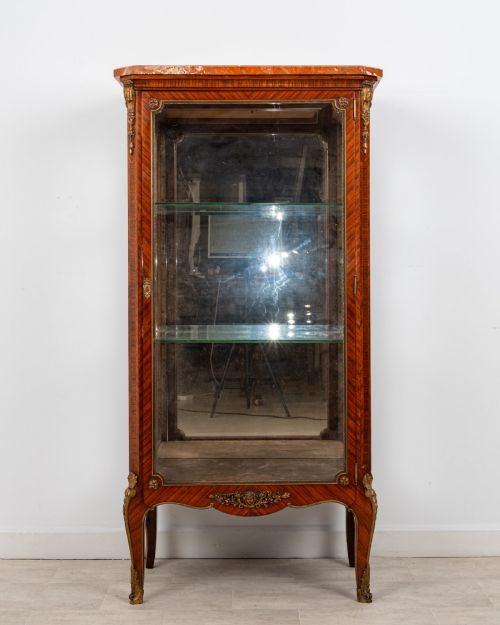
fig 1. A 19th-century French Louis Revival vitrine cabinet featuring a marble top, glazed glass sides and door, floral marquetry panels, and ornate gilt bronze mounts.
fig 1. Antique French Louis Revival Parquetry Display Cabinet C1870 19th C

It has shaped glass to the front and sides, stands on elegant, slender cabriole legs and has three shelves to display your collectables.

It is surmounted with an exquisite "Rosso Carpazzi" marble top and will add a touch of unparalleled style to your home. It is perfect for displaying your collection of silver or porcelain.
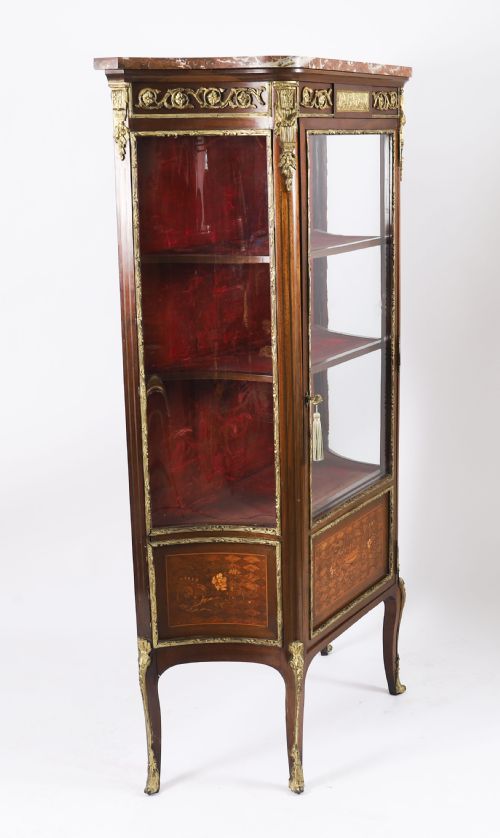
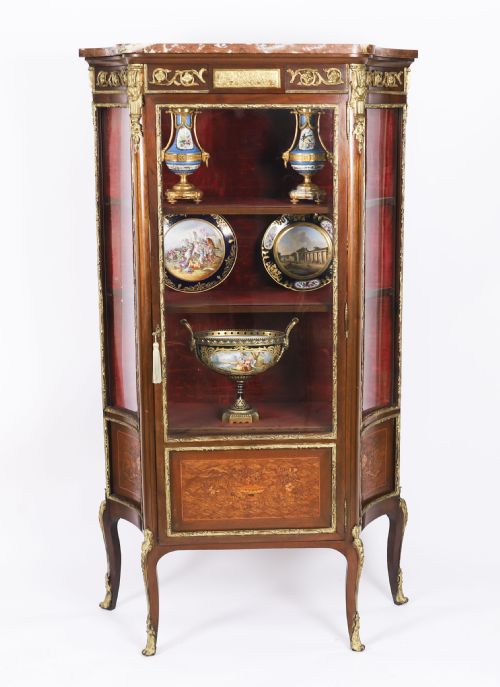
fig 2. A 19th-century French Louis Revival vitrine cabinet featuring a marble top, glazed glass sides and door, floral marquetry panels, and ornate gilt bronze mounts.
fig 2. Antique French Louis Revival Parquetry Display Cabinet C1870 19th C

Complete with working lock and key.

Condition:

In excellent condition, having been beautifully cleaned, polished, waxed and the interior relined in our workshops, please see photos for confirmation.

Dimensions in cm:
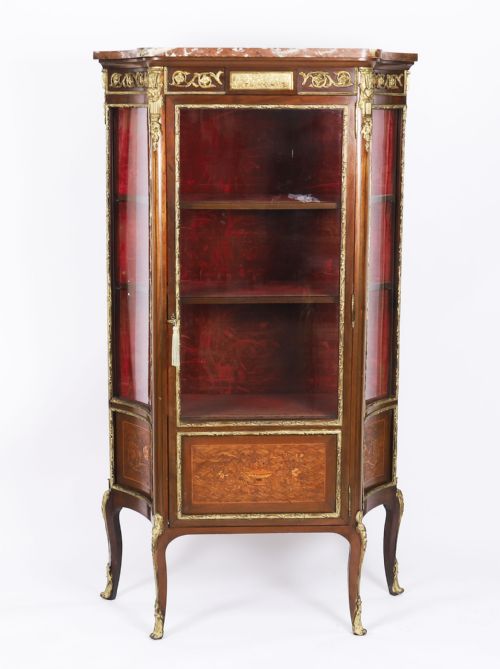
fig 3. A 19th-century French Louis Revival vitrine cabinet featuring a marble top, glazed glass sides and door, floral marquetry panels, and ornate gilt bronze mounts.
fig 3. Antique French Louis Revival Parquetry Display Cabinet C1870 19th C

Height 160 cm x Width 90 cm x Depth 38 cm

Dimensions in inches:

Height 5 foot, 3 inches x Width 2 foot, 11 inches x Depth 1 foot, 3 inches

Marquetry

is decorative artistry where pieces of material of different colours are inserted into the surface wood veneer to form intricate patterns such as scrolls or flowers.
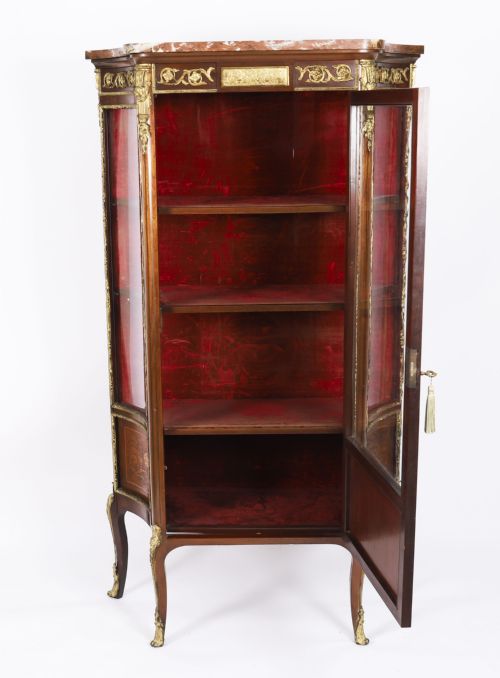
fig 4. A 19th-century French Louis Revival vitrine cabinet featuring a marble top, glazed glass sides and door, floral marquetry panels, and ornate gilt bronze mounts.
fig 4. Antique French Louis Revival Parquetry Display Cabinet C1870 19th C

The technique of veneered marquetry had its inspiration in 16th-century Florence. Marquetry elaborated upon Florentine techniques of inlaying solid marble slabs with designs formed of fitted marbles, jaspers and semi-precious stones. This work, called opere di commessi, has medieval parallels in Central Italian "Cosmati"-work of inlaid marble floors, altars and columns. The technique is known in English as pietra dura, for the "hardstones" used: onyx, jasper, cornelian, lapis lazuli and colored marbles. In Florence, the Chapel of the Medici at San Lorenzo is completely covered in a colored marble facing using this demanding jig-sawn technique.
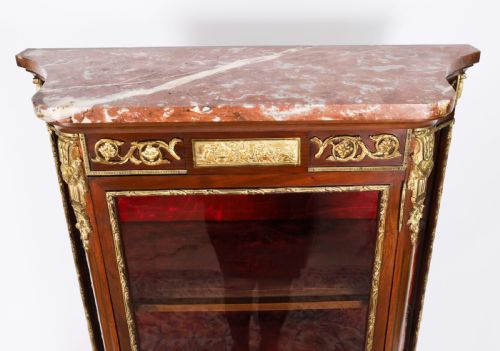
fig 5. A 19th-century French Louis Revival vitrine cabinet featuring a marble top, glazed glass sides and door, floral marquetry panels, and ornate gilt bronze mounts.
fig 5. Antique French Louis Revival Parquetry Display Cabinet C1870 19th C

Techniques of wood marquetry were developed in Antwerp and other Flemish centers of luxury cabinet-making during the early 16th century. The craft was imported full-blown to France after the mid-seventeenth century, to create furniture of unprecedented luxury being made at the royal manufactory of the Gobelins, charged with providing furnishings to decorate Versailles and the other royal residences of Louis XIV. Early masters of French marquetry were the Fleming Pierre Golle and his son-in-law, André-Charles Boulle, who founded a dynasty of royal and Parisian cabinet-makers (ébénistes) and gave his name to a technique of marquetry employing brass with pewter in arabesque or intricately foliate designs.
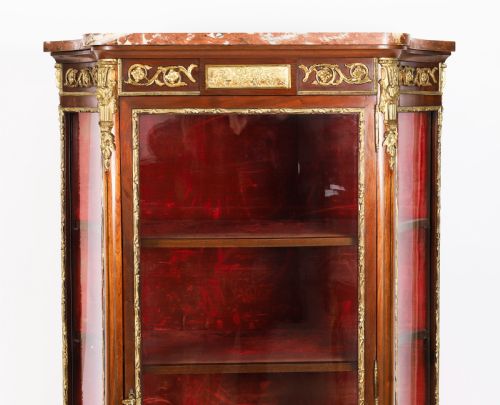
fig 6. A 19th-century French Louis Revival vitrine cabinet featuring a marble top, glazed glass sides and door, floral marquetry panels, and ornate gilt bronze mounts.
fig 6. Antique French Louis Revival Parquetry Display Cabinet C1870 19th C

Parquetry is a geometric mosaic of wood pieces used for decorative effect. The two main uses of parquetry are as veneer patterns on furniture and block patterns for flooring. Parquetry patterns are entirely geometrical and angular—squares, triangles, lozenges.
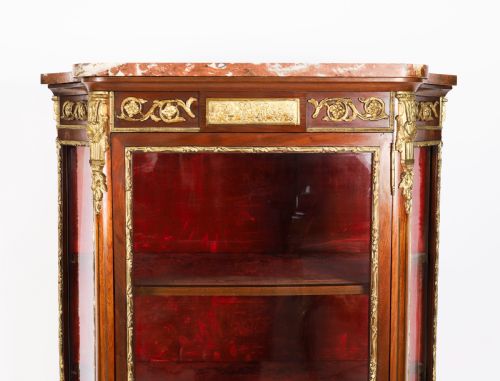
fig 7. A 19th-century French Louis Revival vitrine cabinet featuring a marble top, glazed glass sides and door, floral marquetry panels, and ornate gilt bronze mounts.
fig 7. Antique French Louis Revival Parquetry Display Cabinet C1870 19th C

The word derives from the Old French parchet, literally meaning "a small enclosed space". Large diagonal squares known as parquet de Versailles were introduced in 1684 as parquet de menuiserie to replace the marble flooring that required constant washing, which tended to rot the joists beneath the floors.
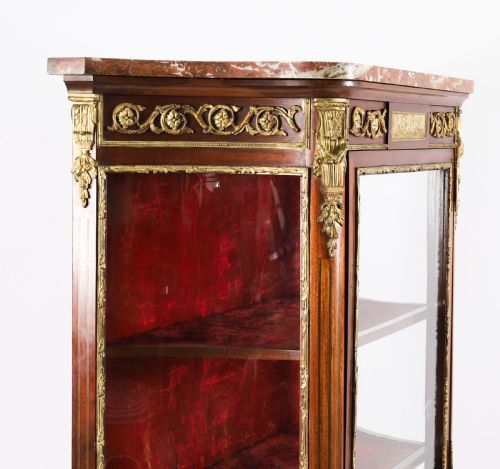
fig 8. A 19th-century French Louis Revival vitrine cabinet featuring a marble top, glazed glass sides and door, floral marquetry panels, and ornate gilt bronze mounts.
fig 8. Antique French Louis Revival Parquetry Display Cabinet C1870 19th C

Such parquets en lozange were noted by the Swedish architect Daniel Cronström at Versailles and at the Grand Trianon in 1693. Timber contrasting in color and grain, such as oak, walnut, cherry, lime, pine, maple etc. are sometimes employed; and in the more expensive kinds, the tropical hardwoods are also used. 
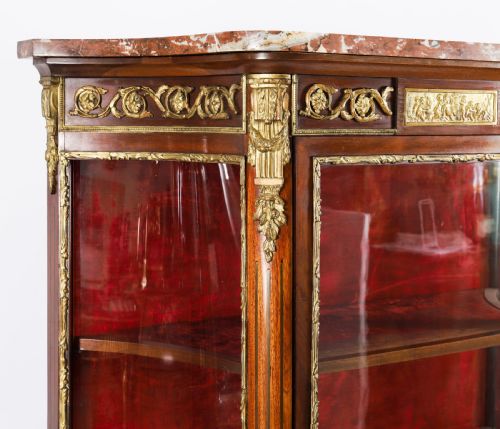
fig 9. A 19th-century French Louis Revival vitrine cabinet featuring a marble top, glazed glass sides and door, floral marquetry panels, and ornate gilt bronze mounts.
fig 9. Antique French Louis Revival Parquetry Display Cabinet C1870 19th C

Ormolu

(from French 'or moulu', signifying ground or pounded gold) is an 18th-century English term for applying finely ground, high-carat gold in a mercury amalgam to an object of bronze.The mercury is driven off in a kiln, leaving behind a gold-coloured veneer known as 'gilt bronze'.
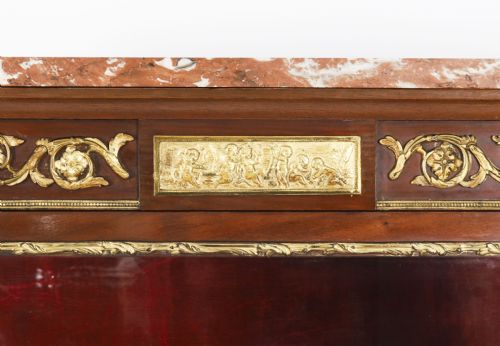
fig 10. A 19th-century French Louis Revival vitrine cabinet featuring a marble top, glazed glass sides and door, floral marquetry panels, and ornate gilt bronze mounts.
fig 10. Antique French Louis Revival Parquetry Display Cabinet C1870 19th C

The manufacture of true ormolu employs a process known as mercury-gilding or fire-gilding, in which a solution of nitrate of mercury is applied to a piece of copper, brass, or bronze, followed by the application of an 

Height
160cm (62.99")
Width
90cm (35.43")
Depth
38cm (14.96")
Date of Manufacture

Regent Antiques has dated this French Louis Revival Vitrine to the 1870s.

Reference Numbers
Sellingantiques Ref
SA1209217
Dealers Internal Ref
07854x
Regent Antiques
Regent Antiques
Sellingantiques verified Since Sep 2016

We specialise in english and continental furniture, silver, porcelain and decorative items.

Dealer Profile

You can view the stock and full dealer information on the Regent Antiques Profile Page

Trade Associations

Regent Antiques is a registered member of LAPADA  CINOA
PDF SHARE
SAVE
A 19th-century French Louis Revival vitrine cabinet featuring a marble top, glazed glass sides and door, floral marquetry panels, and ornate gilt bronze mounts.
1 / 18
Archive I A 19th-century French Louis Revival vitrine cabinet featuring a marble top, glazed glass sides and door, floral marquetry panels, and ornate gilt bronze mounts.

Antique French Louis Revival Parquetry Display Cabinet C1870 19th C
Archive II A 19th-century French Louis Revival vitrine cabinet featuring a marble top, glazed glass sides and door, floral marquetry panels, and ornate gilt bronze mounts. View II
Archive III A 19th-century French Louis Revival vitrine cabinet featuring a marble top, glazed glass sides and door, floral marquetry panels, and ornate gilt bronze mounts. View III
Archive IV A 19th-century French Louis Revival vitrine cabinet featuring a marble top, glazed glass sides and door, floral marquetry panels, and ornate gilt bronze mounts. View IV
Archive V A 19th-century French Louis Revival vitrine cabinet featuring a marble top, glazed glass sides and door, floral marquetry panels, and ornate gilt bronze mounts. View V
Archive VI A 19th-century French Louis Revival vitrine cabinet featuring a marble top, glazed glass sides and door, floral marquetry panels, and ornate gilt bronze mounts. View VI
Archive VII A 19th-century French Louis Revival vitrine cabinet featuring a marble top, glazed glass sides and door, floral marquetry panels, and ornate gilt bronze mounts. View VII
Archive VIII A 19th-century French Louis Revival vitrine cabinet featuring a marble top, glazed glass sides and door, floral marquetry panels, and ornate gilt bronze mounts. View VIII
Archive IX A 19th-century French Louis Revival vitrine cabinet featuring a marble top, glazed glass sides and door, floral marquetry panels, and ornate gilt bronze mounts. View IX
Archive X A 19th-century French Louis Revival vitrine cabinet featuring a marble top, glazed glass sides and door, floral marquetry panels, and ornate gilt bronze mounts. View X
Archive XI A 19th-century French Louis Revival vitrine cabinet featuring a marble top, glazed glass sides and door, floral marquetry panels, and ornate gilt bronze mounts. View XI
Archive XII A 19th-century French Louis Revival vitrine cabinet featuring a marble top, glazed glass sides and door, floral marquetry panels, and ornate gilt bronze mounts. View XII
Archive XIII A 19th-century French Louis Revival vitrine cabinet featuring a marble top, glazed glass sides and door, floral marquetry panels, and ornate gilt bronze mounts. View XIII
Archive XIV A 19th-century French Louis Revival vitrine cabinet featuring a marble top, glazed glass sides and door, floral marquetry panels, and ornate gilt bronze mounts. View XIV
Archive XV A 19th-century French Louis Revival vitrine cabinet featuring a marble top, glazed glass sides and door, floral marquetry panels, and ornate gilt bronze mounts. View XV
Archive XVI A 19th-century French Louis Revival vitrine cabinet featuring a marble top, glazed glass sides and door, floral marquetry panels, and ornate gilt bronze mounts. View XVI
Archive XVII A 19th-century French Louis Revival vitrine cabinet featuring a marble top, glazed glass sides and door, floral marquetry panels, and ornate gilt bronze mounts. View XVII
Archive XVIII A 19th-century French Louis Revival vitrine cabinet featuring a marble top, glazed glass sides and door, floral marquetry panels, and ornate gilt bronze mounts. View XVIII
FURTHER BROWSING

Visitors also looked at these ⇣

Enlarged Archival View
Location
Manor Warehouse
318 Green Lanes
London
N4 1BX
United Kingdom
Verified Since Sep 2016
Items For Sale 659
Items Sold 2,608
Regent Antiques
Regent Antiques
Verified Since Sep 2016
View Dealer Info
Location: Manor Warehouse, 318 Green Lanes, London, N4 1BX, United Kingdom
Verified
Sep 2016
For Sale
659
Sold
2,608
A 19th-century French Louis Revival vitrine cabinet featuring a marble top, glazed glass sides and door, floral marquetry panels, and ornate gilt bronze mounts.
Antique French Louis Revival Parquetry Display Cabinet C1870 19th C
Ref: SA1209217
A 19th-century French Louis Revival vitrine cabinet featuring a marble top, glazed glass sides and door, floral marquetry panels, and ornate gilt bronze mounts.
Detail View 1
Detail View 2
Detail View 3
Detail View 4
Detail View 5
Detail View 6
Detail View 7
Detail View 8
Detail View 9
Detail View 10
Detail View 11
Detail View 12
Detail View 13
Detail View 14
Detail View 15
Detail View 16
Detail View 17
Archival Detail
Every single antique dealer on our platform is individually approved by our internal team. We verify their professional trade history, ethical standards, and photographic quality to ensure a secure, high-standard buying environment. Upon joining, every dealer agrees to a strict 9-point code of conduct. While issues can occasionally arise, our dealers typically resolve them swiftly and directly with the buyer. In fact, since our founding in 2002, Sellingantiques has only had to step in to help resolve an issue on roughly five occasions—a true testament to the quality of our dealers and their dedication to your happiness.
Our dealers are highly experienced in packing and shipping fragile, high-value antiques. Because you are in direct contact with the dealer, you will be able to easily go through all available shipping and insurance options together to ensure your item arrives safely.
Antiques are the ultimate green purchase. By choosing historical pieces over newly manufactured goods, you completely eliminate the carbon footprint of modern mass production while preserving exceptional, timeless craftsmanship.

Originating in the 19th century, French Louis Revival furniture recreates the ornate elegance of 18th-century courtly designs, particularly Louis XV and Louis XVI styles. These cabinets typically feature decorative marquetry panels, cast ormolu mounts, glazed display sections, and marble tops.

Craftsmen utilised exotic wood veneers such as kingwood, tulipwood, and mahogany, often applying detailed marquetry or parquetry inlays. Additional defining elements include hand-chased gilt bronze (ormolu) mounts, imported marble slabs, and paned float glass.

Authentic pieces generally exhibit hand-cut dovetail joints, solid oak drawer or frame linings, and aged patina on gilt bronze mounts. Original marble tops usually feature distinct bevelled edges and natural surface wear consistent with age.

A glazed vitrine serves as a focal point when placed against neutral or contemporary walls in a dining room, living area, or wide hallway. It provides a protective showcase for curated collections of porcelain, glassware, or modern decorative objects.

Dust surfaces regularly using a clean, soft microfibre cloth without harsh chemical cleaners that could damage lacquer or wood polish. Gilt bronze mounts should be gently cleaned with a dry brush to prevent moisture from tarnishing the gilded layer or penetrating wood veneers.
items
Add keywords to the filter
Price
£100
£250000
Era
Movements
Material
Origin
Stock Location
Freshness
Online Payments
Categories