38,829  PAGES BROWSED TODAY PAGES TODAY 146  ANTIQUES UPLOADED TODAY NEW ARRIVALS
ID #SA1202728
FOR SALE
£800
Email
Save
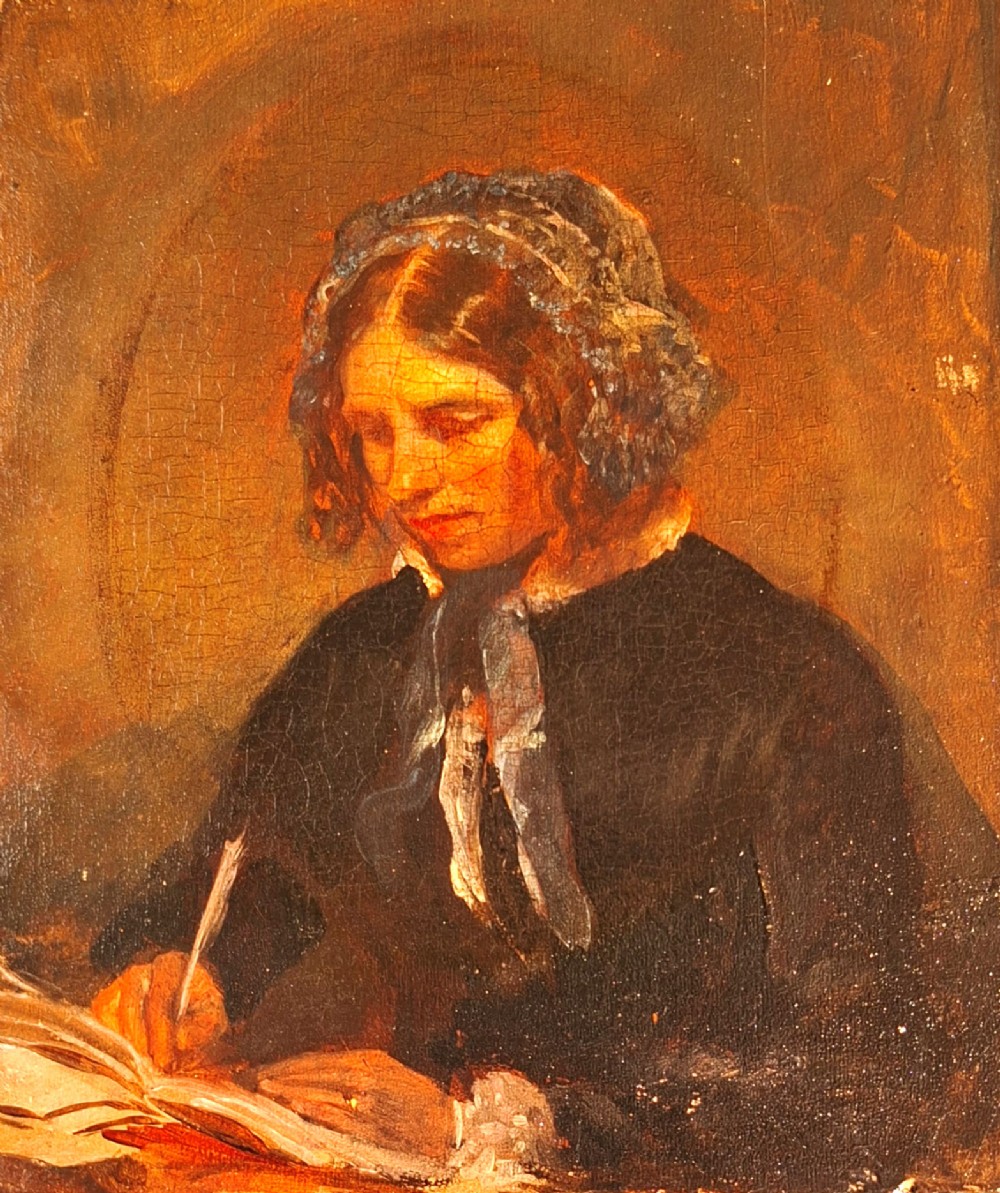
William Henry Knight Ra 1823-1863 Portrait of Mary Sherborn, Nee Brance 1801-1886 Writing at Her Desk extensively Inscribed on the Reverse " Mrs C Sherborn/by W H Knight/ Mary Brance 1801-1886/Mother of C W Sherborn"
Artware Fineart
for sale €936     $1,016
£800

Artware Fineart

Sellingantiques Verified Since Sep 2008
View Dealers Stock Page
Id #SA1202728
PDF SHARE
SAVE

William Henry Knight Ra 1823-1863 Portrait of Mary Sherborn, Nee Brance 1801-1886 Writing at Her Desk extensively Inscribed on the Reverse " Mrs C Sherborn/by W H Knight/ Mary Brance 1801-1886/Mother of C W Sherborn"

19th century
For Sale by Artware Fineart
Description

William Henry Knight RA 1823-1863

Portrait of Mary Sherborn, Nee Brance 1801-1886 writing at her desk
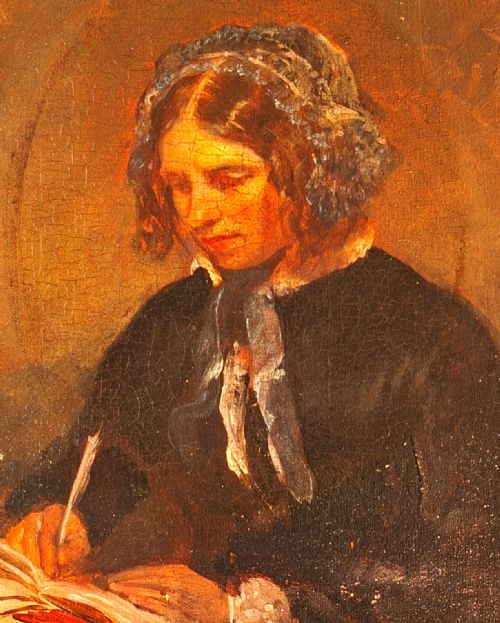
extensively inscribed on the reverse " Mrs C Sherborn/by W H Knight/ Mary Brance 1801-1886/mother of C W Sherborn"

oil on panel

16.5 x 16 cm

Mary Brance, married Charles Sherborn, an upholsterer; their son was Charles William Sherborn, RE (14 June 1831 – 10 February 1912) who was an English engraver, who chiefly made bookplates. He has been hailed as having led the revival in copper-engraved bookplates, and came to be called the "Victorian little master".

Artist biography

William Henry Knight (26 September 1823 – 31 July 1863) was an English portrait and genre painter.

Knight was born in Newbury, Berkshire where his father, John Knight, was a schoolmaster. He was to become a solicitor, but gave up his law studies after two of his paintings were accepted by the annual exhibition of the Society of British Artists. He moved to London in 1855, taking lodgings in Kennington Road, Lambeth, and supporting himself by drawing crayon portraits while studying in the British Museum and in the schools of the Royal Academy.

Following in the footsteps of William Mulready, he became a genre painter, his street scenes and interior scenes often showing children at play. His first contribution to the Royal Academy exhibition was Boys playing draughts in 1846; from that year until 1862 he was a constant exhibitor there. He also showed many pictures at the British Institution.

Among his best works were: "A Christmas party preparing for blind man's buff" (1850); "Time for play", "Boys snowballing" (1853); "The broken window" (1855 – engraved for the August 1865 edition of The Art Journal); "The village school" (1857); "Knuckle down" (1858); "The lost change" (1859); Hide and seek (1860); The game of marbles, "An unexpected trump" (1861); "Rivals to Blondin" and "The counterfeit coin" (1862). Many engravings were made from his works. In his 1855 Academy notes, John Ruskin wrote about The broken window: "This picture does not catch the eye at a distance, but, on looking close, there will be found exquisite and careful painting in it.".

Knight died on 31 July 1863 aged 39, leaving a widow and six children.

Provenance : Derek Sherborn, Fawns Manor, Bedfont, Middlesex

Physical Dimensions
Height
16.5cm (6.50")
Width
16cm (6.30")
Depth
1cm (0.39")
Declaration

Artware Fineart has dated this Victorian Oil Portrait Painting to the 19th Century.

Reference Numbers
Sellingantiques Reference
SA1202728
Dealers Internal Reference
2787
Description
William Henry Knight RA 1823-1863

Portrait of Mary Sherborn, Nee Brance 1801-1886 writing at her desk

extensively inscribed on the reverse " Mrs C Sherborn/by W H Knight/ Mary Brance 1801-1886/mother of C W Sherborn".
Artware Fineart
fig 1. A 19th-century oil painting depicting a woman in a lace cap writing with a quill at a desk, rendered in warm brown tones.
fig 1. William Henry Knight Ra 1823-1863 Portrait of Mary Sherborn, Nee Brance 1801-1886 Writing at Her Desk extensively Inscribed on the Reverse " Mrs C Sherborn/by W H Knight/ Mary Brance 1801-1886/Mother of C W Sherborn"

oil on panel

16.5 x 16 cm

Mary Brance, married Charles Sherborn, an upholsterer; their son was Charles William Sherborn, RE (14 June 1831 – 10 February 1912) who was an English engraver, who chiefly made bookplates. He has been hailed as having led the revival in copper-engraved bookplates, and came to be called the "Victorian little master".

Artist biography

William Henry Knight (26 September 1823 – 31 July 1863) was an English portrait and genre painter.

Knight was born in Newbury, Berkshire where his father, John Knight, was a schoolmaster. He was to become a solicitor, but gave up his law studies after two of his paintings were accepted by the annual exhibition of the Society of British Artists. He moved to London in 1855, taking lodgings in Kennington Road, Lambeth, and supporting himself by drawing crayon portraits while studying in the British Museum and in the schools of the Royal Academy.

Following in the footsteps of William Mulready, he became a genre painter, his street scenes and interior scenes often showing children at play. His first contribution to the Royal Academy exhibition was Boys playing draughts in 1846; from that year until 1862 he was a constant exhibitor there. He also showed many pictures at the British Institution.

Among his best works were: "A Christmas party preparing for blind man's buff" (1850); "Time for play", "Boys snowballing" (1853); "The broken window" (1855 – engraved for the August 1865 edition of The Art Journal); "The village school" (1857); "Knuckle down" (1858); "The lost change" (1859); Hide and seek (1860); The game of marbles, "An unexpected trump" (1861); "Rivals to Blondin" and "The counterfeit coin" (1862). Many engravings were made from his works. In his 1855 Academy notes, John Ruskin wrote about The broken window: "This picture does not catch the eye at a distance, but, on looking close, there will be found exquisite and careful painting in it.".

Knight died on 31 July 1863 aged 39, leaving a widow and six children.

Provenance : Derek Sherborn, Fawns Manor, Bedfont, Middlesex

Height
16.5cm (6.50")
Width
16cm (6.30")
Depth
1cm (0.39")
Date of Manufacture

Artware Fineart has dated this Victorian Oil Portrait Painting to the 19th Century.

Reference Numbers
Sellingantiques Ref
SA1202728
Dealers Internal Ref
2787
Artware Fineart
Sellingantiques verified Since Sep 2008
Dealer Profile

You can view the stock and full dealer information on the Artware Fineart Profile Page
PDF SHARE
SAVE
A 19th-century oil painting depicting a woman in a lace cap writing with a quill at a desk, rendered in warm brown tones.
1 / 2
Archive I A 19th-century oil painting depicting a woman in a lace cap writing with a quill at a desk, rendered in warm brown tones.

William Henry Knight Ra 1823-1863 Portrait of Mary Sherborn, Nee Brance 1801-1886 Writing at Her Desk extensively Inscribed on the Reverse " Mrs C Sherborn/by W H Knight/ Mary Brance 1801-1886/Mother of C W Sherborn"
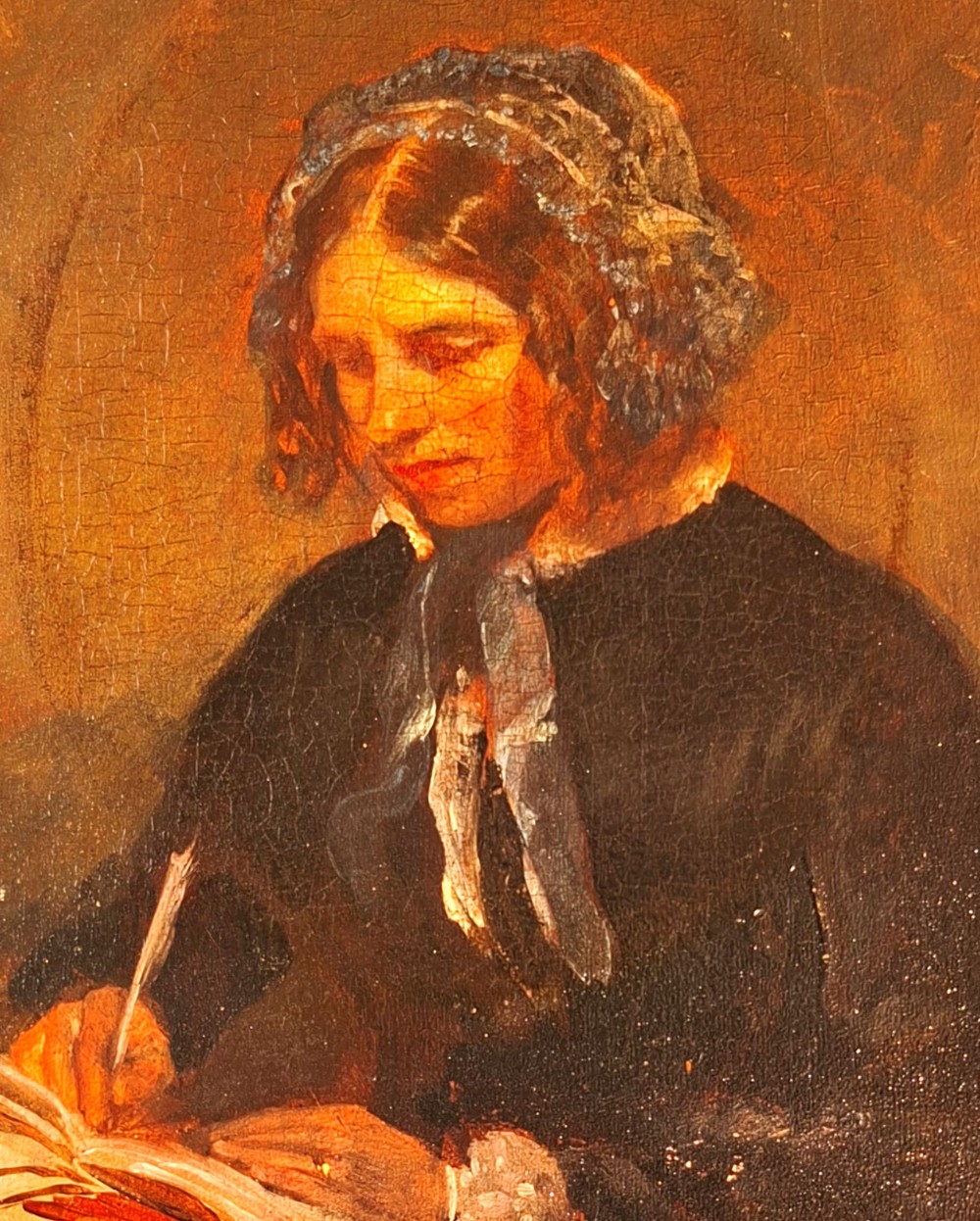
Archive II A 19th-century oil painting depicting a woman in a lace cap writing with a quill at a desk, rendered in warm brown tones. View II
FURTHER BROWSING

Visitors also looked at these ⇣

Enlarged Archival View
Telephone 07958 699 645
Location
18 La Gare
51 Surrey Row
London
SE1 0BZ
United Kingdom
Verified Since Sep 2008
Items For Sale 243
Items Sold 223
Artware Fineart
Verified Since Sep 2008
View Dealer Info
Location: 18 La Gare , 51 Surrey Row , London , SE1 0BZ , United Kingdom
Verified
Sep 2008
For Sale
243
Sold
223
A 19th-century oil painting depicting a woman in a lace cap writing with a quill at a desk, rendered in warm brown tones.
William Henry Knight RA 1823-1863 Portrait of Mary Sherborn, Nee Brance 1801-1886 writing at her desk extensively inscribed on the reverse " Mrs C Sherborn/by W H Knight/ Mary Brance 1801-1886/mother of C W Sherborn"
Ref: SA1202728
A 19th-century oil painting depicting a woman in a lace cap writing with a quill at a desk, rendered in warm brown tones.
Detail View 1
Archival Detail
Every single antique dealer on our platform is individually approved by our internal team. We verify their professional trade history, ethical standards, and photographic quality to ensure a secure, high-standard buying environment. Upon joining, every dealer agrees to a strict 9-point code of conduct. While issues can occasionally arise, our dealers typically resolve them swiftly and directly with the buyer. In fact, since our founding in 2002, Sellingantiques has only had to step in to help resolve an issue on roughly five occasions—a true testament to the quality of our dealers and their dedication to your happiness.
Our dealers are highly experienced in packing and shipping fragile, high-value antiques. Because you are in direct contact with the dealer, you will be able to easily go through all available shipping and insurance options together to ensure your item arrives safely.
Antiques are the ultimate green purchase. By choosing historical pieces over newly manufactured goods, you completely eliminate the carbon footprint of modern mass production while preserving exceptional, timeless craftsmanship.

Victorian portraiture often focused on realistic representations of individuals within intimate, domestic, or scholarly settings, reflecting the personal life and social context of the sitter.

Artists typically utilised ground oil pigments mixed with drying oils on stretched linen canvas or wooden panels, finishing the artwork with protective varnish layers.

Authentic works usually exhibit natural craquelure across the paint surface, period-appropriate stretcher construction, genuine brushwork textures, and original inscriptions or stamps on the reverse.

Positioning an antique portrait within a contemporary gallery wall or displaying it above a minimalist sideboard creates a rich visual contrast between historical fine art and modern interior design.

Keep the canvas away from direct sunlight, extreme humidity, and heat sources, and clean dust gently from the surface using a soft, dry brush without applying liquid chemical solvents.
items
Add keywords to the filter
Price
£100
£250000
Era
Movements
Material
Origin
Stock Location
Freshness
Online Payments
Categories