8,310  PAGES BROWSED TODAY PAGES TODAY 36  ANTIQUES UPLOADED TODAY NEW ARRIVALS
ID #SA1200657
FOR SALE
£2,750
Email
Save
Antique Victorian Giltwood Oval Cushion Mirror 19th C 123x96cm
Regent Antiques
for sale €3,218     $3,493
£2,750
Regent Antiques

Regent Antiques

Sellingantiques Verified Since Sep 2016
View Dealers Stock Page
  • About Us
    We specialise in english and continental furniture, silver, porcelain and decorative items.
  • Trade Associations
    Regent Antiques is a registered member of LAPADA  CINOA
Id #SA1200657
PDF SHARE
SAVE

Antique Victorian Giltwood Oval Cushion Mirror 19th C 123x96cm

19th century
For Sale by Regent Antiques
Description

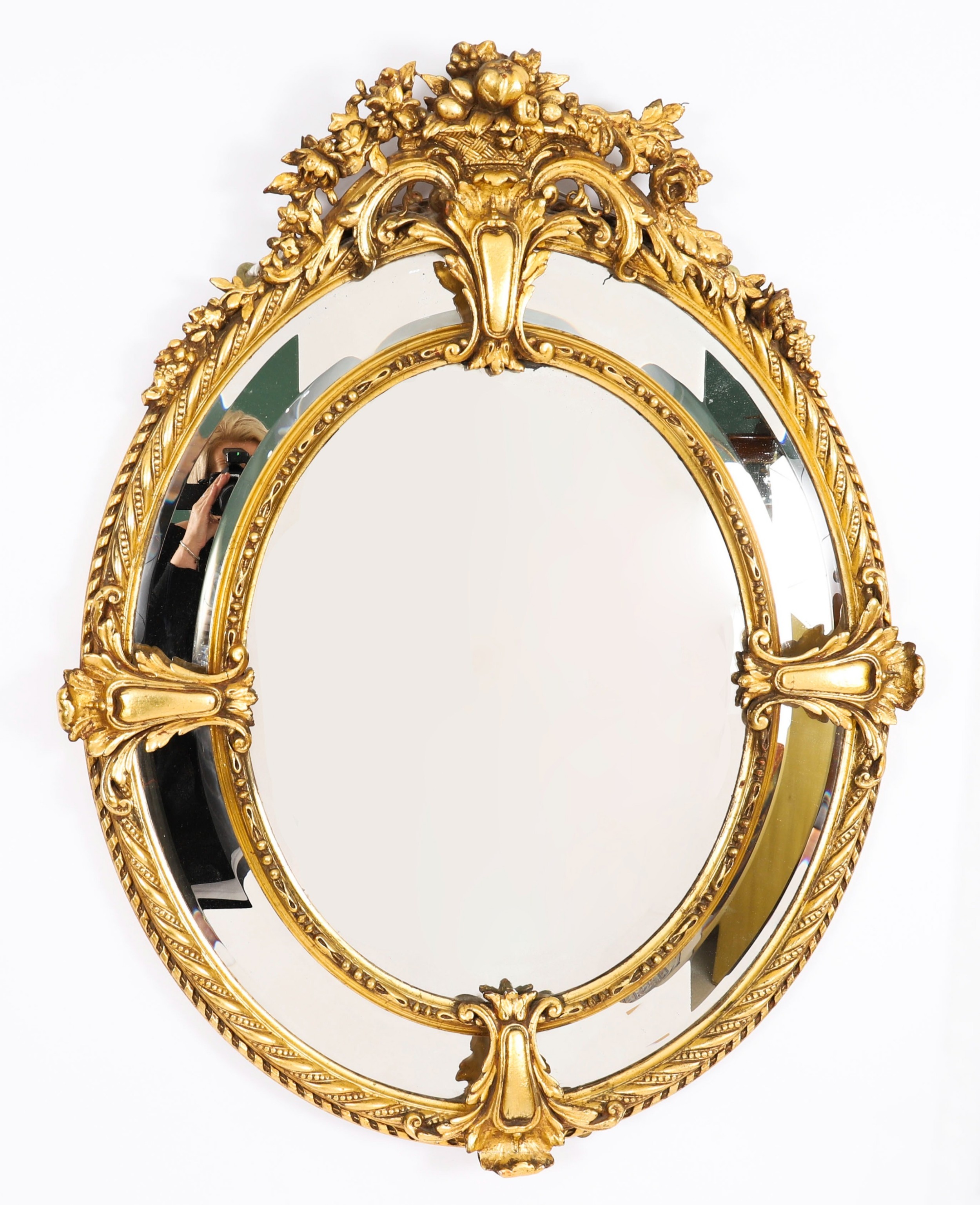
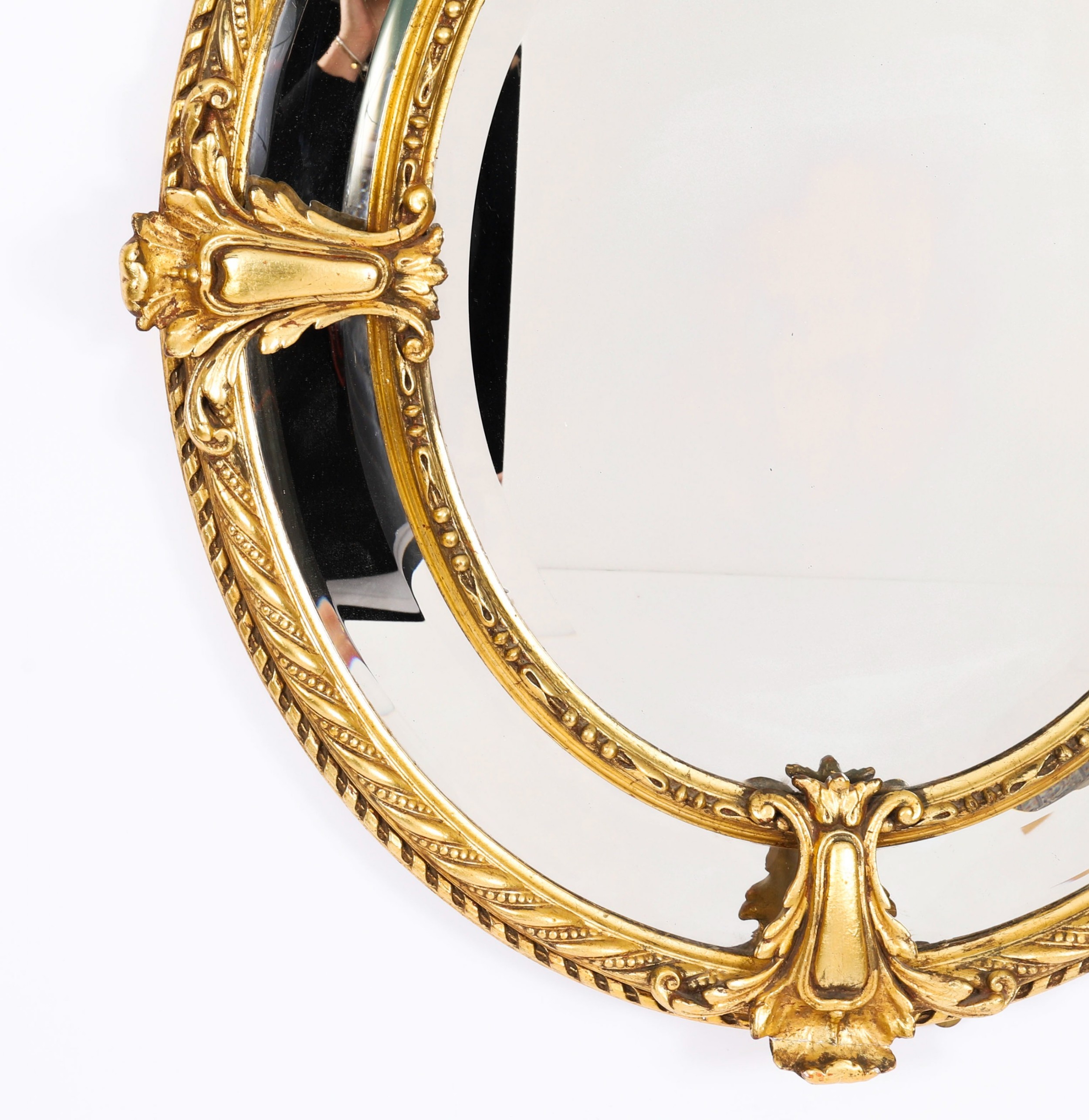
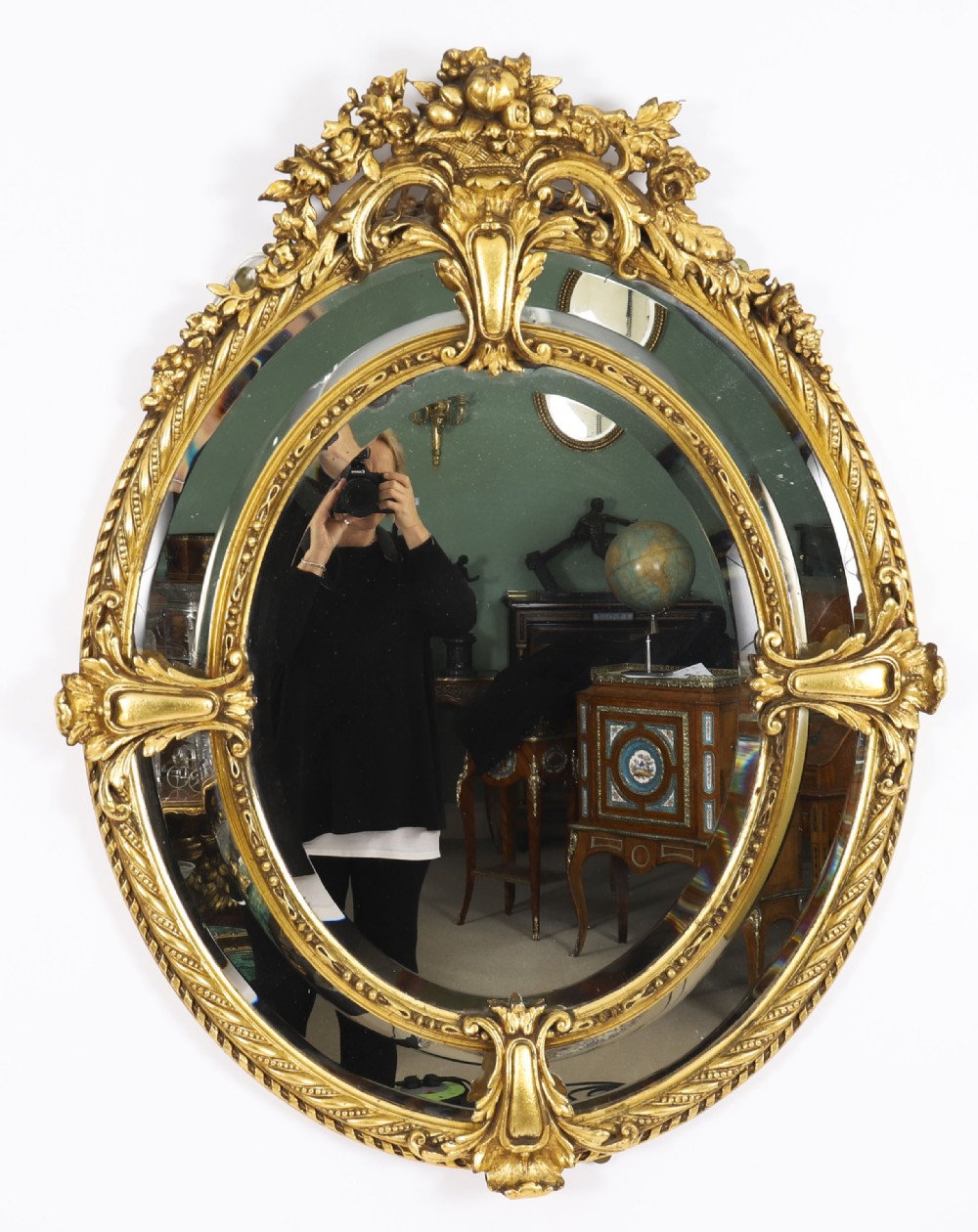
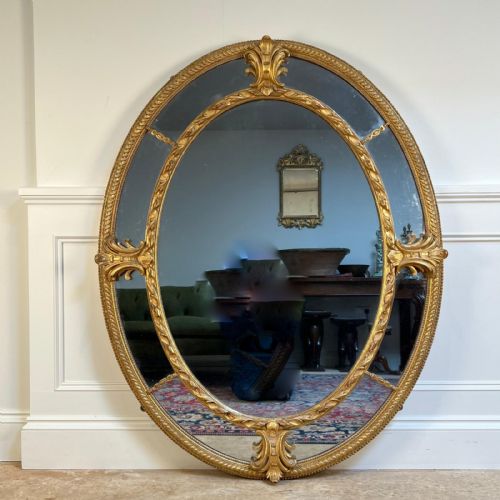
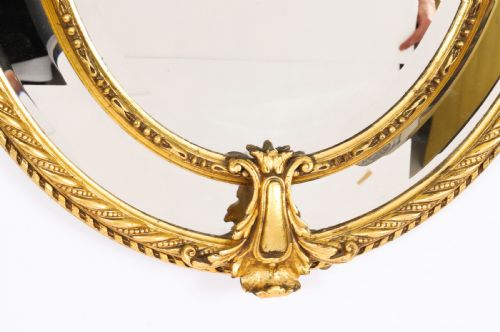
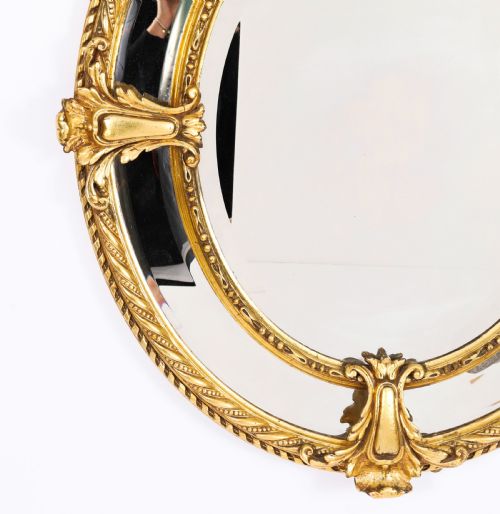
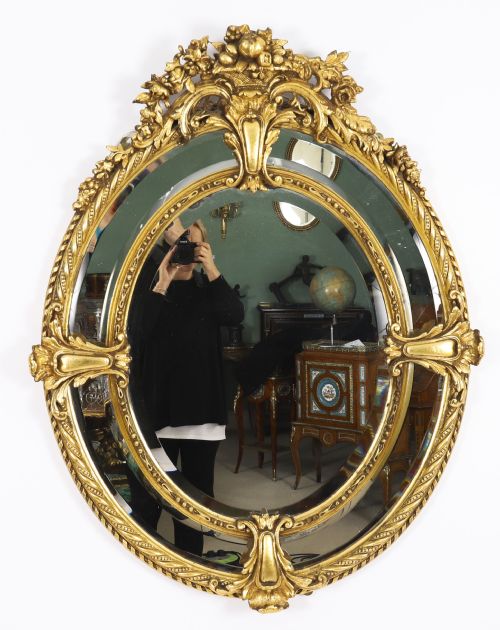
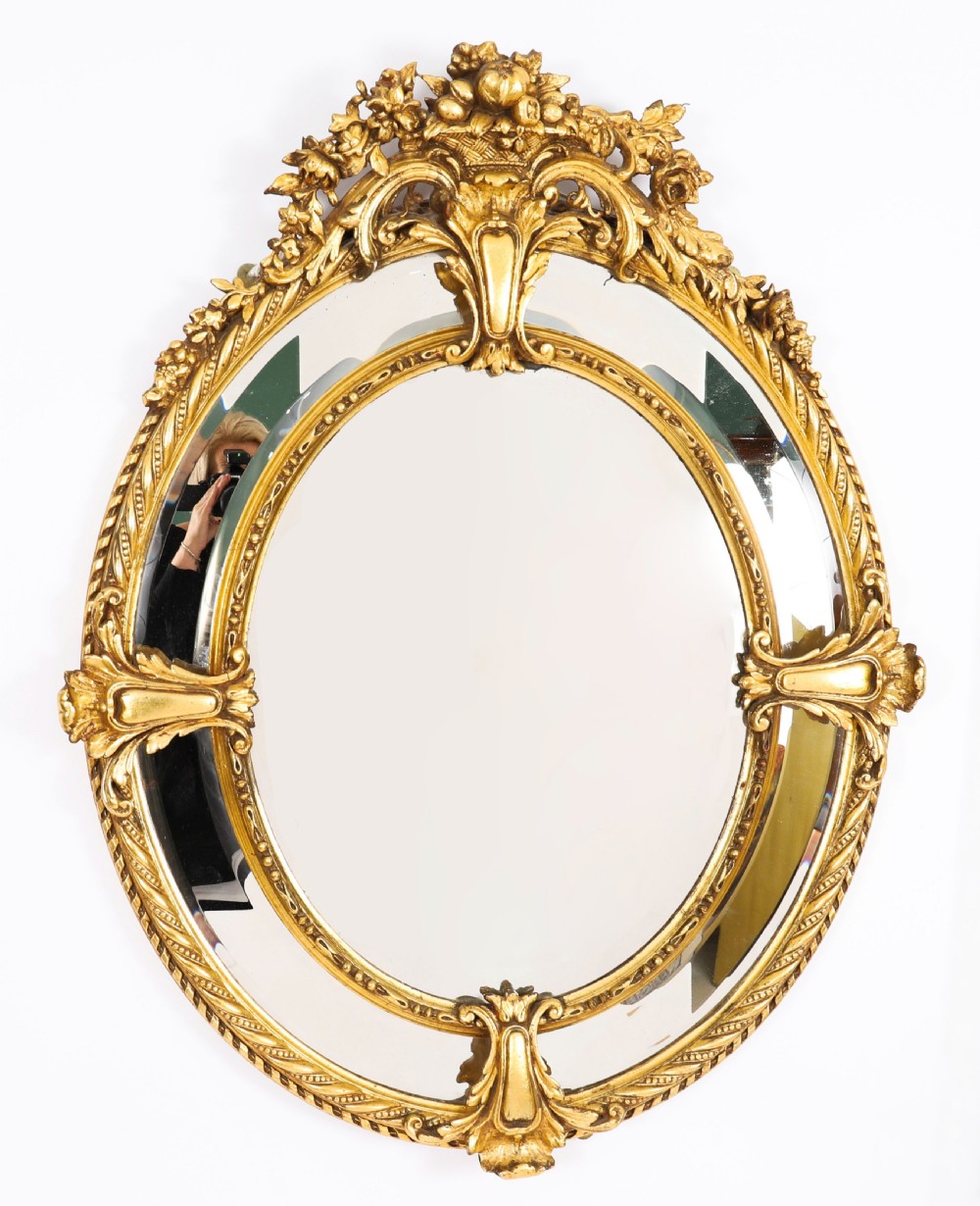
A finely carved antique Victorian  oval margin plate giltwood mirror, circa 1860 in date.

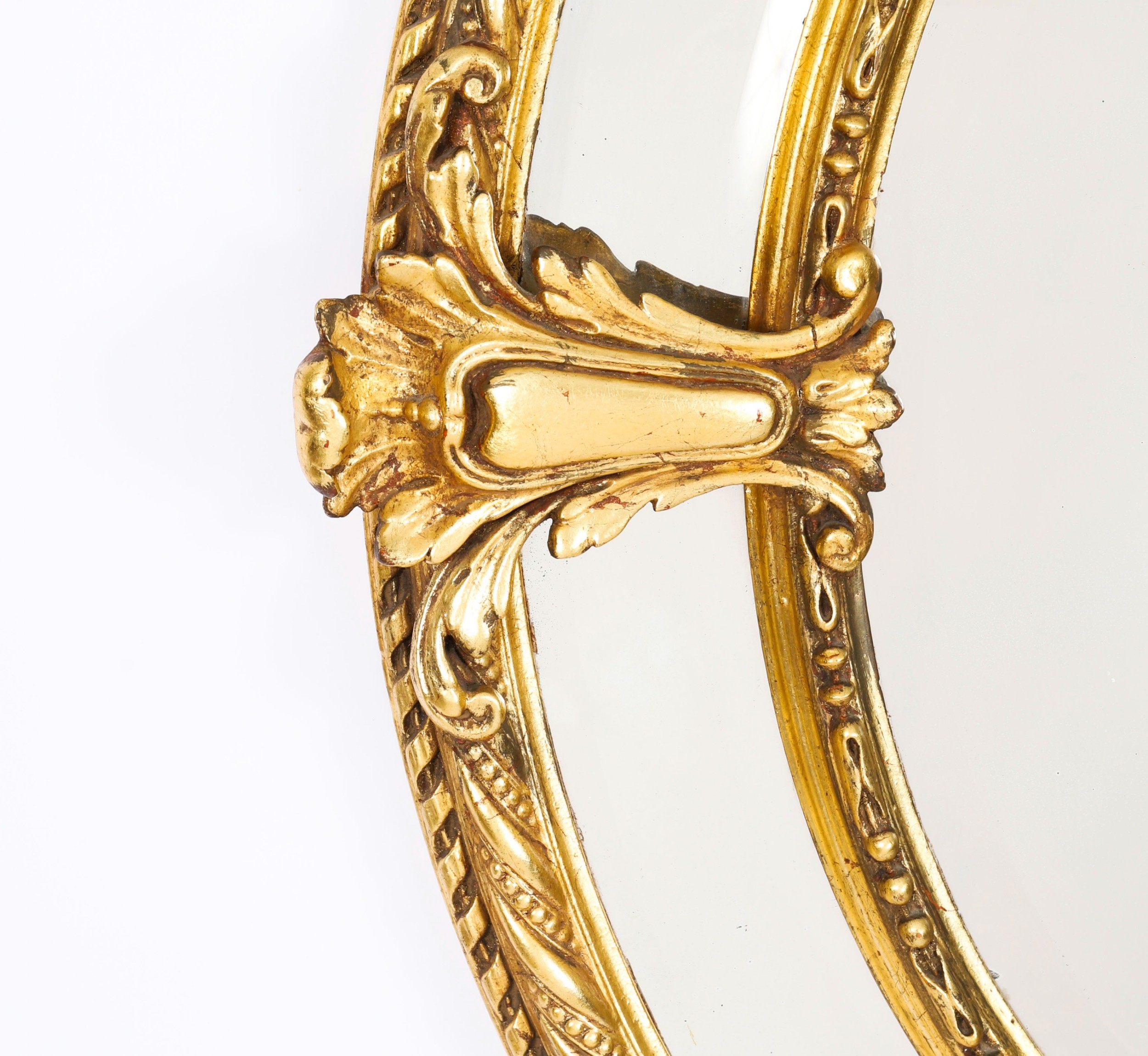
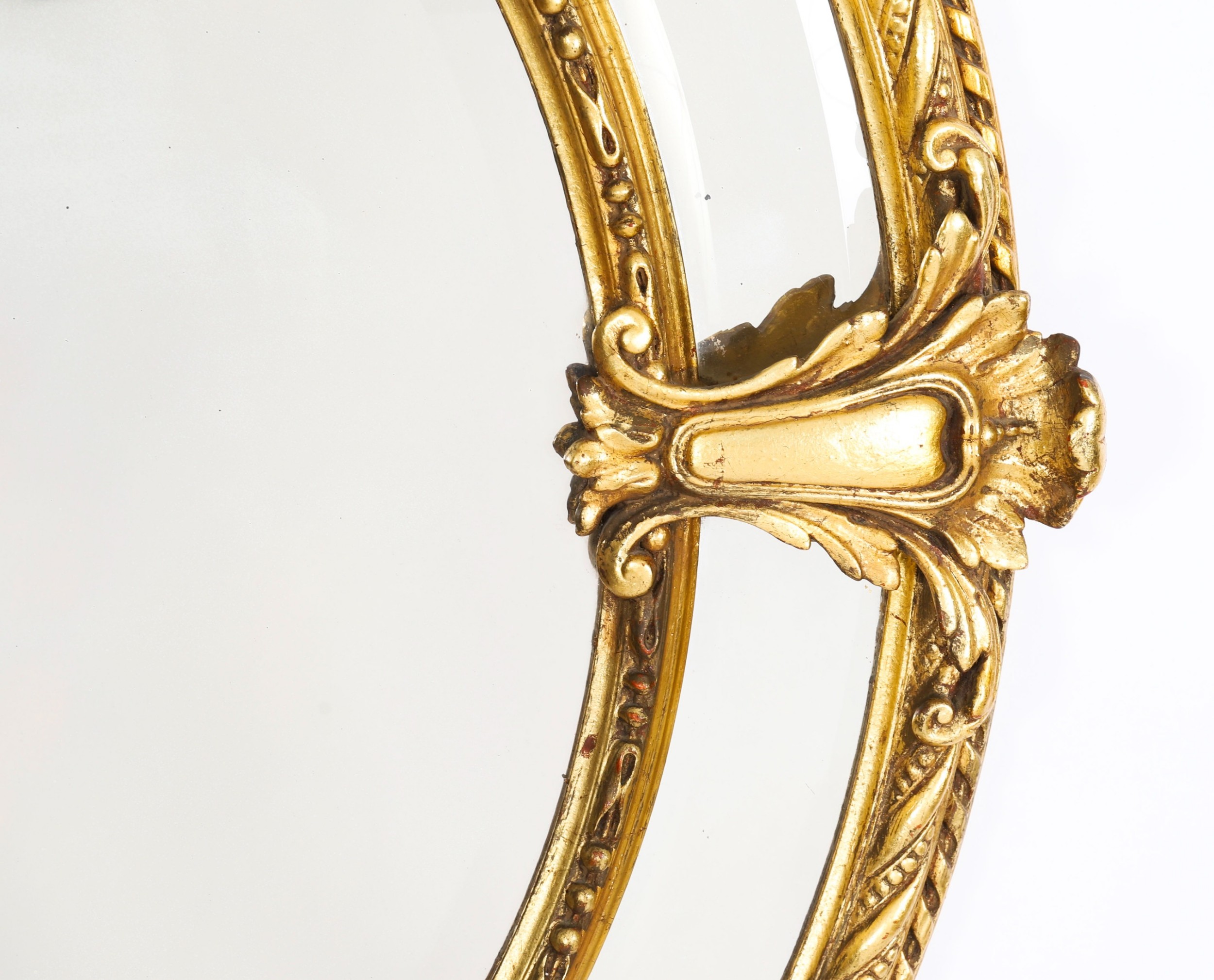
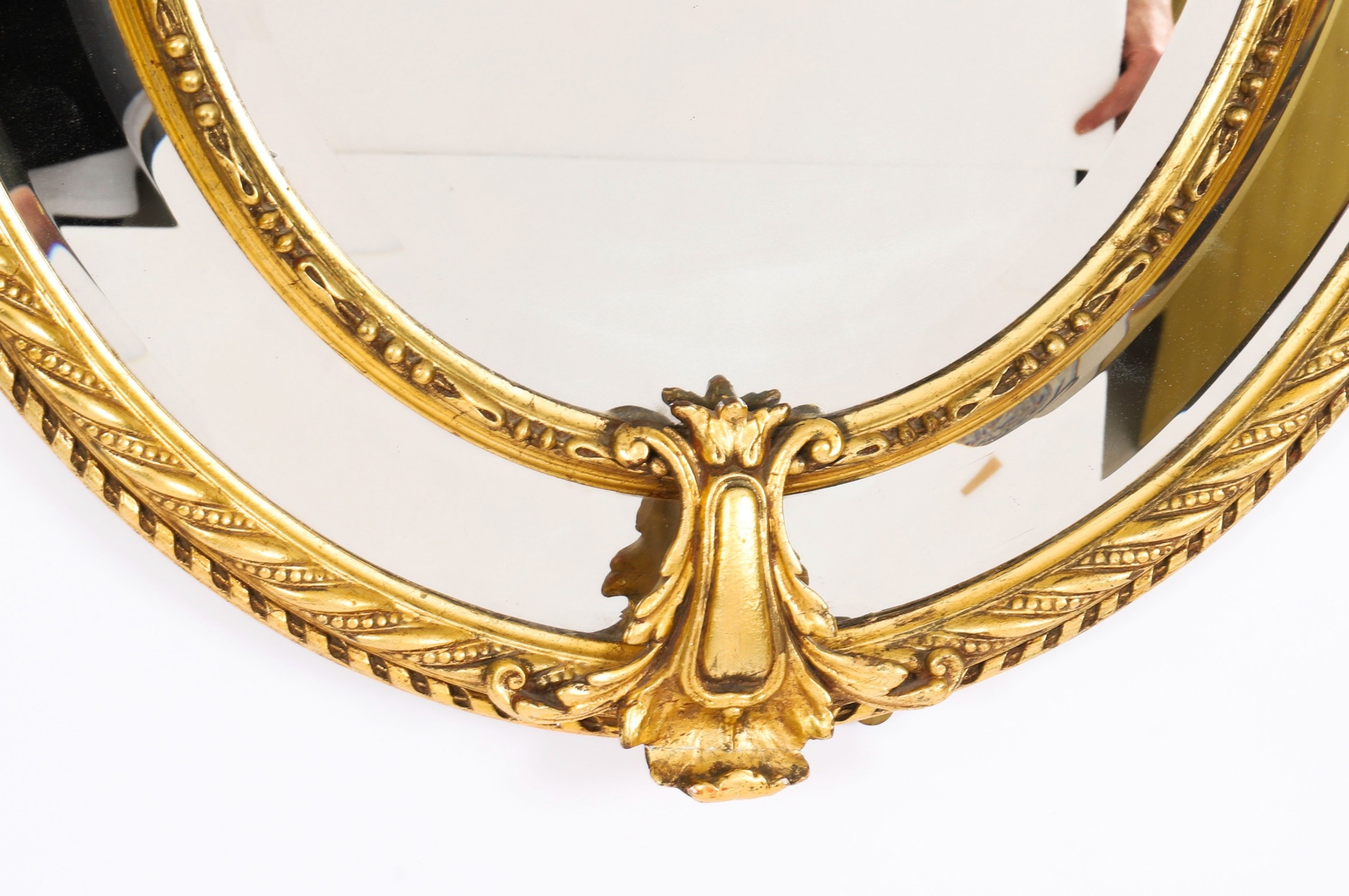
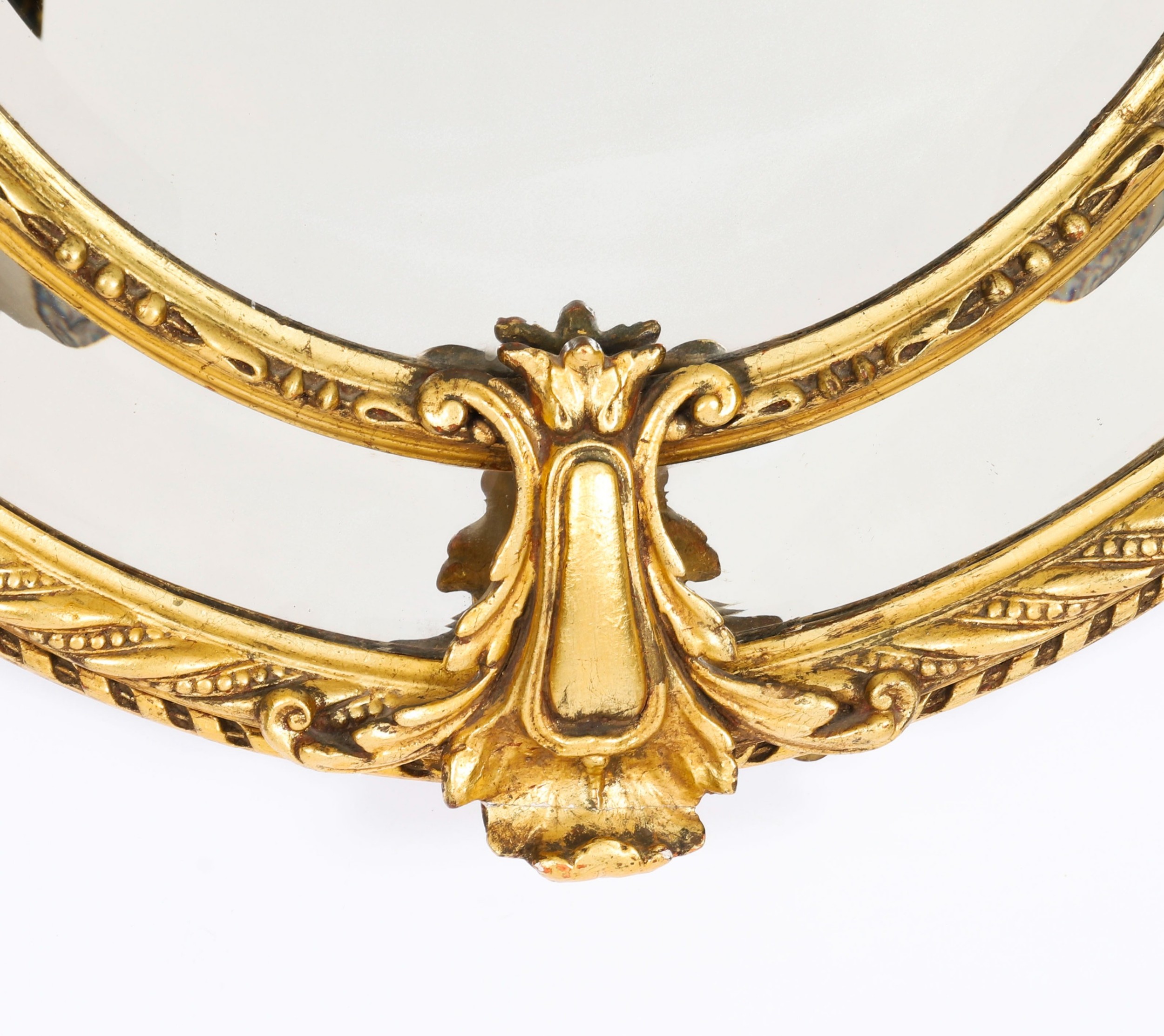
The bevelled mirror plate is set within a bead and husk giltwood frame with acanthus decoration and surmounted by a flower-filled basket. The gilding in excellent original condition.
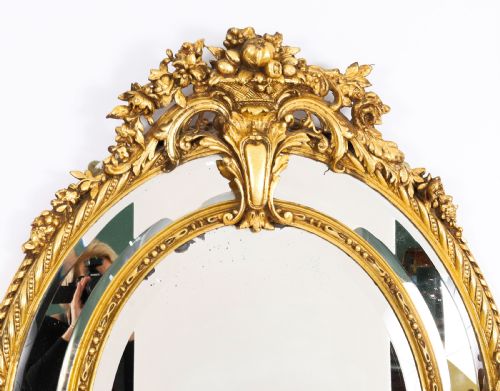
This mirror is a very decorative item which will look amazing and enhance the look of any room.

Provenance:

Private collection, Aberdeenshire

Condition:

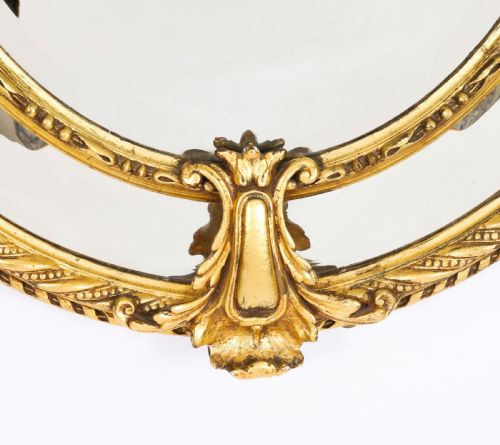
In excellent condition, the frame having its been beautifully cleaned and waxed in our workshops, please see photos for confirmation.
Dimensions in cm:

Height 123 cm x Width 96 cm x Depth 14.5 cm

Dimensions in inches:Height 4 foot x Width 3 foot, 2 inches x Depth 6 inches

Mirrors

are commonly used for personal grooming or admiring oneself (in which case the archaic term looking-glass is sometimes still used), decoration, and architecture.
The earliest manufactured mirrors were pieces of polished stone such as obsidian, a naturally occurring volcanic glass. In classical antiquity, mirrors were made of solid metal (bronze, later silver) and were too expensive for widespread use by common people; they were also prone to corrosion. Due to the low reflectivity of polished metal, these mirrors also gave a darker image than modern ones, making them unsuitable for indoor use with the artificial lighting of the time.
The method of making mirrors out of plate glass was invented by 16th-century Venetian glassmakers on the island of Murano, who covered the back of the glass with mercury, obtaining near-perfect and undistorted reflection. For over one hundred years, Venetian mirrors installed in richly decorated frames served as luxury decorations for palaces throughout Europe, but the secret of the mercury process eventually arrived in London and Paris during the 17th century, due to industrial espionage. French workshops succeeded in large scale industrialization of the process, eventually making mirrors affordable to the masses.
Giltwood

There is no doubt that giltwood furniture is an expression of grandeur and luxury. The golden hue of these pieces comes from the application of real gold leaf—a highly valued material both then and now. When it comes to buying antique giltwood furniture for your collection, there are many different considerations to keep in mind, many of which come down to personal preference.
Origins of Giltwood

The gilt gesso technique appeared in England at the end of the seventeenth century with the work of Jean Pelletier, a Huguenot craftsman who received royal patronage at Hampton Court and Kensington Palace. James Moore, a royal cabinetmaker working in the early eighteenth century, expanded on this technique with increased drama and exaggeration to the carving. Throughout the Georgian era in the eighteenth century, gilded furniture was highly prized as some of the finest furniture available as it emulated the ever popular taste for French style and décor.
The Technique

Gesso is a type of plaster that is prepared of finely ground chalk, applied onto the wooden surface in a series of layers—at least fifteen layers were needed to achieve the desired thickness. Once dried, the craftsmen could cut into the new surface to create different designs.  When the designs were complete, the gilding could be applied. To gild the surface, a red clay ground, known as bole, would be spread onto the surface to prepare for the laying of the gold leaf.

Our reference: A5128

Physical Dimensions
Height
123cm (48.43")
Width
96cm (37.80")
Depth
14.5cm (5.71")
Declaration

Regent Antiques has dated this Giltwood Oval Cushion Mirror to the 1860s.

Reference Numbers
Sellingantiques Reference
SA1200657
Dealers Internal Reference
A5128
Description
A finely carved antique Victorian  oval margin plate giltwood mirror, circa 1860 in date.
The bevelled mirror plate is set within a bead and husk giltwood frame with acanthus decoration and surmounted by a flower-filled basket.
Regent Antiques

The gilding in excellent original condition.

fig 1. An ornate nineteenth-century oval giltwood cushion mirror featuring carved floral cresting, acanthus leaf accents, and surround mirror paneling.
fig 1. Antique Victorian Giltwood Oval Cushion Mirror 19th C 123x96cm

This mirror is a very decorative item which will look amazing and enhance the look of any room.

Provenance:

Private collection, Aberdeenshire

Condition:

In excellent condition, the frame having its been beautifully cleaned and waxed in our workshops, please see photos for confirmation.

fig 2. An ornate nineteenth-century oval giltwood cushion mirror featuring carved floral cresting, acanthus leaf accents, and surround mirror paneling.
fig 2. Antique Victorian Giltwood Oval Cushion Mirror 19th C 123x96cm

Dimensions in cm:

Height 123 cm x Width 96 cm x Depth 14.5 cm

Dimensions in inches:Height 4 foot x Width 3 foot, 2 inches x Depth 6 inches

Mirrors

are commonly used for personal grooming or admiring oneself (in which case the archaic term looking-glass is sometimes still used), decoration, and architecture.

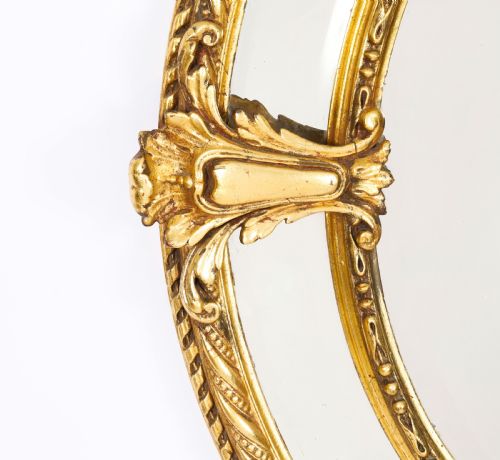
fig 3. An ornate nineteenth-century oval giltwood cushion mirror featuring carved floral cresting, acanthus leaf accents, and surround mirror paneling.
fig 3. Antique Victorian Giltwood Oval Cushion Mirror 19th C 123x96cm

The earliest manufactured mirrors were pieces of polished stone such as obsidian, a naturally occurring volcanic glass. In classical antiquity, mirrors were made of solid metal (bronze, later silver) and were too expensive for widespread use by common people; they were also prone to corrosion. Due to the low reflectivity of polished metal, these mirrors also gave a darker image than modern ones, making them unsuitable for indoor use with the artificial lighting of the time.

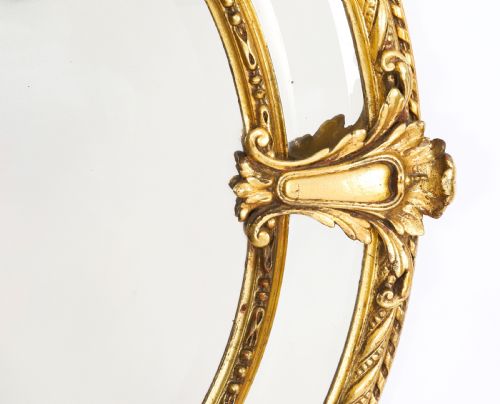
fig 4. An ornate nineteenth-century oval giltwood cushion mirror featuring carved floral cresting, acanthus leaf accents, and surround mirror paneling.
fig 4. Antique Victorian Giltwood Oval Cushion Mirror 19th C 123x96cm

The method of making mirrors out of plate glass was invented by 16th-century Venetian glassmakers on the island of Murano, who covered the back of the glass with mercury, obtaining near-perfect and undistorted reflection. For over one hundred years, Venetian mirrors installed in richly decorated frames served as luxury decorations for palaces throughout Europe, but the secret of the mercury process eventually arrived in London and Paris during the 17th century, due to industrial espionage. French workshops succeeded in large scale industrialization of the process, eventually making mirrors affordable to the masses.

fig 5. An ornate nineteenth-century oval giltwood cushion mirror featuring carved floral cresting, acanthus leaf accents, and surround mirror paneling.
fig 5. Antique Victorian Giltwood Oval Cushion Mirror 19th C 123x96cm

Giltwood

There is no doubt that giltwood furniture is an expression of grandeur and luxury. The golden hue of these pieces comes from the application of real gold leaf—a highly valued material both then and now. When it comes to buying antique giltwood furniture for your collection, there are many different considerations to keep in mind, many of which come down to personal preference.

fig 6. An ornate nineteenth-century oval giltwood cushion mirror featuring carved floral cresting, acanthus leaf accents, and surround mirror paneling.
fig 6. Antique Victorian Giltwood Oval Cushion Mirror 19th C 123x96cm

Origins of Giltwood

The gilt gesso technique appeared in England at the end of the seventeenth century with the work of Jean Pelletier, a Huguenot craftsman who received royal patronage at Hampton Court and Kensington Palace. James Moore, a royal cabinetmaker working in the early eighteenth century, expanded on this technique with increased drama and exaggeration to the carving. Throughout the Georgian era in the eighteenth century, gilded furniture was highly prized as some of the finest furniture available as it emulated the ever popular taste for French style and décor.

fig 7. An ornate nineteenth-century oval giltwood cushion mirror featuring carved floral cresting, acanthus leaf accents, and surround mirror paneling.
fig 7. Antique Victorian Giltwood Oval Cushion Mirror 19th C 123x96cm

The Technique

Gesso is a type of plaster that is prepared of finely ground chalk, applied onto the wooden surface in a series of layers—at least fifteen layers were needed to achieve the desired thickness. Once dried, the craftsmen could cut into the new surface to create different designs.  When the designs were complete, the gilding could be applied. To gild the surface, a red clay ground, known as bole, would be spread onto the surface to prepare for the laying of the gold leaf.

Our reference: A5128

Height
123cm (48.43")
Width
96cm (37.80")
Depth
14.5cm (5.71")
Date of Manufacture

Regent Antiques has dated this Giltwood Oval Cushion Mirror to the 1860s.

Reference Numbers
Sellingantiques Ref
SA1200657
Dealers Internal Ref
A5128
Regent Antiques
Regent Antiques
Sellingantiques verified Since Sep 2016

We specialise in english and continental furniture, silver, porcelain and decorative items.

Dealer Profile

You can view the stock and full dealer information on the Regent Antiques Profile Page

Trade Associations

Regent Antiques is a registered member of LAPADA  CINOA
PDF SHARE
SAVE
An ornate nineteenth-century oval giltwood cushion mirror featuring carved floral cresting, acanthus leaf accents, and surround mirror paneling.
1 / 8
Archive I An ornate nineteenth-century oval giltwood cushion mirror featuring carved floral cresting, acanthus leaf accents, and surround mirror paneling.

Antique Victorian Giltwood Oval Cushion Mirror 19th C 123x96cm
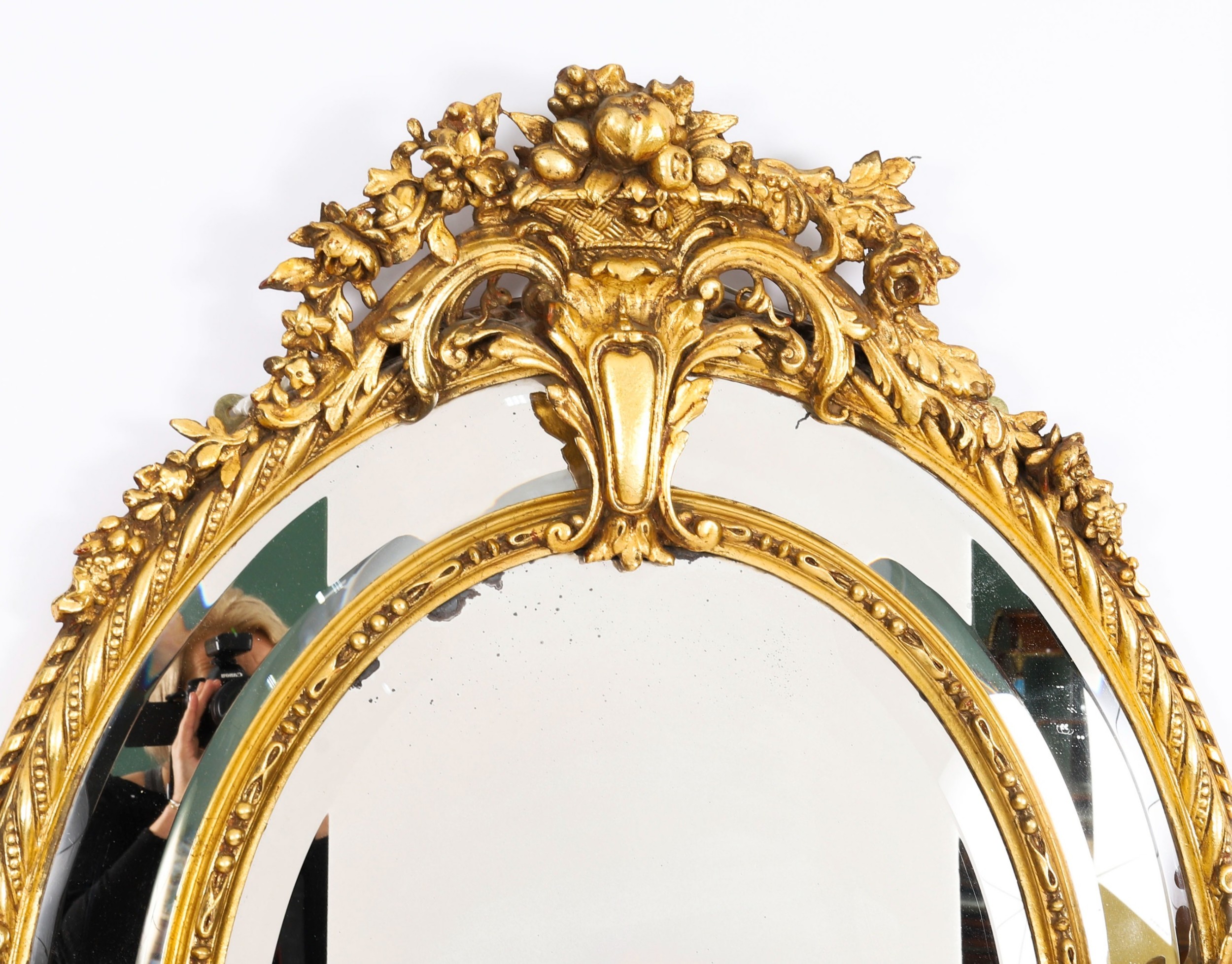
Archive II An ornate nineteenth-century oval giltwood cushion mirror featuring carved floral cresting, acanthus leaf accents, and surround mirror paneling. View II
Archive III An ornate nineteenth-century oval giltwood cushion mirror featuring carved floral cresting, acanthus leaf accents, and surround mirror paneling. View III
Archive IV An ornate nineteenth-century oval giltwood cushion mirror featuring carved floral cresting, acanthus leaf accents, and surround mirror paneling. View IV
Archive V An ornate nineteenth-century oval giltwood cushion mirror featuring carved floral cresting, acanthus leaf accents, and surround mirror paneling. View V
Archive VI An ornate nineteenth-century oval giltwood cushion mirror featuring carved floral cresting, acanthus leaf accents, and surround mirror paneling. View VI
Archive VII An ornate nineteenth-century oval giltwood cushion mirror featuring carved floral cresting, acanthus leaf accents, and surround mirror paneling. View VII
Archive VIII An ornate nineteenth-century oval giltwood cushion mirror featuring carved floral cresting, acanthus leaf accents, and surround mirror paneling. View VIII
FURTHER BROWSING

Visitors also looked at these ⇣

Enlarged Archival View
Location
Manor Warehouse
318 Green Lanes
London
N4 1BX
United Kingdom
Verified Since Sep 2016
Items For Sale 659
Items Sold 2,608
Regent Antiques
Regent Antiques
Verified Since Sep 2016
View Dealer Info
Location: Manor Warehouse, 318 Green Lanes, London, N4 1BX, United Kingdom
Verified
Sep 2016
For Sale
659
Sold
2,608
An ornate nineteenth-century oval giltwood cushion mirror featuring carved floral cresting, acanthus leaf accents, and surround mirror paneling.
Antique Victorian Giltwood Oval Cushion Mirror 19th C 123x96cm
Ref: SA1200657
An ornate nineteenth-century oval giltwood cushion mirror featuring carved floral cresting, acanthus leaf accents, and surround mirror paneling.
Detail View 1
Detail View 2
Detail View 3
Detail View 4
Detail View 5
Detail View 6
Detail View 7
Archival Detail
Every single antique dealer on our platform is individually approved by our internal team. We verify their professional trade history, ethical standards, and photographic quality to ensure a secure, high-standard buying environment. Upon joining, every dealer agrees to a strict 9-point code of conduct. While issues can occasionally arise, our dealers typically resolve them swiftly and directly with the buyer. In fact, since our founding in 2002, Sellingantiques has only had to step in to help resolve an issue on roughly five occasions—a true testament to the quality of our dealers and their dedication to your happiness.
Our dealers are highly experienced in packing and shipping fragile, high-value antiques. Because you are in direct contact with the dealer, you will be able to easily go through all available shipping and insurance options together to ensure your item arrives safely.
Antiques are the ultimate green purchase. By choosing historical pieces over newly manufactured goods, you completely eliminate the carbon footprint of modern mass production while preserving exceptional, timeless craftsmanship.

A cushion mirror is a decorative frame construction featuring a central reflective glass panel bordered by angled subsidiary mirror pieces. Developed in the seventeenth century and refined during the Victorian era, this design reflects light across multiple angles to brighten interior spaces.

Traditional giltwood frames were constructed from carved timber bases layered with gesso, a smooth mixture of chalk and glue binder. Gold leaf was then applied using water gilding or oil gilding techniques before being burnished with agate tools.

Authentic pieces display fine craquelure across the gesso surface, subtle wear revealing underlying red or grey clay bole, and heavy timber backings. Original mirror glass often shows mild oxidisation, foxing, or slight distortion characteristic of historical production methods.

Position the mirror above a fireplace mantelpiece or modern sideboard to create a commanding central focal point. The warm gold finish and ornate detailing contrast effectively against contemporary matte paint finishes or simplified architectural lines.

Dust giltwood frames gently with a dry, soft-bristled brush, avoiding liquid cleaners or water that can dissolve gesso and water gilding. Glass panels should be cleaned sparingly using a lightly dampened microfiber cloth, taking care not to let moisture seep behind the frame border.
items
Add keywords to the filter
Price
£100
£250000
Era
Movements
Material
Origin
Stock Location
Freshness
Online Payments
Categories