16,740  PAGES BROWSED TODAY PAGES TODAY 25  ANTIQUES UPLOADED TODAY NEW ARRIVALS
ID #SA1198948
FOR SALE
£14,000
Email
Save
18th Century Portrait Oil Painting of James Stanley by John Hamilton Mortimer (1740-1779)
Isherwood Fine Art
for sale €16,380     $17,780
£14,000
Isherwood Fine Art

Isherwood Fine Art

Sellingantiques Verified Since Oct 2023
View Dealers Stock Page
  • About Us
    16th to 19th century old master, british and european paintings and sculpture, specialising in period portraiture. Member BADA, LAPADA.
  • Trade Associations
    Isherwood Fine Art is a registered member of LAPADA  BADA 
Id #SA1198948
PDF SHARE
SAVE

18th Century Portrait Oil Painting of James Stanley by John Hamilton Mortimer (1740-1779)

18th century
Description

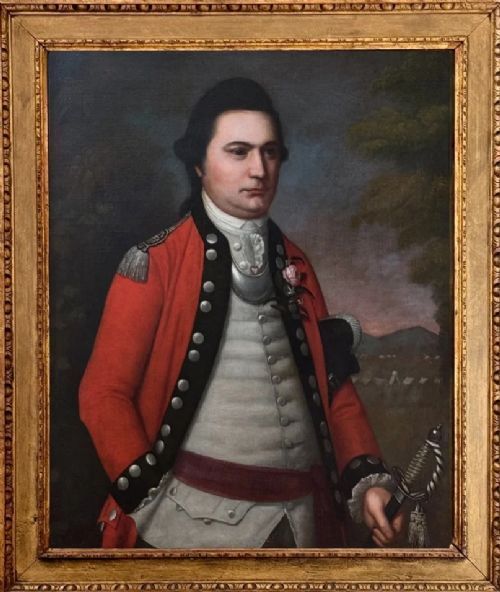
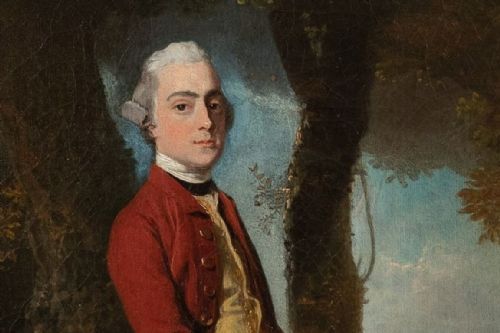
Portrait of James Stanley (1750 - 1810), circa 1775-1778, full-length, wearing a red coat and breeches and a gold embroidered waistcoat, holding his hat whilst resting on his cane under a tree in a woodland park landscape.

Oil on canvas in a carved giltwood frame decorated with floral and shell motifs.

Provenance:

With the sitter, James Stanley (1750-1810), and thence by descent to his grandson;

Edward James Stanley, who married Mary Dorothy Labouchere (1843-1920), eldest daughter of Henry Labouchere, Lord Taunton (1798-1869);

By descent to their son E. A. V. Stanley;

Sotheby, Wilson & Hodge, 14 July 1920, lot 174;

Private Collection, United Kingdom

James Stanley was born in 1750. He was the grandfather of Edward James Stanley, who married Mary Dorothy Labouchere, eldest daughter of Henry Labouchere, Lord Taunton (1798-1869).

Lord Taunton was a prominent Whig and Liberal politician and also formed a wide-ranging art collection of very high quality. He lived at Stoke Park, Stoke Poges, but later moved to a larger house, Quantock Lodge near Over Stowey, which he built between 1856 and 1868 to accommodate his collection. After his death Quantock Lodge and the art collection passed by descent to Edward Arthur Vesey Stanley, who sold part of it at auction. Included was the present portrait, which had come into Lord Taunton’s collection from the Stanley family.

The 14 July 1920 sale was conducted by Sotheby, Wilkinson & Hodge, the present work sold as lot 174: ''Zoffany (attributed to). Portrait of a gentleman: whole-length, walking towards the right in a landscape; in red coat and breeches and embroidered waistcoat. Canvas, 29 x 24 ins.''

John Hamilton Mortimer was born on 17 September 1740 in Eastbourne, Sussex, the fifth and youngest child of Thomas Mortimer (1697-1774), a mill owner and customs officer, and his wife, Catherine, née Smith (d. 1746).

He may have received some instruction in painting from a paternal uncle, Roger Mortimer (1700-1769), an itinerant artist. In 1756 or 1757 Mortimer''s father paid £100 for him to be placed in London for three years in the studio of the portrait painter Thomas Hudson (1701-1779). Finding Hudson''s studio regime quite rigid, Mortimer was by March 1759 working under Robert Edge Pine (1730-1788), a history painter and portraitist of republican views who later moved to America. Although Mortimer did not stay with Pine for long, he was influenced by his painting style, his subject matter, and probably his radical political views. Mortimer embraced the opportunity for developing his drawing skills and contact with other students and artists in London which he found in the Duke of Richmond''s Sculpture Gallery, the St Martinis Lane Academy and Shipley''s Drawing Academy. Mortimer won prizes offered by the Society for the Encouragement of Arts, Manufactures, and Commerce, for drawings done in the Duke of Richmond''s Sculpture Gallery and the St Martin''s Lane Academy. Mortimer met the painter Joseph Wright of Derby (1734 - 1797), with whom he became friends, in Hudson''s studio, and in Shipley''s drawing school he probably met two of his closest artist friends, Thomas Jones (1742-1803) and James Gandon (1742-1823).

In 1750 the Society for the Encouragement of Arts, Manufactures, and Commerce began to offer premiums for English (and later British) history painting. Mortimer won second prize in 1763 and in 1764 he won the first prize for St Paul Preaching to the Ancient Britons (Guildhall, High Wycombe, Buckinghamshire). This success established his reputation as a history painter. Alongside this, he painted portraits and particularly group portraits, in the style of John Zoffany and Francis Wheatley.

Physical Dimensions
Height
93cm (36.61")
Width
80cm (31.50")
Declaration

Isherwood Fine Art has dated this Georgian Oil Portrait Painting to the 18th Century.
Reference Numbers
Sellingantiques Reference
SA1198948
Dealers Notes

Isherwood fine art

Description
Portrait of James Stanley (1750 - 1810), circa 1775-1778, full-length, wearing a red coat and breeches and a gold embroidered waistcoat, holding his hat whilst resting on his cane under a tree in a woodland park landscape.
fig 1. An 18th-century oil painting featuring a gentleman in a red coat standing outdoors within an ornate gold giltwood frame.
fig 1. 18th Century Portrait Oil Painting of James Stanley by John Hamilton Mortimer (1740-1779)

Oil on canvas in a carved giltwood frame decorated with floral and shell motifs.

Provenance:

With the sitter, James Stanley (1750-1810), and thence by descent to his grandson;
Edward James Stanley, who married Mary Dorothy Labouchere (1843-1920), eldest daughter of Henry Labouchere, Lord Taunton (1798-1869);.
Isherwood Fine Art
fig 2. An 18th-century oil painting featuring a gentleman in a red coat standing outdoors within an ornate gold giltwood frame.
fig 2. 18th Century Portrait Oil Painting of James Stanley by John Hamilton Mortimer (1740-1779)

By descent to their son E. A. V. Stanley;

Sotheby, Wilson & Hodge, 14 July 1920, lot 174;

Private Collection, United Kingdom

James Stanley was born in 1750. He was the grandfather of Edward James Stanley, who married Mary Dorothy Labouchere, eldest daughter of Henry Labouchere, Lord Taunton (1798-1869).
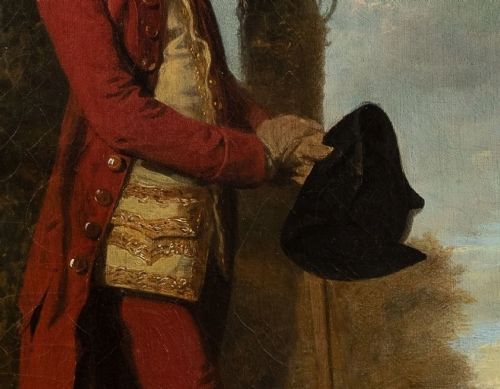
fig 3. An 18th-century oil painting featuring a gentleman in a red coat standing outdoors within an ornate gold giltwood frame.
fig 3. 18th Century Portrait Oil Painting of James Stanley by John Hamilton Mortimer (1740-1779)

Lord Taunton was a prominent Whig and Liberal politician and also formed a wide-ranging art collection of very high quality. He lived at Stoke Park, Stoke Poges, but later moved to a larger house, Quantock Lodge near Over Stowey, which he built between 1856 and 1868 to accommodate his collection. After his death Quantock Lodge and the art collection passed by descent to Edward Arthur Vesey Stanley, who sold part of it at auction. Included was the present portrait, which had come into Lord Taunton’s collection from the Stanley family.
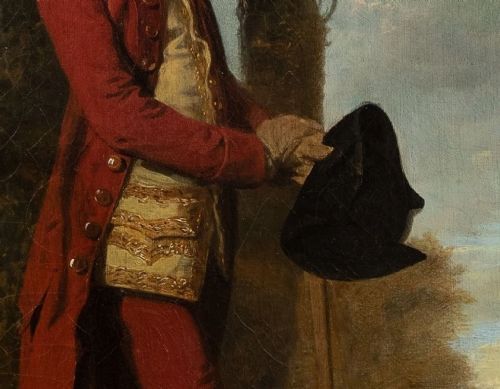
fig 4. An 18th-century oil painting featuring a gentleman in a red coat standing outdoors within an ornate gold giltwood frame.
fig 4. 18th Century Portrait Oil Painting of James Stanley by John Hamilton Mortimer (1740-1779)

The 14 July 1920 sale was conducted by Sotheby, Wilkinson & Hodge, the present work sold as lot 174: ''Zoffany (attributed to). Portrait of a gentleman: whole-length, walking towards the right in a landscape; in red coat and breeches and embroidered waistcoat. Canvas, 29 x 24 ins.''
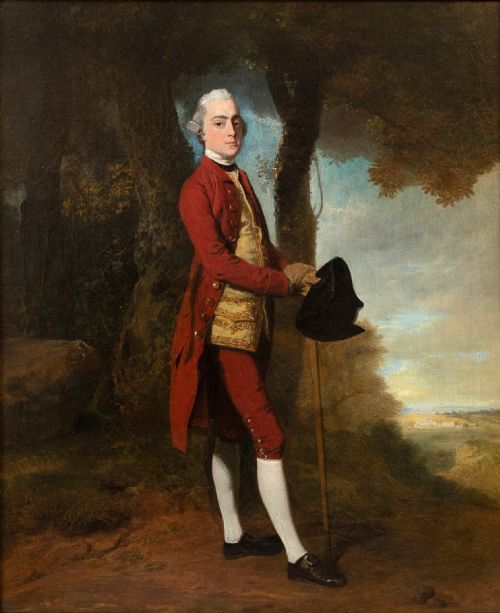
fig 5. An 18th-century oil painting featuring a gentleman in a red coat standing outdoors within an ornate gold giltwood frame.
fig 5. 18th Century Portrait Oil Painting of James Stanley by John Hamilton Mortimer (1740-1779)

John Hamilton Mortimer was born on 17 September 1740 in Eastbourne, Sussex, the fifth and youngest child of Thomas Mortimer (1697-1774), a mill owner and customs officer, and his wife, Catherine, née Smith (d. 1746).

He may have received some instruction in painting from a paternal uncle, Roger Mortimer (1700-1769), an itinerant artist. In 1756 or 1757 Mortimer''s father paid £100 for him to be placed in London for three years in the studio of the portrait painter Thomas Hudson (1701-1779). Finding Hudson''s studio regime quite rigid, Mortimer was by March 1759 working under Robert Edge Pine (1730-1788), a history painter and portraitist of republican views who later moved to America. Although Mortimer did not stay with Pine for long, he was influenced by his painting style, his subject matter, and probably his radical political views. Mortimer embraced the opportunity for developing his drawing skills and contact with other students and artists in London which he found in the Duke of Richmond''s Sculpture Gallery, the St Martinis Lane Academy and Shipley''s Drawing Academy. Mortimer won prizes offered by the Society for the Encouragement of Arts, Manufactures, and Commerce, for drawings done in the Duke of Richmond''s Sculpture Gallery and the St Martin''s Lane Academy. Mortimer met the painter Joseph Wright of Derby (1734 - 1797), with whom he became friends, in Hudson''s studio, and in Shipley''s drawing school he probably met two of his closest artist friends, Thomas Jones (1742-1803) and James Gandon (1742-1823).

In 1750 the Society for the Encouragement of Arts, Manufactures, and Commerce began to offer premiums for English (and later British) history painting. Mortimer won second prize in 1763 and in 1764 he won the first prize for St Paul Preaching to the Ancient Britons (Guildhall, High Wycombe, Buckinghamshire). This success established his reputation as a history painter. Alongside this, he painted portraits and particularly group portraits, in the style of John Zoffany and Francis Wheatley.

Height
93cm (36.61")
Width
80cm (31.50")
Date of Manufacture

Isherwood Fine Art has dated this Georgian Oil Portrait Painting to the 18th Century.

Reference Numbers
Sellingantiques Ref
SA1198948
Isherwood Fine Art
Isherwood Fine Art
Sellingantiques verified Since Oct 2023

16th to 19th century old master, british and european paintings and sculpture, specialising in period portraiture. Member BADA, LAPADA.

Dealer Profile

You can view the stock and full dealer information on the Isherwood Fine Art Profile Page

Trade Associations

Isherwood Fine Art is a registered member of LAPADA  BADA 

PDF SHARE
SAVE
An 18th-century oil painting featuring a gentleman in a red coat standing outdoors within an ornate gold giltwood frame.
1 / 6
Archive I An 18th-century oil painting featuring a gentleman in a red coat standing outdoors within an ornate gold giltwood frame.

18th Century Portrait Oil Painting Of James Stanley By John Hamilton Mortimer (1740-1779)

Archive II An 18th-century oil painting featuring a gentleman in a red coat standing outdoors within an ornate gold giltwood frame. View II
Archive III An 18th-century oil painting featuring a gentleman in a red coat standing outdoors within an ornate gold giltwood frame. View III
Archive IV An 18th-century oil painting featuring a gentleman in a red coat standing outdoors within an ornate gold giltwood frame. View IV
Archive V An 18th-century oil painting featuring a gentleman in a red coat standing outdoors within an ornate gold giltwood frame. View V
Archive VI An 18th-century oil painting featuring a gentleman in a red coat standing outdoors within an ornate gold giltwood frame. View VI
FURTHER BROWSING

Visitors also looked at these ⇣

Enlarged Archival View
Telephone 07984 699799
Location
Bath and London
United Kingdom

By appointment only.
Verified Since Oct 2023
Items For Sale 43
Items Sold 32
Isherwood Fine Art
Isherwood Fine Art
Verified Since Oct 2023
View Dealer Info
Location: Bath and London, United Kingdom, , By appointment only.
Verified
Oct 2023
For Sale
43
Sold
32
An 18th-century oil painting featuring a gentleman in a red coat standing outdoors within an ornate gold giltwood frame.
18th Century Portrait Oil Painting Of James Stanley By John Hamilton Mortimer (1740-1779)
Ref: SA1198948
An 18th-century oil painting featuring a gentleman in a red coat standing outdoors within an ornate gold giltwood frame.
Detail View 1
Detail View 2
Detail View 3
Detail View 4
Detail View 5
Archival Detail
Every single antique dealer on our platform is individually approved by our internal team. We verify their professional trade history, ethical standards, and photographic quality to ensure a secure, high-standard buying environment. Upon joining, every dealer agrees to a strict 9-point code of conduct. While issues can occasionally arise, our dealers typically resolve them swiftly and directly with the buyer. In fact, since our founding in 2002, Sellingantiques has only had to step in to help resolve an issue on roughly five occasions—a true testament to the quality of our dealers and their dedication to your happiness.
Our dealers are highly experienced in packing and shipping fragile, high-value antiques. Because you are in direct contact with the dealer, you will be able to easily go through all available shipping and insurance options together to ensure your item arrives safely.
Antiques are the ultimate green purchase. By choosing historical pieces over newly manufactured goods, you completely eliminate the carbon footprint of modern mass production while preserving exceptional, timeless craftsmanship.

Georgian portraiture of the 18th century typically depicted members of nobility and high society set against idealised landscape backdrops or understated interiors. Artists of this era focused on capturing stature, social standing, and elaborate period clothing through refined oil painting techniques.

Portraits from this era were traditionally executed using oil pigments ground with drying oils, applied onto stretched linen or cotton canvas. Frames were commonly crafted from carved wood and gesso, finished with hand-applied gold leaf.

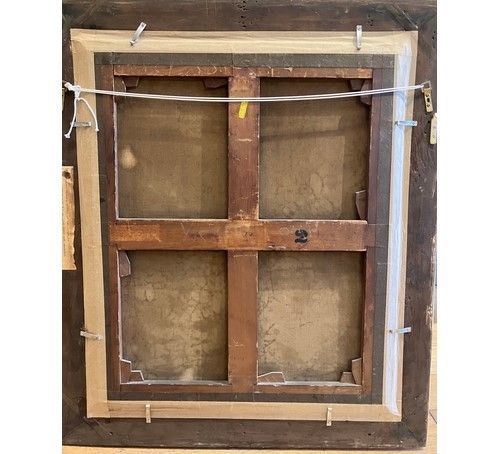
Authentic 18th-century paintings often display natural age-related craquelure across the paint surface, original hand-carved stretcher bars, and historic oxidisation on the canvas reverse. Additionally, original giltwood frames show distinctive layer wear where gesso and bole become visible beneath the leafing.

A formal Georgian portrait creates a focal point when hung above a minimalist console table, sideboard, or mantelpiece. Pairing historical portraiture with modern architectural lighting or clean-lined contemporary furniture enhances the visual contrast between period art and modern design.

Keep the painting in a climate-controlled room away from direct sunlight, excess humidity, and direct heat sources. Dust the surface lightly with a soft, dry camel-hair brush, avoiding liquid cleaners or abrasive cloths which can damage fragile oil layers and gold leaf.
items
Add keywords to the filter
Price
£100
£250000
Era
Movements
Material
Origin
Stock Location
Freshness
Online Payments
Categories