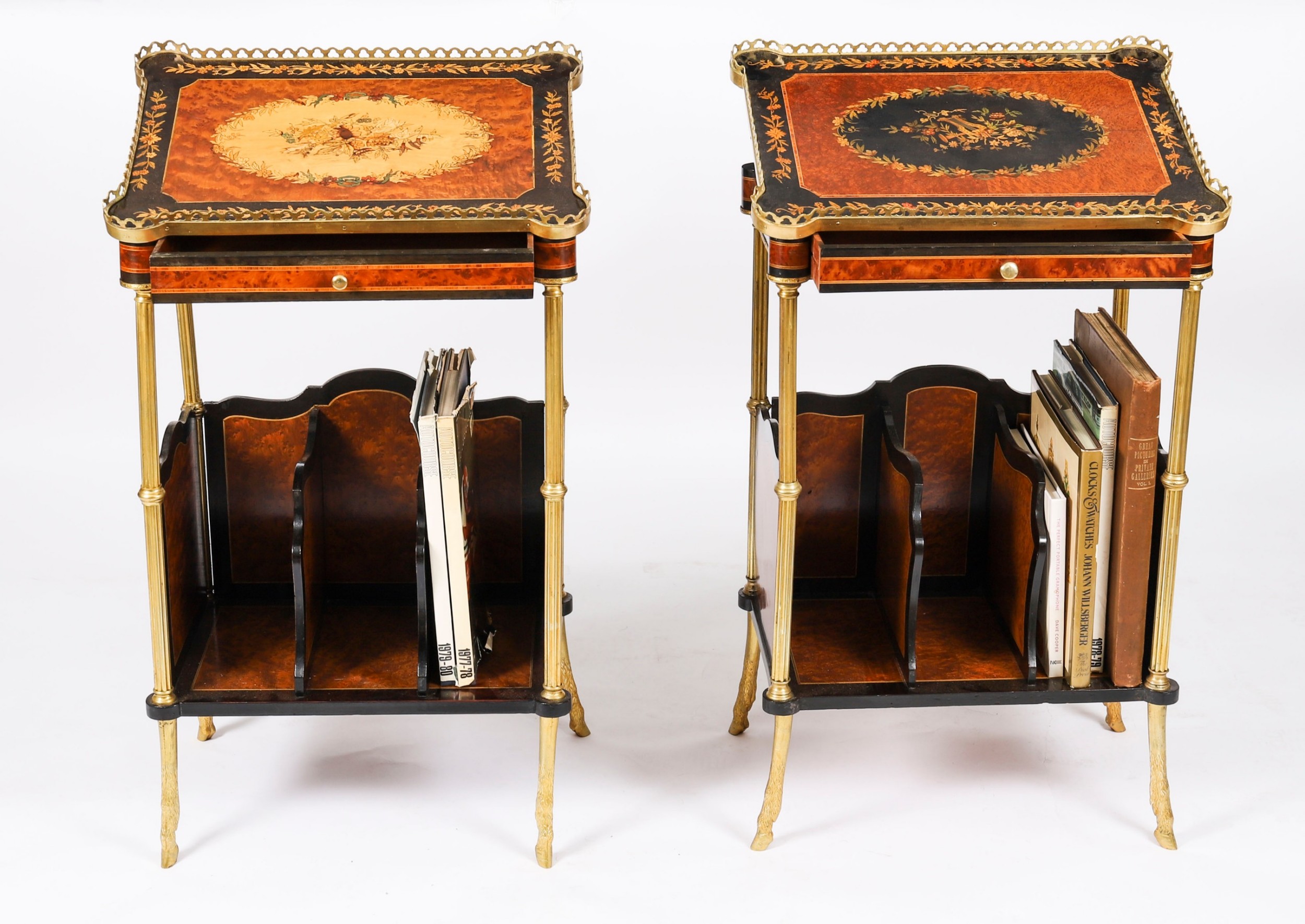
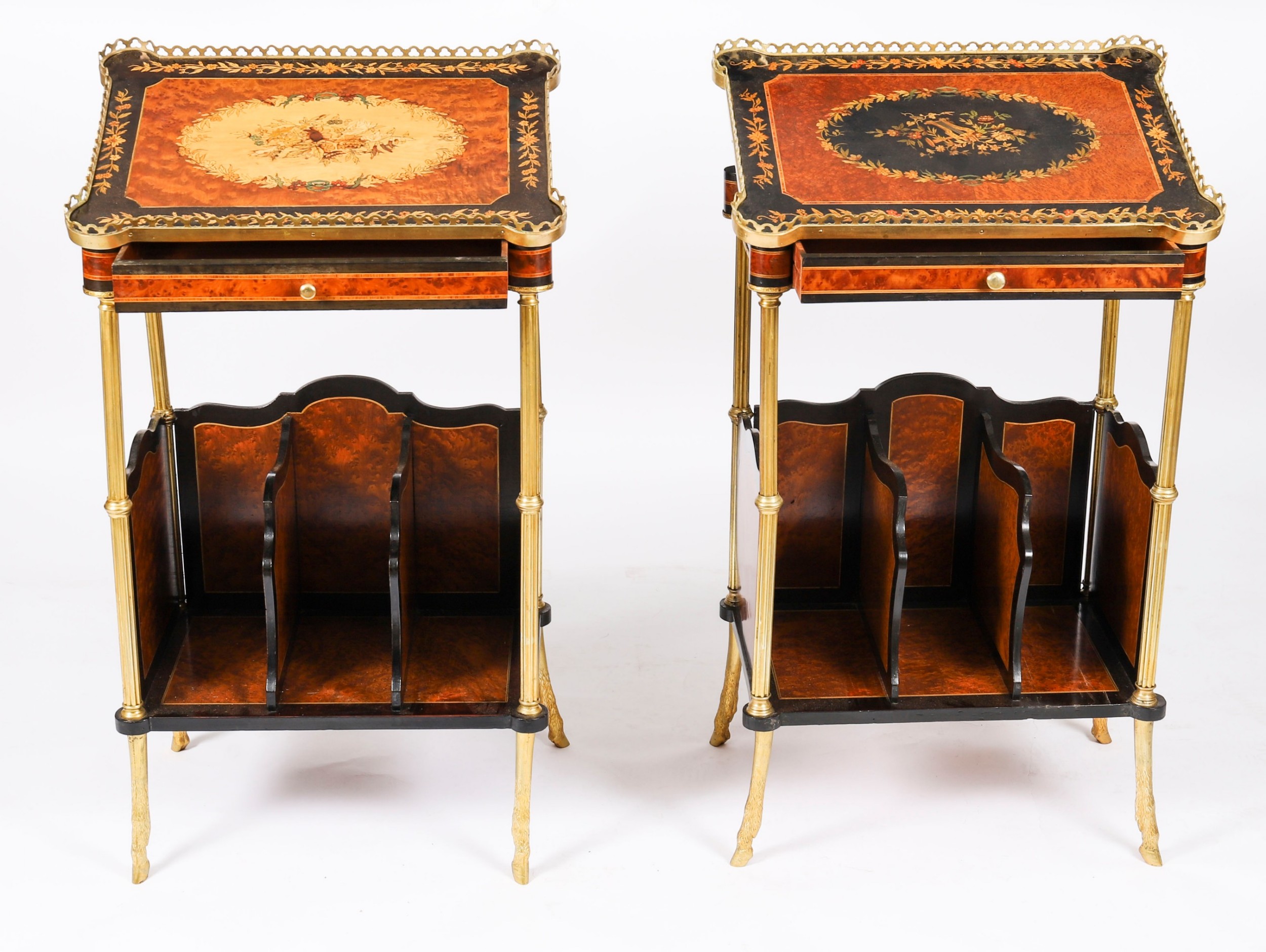
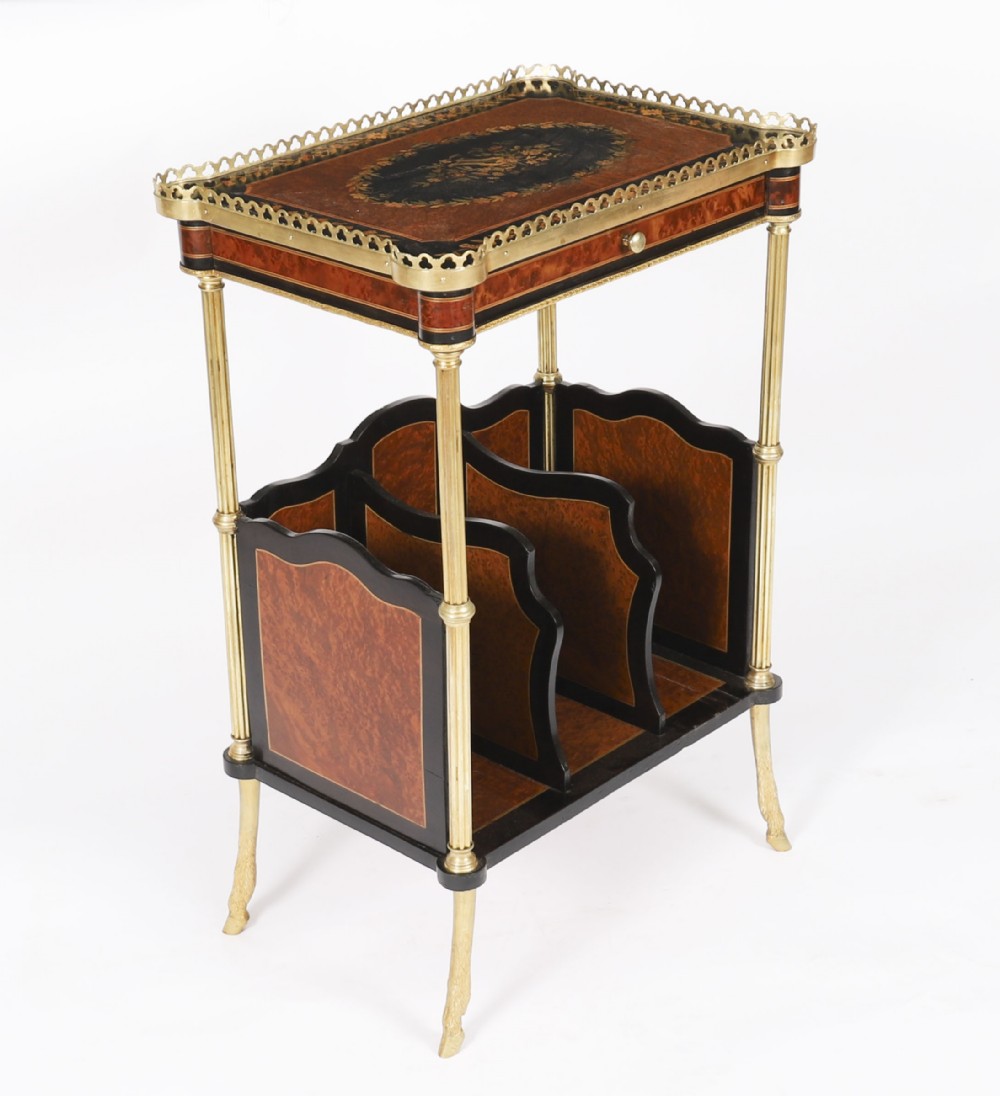
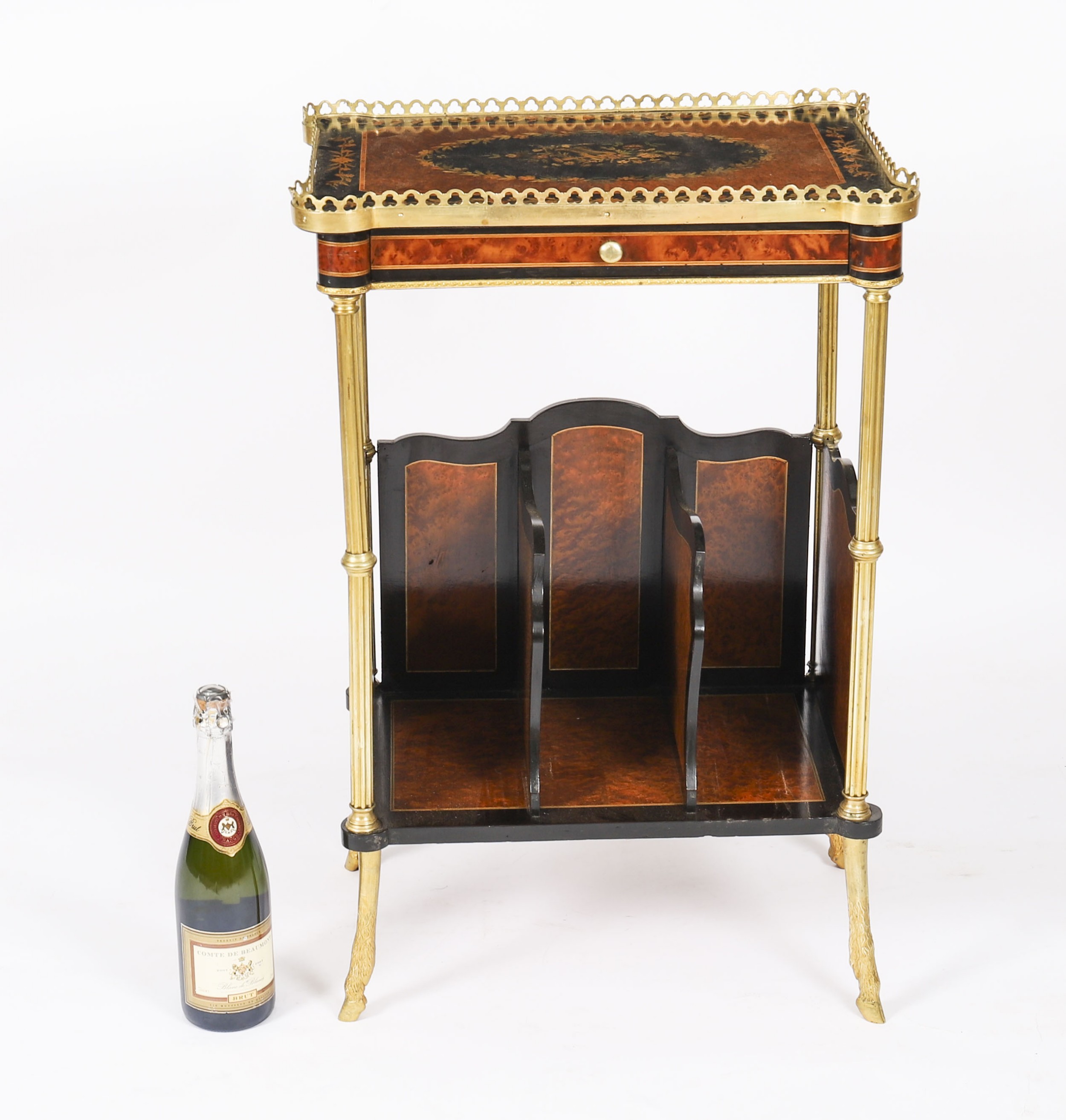
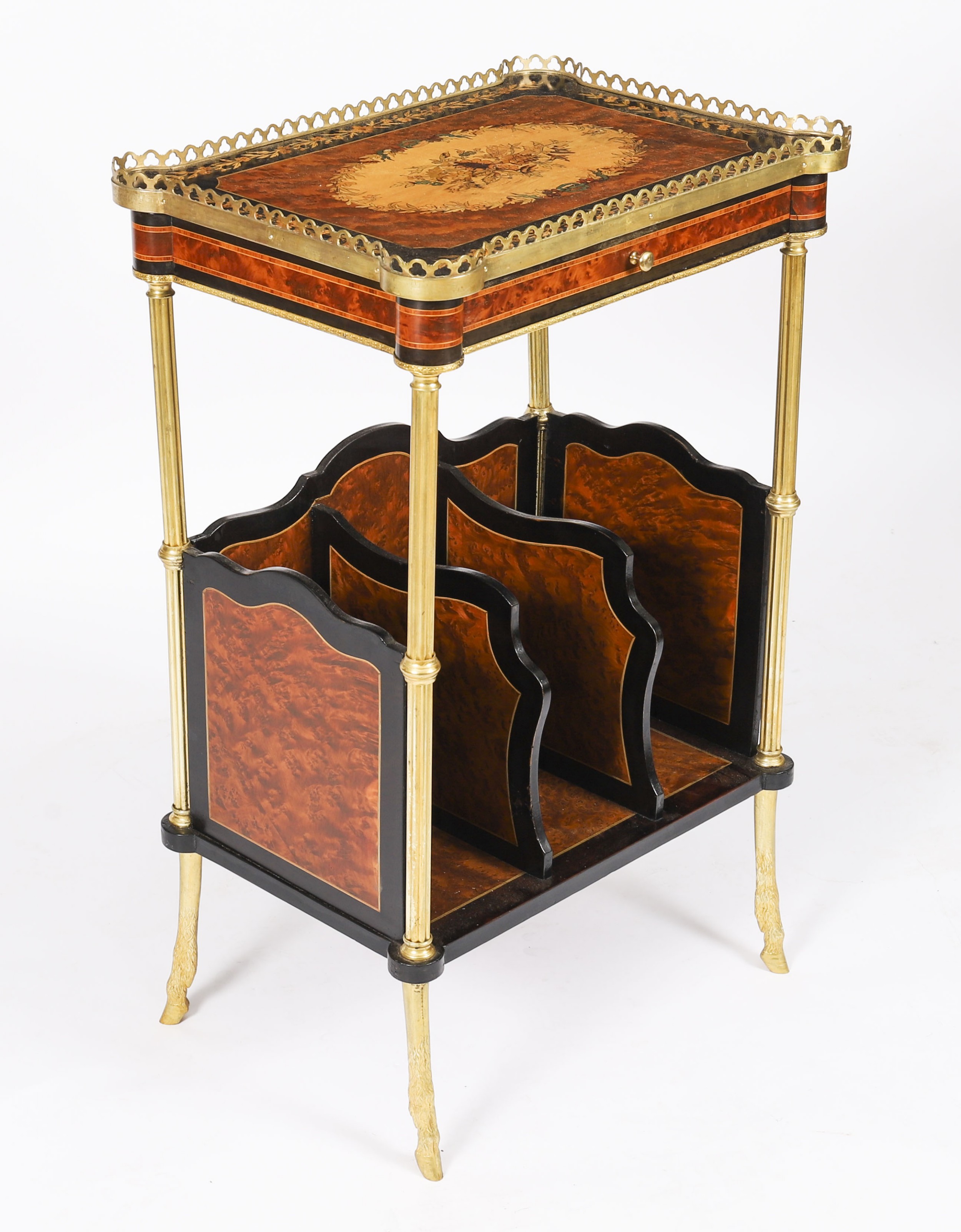
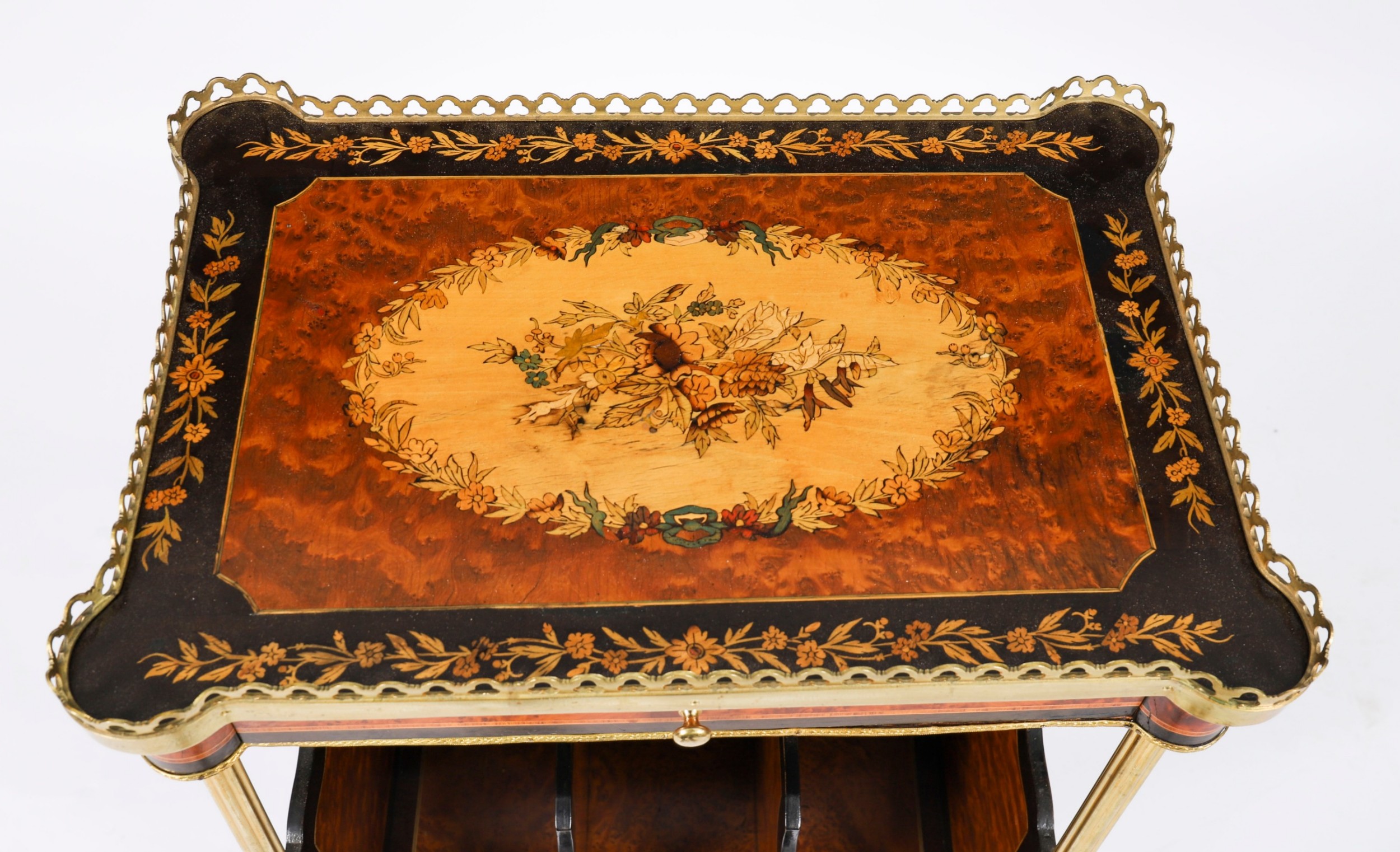
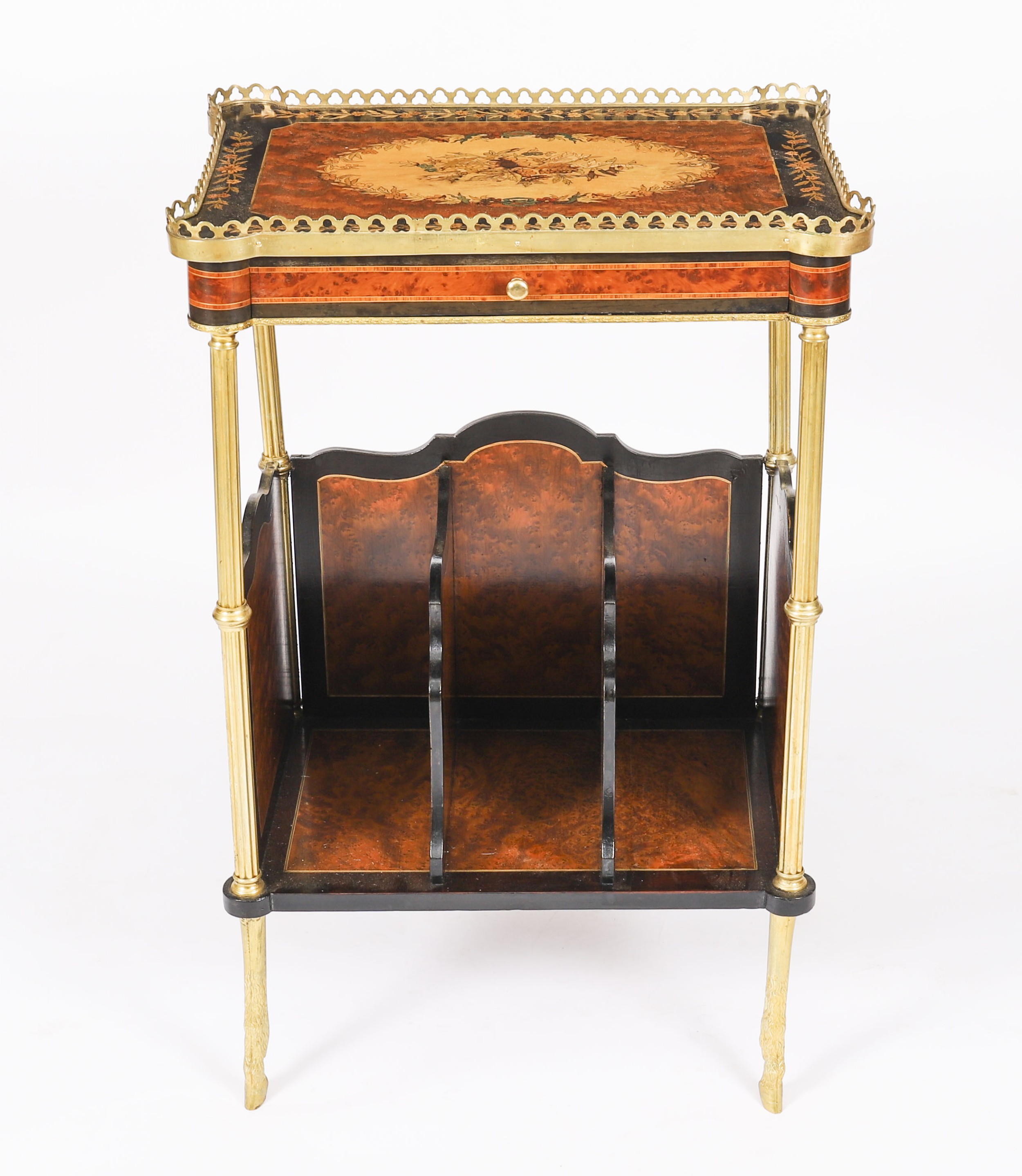
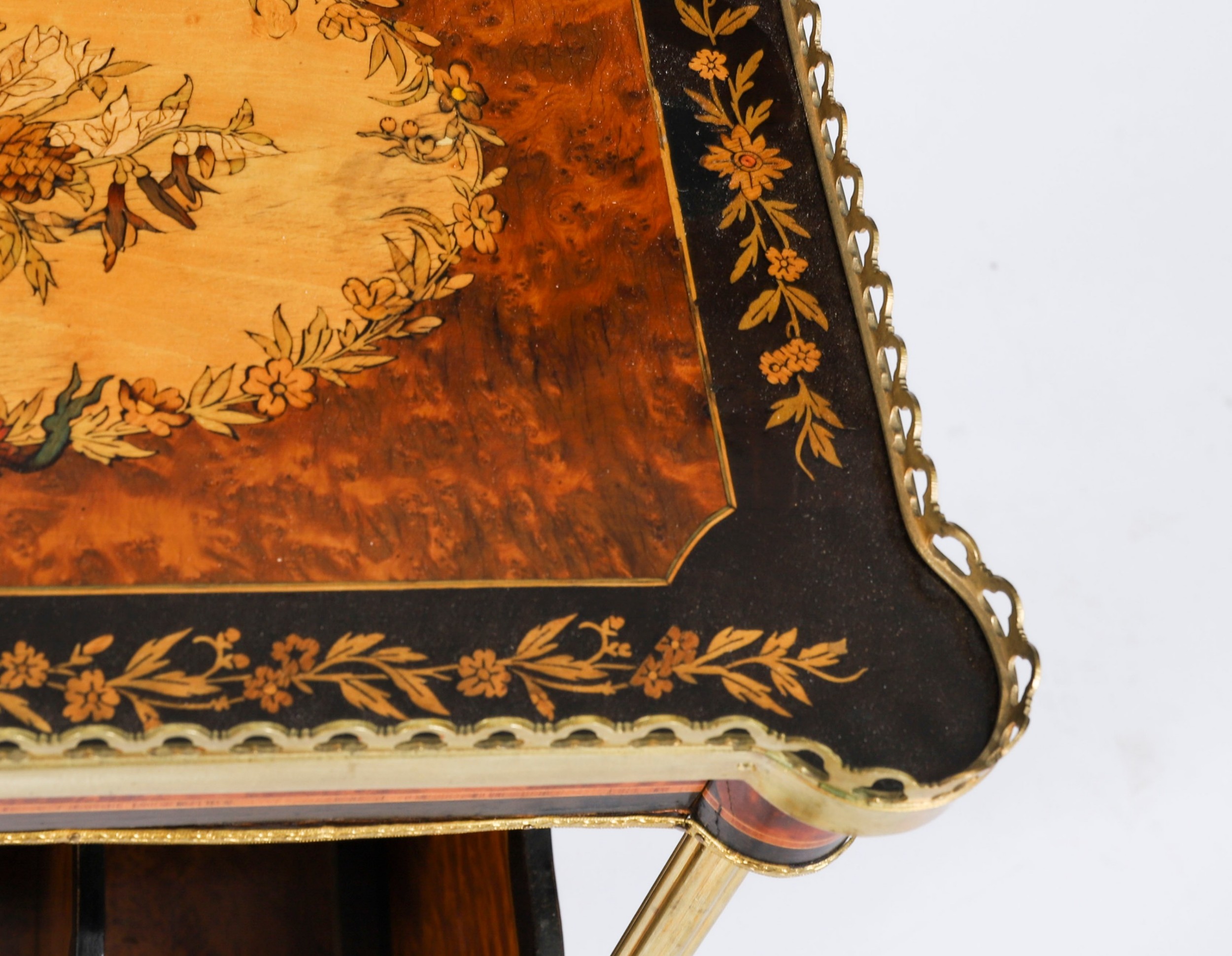
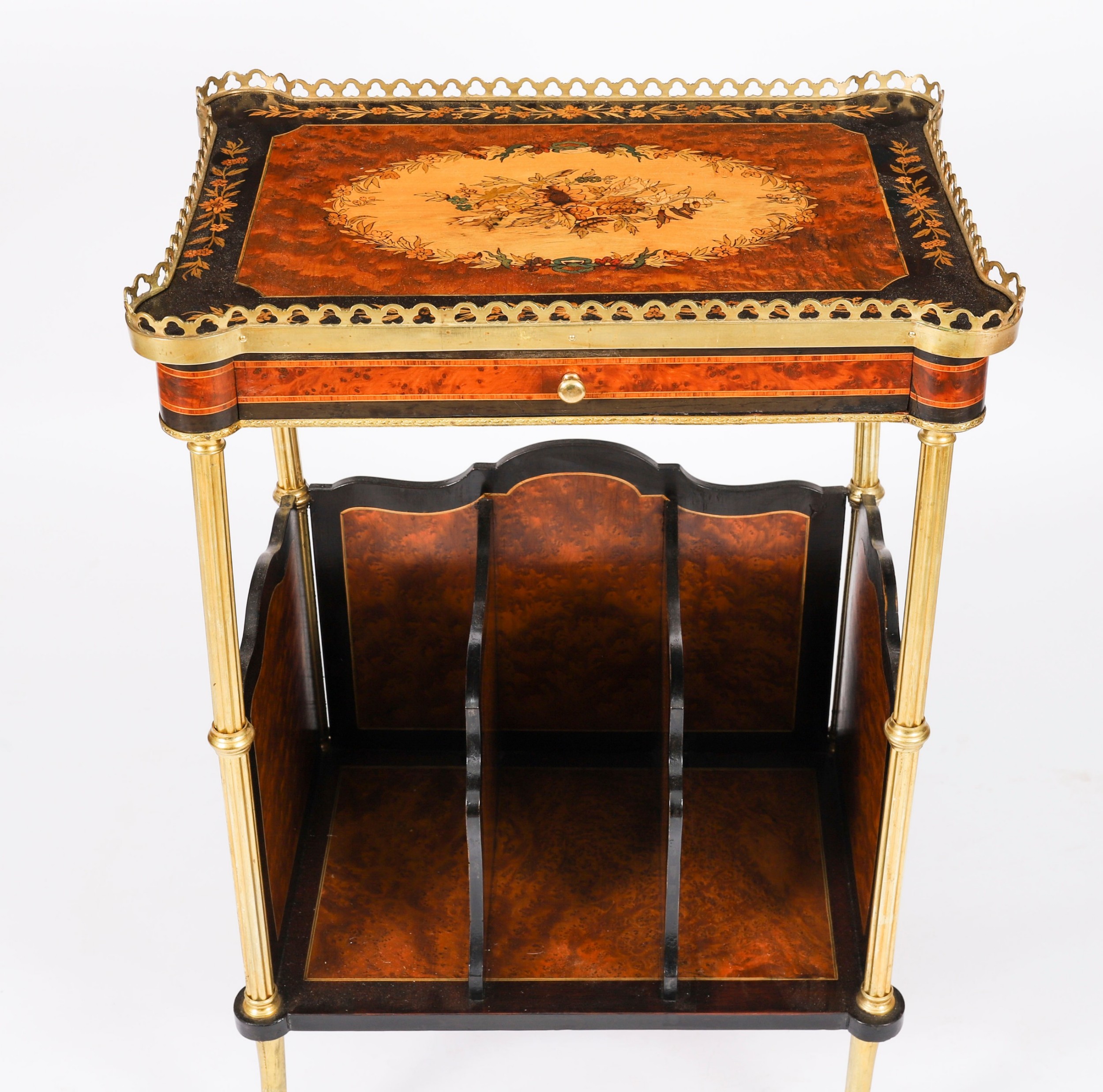
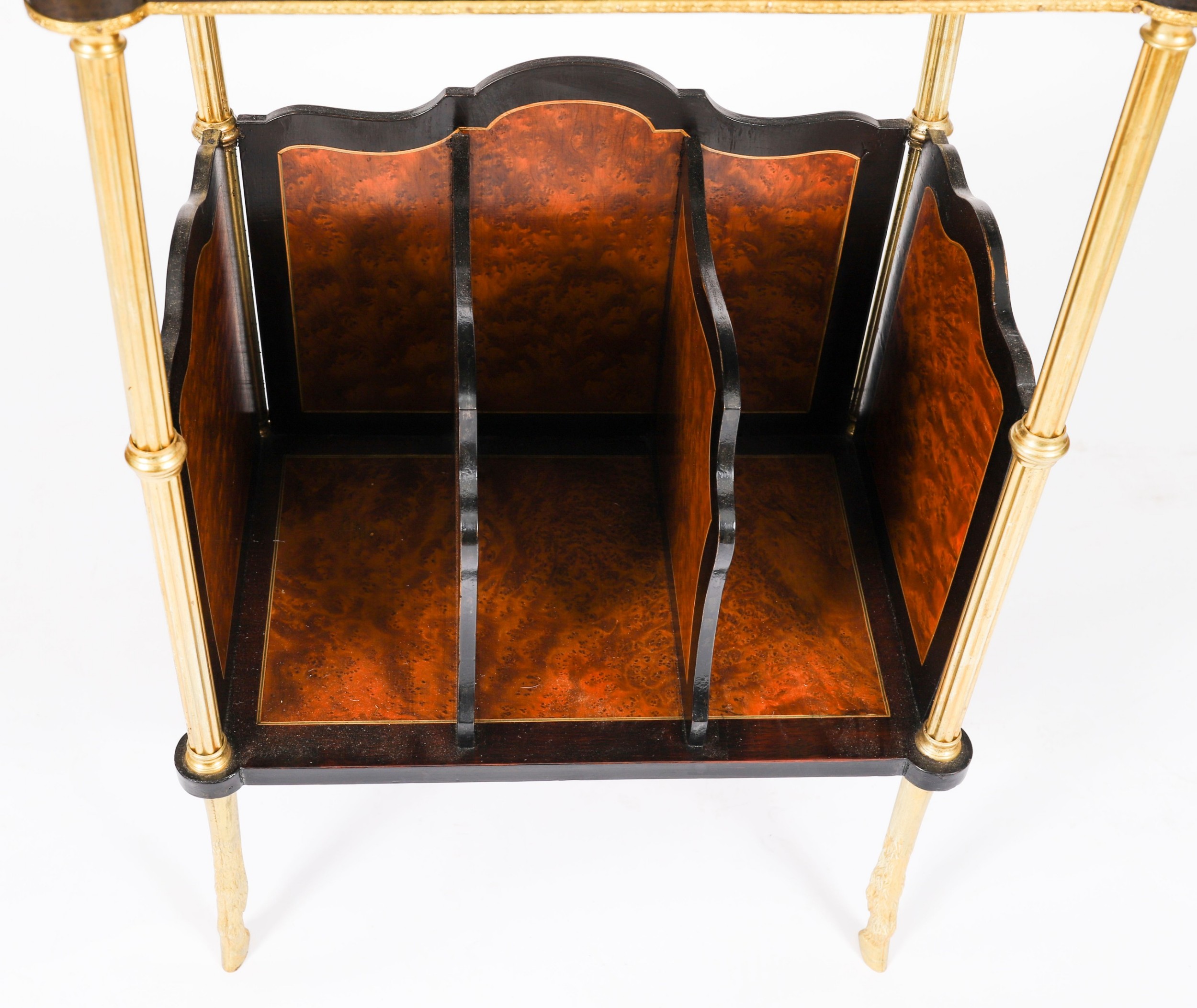
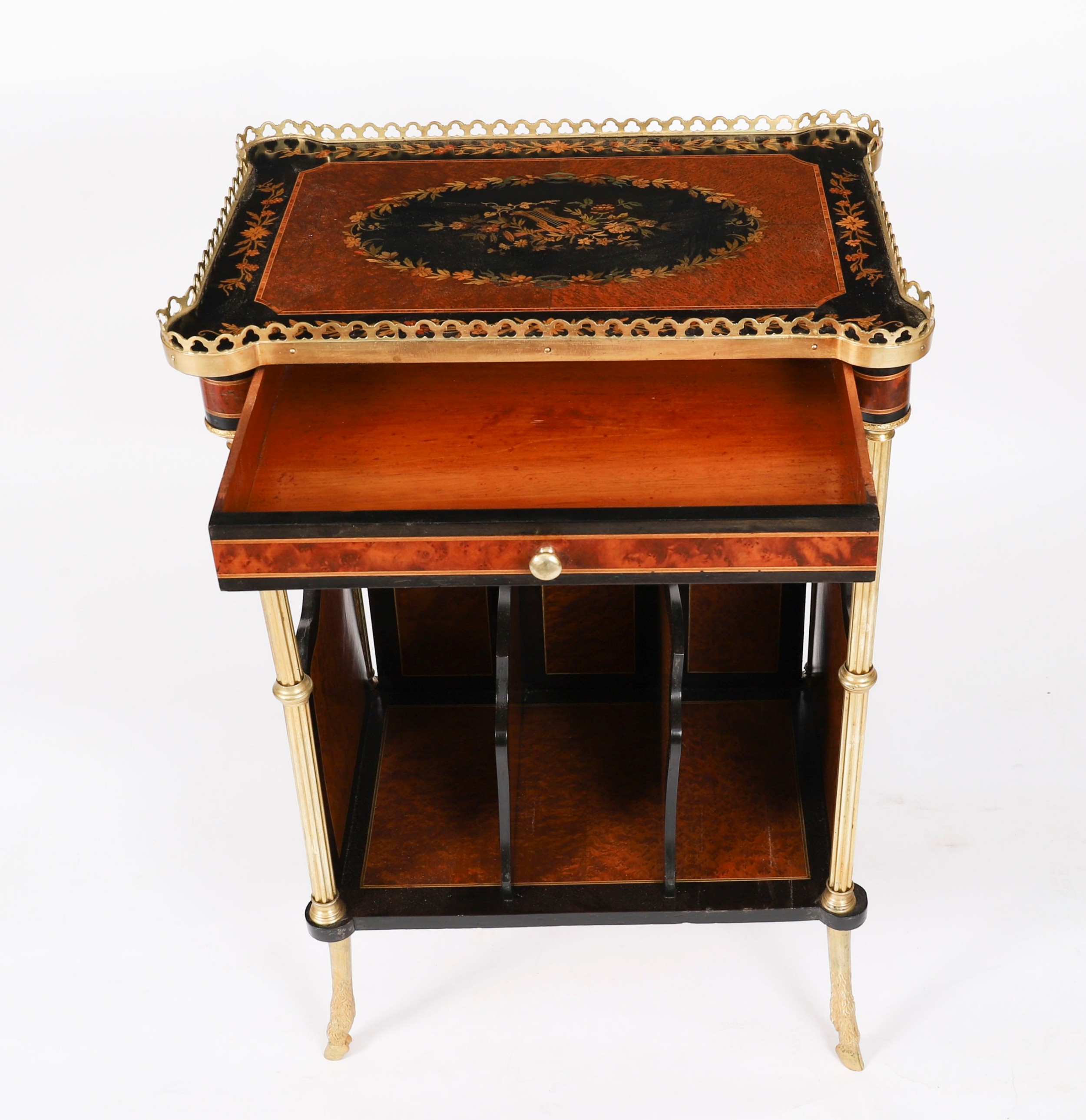
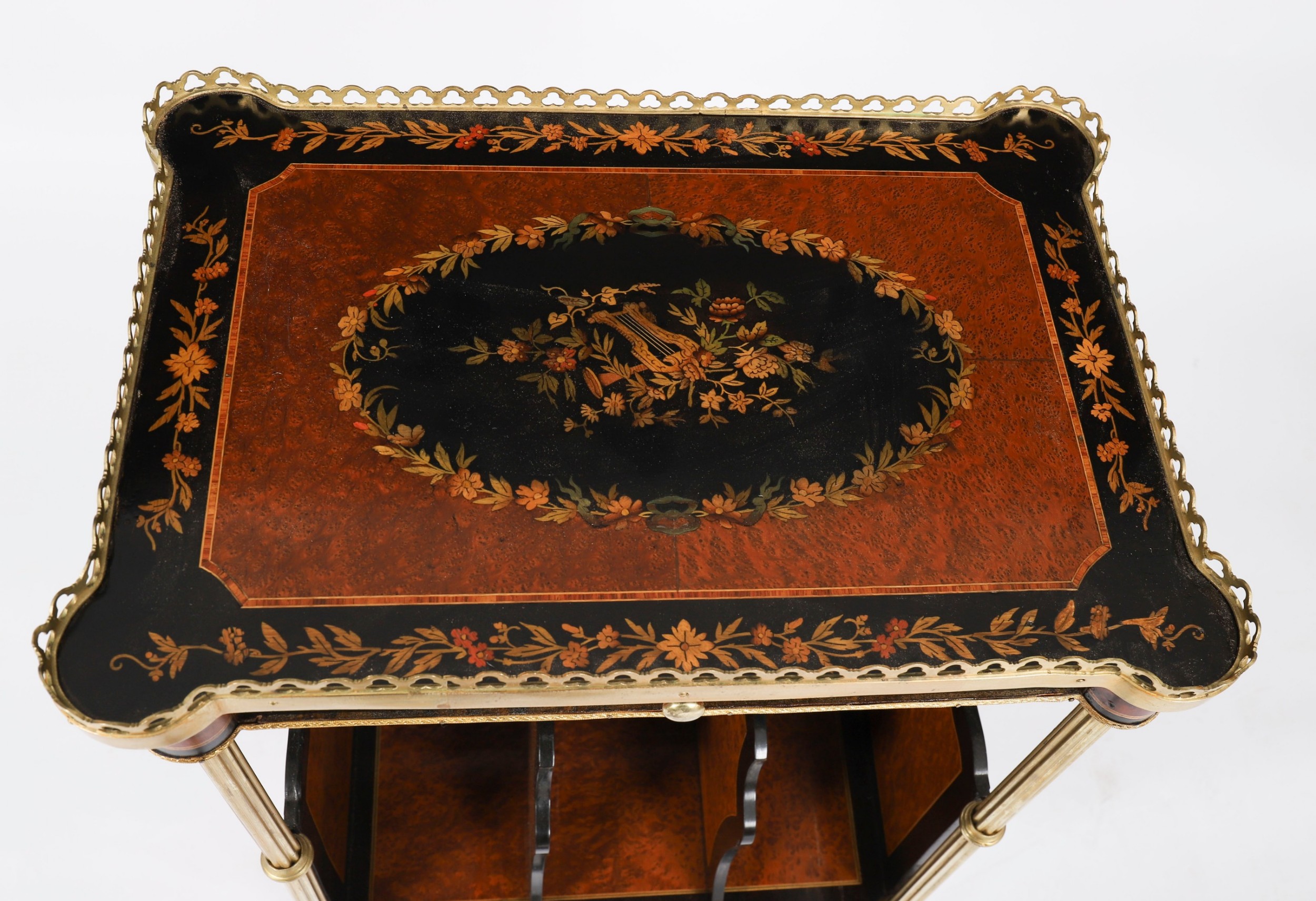
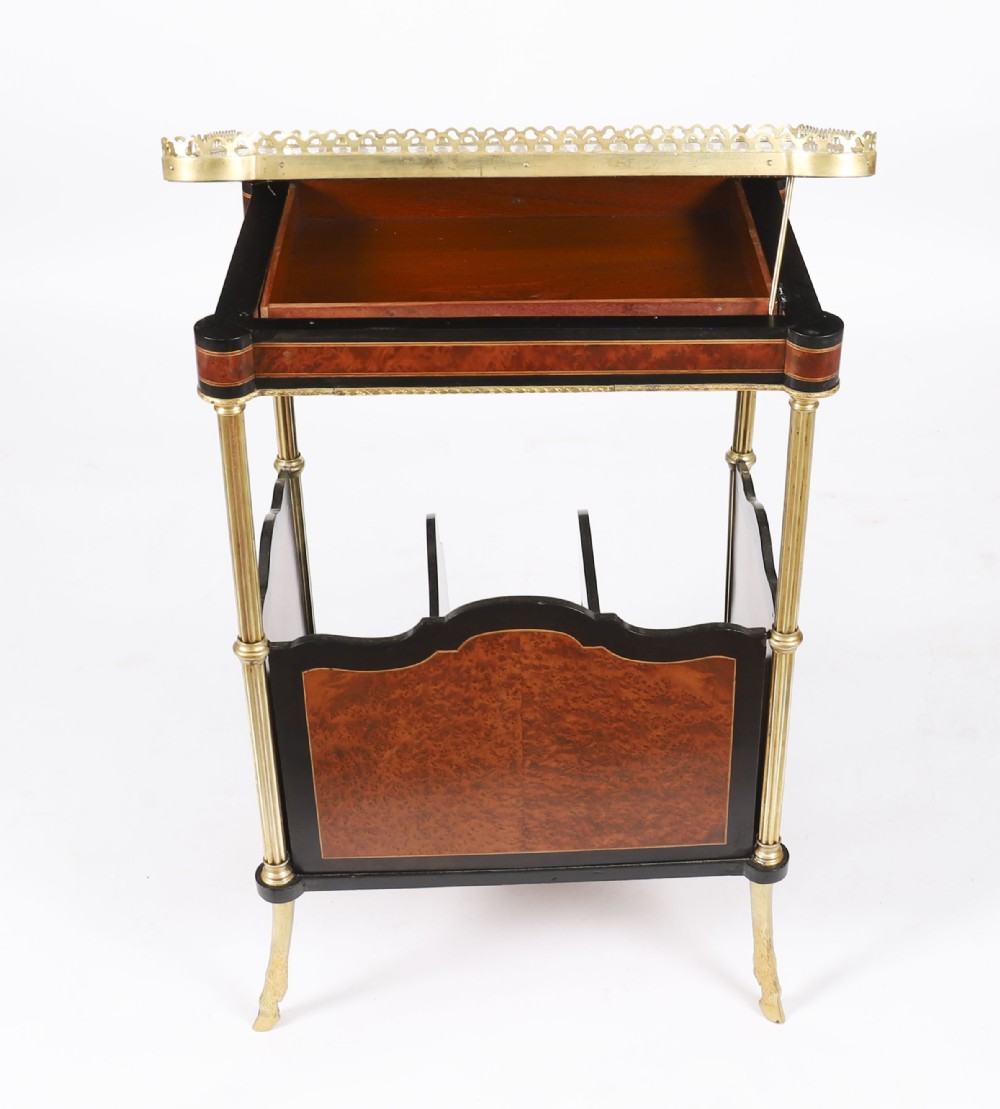
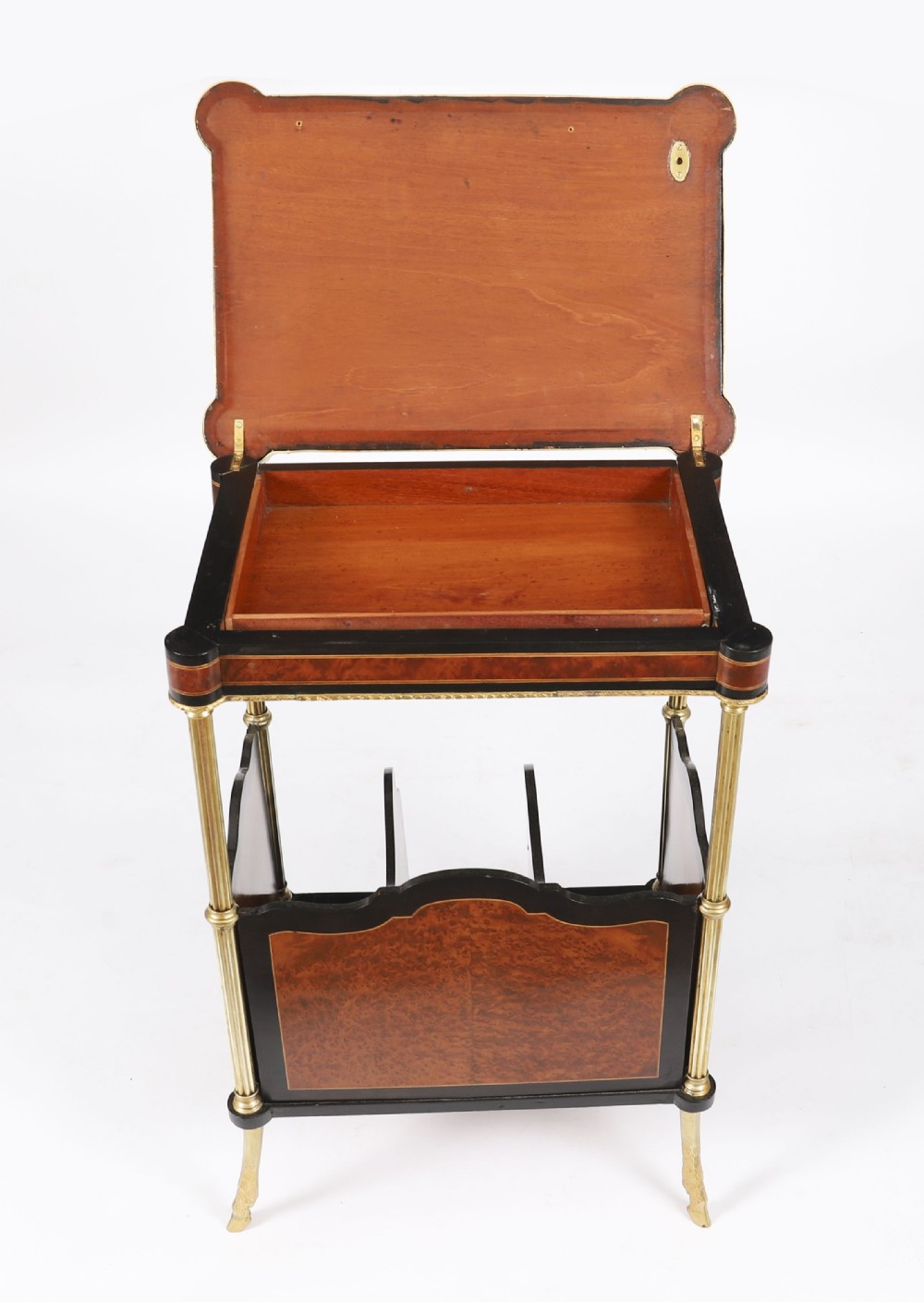
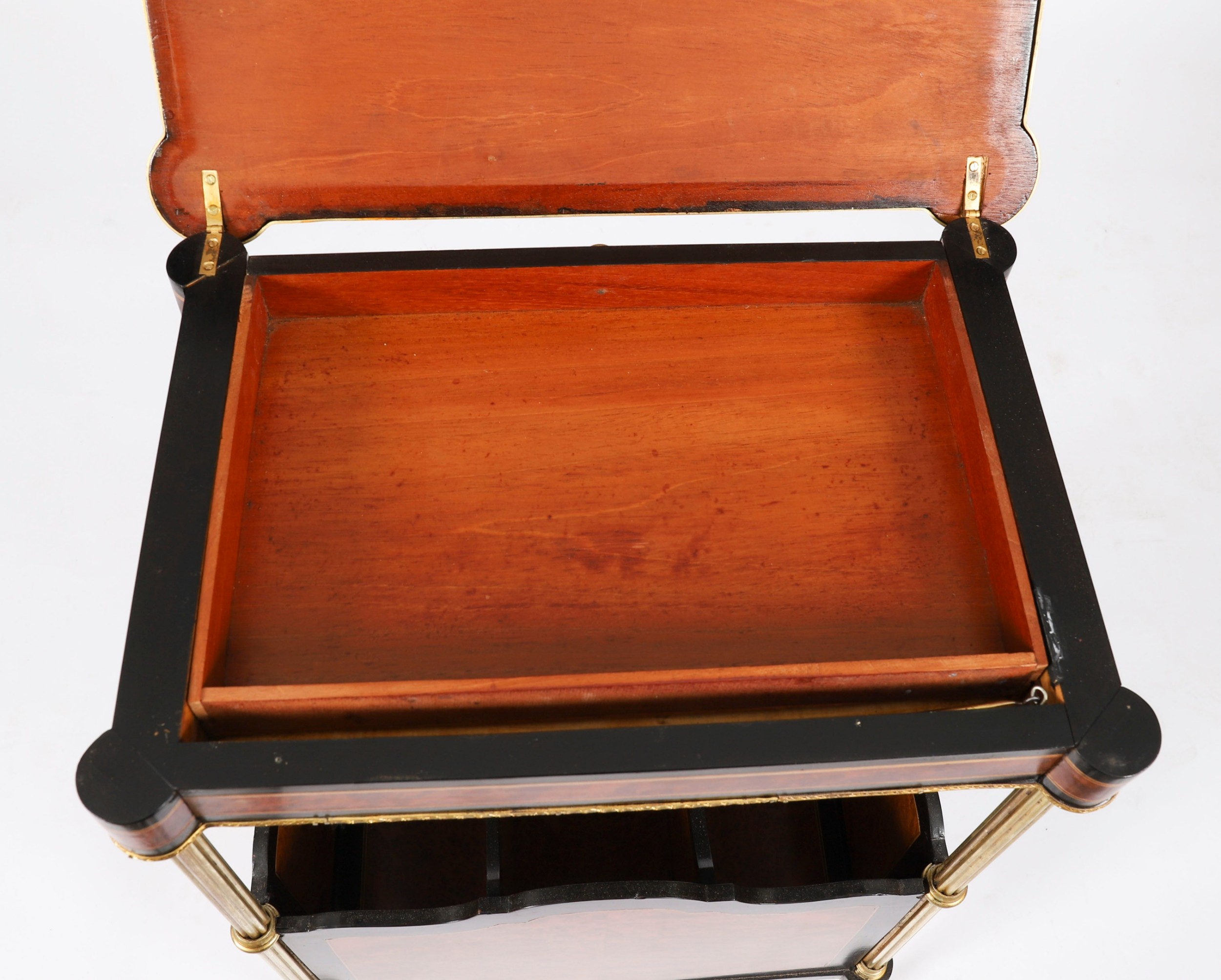
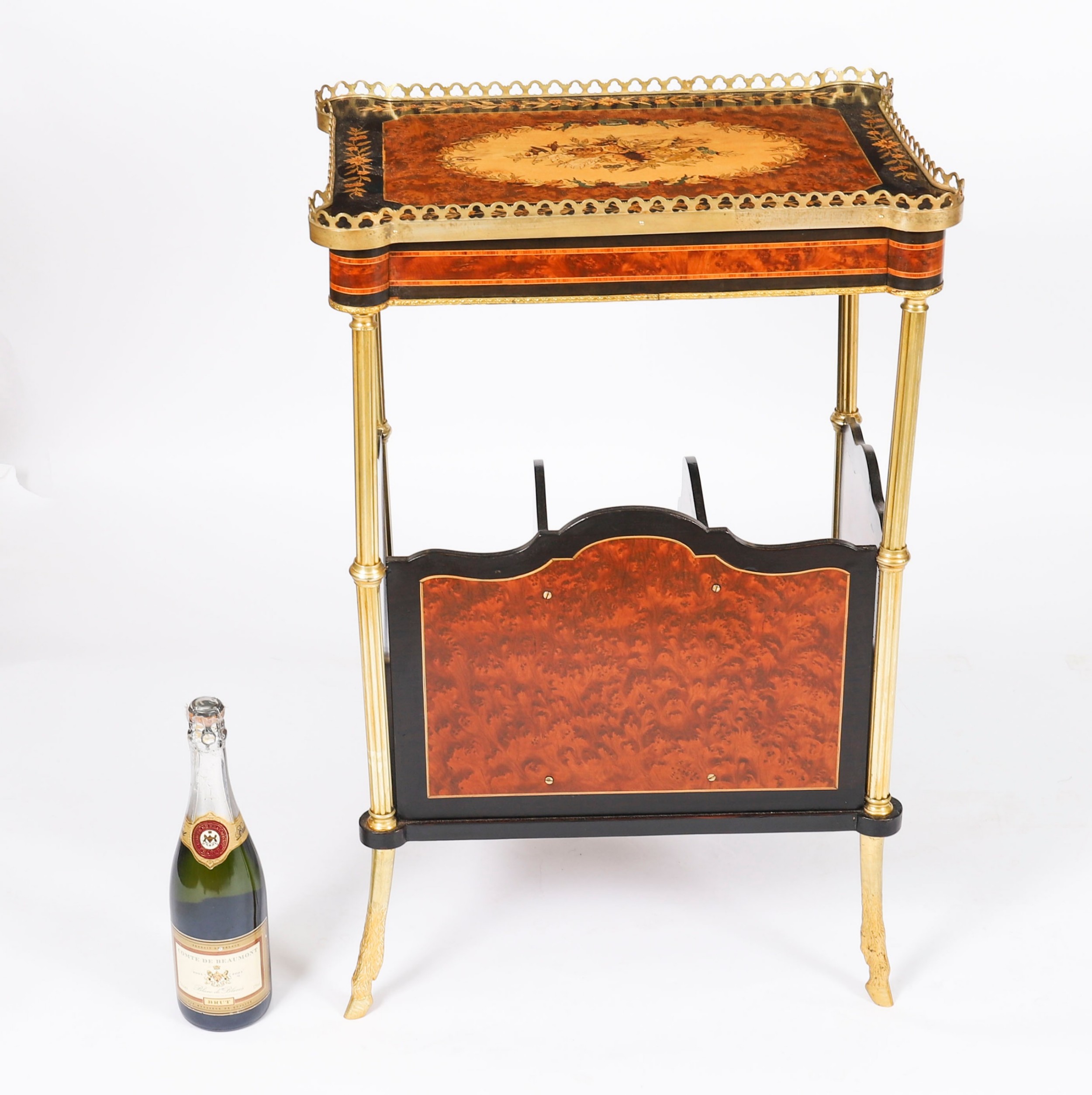
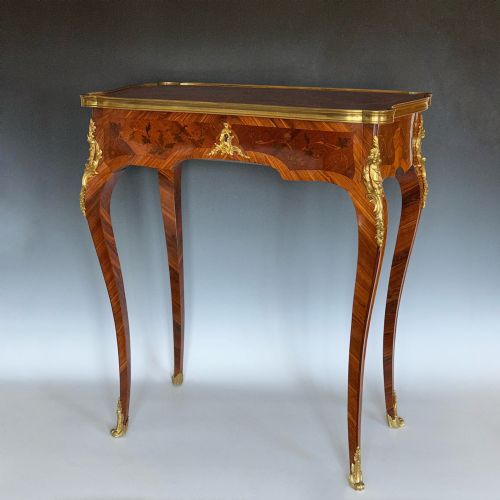
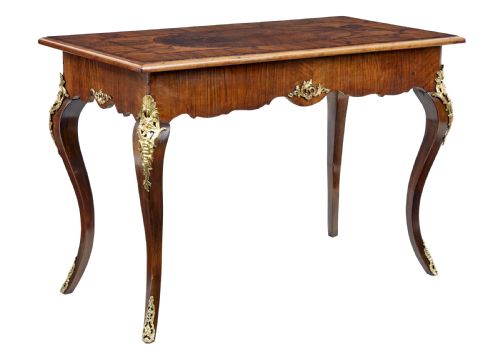
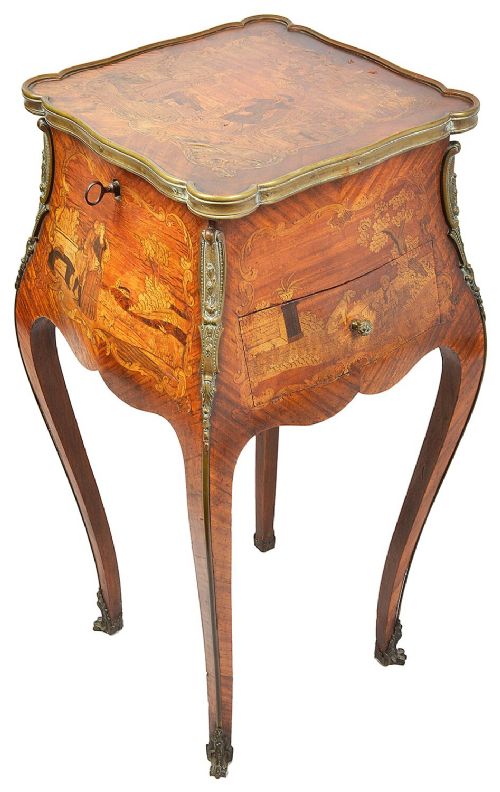
Regent Antiques has dated these French Ormolu Side Tables to the 1880s.
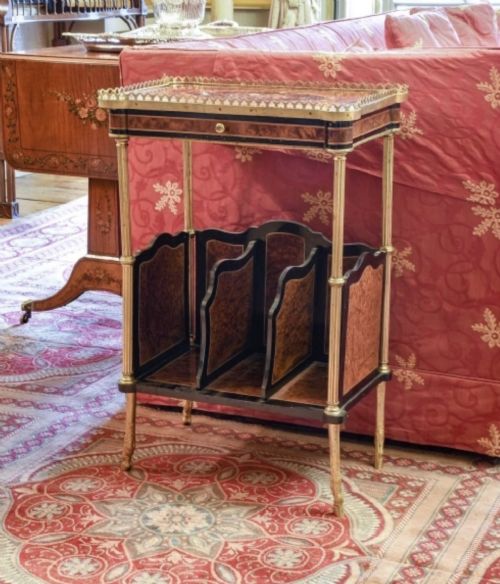
Add an elegant touch to any room with this stylish pair of tables.
Provenance:
Corby Castle, Carlisle, England
Lord and Lady Ballyedmond
Condition:
In excellent condition having been beautifully cleaned, French polished and waxed in our workshops, please see photos for confirmation.

Dimensions in cm:
Height 77 cm x Width 51 cm x Depth 35 cm
Dimensions in inches:
Height 2 foot, 6 inches x Width 1 foot, 8 inches x Depth 1 foot, 2 inches
Corby Castle
One of Cumbria’s most historically important mansion houses, grade I-listed Corby Castle sits on a plateau, rising above the picturesque River Eden to the east of Carlisle. The Manor of Corby was granted to Hubert de Vallibus by Henry II and passed to Andrew de Harcia, Earl of Carlisle before being given to Richard Salkeld in 1336. The estate remained in the hands of the Salkeld family until it was sold in 1611 to Lord William Howard, the third son of Thomas Howard, 4th Duke of Norfolk. The house is built around a red sandstone peel tower, or fortified tower house, built in the 13th century; William Howard added a two-storied L-shaped house to the peel tower, and the house was once again modified in the early 19th century by descendant Henry Howard. Between 1812 and 1814, Scottish architect Peter Nicholson gave the castle a new rectangular plan and the harmonious neo-classical façade in the distinctive local red sandstone that graces the building today. Corby Castle remained in the Howard family until 1994, when Lord and Lady Ballyedmond, as new owners, began an inspired revival of Corby, giving new life to one of the great Cumbrian mansions.
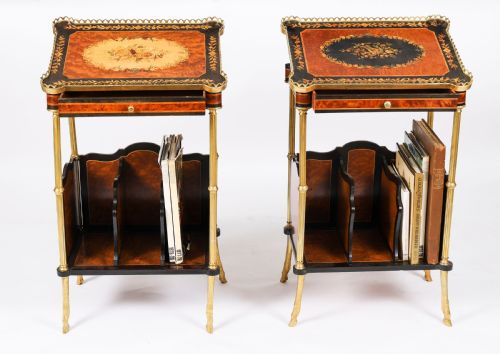
Canterbury is a piece of portable, occasional furniture, consisting of an open-topped rack with slatted compartments for sheet music, music books, magazines or newspapers and often a drawer underneath as well; rests on four legs, which are typically on casters.
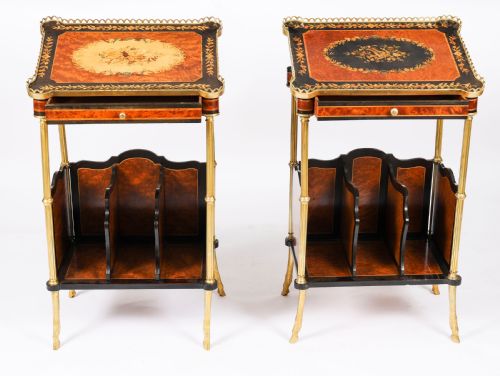
It was developed in the 1780s in England (reputedly deriving its name from the Archbishop of Canterbury, who commissioned one), it grew increasingly ornate throughout the 19th century: Victorian pieces often have an upper galleried shelf, and panels shaped like lyres or treble clefs.
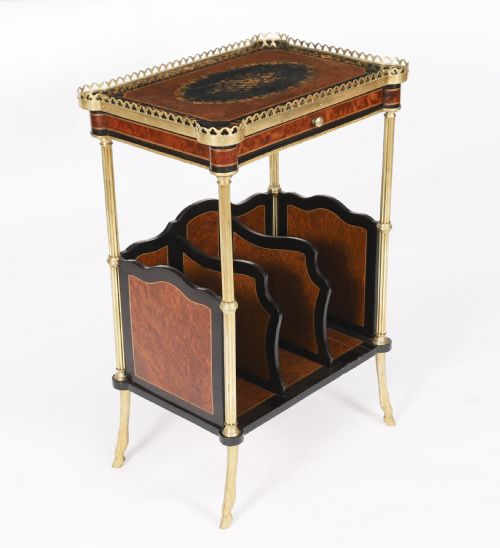
Ormolu - Gilt Bronze (from French 'or moulu', signifying ground or pounded gold) is an 18th-century English term for applying finely ground, high-carat gold in a mercury amalgam to an object of bronze.The mercury is driven off in a kiln leaving behind a gold-coloured veneer known as 'gilt bronze'.
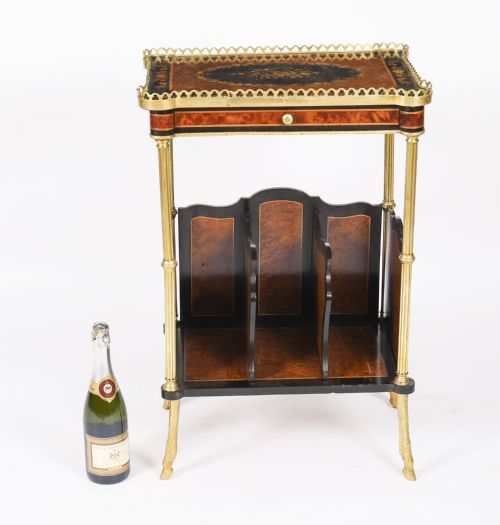
Amboyna
is a type of wood which has its origins in Indonesia (the preferred veneer comes particularly from the Andaman Islands). The grain texture is one of the most seldom and exclusive on earth.
The burls are often very small, which is why the sheets of veneer come in small dimensions. The colours range from deep yellowish-orange to dark red.
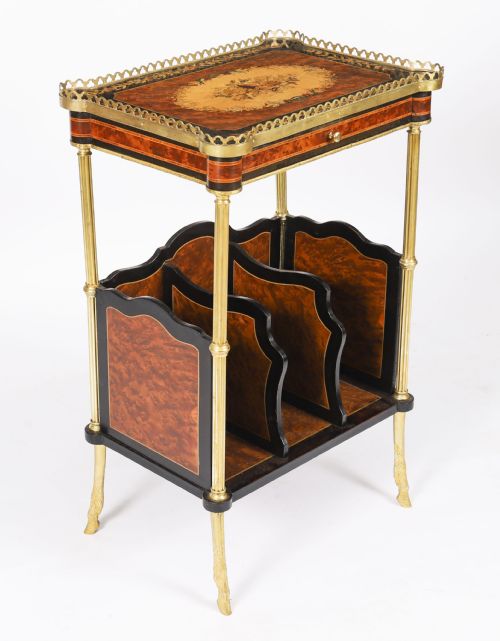
After finishing the surface, the grain texture of amboyna wood has a depth and richness unmatched in other textured woods.
Tulip wood
Brazilian tulip wood is a classic high-quality wood, it is very dense with a lovely figure. It is used for inlays in furniture and for small turned items. Available only in small sizes, it is rarely used in the solid for luxury furniture. Like other woods with a pronounced figure it is rather strongly subject to fashion.
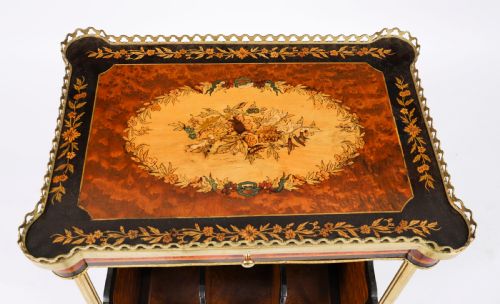
Marquetry
is decorative artistry where pieces of material of different colours are inserted into surface wood veneer to form intricate patterns such as scrolls or flowers.
The technique of veneered marquetry had its inspiration i
Regent Antiques has dated these French Ormolu Side Tables to the 1880s.
We specialise in english and continental furniture, silver, porcelain and decorative items.
You can view the stock and full dealer information on the Regent Antiques Profile Page
Regent Antiques is a registered member of LAPADA CINOA
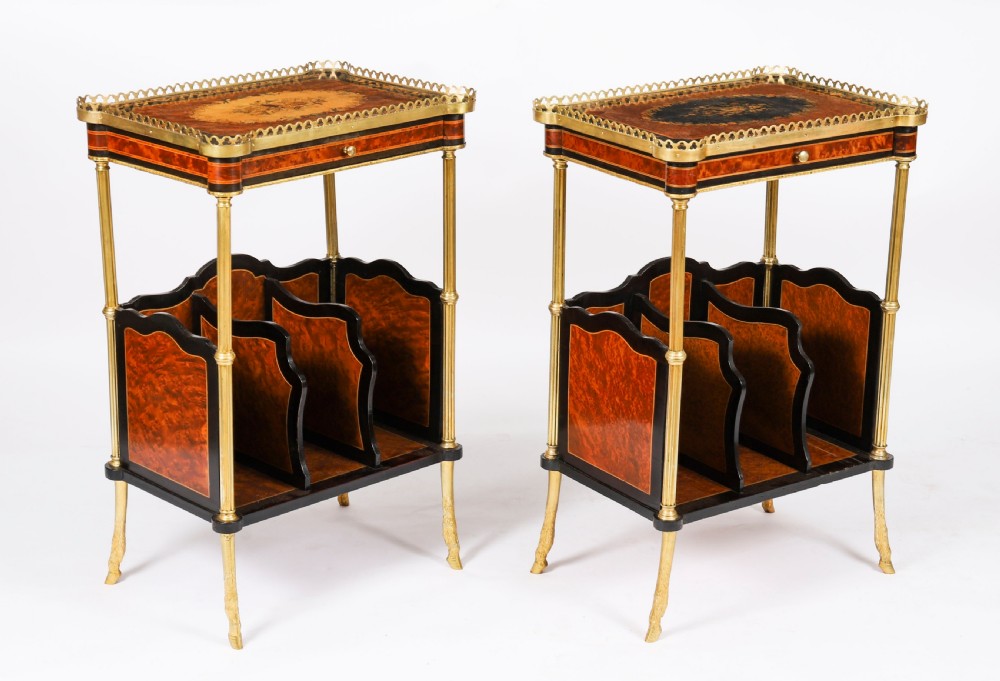
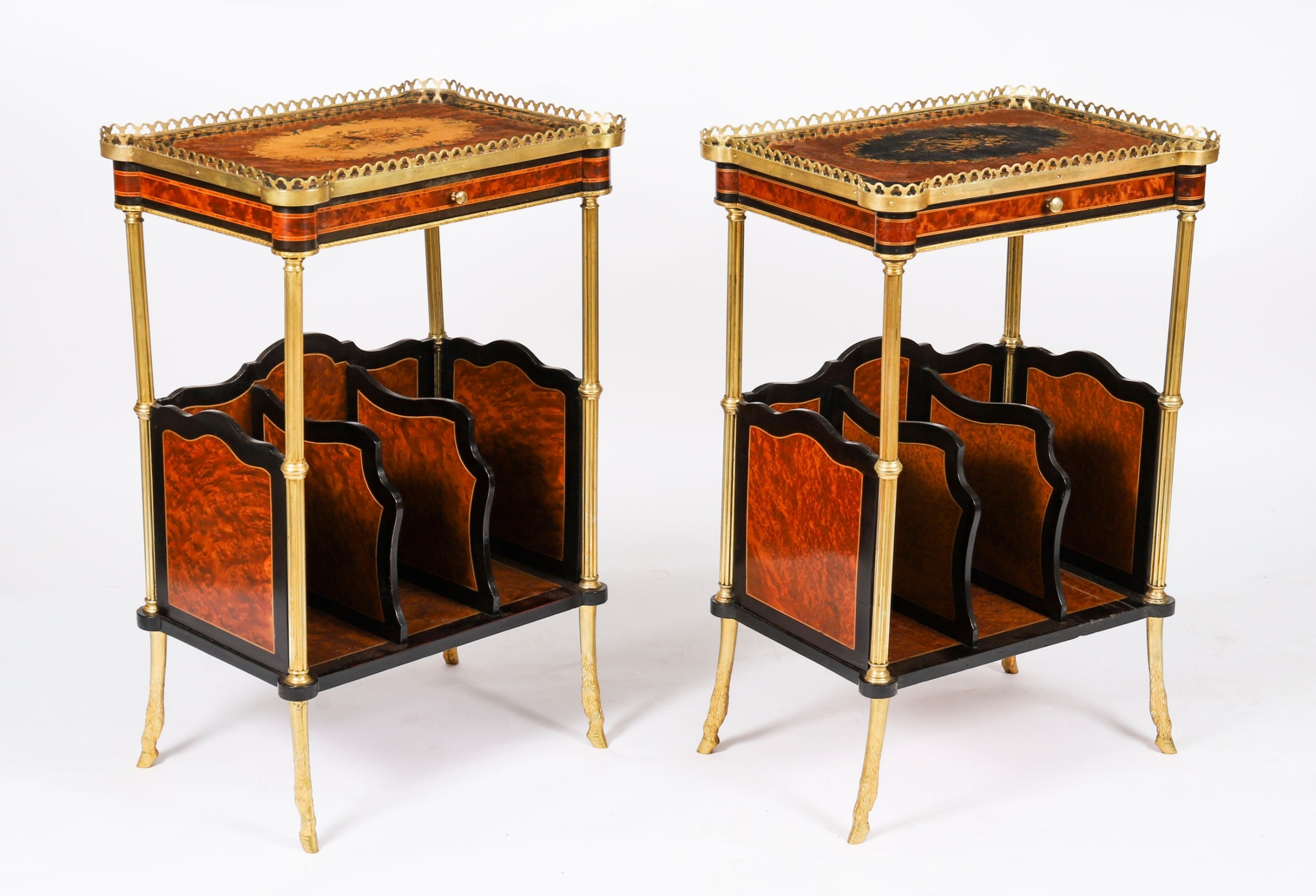
Antique Pair French Ormolu Mounted Occasional Side Tables 19th C