23,878  PAGES BROWSED TODAY PAGES TODAY 36  ANTIQUES UPLOADED TODAY NEW ARRIVALS
ID #SA1198214
FOR SALE
£2,350
Email
Save
Antique William IV Gonçalo Alves Writing Table 19th C
Regent Antiques
for sale €2,750     $2,985
£2,350
Regent Antiques

Regent Antiques

Sellingantiques Verified Since Sep 2016
View Dealers Stock Page
  • About Us
    We specialise in english and continental furniture, silver, porcelain and decorative items.
  • Trade Associations
    Regent Antiques is a registered member of LAPADA  CINOA
Id #SA1198214
PDF SHARE
SAVE

Antique William IV Gonçalo Alves Writing Table 19th C

19th century
For Sale by Regent Antiques
Description

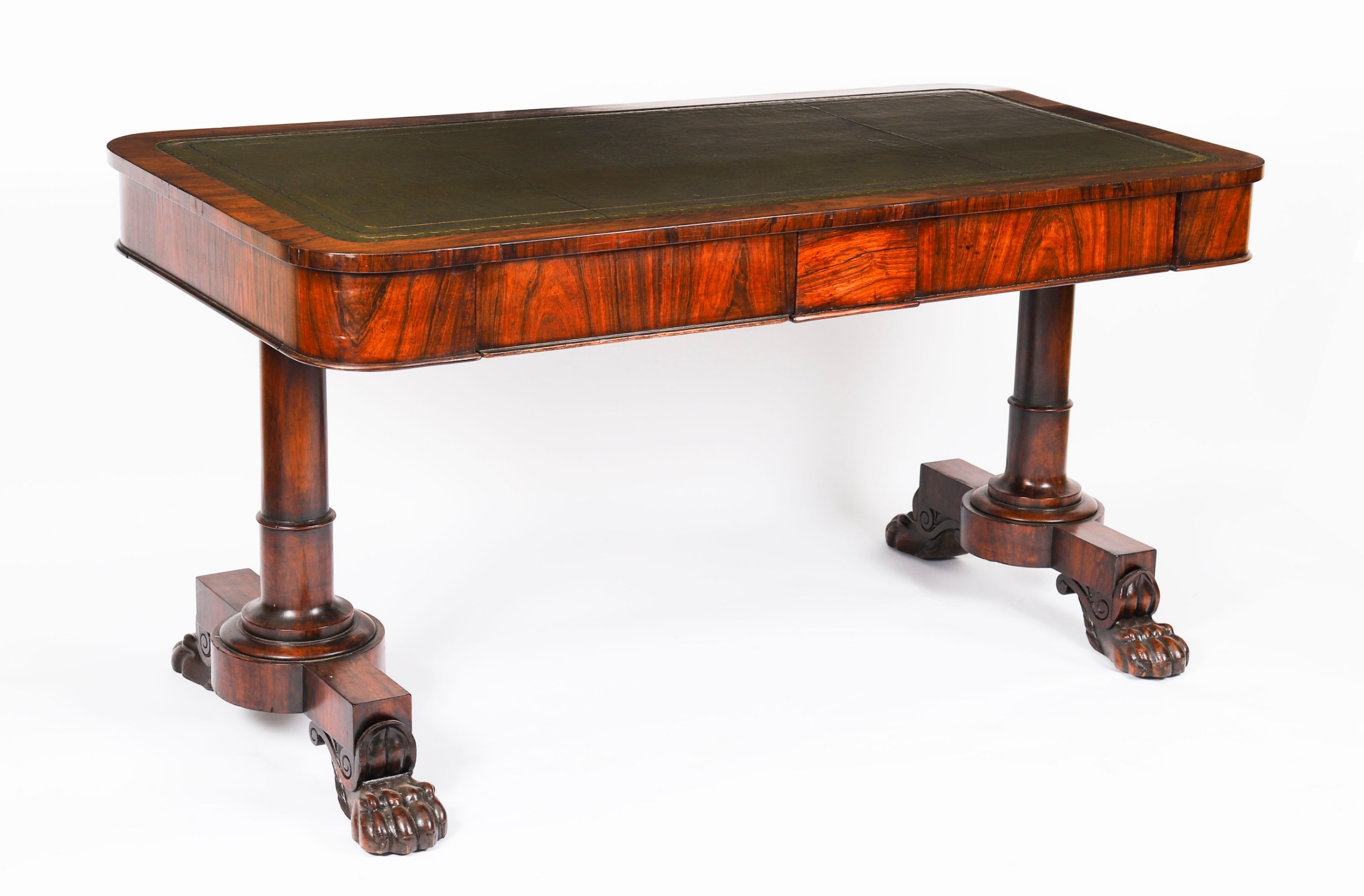
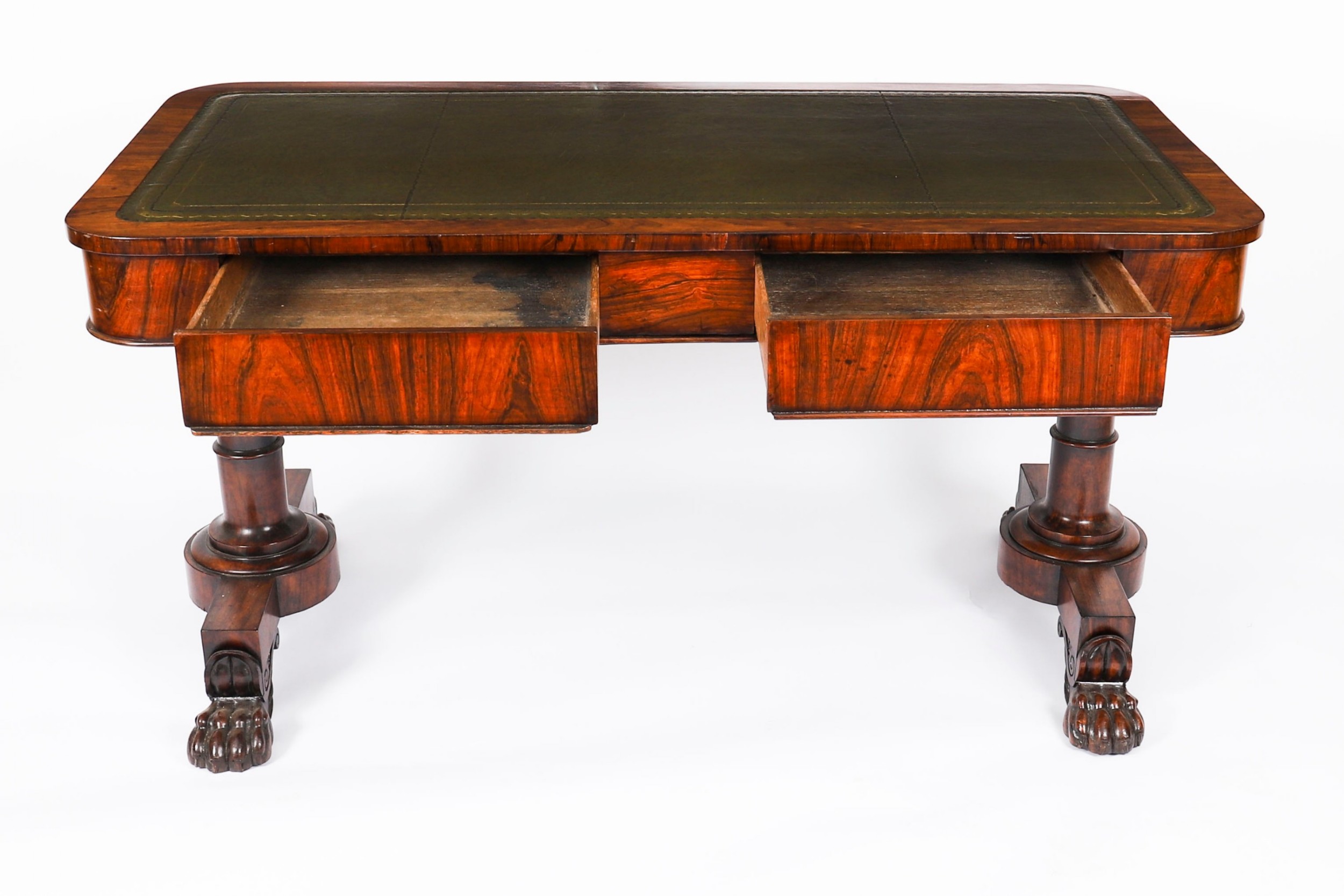
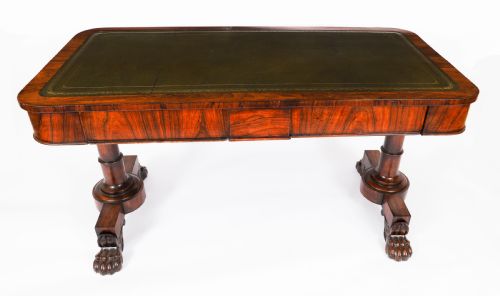
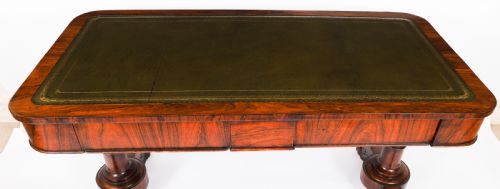
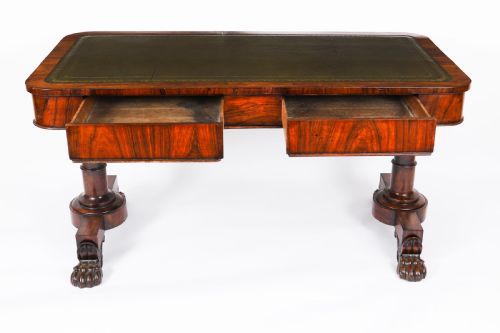
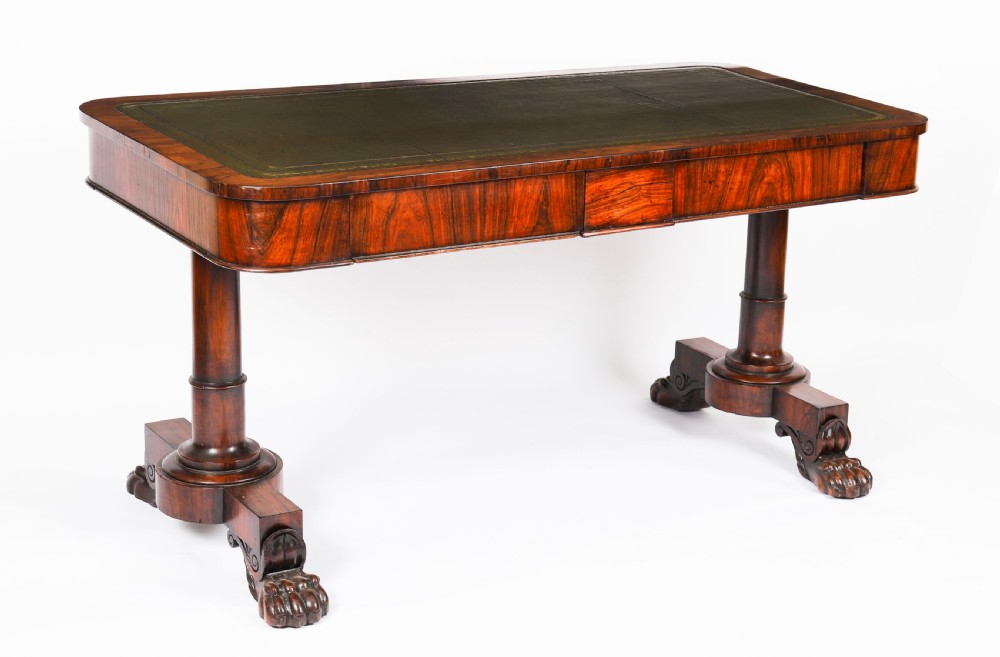
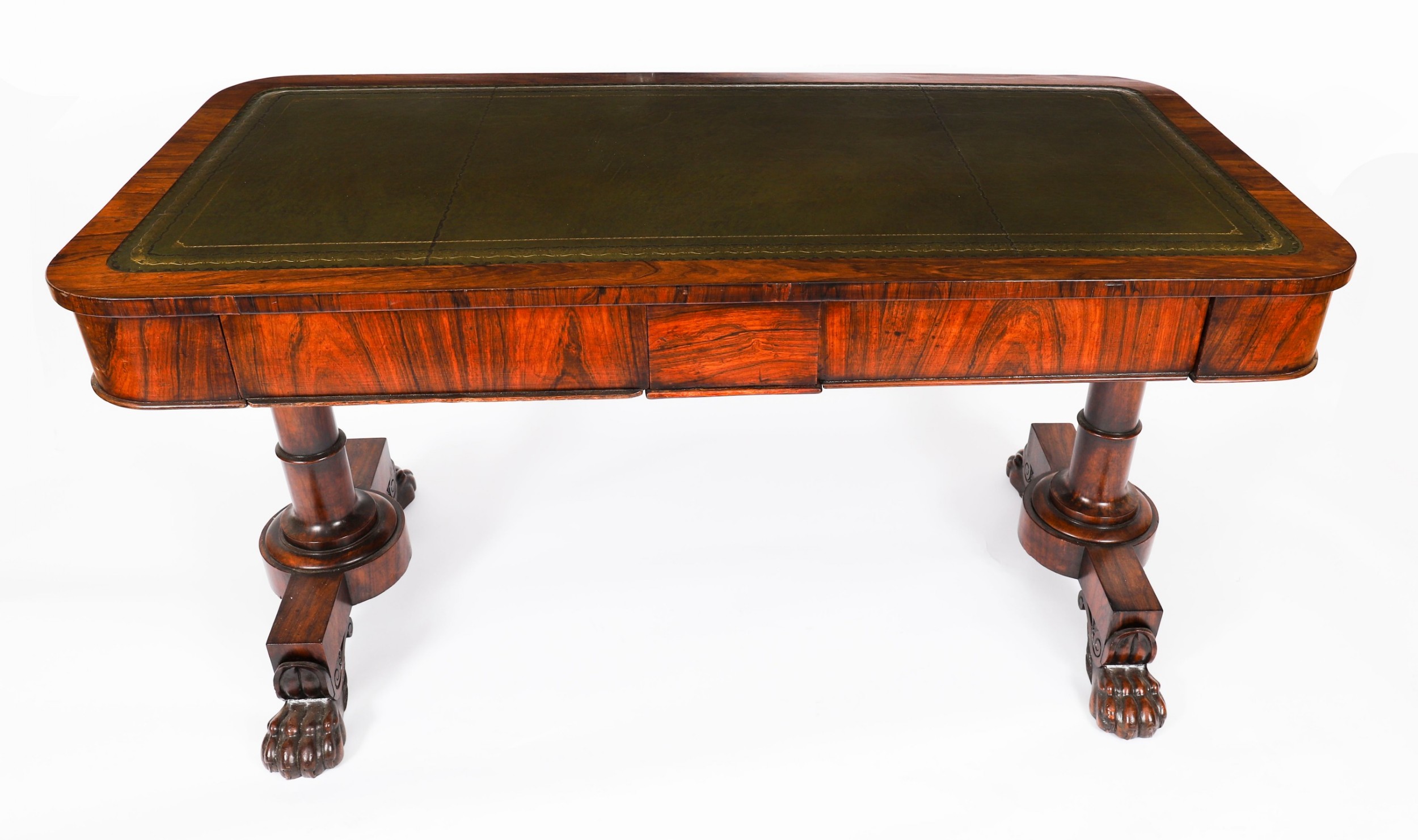
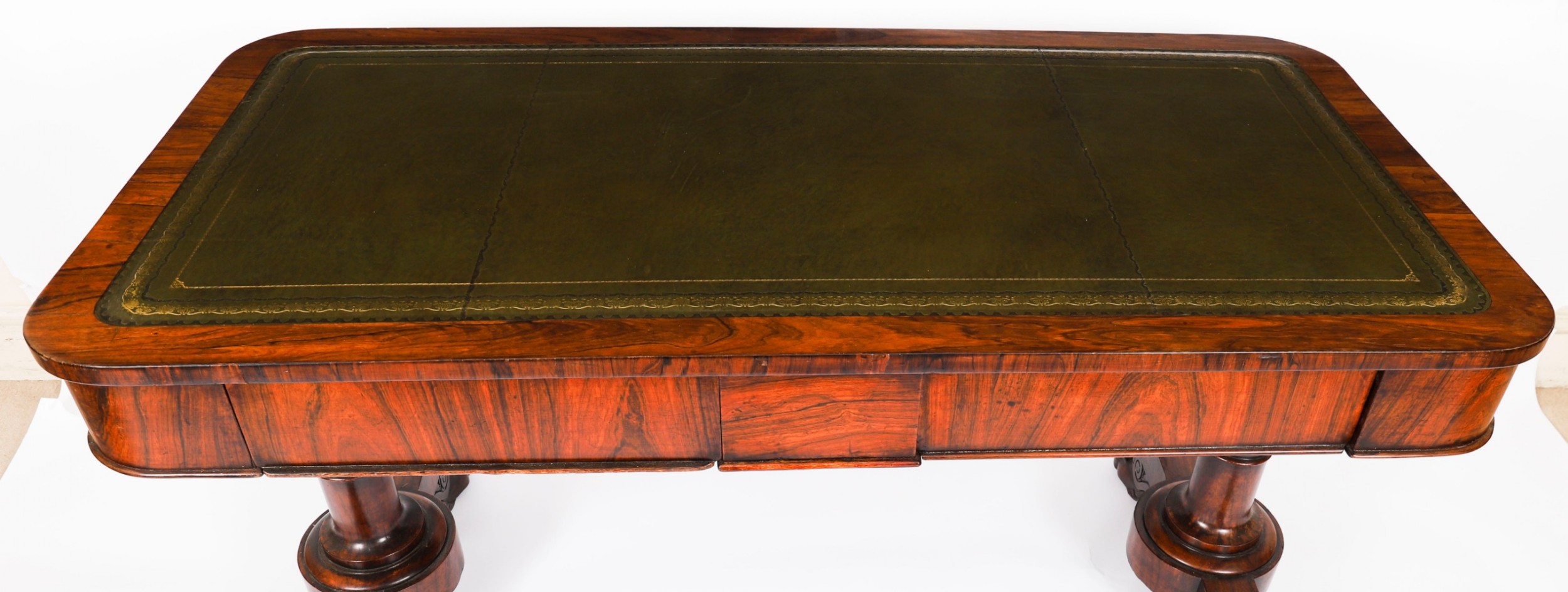
A beautiful antique William IV Gonçalo Alves, writing table, circa 1830 in date.

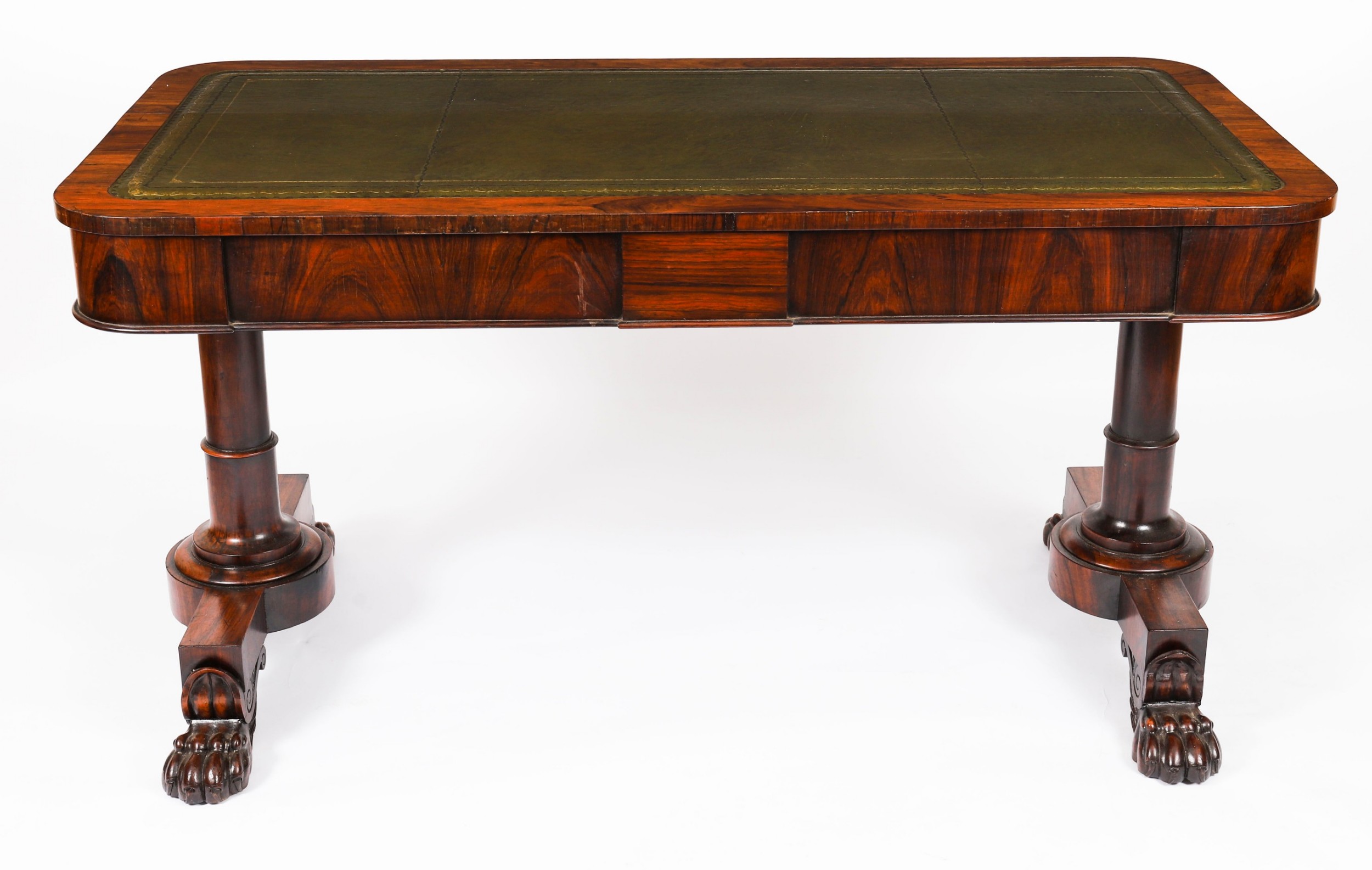
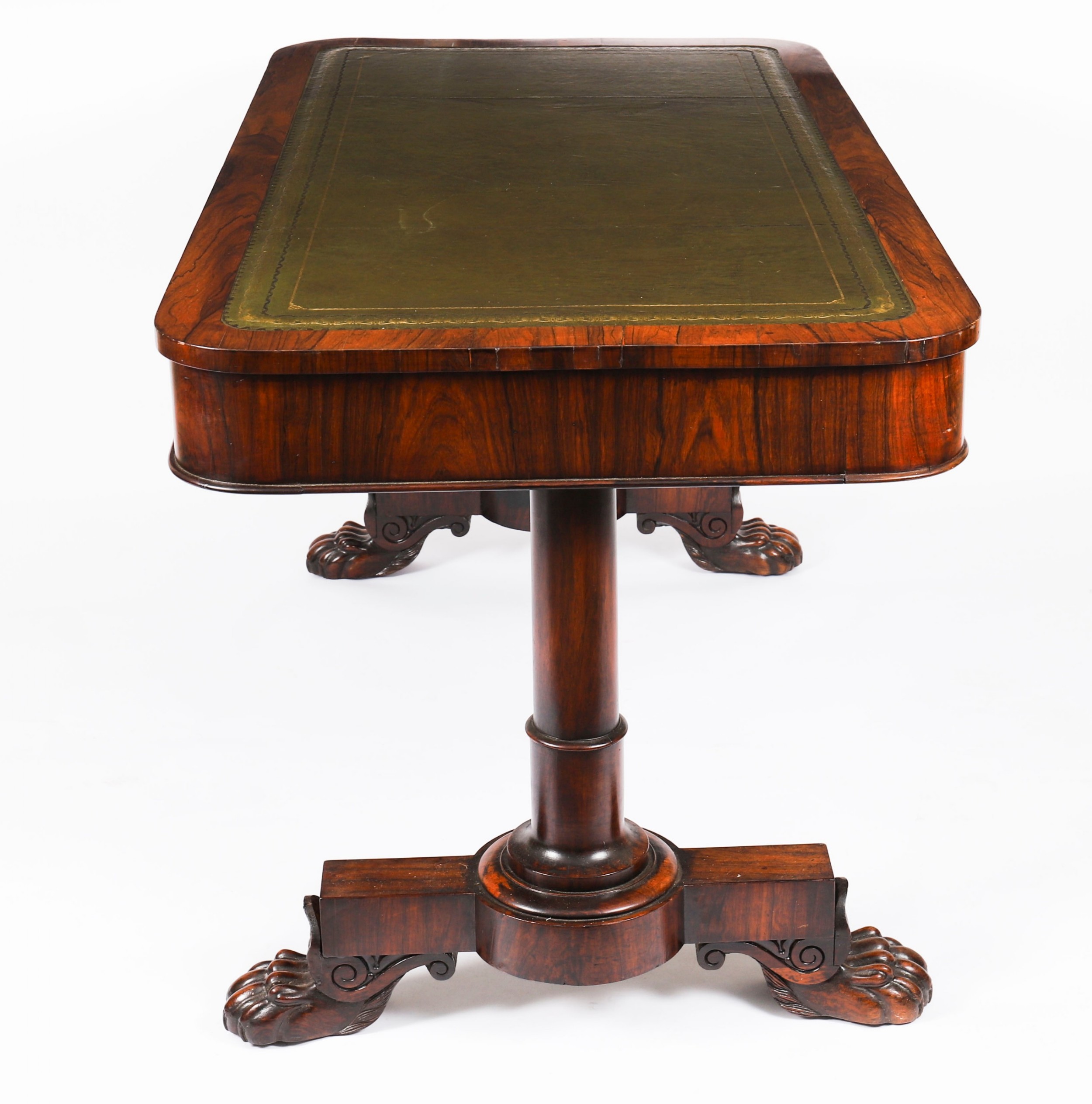
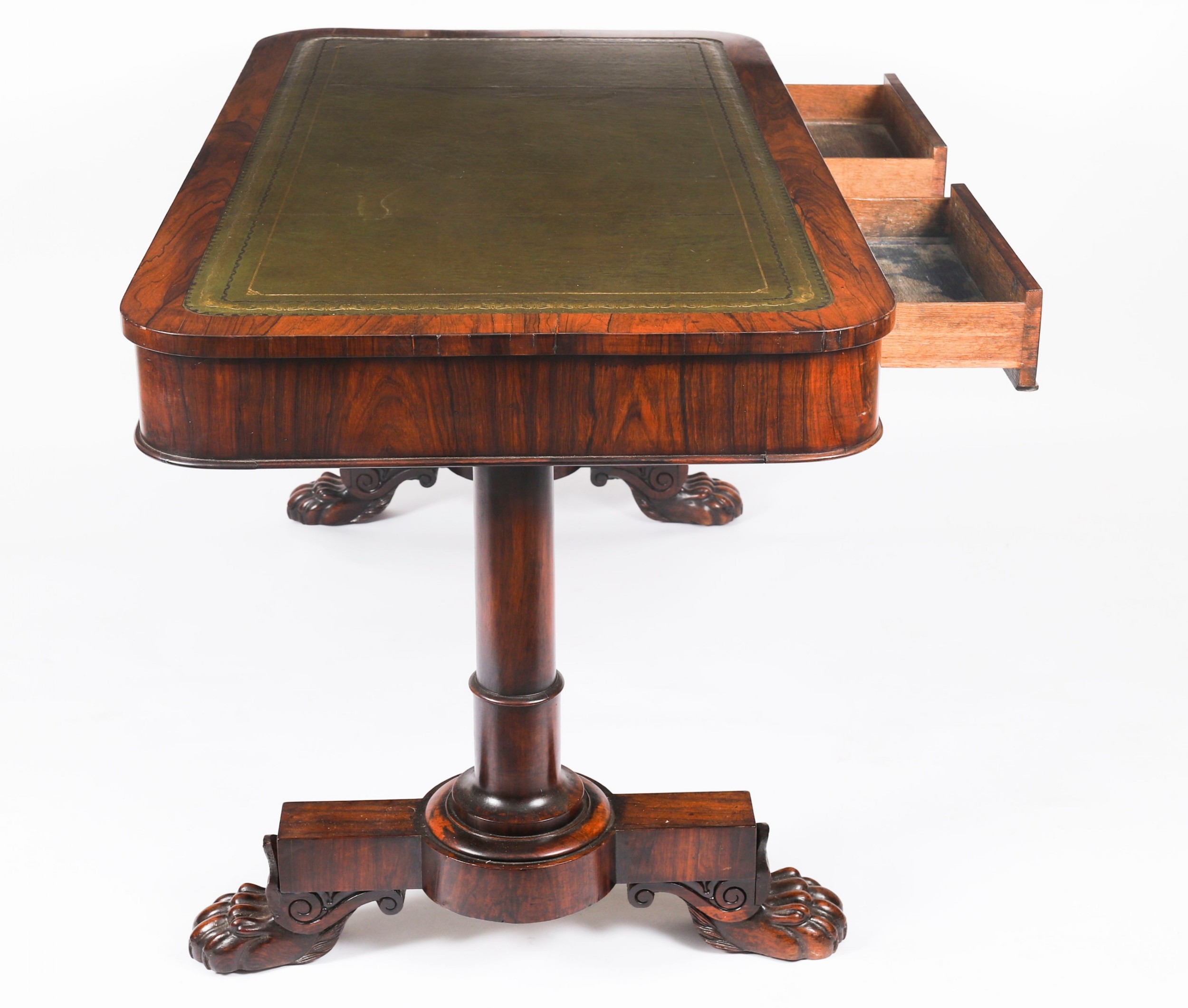
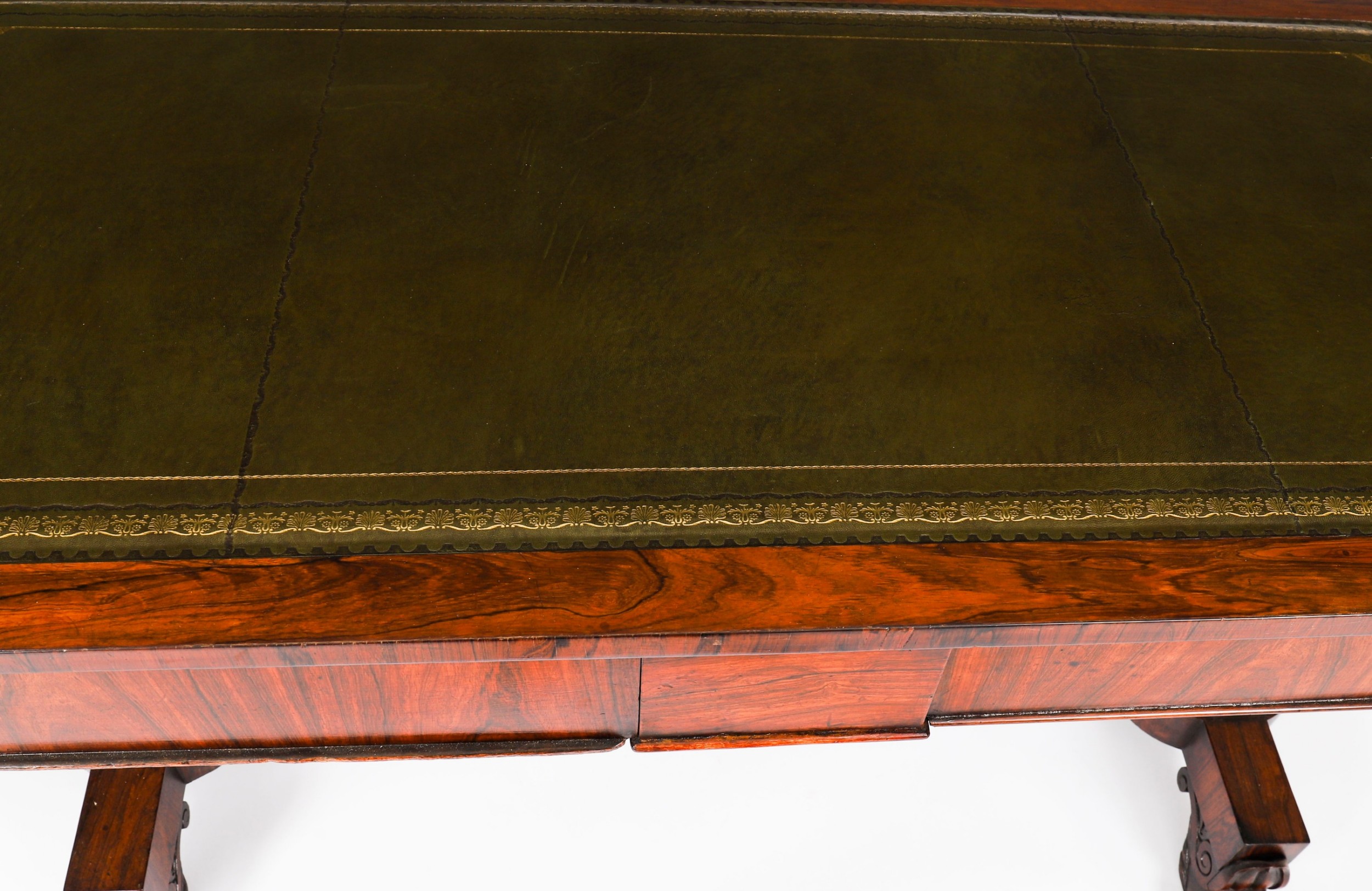
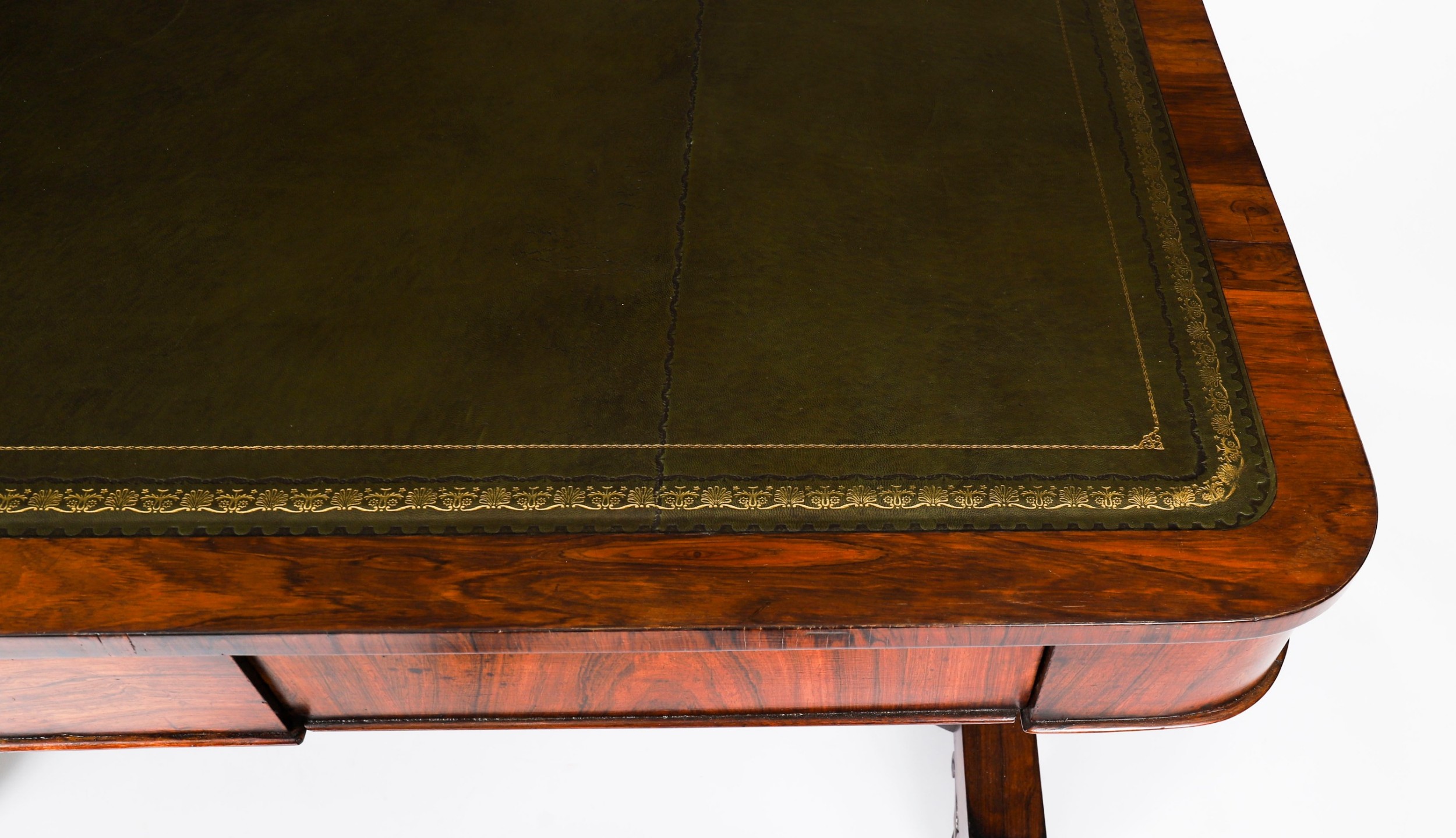
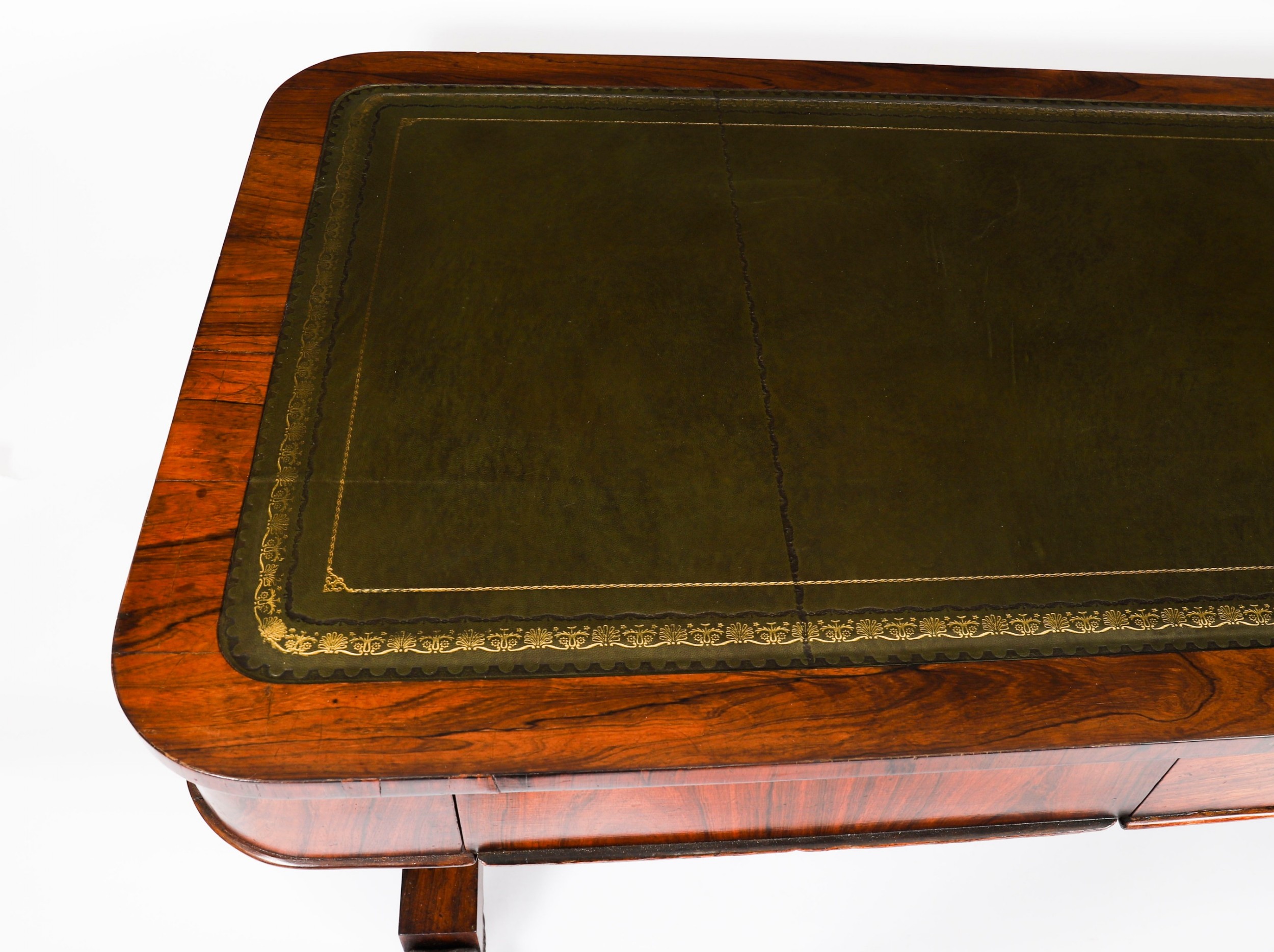
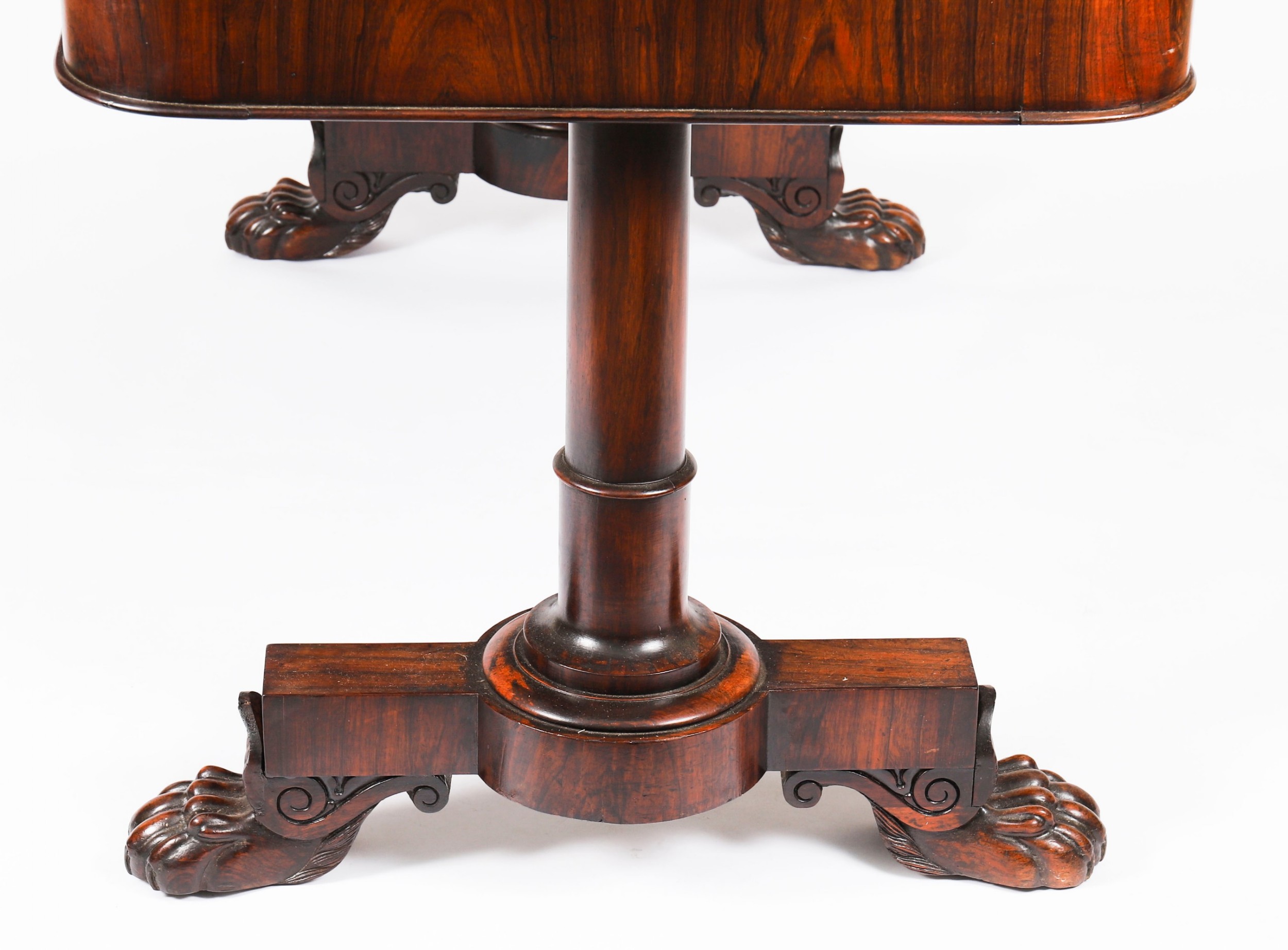
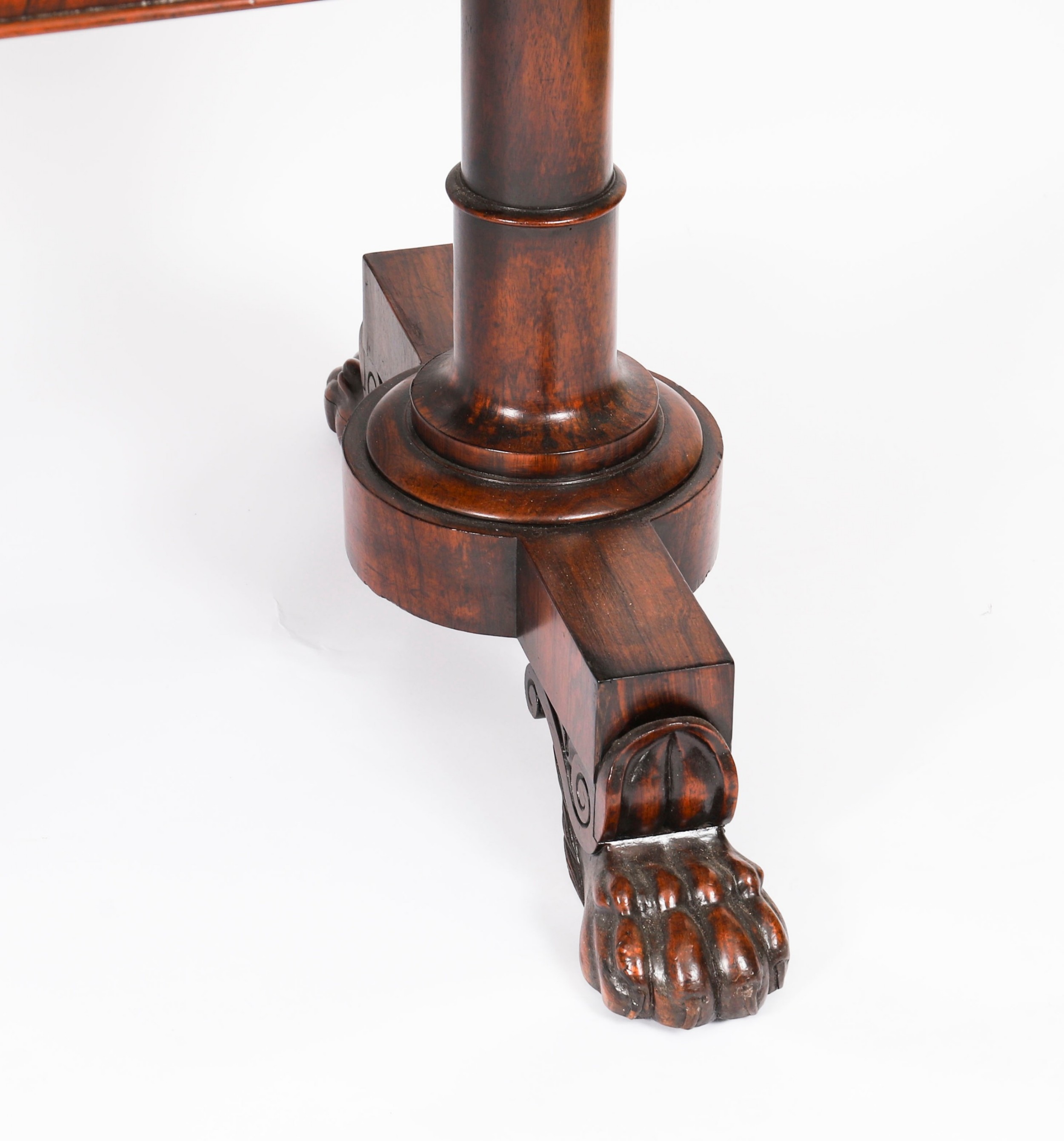
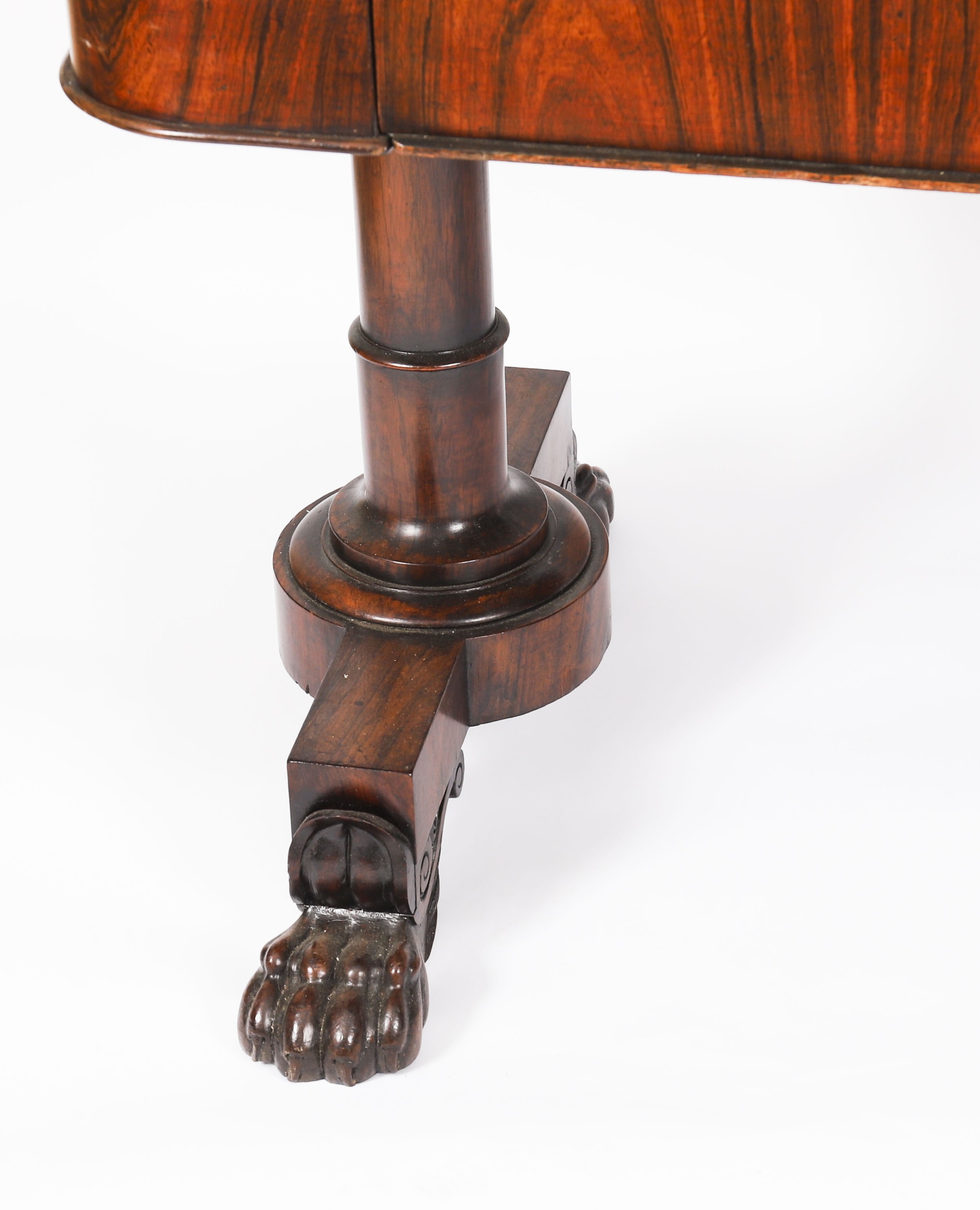
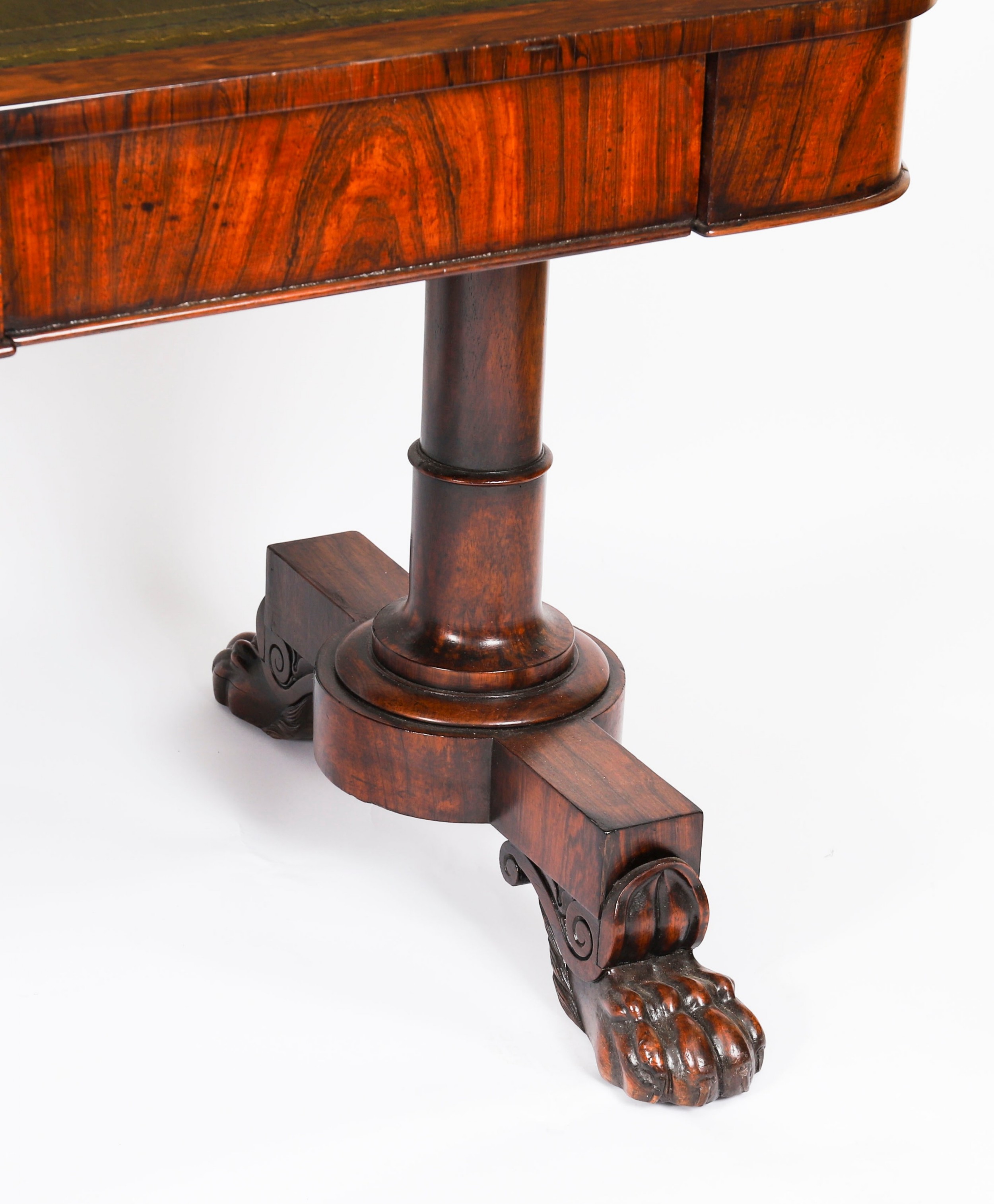
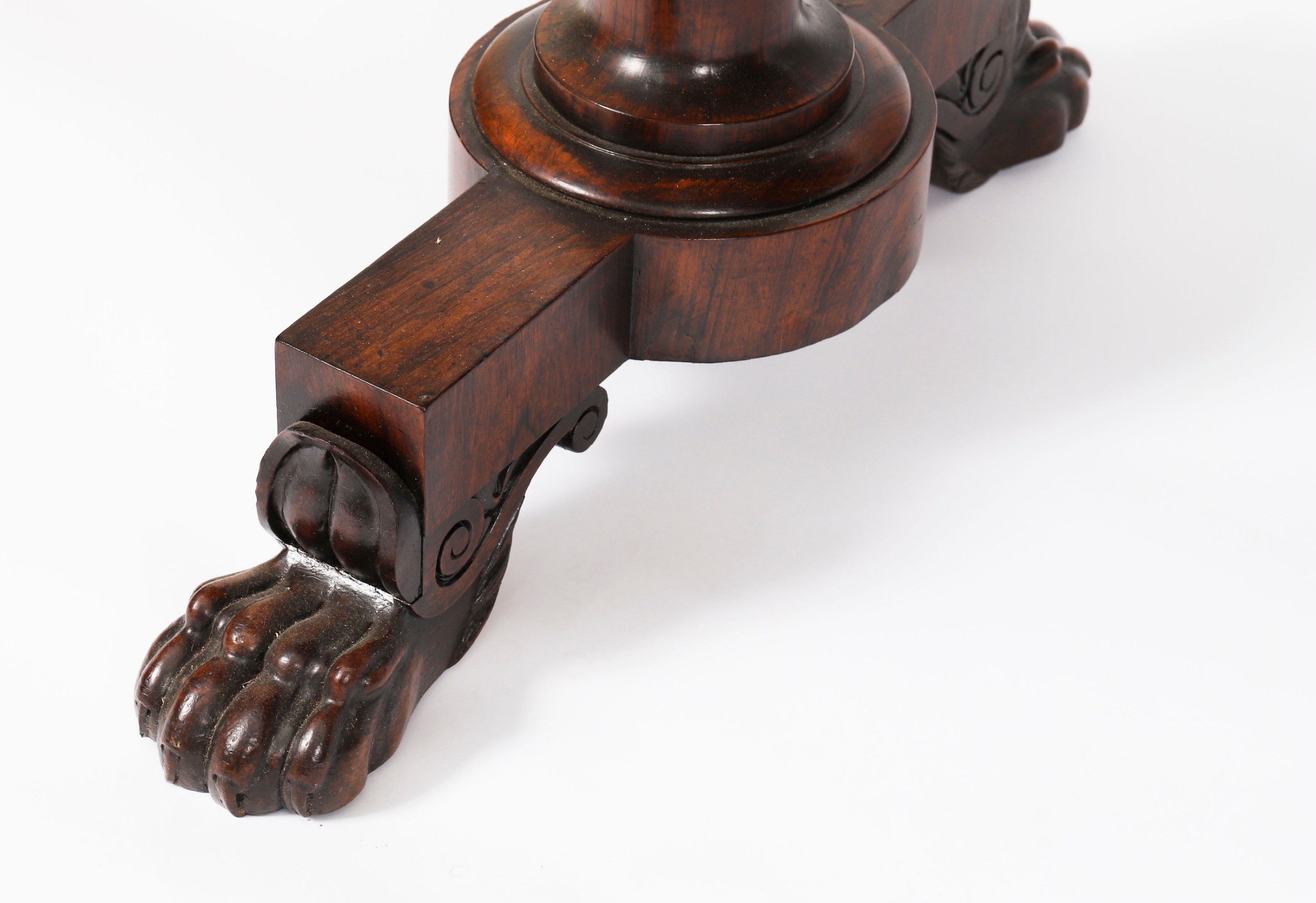
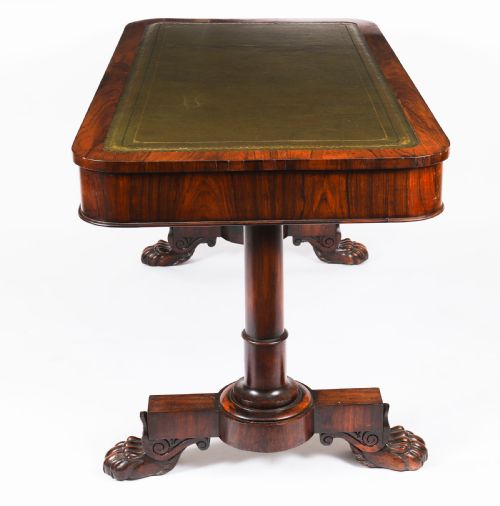
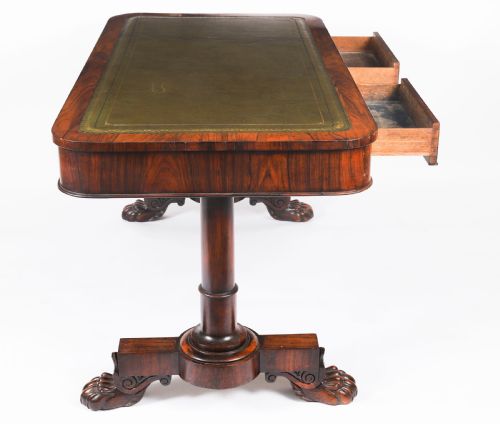
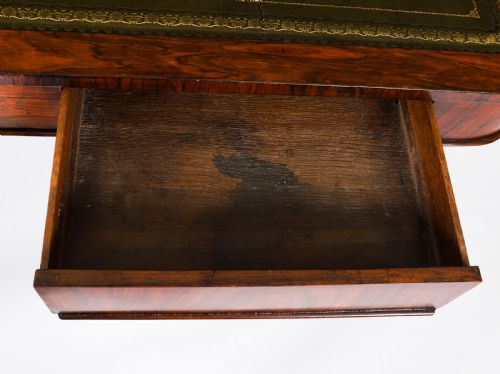
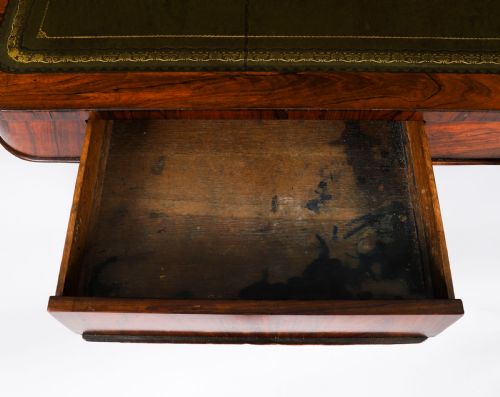
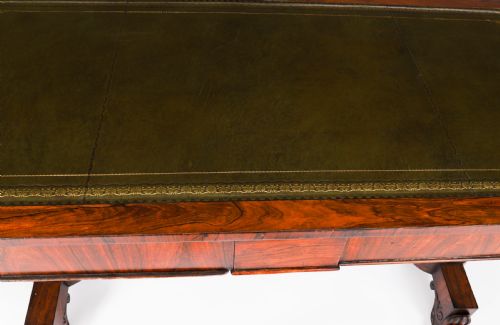
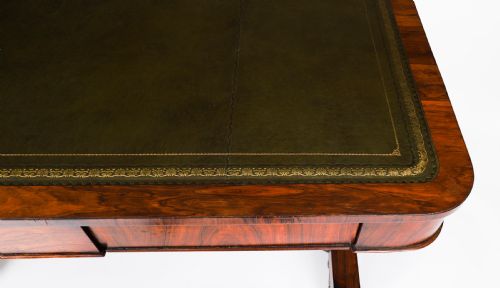
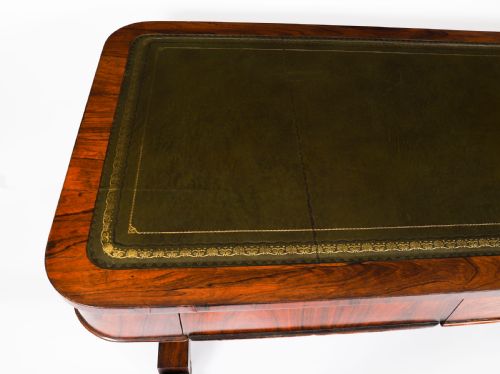
The rectangular top features an inset gilt tooled green leather writing surface above a pair of  frieze drawers. The desk is raised on a pair of turned and carved end supports with lion's paw feet and recessed brass castors.
Add an elegant touch to your home with this stunning combination piece of antique English furniture.

Condition:

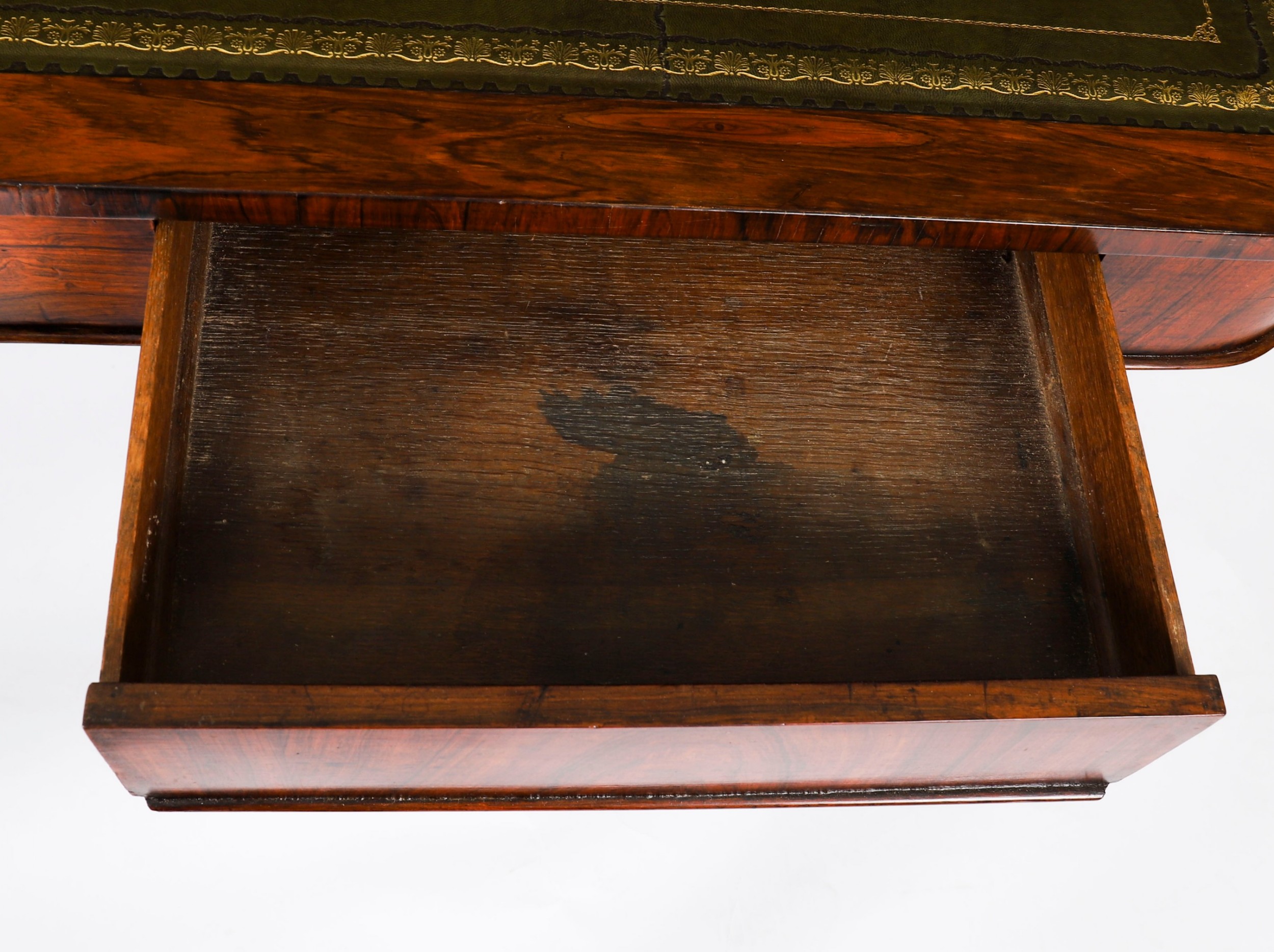
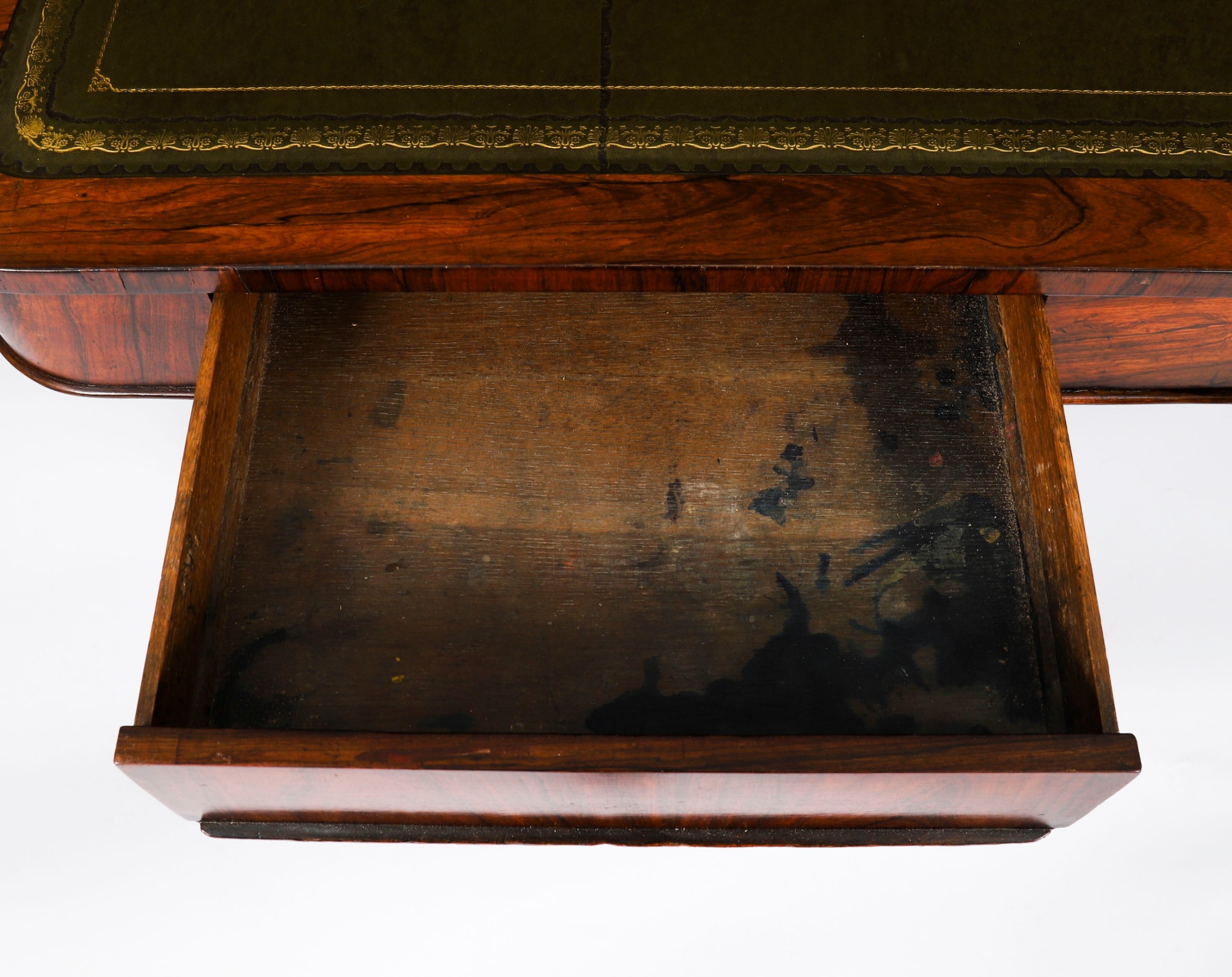
In excellent condition having been beautifully cleaned polished and releathered in our workshops, please see photos for confirmation.
Dimensions in cm:

Height 74 cm x Width 143 cm x Depth 74 cm

Dimensions in inches:

Height 2 foot, 5 inches x Width 4 foot, 8 inches x Depth 2 foot, 5 inches

Gonçalo Alves is a hardwood (from the Portuguese name, Gonçalo Alves). It is sometimes referred to as tigerwood — a name that underscore the wood’s often dramatic, contrasting color scheme. 
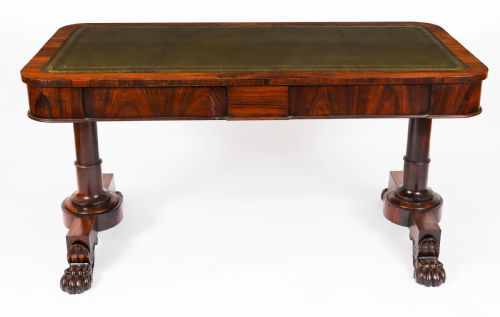
While the sapwood is very light in color, the heartwood is a sombre brown, with dark streaks that give it a unique look. The wood’s color deepens with exposure and age and even the plainer-looking wood has a natural luster.
Two species are usually listed as sources for gonçalo alves: Astronium fraxinifolium and Astronium graveolens, although other species in the genus may yield similar wood; the amount of striping that is present may vary. 
In the high tropical forests of Central and South America, well-drained soils furnish nutrients for a variety of dense, durable hardwoods sought for maritime use, heavy construction, and furniture. The Spanish began harvesting in Latin American forests in the early 1500s to provide timber for boat building and repair. By the early 1900s, however, steel ships had replaced wooden ones, and the interest in tropical forests by both Europeans and Americans shifted to appearance-grade woods for furniture.
Although history fails to provide us with a shopping list of species from either harvest period, it's probable that the wood we know today as goncalo alves has always been sought. That's because goncalo alves, considered one of the most beautiful of tropical woods, has a tough reputation, too. Strong and durable, it's used for construction in its homeland and secondarily for fine furniture. Woodworkers elsewhere treasure the wood for decorative items and veneer accents.
William IV - the brief reign of William IV (1830 – 1837) marked a period of transition between the Regency period (which had been an age of innovation based on revivalist styles such as ancient Egypt, and the Grecian designs) and the Victorian era.
William IV furniture is similar in style to Regency furniture with many of the designs from the Regency period being copied but often executed in a much heavier manner with chairs, tables and other items being coarser and clumsier in appearance when compared with those made during the Regency period.
Popular pieces produced during this period include tilt top dining tables and pillared extendable tables. Sofa tables and drum tables were also favoured at the time as were sideboards and card tables. Heavy brass fittings were a prominent feature such as lion’s paw feet on tables.  Chairs frequently sported sabre legs to the back with stumpy bulbous turned legs to the front.  The rope twist carved back was also much in favour.
This period also saw the introduction of the more exotic timbers such as zebra wood.  With the Industrial Revolution getting under way furniture making saw the increased use of mechanisation a trend set to accelerate during the Victorian period.
This short, but important transitional period eventually gave way to the romanticism of the Victorians but the furniture it produced was usually of good quality and it remains sought after and desirable today.

Our reference: A5112

Physical Dimensions
Height
74cm (29.13")
Width
143cm (56.30")
Depth
74cm (29.13")
Declaration

Regent Antiques has dated this William IV Writing Desk to the 1800s.

Reference Numbers
Sellingantiques Reference
SA1198214
Dealers Internal Reference
A5112
Description
A beautiful antique William IV Gonçalo Alves, writing table, circa 1830 in date.
The rectangular top features an inset gilt tooled green leather writing surface above a pair of  frieze drawers.
Regent Antiques

The desk is raised on a pair of turned and carved end supports with lion's paw feet and recessed brass castors.

fig 1. A nineteenth-century William IV writing table crafted from Goncalo Alves wood featuring a green leather top and carved paw feet.
fig 1. Antique William IV Gonçalo Alves Writing Table 19th C

Add an elegant touch to your home with this stunning combination piece of antique English furniture.

Condition:

In excellent condition having been beautifully cleaned polished and releathered in our workshops, please see photos for confirmation.

fig 2. A nineteenth-century William IV writing table crafted from Goncalo Alves wood featuring a green leather top and carved paw feet.
fig 2. Antique William IV Gonçalo Alves Writing Table 19th C

Dimensions in cm:

Height 74 cm x Width 143 cm x Depth 74 cm

Dimensions in inches:

Height 2 foot, 5 inches x Width 4 foot, 8 inches x Depth 2 foot, 5 inches

Gonçalo Alves is a hardwood (from the Portuguese name, Gonçalo Alves). It is sometimes referred to as tigerwood — a name that underscore the wood’s often dramatic, contrasting color scheme. 

fig 3. A nineteenth-century William IV writing table crafted from Goncalo Alves wood featuring a green leather top and carved paw feet.
fig 3. Antique William IV Gonçalo Alves Writing Table 19th C

While the sapwood is very light in color, the heartwood is a sombre brown, with dark streaks that give it a unique look. The wood’s color deepens with exposure and age and even the plainer-looking wood has a natural luster.

fig 4. A nineteenth-century William IV writing table crafted from Goncalo Alves wood featuring a green leather top and carved paw feet.
fig 4. Antique William IV Gonçalo Alves Writing Table 19th C

Two species are usually listed as sources for gonçalo alves: Astronium fraxinifolium and Astronium graveolens, although other species in the genus may yield similar wood; the amount of striping that is present may vary. 

fig 5. A nineteenth-century William IV writing table crafted from Goncalo Alves wood featuring a green leather top and carved paw feet.
fig 5. Antique William IV Gonçalo Alves Writing Table 19th C

In the high tropical forests of Central and South America, well-drained soils furnish nutrients for a variety of dense, durable hardwoods sought for maritime use, heavy construction, and furniture. The Spanish began harvesting in Latin American forests in the early 1500s to provide timber for boat building and repair. By the early 1900s, however, steel ships had replaced wooden ones, and the interest in tropical forests by both Europeans and Americans shifted to appearance-grade woods for furniture.

fig 6. A nineteenth-century William IV writing table crafted from Goncalo Alves wood featuring a green leather top and carved paw feet.
fig 6. Antique William IV Gonçalo Alves Writing Table 19th C

Although history fails to provide us with a shopping list of species from either harvest period, it's probable that the wood we know today as goncalo alves has always been sought. That's because goncalo alves, considered one of the most beautiful of tropical woods, has a tough reputation, too. Strong and durable, it's used for construction in its homeland and secondarily for fine furniture. Woodworkers elsewhere treasure the wood for decorative items and veneer accents.

fig 7. A nineteenth-century William IV writing table crafted from Goncalo Alves wood featuring a green leather top and carved paw feet.
fig 7. Antique William IV Gonçalo Alves Writing Table 19th C

William IV - the brief reign of William IV (1830 – 1837) marked a period of transition between the Regency period (which had been an age of innovation based on revivalist styles such as ancient Egypt, and the Grecian designs) and the Victorian era.

fig 8. A nineteenth-century William IV writing table crafted from Goncalo Alves wood featuring a green leather top and carved paw feet.
fig 8. Antique William IV Gonçalo Alves Writing Table 19th C

William IV furniture is similar in style to Regency furniture with many of the designs from the Regency period being copied but often executed in a much heavier manner with chairs, tables and other items being coarser and clumsier in appearance when compared with those made during the Regency period.

fig 9. A nineteenth-century William IV writing table crafted from Goncalo Alves wood featuring a green leather top and carved paw feet.
fig 9. Antique William IV Gonçalo Alves Writing Table 19th C

Popular pieces produced during this period include tilt top dining tables and pillared extendable tables. Sofa tables and drum tables were also favoured at the time as were sideboards and card tables. Heavy brass fittings were a prominent feature such as lion’s paw feet on tables.  Chairs frequently sported sabre legs to the back with stumpy bulbous turned legs to the front.  The rope twist carved back was also much in favour.

fig 10. A nineteenth-century William IV writing table crafted from Goncalo Alves wood featuring a green leather top and carved paw feet.
fig 10. Antique William IV Gonçalo Alves Writing Table 19th C

This period also saw the introduction of the more exotic timbers such as zebra wood.  With the Industrial Revolution getting under way furniture making saw the increased use of mechanisation a trend set to accelerate during the Victorian period.

fig 11. A nineteenth-century William IV writing table crafted from Goncalo Alves wood featuring a green leather top and carved paw feet.
fig 11. Antique William IV Gonçalo Alves Writing Table 19th C

This short, but important transitional period eventually gave way to the romanticism of the Victorians but the furniture it produced was usually of good quality and it remains sought after and desirable today.

Our reference: A5112

Height
74cm (29.13")
Width
143cm (56.30")
Depth
74cm (29.13")
Date of Manufacture

Regent Antiques has dated this William IV Writing Desk to the 1800s.

Reference Numbers
Sellingantiques Ref
SA1198214
Dealers Internal Ref
A5112
Regent Antiques
Regent Antiques
Sellingantiques verified Since Sep 2016

We specialise in english and continental furniture, silver, porcelain and decorative items.

Dealer Profile

You can view the stock and full dealer information on the Regent Antiques Profile Page

Trade Associations

Regent Antiques is a registered member of LAPADA  CINOA
PDF SHARE
SAVE
A nineteenth-century William IV writing table crafted from Goncalo Alves wood featuring a green leather top and carved paw feet.
1 / 17
Archive I A nineteenth-century William IV writing table crafted from Goncalo Alves wood featuring a green leather top and carved paw feet.

Antique William IV Gonçalo Alves Writing Table 19th C
Archive II A nineteenth-century William IV writing table crafted from Goncalo Alves wood featuring a green leather top and carved paw feet. View II
Archive III A nineteenth-century William IV writing table crafted from Goncalo Alves wood featuring a green leather top and carved paw feet. View III
Archive IV A nineteenth-century William IV writing table crafted from Goncalo Alves wood featuring a green leather top and carved paw feet. View IV
Archive V A nineteenth-century William IV writing table crafted from Goncalo Alves wood featuring a green leather top and carved paw feet. View V
Archive VI A nineteenth-century William IV writing table crafted from Goncalo Alves wood featuring a green leather top and carved paw feet. View VI
Archive VII A nineteenth-century William IV writing table crafted from Goncalo Alves wood featuring a green leather top and carved paw feet. View VII
Archive VIII A nineteenth-century William IV writing table crafted from Goncalo Alves wood featuring a green leather top and carved paw feet. View VIII
Archive IX A nineteenth-century William IV writing table crafted from Goncalo Alves wood featuring a green leather top and carved paw feet. View IX
Archive X A nineteenth-century William IV writing table crafted from Goncalo Alves wood featuring a green leather top and carved paw feet. View X
Archive XI A nineteenth-century William IV writing table crafted from Goncalo Alves wood featuring a green leather top and carved paw feet. View XI
Archive XII A nineteenth-century William IV writing table crafted from Goncalo Alves wood featuring a green leather top and carved paw feet. View XII
Archive XIII A nineteenth-century William IV writing table crafted from Goncalo Alves wood featuring a green leather top and carved paw feet. View XIII
Archive XIV A nineteenth-century William IV writing table crafted from Goncalo Alves wood featuring a green leather top and carved paw feet. View XIV
Archive XV A nineteenth-century William IV writing table crafted from Goncalo Alves wood featuring a green leather top and carved paw feet. View XV
Archive XVI A nineteenth-century William IV writing table crafted from Goncalo Alves wood featuring a green leather top and carved paw feet. View XVI
Archive XVII A nineteenth-century William IV writing table crafted from Goncalo Alves wood featuring a green leather top and carved paw feet. View XVII
FURTHER BROWSING

Visitors also looked at these ⇣

Enlarged Archival View
Location
Manor Warehouse
318 Green Lanes
London
N4 1BX
United Kingdom
Verified Since Sep 2016
Items For Sale 659
Items Sold 2,608
Regent Antiques
Regent Antiques
Verified Since Sep 2016
View Dealer Info
Location: Manor Warehouse, 318 Green Lanes, London, N4 1BX, United Kingdom
Verified
Sep 2016
For Sale
659
Sold
2,608
A nineteenth-century William IV writing table crafted from Goncalo Alves wood featuring a green leather top and carved paw feet.
Antique William IV Gonçalo Alves Writing Table 19th C
Ref: SA1198214
A nineteenth-century William IV writing table crafted from Goncalo Alves wood featuring a green leather top and carved paw feet.
Detail View 1
Detail View 2
Detail View 3
Detail View 4
Detail View 5
Detail View 6
Detail View 7
Detail View 8
Detail View 9
Detail View 10
Detail View 11
Detail View 12
Detail View 13
Detail View 14
Detail View 15
Detail View 16
Archival Detail
Every single antique dealer on our platform is individually approved by our internal team. We verify their professional trade history, ethical standards, and photographic quality to ensure a secure, high-standard buying environment. Upon joining, every dealer agrees to a strict 9-point code of conduct. While issues can occasionally arise, our dealers typically resolve them swiftly and directly with the buyer. In fact, since our founding in 2002, Sellingantiques has only had to step in to help resolve an issue on roughly five occasions—a true testament to the quality of our dealers and their dedication to your happiness.
Our dealers are highly experienced in packing and shipping fragile, high-value antiques. Because you are in direct contact with the dealer, you will be able to easily go through all available shipping and insurance options together to ensure your item arrives safely.
Antiques are the ultimate green purchase. By choosing historical pieces over newly manufactured goods, you completely eliminate the carbon footprint of modern mass production while preserving exceptional, timeless craftsmanship.

Produced during the reign of King William IV from 1830 to 1837, these tables bridge the transition between late Regency sophistication and Victorian solidity. They are characterised by robust architectural proportions, exotic timber veneers, turned support columns, and carved foot details.

Cabinetmakers during this era favoured heavy, highly figured timbers such as mahogany, rosewood, and Goncalo Alves. Writing tables typically incorporated hand-tooled leather surfaces, solid brass drawer hardware, and oak or pine drawer linings.

Authentic pieces feature hand-cut dovetail joints, original timber oxidisation on underside surfaces, and substantial weight due to dense hardwoods. Design elements like lappet carving, scrolled feet, and bold turned supports are distinct markers of the 1830s period.

Position the table as a freestanding desk in a home office or study to showcase its fully finished back and sides. Pair it with modern task lighting and contemporary artwork to create a balanced contrast between historical craftsmanship and modern design.

Keep the piece away from direct sunlight and central heating sources to prevent timber warping and leather shrinkage. Clean the wood with a soft microfiber cloth, apply beeswax periodically, and treat the leather inset with a dedicated leather conditioner.
items
Add keywords to the filter
Price
£100
£250000
Era
Movements
Material
Origin
Stock Location
Freshness
Online Payments
Categories