60,930  PAGES BROWSED TODAY PAGES TODAY 103  ANTIQUES UPLOADED TODAY NEW ARRIVALS
ID #SA1182815
FOR SALE
£4,500
Email
Save
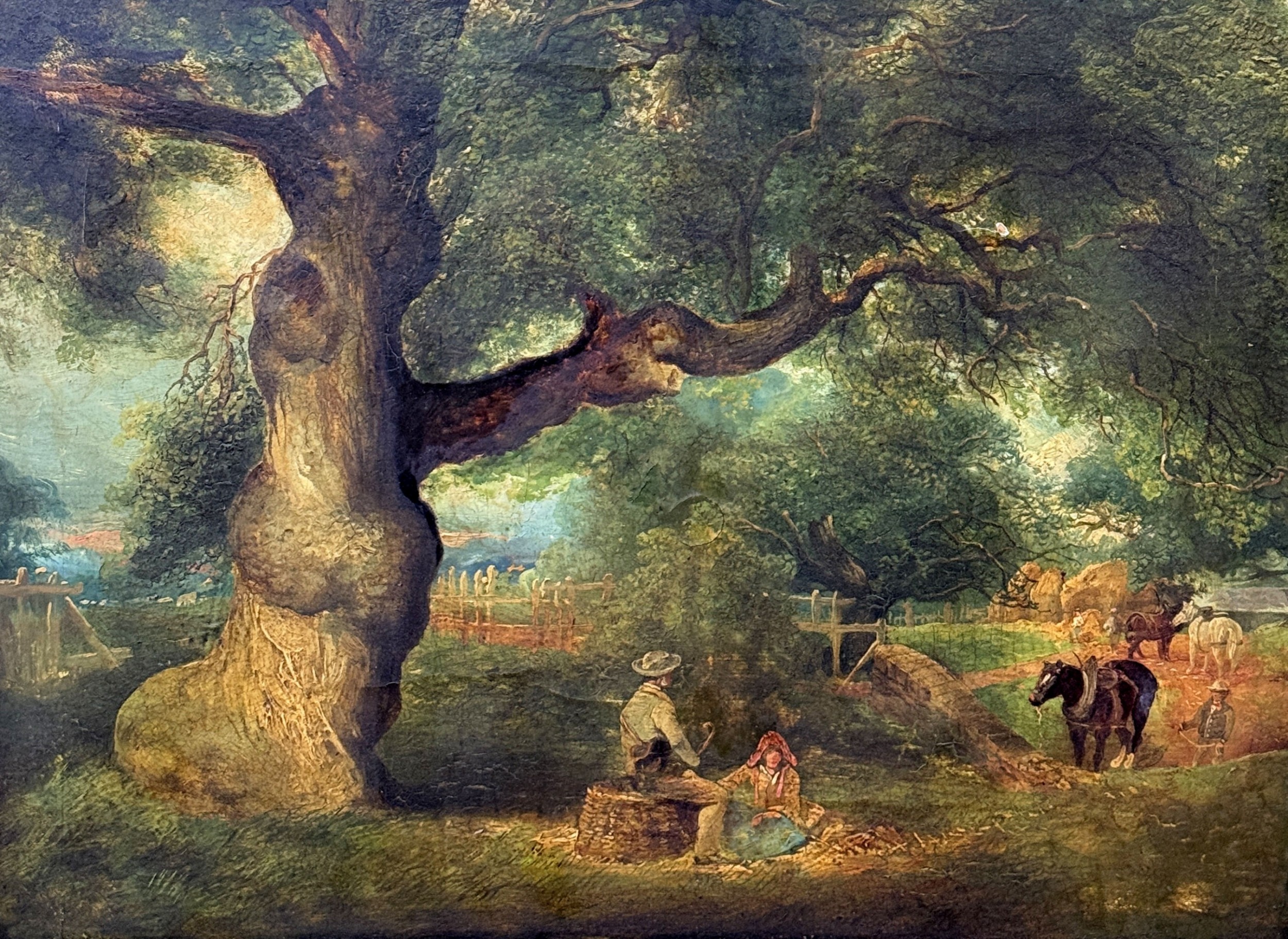
John Linnell 1792 -1882 Labourers Resting at Oak Tree with Shire & Carthorses Working in the Farm Yard Beyond oil on Canvas 34 X 45 Cm.
Artware Fineart
for sale €5,265     $5,715
£4,500

Artware Fineart

Sellingantiques Verified Since Sep 2008
View Dealers Stock Page
Id #SA1182815
PDF SHARE
SAVE

John Linnell 1792 -1882 Labourers Resting at Oak Tree with Shire & Carthorses Working in the Farm Yard Beyond oil on Canvas 34 X 45 Cm.

19th century
For Sale by Artware Fineart
Description

John Linnell 1792 -1882

Labourers resting at Oak Tree with Shire & Carthorses working in the Farm Yard beyond

oil on canvas

34 x 45 cm.

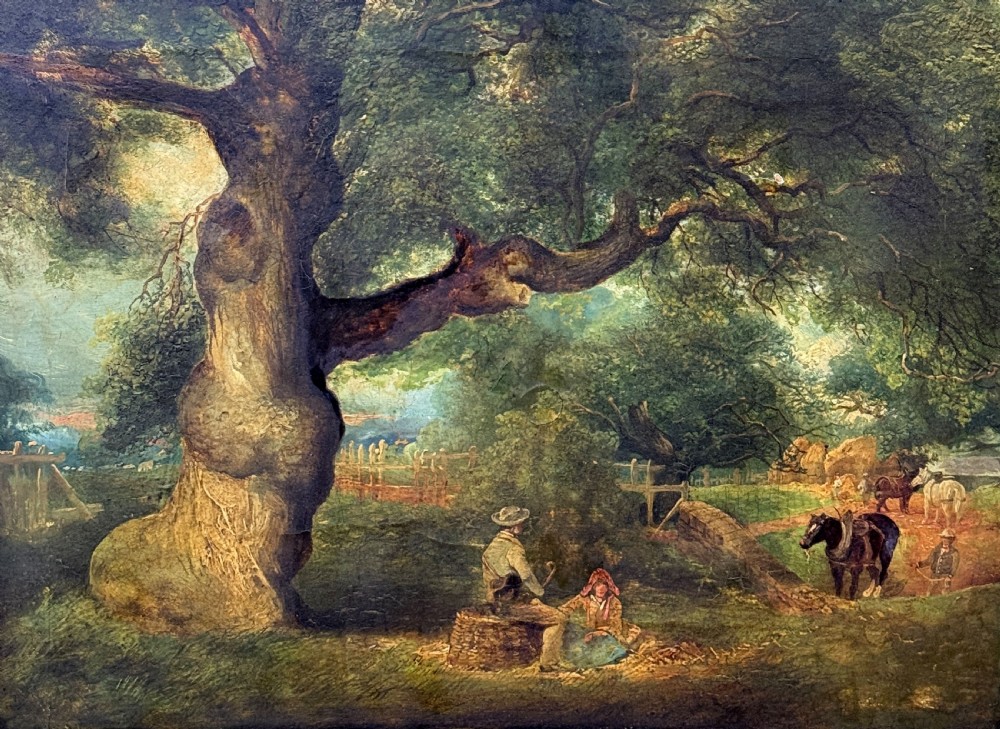
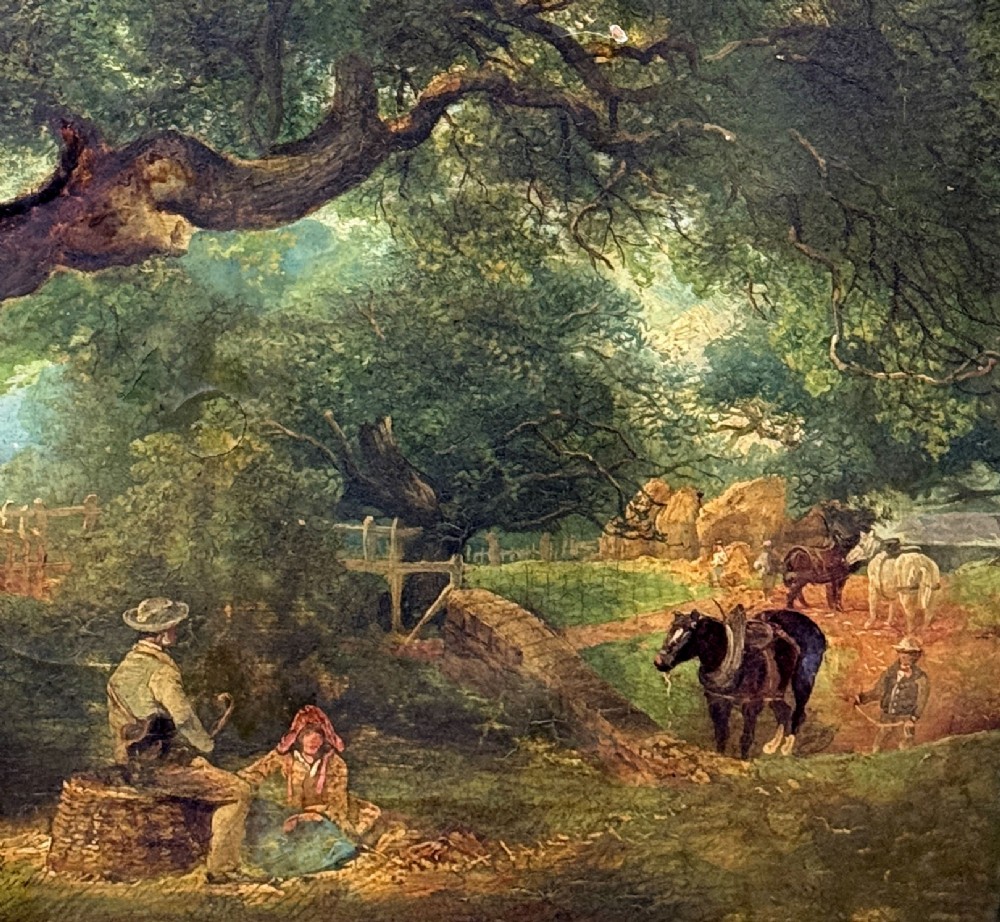
The painting depicts Labourers resting under an ancient Oak Tree at Harvest time while a Shire Horse drinks at the Wagon Wash and other Cart Horses rest in between jobs at the Farm. Hay stacks are being built in the distance. The activity in the back ground looks like they were bringing in the hay harvest.Before the days of mechanical baler machines, hay was built into round stacks. A pole was sunk into the ground (a bit like a tall fence post) and the loose hay was packed tightly hand in a circle around the pole. The stacks were then thatched at the top to help keep the weather out. In the painting one stack is finished and another being made. The hay would have been used as winter feed for the cattle, sheep and horses on the farm. It is generally accepted that a third of the crops produced on farms, were used to feed the horses that the farms needed for doing the work. The colours of the horses in the picture suggest they are shires, or forerunners of what were eventually recognised as shires. Shires were not officially recognised as a breed until 1878 .
Notes

Carthorse, work horse or heavy horse, is a large horse bred to be a working animal hauling freight and doing heavy agricultural tasks such as plowing. There are a number of breeds, with varying characteristics, but all share common traits of strength, patience, and a docile temperament.
While indispensable to generations of pre-industrial farmers, draft horses are used today for a multitude of purposes, including farming, draft horse showing, logging, recreation, and other uses. Draft breeds have been crossbred with light riding breeds such as the Thoroughbred to create sport horses or warmbloods. While most draft horses are used for driving, they can be ridden and some of the lighter draft breeds are capable performers under saddle.
Draft horses are recognizable by their extremely muscular build. They tend to have broad, short backs with powerful hindquarters. In general, they are taller and tend to have heavier bone and a more upright shoulder than riding horses, producing conformation that is well suited for pulling. Many draft breeds have heavier hair, called feathering on their lower legs. Draft breeds range from approximately 163 to 193 cm (16 to 19 hands) high and from 640 to 910 kg (1,400 to 2,000 lb).

Background

Humans domesticated horses and used them to perform a variety of duties. One type of horse-powered work was the hauling of heavy loads, plowing fields, and other tasks that required pulling ability. A heavy, calm, patient, and well-muscled animal was desired for this work. Conversely, a light, more energetic horse was needed for riding and rapid transport. Thus, to the extent possible, a certain amount of selective breeding was used to develop different types of horse for different types of work.

It is a common misunderstanding that the Destrier that carried the armoured knight of the Middle Ages had the size and conformation of a modern draft horse, and some of these Medieval war horses may have provided some bloodlines for some of the modern draft breeds. The reality was that the high-spirited, quick-moving Destrier was closer to the size, build, and temperament of a modern Andalusian or Friesian. There also were horses of more phlegmatic temperaments used for pulling military wagons or performing ordinary farm work which provided bloodlines of the modern draft horse. Records indicate that even medieval drafts were not as large as those today. Of the modern draft breeds, the Percheron probably has the closest ties to the medieval war horse.

By the 19th century horses weighing more than 730 kilograms (1,600 lb) that also moved at a quick pace were in demand. Tall stature, muscular backs, and

Physical Dimensions
Height
34cm (13.39")
Width
45cm (17.72")
Depth
2cm (0.79")
Declaration

Artware Fineart has dated this Victorian Pastoral Landscape Painting to the 19th Century.

Reference Numbers
Sellingantiques Reference
SA1182815
Dealers Internal Reference
5180
Description
John Linnell 1792 -1882

Labourers resting at Oak Tree with Shire & Carthorses working in the Farm Yard beyond

oil on canvas

34 x 45 cm.

The painting depicts Labourers resting under an ancient Oak Tree at Harvest time while a Shire Horse drinks at the Wagon Wash and other Cart Horses rest in between jobs at the Farm.
Artware Fineart

Hay stacks are being built in the distance. The activity in the back ground looks like they were bringing in the hay harvest.Before the days of mechanical baler machines, hay was built into round stacks. A pole was sunk into the ground (a bit like a tall fence post) and the loose hay was packed tightly hand in a circle around the pole. The stacks were then thatched at the top to help keep the weather out. In the painting one stack is finished and another being made. The hay would have been used as winter feed for the cattle, sheep and horses on the farm. It is generally accepted that a third of the crops produced on farms, were used to feed the horses that the farms needed for doing the work. The colours of the horses in the picture suggest they are shires, or forerunners of what were eventually recognised as shires. Shires were not officially recognised as a breed until 1878 .

fig 1. A 19th-century oil painting depicting agricultural labourers resting under a mature oak tree with cart horses working in a distant farmyard.
fig 1. John Linnell 1792 -1882 Labourers Resting at Oak Tree with Shire & Carthorses Working in the Farm Yard Beyond oil on Canvas 34 X 45 Cm.

Notes

Carthorse, work horse or heavy horse, is a large horse bred to be a working animal hauling freight and doing heavy agricultural tasks such as plowing. There are a number of breeds, with varying characteristics, but all share common traits of strength, patience, and a docile temperament.

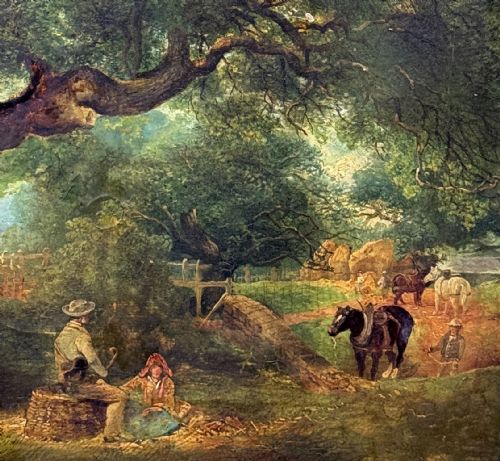
fig 2. A 19th-century oil painting depicting agricultural labourers resting under a mature oak tree with cart horses working in a distant farmyard.
fig 2. John Linnell 1792 -1882 Labourers Resting at Oak Tree with Shire & Carthorses Working in the Farm Yard Beyond oil on Canvas 34 X 45 Cm.

While indispensable to generations of pre-industrial farmers, draft horses are used today for a multitude of purposes, including farming, draft horse showing, logging, recreation, and other uses. Draft breeds have been crossbred with light riding breeds such as the Thoroughbred to create sport horses or warmbloods. While most draft horses are used for driving, they can be ridden and some of the lighter draft breeds are capable performers under saddle.

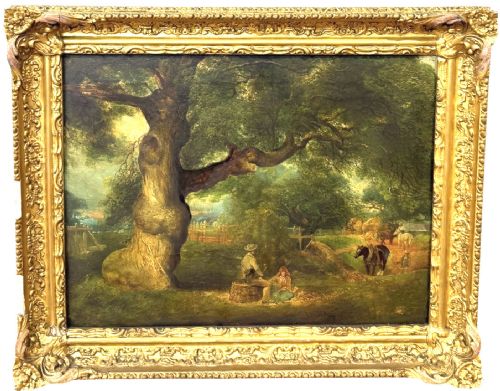
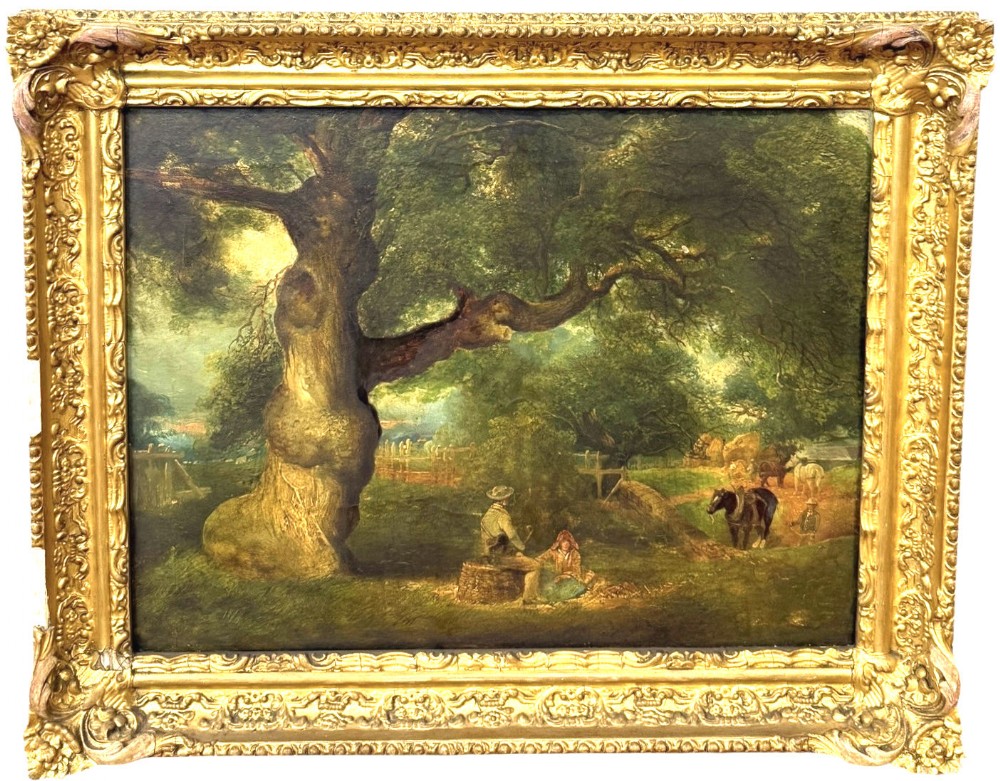
fig 3. A 19th-century oil painting depicting agricultural labourers resting under a mature oak tree with cart horses working in a distant farmyard.
fig 3. John Linnell 1792 -1882 Labourers Resting at Oak Tree with Shire & Carthorses Working in the Farm Yard Beyond oil on Canvas 34 X 45 Cm.

Draft horses are recognizable by their extremely muscular build. They tend to have broad, short backs with powerful hindquarters. In general, they are taller and tend to have heavier bone and a more upright shoulder than riding horses, producing conformation that is well suited for pulling. Many draft breeds have heavier hair, called feathering on their lower legs. Draft breeds range from approximately 163 to 193 cm (16 to 19 hands) high and from 640 to 910 kg (1,400 to 2,000 lb).

Background

Humans domesticated horses and used them to perform a variety of duties. One type of horse-powered work was the hauling of heavy loads, plowing fields, and other tasks that required pulling ability. A heavy, calm, patient, and well-muscled animal was desired for this work. Conversely, a light, more energetic horse was needed for riding and rapid transport. Thus, to the extent possible, a certain amount of selective breeding was used to develop different types of horse for different types of work.

It is a common misunderstanding that the Destrier that carried the armoured knight of the Middle Ages had the size and conformation of a modern draft horse, and some of these Medieval war horses may have provided some bloodlines for some of the modern draft breeds. The reality was that the high-spirited, quick-moving Destrier was closer to the size, build, and temperament of a modern Andalusian or Friesian. There also were horses of more phlegmatic temperaments used for pulling military wagons or performing ordinary farm work which provided bloodlines of the modern draft horse. Records indicate that even medieval drafts were not as large as those today. Of the modern draft breeds, the Percheron probably has the closest ties to the medieval war horse.

By the 19th century horses weighing more than 730 kilograms (1,600 lb) that also moved at a quick pace were in demand. Tall stature, muscular backs, and

Height
34cm (13.39")
Width
45cm (17.72")
Depth
2cm (0.79")
Date of Manufacture

Artware Fineart has dated this Victorian Pastoral Landscape Painting to the 19th Century.

Reference Numbers
Sellingantiques Ref
SA1182815
Dealers Internal Ref
5180
Artware Fineart
Sellingantiques verified Since Sep 2008
Dealer Profile

You can view the stock and full dealer information on the Artware Fineart Profile Page
PDF SHARE
SAVE
A 19th-century oil painting depicting agricultural labourers resting under a mature oak tree with cart horses working in a distant farmyard.
1 / 4
Archive I A 19th-century oil painting depicting agricultural labourers resting under a mature oak tree with cart horses working in a distant farmyard.

John Linnell 1792 -1882 Labourers Resting at Oak Tree with Shire & Carthorses Working in the Farm Yard Beyond oil on Canvas 34 X 45 Cm.
Archive II A 19th-century oil painting depicting agricultural labourers resting under a mature oak tree with cart horses working in a distant farmyard. View II
Archive III A 19th-century oil painting depicting agricultural labourers resting under a mature oak tree with cart horses working in a distant farmyard. View III
Archive IV A 19th-century oil painting depicting agricultural labourers resting under a mature oak tree with cart horses working in a distant farmyard. View IV
Enlarged Archival View
Telephone 07958 699 645
Location
18 La Gare
51 Surrey Row
London
SE1 0BZ
United Kingdom
Verified Since Sep 2008
Items For Sale 243
Items Sold 223
Artware Fineart
Verified Since Sep 2008
View Dealer Info
Location: 18 La Gare , 51 Surrey Row , London , SE1 0BZ , United Kingdom
Verified
Sep 2008
For Sale
243
Sold
223
A 19th-century oil painting depicting agricultural labourers resting under a mature oak tree with cart horses working in a distant farmyard.
John Linnell 1792 -1882 Labourers resting at Oak Tree with Shire & Carthorses working in the Farm Yard beyond oil on canvas 34 x 45 cm.
Ref: SA1182815
A 19th-century oil painting depicting agricultural labourers resting under a mature oak tree with cart horses working in a distant farmyard.
Detail View 1
Detail View 2
Detail View 3
Archival Detail
Every single antique dealer on our platform is individually approved by our internal team. We verify their professional trade history, ethical standards, and photographic quality to ensure a secure, high-standard buying environment. Upon joining, every dealer agrees to a strict 9-point code of conduct. While issues can occasionally arise, our dealers typically resolve them swiftly and directly with the buyer. In fact, since our founding in 2002, Sellingantiques has only had to step in to help resolve an issue on roughly five occasions—a true testament to the quality of our dealers and their dedication to your happiness.
Our dealers are highly experienced in packing and shipping fragile, high-value antiques. Because you are in direct contact with the dealer, you will be able to easily go through all available shipping and insurance options together to ensure your item arrives safely.
Antiques are the ultimate green purchase. By choosing historical pieces over newly manufactured goods, you completely eliminate the carbon footprint of modern mass production while preserving exceptional, timeless craftsmanship.

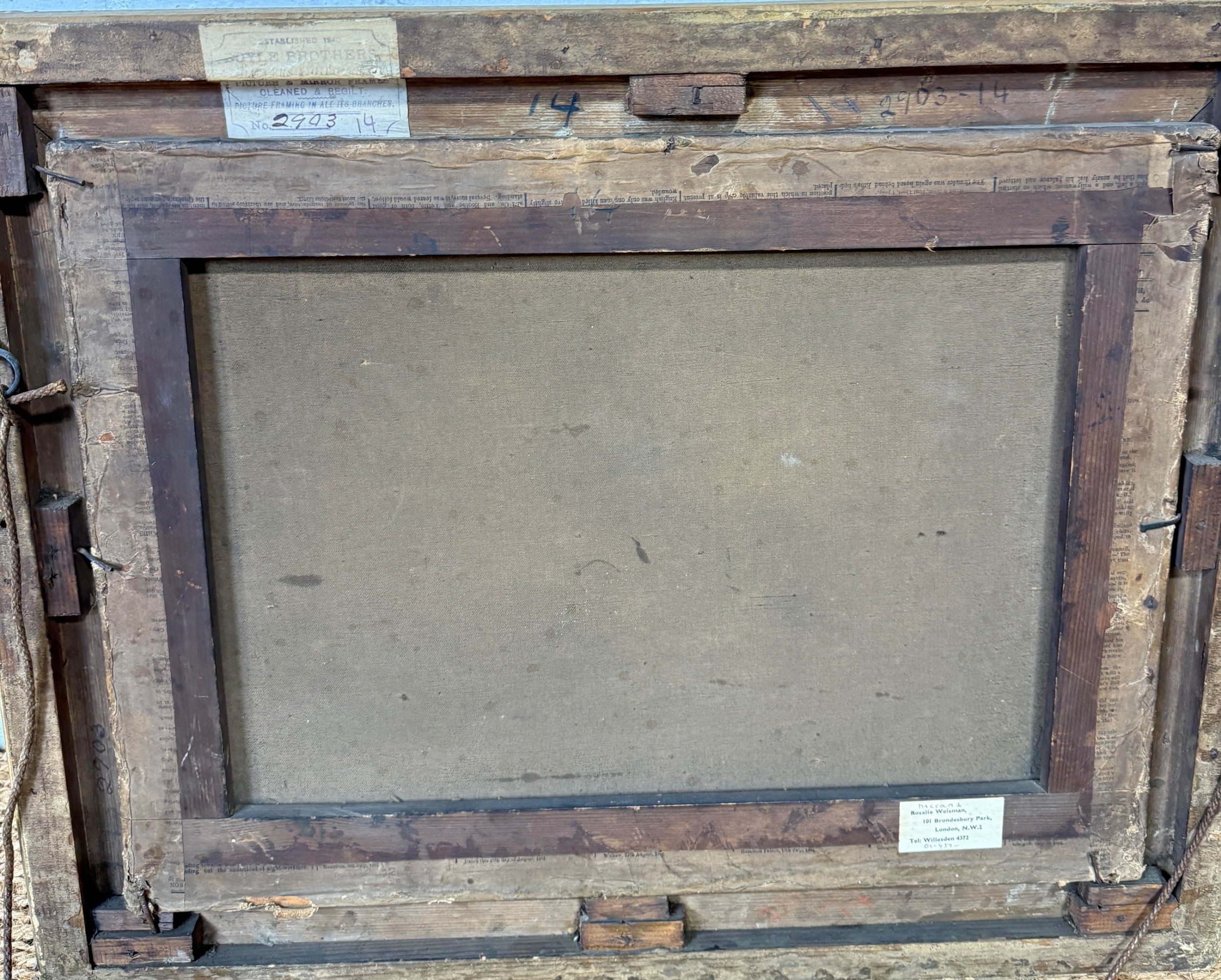
Victorian pastoral landscape art emerged in 19th-century Britain, focusing on idealised rural life, agricultural workers, and natural scenery. Artists emphasized light, weather phenomena, and detailed botanical features to document the countryside amidst industrialisation.

Paintings from this era were traditionally executed using oil pigments bound with linseed oil on hand-stretched linen or cotton canvas. The canvas was typically attached to wooden stretcher bars and primed with an oil-based gesso ground.

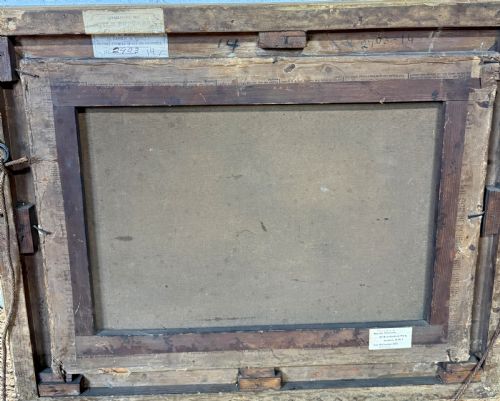
Authentic period works display natural age craquelure across the paint surface, historic canvas oxidation on the reverse, and period-correct stretcher construction. Signatures, label remnants, or inscribed titles on the frame or stretcher further assist in identification.

Victorian landscape paintings can be hung above accent furniture such as sideboards or consoles to create a focal point. Combining dark-toned oil paintings with contemporary lighting or minimalist moulding creates a balanced, layered aesthetic.

To preserve oil paintings, maintain a stable climate away from direct sunlight, dampness, and intense heat sources. Dust the surface gently with a soft dry brush and avoid chemical cleaners or water.
items
Add keywords to the filter
Price
£100
£250000
Era
Movements
Material
Origin
Stock Location
Freshness
Online Payments
Categories