8,653  PAGES BROWSED TODAY PAGES TODAY 36  ANTIQUES UPLOADED TODAY NEW ARRIVALS
ID #SA1175270
SOLD
Email
Save
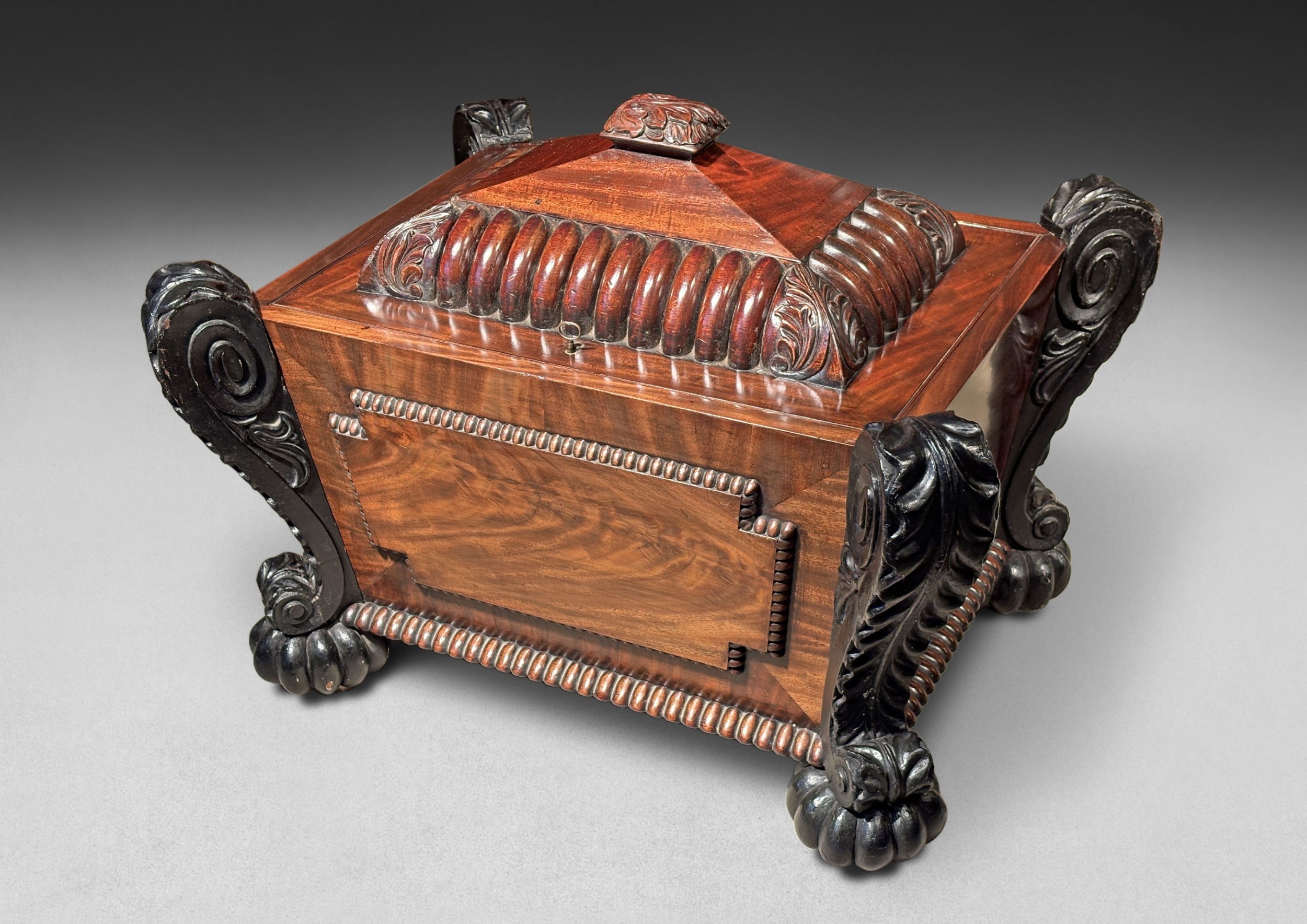
A Regency Carved Mahogany and Ebonised Cellarette in the Manner of Thomas Hope
W.R. Harvey & Co. (Antiques) Ltd
sold SA1175270
Sorry, but this item has been sold.
W.R. Harvey & Co. (Antiques) Ltd

W.R. Harvey & Co. (Antiques) Ltd

Sellingantiques Verified Since Sep 2016
View Dealers Stock Page
  • About Us
    Specialists in 17th-18th and early 19th century fine english furniture, art, clocks and other objets d'art
  • Trade Associations
    W.R. Harvey & Co. (Antiques) Ltd is a registered member of LAPADA 
Id #SA1175270
PDF SHARE
SAVE

A Regency Carved Mahogany and Ebonised Cellarette in the Manner of Thomas Hope

19th century
Description

No: 11210

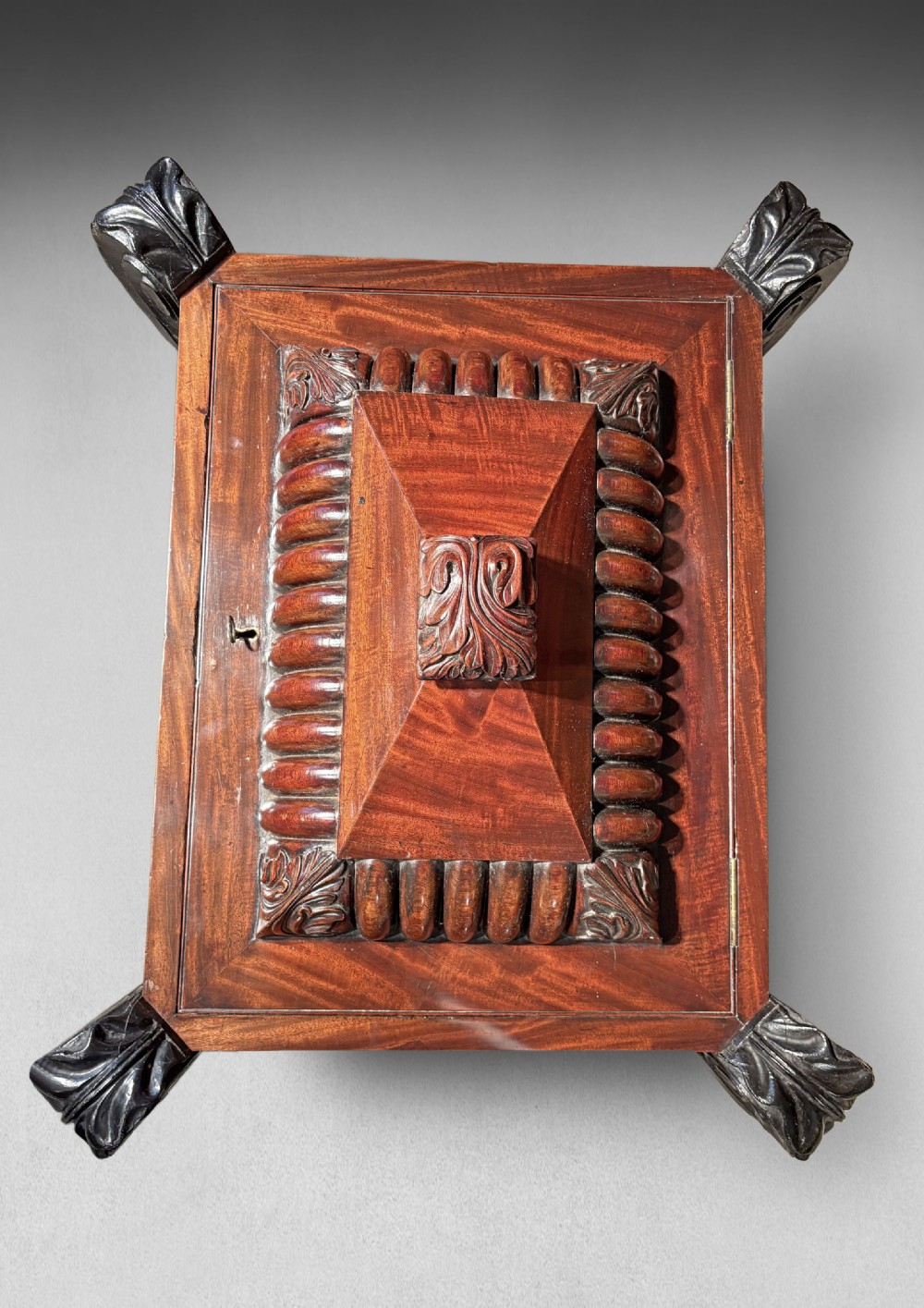
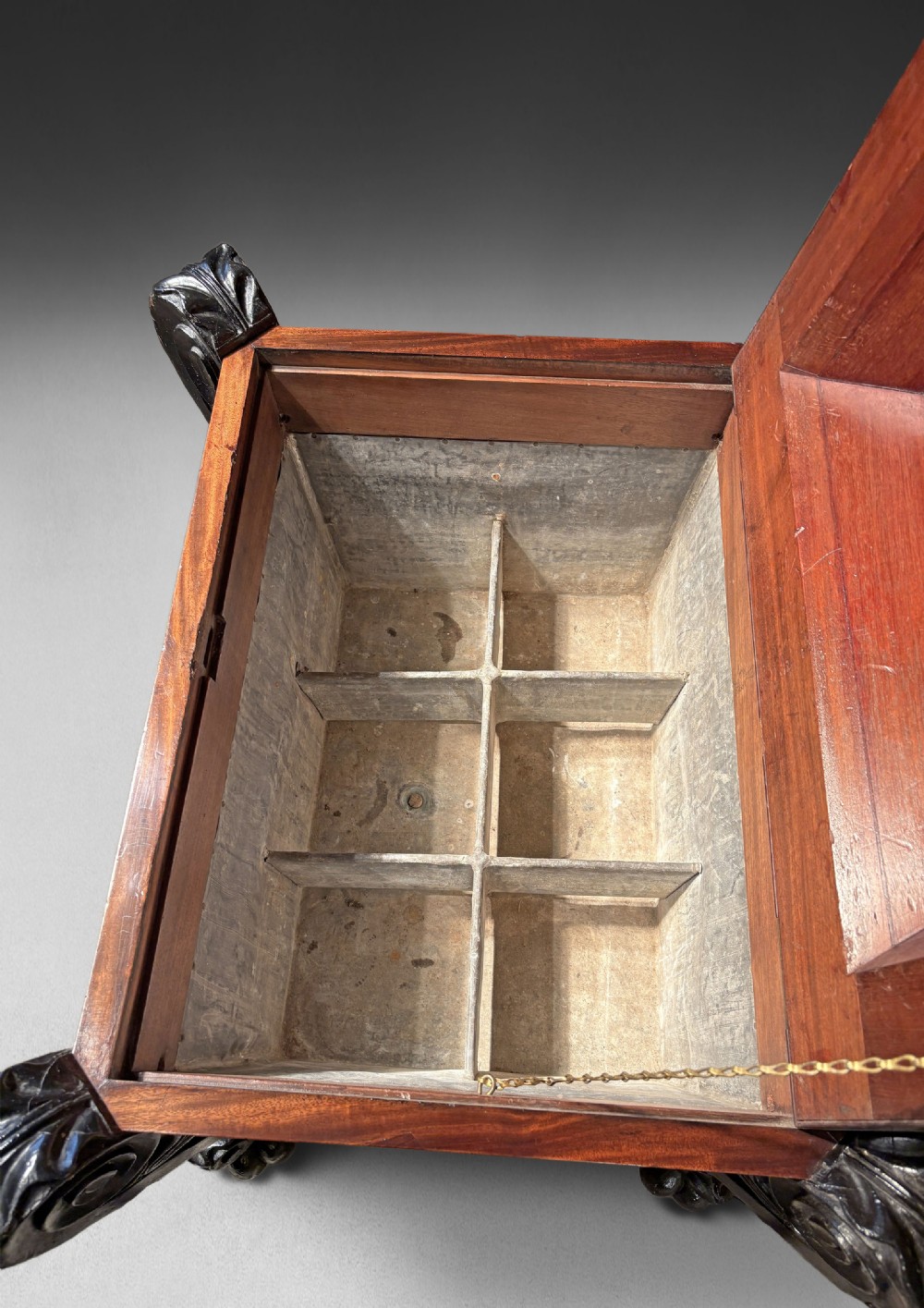
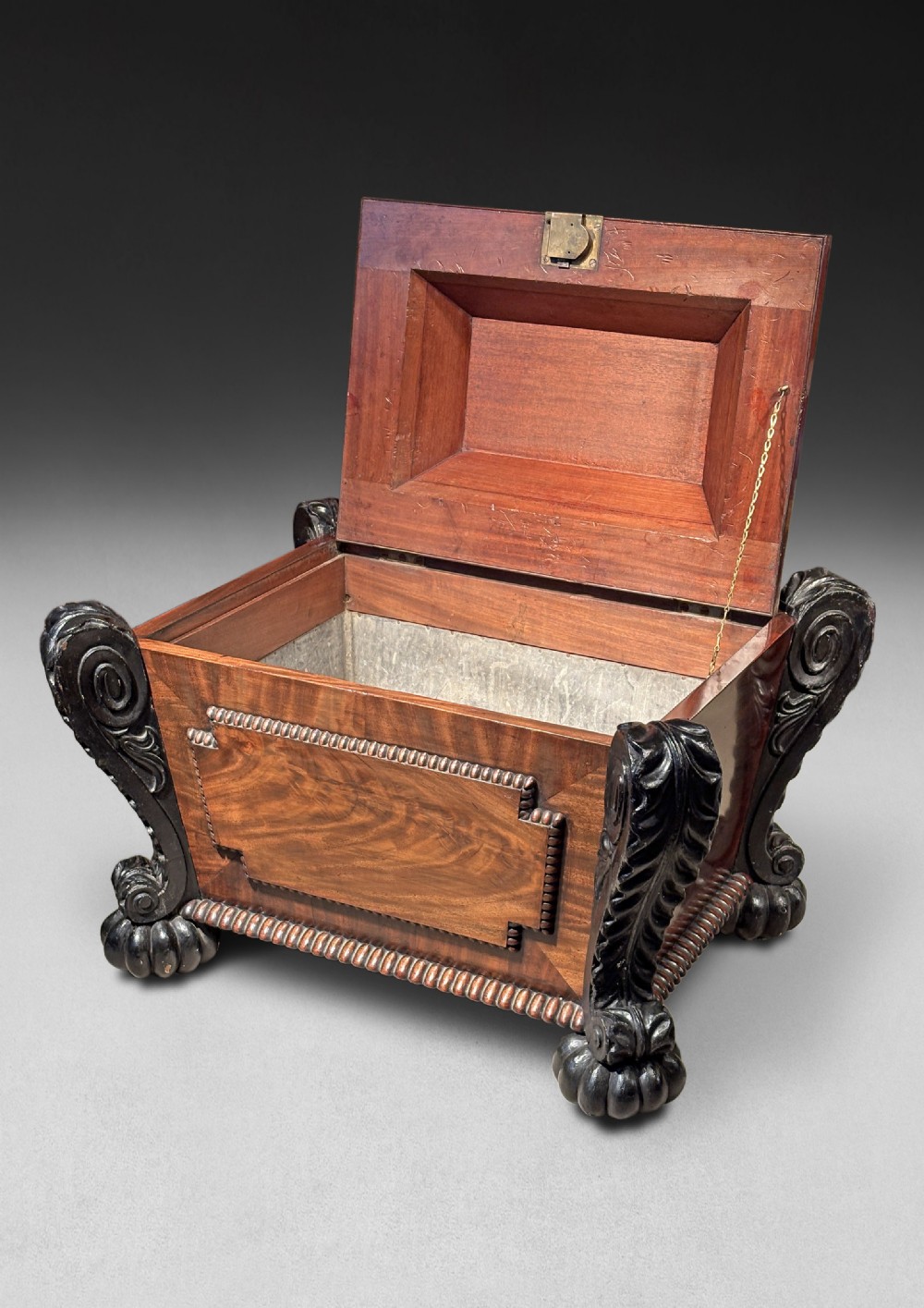
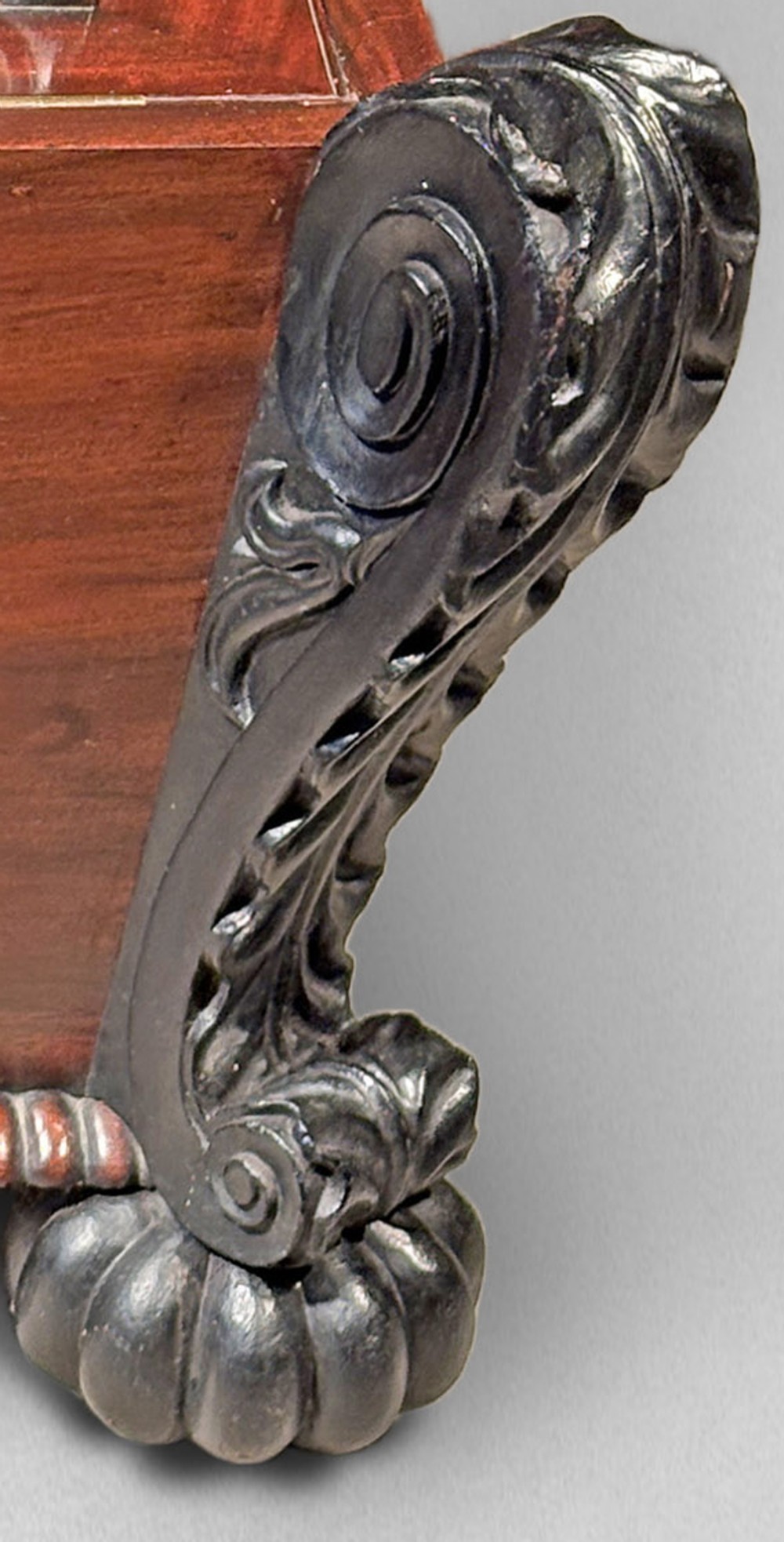
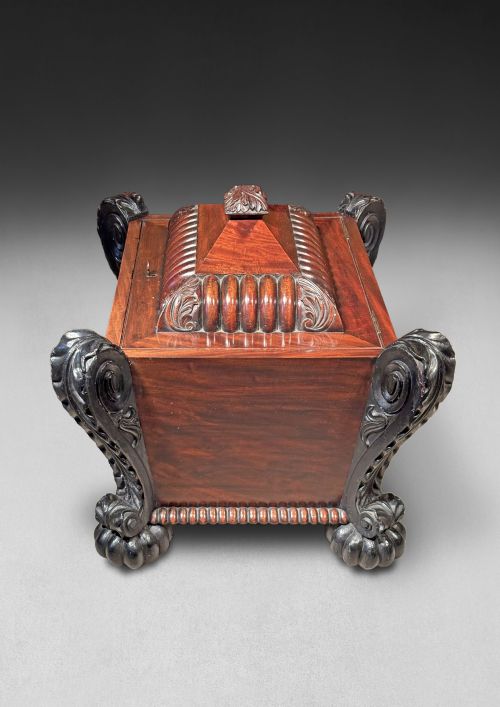
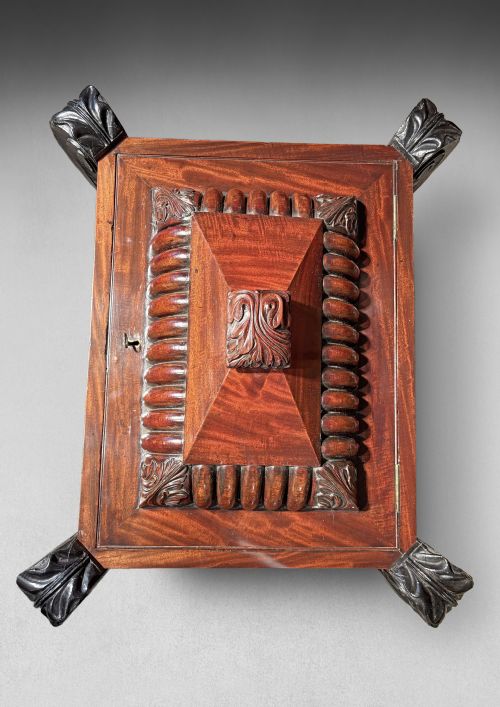
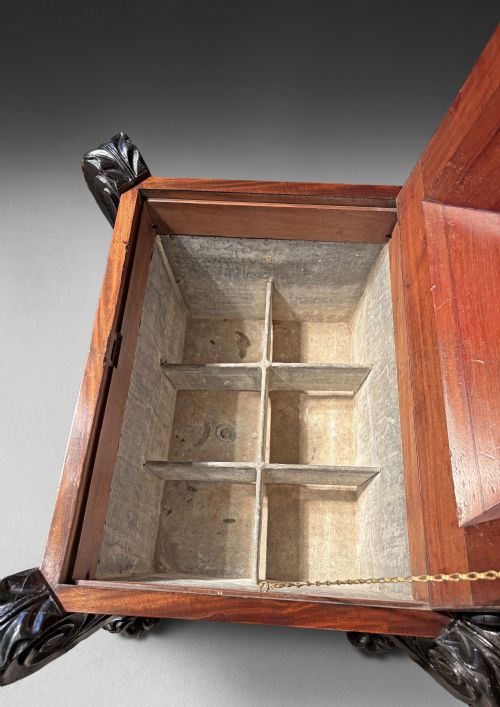
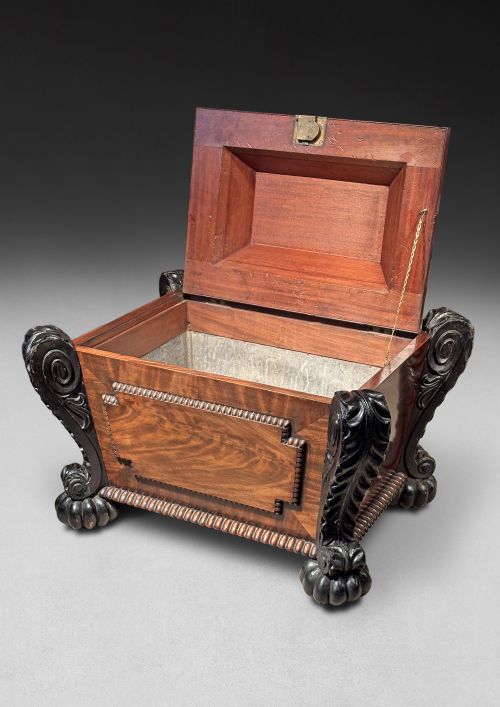
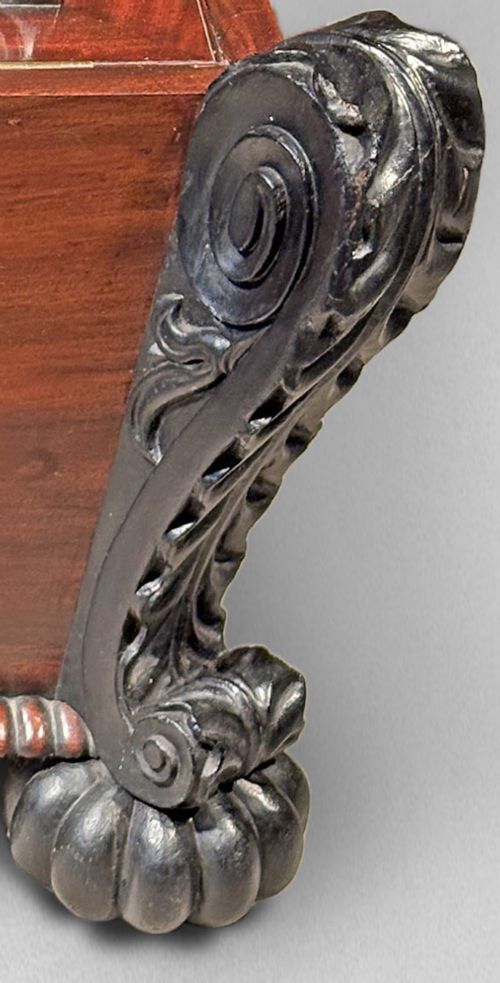
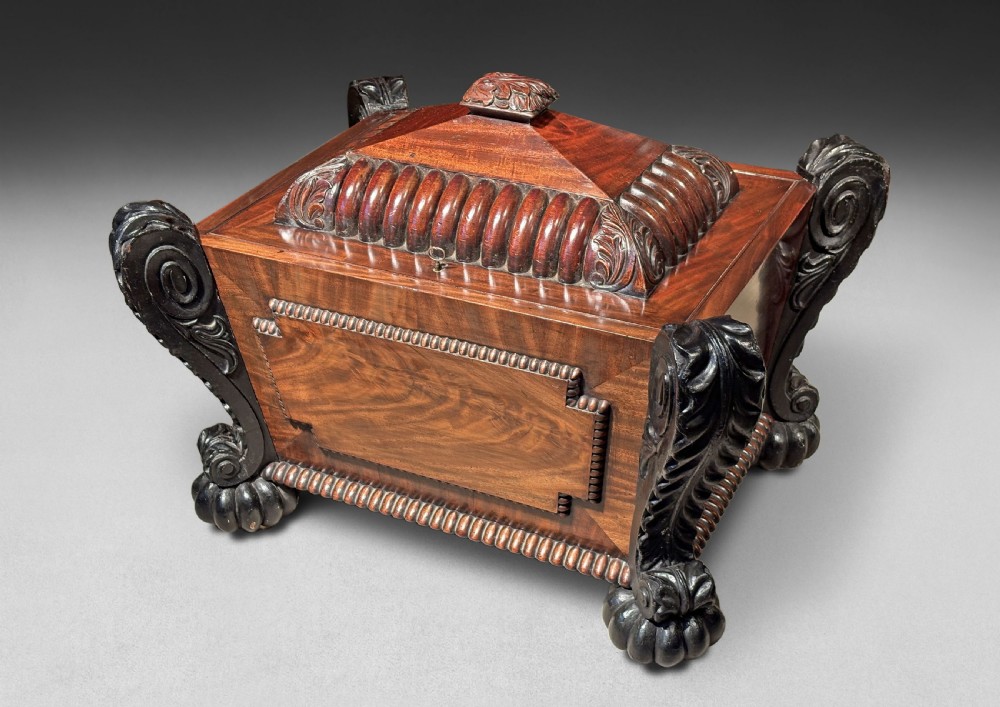
A Regency Carved Mahogany and Ebonised cellarette in the manner of Thomas Hope of sarcophagus form, the carved inset lid opening to reveal a lead-lined interior for six bottles, the body with ebonised scrolling brackets to the corners, and standing on gadrooned bun feet. This example is of outstanding quality.
Circa: 1815 Price: £7,250-00p.

Height:23 ½”, (60cm) Width:29” (74cm) Depth:23 ½”, (60cm).

Note: From the V & A “Thomas Hope and the Regency Style”

Thomas Hope (1769 – 1831) was an influential designer, design reformer and collector. A Dutchman, born in Amsterdam, Hope inherited from his family a tradition of collecting as well as vast wealth from the family bank. He was a collector on a grand scale and also an innovative designer who helped define what we understand as the Regency style (1800 – 30).
Hope’s extensive Grand Tour travels in Europe, Greece, Turkey and Egypt inspired his interest in antiquities as a source of designs for Regency interiors, furniture and metalwork. He was determined to reform contemporary taste by returning architecture and the arts, including interior design and furniture, to what he conceived as the spirit of classical purity.
Evolving from the Neo-classical style of the 18th century, Regency Classicism was characterised by forms and motifs from ancient Greece and Rome. To these were added elements taken from nature, from the arts of ancient Egypt and from French design of the mid-18th century – a revival of this Rococo style is seen in the use of curved forms and decoration in the shape of rocks and shells. The combination of different patterns and colours made Regency Classicism a visually rich style.
Duchess Street

In 1799, Hope bought a house designed by the celebrated architect and designer Robert Adam (1728 – 92) in Duchess Street, Portland Place, London, which he remodelled with a series of themed interiors. He recorded this work in his book, Household Furniture & Interior Decoration executed from Designs by Thomas Hope (1807), which became a major source for designers and introduced for the first time into the English language the term ‘interior decoration’.
Hope’s book was accompanied by an impassioned text setting out his reforming manifesto on design and craftsmanship. He stated that by promoting craftsmanship, avoiding the excesses of the division of labour and by employing “the talent of the professor of the more liberal arts; the draughtsman, the modeller, the painter, and the sculptor”, it would be possible to give not only “new food to the industry of the poor, but a new decorum to the expenditure of the rich”. The resulting rise in design standards would lead “not only towards ultimately increasing the welfare and the commerce of the nation but refining the intellectual and sensible enjoyments of the individual”.

The interiors created by Hope at his London house in Duchess Street were the fullest expression of his mission to transform modern British taste. He opened the house in 1802, with a grand party attended by George Augustus Frederick, Prince of Wales. To the surprise of his contemporaries, he then issued admission tickets in 1804 to members of the Royal Academy. Subsequently, there were numerous other visitors to the house, including leaders of society, artists, scholars and designers.

Hope’s startling juxtaposition of styles included Egyptian, Greek, Roman and Indian elements, as well as his own version of the French Empire style (1804 – 18). Classical sculpture and vases were displayed alongside modern paintings and sculpture. Most striking of all was the inventive and exotic furniture that Hope designed specifically for the house.

The Egyptian Room at Duchess Street was one of the most inventive interiors in Europe at the time. Here, Hope displayed his

Physical Dimensions
Height
60cm (23.62")
Width
74cm (29.13")
Depth
60cm (23.62")
Declaration

W.R. Harvey & Co. (Antiques) Ltd has dated this Regency Mahogany Cellarette to the Regency era.

Reference Numbers
Sellingantiques Reference
SA1175270
Dealers Internal Reference
11210
Dealers Notes

We offer free delivery within the UK. For deliveries Worldwide, please contact us for a quote and we will get back to you within 12 hours.

If you would like to view the item in person, our showrooms are open Monday to Saturday 9.30 - 5.30 and by appointment on Sunday.

Any questions, please contact us as soon as possible. We will endeavour to get you an answer within 24 hours - and hopefully much quicker!

Description
No: 11210

A Regency Carved Mahogany and Ebonised cellarette in the manner of Thomas Hope of sarcophagus form, the carved inset lid opening to reveal a lead-lined interior for six bottles, the body with ebonised scrolling brackets to the corners, and standing on gadrooned bun feet. This example is of outstanding quality.

fig 1. A Regency mahogany and ebonised cellarette featuring a sarcophagus-form hinged lid with carved gadrooning, set on heavy scroll corner feet.
fig 1. A Regency Carved Mahogany and Ebonised Cellarette in the Manner of Thomas Hope

Circa: 1815 Price: £7,250-00p.

Height:23 ½”, (60cm) Width:29” (74cm) Depth:23 ½”, (60cm).

Note: From the V & A “Thomas Hope and the Regency Style”

Thomas Hope (1769 – 1831) was an influential designer, design reformer and collector.

A Dutchman, born in Amsterdam, Hope inherited from his family a tradition of collecting as well as vast wealth from the family bank.
W.R. Harvey & Co. (Antiques) Ltd

He was a collector on a grand scale and also an innovative designer who helped define what we understand as the Regency style (1800 – 30).

fig 2. A Regency mahogany and ebonised cellarette featuring a sarcophagus-form hinged lid with carved gadrooning, set on heavy scroll corner feet.
fig 2. A Regency Carved Mahogany and Ebonised Cellarette in the Manner of Thomas Hope

Hope’s extensive Grand Tour travels in Europe, Greece, Turkey and Egypt inspired his interest in antiquities as a source of designs for Regency interiors, furniture and metalwork. He was determined to reform contemporary taste by returning architecture and the arts, including interior design and furniture, to what he conceived as the spirit of classical purity.

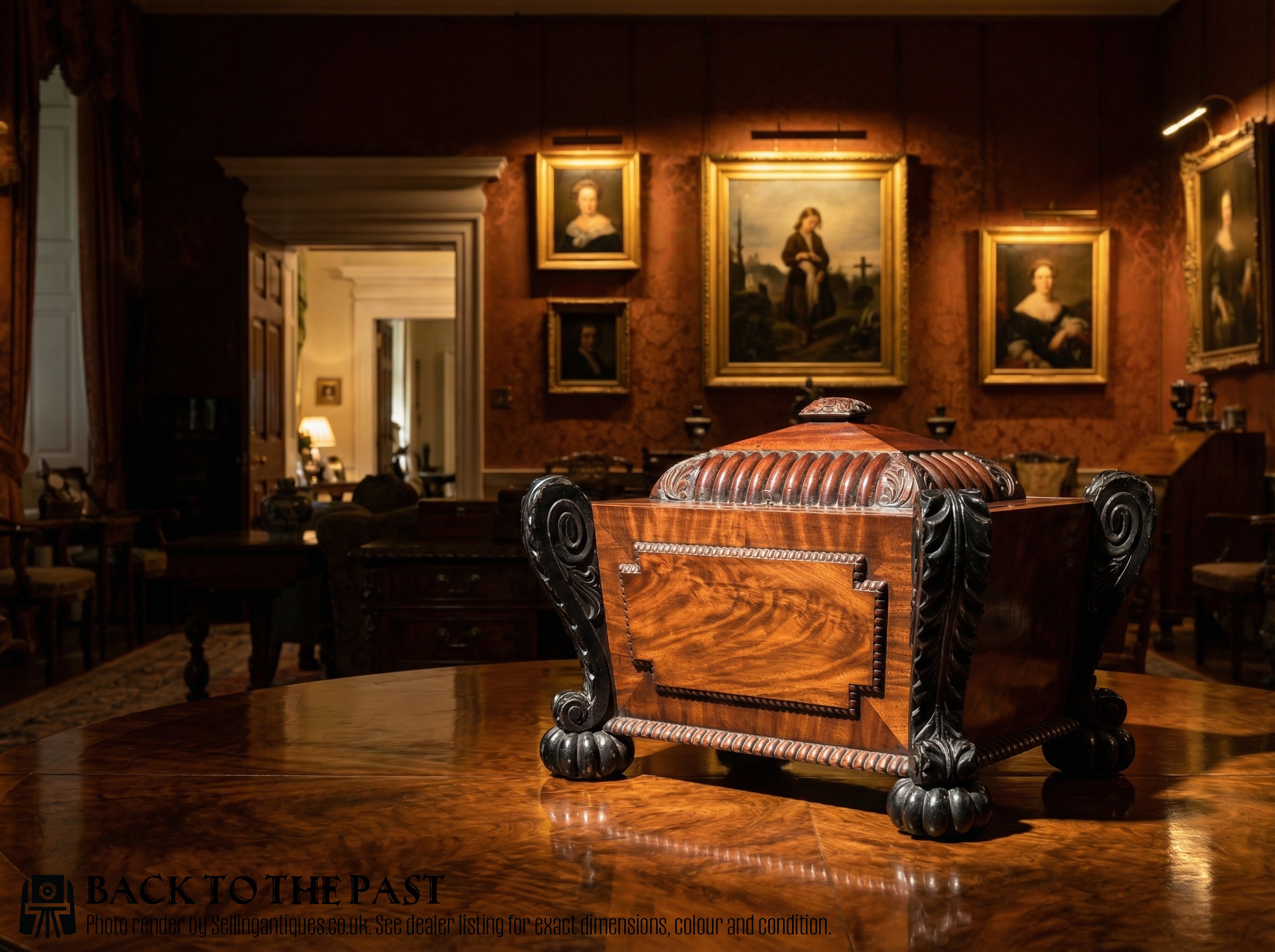
fig 3. A Regency mahogany and ebonised cellarette featuring a sarcophagus-form hinged lid with carved gadrooning, set on heavy scroll corner feet.
fig 3. A Regency Carved Mahogany and Ebonised Cellarette in the Manner of Thomas Hope

Evolving from the Neo-classical style of the 18th century, Regency Classicism was characterised by forms and motifs from ancient Greece and Rome. To these were added elements taken from nature, from the arts of ancient Egypt and from French design of the mid-18th century – a revival of this Rococo style is seen in the use of curved forms and decoration in the shape of rocks and shells. The combination of different patterns and colours made Regency Classicism a visually rich style.

fig 4. A Regency mahogany and ebonised cellarette featuring a sarcophagus-form hinged lid with carved gadrooning, set on heavy scroll corner feet.
fig 4. A Regency Carved Mahogany and Ebonised Cellarette in the Manner of Thomas Hope

Duchess Street

In 1799, Hope bought a house designed by the celebrated architect and designer Robert Adam (1728 – 92) in Duchess Street, Portland Place, London, which he remodelled with a series of themed interiors. He recorded this work in his book, Household Furniture & Interior Decoration executed from Designs by Thomas Hope (1807), which became a major source for designers and introduced for the first time into the English language the term ‘interior decoration’.

fig 5. A Regency mahogany and ebonised cellarette featuring a sarcophagus-form hinged lid with carved gadrooning, set on heavy scroll corner feet.
fig 5. A Regency Carved Mahogany and Ebonised Cellarette in the Manner of Thomas Hope

Hope’s book was accompanied by an impassioned text setting out his reforming manifesto on design and craftsmanship. He stated that by promoting craftsmanship, avoiding the excesses of the division of labour and by employing “the talent of the professor of the more liberal arts; the draughtsman, the modeller, the painter, and the sculptor”, it would be possible to give not only “new food to the industry of the poor, but a new decorum to the expenditure of the rich”. The resulting rise in design standards would lead “not only towards ultimately increasing the welfare and the commerce of the nation but refining the intellectual and sensible enjoyments of the individual”.

The interiors created by Hope at his London house in Duchess Street were the fullest expression of his mission to transform modern British taste. He opened the house in 1802, with a grand party attended by George Augustus Frederick, Prince of Wales. To the surprise of his contemporaries, he then issued admission tickets in 1804 to members of the Royal Academy. Subsequently, there were numerous other visitors to the house, including leaders of society, artists, scholars and designers.

Hope’s startling juxtaposition of styles included Egyptian, Greek, Roman and Indian elements, as well as his own version of the French Empire style (1804 – 18). Classical sculpture and vases were displayed alongside modern paintings and sculpture. Most striking of all was the inventive and exotic furniture that Hope designed specifically for the house.

The Egyptian Room at Duchess Street was one of the most inventive interiors in Europe at the time. Here, Hope displayed his

Height
60cm (23.62")
Width
74cm (29.13")
Depth
60cm (23.62")
Date of Manufacture

W.R. Harvey & Co. (Antiques) Ltd has dated this Regency Mahogany Cellarette to the Regency era.

Reference Numbers
Sellingantiques Ref
SA1175270
Dealers Internal Ref
11210
W.R. Harvey & Co. (Antiques) Ltd
Sellingantiques verified Since Sep 2016

Specialists in 17th-18th and early 19th century fine english furniture, art, clocks and other objets d'art

Dealer Profile

You can view the stock and full dealer information on the W.R. Harvey & Co. (Antiques) Ltd Profile Page

Trade Associations

W.R. Harvey & Co. (Antiques) Ltd is a registered member of LAPADA 
PDF SHARE
SAVE
A Regency mahogany and ebonised cellarette featuring a sarcophagus-form hinged lid with carved gadrooning, set on heavy scroll corner feet.
1 / 7
Archive I A Regency mahogany and ebonised cellarette featuring a sarcophagus-form hinged lid with carved gadrooning, set on heavy scroll corner feet.

A Regency Carved Mahogany and Ebonised Cellarette in the Manner of Thomas Hope
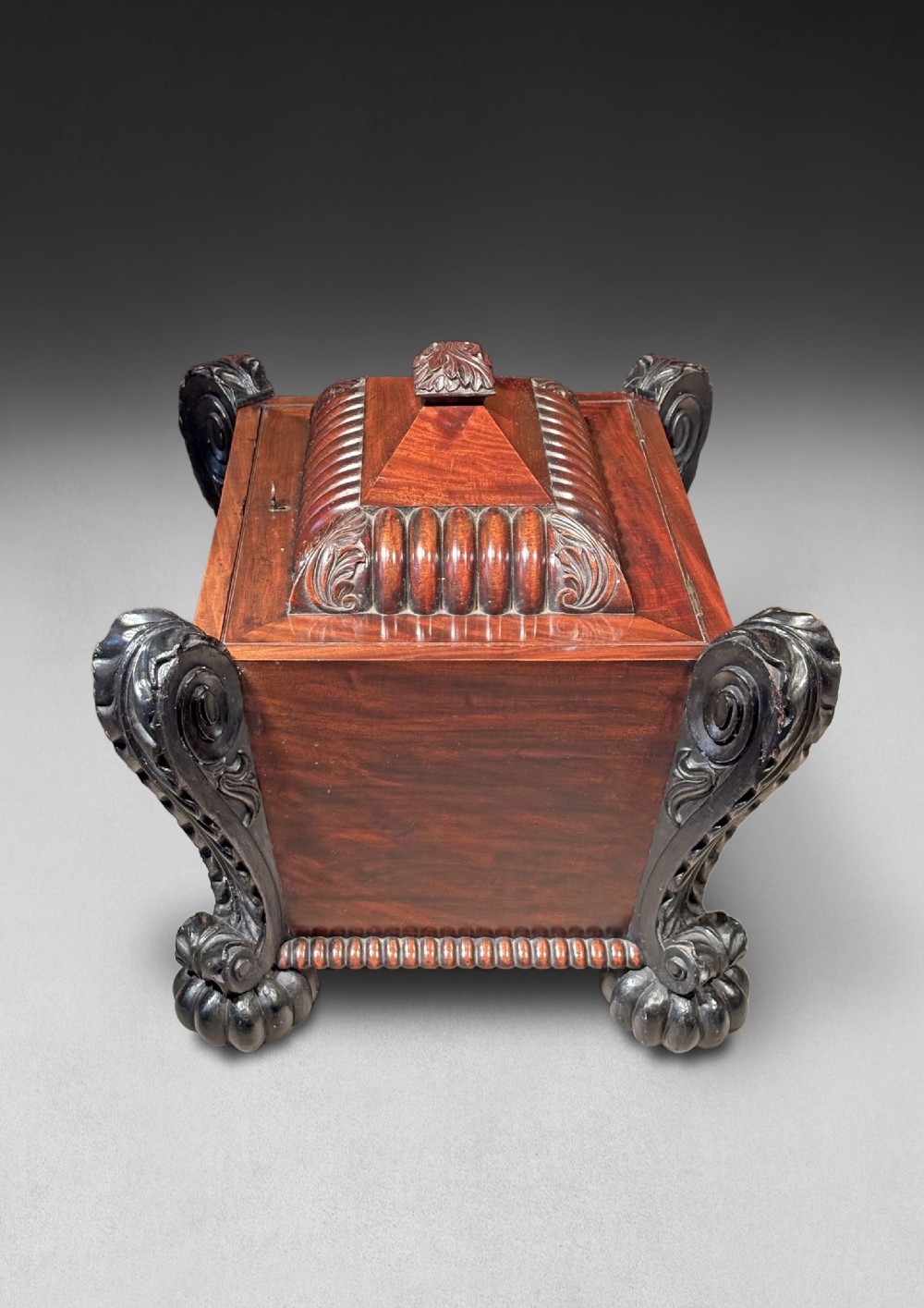
Archive II A Regency mahogany and ebonised cellarette featuring a sarcophagus-form hinged lid with carved gadrooning, set on heavy scroll corner feet. View II
Archive III A Regency mahogany and ebonised cellarette featuring a sarcophagus-form hinged lid with carved gadrooning, set on heavy scroll corner feet. View III
Archive IV Scale Reference for A Regency mahogany and ebonised cellarette featuring a sarcophagus-form hinged lid with carved gadrooning, set on heavy scroll corner feet.
Archive V A Regency mahogany and ebonised cellarette featuring a sarcophagus-form hinged lid with carved gadrooning, set on heavy scroll corner feet. View V
Archive VI A Regency mahogany and ebonised cellarette featuring a sarcophagus-form hinged lid with carved gadrooning, set on heavy scroll corner feet. View VI
Archive VII A Regency mahogany and ebonised cellarette featuring a sarcophagus-form hinged lid with carved gadrooning, set on heavy scroll corner feet. View VII
Enlarged Archival View
Telephone 01993 706501
Location
86 Corn Street
Witney
Oxfordshire
OX28 6BU
United Kingdom
Verified Since Sep 2016
Items For Sale 112
Items Sold 543
W.R. Harvey & Co. (Antiques) Ltd
Verified Since Sep 2016
View Dealer Info
Location: 86 Corn Street, Witney, Oxfordshire, OX28 6BU, United Kingdom
Verified
Sep 2016
For Sale
112
Sold
543
A Regency mahogany and ebonised cellarette featuring a sarcophagus-form hinged lid with carved gadrooning, set on heavy scroll corner feet.
A Regency Carved Mahogany and Ebonised cellarette in the manner of Thomas Hope
Ref: SA1175270
A Regency mahogany and ebonised cellarette featuring a sarcophagus-form hinged lid with carved gadrooning, set on heavy scroll corner feet.
Detail View 1
Detail View 2
Detail View 3
Detail View 4
Detail View 5
Scale Reference
Archival Detail
Every single antique dealer on our platform is individually approved by our internal team. We verify their professional trade history, ethical standards, and photographic quality to ensure a secure, high-standard buying environment. Upon joining, every dealer agrees to a strict 9-point code of conduct. While issues can occasionally arise, our dealers typically resolve them swiftly and directly with the buyer. In fact, since our founding in 2002, Sellingantiques has only had to step in to help resolve an issue on roughly five occasions—a true testament to the quality of our dealers and their dedication to your happiness.
Our dealers are highly experienced in packing and shipping fragile, high-value antiques. Because you are in direct contact with the dealer, you will be able to easily go through all available shipping and insurance options together to ensure your item arrives safely.
Antiques are the ultimate green purchase. By choosing historical pieces over newly manufactured goods, you completely eliminate the carbon footprint of modern mass production while preserving exceptional, timeless craftsmanship.

A Regency cellarette is a wooden storage cabinet or chest, popular in early 19th-century Britain, designed to contain and chill wine bottles in formal dining settings.

These pieces were typically constructed from mahogany or rosewood, frequently incorporating carved ebonised accents, flame mahogany veneers, and internal zinc or lead linings for thermal insulation.

Authentic examples demonstrate Neoclassical motifs inspired by classical antiquity, hand-cut joinery, original brass hardware, and architectural forms such as sarcophagus lids and monopodia carved feet.

A cellarette functions effectively as a sculptural accent piece positioned in a dining room, hallway, or alcove, providing discrete storage while offering historical character.

Dust surfaces using a clean, dry microfibre cloth, apply natural wax polish sparingly along the timber grain, and avoid placement near direct heat sources to preserve original patination and prevent veneer distortion.
items
Add keywords to the filter
Price
£100
£250000
Era
Movements
Material
Origin
Stock Location
Freshness
Online Payments
Categories