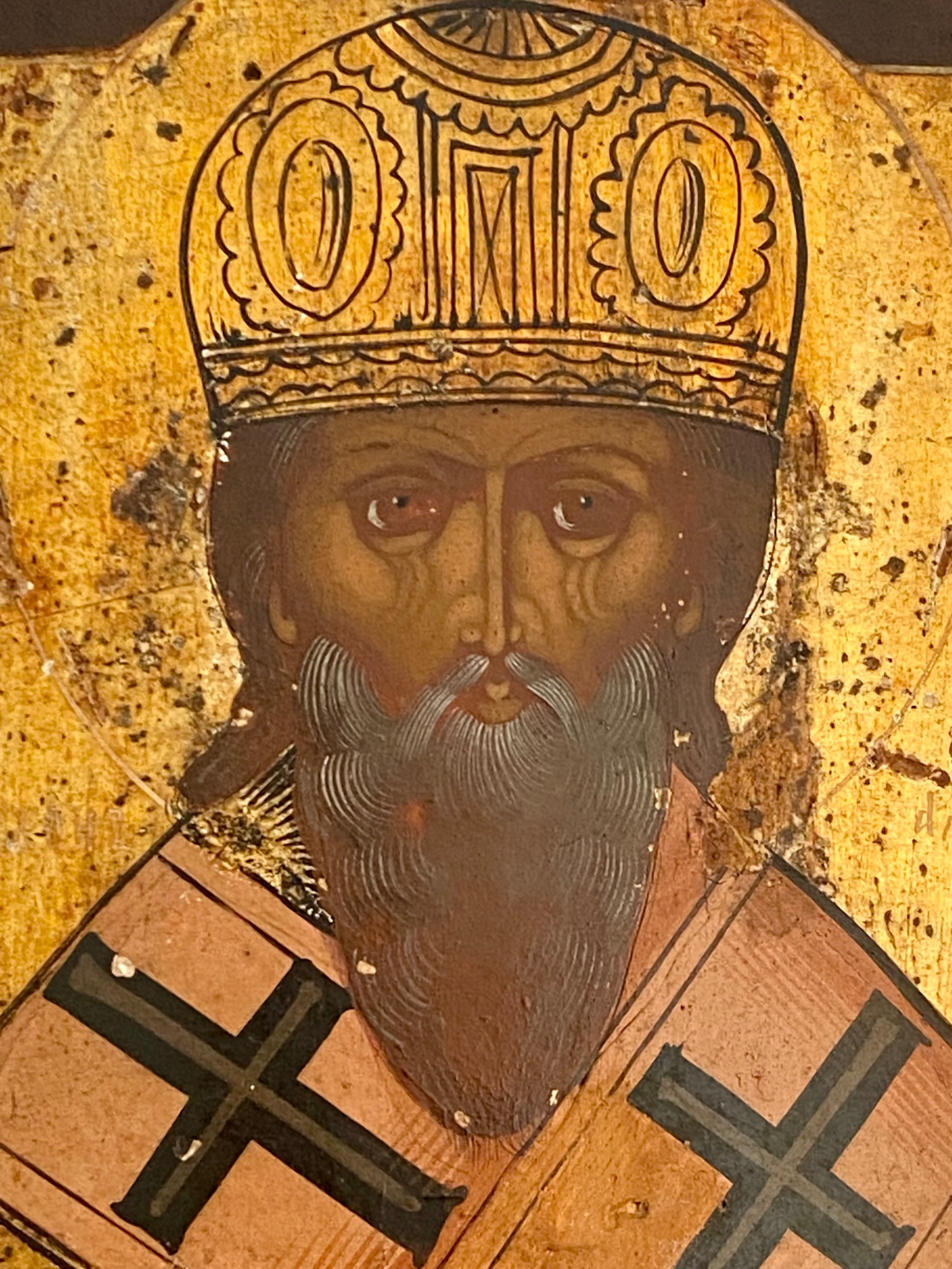
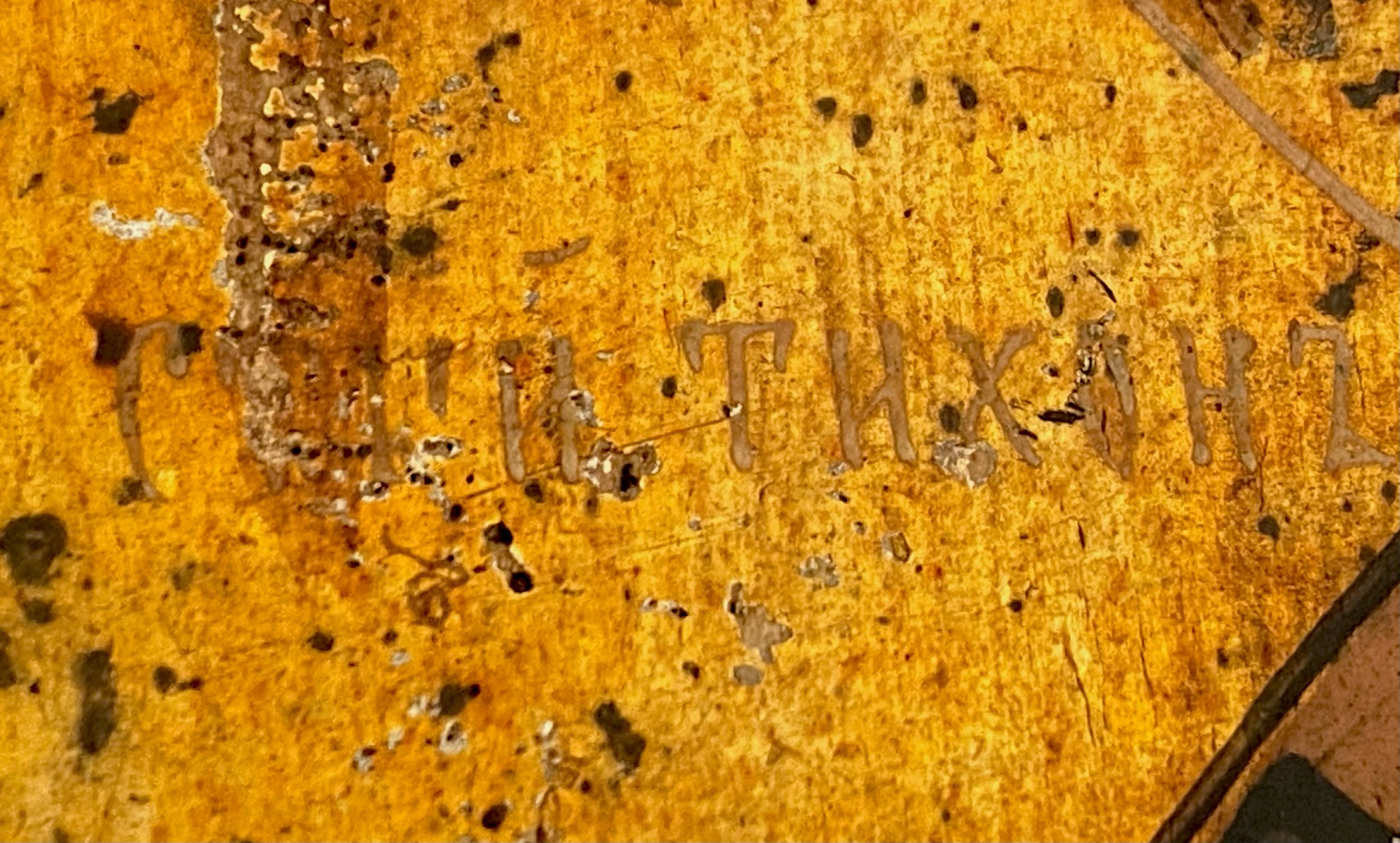
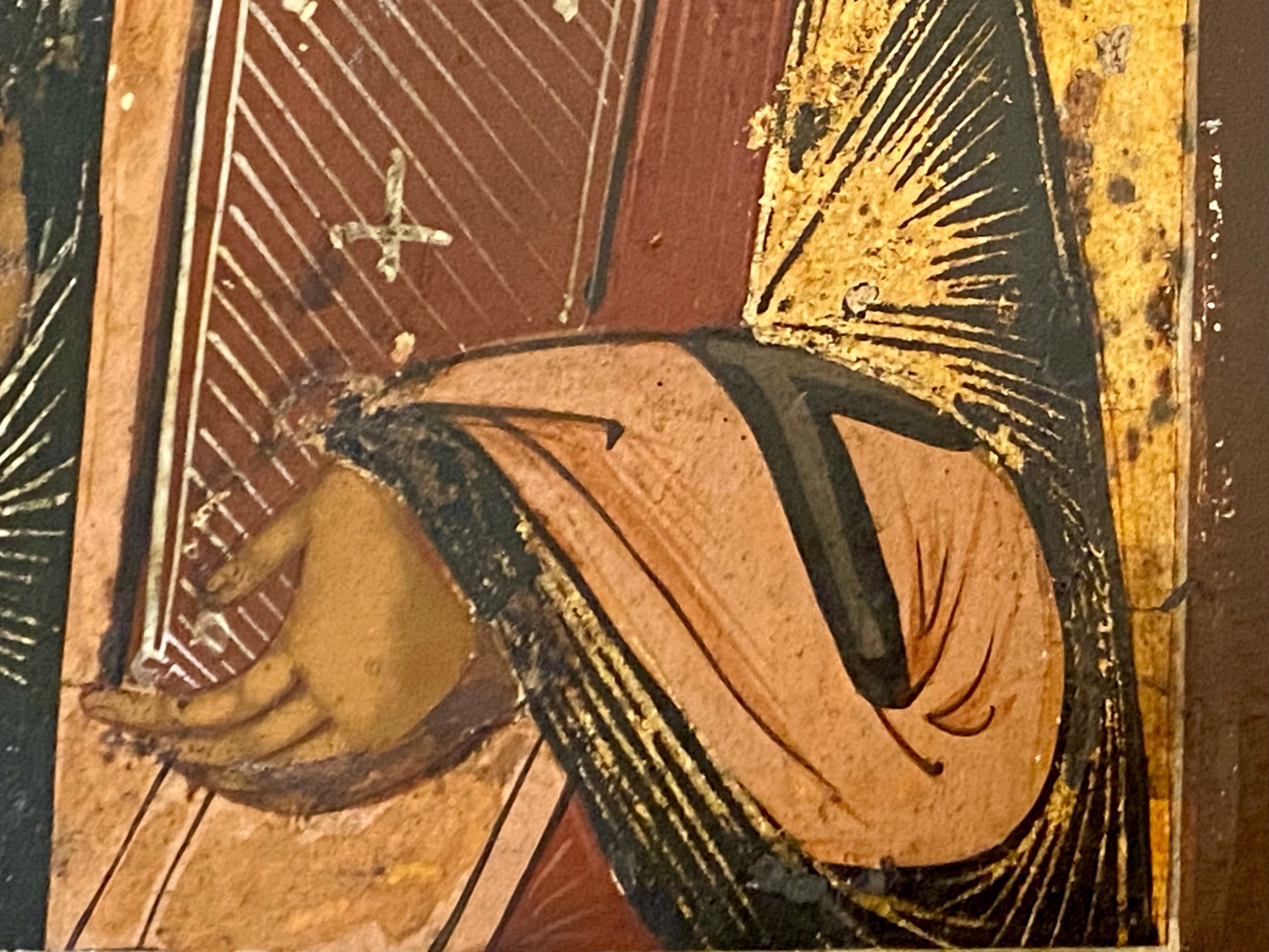
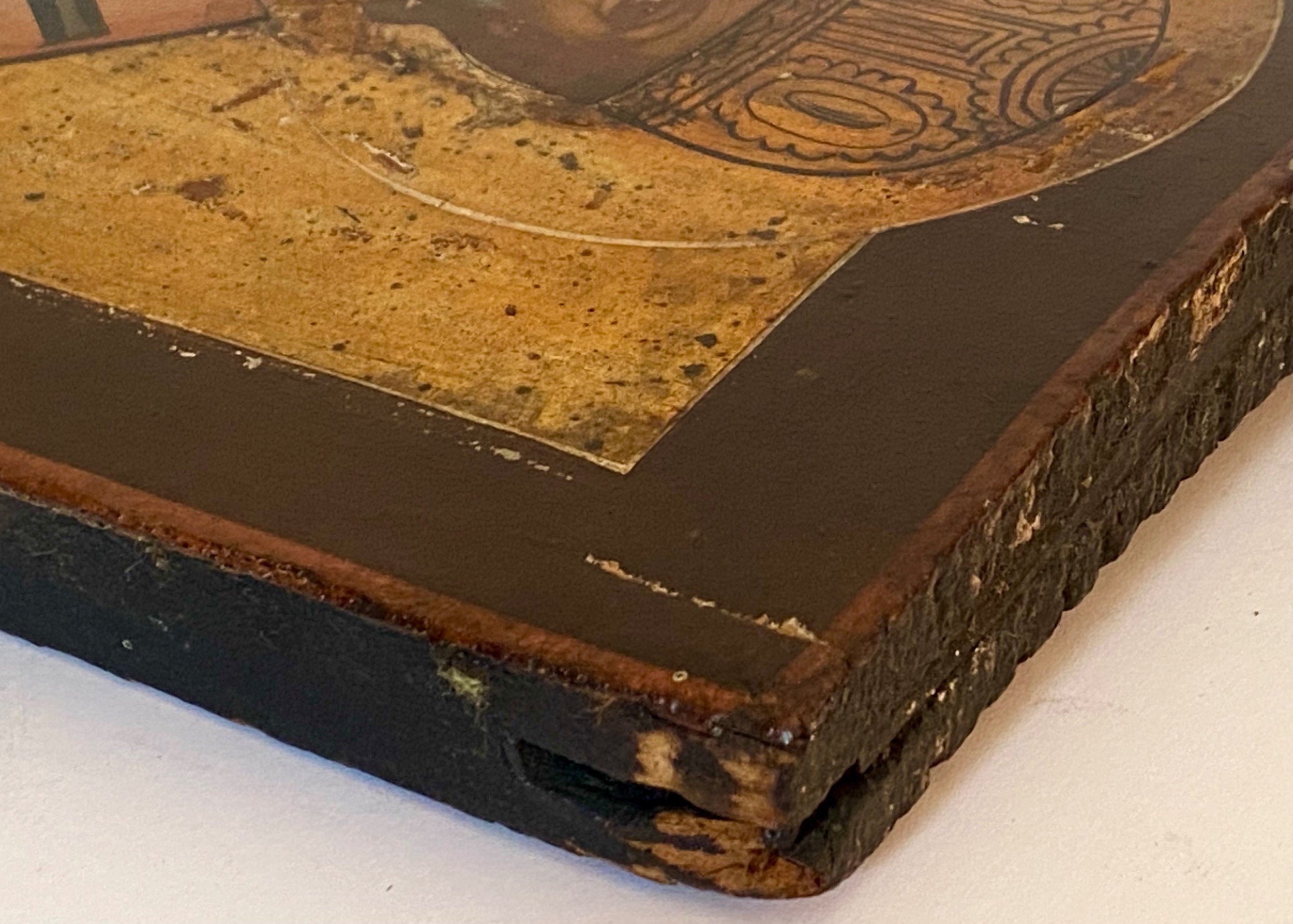
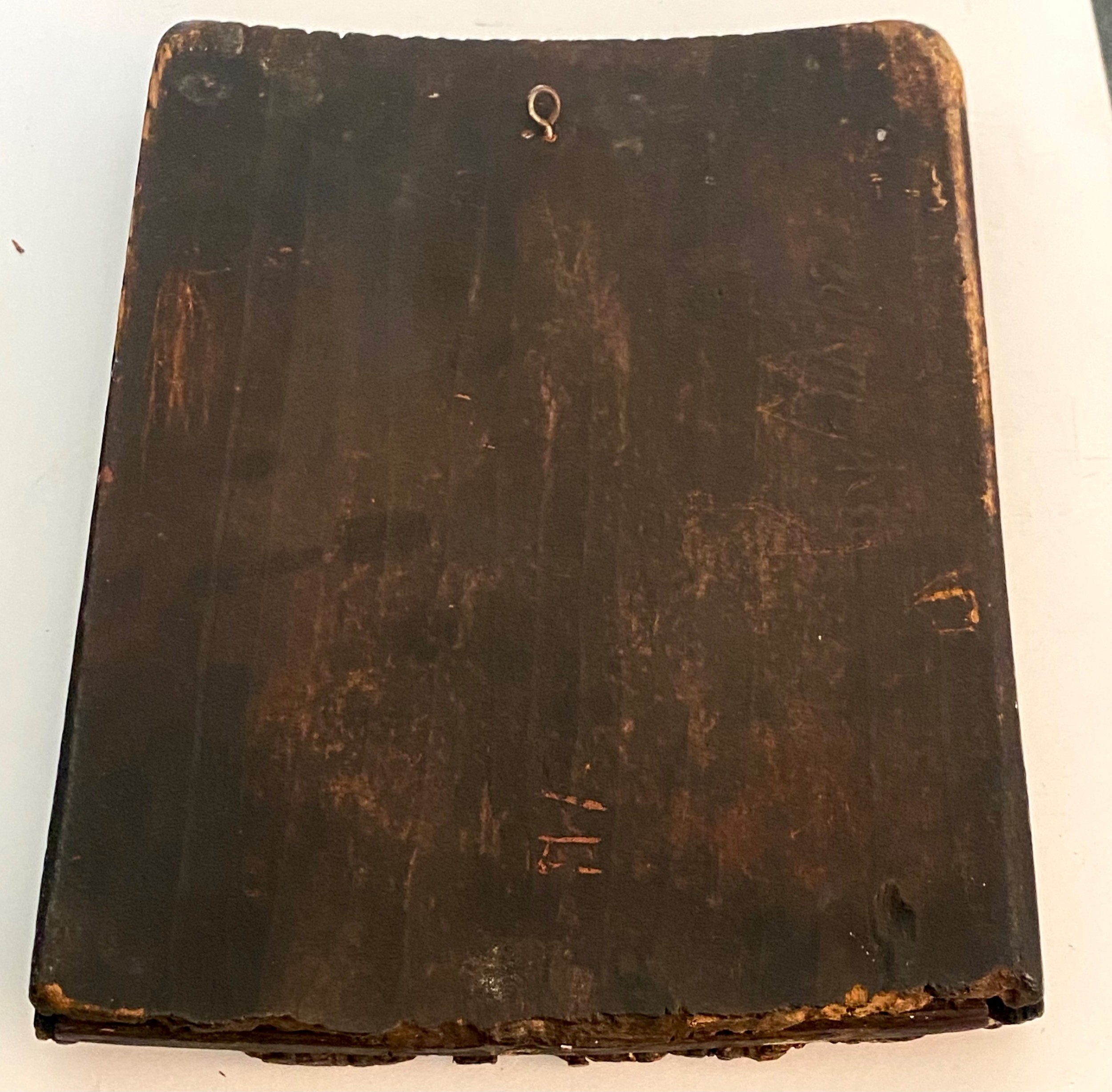
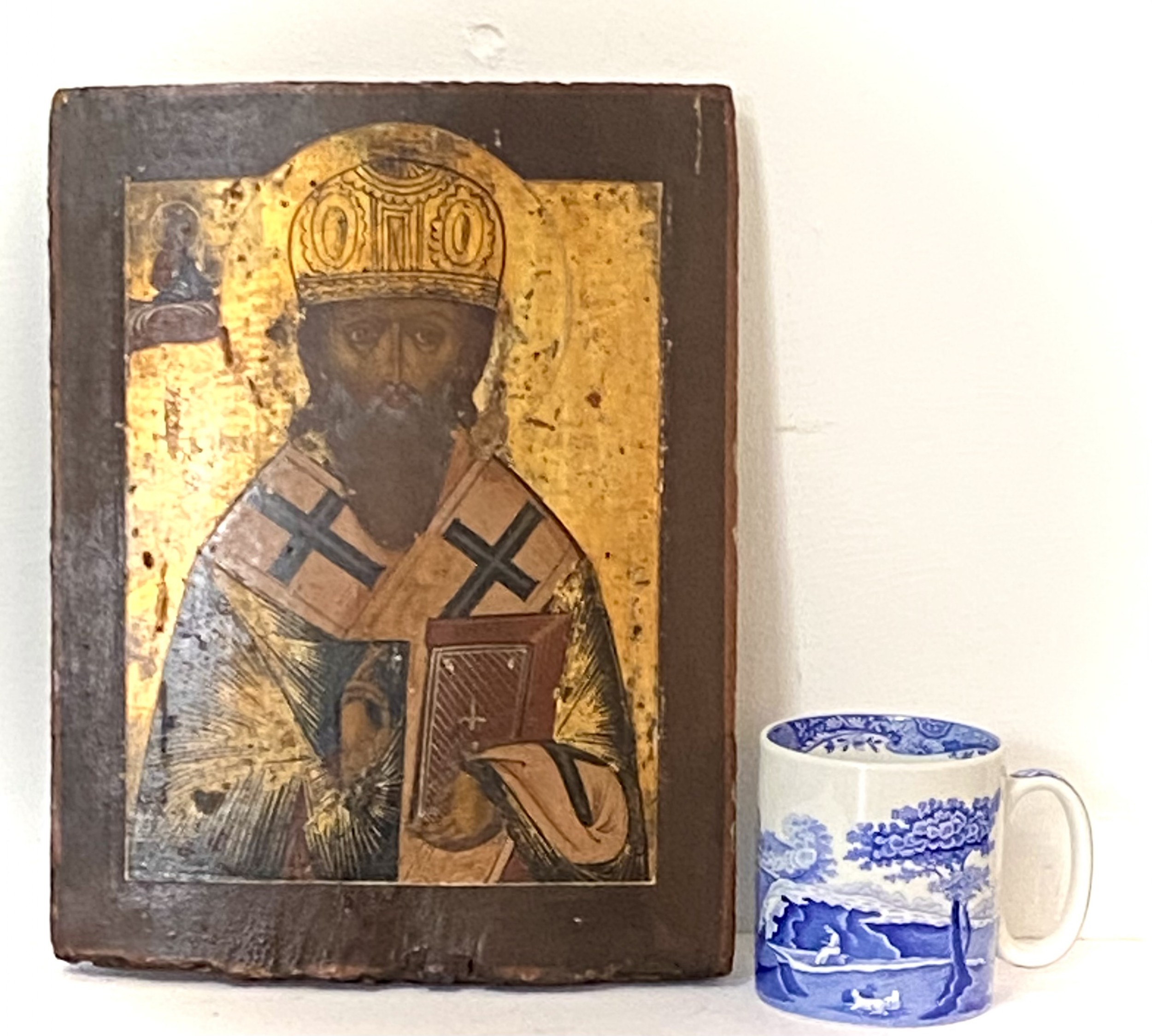
Jane Short Antiques has dated this piece to the 19th Century.
Life of St Spyridon
Spyridon was born in Assia, in Cyprus. He worked as a shepherd and was known for his great piety.
He married and had one daughter, Irene.
Upon the death of his wife, Spyridon entered a monastery, and their daughter entered a convent.
He took part in the First Ecumenical Council of Nicaea (325), where he was instrumental in countering the theological arguments of Arius and his followers.
He reportedly converted a pagan philosopher to Christianity by using a potsherd to illustrate how one single entity (a piece of pottery) could be composed of three unique entities (fire, water, and clay); a metaphor for the Christian doctrine of the Trinity.
As he was speaking, in order to explain the trinity, he grabbed a shard of roof tile (some accounts of this event say that it was a brick he held in his hand). He spoke "in the name of the father" and it is said to have miraculously burst into flame, "and of the son", then water began to drip on the ground, "and of the holy spirit" whereupon only dust remained in his hand.
After the council, Spyridon returned to his diocese in Tremithous. He had earlier fallen into disfavor during the persecutions of the emperor Maximinus, but died peacefully in old age.
Spyridon was popular in Byzantine literature. A poem, now lost, was dedicated to him by his pupil Triphyllius. It inspired two 7th-century vitae, one by Theodore of Paphos (c. 655) and another possibly by Leontios of Neapolis. The former was used by Symeon the Metaphrast. Arabic and Georgian hagiographies also survive.
We can deliver free of charge in UK mainland and can calculate the cost for international delivery.
Jane Short Antiques has dated this piece to the 19th Century.
30 years of expertise in 17th- to early 20th-century furniture and fine art
You can view the stock and full dealer information on the Jane Short Antiques Profile Page
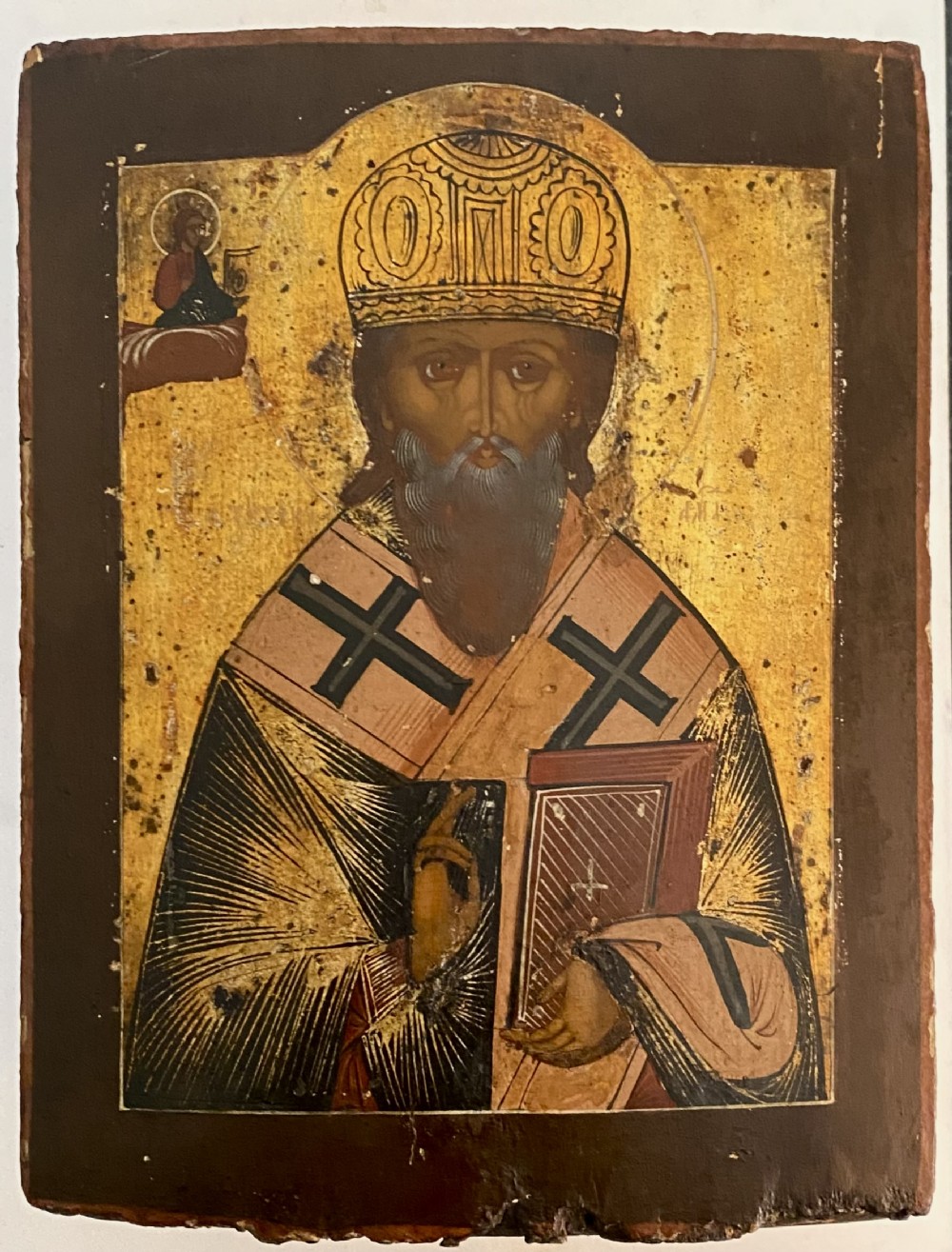
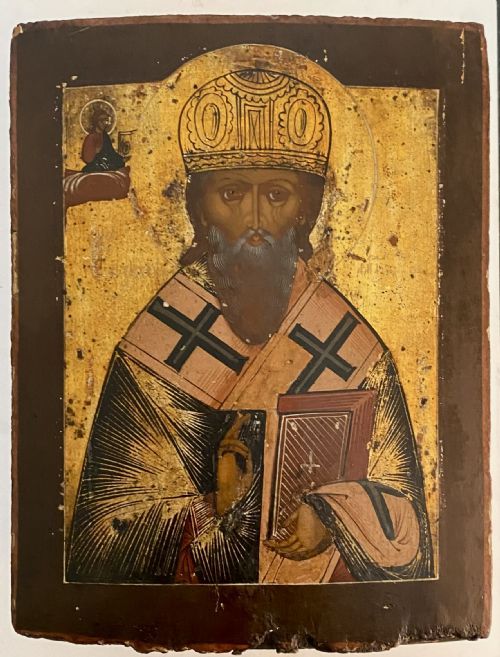
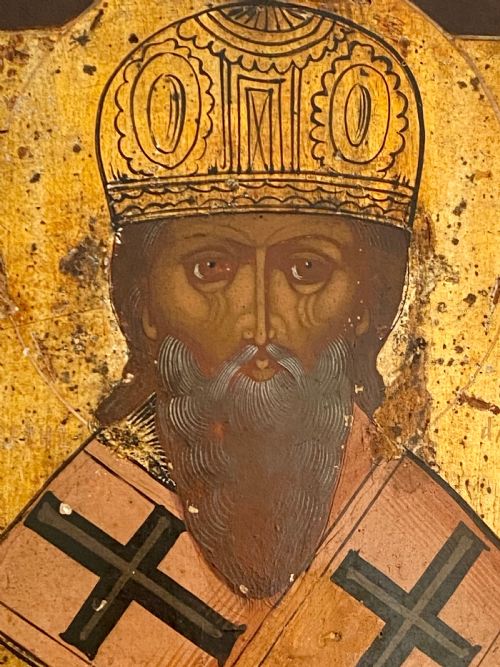
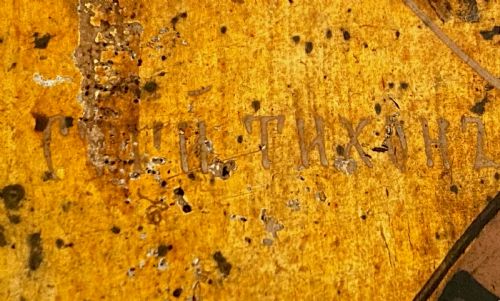
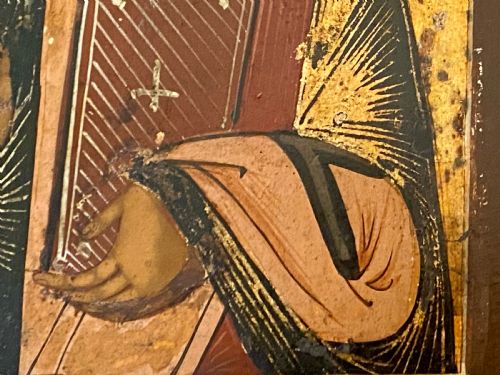
Eastern Orthodox Icon of St Spyridon