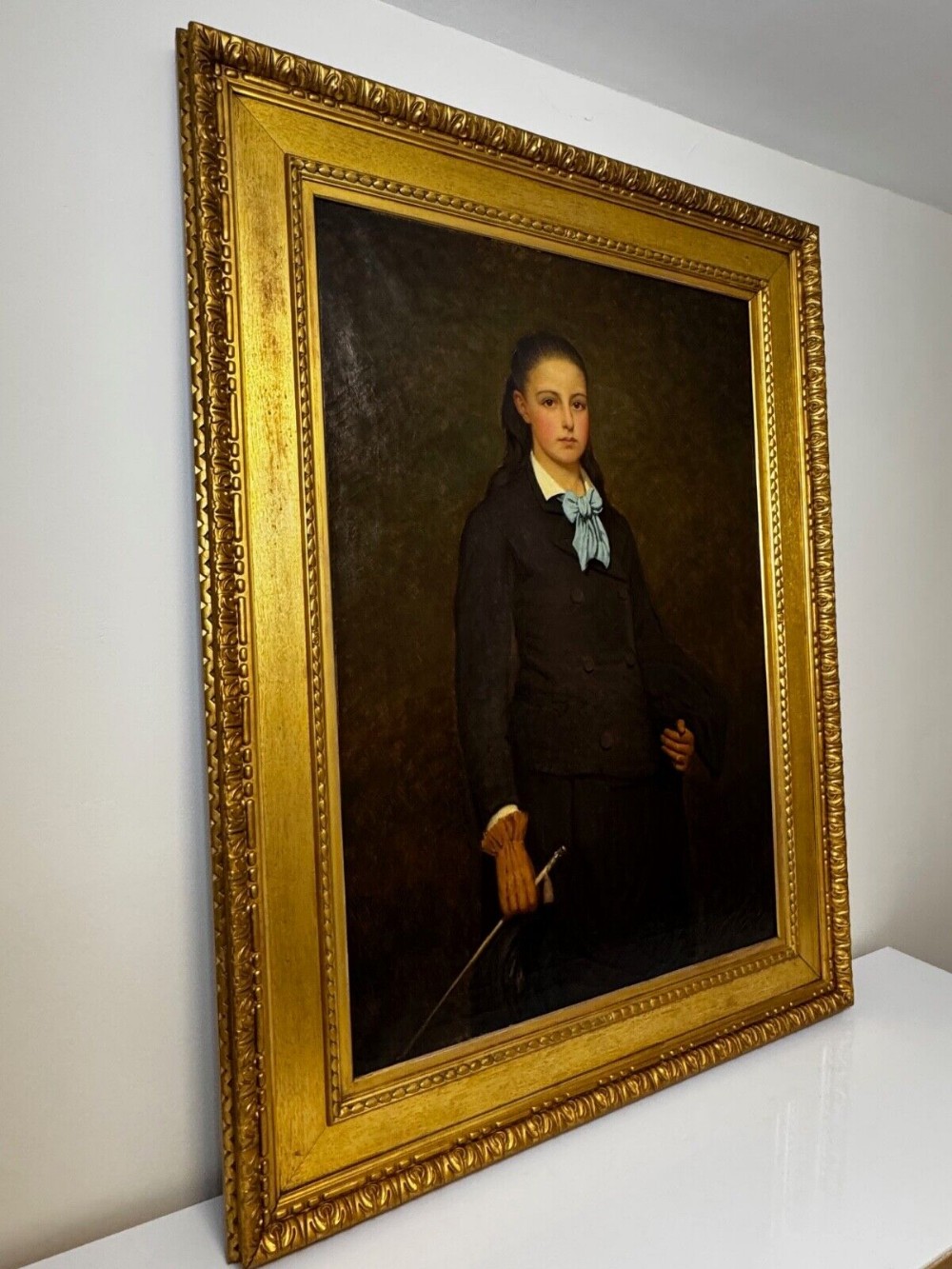
Cheshire Antiques Consultant Ltd has dated this Victorian Equestrienne Oil Portrait to the Victorian era.
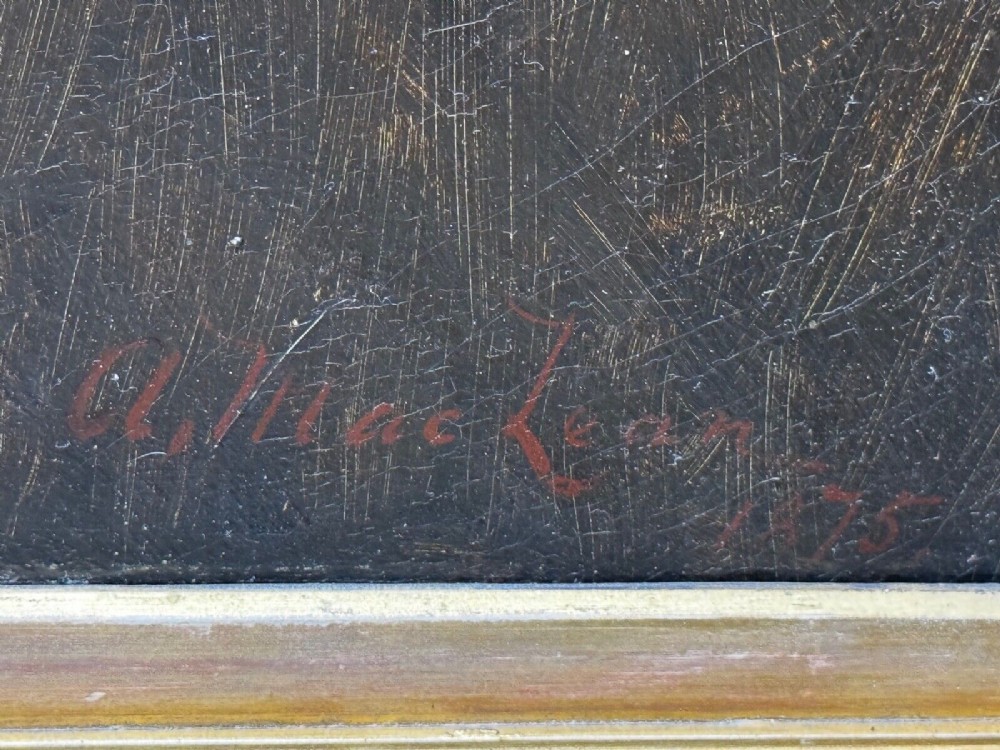
Attributed to Alexander Maclean (Scottish, 1840–1877), circa 1875
1861), portrayed at the age of fourteen.
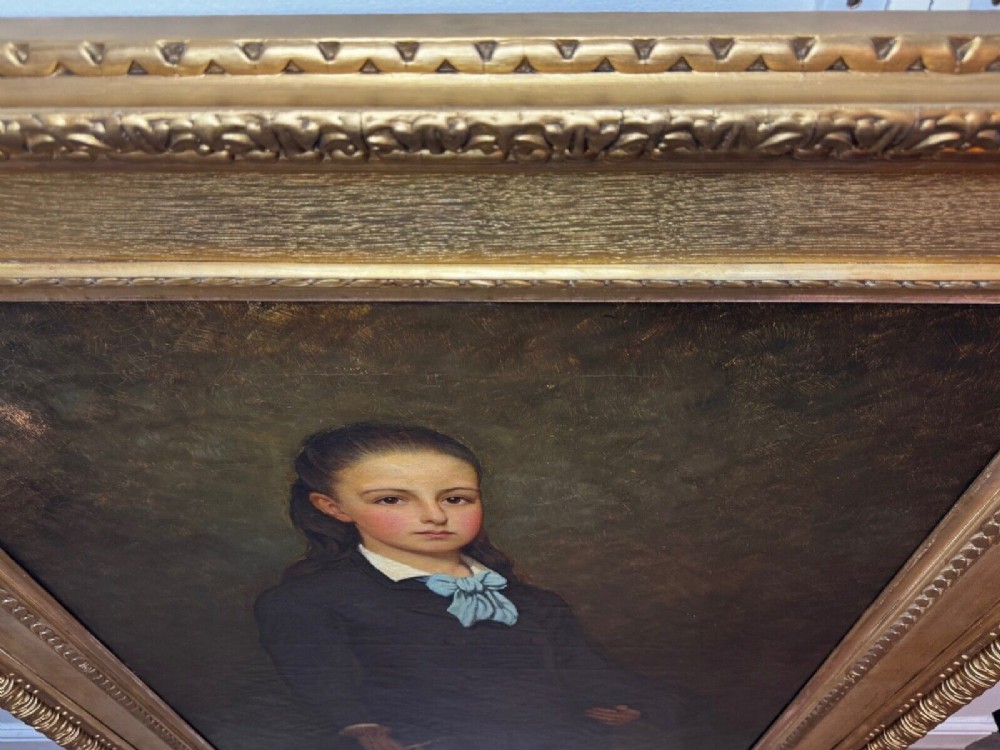
Rendered with remarkable sensitivity and poise, the work captures a moment of quiet confidence and refinement — the essence of an accomplished young equestrienne emerging into society.
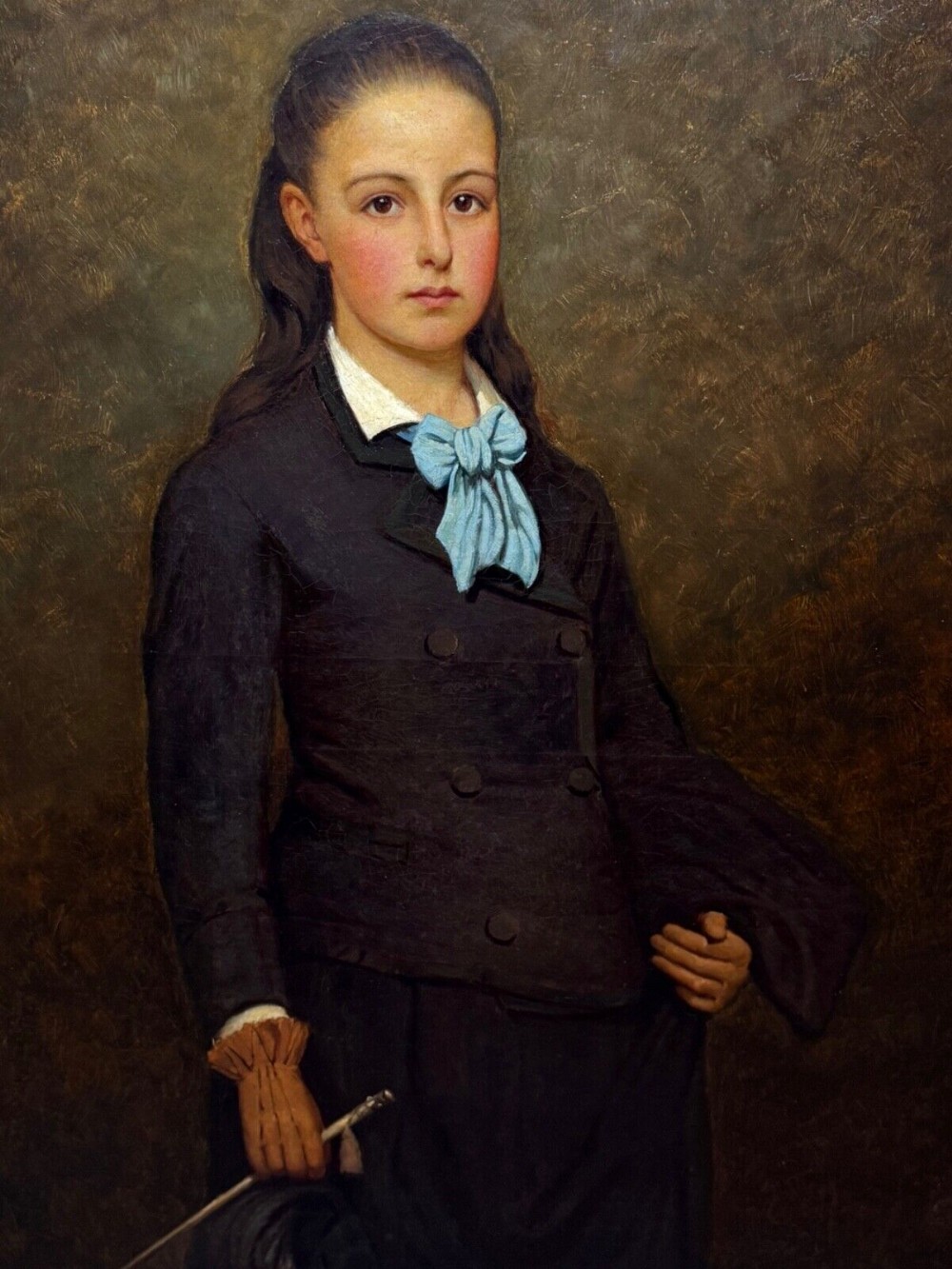
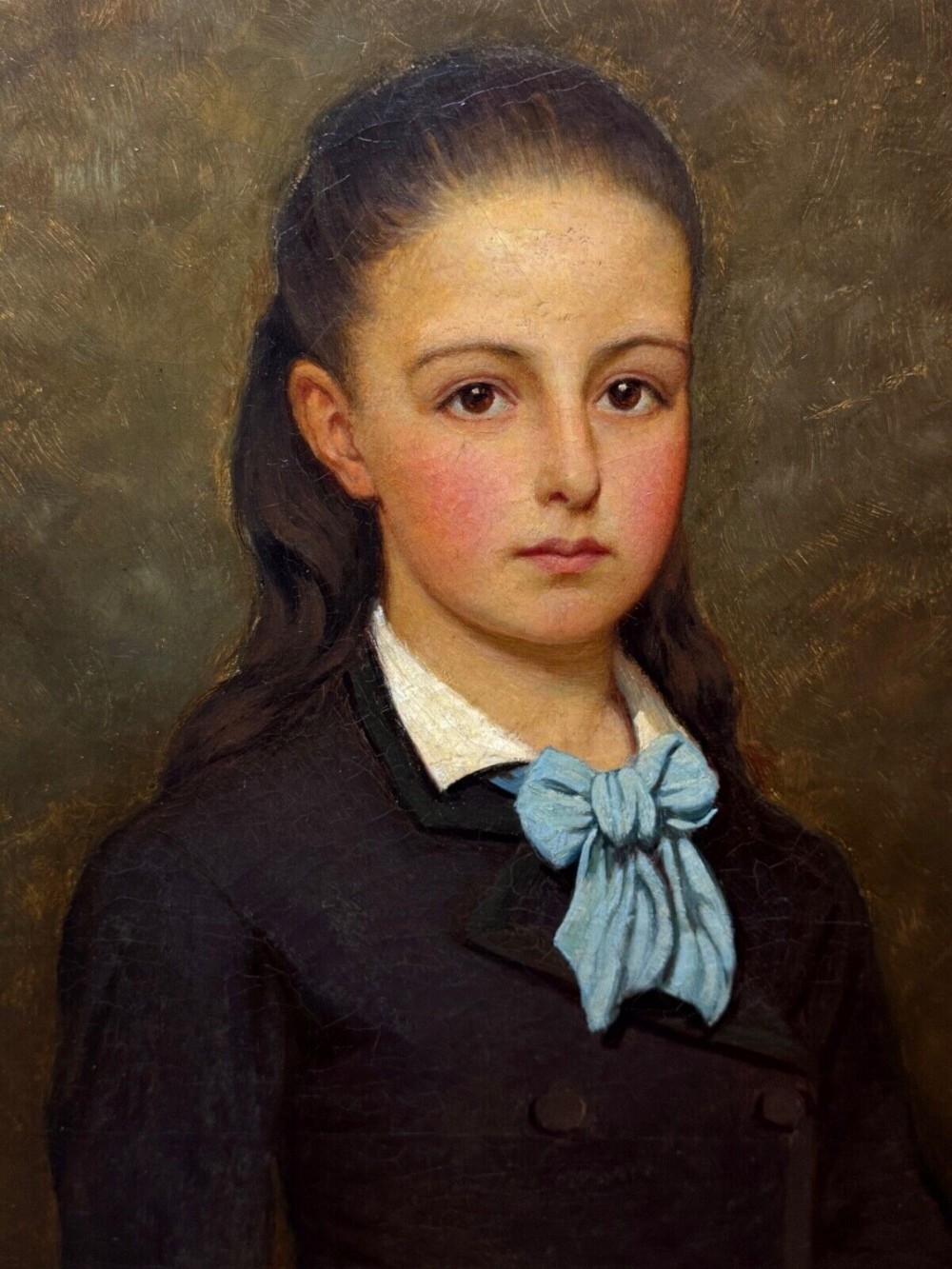
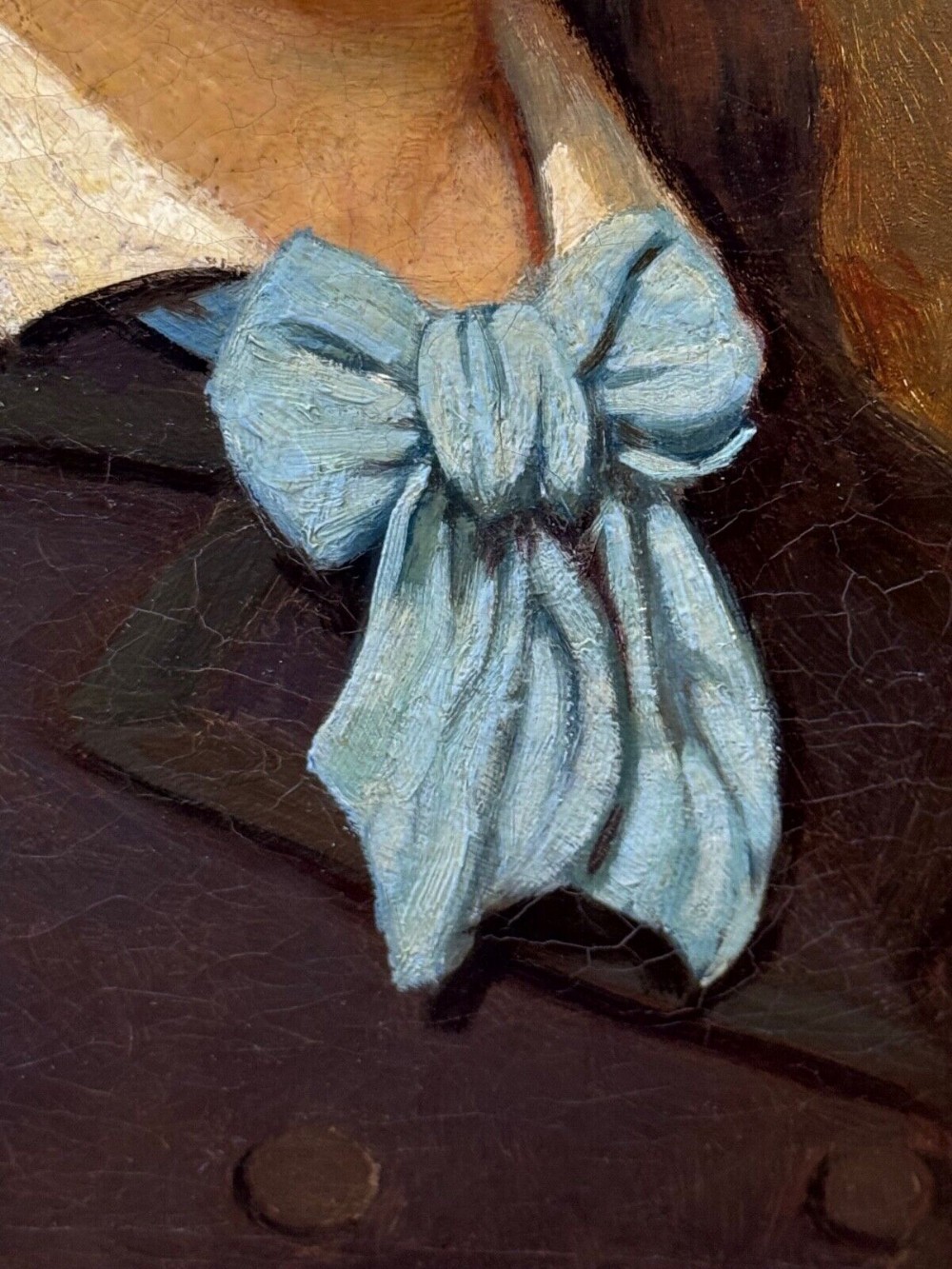
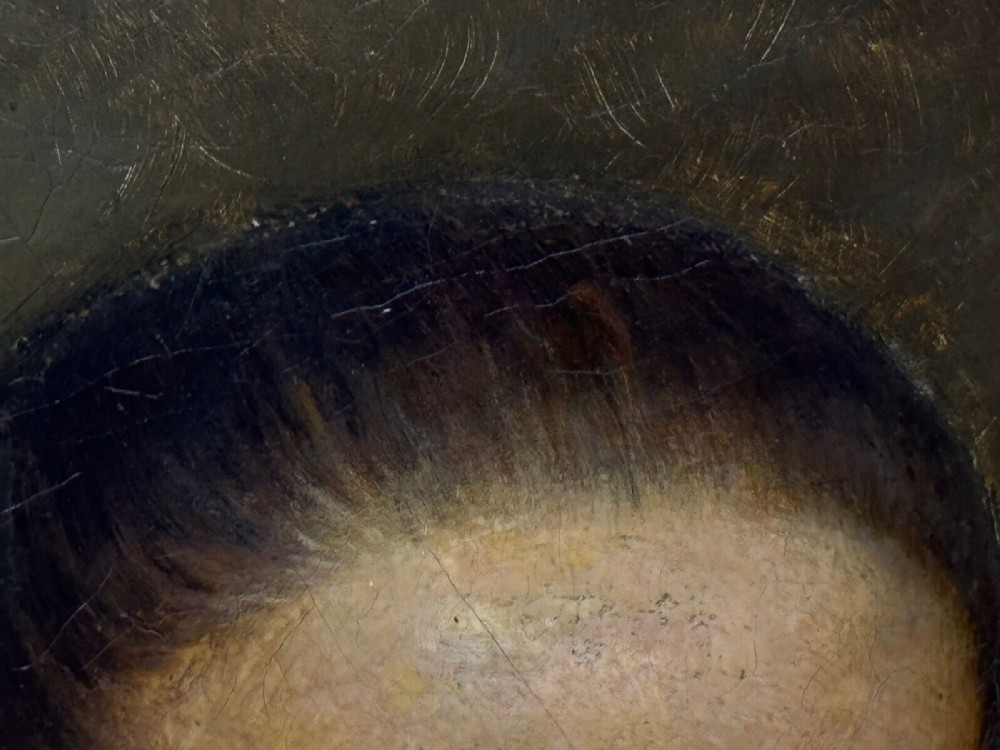
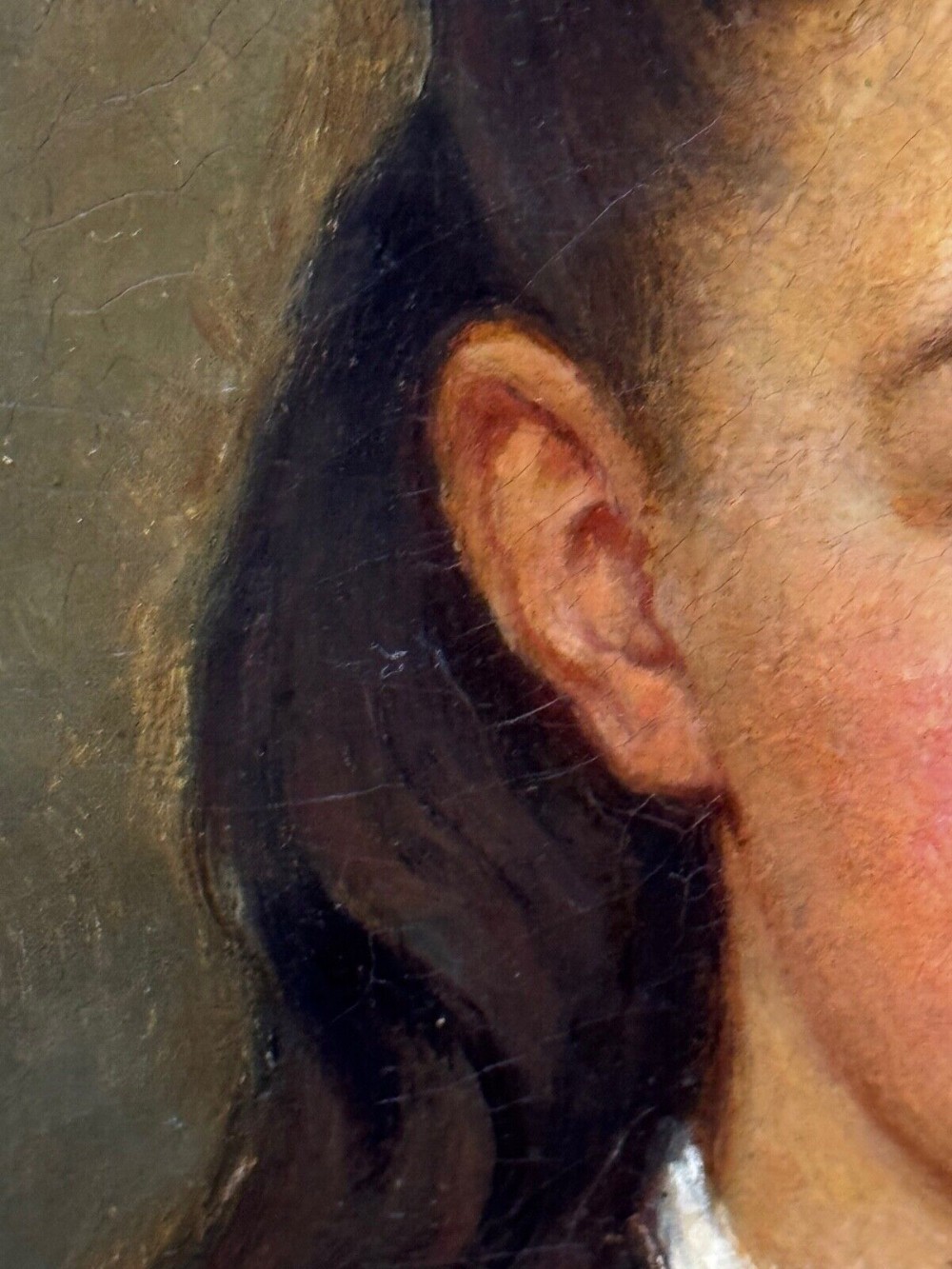
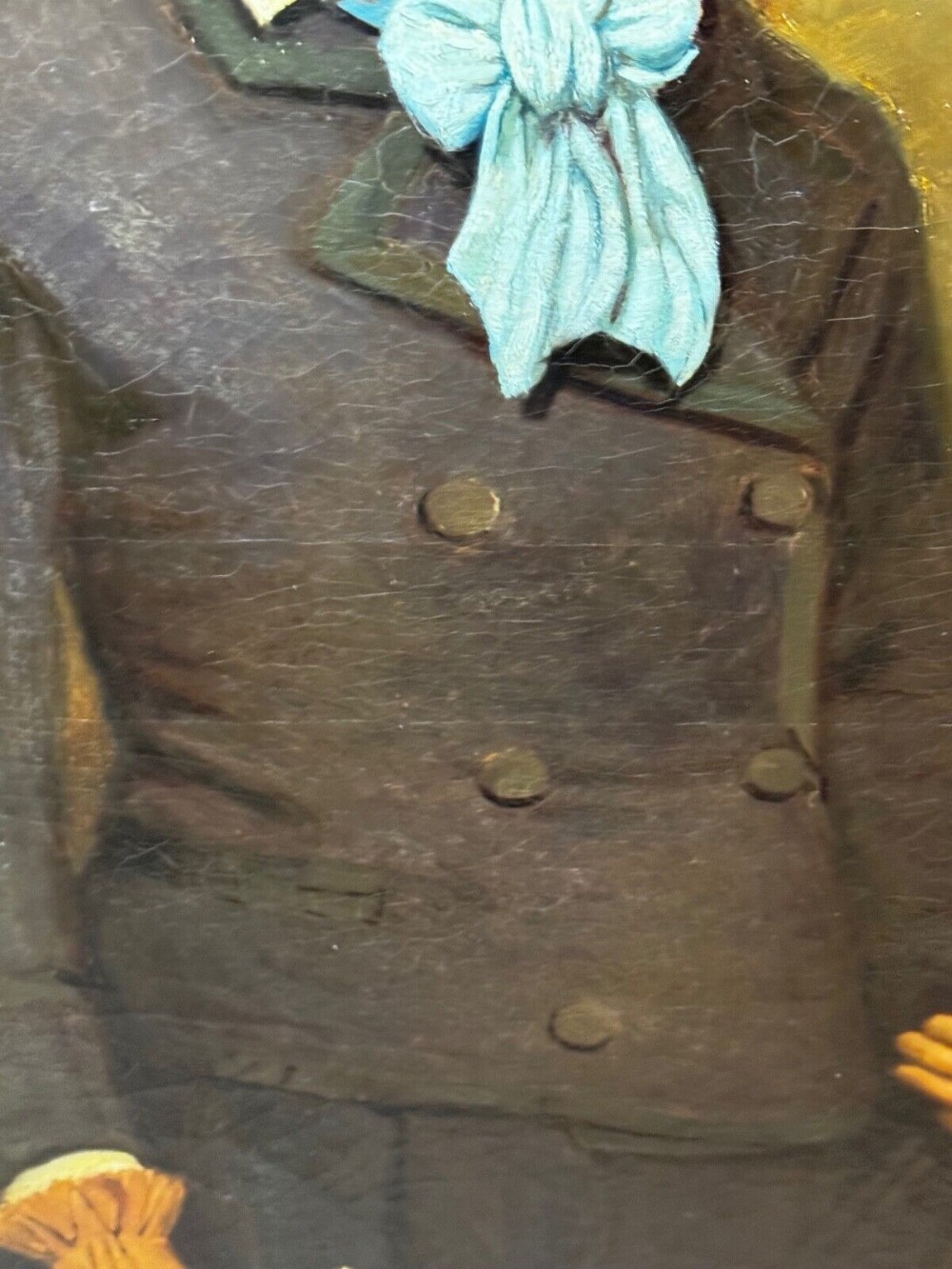
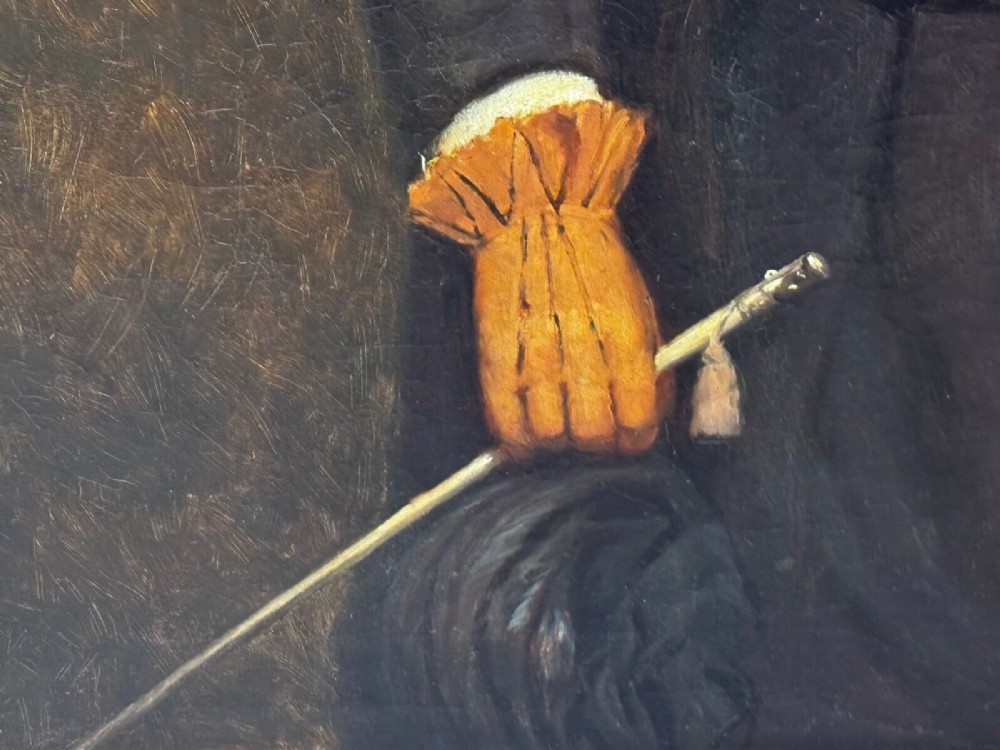
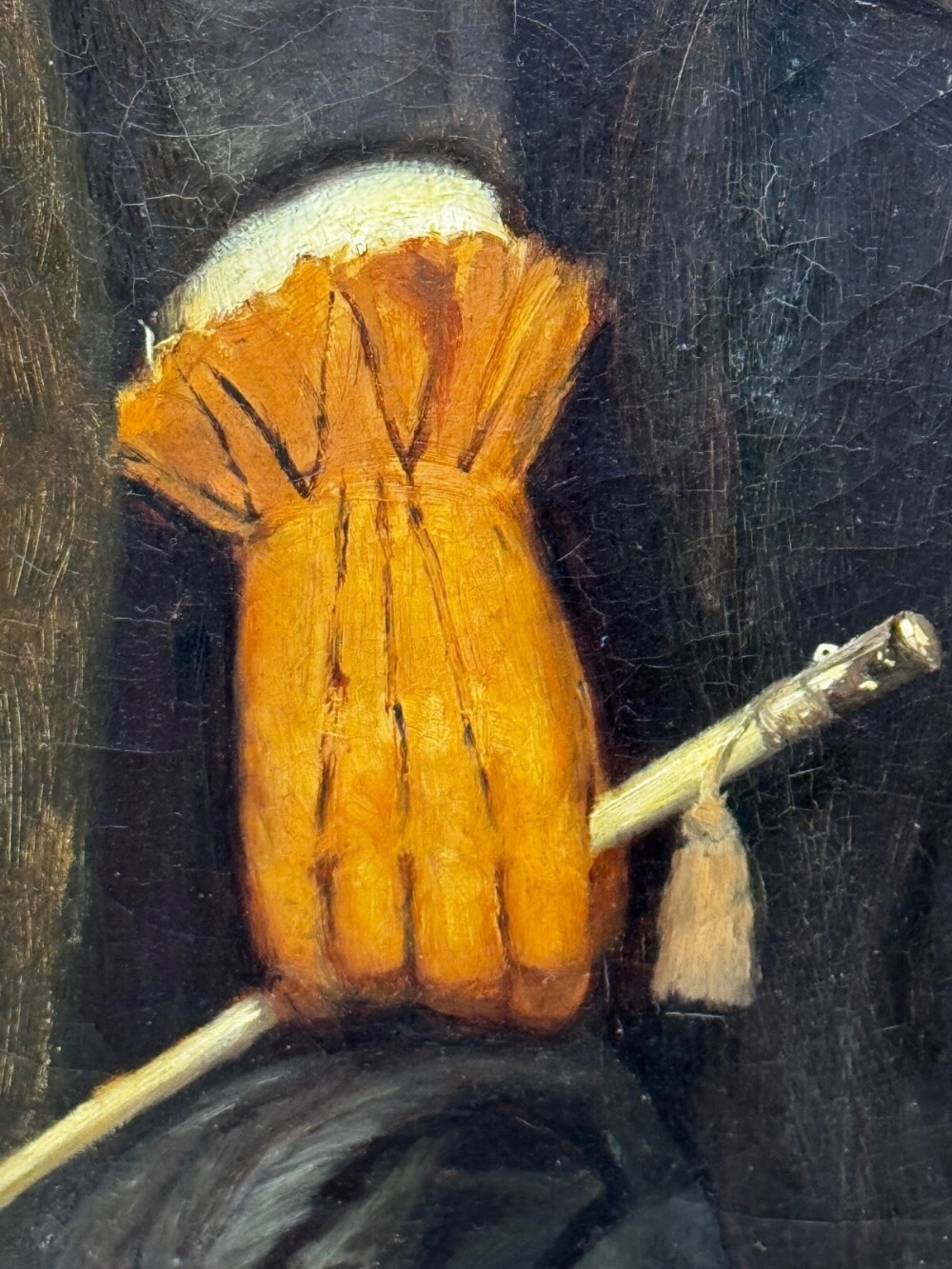
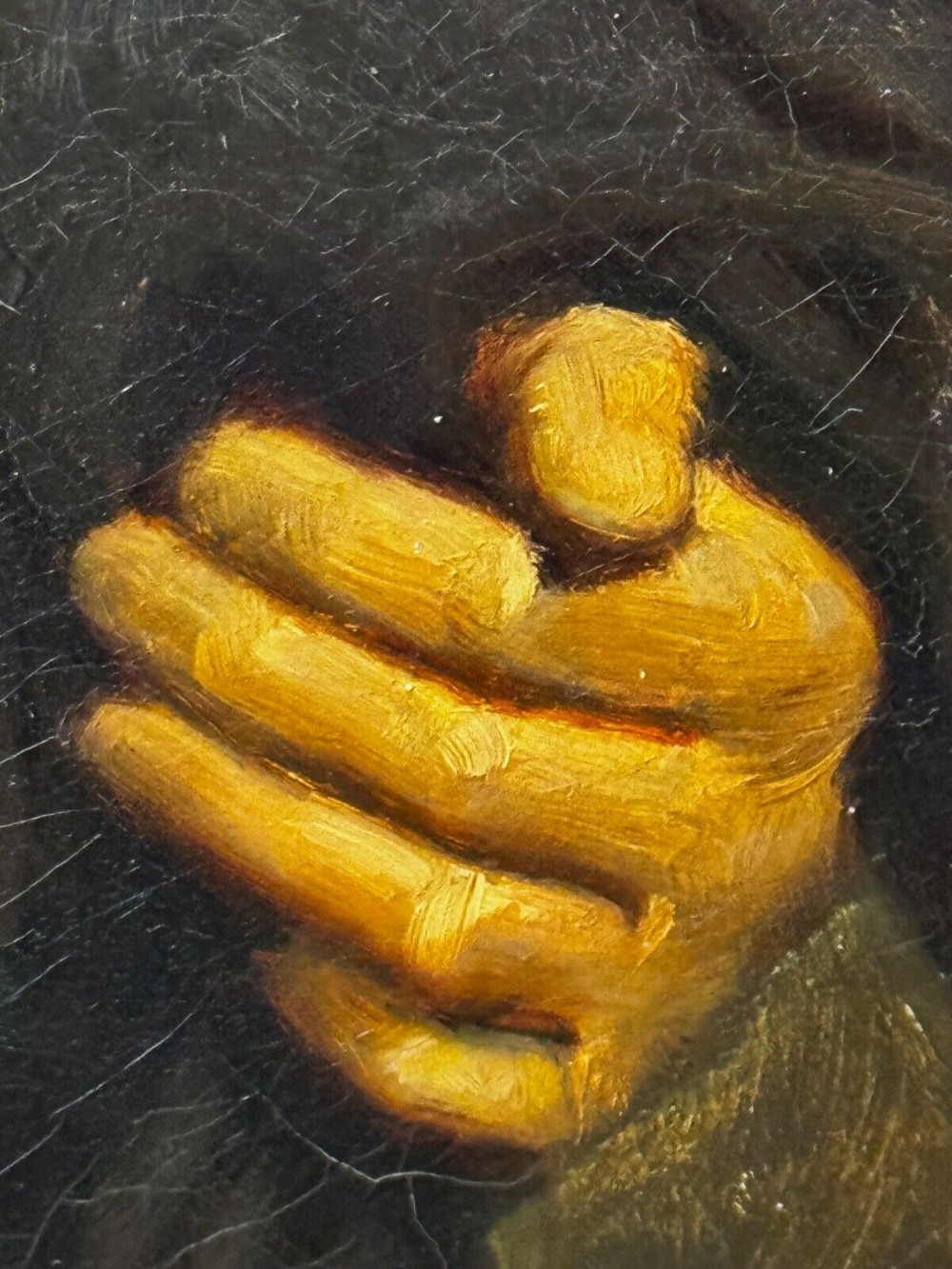
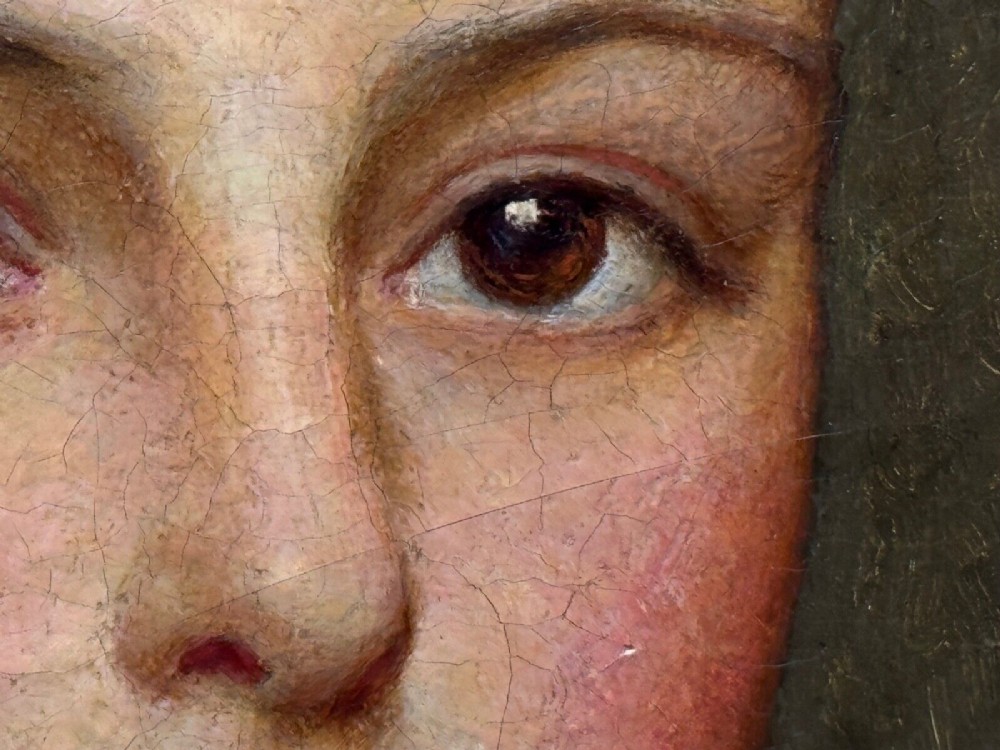
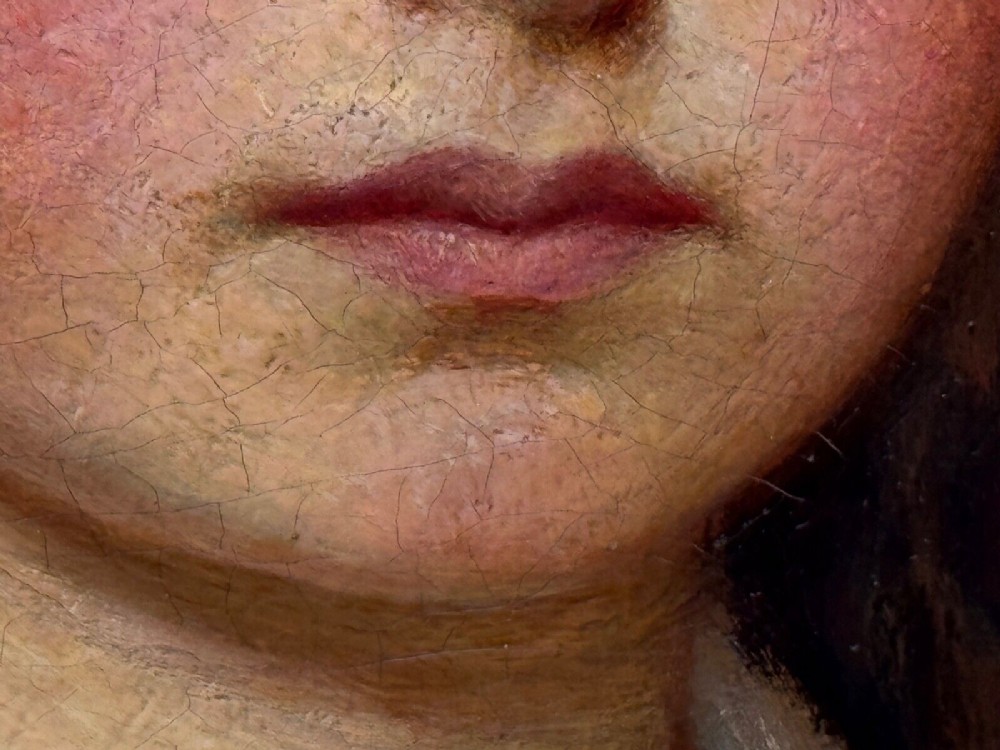
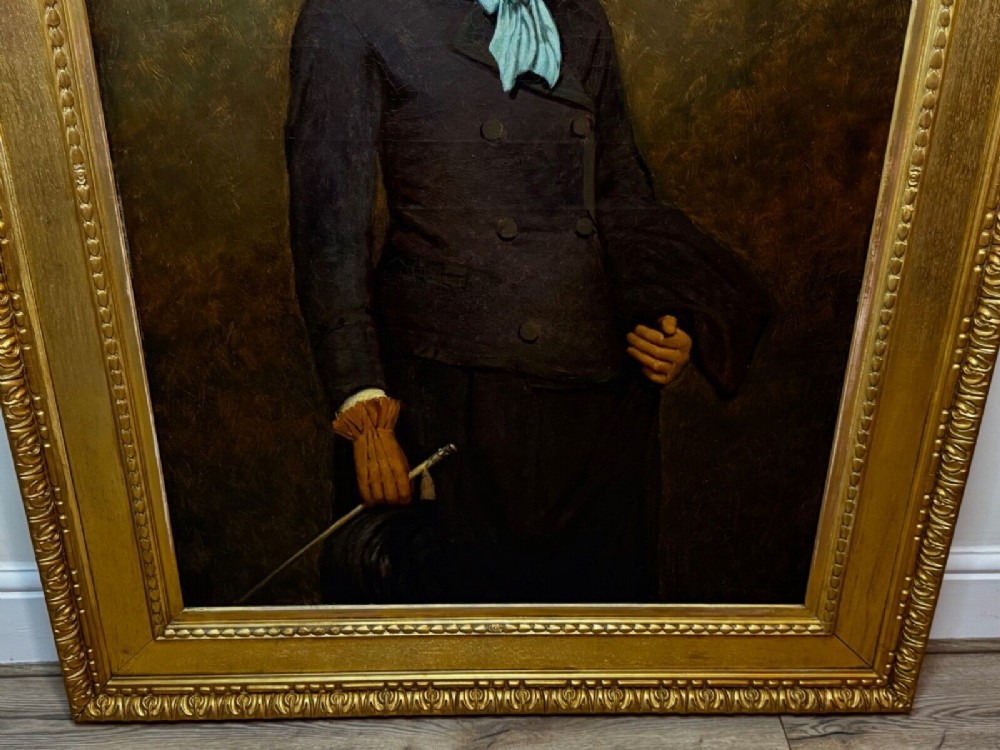
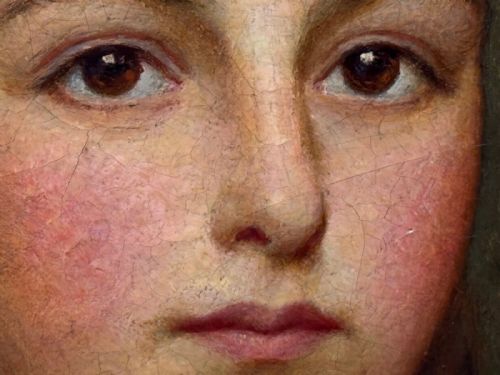
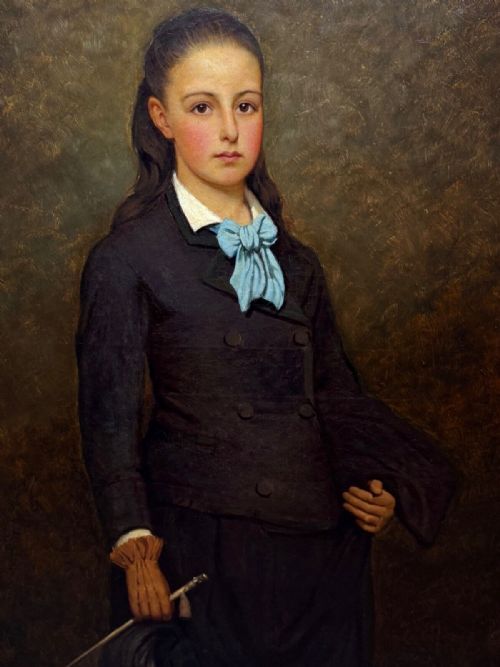
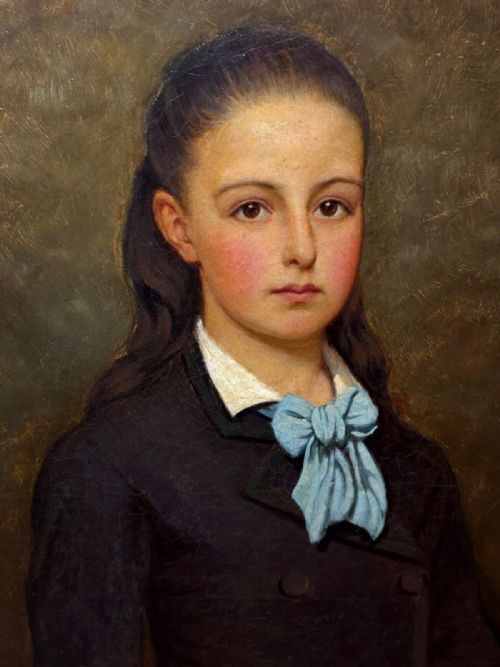
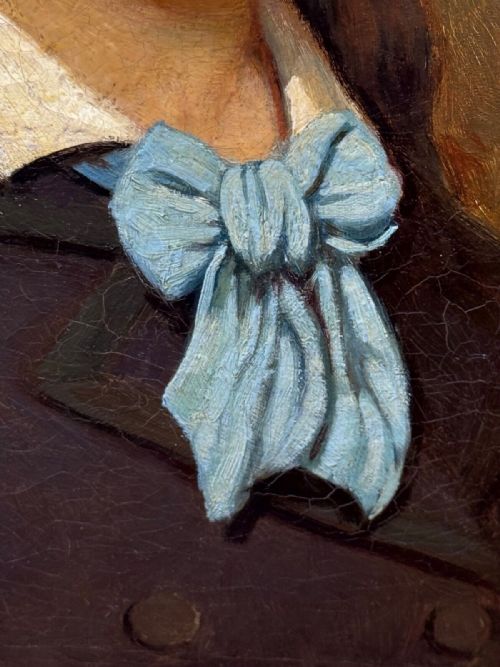
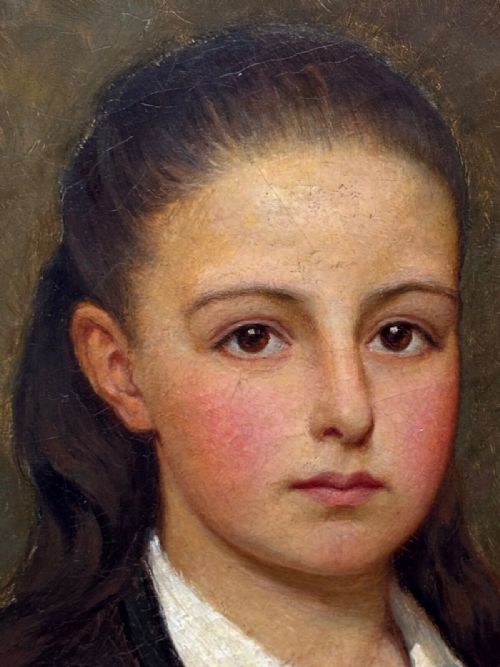
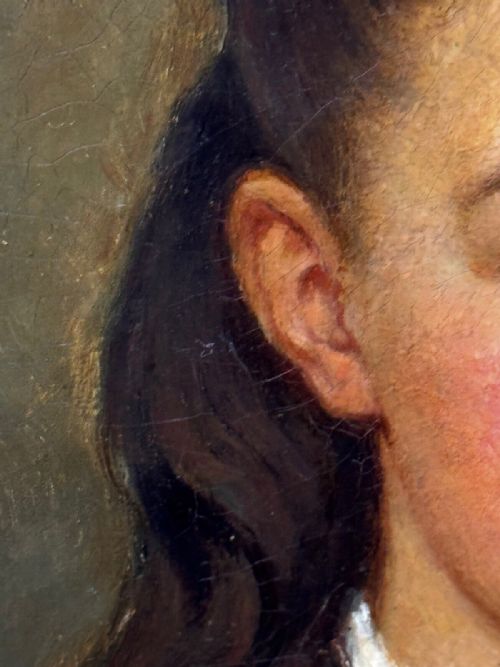
Set against a soft, neutral ground, Beatrice stands gracefully in three-quarter profile, dressed in a tailored black riding jacket, crisp white blouse, and turquoise cravat. She holds her riding crop with composure, her golden-brown gloves gently illuminated by the artist’s masterful control of tone and light. Every detail, from the delicately modelled features to the rich interplay of shadow and texture, reflects Alexander Maclean’s academic precision and emotive realism, hallmarks of his mature period.
The Sitter: Beatrice Mary Clifford (1861 – c.1930)
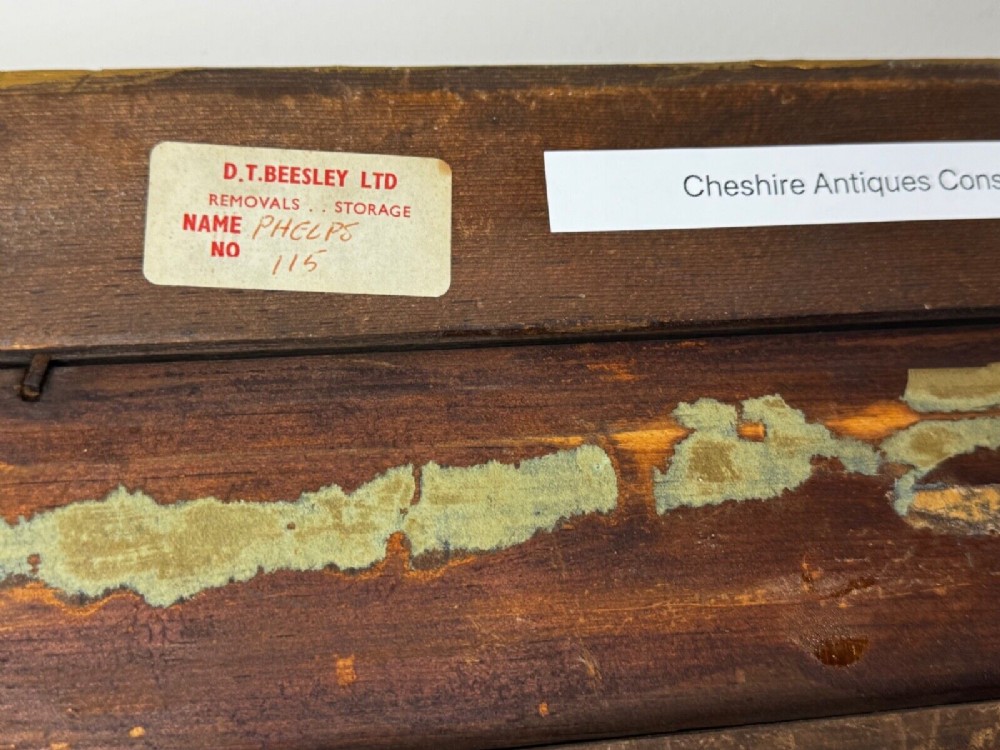
Beatrice Mary Clifford was born in 1861, the eldest daughter of William Henry Clifford (1821–1908) and Caroline Clifford (née Phelps, 1829–1916) of Chestal House, Dursley, Gloucestershire. Her maternal grandfather, James Phelps of Chestal, was a prosperous wool merchant and banker who built the family’s elegant country seat around 1848.
The union of the Phelps and Clifford families combined industrial prosperity with landed heritage, establishing one of Gloucestershire’s most respected households.
Growing up amid the cultivated surroundings of Chestal — with its parkland, stables, and formal gardens — Beatrice enjoyed a privileged education in refinement and equestrian accomplishment. Riding was central to family life and social identity, and this portrait captures not only her grace and composure but also the confidence and discipline that defined the young women of her class.
The painting likely commemorated her entry into young society — a symbolic moment of transition from childhood to genteel womanhood — expressed through the visual language of the Victorian equestrienne: poised, dignified, and self-assured.
Subject & Medium
A magnificent example of Victorian portraiture, the painting depicts a young equestrian lady poised with grace and restraint. Her attire — a tailored black riding jacket, white blouse, and vivid turquoise cravat — embodies fashionable refinement of the 1870s. The golden-brown gloves, softly catching the light, add warmth and naturalism against the cool tones of her clothing. Her gaze, direct yet serene, conveys the quiet confidence of a well-bred young woman aware of her place in the world.
The Portrait (c.1875)
Executed around 1875, when Beatrice was fourteen, this work likely marked her social coming of age. During the Victorian period, equestrian portraits of girls and young women were highly fashionable among the landed gentry — celebrating not only beauty and grace but also discipline and moral virtue.
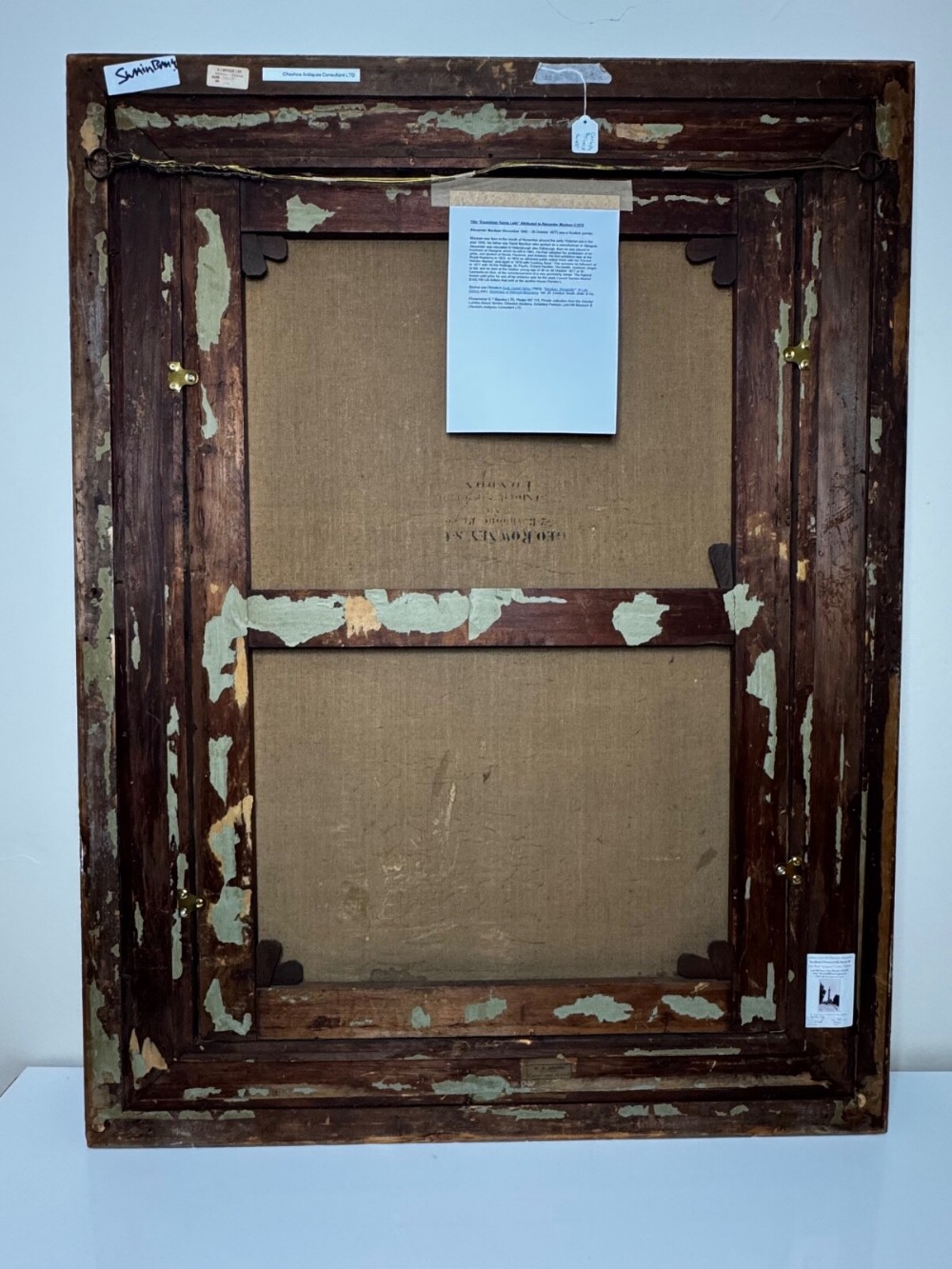
No documentary evidence confirming the identification accompanies the painting and the association should therefore be regarded as a traditional attribution. The identification of the sitter is offered as a non-guaranteed professional opinion based upon evidence available and should not be regarded as definitive statement of fact. Nevertheless, the connection adds considerable cultural and historical interest to the work
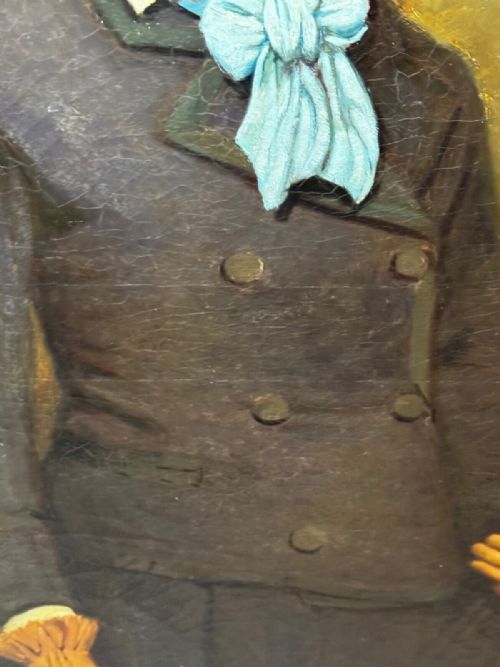
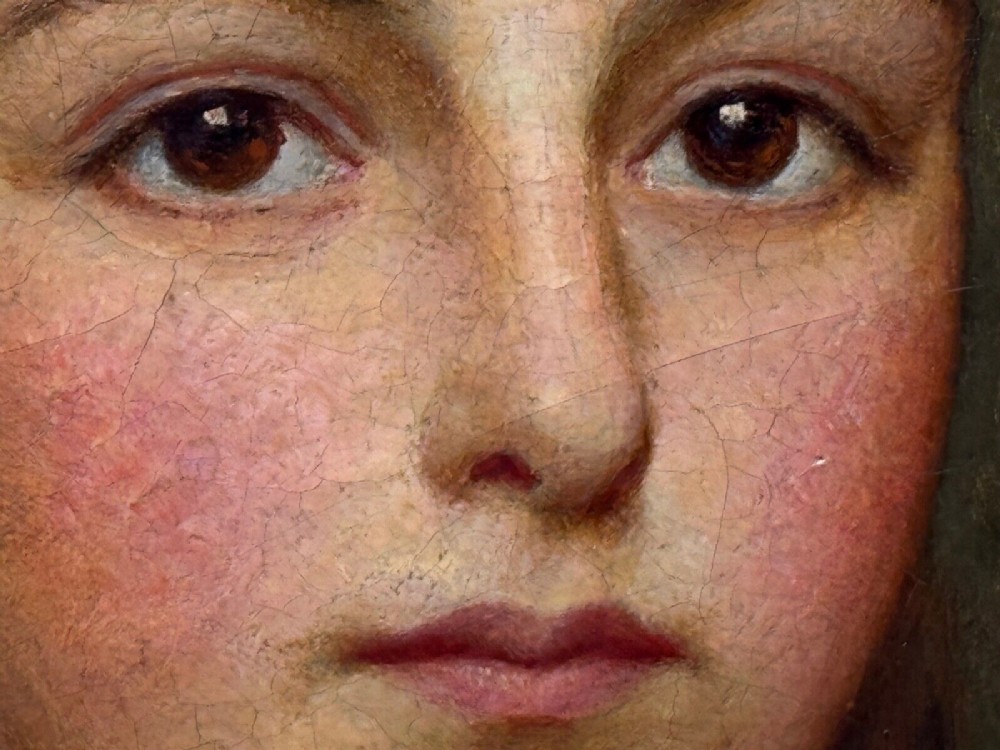
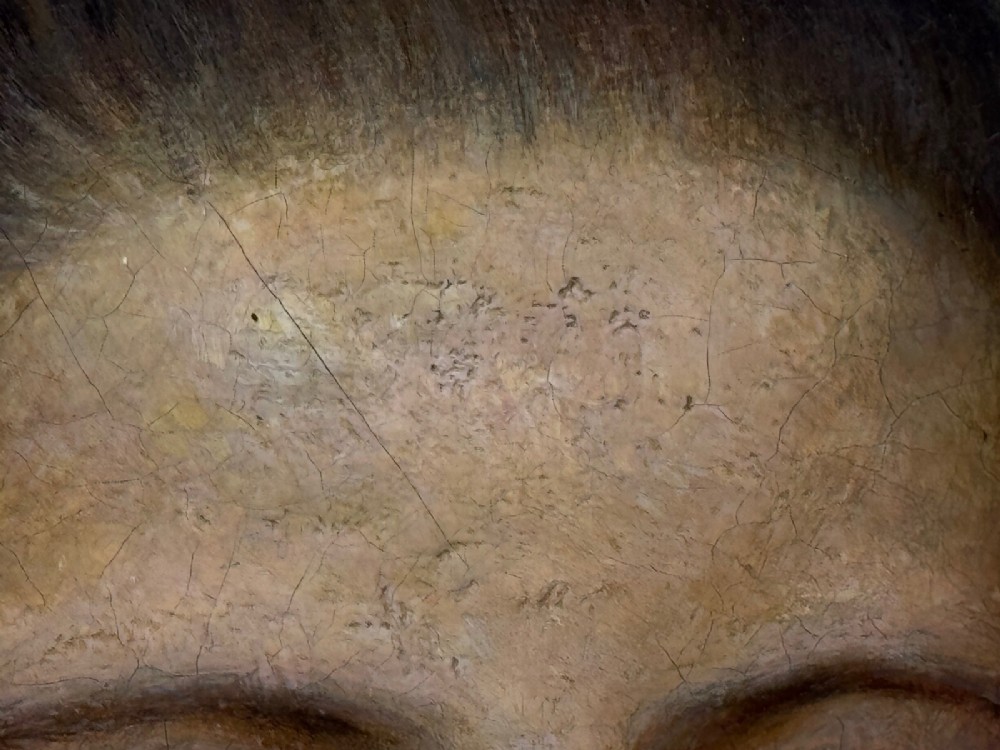
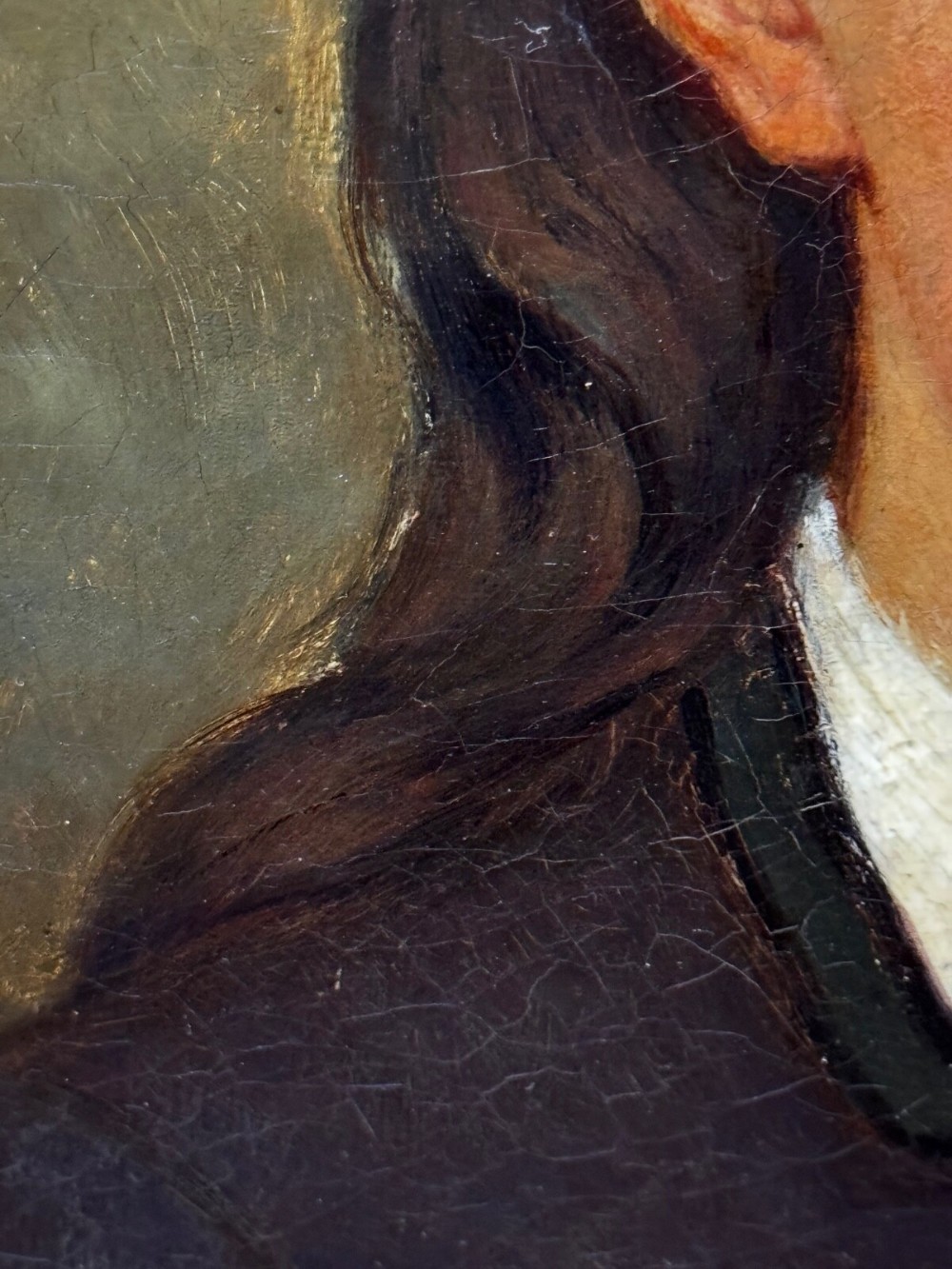
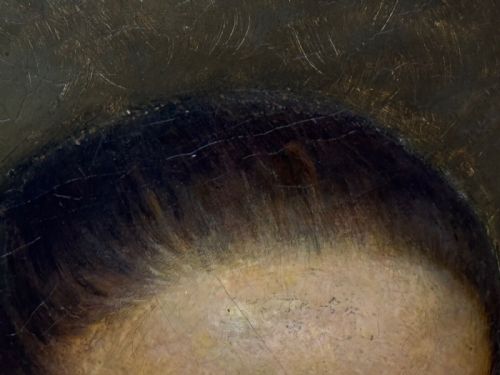
Painted with exceptional sensitivity and precision, the work exemplifies the romantic realism of late Victorian portraiture. The deep blacks and cool greys of her attire contrast elegantly with the turquoise of her cravat and the soft warmth of her complexion. The neutral background enhances her luminosity without distraction.
Cheshire Antiques Consultant Ltd has dated this Victorian Equestrienne Oil Portrait to the Victorian era.
Source the historic in 17th, 18th, 19th & 20th century fine arts, painting, sculptures & collectibles
You can view the stock and full dealer information on the Cheshire Antiques Consultant Ltd Profile Page
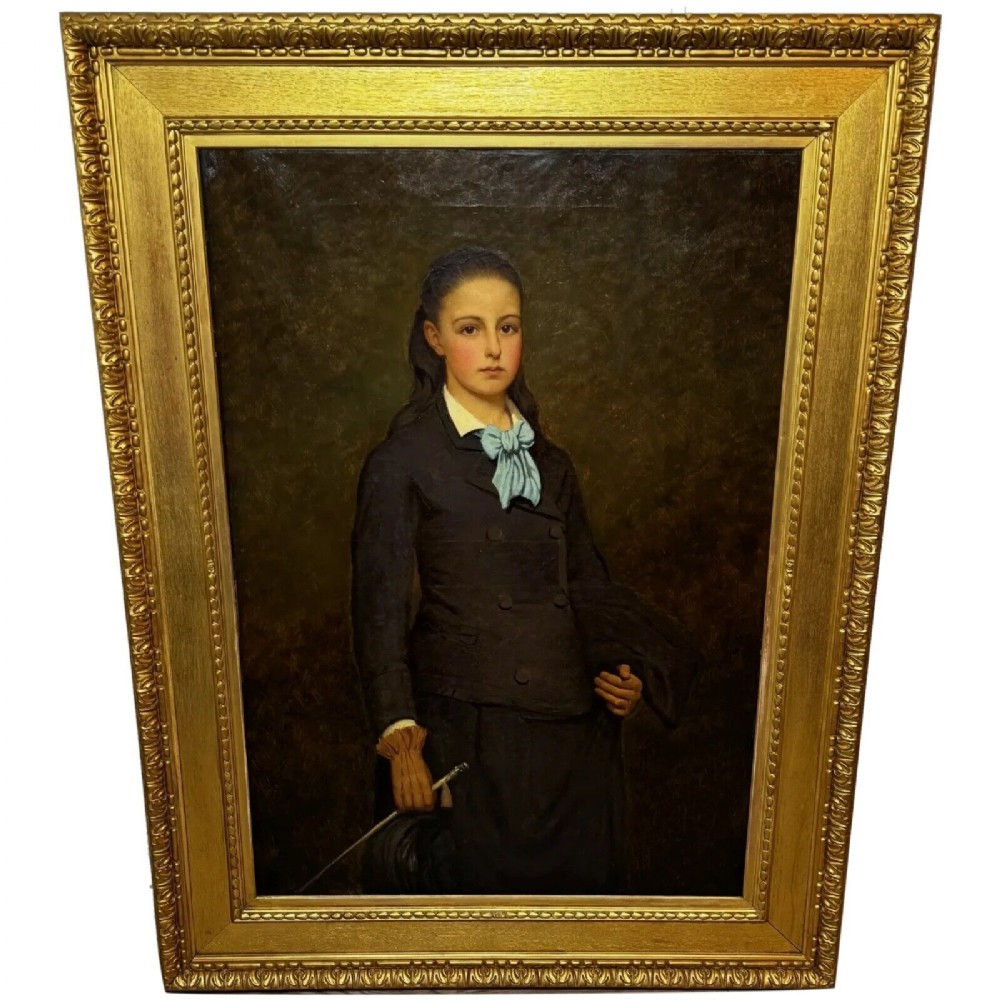
Young Equestrienne Oil Portrait of Beatrice Mary Clifford Attributed to Alexander Maclean