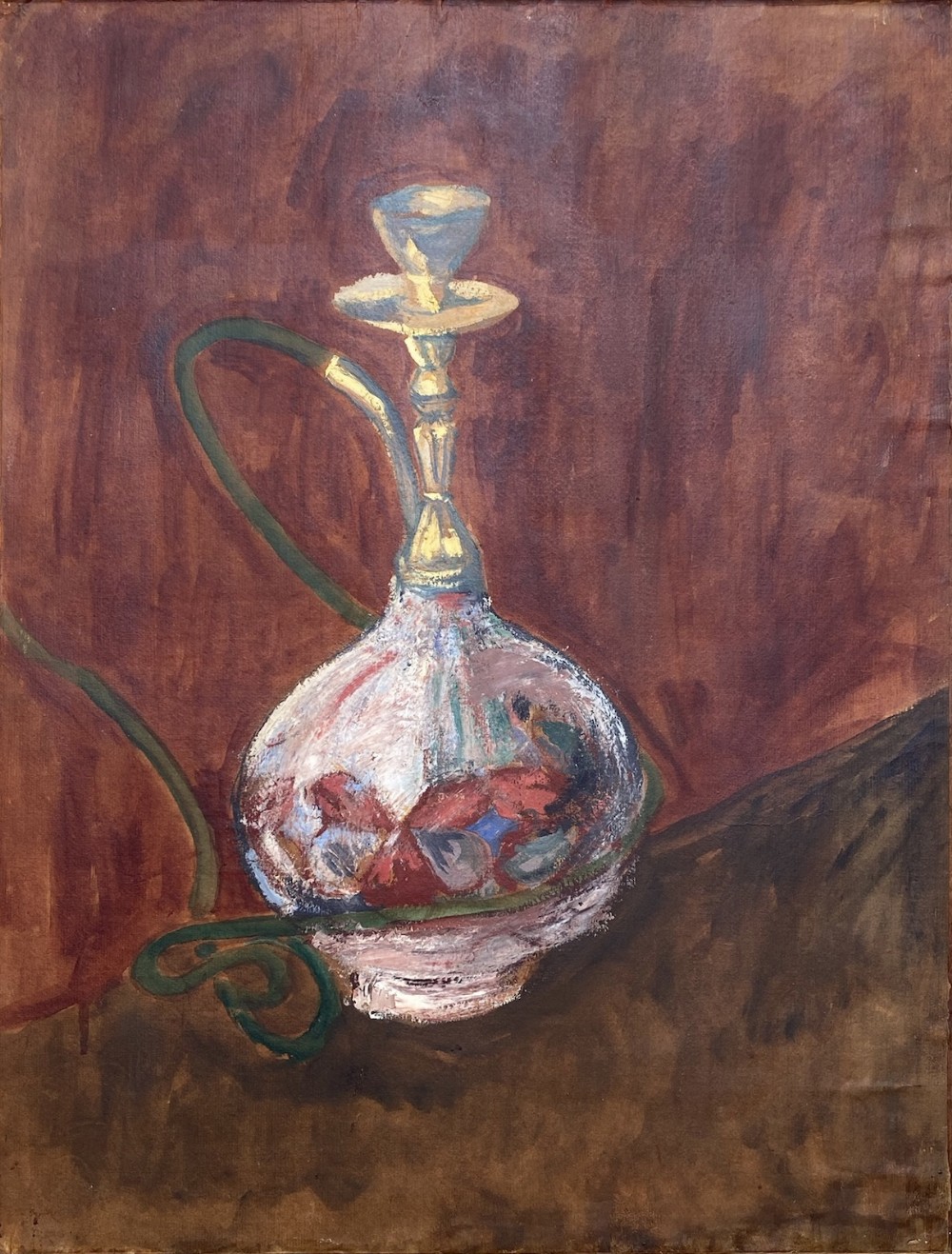
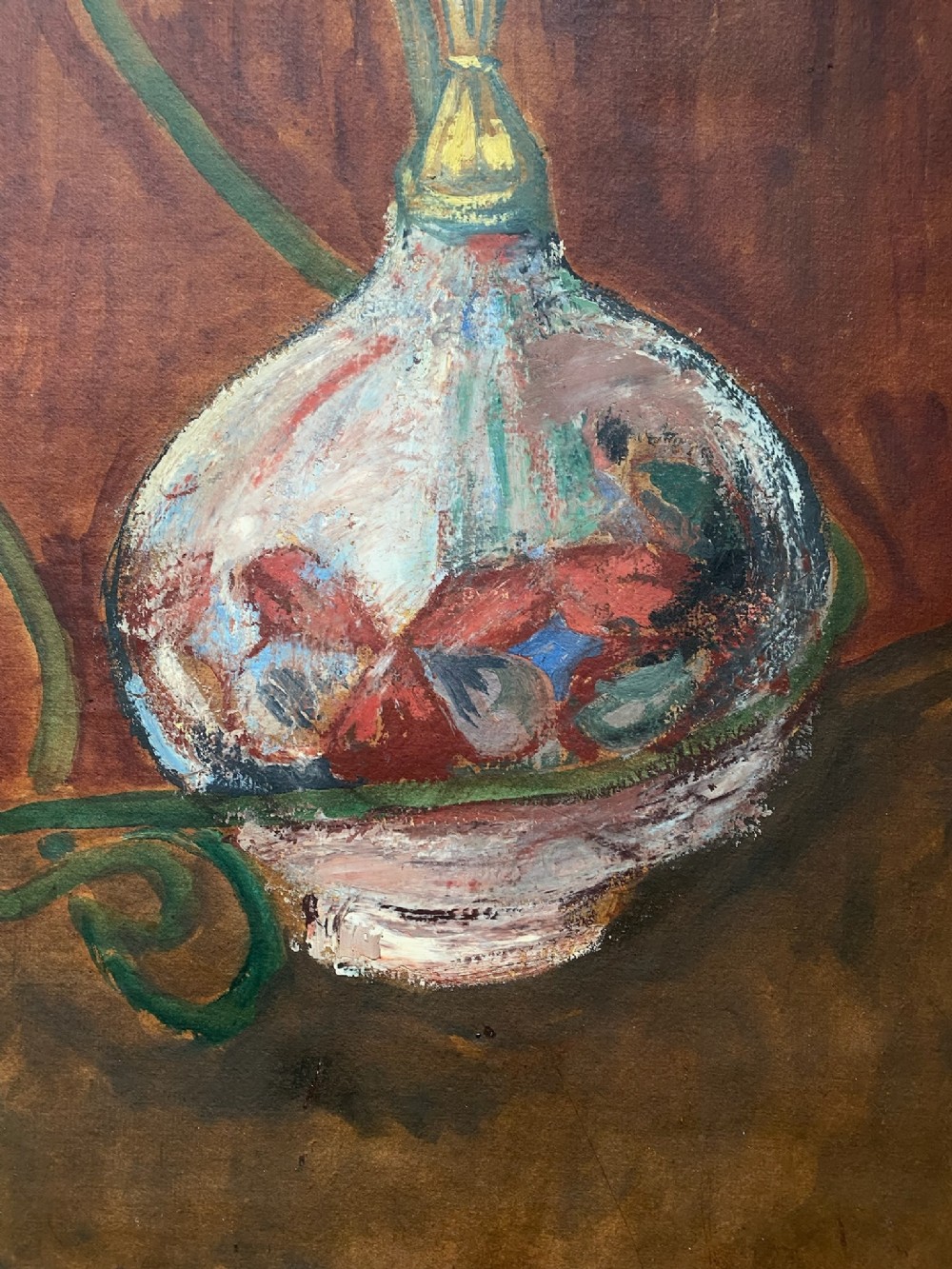
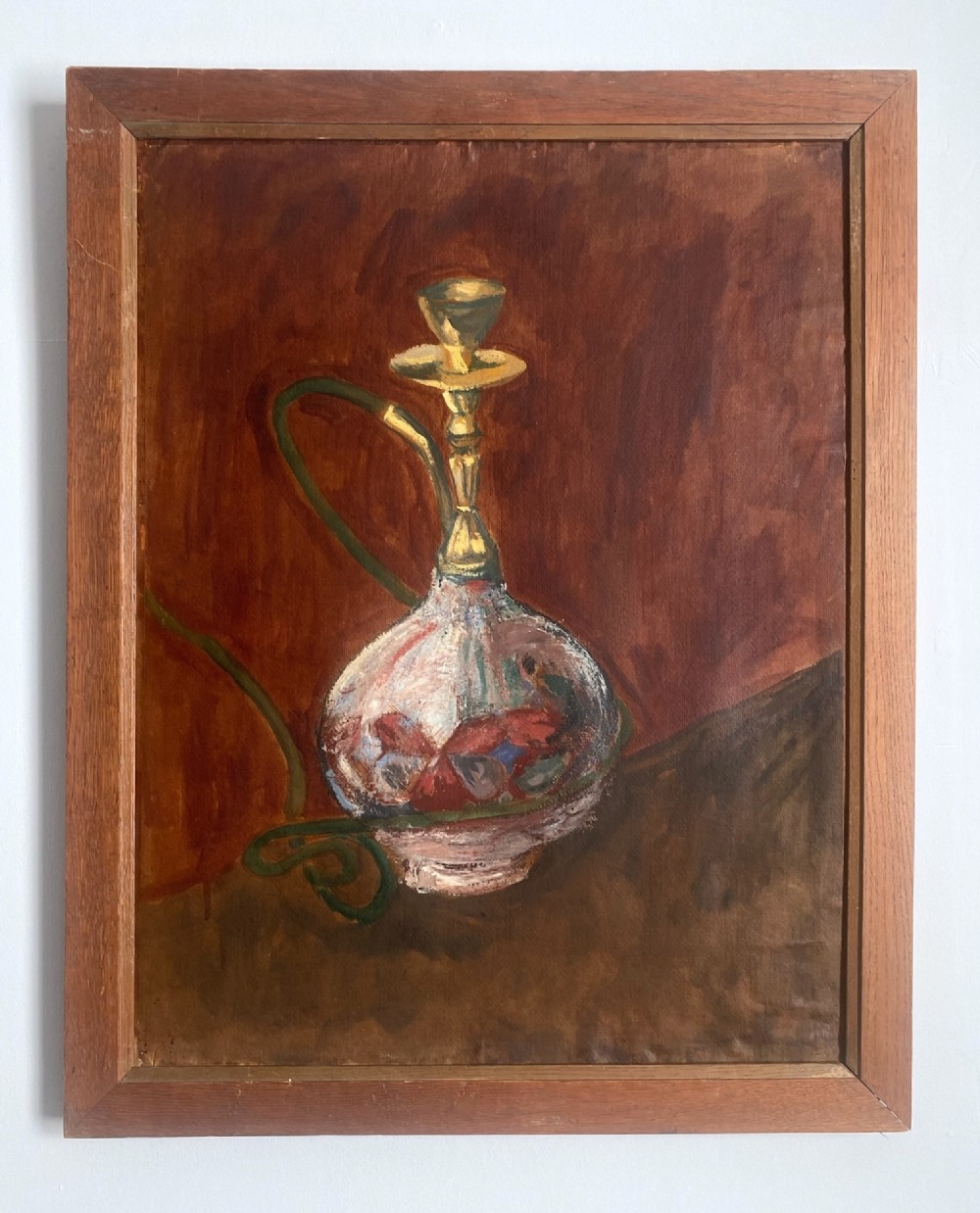
Skippings Fine Arts has dated this Fauvist Still Life Painting to the 1920s.
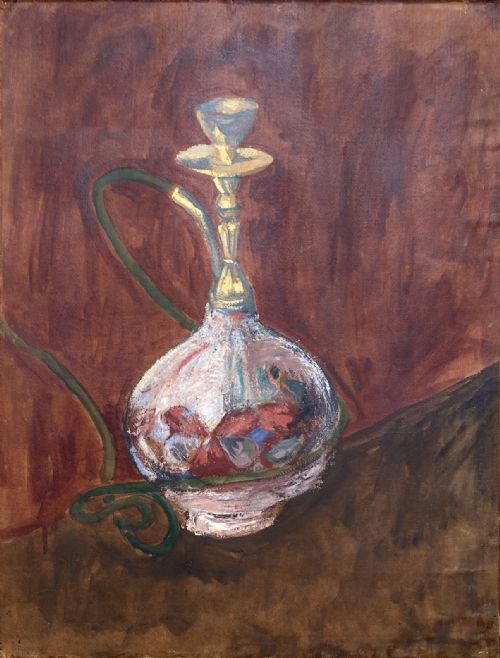
Pierre Girieud was a significant, though sometimes unheralded, figure in the early 20th-century art scene. He was known for his ability to synthesise various movements, including Fauvism, Expressionism, and Symbolism. Just like Paul Gauguin whom he admired, Girieud translated sensations and emotions into his work rather than just copying reality.
He was also influenced by his friendship with Kandinsky and was one of the first French artists to embrace German Expressionist principles. After the trauma of World War I, Girieud's style shifted towards neoclassicism, characterised by softer colours and a focus on form and structure. Our waterpipe, created in 1922, dates from this period.
In 1922 Girieud painted a major composition entitled "An Oriental Afternoon". It was shown at the exhibition of modern painting at the Museum of Fine Arts at Saint Etienne, alongside works by Bonnard, Derain, Marquet, Matisse, Signac, Utrillo, Vlaminck and Vuillard. It is therefore clear that during that year, he was interested in the representation of all things Eastern. While no waterpipe is visible in the 'Oriental Afternoon,' it's highly plausible he considered it for the composition.
A preparatory study of a mandolin of exactly the same size as our painting, with an identical red madder background, and an identical frame, is known to exist.
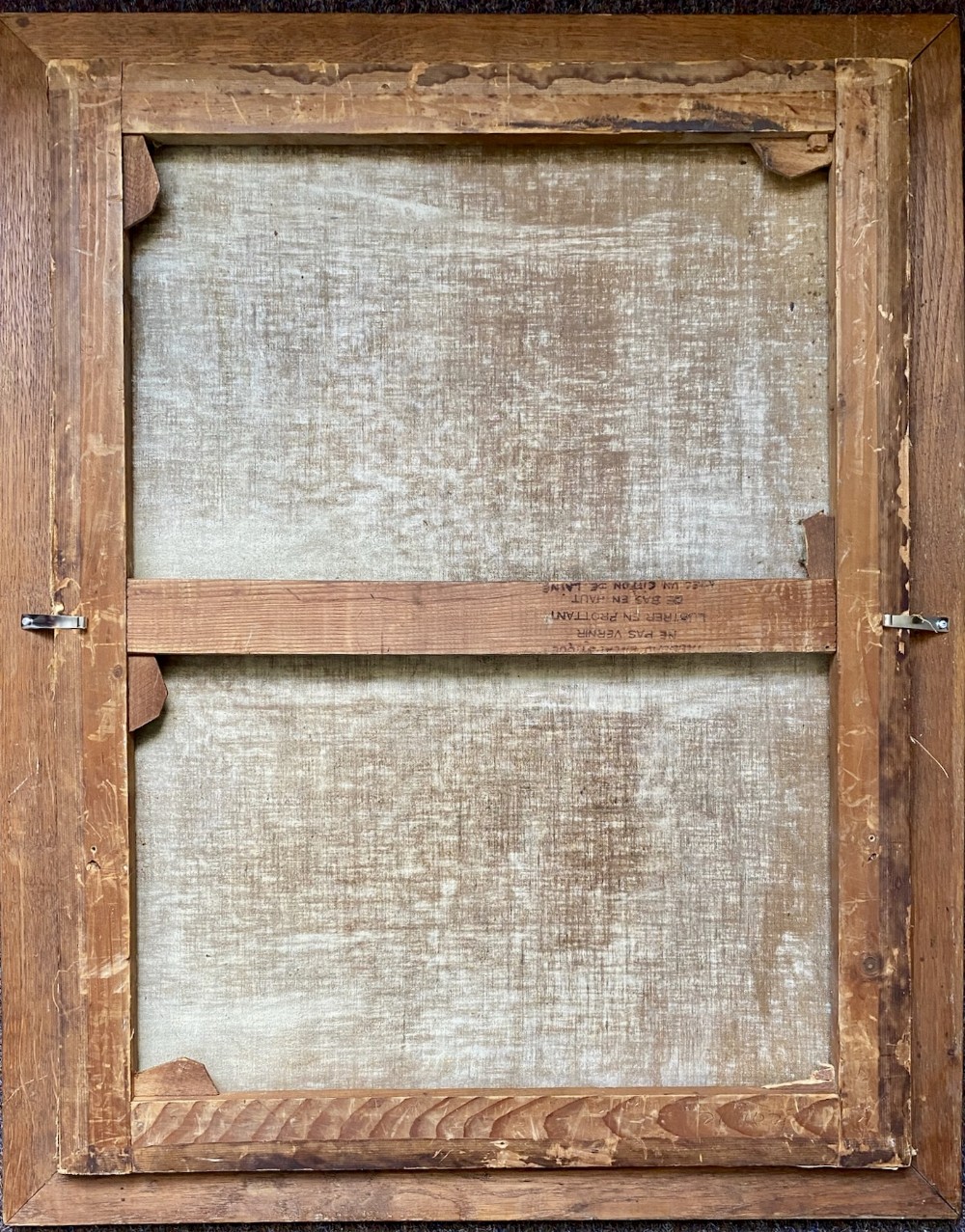
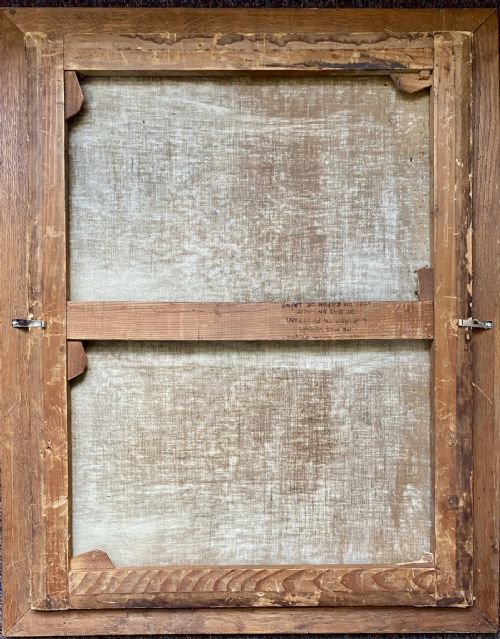
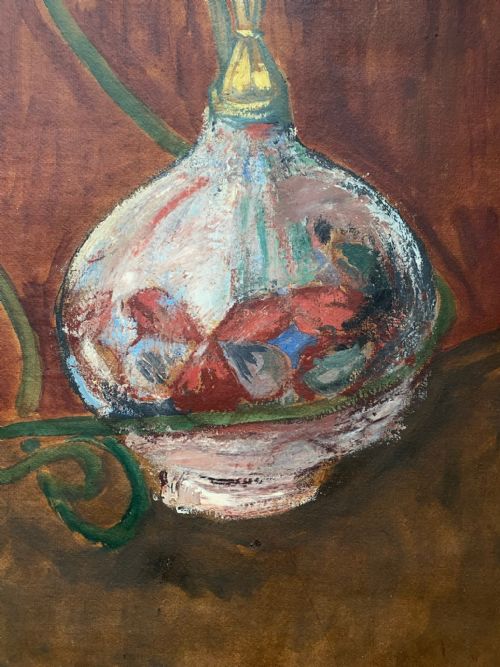
Our hookah/waterpipe is unsigned, but features in the catalogue raisonné of the artist, which is accessible online. Painted in encaustic on paper and mounted on to canvas, belonged to Girieud's daughter Jeanne. With light cockling to some of the edges, the painting measures 70 x 52 cm for the canvas alone and is presented in its original oak frame. The overall framed size is 78 x 62 cm.
Pierre Girieud is present in twenty-two museums, including the Hermitage Museum in Saint Petersburg, the National Museum of Modern Art in Paris , the Lenbachhaus in Munich, the Petit Palais Museum in Geneva, the Annonciade Museum in Saint-Tropez and the Cantini Museum in Marseille.
Skippings Fine Arts has dated this Fauvist Still Life Painting to the 1920s.
Modern french & continental pictures selected by a former french auction house expert
You can view the stock and full dealer information on the Skippings Fine Arts Profile Page
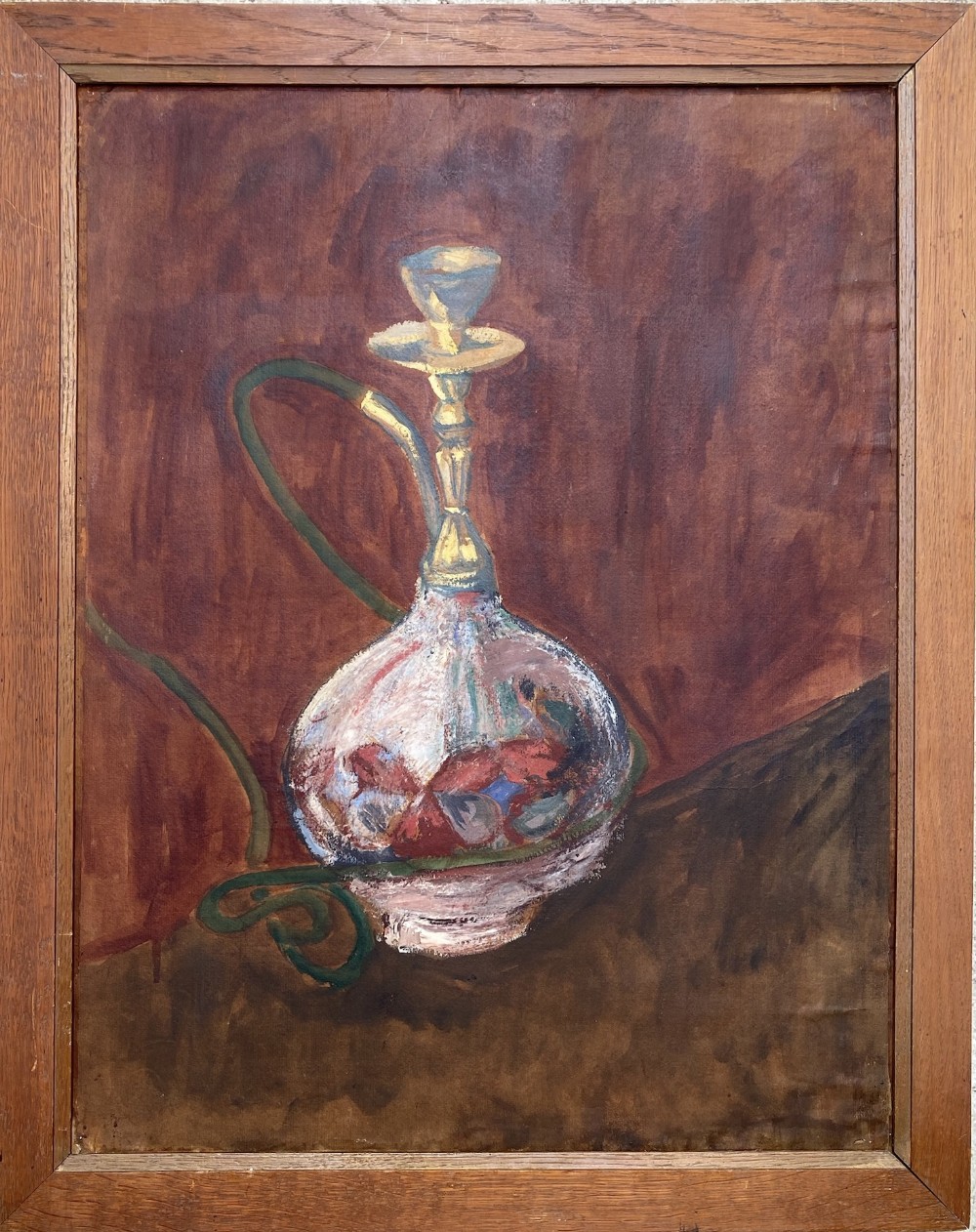
The Waterpipe, 1922, Avant Garde Composition by Fauve Master Girieud, Encausic on Canvas Painting