17,510  PAGES BROWSED TODAY PAGES TODAY 36  ANTIQUES UPLOADED TODAY NEW ARRIVALS
ID #SA1095652
FOR SALE
£7,800
Email
Save
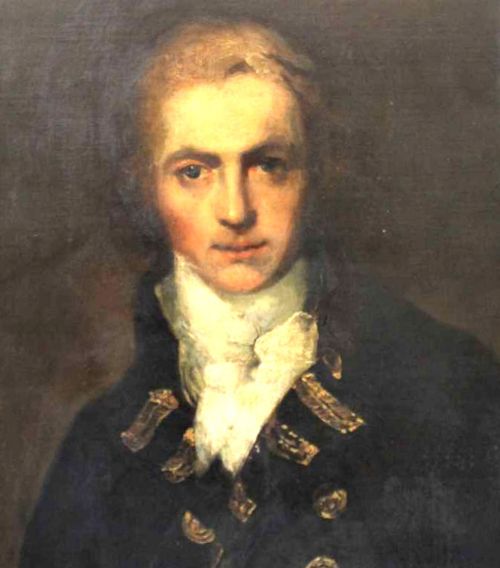
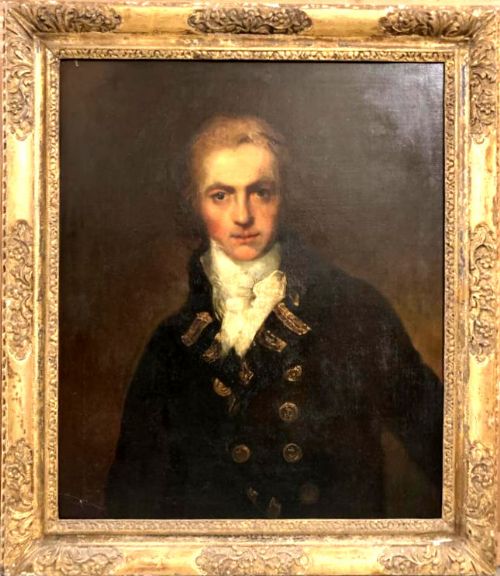
Sir Thomas Lawrence Pra, Fsra 1750-1820 Portrait of Admiral Sir Graham Moore Gcb, Gcmg 1764 – 1843 Oil on Canvas 71 X 61 Cm.
Artware Fineart
for sale €9,126     $9,906
£7,800

Artware Fineart

Sellingantiques Verified Since Sep 2008
View Dealers Stock Page
Id #SA1095652
PDF SHARE
SAVE

Sir Thomas Lawrence Pra, Fsra 1750-1820 Portrait of Admiral Sir Graham Moore Gcb, Gcmg 1764 – 1843 Oil on Canvas 71 X 61 Cm.

18th century
For Sale by Artware Fineart
Description

Sir Thomas Lawrence PRA, FSRA 1750-1820

Portrait of Admiral Sir Graham Moore GCB, GCMG 1764 – 1843

oil on canvas

71 x 61 cm.

Admiral Sir Graham Moore GCB, GCMG (1764 – 25 November 1843) was a Royal Navy officer. As a junior officer he took part in the Great Siege of Gibraltar during the American Revolutionary War. As captain of the frigate Melampus, he took part in the Battle of Tory Island in October 1798, capturing the French frigate Résolue two days later, during the French Revolutionary Wars. He went on to be First Naval Lord, then Commander-in-Chief, Mediterranean Fleet, and finally, Commander-in-Chief, Plymouth. He was the younger brother of General Sir John Moore.
Moore was born in Glasgow, Scotland, the son of Jean Simson and John Moore, doctor and author. He entered the Navy in 1777 at the age of 13. He was promoted to lieutenant on 8 March 1782 to serve aboard Crown, taking part in the relief of Gibraltar under Lord Howe, and the subsequent battle of Cape Spartel in October. During the peace he travelled through France, but was recalled to serve aboard Perseus, Dido, and then Adamant, the flagship of Sir Richard Hughes on the North American Station. On 22 November 1790 he was promoted to commander in the sloop Bonetta, before finally returning to England in 1793.
A group of ships in the water

Description automatically generated

Battle of Tory island on 12 October 1798 by Nicholas Pocock;

Moore took part in the action

Moore was promoted to post-captain on 2 April 1794, soon after the start of the Revolutionary War, with command of the 32-gun frigate Syren, in the North Sea and the coast of France. He then commanded the 36-gun frigate Melampus from September 1795. In her he took part in the Battle of Tory Island on 12 October 1798, capturing the French frigate Résolue two days later. In February 1800 he went out to the West Indies, but was invalided home after eighteen months.

A painting of ships in the water

Description automatically generated

Sir Graham Moore's action off Cape St. Mary, 5 October 1804

On the renewal of the war in 1803 he was appointed to Indefatigable (44), and with three other frigates – Medusa (32), Lively (38) and Amphion (32) – under his command, captured a Spanish treasure fleet of four frigates – Medea (40), Clara (34), Fama (34) and Mercedes (36) – carrying bullion from the Caribbean back to Spain off Cadiz in the action of 5 October 1804.

Moore was then attached to Sir Robert Calder's squadron blockading Ferrol. In 1808, he served as commodore, flying his broad pennant in the new ship Marlborough assisting Admiral Sir Sidney Smith with the Portuguese royal family's escape to Brazil, and was subsequently made a Knight of the Order of the Tower and Sword.

He later served as part of the North Sea fleet for several years. At the close of the Walcheren campaign in December 1809, he was entrusted with destroying the basin, arsenal, and sea defences of Flushing (Vlissingen).

Moore commanded Chatham from March 1812, until promoted to rear-admiral on 12 August 1812, and served as Commander-in-Chief in the Baltic for a short time, flying his flag in HMS Fame. In 1814 he served as captain of the fleet to Lord Keith in the Channel, and, having been appointed a Knight Commander of the Order of the Bath on 2 January 1815, he became second-in-command, Mediterranean Fleet in 1815. He joined the Board of Admiralty as First Naval Lord in the Liverpool ministry in May 1816.

Promoted to vice-admiral on 12 August 1819,he left the Board of the Admiralty in March 1820. He was Commander-in-Chief, Mediterranean Fleet between 1820 and 1823 and was advanced to Knight Grand Cross of the Order of the Bath on 11 March 1836. Promoted to full admiral on 10 January 1837, he served as Commander-in-Chief, Plymouth from 1839 to 1842 flying his flag in Impregna

Physical Dimensions
Height
71cm (27.95")
Width
61cm (24.02")
Depth
2cm (0.79")
Declaration

Artware Fineart has dated this Regency Oil Portrait Painting to the 18th Century.

Reference Numbers
Sellingantiques Reference
SA1095652
Dealers Internal Reference
5101
Description
Sir Thomas Lawrence PRA, FSRA 1750-1820

Portrait of Admiral Sir Graham Moore GCB, GCMG 1764 – 1843

oil on canvas

71 x 61 cm.

Admiral Sir Graham Moore GCB, GCMG (1764 – 25 November 1843) was a Royal Navy officer.

As a junior officer he took part in the Great Siege of Gibraltar during the American Revolutionary War.
Artware Fineart

As captain of the frigate Melampus, he took part in the Battle of Tory Island in October 1798, capturing the French frigate Résolue two days later, during the French Revolutionary Wars. He went on to be First Naval Lord, then Commander-in-Chief, Mediterranean Fleet, and finally, Commander-in-Chief, Plymouth. He was the younger brother of General Sir John Moore.

fig 1. A Regency period half-length oil painting on canvas depicting a naval officer in a dark blue coat with gold braid and white neckcloth.
fig 1. Sir Thomas Lawrence Pra, Fsra 1750-1820 Portrait of Admiral Sir Graham Moore Gcb, Gcmg 1764 – 1843 Oil on Canvas 71 X 61 Cm.

Moore was born in Glasgow, Scotland, the son of Jean Simson and John Moore, doctor and author. He entered the Navy in 1777 at the age of 13. He was promoted to lieutenant on 8 March 1782 to serve aboard Crown, taking part in the relief of Gibraltar under Lord Howe, and the subsequent battle of Cape Spartel in October. During the peace he travelled through France, but was recalled to serve aboard Perseus, Dido, and then Adamant, the flagship of Sir Richard Hughes on the North American Station. On 22 November 1790 he was promoted to commander in the sloop Bonetta, before finally returning to England in 1793.

fig 2. A Regency period half-length oil painting on canvas depicting a naval officer in a dark blue coat with gold braid and white neckcloth.
fig 2. Sir Thomas Lawrence Pra, Fsra 1750-1820 Portrait of Admiral Sir Graham Moore Gcb, Gcmg 1764 – 1843 Oil on Canvas 71 X 61 Cm.

A group of ships in the water

Description automatically generated

Battle of Tory island on 12 October 1798 by Nicholas Pocock;

Moore took part in the action

Moore was promoted to post-captain on 2 April 1794, soon after the start of the Revolutionary War, with command of the 32-gun frigate Syren, in the North Sea and the coast of France. He then commanded the 36-gun frigate Melampus from September 1795. In her he took part in the Battle of Tory Island on 12 October 1798, capturing the French frigate Résolue two days later. In February 1800 he went out to the West Indies, but was invalided home after eighteen months.

A painting of ships in the water

Description automatically generated

Sir Graham Moore's action off Cape St. Mary, 5 October 1804

On the renewal of the war in 1803 he was appointed to Indefatigable (44), and with three other frigates – Medusa (32), Lively (38) and Amphion (32) – under his command, captured a Spanish treasure fleet of four frigates – Medea (40), Clara (34), Fama (34) and Mercedes (36) – carrying bullion from the Caribbean back to Spain off Cadiz in the action of 5 October 1804.

Moore was then attached to Sir Robert Calder's squadron blockading Ferrol. In 1808, he served as commodore, flying his broad pennant in the new ship Marlborough assisting Admiral Sir Sidney Smith with the Portuguese royal family's escape to Brazil, and was subsequently made a Knight of the Order of the Tower and Sword.

He later served as part of the North Sea fleet for several years. At the close of the Walcheren campaign in December 1809, he was entrusted with destroying the basin, arsenal, and sea defences of Flushing (Vlissingen).

Moore commanded Chatham from March 1812, until promoted to rear-admiral on 12 August 1812, and served as Commander-in-Chief in the Baltic for a short time, flying his flag in HMS Fame. In 1814 he served as captain of the fleet to Lord Keith in the Channel, and, having been appointed a Knight Commander of the Order of the Bath on 2 January 1815, he became second-in-command, Mediterranean Fleet in 1815. He joined the Board of Admiralty as First Naval Lord in the Liverpool ministry in May 1816.

Promoted to vice-admiral on 12 August 1819,he left the Board of the Admiralty in March 1820. He was Commander-in-Chief, Mediterranean Fleet between 1820 and 1823 and was advanced to Knight Grand Cross of the Order of the Bath on 11 March 1836. Promoted to full admiral on 10 January 1837, he served as Commander-in-Chief, Plymouth from 1839 to 1842 flying his flag in Impregna

Height
71cm (27.95")
Width
61cm (24.02")
Depth
2cm (0.79")
Date of Manufacture

Artware Fineart has dated this Regency Oil Portrait Painting to the 18th Century.

Reference Numbers
Sellingantiques Ref
SA1095652
Dealers Internal Ref
5101
Artware Fineart
Sellingantiques verified Since Sep 2008
Dealer Profile

You can view the stock and full dealer information on the Artware Fineart Profile Page

PDF SHARE
SAVE
A Regency period half-length oil painting on canvas depicting a naval officer in a dark blue coat with gold braid and white neckcloth.
1 / 3
Archive I A Regency period half-length oil painting on canvas depicting a naval officer in a dark blue coat with gold braid and white neckcloth.

Sir Thomas Lawrence Pra, Fsra 1750-1820 Portrait of Admiral Sir Graham Moore Gcb, Gcmg 1764 – 1843 Oil on Canvas 71 X 61 Cm.

Archive II A Regency period half-length oil painting on canvas depicting a naval officer in a dark blue coat with gold braid and white neckcloth. View II
Archive III A Regency period half-length oil painting on canvas depicting a naval officer in a dark blue coat with gold braid and white neckcloth. View III
FURTHER BROWSING

Visitors also looked at these ⇣

Enlarged Archival View
Telephone 07958 699 645
Location
18 La Gare
51 Surrey Row
London
SE1 0BZ
United Kingdom
Verified Since Sep 2008
Items For Sale 243
Items Sold 223
Artware Fineart
Verified Since Sep 2008
View Dealer Info
Location: 18 La Gare , 51 Surrey Row , London , SE1 0BZ , United Kingdom
Verified
Sep 2008
For Sale
243
Sold
223
A Regency period half-length oil painting on canvas depicting a naval officer in a dark blue coat with gold braid and white neckcloth.
Sir Thomas Lawrence PRA, FSRA 1750-1820 Portrait of Admiral Sir Graham Moore GCB, GCMG 1764 – 1843 oil on canvas 71 x 61 cm.
Ref: SA1095652
A Regency period half-length oil painting on canvas depicting a naval officer in a dark blue coat with gold braid and white neckcloth.
Detail View 1
Detail View 2
Archival Detail
Every single antique dealer on our platform is individually approved by our internal team. We verify their professional trade history, ethical standards, and photographic quality to ensure a secure, high-standard buying environment. Upon joining, every dealer agrees to a strict 9-point code of conduct. While issues can occasionally arise, our dealers typically resolve them swiftly and directly with the buyer. In fact, since our founding in 2002, Sellingantiques has only had to step in to help resolve an issue on roughly five occasions—a true testament to the quality of our dealers and their dedication to your happiness.
Our dealers are highly experienced in packing and shipping fragile, high-value antiques. Because you are in direct contact with the dealer, you will be able to easily go through all available shipping and insurance options together to ensure your item arrives safely.
Antiques are the ultimate green purchase. By choosing historical pieces over newly manufactured goods, you completely eliminate the carbon footprint of modern mass production while preserving exceptional, timeless craftsmanship.

Regency portraiture, spanning roughly the late eighteenth to early nineteenth century, is characterised by fluid brushwork, dramatic lighting, and naturalistic posing. Artists of this era emphasised psychological depth and status, frequently capturing naval officers, politicians, and gentry in tailored uniforms or classical attire.

Paintings from this era were primarily executed using hand-ground mineral and organic pigments bound in linseed or walnut oil, applied onto stretched linen canvases. Grounds were typically lead-based, providing a durable surface that allowed for subtle tonal transitions and glazes.

Authentic period canvases display natural age-related craquelure patterns that align with the tension of the wooden stretcher bars. Examination of the canvas weave, historic lining, stretcher construction, oxidation on metal tacks, and chemical pigment signatures under ultraviolet light helps verify age.

A formal period portrait creates visual weight and character when styled against modern dark paint palettes or traditional timber panelling. Hanging historical artwork above a mantlepiece or within a contemporary gallery wall provides an engaging dialogue between historic art and clean-lined furniture.

Keep the canvas in a climate-controlled room away from direct sunlight, heating vents, and high humidity. Dust lightly with a soft, dry camel-hair brush, and consult a qualified fine art conservator for surface cleaning or varnish removal.
items
Add keywords to the filter
Price
£100
£250000
Era
Movements
Material
Origin
Stock Location
Freshness
Online Payments
Categories