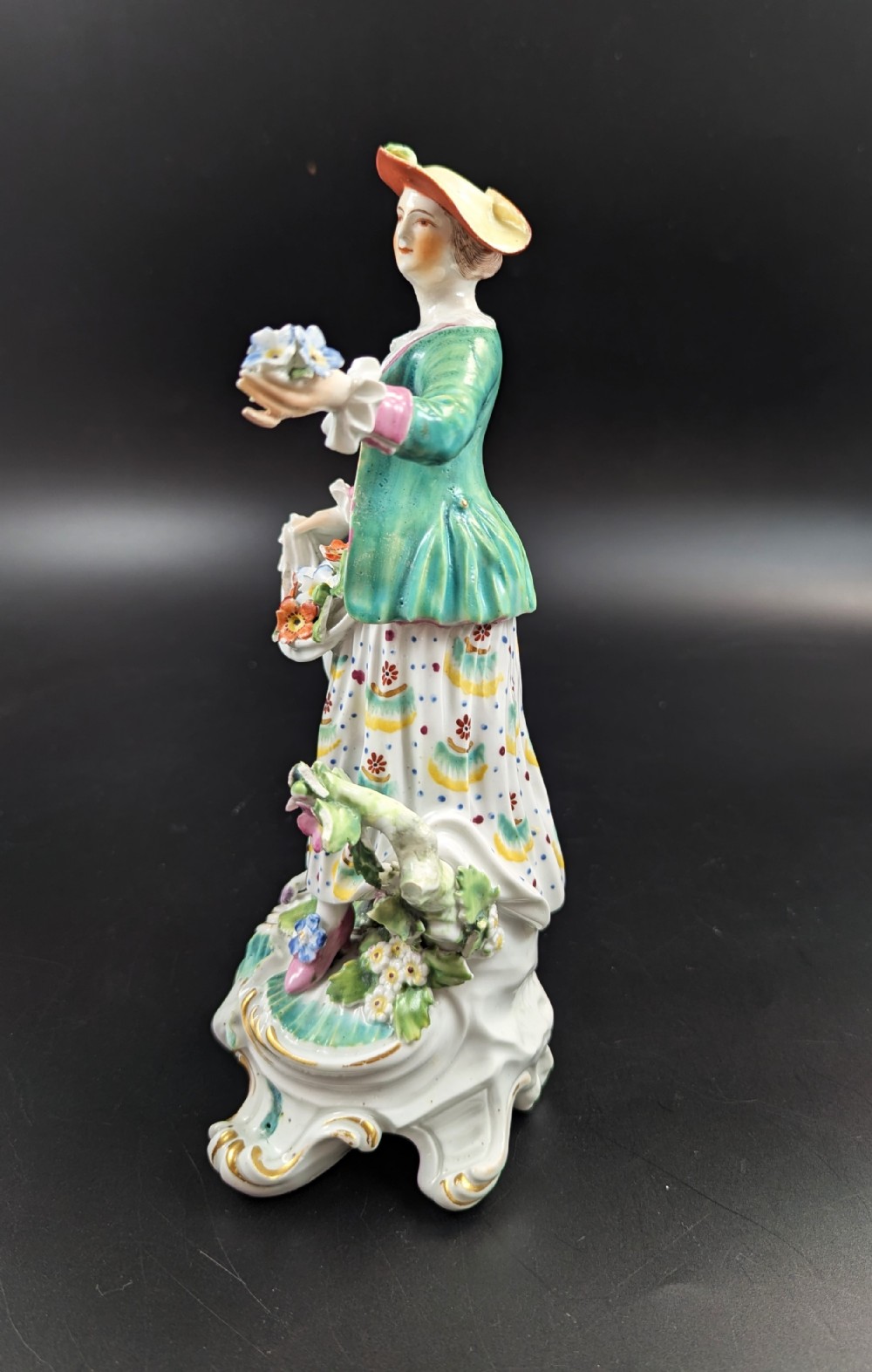
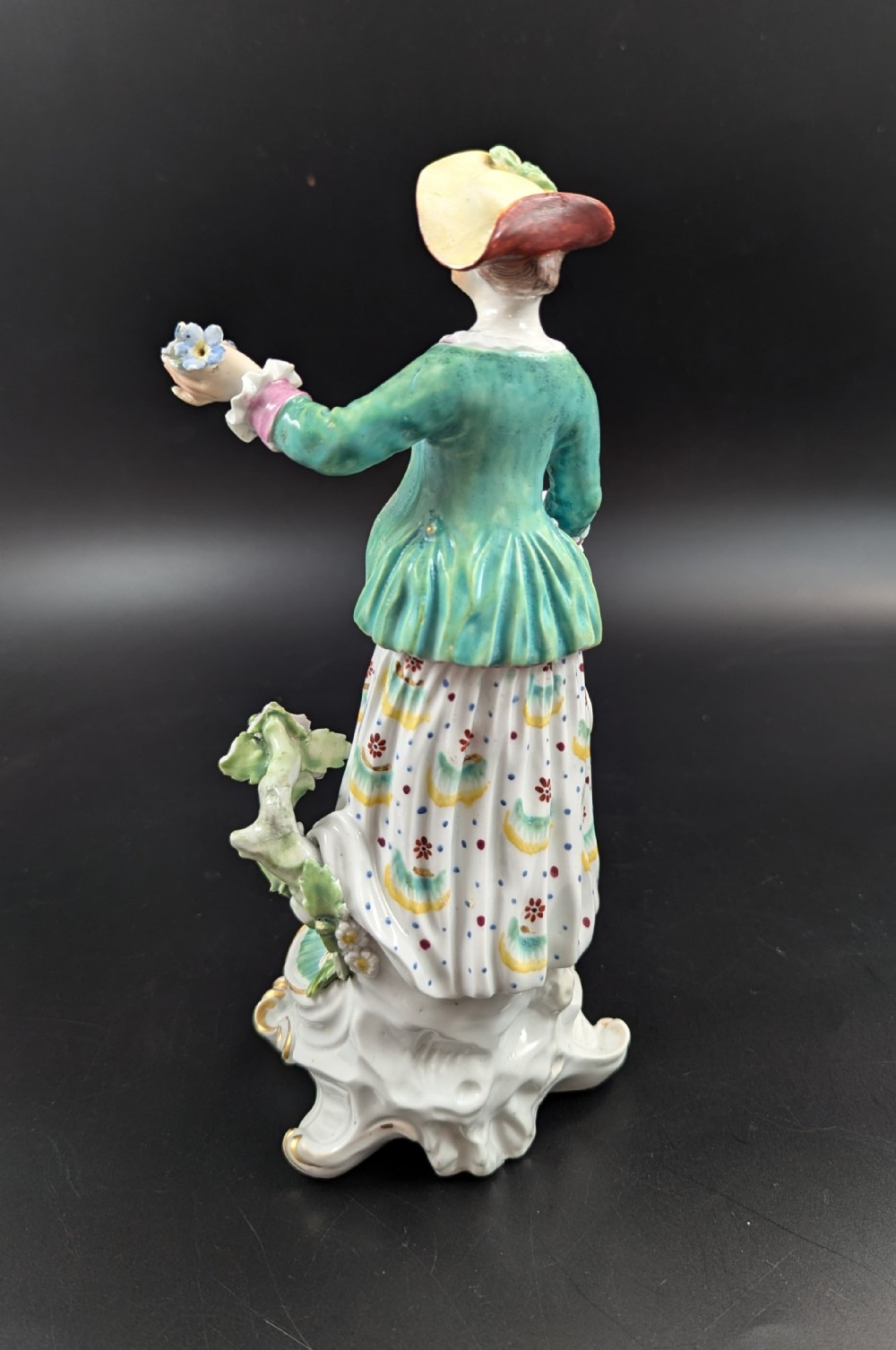
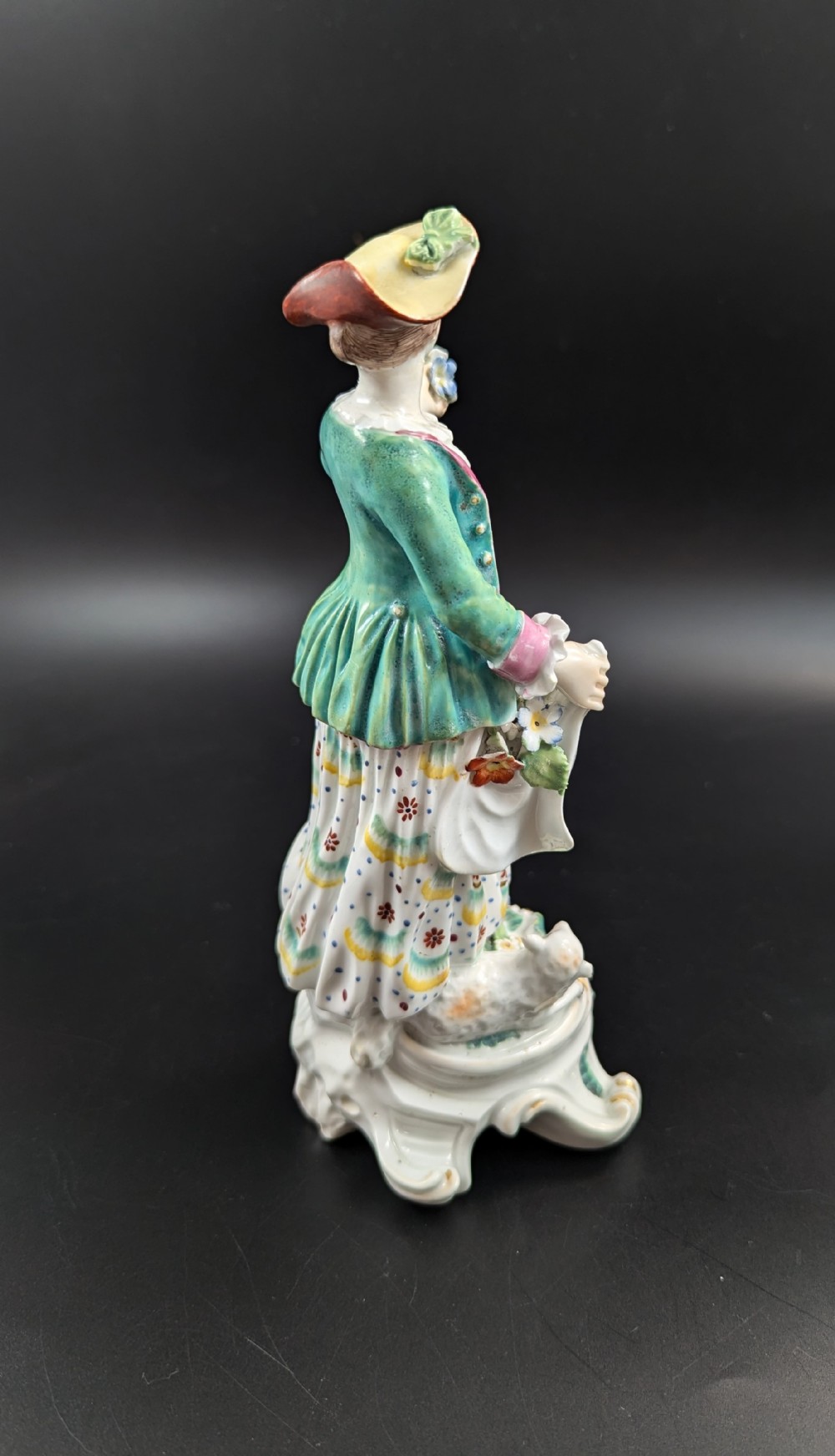
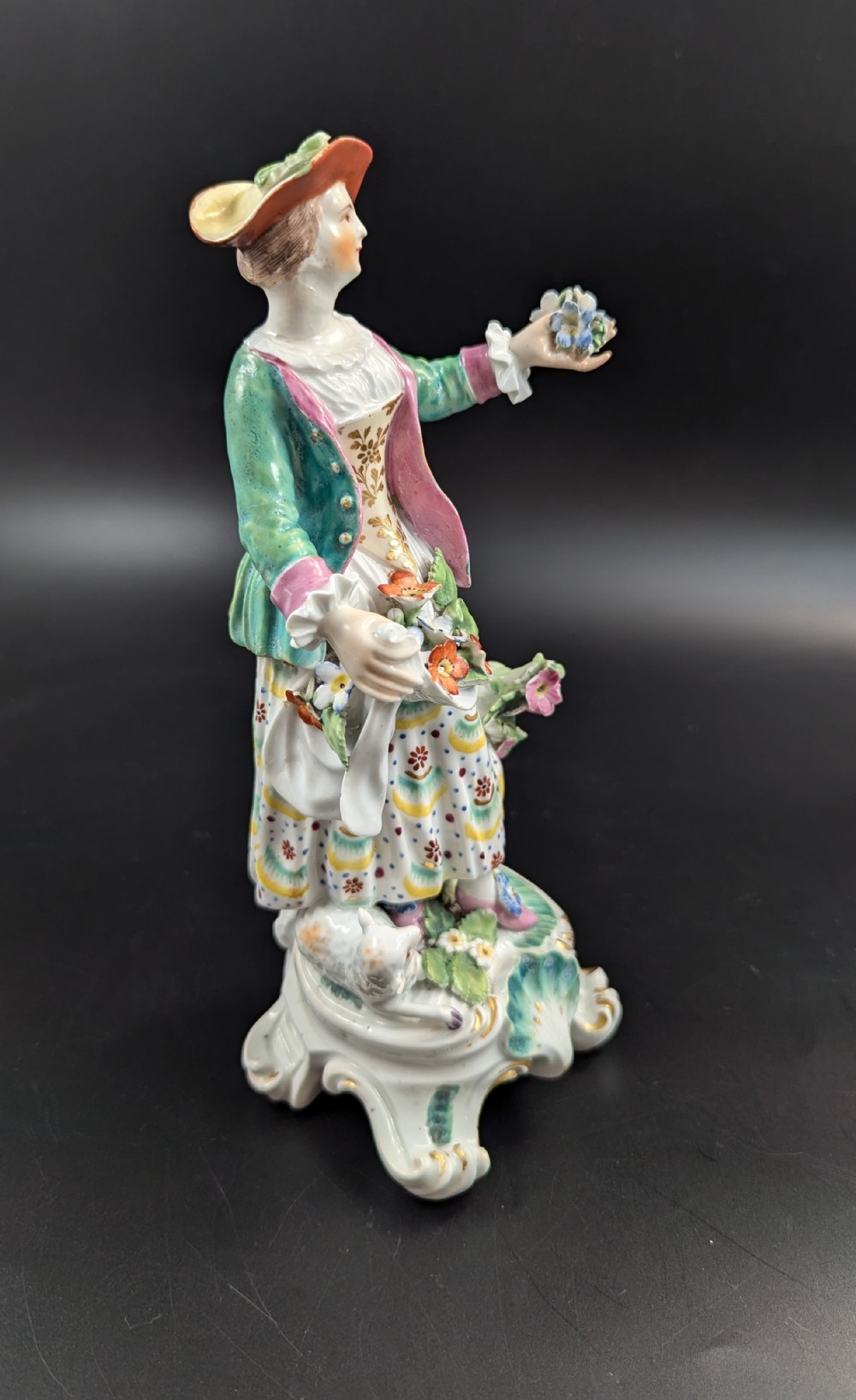
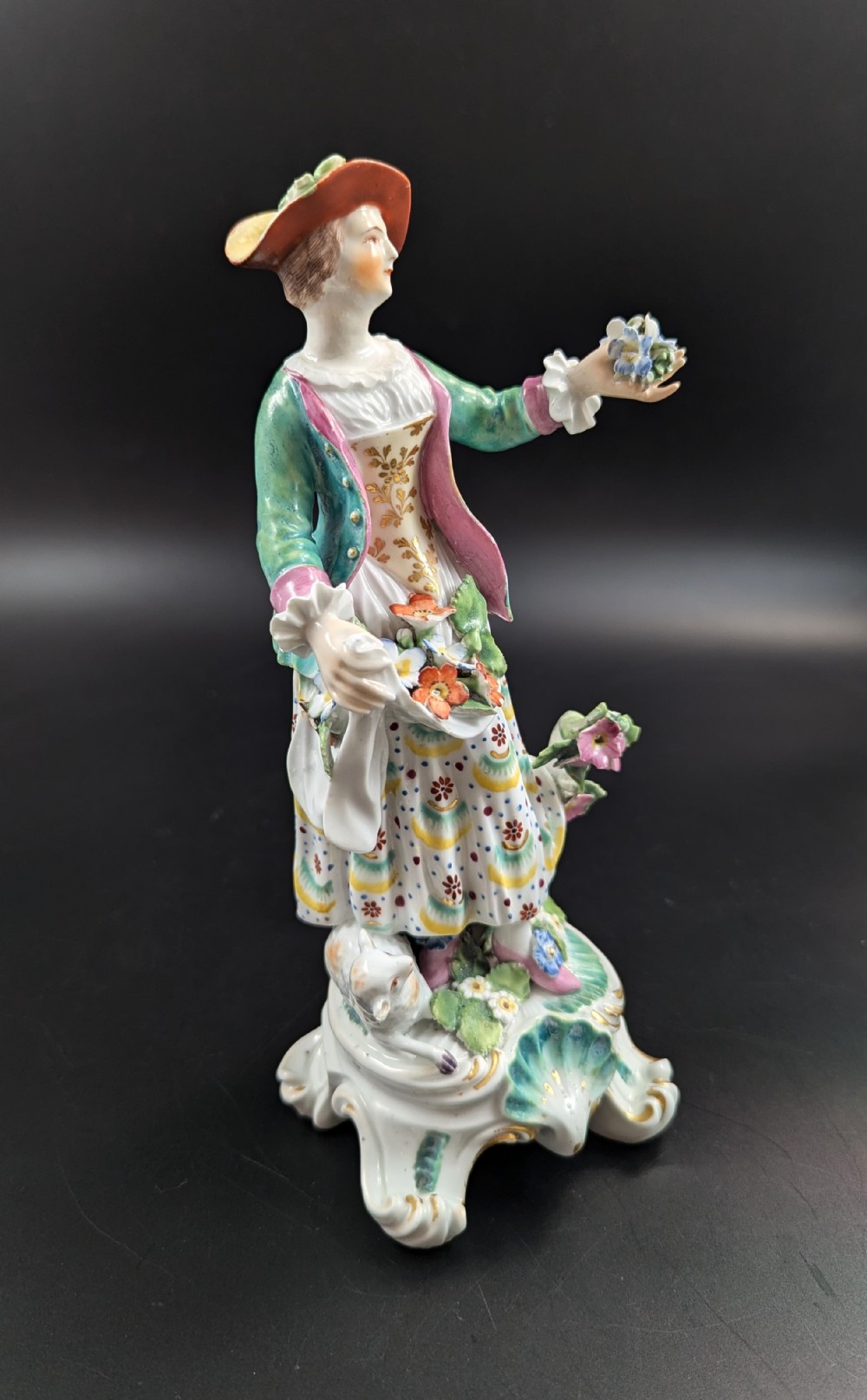
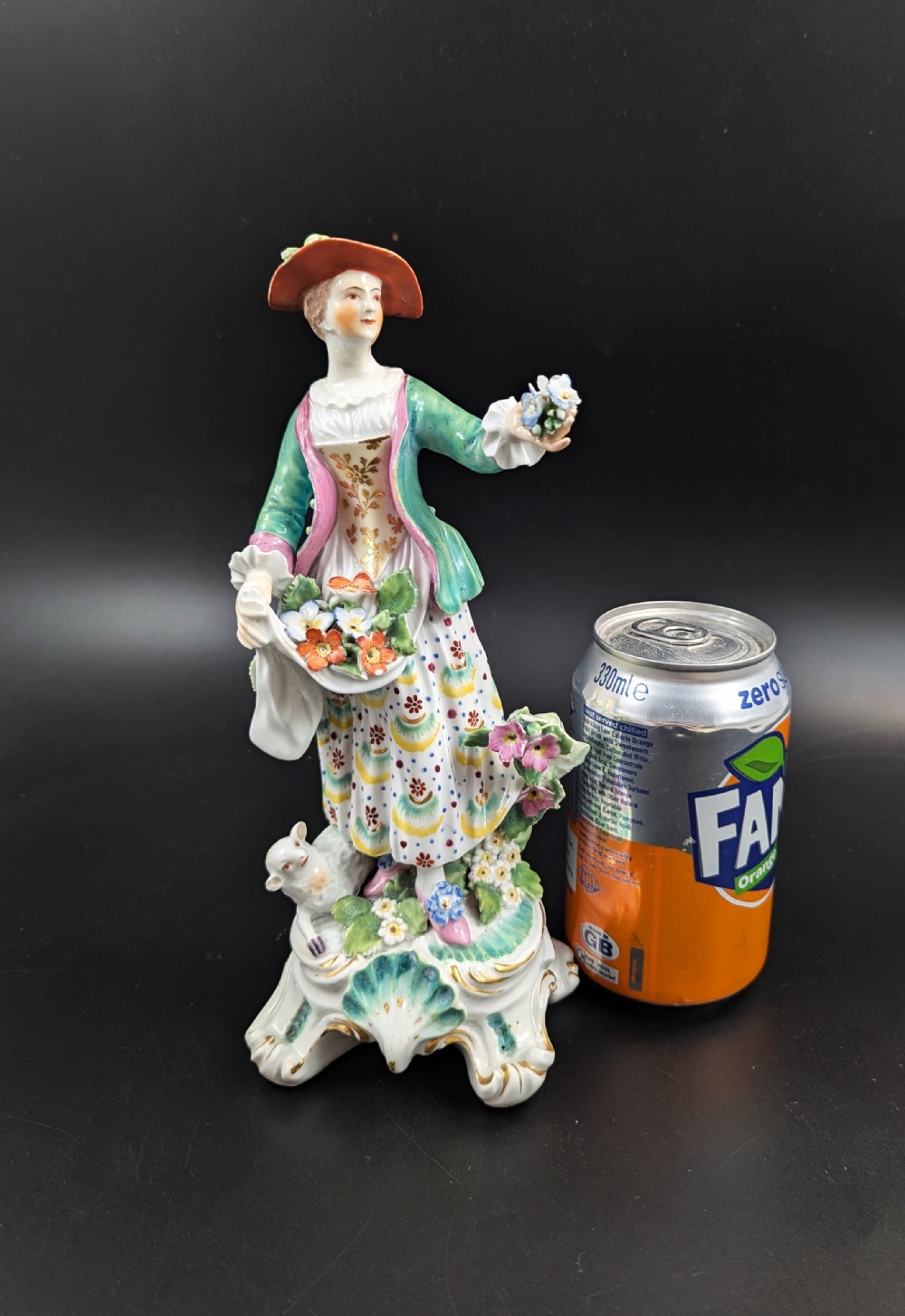
Gillers Antiques Ltd has dated this piece to the 18th Century.
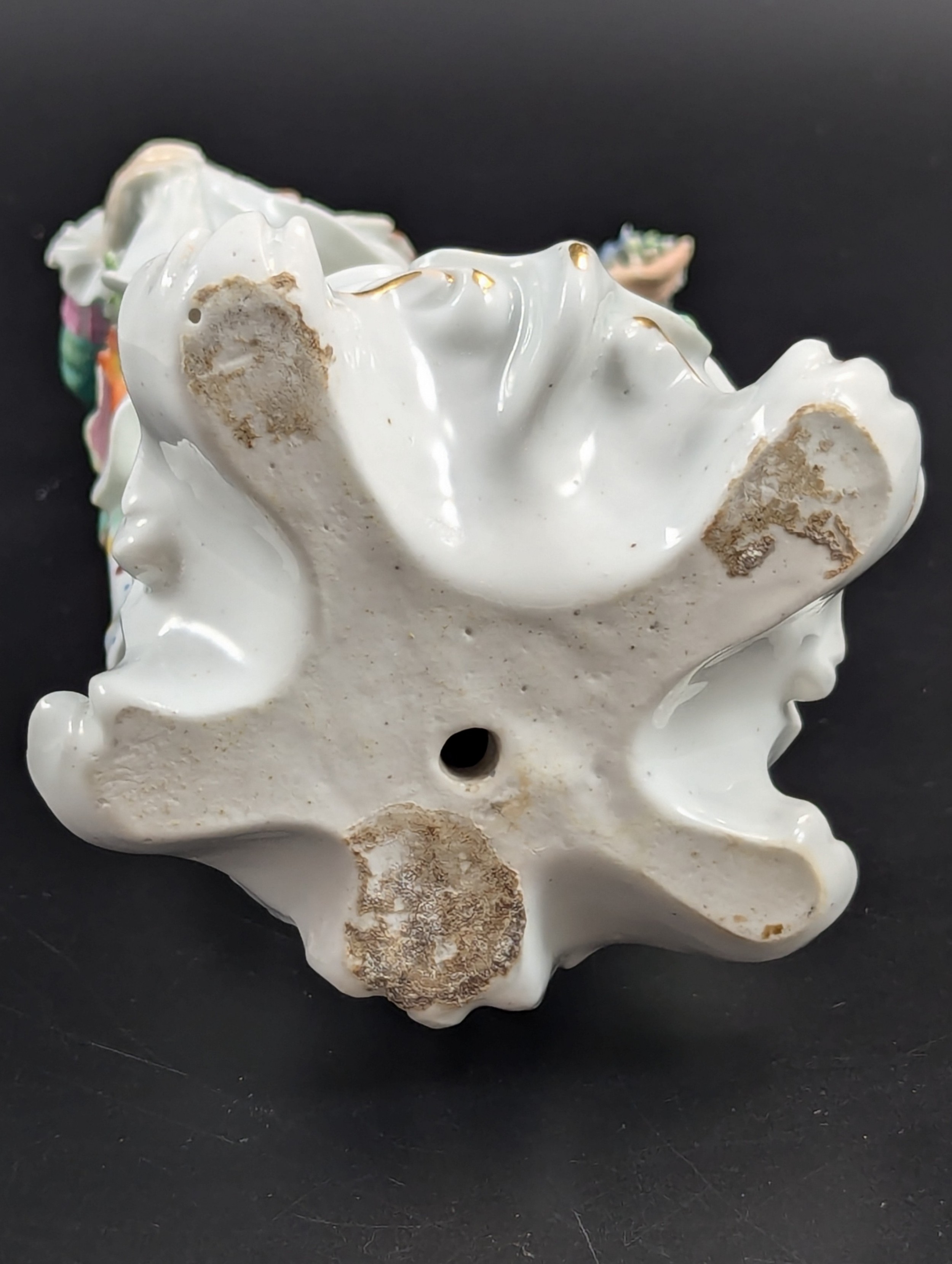
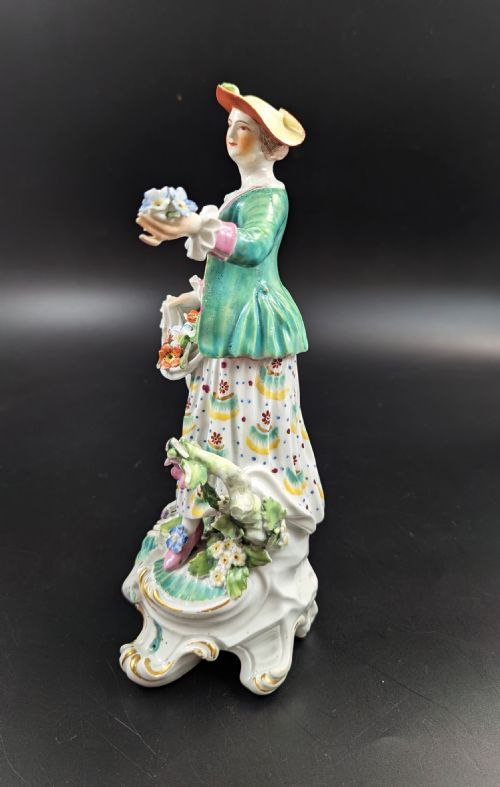
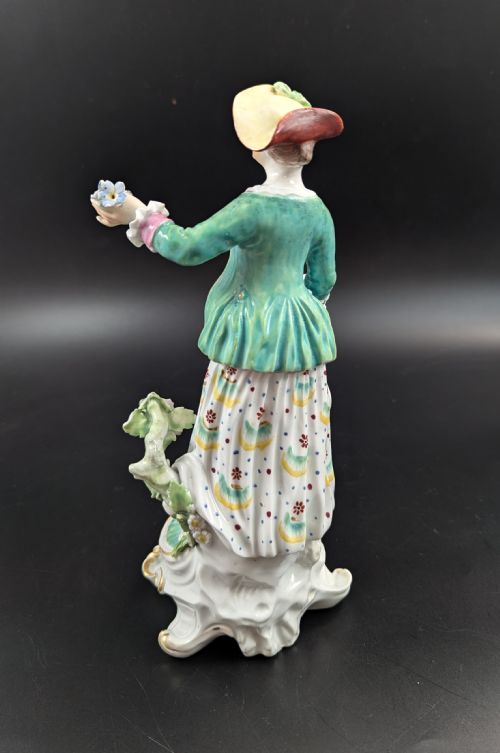
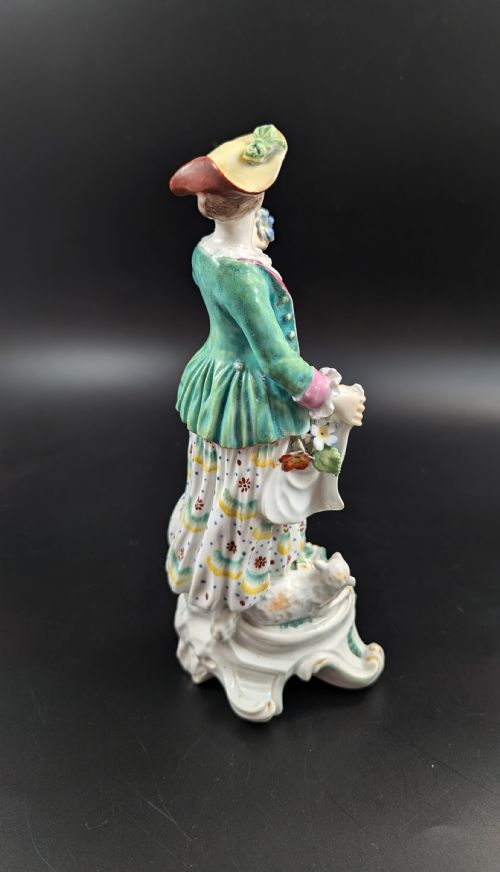
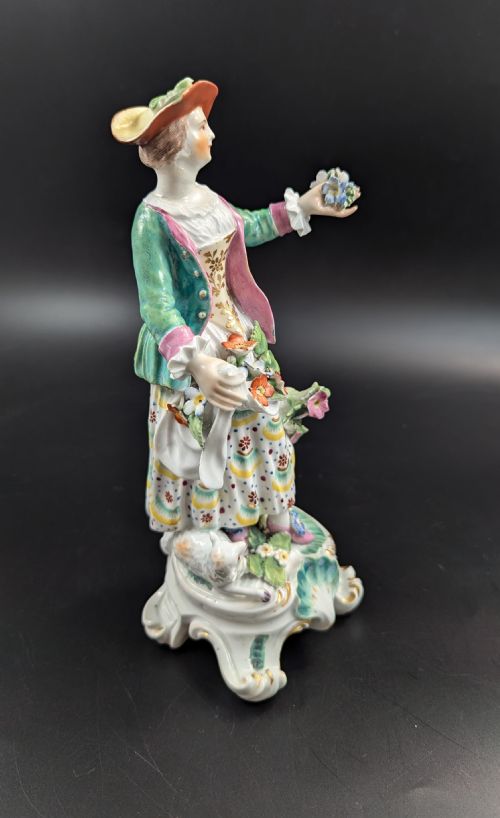
She stands on a rococo moulded base with gilt highlights and floral patterns. There are three 'patch marks' on the base, corresponding with the time of manufacture.
The Derby Porcelain factory has its roots in the late 1740s when Andrew Planché, a Walloon Huguenot refugee, started making simple porcelain toys shaped like animals in his backyard. In 1756, Staffordshire enameller William Duesbury and banker John Heath started a new porcelain factory with Planché. This factory grew to be the largest of its time, acquiring the bankrupted Chelsea and Bow factories, as well as the stock of several other workshops, including that of James Giles. The combination of various traditions, porcelain-making skills, and sophisticated clients enabled Duesbury to create one of the best porcelain factories of the 18th and 19th centuries, which, after many ups and downs, is still operative today.
The factory’s reputation peaked in the 18th century, with self-published advertising material proclaiming the “Derby Porcelain Manufactory” to be “the second Dresden.” Duesbury maintained what would now be termed “retail space” independent of the Chelsea works, at a former pub – The Castle Tavern – in Bedford Street, Covent Garden. This was both a warehousing facility and an exhibition area, serving as the shopfront for what had become “a very thriving and lucrative trade.” Derby porcelain was hand-painted, some with Imari patterns, in London at the Chelsea premises. The output from this dual operation is known as Chelsea Derby. Ultimately, the Chelsea site was closed down, and the name Derby continued in increasingly splendid isolation. Continued Royal patronage afforded Duesbury the license to append a crown to his trademark, giving birth to Royal Crown Derby Porcelain. It’s worth noting that Duesbury also used representations of the marks from Sèvres, Dresden, and Berlin-made porcelain, as he considered his own wares to be superior to every other source except those three.
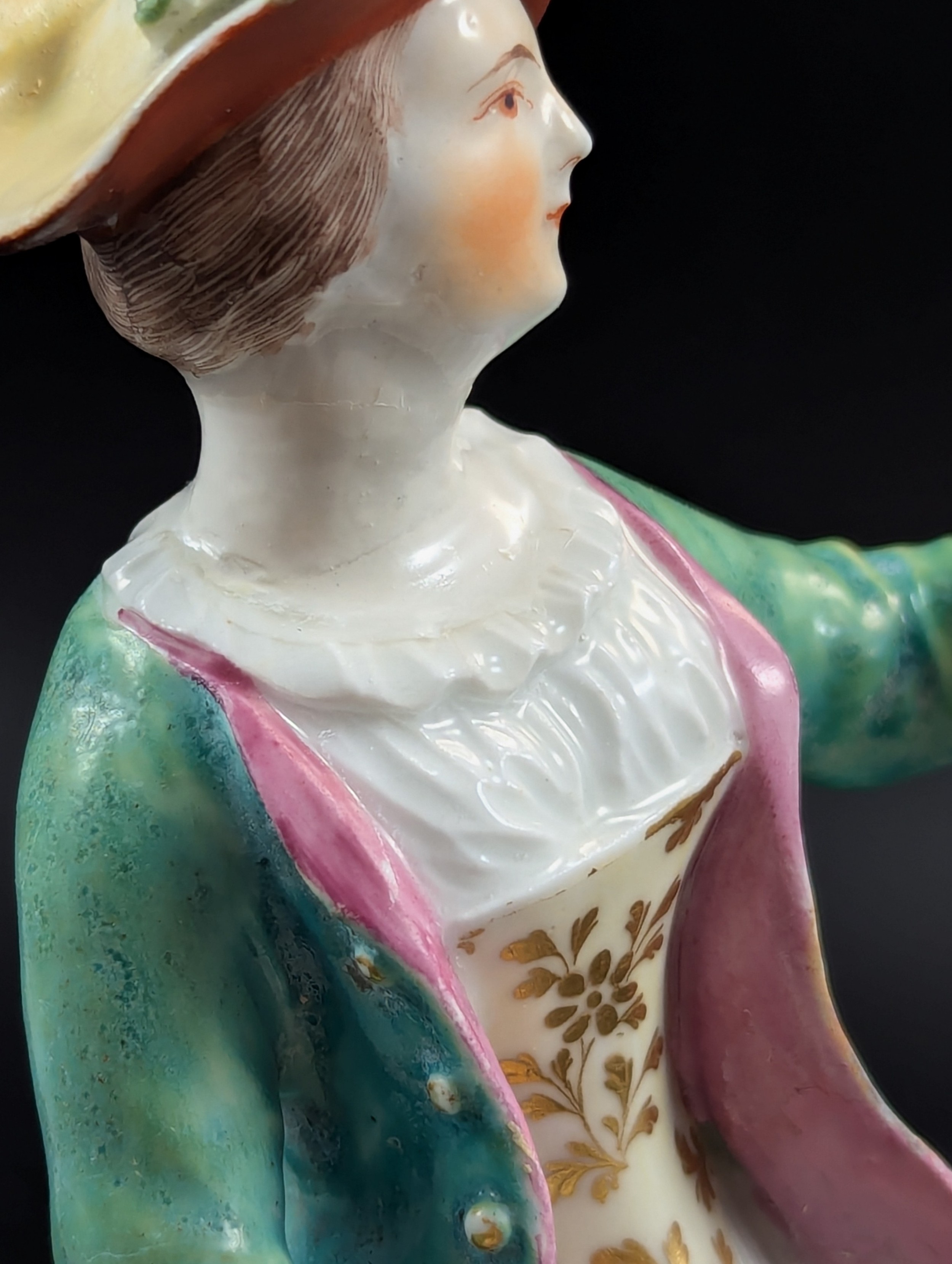
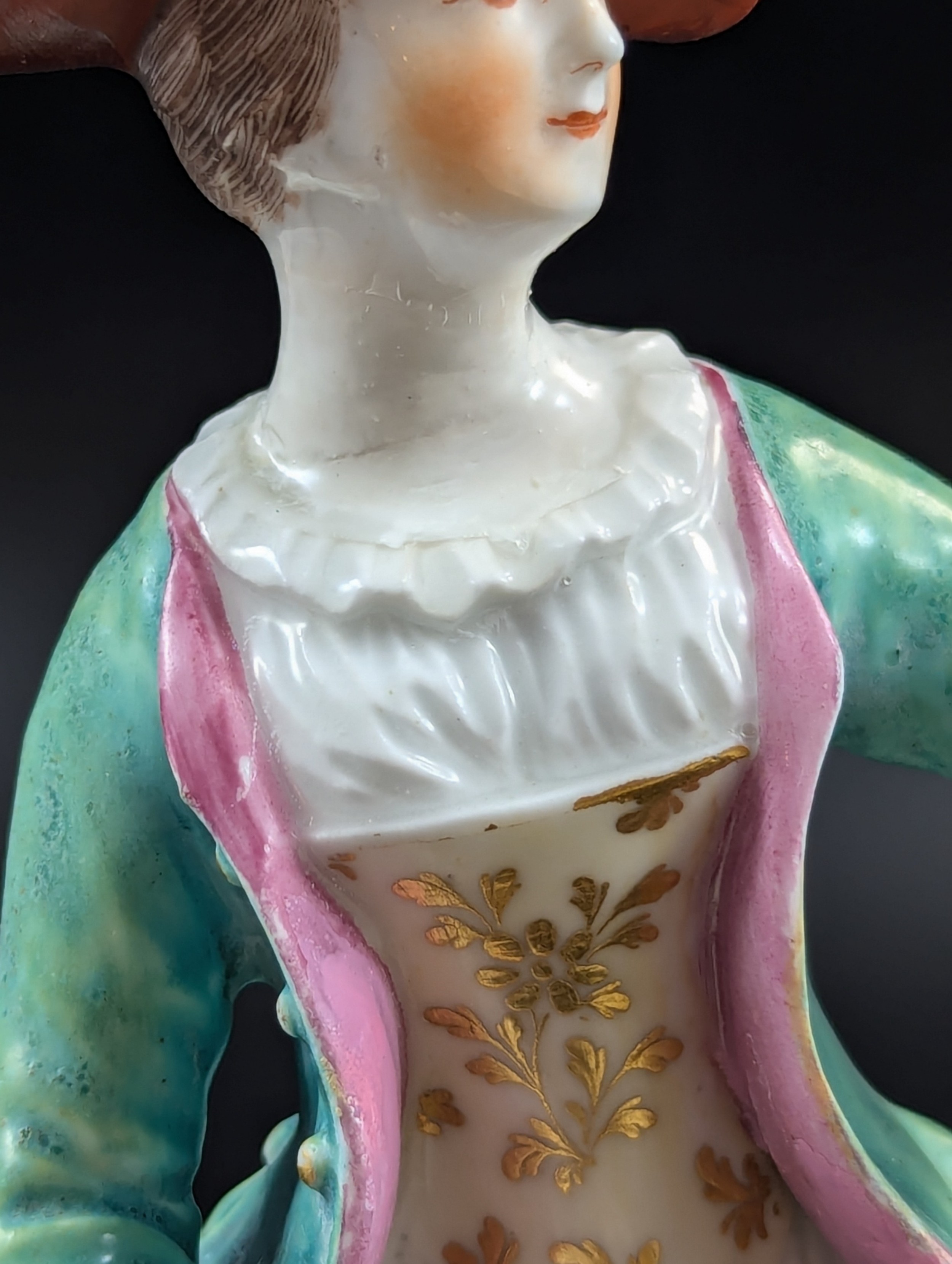
Antique British porcelain is never perfect. Kilns were fired with coal in the 1800s, which meant that china from that period can have some firing specks from flying particles. British makers were also known for their experimentation, sometimes resulting in technically imperfect outcomes. Due to kiln shrinkage, items can have small firing lines or develop crazing over time, which should not be seen as damage but as imperfections of the maker's recipes, probably unknown at the time of making. Items have often been used for many years and can show normal signs of wear, and gilt can show signs of slight disintegration even if never handled. Some minor scratches, nicks, stains, and gilt disintegration can be normal for vintage items and should be taken into account. Please study the accompanying photographs carefully as they form an integral part of this description.
Dimensions:
Height: 23.5 cm
Width: 11 cm
Depth: 11 cm
Weight: 611 grams
Condition:
Old restoration of the neck
Glued left hand
Professional restoration of the back of the hat
Small chip on the right ear of the sheep
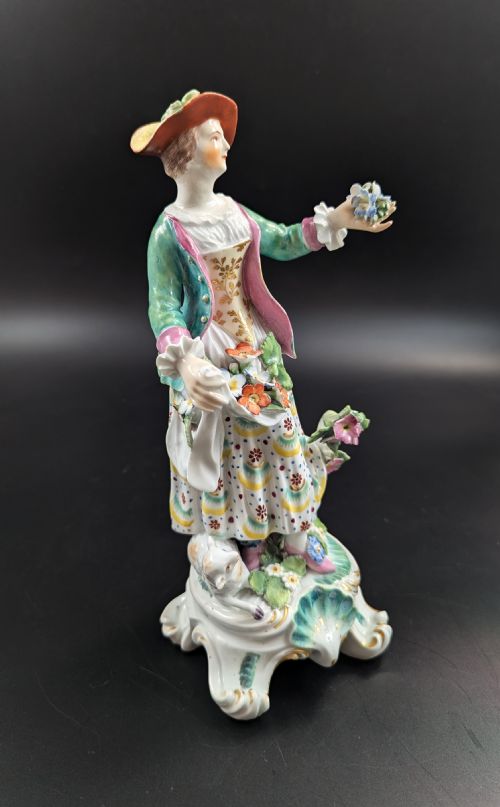
Minor chips on the leaves and flowers
Restoration of the tree on which the girl is leaning
Otherwise, the piece is in good antique condition consistent with its age.
The item will be shipped with full tracking and insurance. It is important to note that shipping costs include labor, packaging, and postage.
Gillers Antiques Ltd has dated this piece to the 18th Century.
You can view the stock and full dealer information on the Gillers Antiques Ltd Profile Page
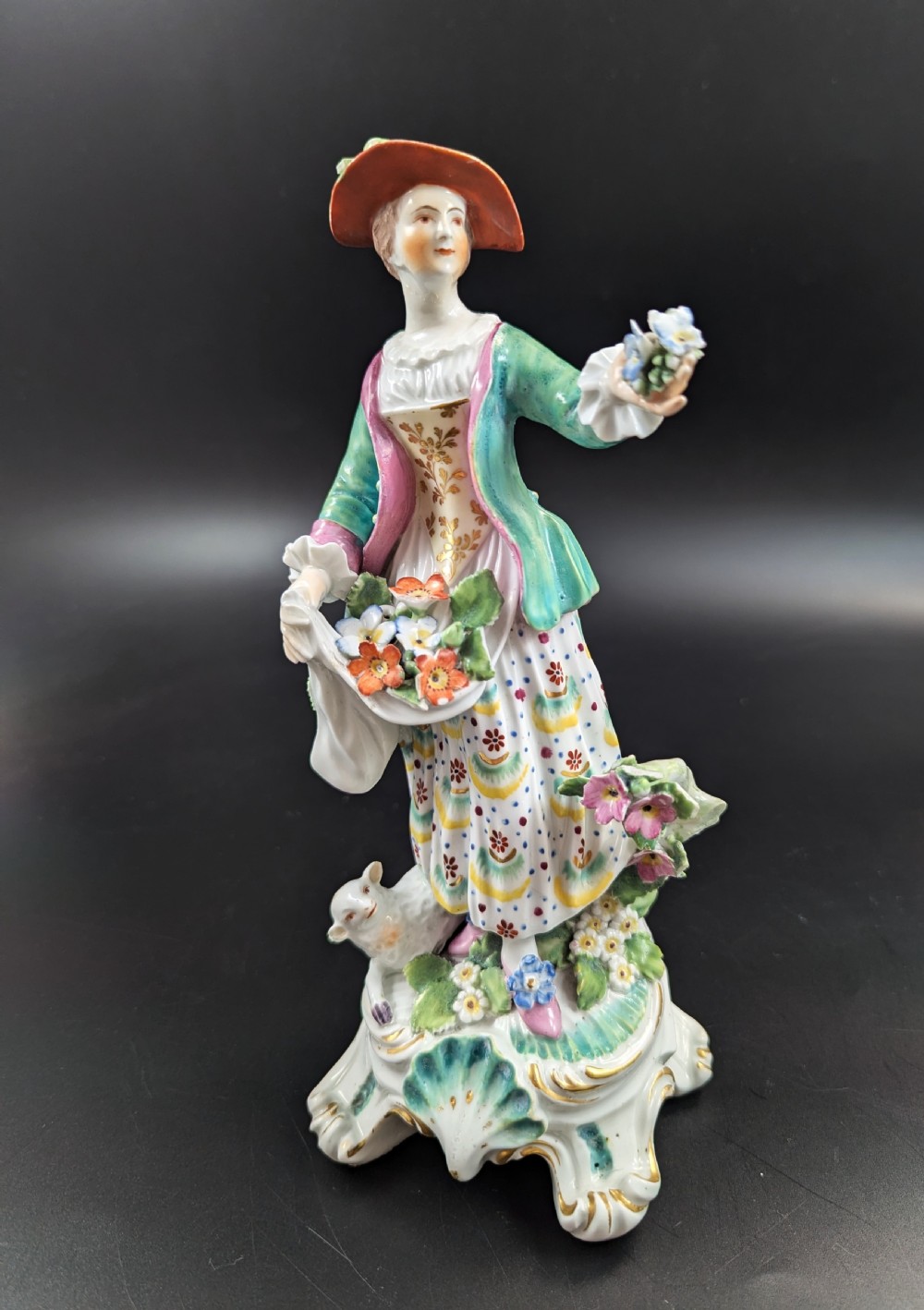
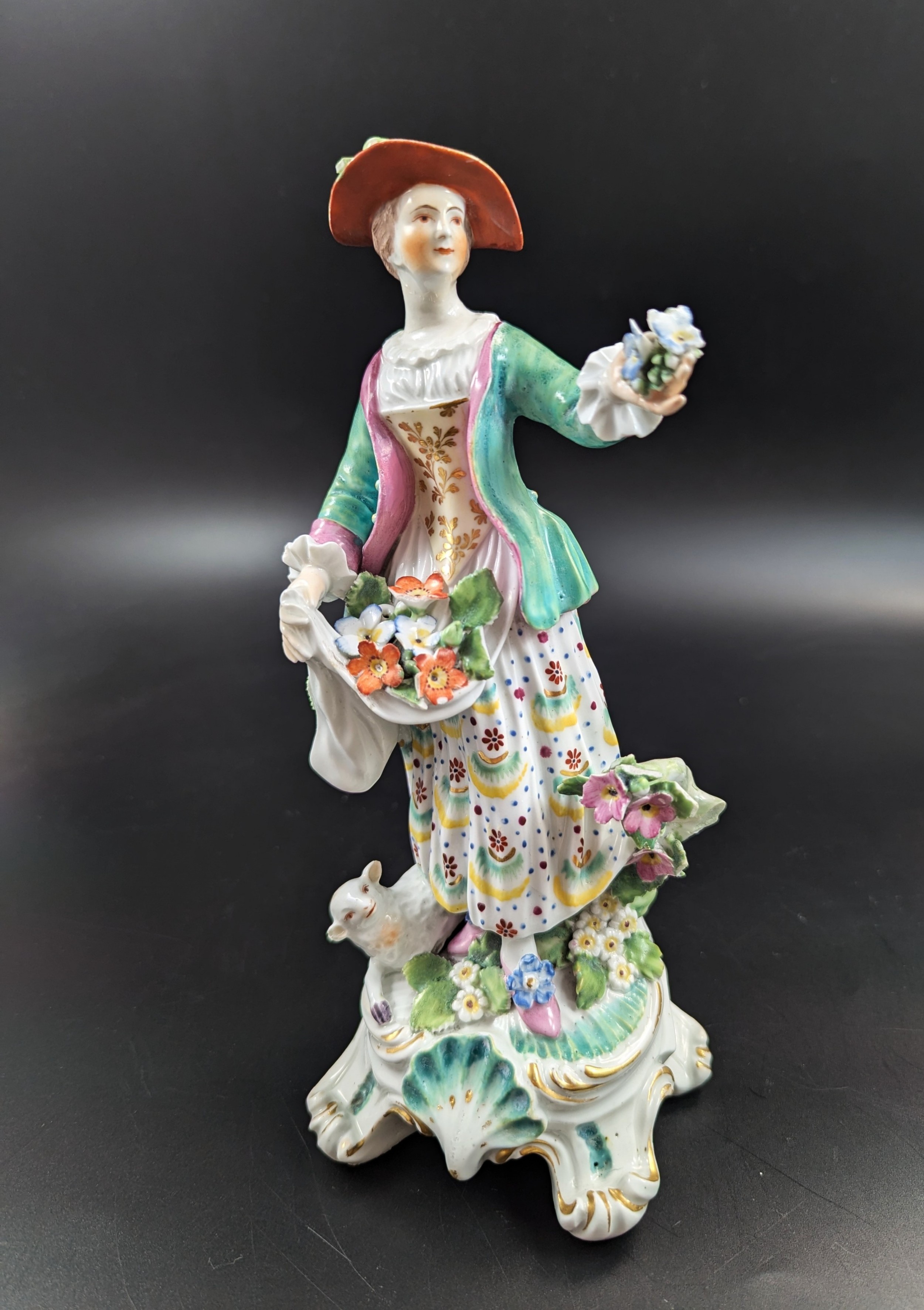
Early Derby, Patch Period, Shepherdess, William Duesbury, C. 1765