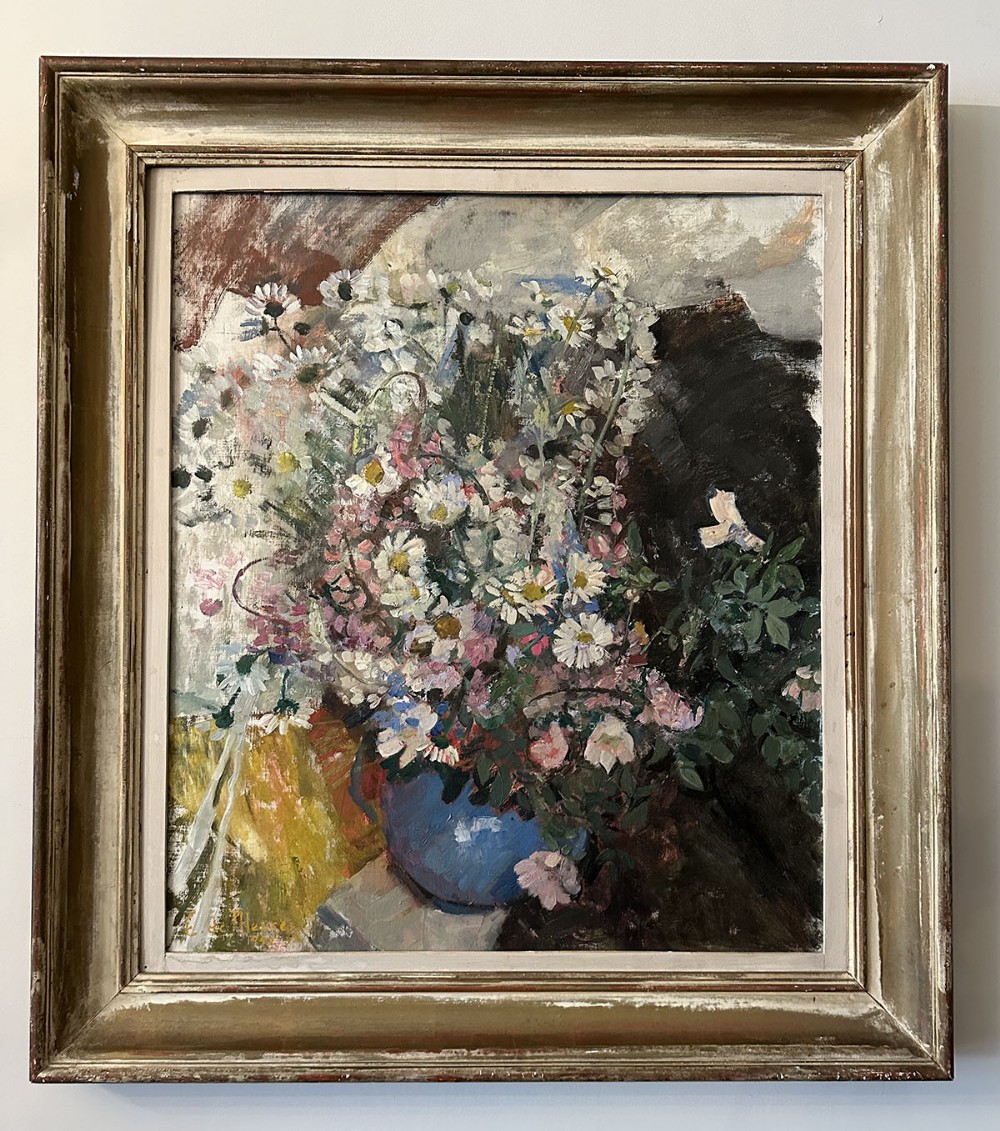
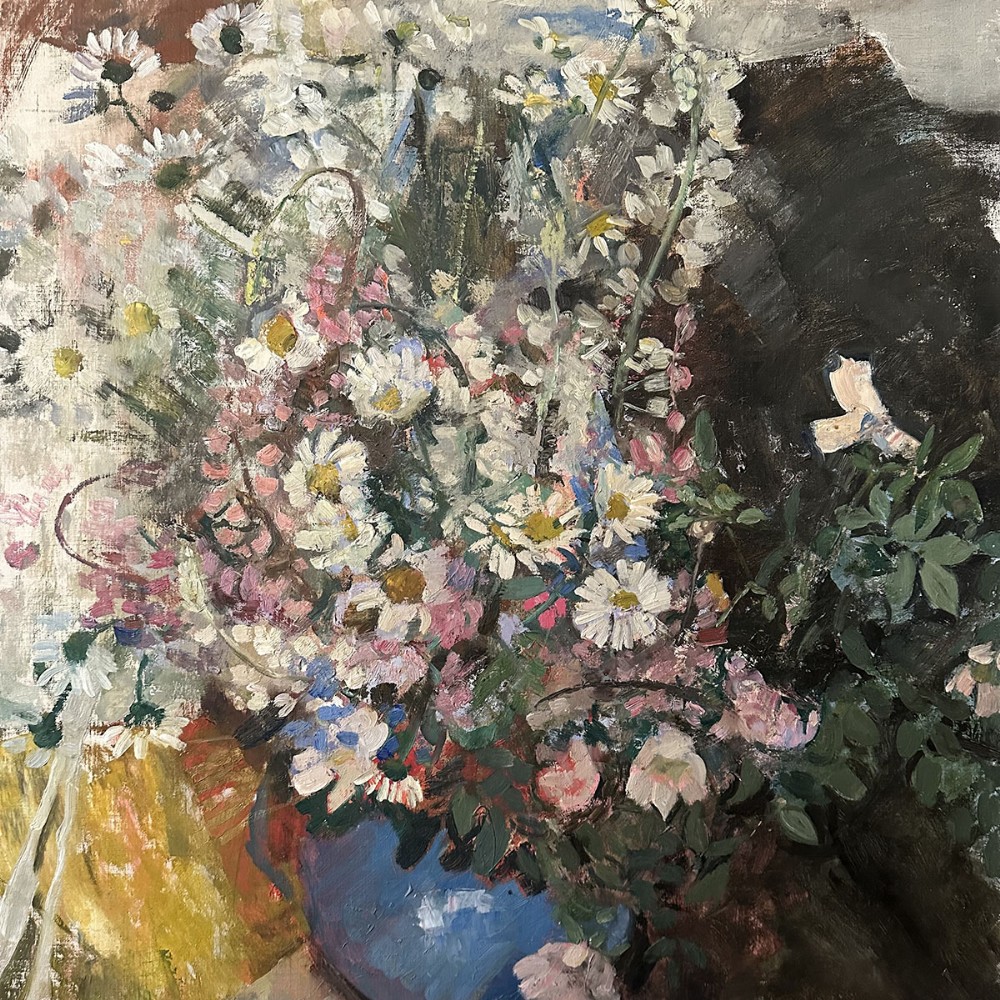
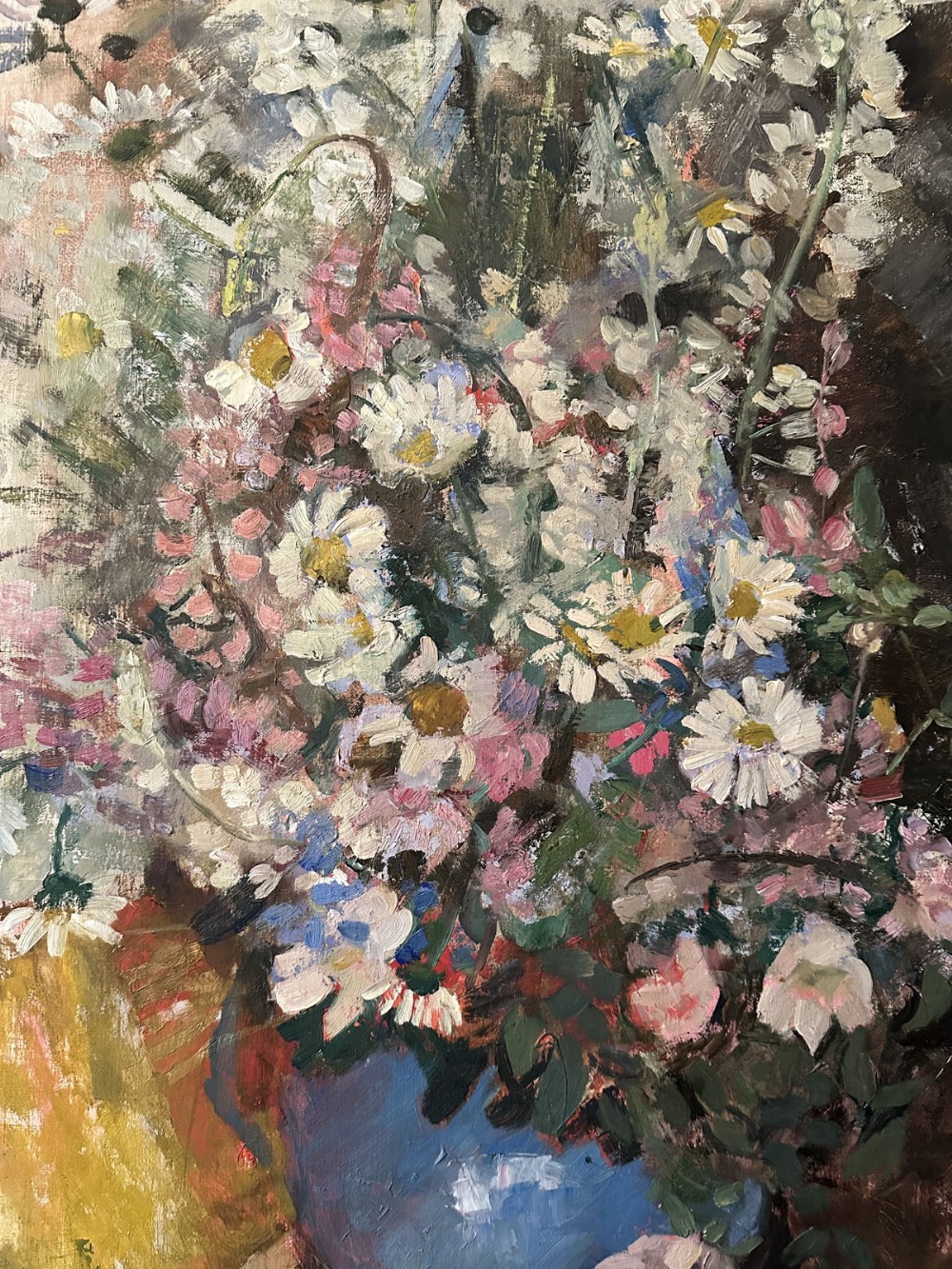
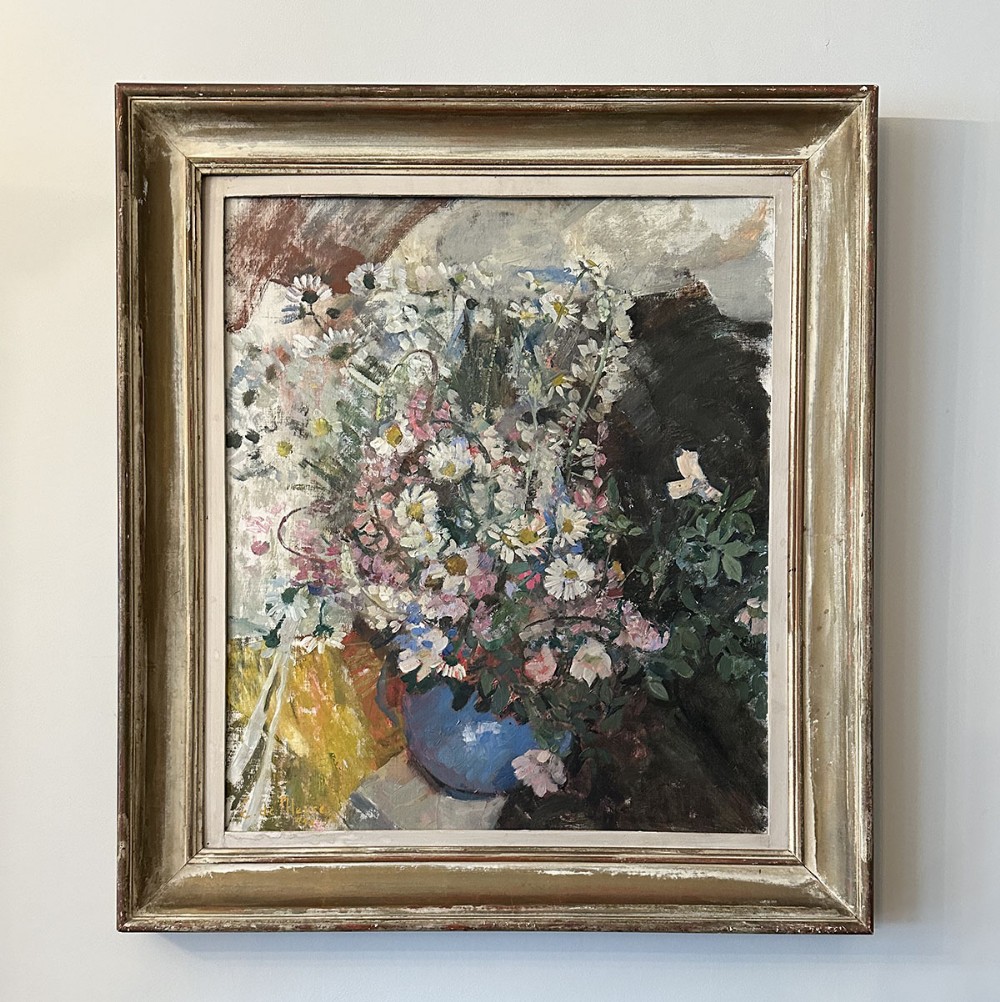
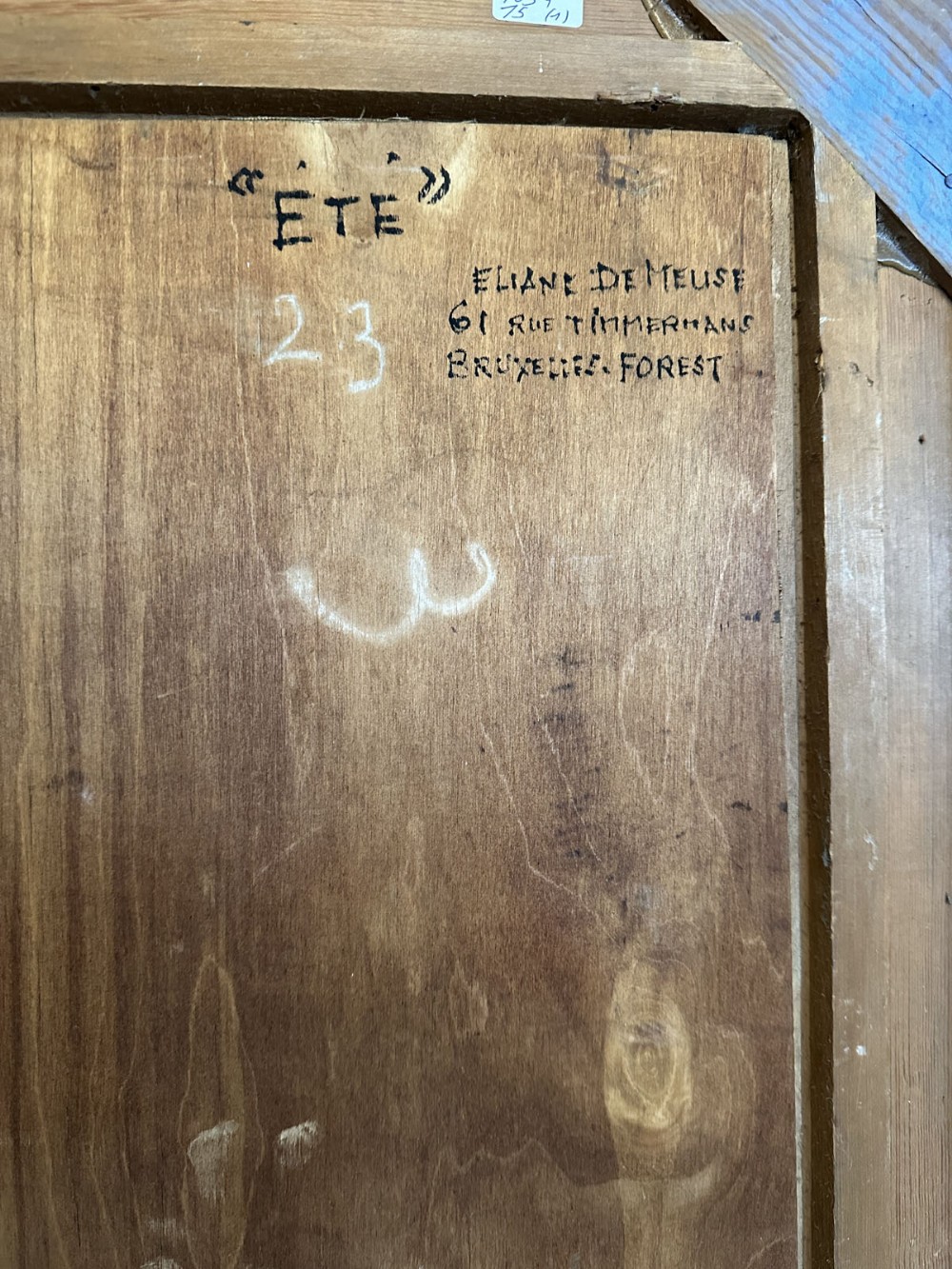
Rue des Fontenelles has dated this piece to the 1940s.
De Meuse was the wife of Max Van Dyck.
In 1916, Meuse decided to become a painter and joined L'Académie Royale des Beaux-Arts, Brussels. At the Academy (ARBA, Brussels) Meuse was the student of the Symbolist painter Jean Delville and the portraitist Herman Richir.
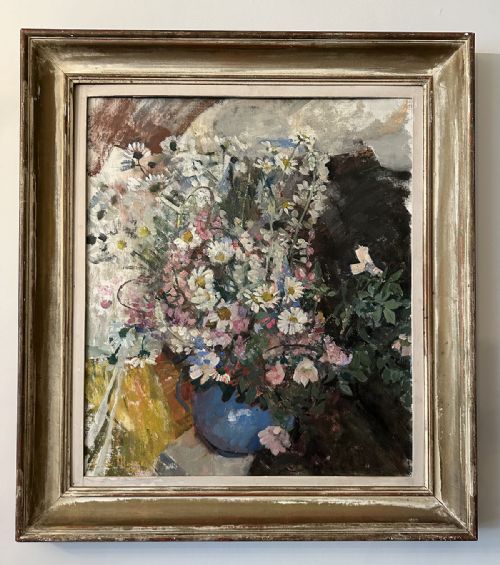
From all of these influences, her art developed into a style similar to Post-Impressionism, her subject matter including portraits, figures, seascapes, landscapes and still lifes. In some of her latest paintings underlying abstract structure can be observed.
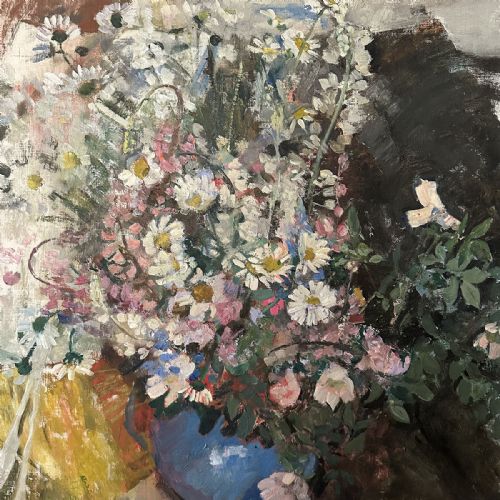
Critics noted that Eliane de Meuse had inherited much from the Belgian Luminism, movement of the very early 20th century, which combined aspects of Realism (Realist visual arts), Impressionism and Neo-Impressionism. It got its name from the style of Emile Claus and a few other painters, grouped in a circle called Vie et Lumière (Life and light) of which Claus was one of the main founders.
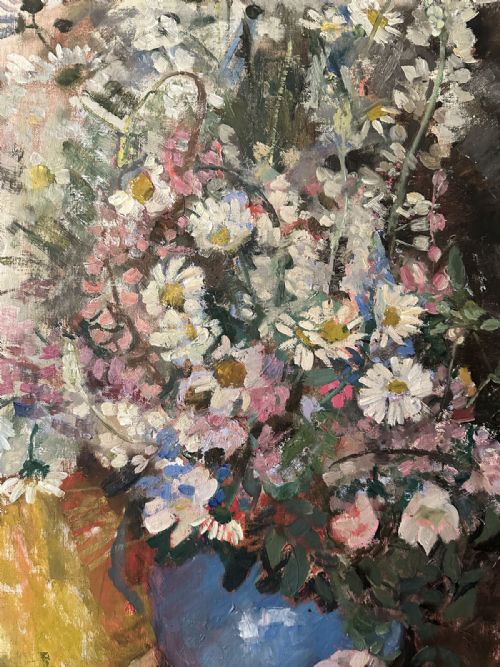
Charles Bernard, the foremost Belgian critic at that time wrote that he considered the art of Eliane de Meuse as aimed towards a pure, clear artistic ideal, without any selfish motives. He felt that the artist did not belong to the Impressionism of Emile Claus, so close to French Pointillism, but that she was the spiritual daughter of James Ensor. In an article published on 22 October 1936 in the Nation Belge, he commented on Meuse's first exhibition "a discovery... an artist that reinvents James Ensor and Rik Wouter's impressionism, that enriches impressionism with new elements, in terms of richness and interpretation indicating the presence of a personality". This exhibition took place in the Palais des Beaux-Arts, where a collection of paintings representing the outcome of fourteen years of dedication in the pursuit of personal expression was presented.
In 1921, she won the Prix Godecharle created in 1881 by Napoleon Godecharle, the son of Gilles-Lambert Godecharle. This prize gave her the opportunity to travel in Italy, the shock of a whole civilization, the ceaseless return to Renaissance sources.
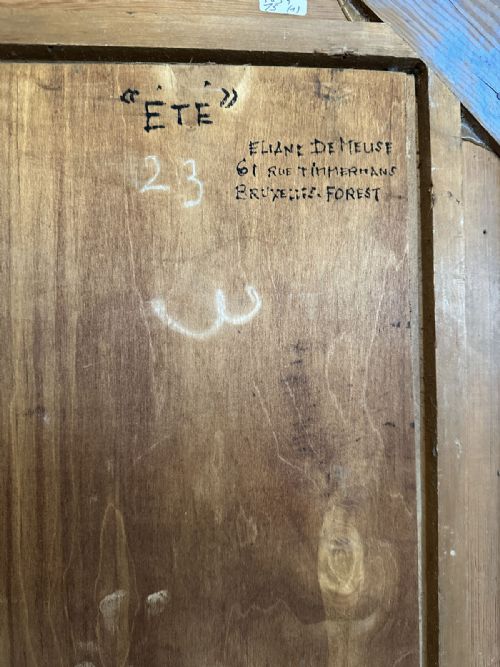
Her main individual exhibitions included:
Palais des Beaux-arts de Bruxelles – 1936 (Belgium)
Cercle artistique d'Anvers – 1936 (Belgium)
Galerie Rencontre – 94 Louise Avenue, Brussels – 1981 (Belgium)
Kelterhaus-Muffendorf – Bonn (Bad-Godesberg) – 1982 (Germany)
Rétrospective organized by the City of Brussels and by the Crédit Général, a Belgian bank located, Grand Place nr 5 at Brussels – 1991 (Belgium)
Dimensions - 95 x 85 x 5 cms
Rue des Fontenelles has dated this piece to the 1940s.
Specialists in french antiiques, decorative objects and french and european paintings.
You can view the stock and full dealer information on the Rue des Fontenelles Profile Page
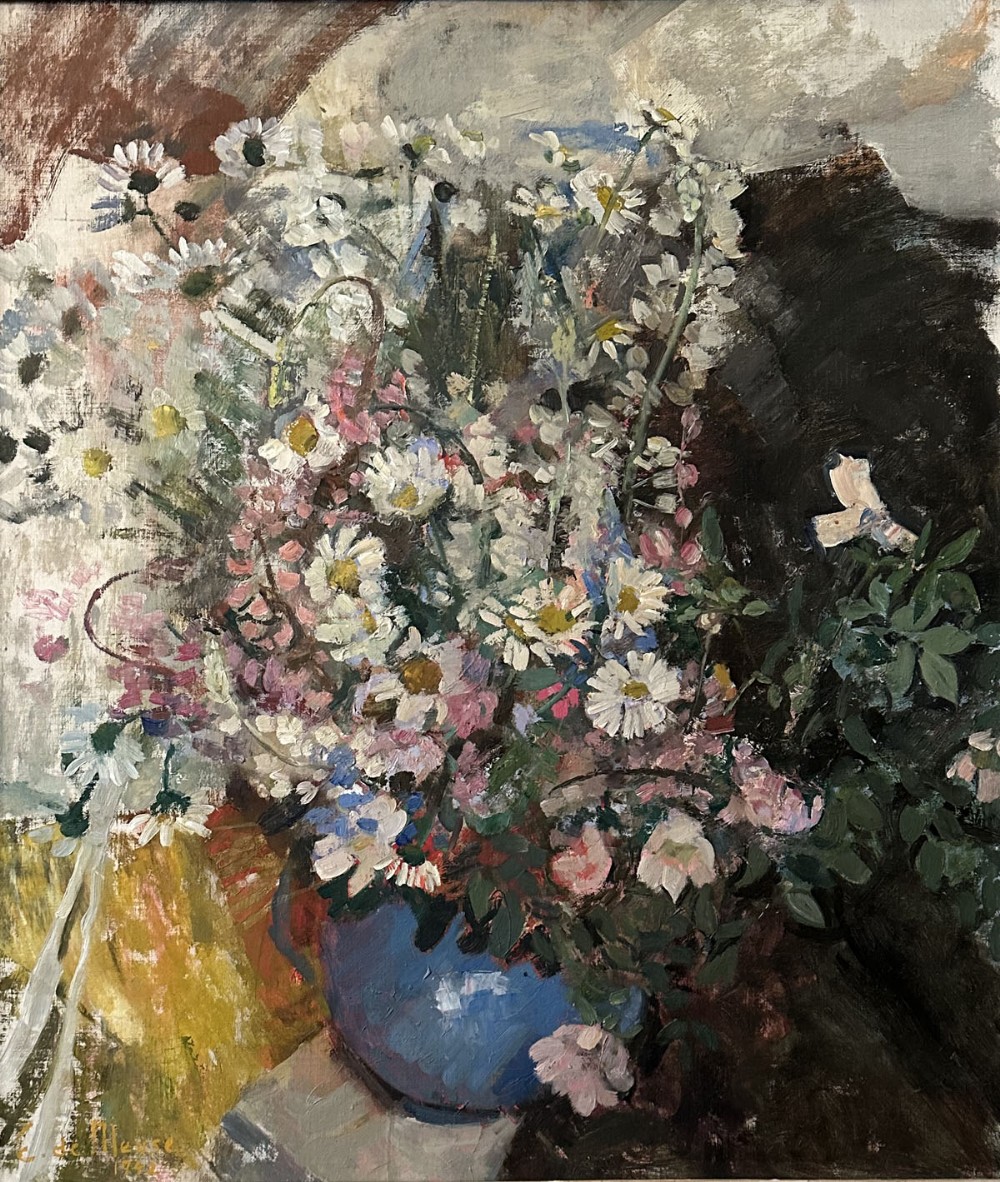
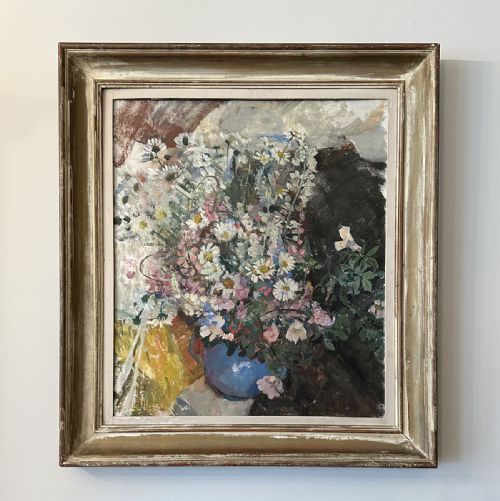
Summer Flowers - Antique Oil Painting