



Yellow Gold Gemstone Studs
Yellow gold gemstone studs bring colourful stones close to the ear, offering enduring daily wear through distinct vintage character.
Yellow Gold Gemstone Studs
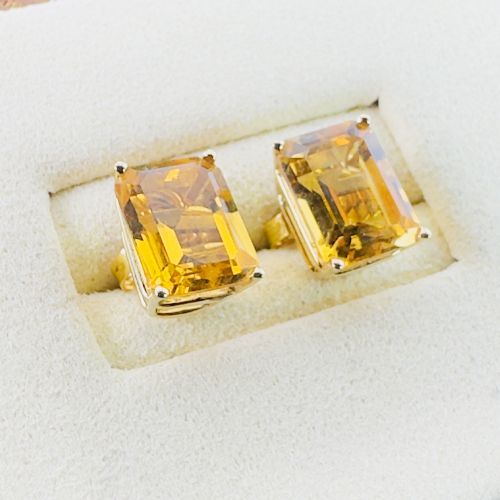
Yellow gold gemstone studs comprise compact earrings secured directly to the earlobe, combining precious metal with various coloured stones. When searching for yellow gold gemstone studs, buyers encounter pieces spanning the Victorian era through the mid-twentieth century, including the 1910s, 1920s, 1930s, 1950s and 1960s.
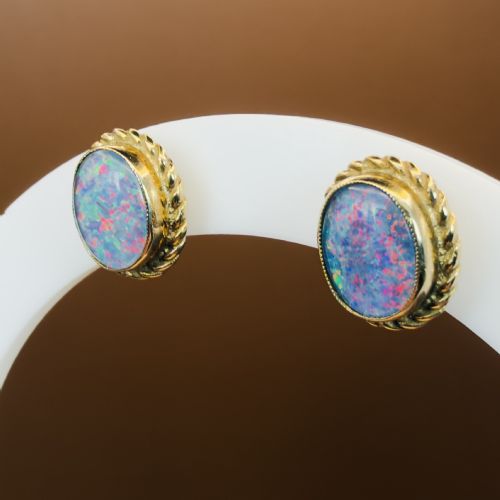
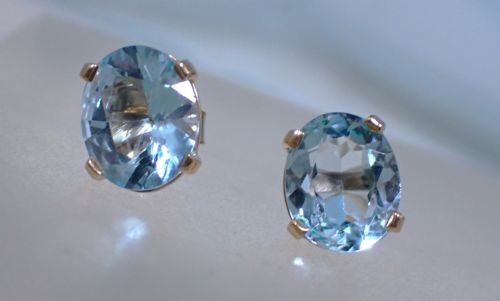
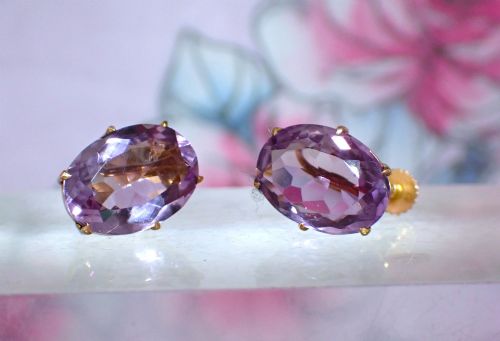
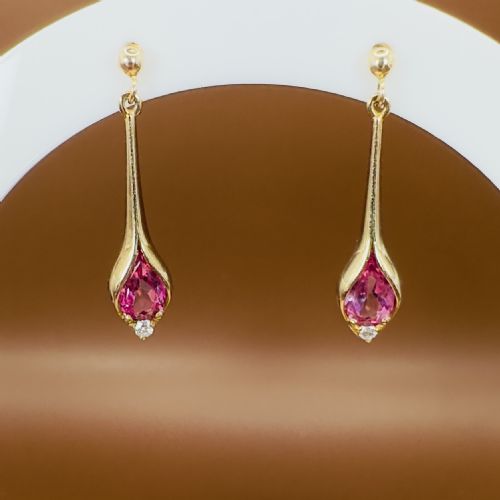
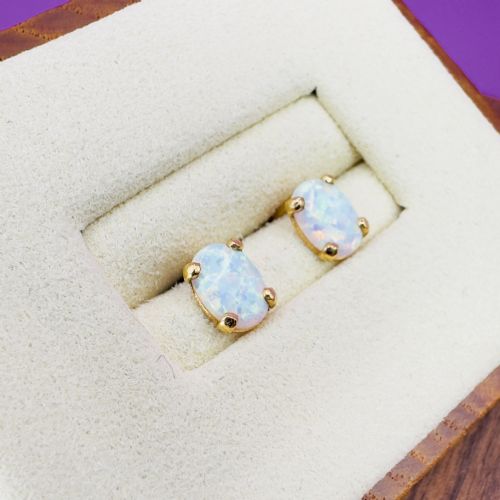
Stones set within these mountings include garnet, opal, amethyst, aquamarine, emerald, sapphire, topaz and turquoise, often accompanied by accent diamonds. The predominant metal standard observed is 9ct gold, supplemented by 14ct and 18ct yellow gold iterations.
How yellow gold gemstone studs were made
Goldsmiths utilised 9ct, 14ct and 18ct yellow gold to construct settings that secure stones via claws, bezels or delicate filigree work. Stones are cut in various shapes, including oval, pear, emerald, square, round and marquis cuts, to maximise the optical properties of each mineral.
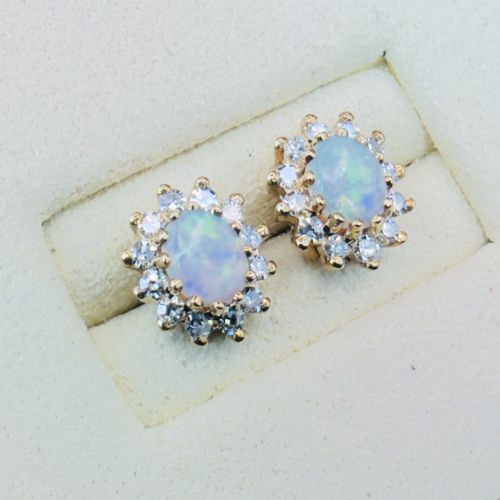
Cluster designs arrange smaller accent stones, such as diamonds, white topaz or pearls, around a central coloured gemstone. Drop variants incorporate articulated sections that allow slight movement beneath the main ear fitting.
The selection spans the Victorian era through the Art Deco period, mid-century modern designs, and the late twentieth century.
What varies in quality in yellow gold gemstone studs
Quality differences emerge in the saturation and clarity of the central gemstone, alongside the precision of the stone cutting. Well-matched stone pairs and secure setting techniques distinguish finer examples from standard production.
The weight and thickness of the yellow gold mountings contribute to the durability and tactile presence of the earrings. Intricate detailing, such as handmade filigree or well-executed gallery work, indicates higher craftsmanship.
Andrew Grima
The Yellow Gold Gemstone Studs Glossary
- Cluster
- A stone setting arrangement where multiple smaller gems encircle a larger central stone. This technique creates a larger visual presence on the earlobe.
- Doublet
- A composite stone made of two joined layers, frequently utilised with opal to enhance colour play and structural stability. The top layer consists of precious opal while the lower base provides support.
- Filigree
- Delicate ornamental work formed from fine gold wire soldered into open patterns. This technique adds intricate texture to the earring mountings.
- Cabochon
- A gemstone cut with a smooth, rounded, convex upper surface rather than faceted planes. This style is typical for opaque or translucent stones like opal and turquoise.
- Stud
- An earring design attached to a post that passes through the earlobe, secured with a backing on the reverse. The main decorative element sits flush against the front of the ear.
Yellow Gold Gemstone Studs: Frequently Asked Questions
How do I care for antique gemstone studs?
Clean these earrings gently with a soft cloth, avoiding harsh ultrasonic cleaners that might damage softer stones like opal, amber or turquoise. Store them individually to prevent scratching between the gold settings and harder gems.
Check the security of the post and any claw settings periodically, particularly on older pieces from the Victorian or Edwardian periods.
Are screw-on earrings difficult to convert?
Screw-on mechanisms from the early twentieth century can be adapted by a jeweller to standard posts if desired. Many collectors prefer to keep the original screw-on mechanism intact to preserve the historical integrity of the piece.
Consult a qualified specialist to discuss conversion options without damaging the original yellow gold fittings.
What does a doublet opal mean?
An opal doublet consists of a thin slice of natural opal adhered to a darker backing material, which intensifies the play-of-colour. This method was frequently employed in mid-century jewellery to provide durability and visual depth.
Examine the side profile of the stone to identify the distinct dividing line between the layers.
How can I tell a 1950s stud from a Victorian one?
Victorian pieces often feature closed-back settings, heavy claw work, and combinations like garnet and pearl. Mid-century examples from the 1950s and 1960s tend to show cleaner lines, modernist influences, and brighter gemstone pairings such as aquamarine or pink topaz.
Review the overall construction style and any accompanying hallmarks to confirm the manufacturing period.