
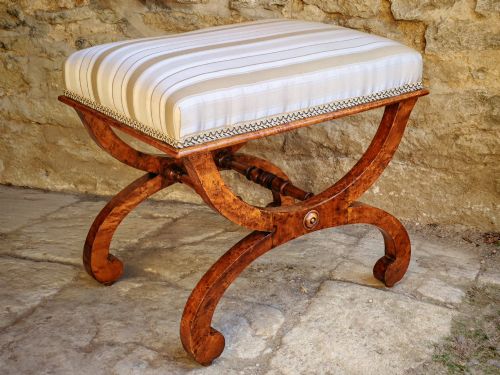
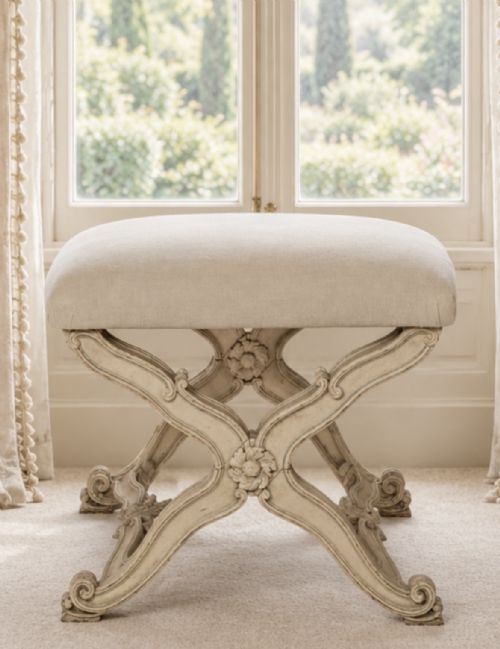

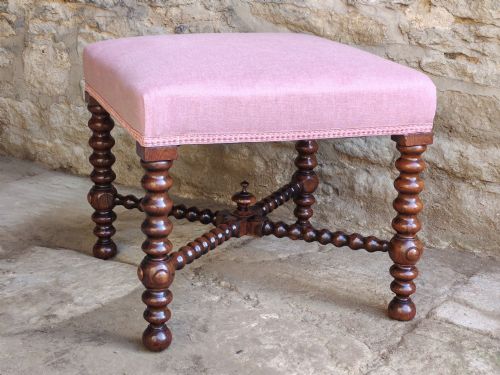


X Leg Vanity Stool
An x leg vanity stool brings compact elegance to a dressing room, offering period charm through carved timber and upholstered seating.
X Leg Vanity Stool
When you search for an x leg vanity stool, you encounter low seating designed originally for dressing tables, piano use, or bedrooms. These pieces emerge across periods from the eighteenth century through to the art deco era.
Most examples function as dressing stools or piano seats, often paired historically with matching dressing tables or positioned independently as small benches.
Materials and construction
Cabinetmakers utilised dense hardwoods like mahogany, walnut, rosewood, and oak to build sturdy frames capable of supporting everyday seating. Timber selection often dictated the style, with dark timbers favouring Georgian and Victorian interpretations.
Upholstery completed the seats, employing textiles ranging from modern fabric replacements to velvet, leather, and antique tapestries. Brass details and gilt finishes sometimes enhanced the structural woodwork.
Listings span multiple centuries, incorporating mahogany, walnut, rosewood, and fabric materials across Victorian and Georgian revival styles.
Factors determining quality
The standard of carving distinguishes standard production from exceptional work, particularly where intricate details define revival styles. Crisp lines in the woodwork indicate superior craftsmanship by the maker.
Originality of timber and the preservation of the frame integrity dictate desirability among collectors. Pieces retaining their structural stability alongside period textiles or sympathetic reupholstery hold stronger appeal.
The X Leg Vanity Stool Glossary
- Cabriole leg
- A furniture leg that curves outward at the knee and inward at the ankle, finishing in a pad, claw, or scroll foot. This form appears frequently on walnut and mahogany pieces.
- Gustavian
- The Swedish interpretation of French neoclassical design, characterised by lighter painted finishes and restrained classical ornamentation. These stools often display pale or gilded surfaces.
- Giltwood
- Wood that has been coated with gold leaf or gold paint to simulate solid gold enrichment. This technique highlights carved details on decorative seating.
- Revolving piano stool
- An adjustable seat mechanism allowing the top to turn for height adjustment during musical performance. Such pieces often incorporate a central wooden screw column.
- Ebonised
- Wood treated with a dark finish to imitate ebony. This process was common in late nineteenth-century and Edwardian cabinetmaking.
X Leg Vanity Stool: Frequently Asked Questions
Where do I put a vanity stool?
These compact seats fit easily beneath dressing tables, in bedrooms, or beside small writing desks.
They also serve as versatile accent pieces in hallways or living spaces where low seating is practical.
How do I date an antique stool?
Dating relies on examining the timber species, joinery techniques, and stylistic revival markers present in the frame.
Periods like the Victorian era or the Edwardian years often leave distinct clues in their turned legs and upholstery methods.
Are these stools comfortable for daily use?
Many historical pieces feature newly restored upholstery and firm padding designed for modern sitting comfort.
Original webbing and springs may require professional updating to support regular daily use.
What is the difference between a piano stool and a vanity stool?
Piano stools frequently incorporate revolving mechanisms or adjustable height screws to suit musicians.
Vanity stools usually maintain a fixed height tailored specifically for sitting at a dressing table mirror.