


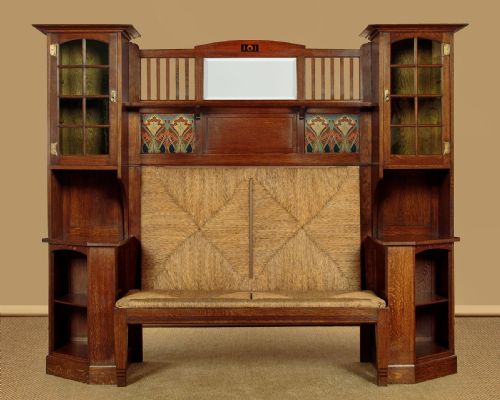


Woven Seat Bench
These woven seat bench designs offer tactile textures and sturdy frames, combining historical craftsmanship with practical seating for any hall or room.
Woven Seat Bench
When you search for a woven seat bench, you encounter a variety of forms including day beds, hall seats, window seats, and long stools. These pieces span the nineteenth and early twentieth centuries, drawing on styles such as Victorian, Arts and Crafts, and French Régence.
The materials utilised for the seating surfaces include cane, rush, and woven rattan, supported by frames of oak, teak, ebonised wood, and bamboo. Most examples hail from the nineteenth century, showcasing traditional craftsmanship suited for hallways, living spaces, and foot of the bed placements.
How they were made
Makers constructed these frames using solid timbers like oak, teak, and ebonised wood, sometimes incorporating carved details or stylistic revivals such as Carolean and Neoclassical motifs. The structural woodwork provides a sturdy skeleton designed to endure daily use.
Seating areas were painstakingly woven by hand using natural materials such as cane, rush, and rattan. This flexible web distributes weight evenly across the bench surface while offering a resilient and breathable texture.
Woven Seat Bench Retail Price Guide 2026
Typical asking prices for woven seat bench among the pieces listed under this phrase on Sellingantiques today, from the lower quarter to the upper quarter. They describe what is for sale here now, not the wider market.
What varies in quality
The integrity of the woven seating surface largely determines the standard of the piece, as tighter and more uniform cane or rush work requires greater skill. Original tension and material preservation dictate how well the seat has survived decades of use.
Frame construction and timber selection also separate finer examples from simpler utilitarian items, with dense hardwoods like teak and detailed hand-carved elements representing superior workshop execution.
The Woven Seat Bench Glossary
- Cane
- A material derived from the peeled bark of rattan palms, utilised for woven chair and bench seats. It creates a flexible, patterned grid.
- Rattan
- A climbing palm native to tropical regions, processed into strips for weaving. It provides strong yet pliable strands for furniture seats.
- Rush
- Marsh plants twisted into cords and used for traditional basketry and seating weaves. This material yields a textured, matte finish.
- Ebonised wood
- Timber treated with a dark stain or finish to imitate ebony. This technique was popular in nineteenth-century furniture design.
Woven Seat Bench: Frequently Asked Questions
What rooms suit a woven seat bench?
These benches fit well in hallways, entranceways, and bedrooms, offering a practical spot for putting on shoes or resting.
Their slim profiles and natural textures also complement living rooms as window seats or supplementary seating.
How do I care for cane and rush seats?
Natural woven surfaces benefit from occasional light dusting and gentle wiping with a damp cloth to prevent the fibres from becoming brittle.
Keeping the furniture away from direct heat sources and excessive moisture preserves the flexibility of the cane or rush.
How can I tell a nineteenth-century piece apart?
Nineteenth-century examples often display hand-woven cane or rattan combined with dense hardwoods like teak, oak, or ebonised finishes.
Stylistic cues such as French Régence curves or Arts and Crafts simplicity help date the craftsmanship accurately.
Were these benches used in hallways historically?
Hall benches and seats served as functional furniture in grand and modest homes alike for welcoming guests and removing outerwear.
Their robust wooden frames and durable woven seats were built to handle heavy transitional traffic.