



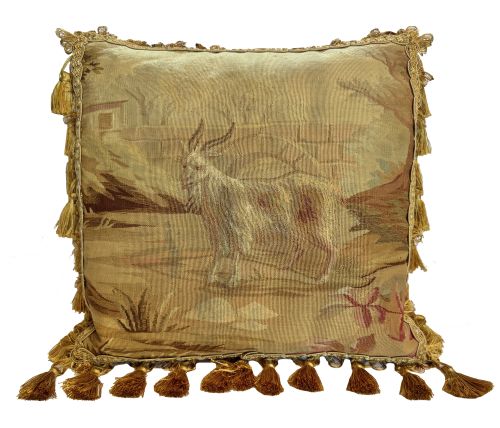


Wool Throw Pillow
These wool throw pillow examples bring rich texture and heritage pattern into a room through repurposed tribal rugs and antique tapestry fragments.
Wool Throw Pillow
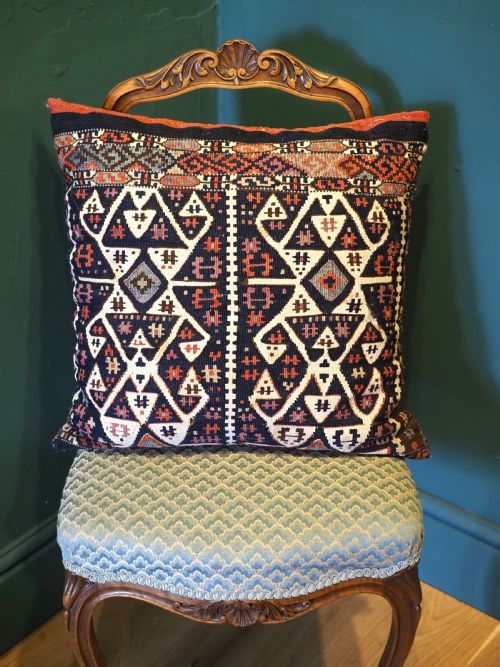
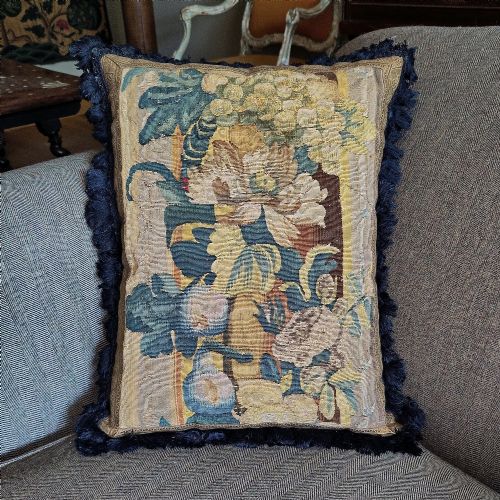
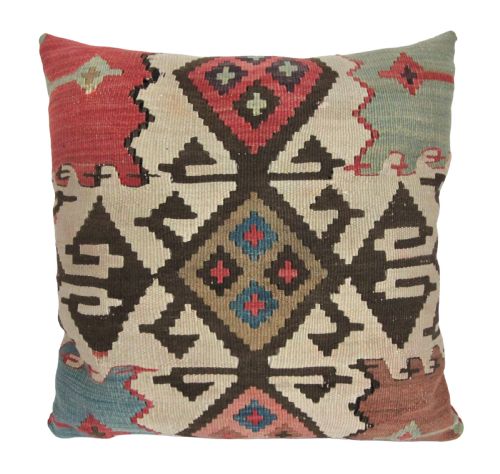
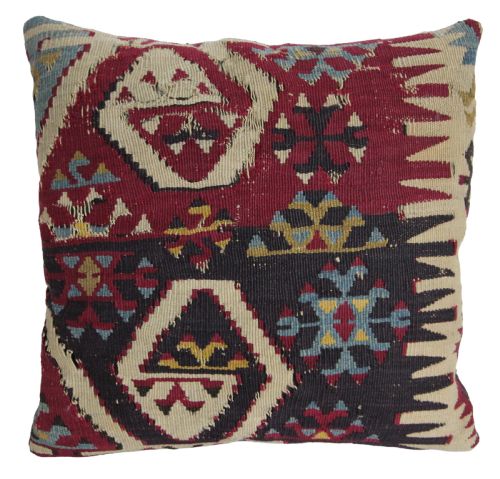
A wool throw pillow takes historical woven textiles like kilims, saddle bags, and rug fragments, and turns them into soft furnishings for daily use. Buyers encounter various forms on this page, with kilim cushions appearing most frequently alongside French Aubusson and Flemish tapestry covers.
The objects span origins from Anatolia, France, and Persia, utilising materials such as wool, cotton, silk, and passementerie. Pieces range in date from the seventeenth century through the nineteenth and early twentieth centuries, reflecting diverse tribal and chateau traditions.
Makers fashioned these pieces from fragments of larger carpets, bag faces, and border panels to preserve weathered textiles. The resulting cushions combine durable flatweave wool fronts with supportive backing materials to suit modern interiors.
How they were made
Craftspeople constructed these pieces by repurposing hand-woven textiles, utilising wool, cotton, and silk yarns in flatweave and tapestry techniques. Artisans often integrated passementerie trims to finish the edges of fragile historical fragments.
Workers selected durable sections from antique rugs, saddle bags, and wall hangings to form the visible cushion faces. They then stitched these textile panels onto sturdy backing fabrics to create functional soft furnishings.
Wool Throw Pillow Retail Price Guide 2026
Typical asking prices for wool throw pillow among the pieces listed under this phrase on Sellingantiques today, from the lower quarter to the upper quarter. They describe what is for sale here now, not the wider market.
Object forms include cushion covers, throw cushions, and bag face pillows originating from Anatolian, French, and Persian traditions.
What varies in quality
The distinction between tiers rests on the integrity of the original textile fragment and the skill of the hand-weaving. Early examples featuring tight knotting or fine flatweave structure command attention for their visual depth.
Condition and historical provenance also dictate value, with intact pile, stable wool fibres, and authentic period backing materials elevating the piece. The harmonious placement of the pattern across the cushion face demonstrates superior textile curation.
The Wool Throw Pillow Glossary
- Kilim
- A flat-woven carpet or rug produced in countries of the former Ottoman Empire, Persia, and Central Asia. These textiles form the primary source material for many antique cushions.
- Tapestry
- A form of textile art, traditionally woven by hand on a vertical loom. Pieces from seventeenth-century Flanders and nineteenth-century France appear frequently in these cushion covers.
- Bag Face
- The decorative front panel of a nomad's storage sack or saddle bag. Artisans repurpose these woven panels into small cushions.
- Passementerie
- Edging, gimp, or ornamental trims applied to furnishings. This material finishes the borders of antique textile cushions.
Wool Throw Pillow: Frequently Asked Questions
Are these cushions made from old rugs?
Many examples on this page derive from historical textiles, utilising sections of antique kilims, saddle bags, and tapestry borders.
Craftspeople repurpose these durable fragments to give weathered rugs a new functional life as decorative home furnishings.
How do I clean an antique wool cushion?
Historical textiles require gentle care to protect fragile wool fibres, silk details, and traditional dyes.
Spot cleaning by a professional textile conservator remains the safest method for maintaining vintage covers without causing damage.
Can I use them on a sofa daily?
These pieces function well as decorative accents on armchairs, beds, and sofas in low-traffic areas.
Heavily textured flatweaves and sturdy wool structures handle normal living room use while maintaining their historical character.
How do I date a tapestry cushion?
Dating relies on identifying the weaving style, material composition, and regional patterns present in the textile fragment.
Evidence from seventeenth-century Flemish borders or nineteenth-century French Aubusson weaves helps place items within specific periods.