

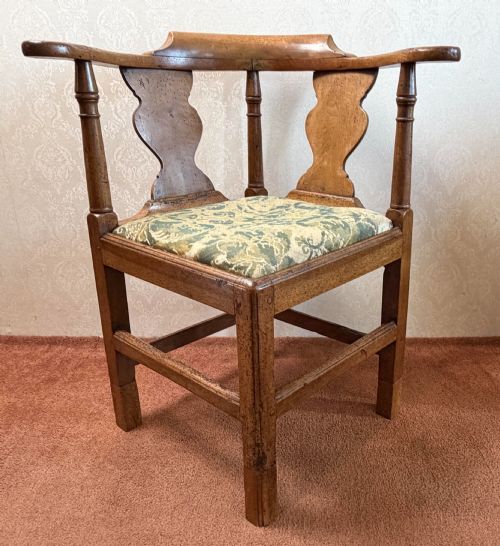


Wooden Writing Chair
A wooden writing chair brings solid period character to any study, offering sturdy seating designed specifically for desk work and correspondence.
Wooden Writing Chair
A wooden writing chair encompasses robust desk chairs, corner chairs, and armchairs designed for writing and study. When exploring this selection, buyers frequently encounter corner chairs and desk chairs originating from the eighteenth and nineteenth centuries.
The assortment on this page spans from early eighteenth-century country examples in fruitwood, oak, and elm through to refined Georgian mahogany pieces and later Victorian and Edwardian iterations.
These forms combine functional seating with period craftsmanship, often featuring upholstered pads in leather, fabric, or tapestry alongside structural woodwork.
Materials and construction
Cabinetmakers utilised hardwoods such as mahogany, oak, walnut, elm, and fruitwood to build these chairs for enduring strength. Timber selection determined the weight and visual tone of each piece, ranging from dark figured mahogany to pale country elm and oak.
Joinery methods involved traditional pegged joints and carved elements, whilst secondary materials like brass hardware provided functional detailing. Seats frequently incorporated drop-in pads covered in leather, tapestry, or woven fabric to soften the wooden frames.
The listings span from the 18th Century through the Edwardian period, utilising woods like mahogany, oak, elm, and fruitwood alongside leather and tapestry.
Assessing quality and character
Quality in these pieces rests upon the crispness of carved detail, the selection of figured timber, and the integrity of the original frame construction. Master cabinetmakers achieved harmonious proportions and smooth turning, distinguishing refined urban pieces from simpler country workshop output.
The presence of original surfaces, patination, and unaltered timber structure separates superior examples from those with extensive replacement parts. Finer chairs exhibit careful attention to structural joints and harmonious integration of wood and upholstery materials.
The Wooden Writing Chair Glossary
- Corner chair
- A seating form designed to fit into the corner of a room, featuring a continuous curved backrest supported by turned columns and a central leg at the front.
- Desk chair
- A sturdy chair built for use at a writing table, often incorporating a revolving mechanism or a wide, supportive backrest.
- Fruitwood
- Timber sourced from fruit-bearing trees such as pear or apple, utilised by country makers for local furniture production.
- Tapestry
- Heavy hand-woven textile material historically used for upholstering seat pads on period chairs.
- Patination
- The natural surface sheen and colour acquired by aged timber through decades of handling, light, and polishing.
Wooden Writing Chair: Frequently Asked Questions
How were these chairs used historically?
Historically, these chairs served domestic and professional functions in studies, libraries, and parlours where correspondence and administration took place. Their robust construction provided stable seating for long hours spent writing or reading.
Corner variants were frequently positioned in room angles or used informally around writing surfaces in domestic interiors.
How do I care for antique wooden seating?
Maintaining antique wooden furniture involves keeping pieces away from direct heat sources and sudden humidity changes to prevent timber splitting. Regular dusting with a dry cloth helps preserve the polished surface.
Applying occasional appropriate wax preserves the historic finish and protects the patinated timber without harming the original surface.
How can I tell the period of a chair?
Dating a chair involves examining the timber species, joinery techniques, and stylistic ornament characteristic of specific eras like the Georgian or Victorian periods. Country examples often display simpler vernacular details compared to formal urban pieces.
Tool marks, construction methods, and wear patterns on the wood provide further physical evidence regarding the age of the piece.