
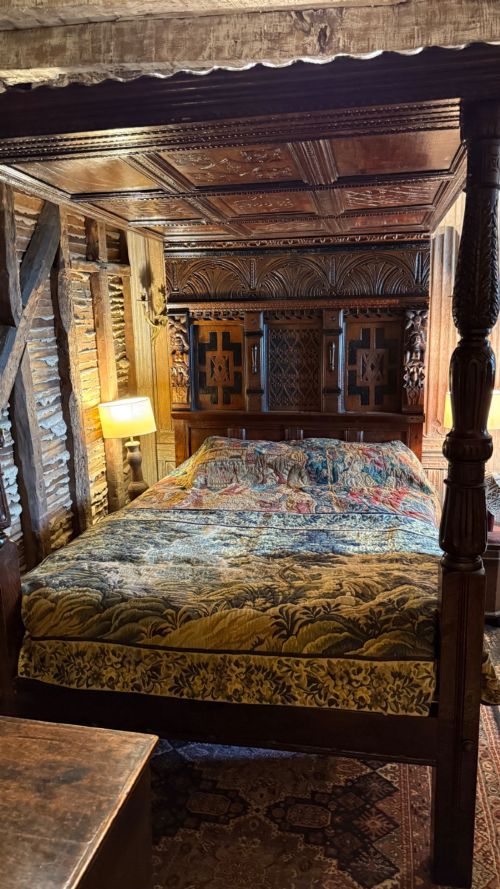


Wooden Tester Bed
A wooden tester bed brings architectural gravity to a room, offering a commanding canopy structure built to anchor the sleeping space.
Wooden Tester Bed
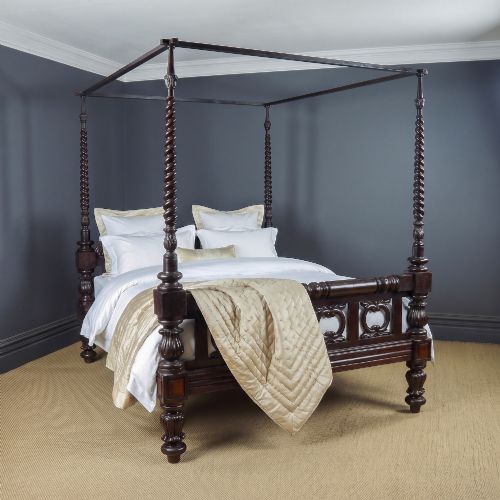
When you search for a wooden tester bed, you encounter substantial frames featuring overhead canopies supported by vertical posts, designed to enclose the sleeping area entirely or partially. These pieces emerge across periods spanning the seventeenth century through to the Edwardian era, reflecting shifting domestic priorities in bedroom architecture.
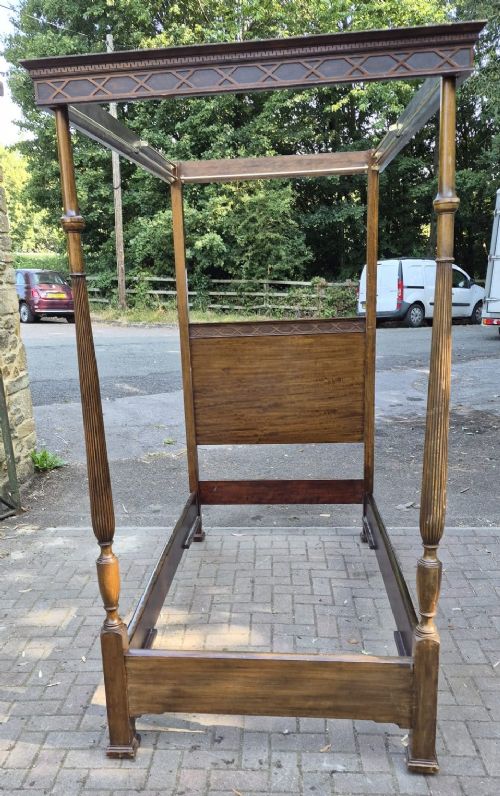
The most common form on this page is the oak bed dating from the seventeenth century, alongside nineteenth-century mahogany interpretations and later Edwardian pieces built in Georgian or Regency styles. Buyers frequently select between full testers and half testers depending on the scale of the room and the desired visual weight of the overhead canopy.
Origins vary from English workshops utilising native oak to colonial centres producing dense mahogany and hardwood frames, alongside French provincial interpretations. Each region imparts distinct proportions and regional carving traditions to the structural posts and headboards.
How they were made
Carpenters constructed these frames using heavy timbers of oak, mahogany, and assorted hardwoods, joined with mortise and tenon techniques designed to support the substantial weight of the wooden tester and hanging textiles. Detail work frequently incorporated hand carving, fruitwood inlay, and painted finishes applied directly to the structural grain.
Canopies range from architectural panelled oak roofs to lighter frames intended to carry fabric draperies, supported by turned or faceted posts. Secondary timbers such as pine occasionally appear in internal framing elements, while textiles and fabric historically lined the tester ceiling to retain warmth.
Early testers provided private micro-rooms within draughty chambers, complete with heavy wool curtains to keep out nocturnal farmyard noises.
What varies in quality
Quality rests upon the architectural integrity of the primary timbers and the crispness of the hand carving on the posts and headboard. Earlier seventeenth-century examples rely on the depth of relief work and the retention of original structural joinery to establish their standing.
Proportion and proportion balance define the upper tiers of craftsmanship, particularly in nineteenth-century revivals where makers emulated earlier Georgian or Jacobean styles. The integration of the tester frame with the vertical posts determines the overall visual harmony of the piece.
Howard and Sons
The Wooden Tester Bed Glossary
- Tester
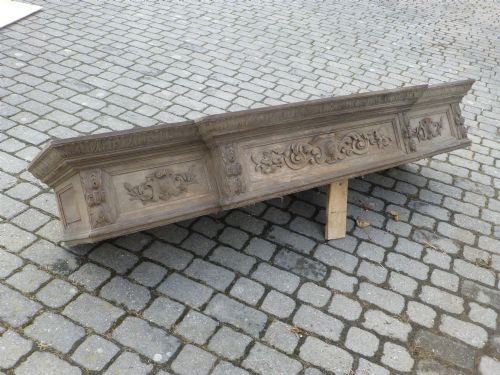
- The flat wooden canopy or ceiling suspended above a bed frame. It is supported by the vertical corner posts.
- Half Tester
- A canopy bed where the roof extends only over the head of the bed rather than spanning the full length. This form often appears in Victorian burr walnut and mid-nineteenth-century mahogany variants.
- Full Tester
- A canopy structure covering the entire length of the bed frame. These frames frequently display extensive hand carving across the headboard and cornice.
- Mortise and Tenon
- A traditional joint where a projecting tenon fits tightly into a matching mortise hole. This method secures the heavy posts and rails of early wooden frames.
Wooden Tester Bed: Frequently Asked Questions
How do I fit a mattress?
Many historical frames precede modern standard sizing dimensions, requiring bespoke or custom mattresses to fit the internal rails correctly. Measuring the exact inner platform space avoids overhang issues.
Supporting slats or modern foundation boards can be integrated discreetly within the antique rails to accommodate contemporary mattress depths without altering the historic structure.
How do I style the canopy?
Historical bed canopies accommodated textiles and fabrics to manage drafts and light within large sleeping quarters. Modern placement often leaves the timber framework exposed to highlight the architectural carving.
Adding drapery panels to the tester rails softens the visual impact of heavy oak or mahogany posts, bridging historical form with contemporary bedroom interiors.
Are these beds easy to move?
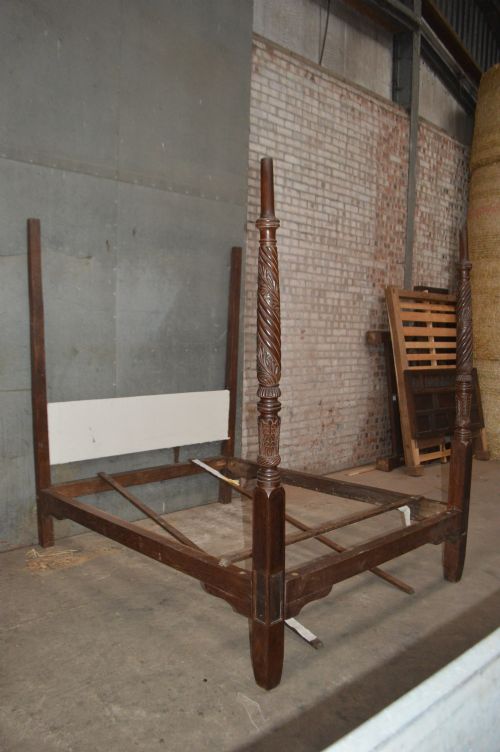
These structures dismantle into separate headboards, footboards, side rails, posts, and tester frames for transport. Reassembly requires careful alignment of the original joinery.
Professional installation is often advisable given the sheer weight of dense hardwoods like oak and mahogany used in seventeenth and nineteenth-century examples.
How do I date the wood?
Dating relies on examining tool marks, joint construction methods, and timber species associated with specific centuries. Seventeenth-century pieces typically show pegged oak joints and hand-adzed surfaces.
Later Victorian and Edwardian revivals often incorporate machine-sawn components and secondary timbers that distinguish them from earlier authentic period frames.