

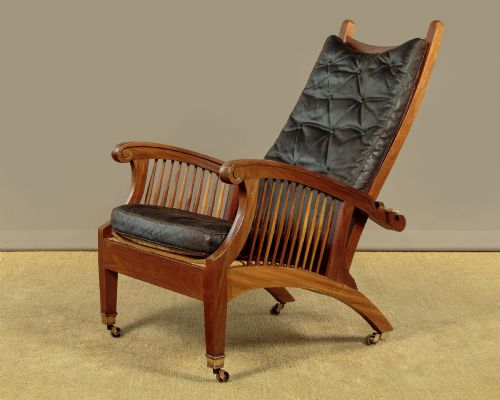
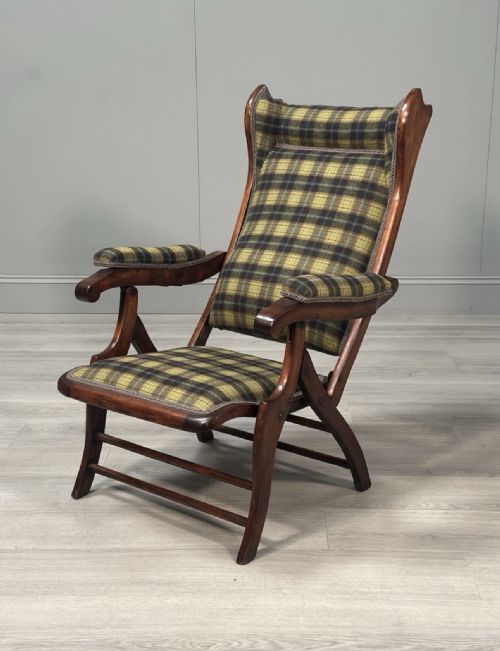
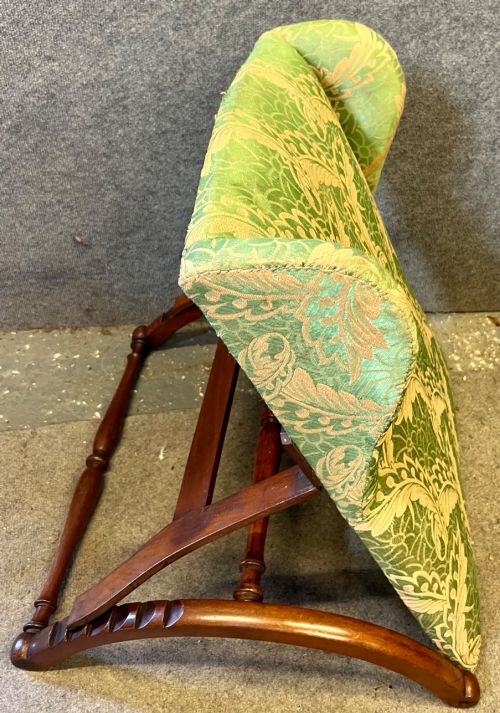


Wooden Reclining Chair
A wooden reclining chair brings mechanical ingenuity and deep comfort together, offering a historical seat designed for total relaxation.
Wooden Reclining Chair
A wooden reclining chair covers a broad spectrum of historical seating designed to adjust for rest, stretching from Georgian examples up through Victorian and Edwardian periods. Buyers investigating a wooden reclining chair will encounter various forms including campaign day beds, steamer deck chairs, planters chairs, and adjustable armchairs.
The selection ranges across distinct regional and stylistic traditions, notably Anglo-Indian, Colonial Campaign, and Arts and Crafts designs. These pieces often incorporate mechanical adjustments, ranging from ladderbacks to folding frames and adjustable backrests.
Origins span British workshops alongside colonial adaptations from Burma, China, and India. Materials vary from domestic oak and walnut to imported teak and rosewood, reflecting global trade and domestic comfort over centuries.
How they were made
Construction relies heavily on robust timbers such as mahogany, oak, walnut, teak, and elm to support folding mechanisms and adjustable frames. Cabinetmakers utilised dense hardwoods to ensure durability in transit and daily use.
Metal elements like brass feature in campaign hinges, castors, and adjustable ratchets that allow the backrest to shift smoothly. Caning, leather, and woven fabric provide the supportive surfaces for seating and lounging.
Joinery techniques balance stationary frames with moveable components, employing hinges, slots, and ladderback rungs to alter the incline. Frames are frequently polished or left in their natural grain depending on the specific period and style.
Wooden Reclining Chair Retail Price Guide 2026
Typical asking prices for wooden reclining chair among the pieces listed under this phrase on Sellingantiques today, from the lower quarter to the upper quarter. They describe what is for sale here now, not the wider market.
Periods represented span from the Georgian era through the Victorian and Edwardian periods up to nineteen-twenty.
What varies in quality
The sophistication of the mechanical adjustment mechanism dictates much of the distinction between standard items and superior examples. Smooth operation of brass ratchets, folding hinges, and multi-position ladderbacks shows the care taken in original manufacture.
Timber selection and cabinetmaking skill also divide pieces, with finer items utilising dense rosewood or beautifully figured walnut and mahogany rather than basic utility woods. The preservation of original surfaces, upholstery materials, and structural integrity defines the standing of an individual piece.
Philip Webb·Heals Of London
The Wooden Reclining Chair Glossary
- Campaign style
- Portable furniture designed for military officers or travel, featuring folding frames and brass fittings. This style prioritises convenience and robust construction.
- Steamer deck chair
- A folding lounge chair featuring extended leg rests, commonly used on ocean liners and verandas. Walnut frames and slatted construction frequently define this type.
- Planters chair
- A colonial seating form featuring extended arms designed for resting feet, common in Anglo-Indian contexts. These chairs use dense hardwoods like teak or rosewood.
- Adjustable backrest
- A mechanical system allowing the sitter to alter the recline angle of the chair. Ratchets, slots, or ladderbacks typically facilitate this movement.
- Day bed
- A piece of furniture serving as both a seat and a bed, often built in campaign or colonial styles. These pieces combine the support of a chair with the length of a lounger.
Wooden Reclining Chair: Frequently Asked Questions
How do I operate the reclining mechanism?
Most historical reclining chairs utilise a system of wooden ratchets, adjustable ladderback rungs, or brass brackets. You simply lift the backrest and guide it into the desired slot or support notch.
Care should be taken with older timber and metal components to ensure smooth movement without forcing the joints.
Were these chairs meant for indoor or outdoor use?
The intended setting depends entirely on the specific type of chair. Steamer deck chairs and folding campaign pieces were built for travel, verandas, or ship decks, while upholstered oak armchairs remained firmly inside.
Hardwoods like teak and rosewood handle varying environments well, though original fabric and leather upholstery require indoor protection.
How do I date a wooden reclining chair?
Dating relies on examining the timber, construction methods, and hardware style. Regency and Georgian examples display different turning and joinery compared to Edwardian or Arts and Crafts pieces.
Patina on the wood and the specific design of brass campaign fittings help narrow down the period of manufacture.
Are folding chairs sturdy enough for daily seating?
Campaign and folding chairs were originally engineered for rigorous travel and active service, meaning they are structurally sound when properly maintained. The quality of the hinges and pins determines their current stability.
Regular checks of the wooden frame and folding pivots ensure safe everyday use.