


Wooden Lounge Chairs
Wooden lounge chairs offer a deep-seated place to rest, bringing together period craftsmanship and substantial timbers like walnut, mahogany, and teak.
Wooden Lounge Chairs
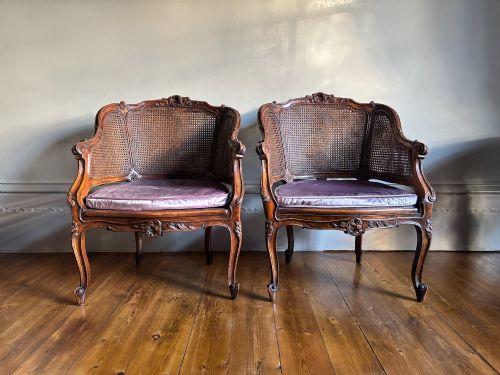
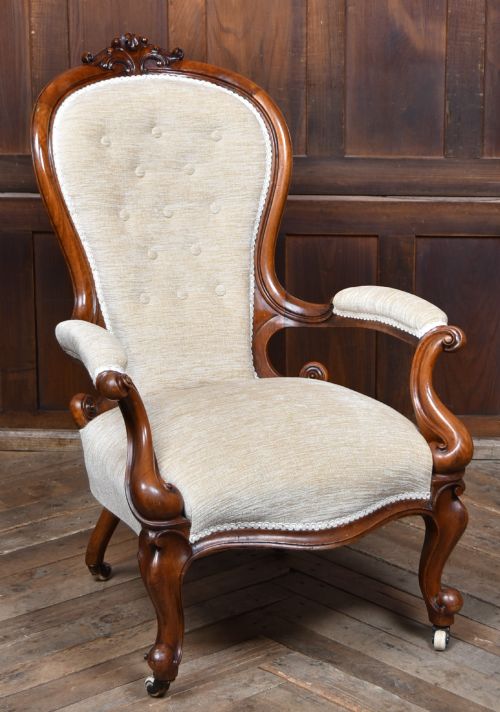
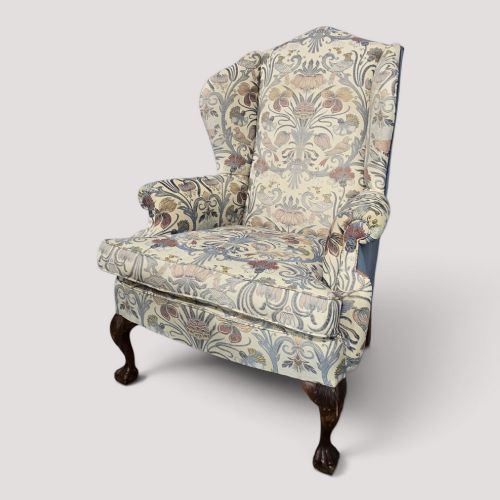
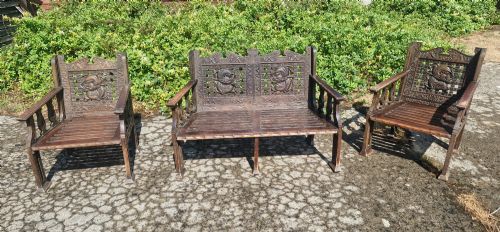
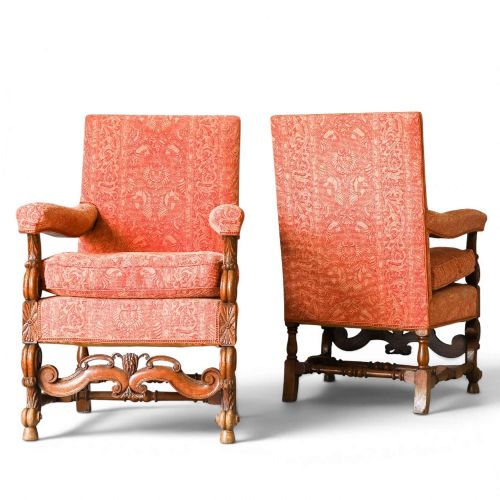
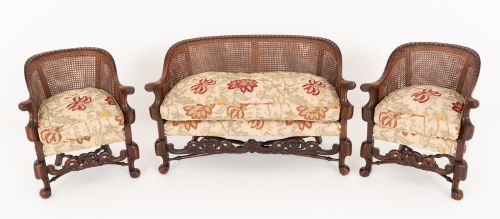
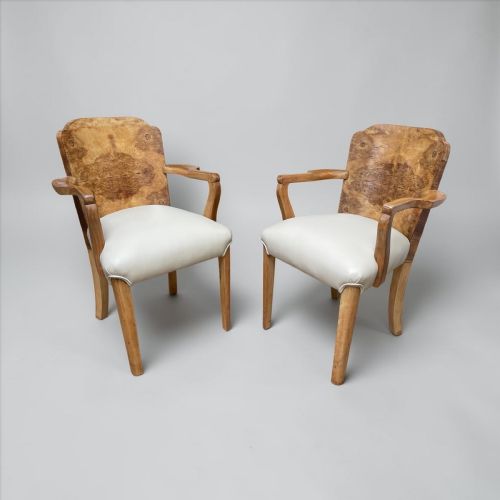
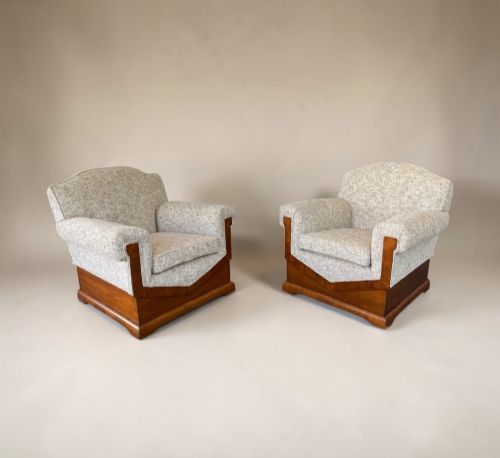
Wooden lounge chairs span multiple centuries of seating design, encompassing heavy Victorian armchairs, Edwardian reclining models, and streamlined Art Deco pairs. When buyers search for wooden lounge chairs, they encounter diverse seating forms such as wing armchairs, bergere suites, planter chairs, and occasional chairs.
The pieces on this page originate from periods ranging through the nineteenth century, the Edwardian era, and the nineteen-twenties and thirties. Makers and designers of these earlier decades utilised varied regional influences, producing English country house styles alongside Anglo-Indian and French revival pieces.
Forms include low armchairs, deep-seated club chairs, reclining chairs with footstools, and expansive daybeds or chaise longues. Buyers find both single statement chairs and matched pairs suited to period interiors.
How they were made
The foundational frames of these chairs rely on solid hardwoods including walnut, mahogany, oak, ebony, teak, and rosewood. Artisans shaped these timbers through extensive carving, turning, and steam bending, as seen in bentwood rocking chairs and tree root constructions.
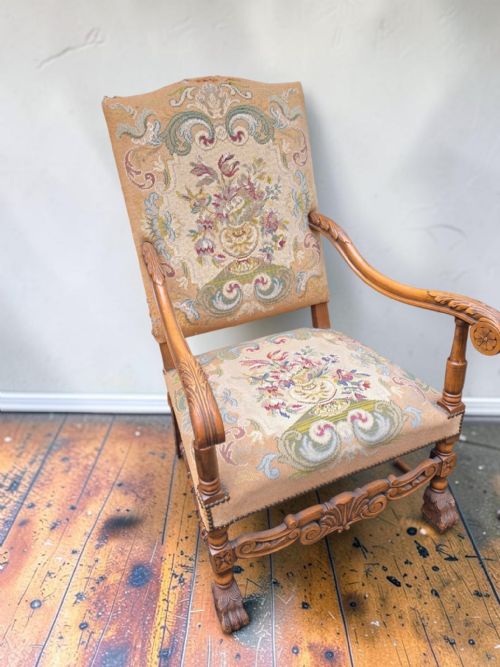
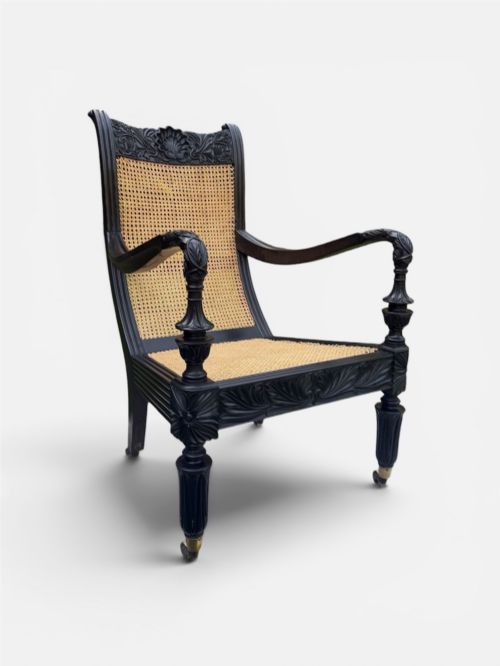
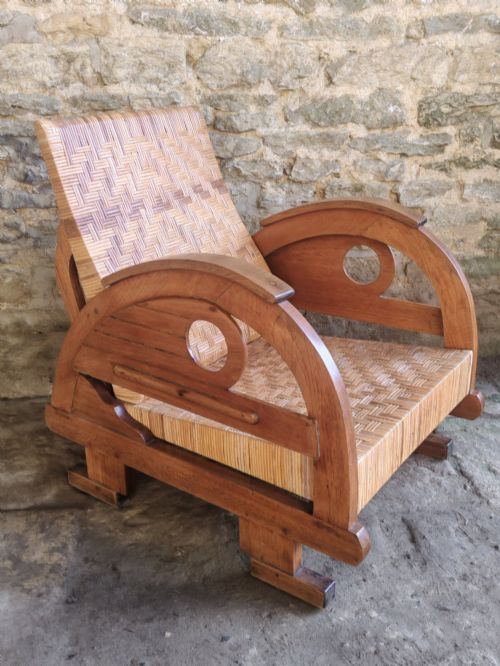
Many frames incorporate woven cane, rattan, or brass accents to complement the exposed wood. Upholstery methods range from traditional tapestry and petit point needlework to leather, velvet, tweed, and original painted finishes.
Wooden Lounge Chairs Retail Price Guide 2026
Typical asking prices for wooden lounge chairs among the pieces listed under this phrase on Sellingantiques today, from the lower quarter to the upper quarter. They describe what is for sale here now, not the wider market.
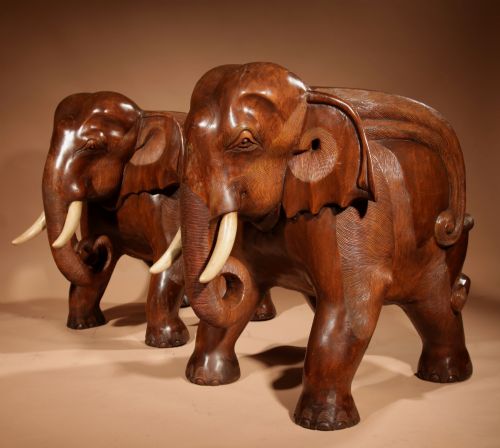
One unexpected chair utilises a solid teak tree root for its frame.
What varies in quality
The standard of execution depends heavily on the crispness of the timber carving and the integrity of the underlying frame construction. Solid ebony, rosewood, and figured walnut elevate a piece above standard domestic timbers.
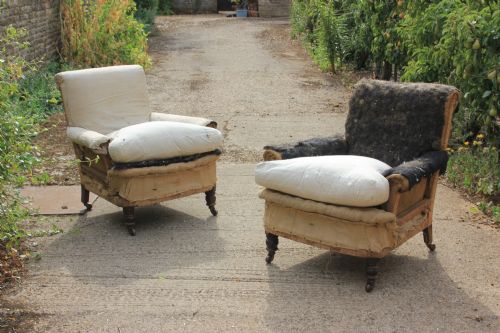
Original upholstery materials, such as period tapestry or retained paint schemes, separate preserved examples from heavily restored or later altered pieces. Matching pairs and complete suites represent a higher tier of domestic seating than isolated single chairs.
Hindley And Sons·Howard And Sons
The Wooden Lounge Chairs Glossary
- Bergere
- An enclosed upholstered armchair with wooden framing exposed around the sides and back. These frequently incorporate cane panels.
- Carolean Style
- A seventeenth-century revival design characterised by high backs, scroll arms, and elaborate carved woodwork. It appears in nineteenth-century interpretations.
- Planter Chair
- A colonial form featuring extended sloping arms designed for resting legs, commonly constructed in teak or rosewood. Anglo-Indian examples often include carved details.
- Duchesse Brisée
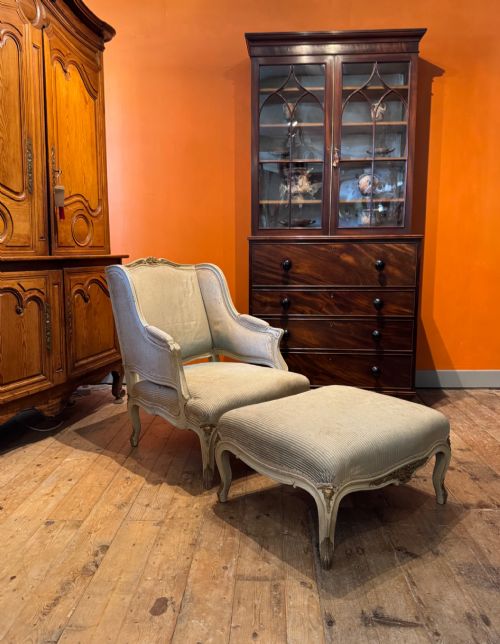
- A multi-part chaise longue comprising an armchair accompanied by one or two footstools to form a continuous resting surface. French styles often feature painted woodwork.
- Bridgewater
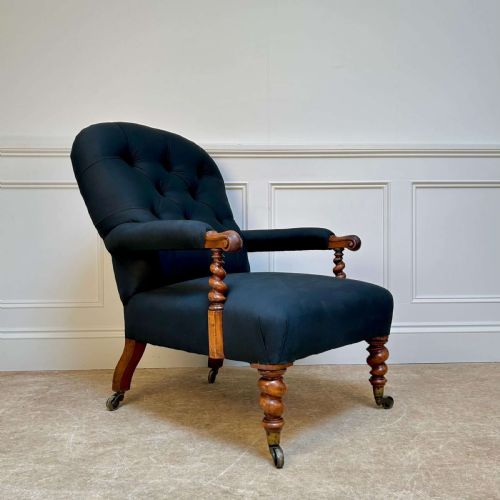
- A traditional upholstered armchair style with low arms, a deep seat, and tailored loose cushions. Makers like Howard and Sons produced notable examples.
Wooden Lounge Chairs: Frequently Asked Questions
What defines a wooden lounge chair?
Wooden lounge chairs comprise low-slung, deep-seated armchairs, club chairs, and reclining seats featuring substantial exposed timber frames. They prioritise relaxed seating postures and robust frame construction over rigid formal dining formats.
These pieces draw on aesthetic movements ranging from Victorian revivalism to Art Deco modernity. The timber framework remains a primary visual component alongside the upholstery.
How do I identify period wooden lounge chairs?
Dating relies on stylistic markers such as carved scrollwork, tapered legs, or geometric Art Deco lines. Examining the timber types and construction methods provides further chronological context.
Materials like solid ebony, rosewood, and cane point towards specific nineteenth-century colonial or European revival workshops. Documented proportions and upholstery treatments align each piece with its era of manufacture.
Where were these chairs used historically?
Owners placed wooden lounge chairs in libraries, drawing rooms, country house conservatories, and colonial verandahs. Reclining models and planter chairs served tropical and domestic leisure environments alike.
Suites and daybeds furnished large reception rooms and bedrooms, offering versatile lounging arrangements for occupants and guests. Occasional chairs filled smaller sitting spaces.
How should I care for antique wooden frames?
Preserving the timber requires stable room humidity and protection from direct sunlight to prevent wood splitting or fading. Regular dusting with a soft cloth maintains the polished finish of walnut, mahogany, and oak.
Avoid harsh chemical cleaners on exposed wood and traditional painted surfaces. Natural waxes applied sparingly help nourish older hardwoods over time.