

Wooden Bench Seating
Wooden bench seating encompasses solid timber forms from the eighteenth to the twentieth century, providing sturdy communal seats for hallways, gardens and domestic interiors.
Wooden Bench Seating
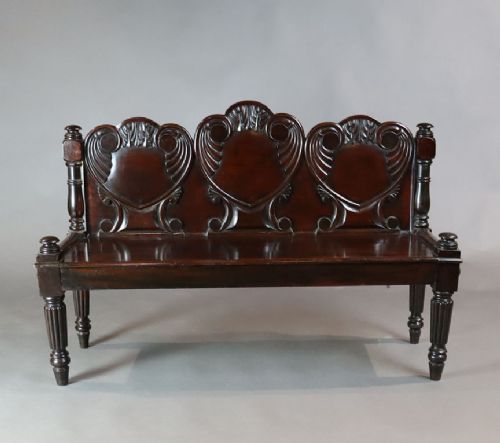
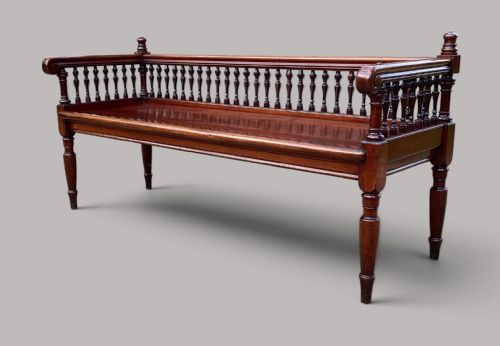
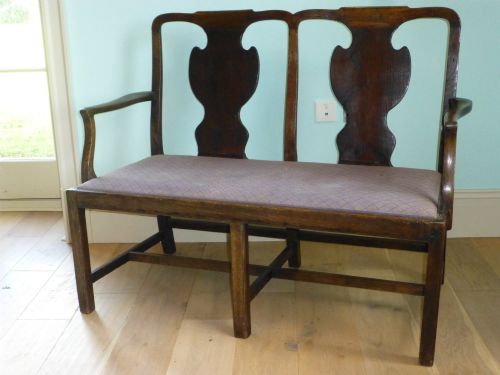
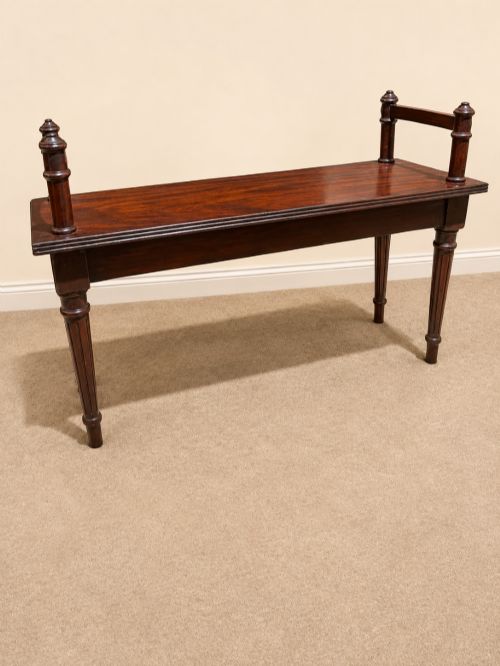
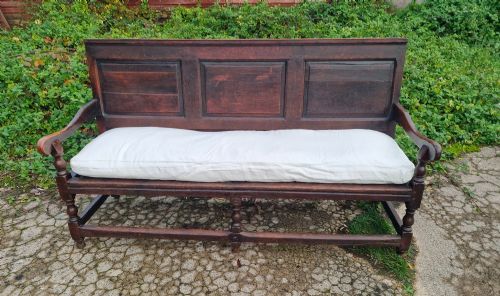
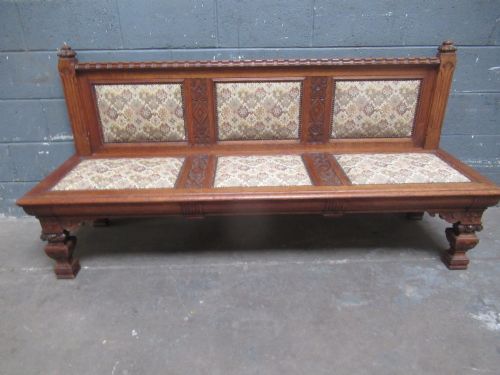
Wooden bench seating primarily spans practical forms such as settles, hall benches, chapel pews, and garden benches originating from English, French, Swedish, and Spanish workshops. Buyers encounter regional vernacular designs alongside revival styles like Jacobean and Regency, reflecting domestic and institutional seating needs over multiple centuries.
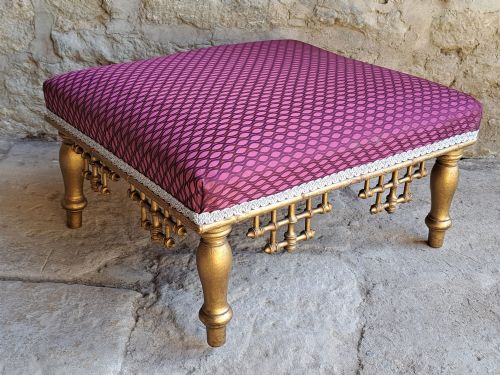
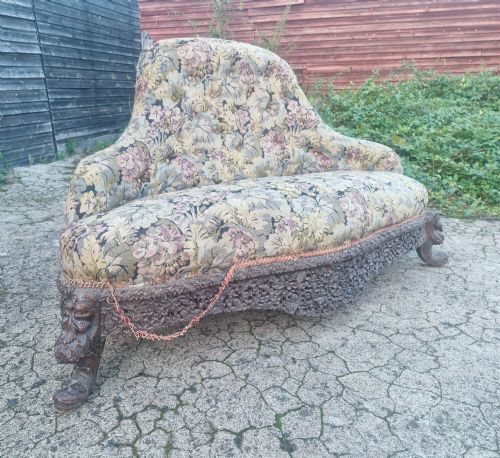
The material selection ranges from local hardwoods like oak, elm, and ash to softer pine and imported mahogany, walnut, and teak. Pieces appear in unadorned rustic timber, painted finishes, or with fabric upholstery suited to domestic reception rooms and window recesses.
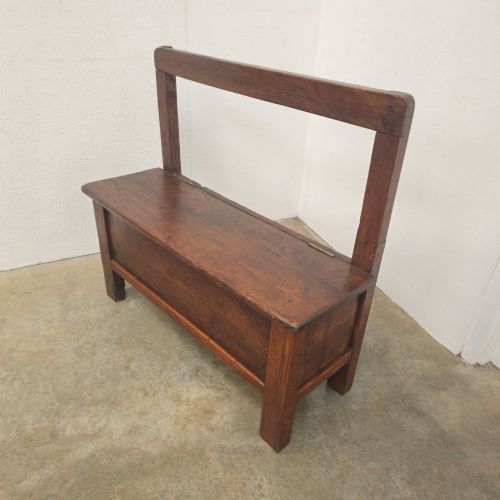
Domestic hall benches and settles often incorporate functional storage elements, including hinged seats and integrated cupboards, while garden variations utilise durable teak and cast iron. Dating spans the eighteenth century through to the Edwardian period and the early twentieth century.
Materials and Construction Methods
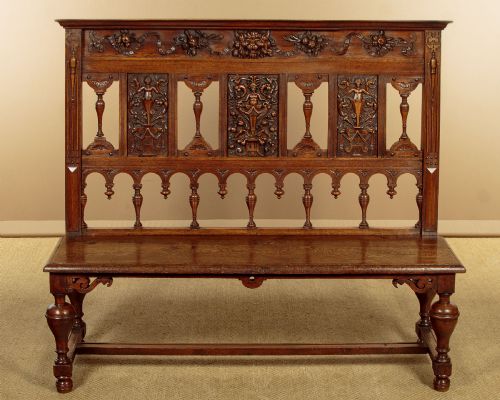
Makers constructed wooden bench seating predominantly from solid oak, pine, elm, and walnut using traditional joinery techniques such as mortise and tenon joints to ensure structural rigidity. Panels are frequently hand-carved or raised, whilst structural elements rely on local timber availability.
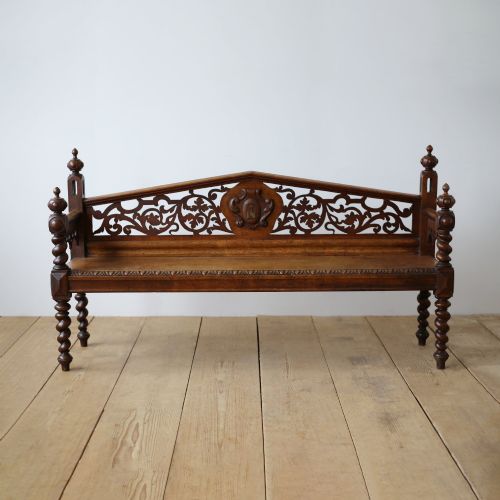
Surface treatments vary from applied paint and clear wax finishes to elaborate floral carvings and inlaid decorative motifs in oak and walnut. Outdoor variants employ weather-resistant teak and durable cast iron frames designed to withstand exterior elements.
Wooden Bench Seating Retail Price Guide 2026
Typical asking prices for wooden bench seating among the pieces listed under this phrase on Sellingantiques today, from the lower quarter to the upper quarter. They describe what is for sale here now, not the wider market.
Listings feature wooden bench seating in oak, pine, walnut, and teak, spanning the eighteenth, nineteenth, and early twentieth centuries.
Factors Defining Quality
Quality in wooden bench seating rests on the integrity of the timber selection and the precision of the original joinery rather than mere decorative elaboration. Heavy solid planks of oak, elm, or walnut combined with sound structural framing indicate superior craftsmanship compared to lesser utility pieces.
The depth and crispness of hand-carved details, the preservation of original patination, and the retention of working iron hinges or storage compartments distinguish higher-tier workshop output from standard domestic furniture.
James Shoolbred·Loidrault Freres Paris
The Wooden Bench Seating Glossary
- Settle
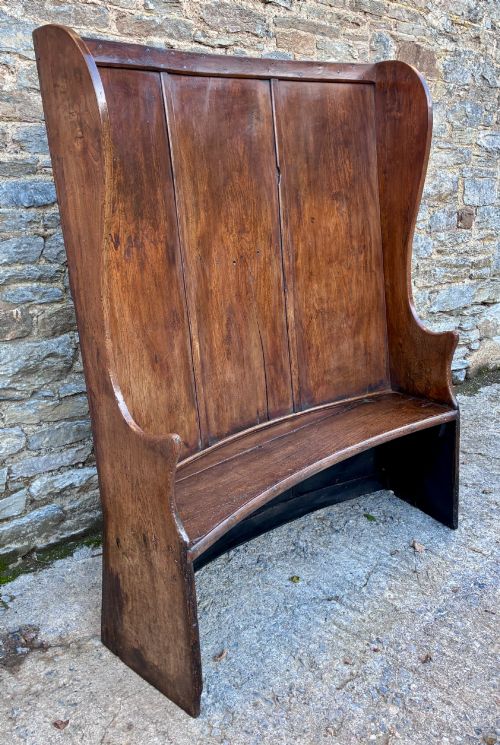
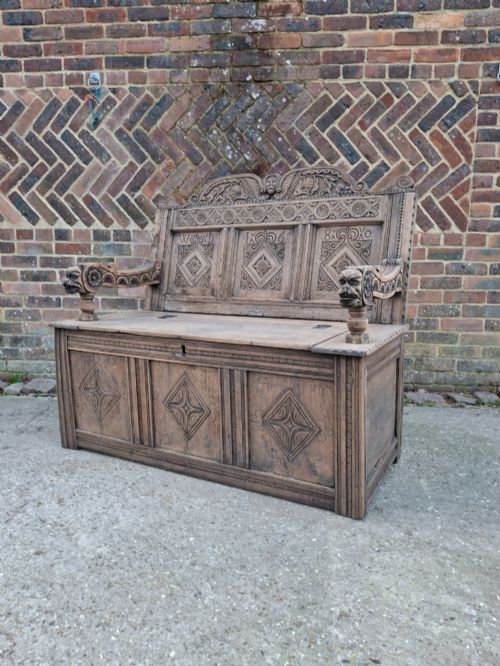
- A wooden bench with a high back, solid arms, and often a storage compartment beneath the hinged seat. This form provided draught protection in communal halls.
- Refectory bench
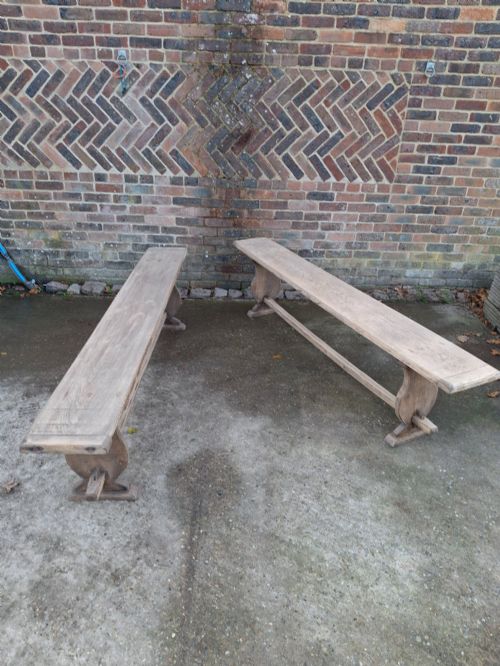
- A long, narrow wooden seating form originally designed for communal dining tables. These pieces utilise sturdy stretchers to support heavy timber tops.
- Chapel pew
- An institutional wooden bench with a simple backrest and open base, produced for religious spaces in pine or oak. They offer utilitarian seating with minimal ornamentation.
- Window bench
- A low wooden seat scaled specifically to fit within a domestic window recess. They frequently incorporate upholstered pads or hinged storage.
- Turned leg
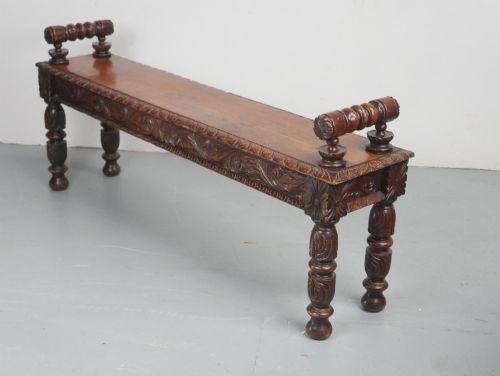
- A support column shaped on a lathe to create cylindrical, bulbous, or spiral profiles. This decorative woodworking technique appears across various centuries.
Wooden Bench Seating: Frequently Asked Questions
What is a settle?
A settle is a traditional wooden bench featuring a high back and solid armrests designed to block draughts in older homes. Many examples include enclosed storage beneath the seat.
These versatile pieces were placed in hallways and kitchens to provide practical seating for multiple occupants.
How do I date a wooden bench?
Dating relies on identifying the timber species, joinery methods, and the style of any carved ornamentation. Eighteenth-century examples often display pegged mortise and tenon joints in native oak or elm.
Later Victorian and Edwardian pieces frequently incorporate machine-sawn elements, applied mouldings, or revival motifs characteristic of specific decades.
Where should I place a hall bench?
Hall benches suit entryways, corridors, and large landings where they provide a practical spot for putting on footwear. Pieces with integrated storage also help conceal hats, scarves, and daily clutter.
Ensure you measure the available floor space and clearance for hinged storage lids before positioning the furniture.
Can wooden benches be used outdoors?
Only specific benches constructed from resilient timbers like teak or supported by cast iron frames are suitable for exterior environments. These materials withstand weathering when properly maintained.
Indoor pieces made from pine, walnut, or oak should remain protected from moisture and direct sunlight to preserve their finish.