

Wood Rotating Bookcase
A wood rotating bookcase brings volumes to hand with a spin, solving the crowded study or desktop.
Wood Rotating Bookcase
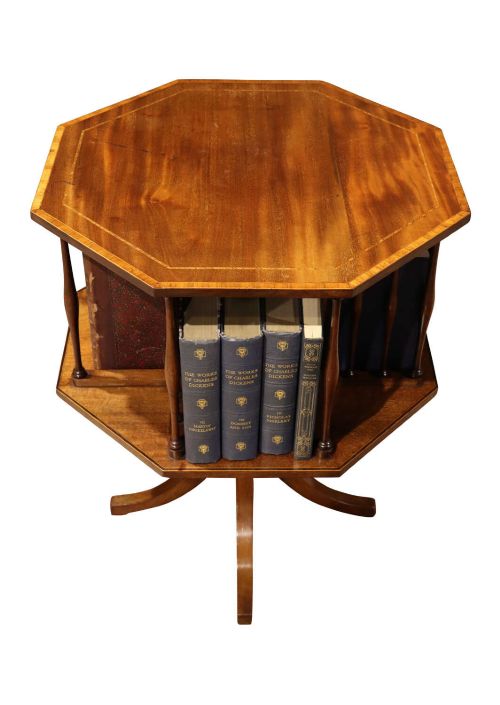
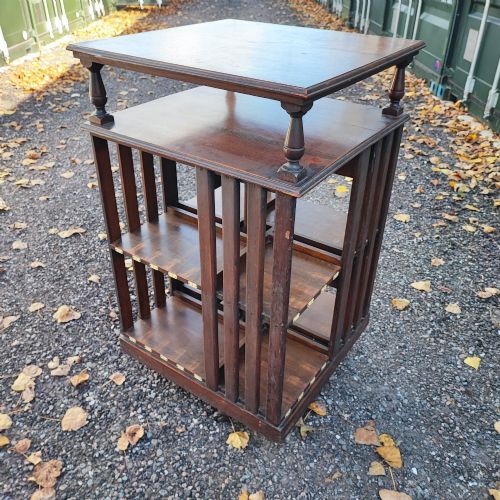
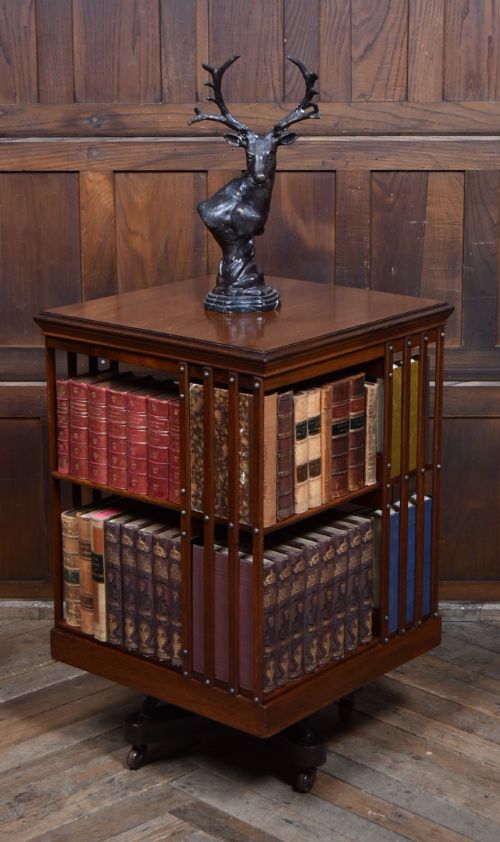
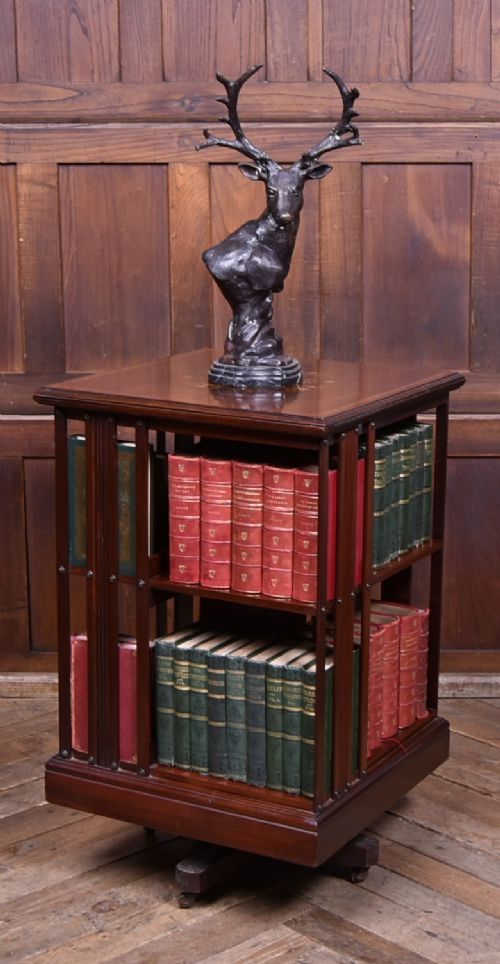
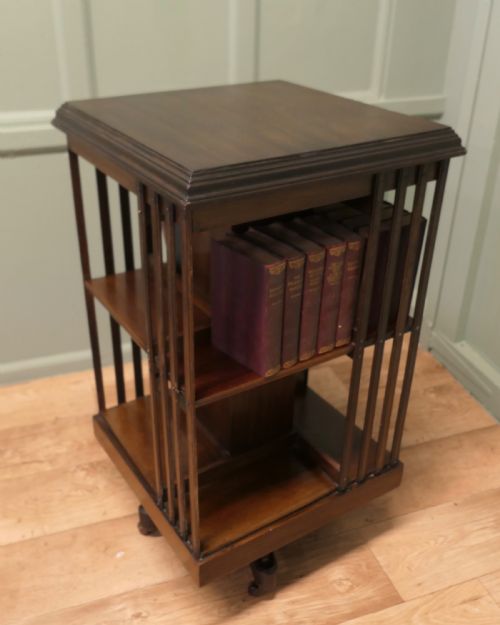
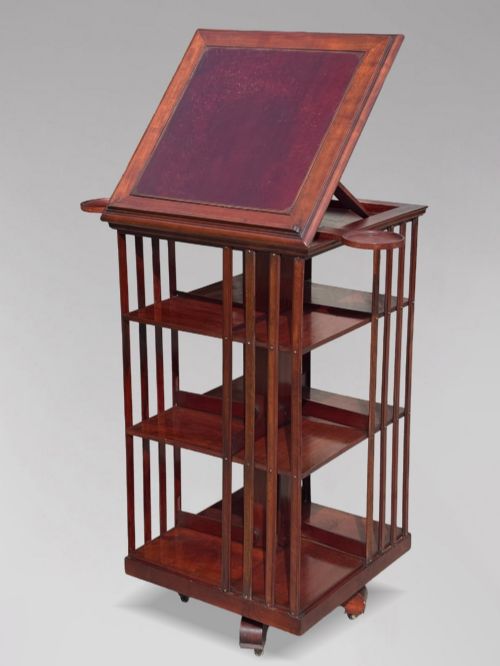
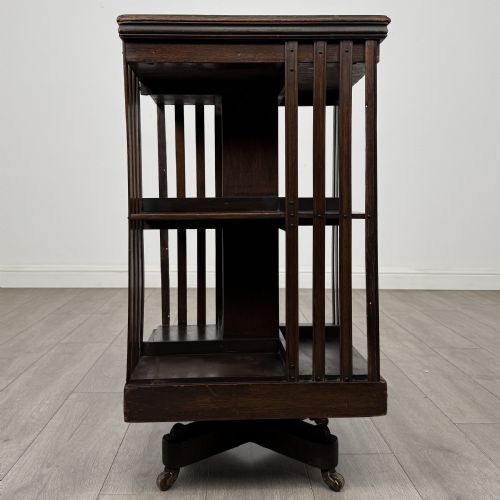
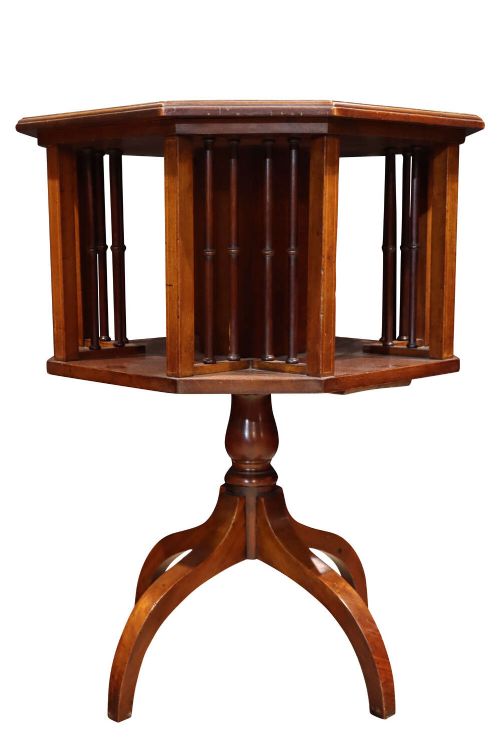
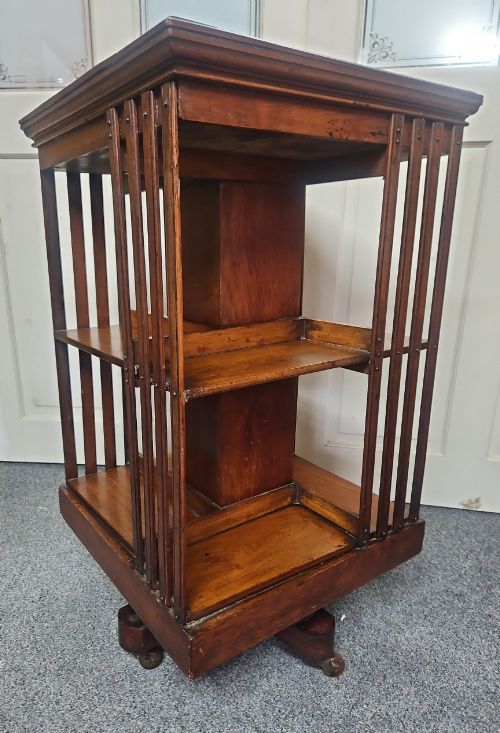
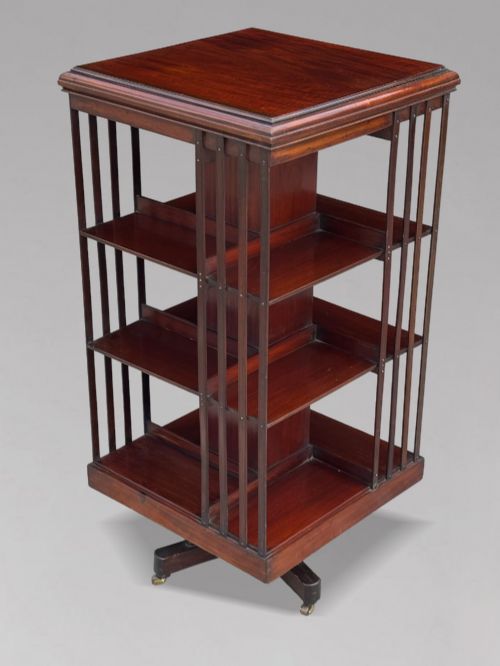
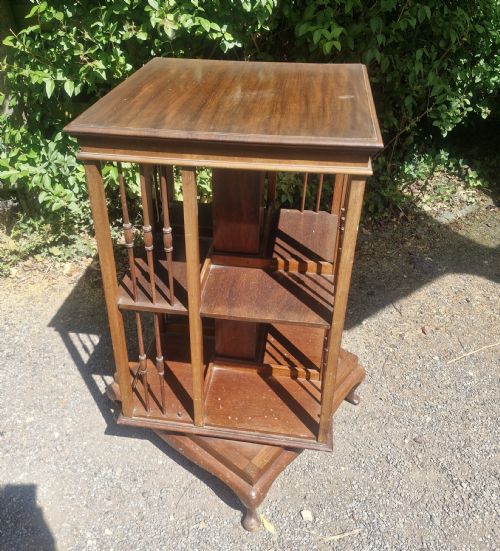
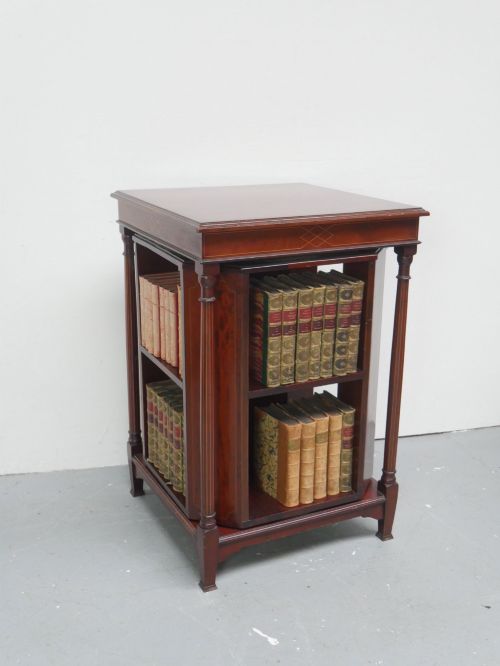
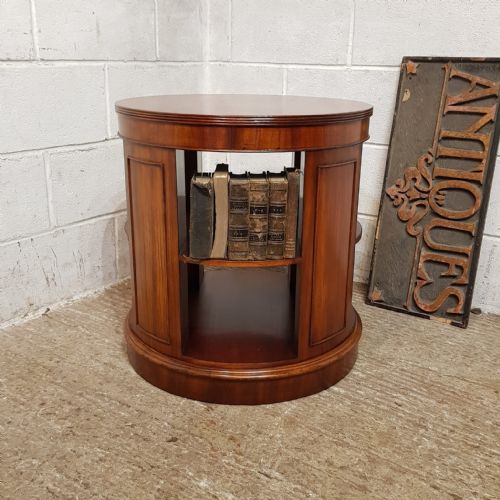
A wood rotating bookcase sits on a table or stands tall upon the floor, designed to pivot smoothly on a concealed mechanism so multiple shelves of volumes turn to reach the reader. This phrase gathers revolving bookcases, bookstands, and library companions from the nineteenth and twentieth centuries.
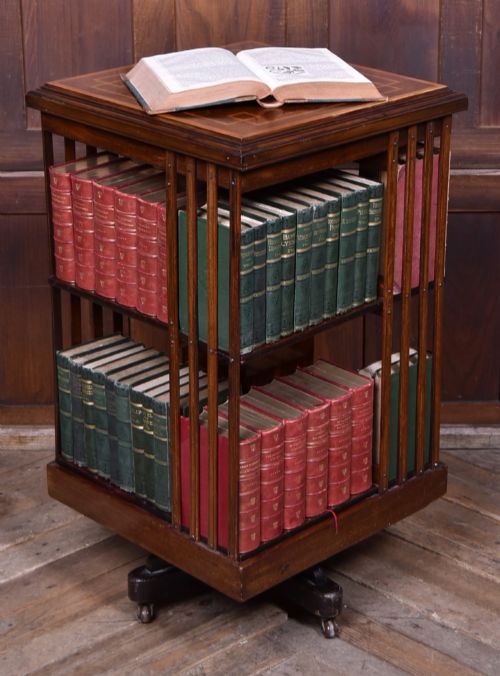
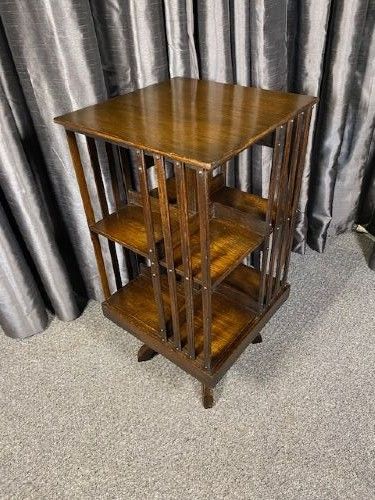
The Edwardian period supplies the greatest number of pieces on this page, mostly in mahogany or oak with slatted sides or inlaid details. Alongside these floor-standing or desktop versions appear taller nineteenth-century French models and compact occasional pieces.
Makers such as Maple & Co and Heals produced versions alongside provincial workshops, spanning round, octagonal, and square forms. Buyers select them for daily utility in studies, libraries, and sitting rooms where floor space or table reach matters.
Materials and construction
Makers utilised solid mahogany, oak, and walnut, often applying satinwood inlay or flame veneers to the top surfaces and upright slats. Iron, brass, and cast iron formed the internal revolving mechanisms that permit smooth rotation under the weight of heavy books.
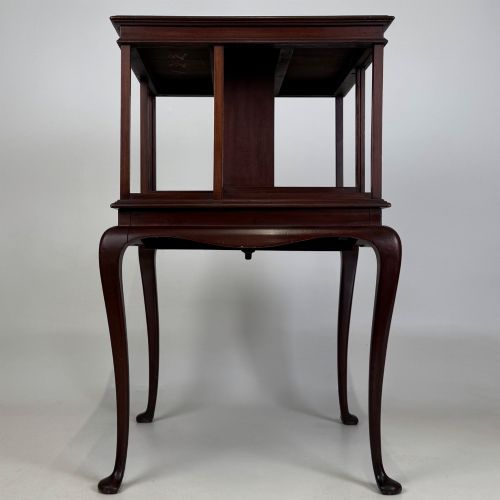
Joinery includes slatted sides, fretted panels, and cabriole legs on floor-standing models, whilst desktop variants rely on compact platforms. Each piece balances stability at the base with freedom of movement at the pivot.
Wood Rotating Bookcase Retail Price Guide 2026
Typical asking prices for wood rotating bookcase among the pieces listed under this phrase on Sellingantiques today, from the lower quarter to the upper quarter. They describe what is for sale here now, not the wider market.
Some desktop models include integrated reading stands, letting you prop up a heavy tome at the ideal angle before giving the whole case a cheerful spin.
Judging quality
The smoothness of the internal rotating action separates standard utility pieces from finer examples, as a superior mechanism turns silently without listing to one side. The choice of timber grain, such as figured flame mahogany or select oak, marks the difference in cabinetmaking ambition.
Intricate detailing like satinwood inlay, well-cut slatted sides, and maker signatures from firms like Heals or Maple & Co elevate a piece above unmarked workshop output.
Maple & Co·Heals
The Wood Rotating Bookcase Glossary
- Revolving bookcase
- A freestanding or desktop shelving unit mounted on a pivot mechanism that allows the entire structure to turn. This design lets readers access multiple tiers of volumes from a single seated position.
- Slatted sides
- Upright wooden bars forming the outer walls of the bookcase tiers. This construction lightens the visual weight of the timber and reveals the book spines within.
- Satinwood inlay
- Contrasting blonde timber inserted into recesses within the darker mahogany surface. It creates geometric or floral borders typical of Edwardian cabinetwork.
- Cabriole leg
- A furniture leg that curves outward at the knee and tapers inward toward the foot in a graceful double curve. Found on select Edwardian revolving bookcases.
- Table top revolving bookcase
- A smaller version designed to sit upon a desk or table surface. It holds a working selection of reference volumes close at hand.
Wood Rotating Bookcase: Frequently Asked Questions
How do I care for a wood rotating bookcase?
Dust the slatted sides and shelves regularly with a soft, dry cloth to prevent grit accumulation in the grain. Apply a quality beeswax occasionally to nourish the mahogany or oak surfaces.
Keep the piece away from direct heat sources and strong sunlight to protect the polish and prevent timber shrinkage. Check the central pivot mechanism periodically to ensure smooth rotation.
Where should I place a revolving bookcase?
Position the bookcase beside a reading chair or desk where you need frequent access to reference volumes or novels. Ensure there is enough clearance on all sides for the tiers to spin freely without striking walls or furniture.
Floor-standing models suit corners or open spaces in studies, whilst smaller table top versions sit comfortably on large desks or sideboards.
How do I date an Edwardian revolving bookcase?
Examine the timber, construction methods, and decorative motifs to determine the period of manufacture. Edwardian pieces from around nineteen hundred often feature satinwood inlay, lighter mahogany tones, and slender proportions.
Look for maker stamps or labels inside the shelves, as firms like Maple & Co and Heals frequently marked their revolving library furniture.
Can these bookcases hold heavy books?
Most revolving bookcases handle standard hardback volumes comfortably across their tiers. The internal iron and brass mechanisms are engineered to support the weight of a full library load when distributed evenly.
Distribute heavier folios on the lower tiers of floor-standing models to maintain a low centre of gravity and ensure stable rotation.