



Whitby Watercolour Painting
A whitby watercolour painting captures the dramatic Yorkshire coast, harbour scenes, and ancient abbey ruins through delicate pigments on paper.
Whitby Watercolour Painting
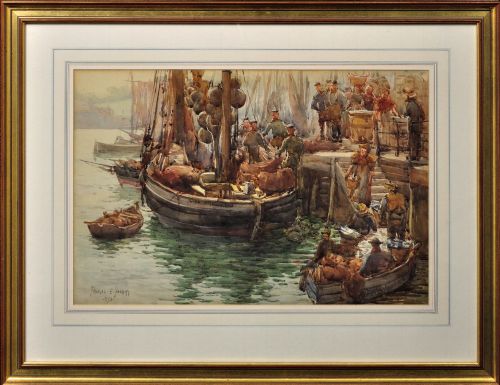
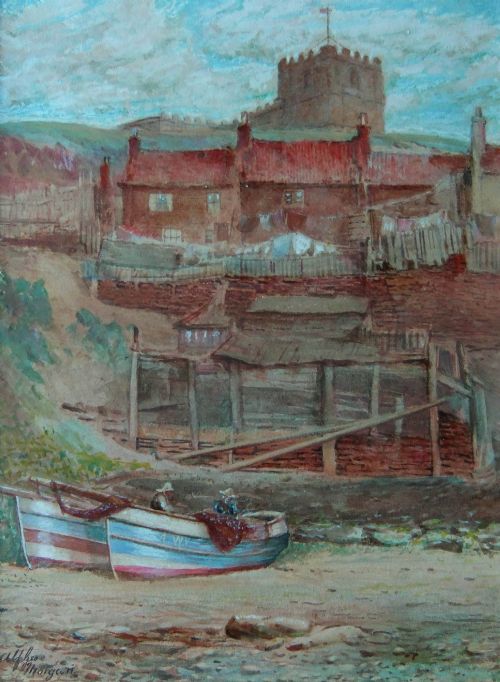
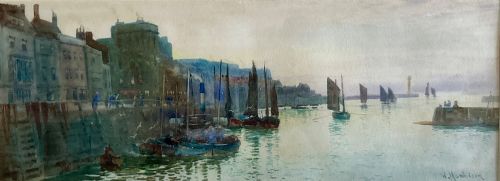
A whitby watercolour painting depicts the iconic Yorkshire landscape, featuring local landmarks such as Whitby Harbour, the River Esk, and the cliffside abbey ruins under changing northern skies. These works span from the eighteenth century through the Victorian and Edwardian eras up to the mid-twentieth century, capturing coastal life, fishing fleets, and narrow town streets.
The selections available include intimate street scenes of locations like Flowergate and Henrietta Street alongside expansive marine views and pastoral river valleys near Larpool. Buyers encounter framed waterpaintings presented behind glass in traditional wood and gilt surrounds, preserving the delicate paper surfaces from atmospheric moisture.
Most examples originate from British artists working during the nineteenth and early twentieth centuries, reflecting the appeal of the Yorkshire coast to painters drawn to maritime activity and dramatic topography. These framed watercolours function as historical windows into the bustling port and surrounding countryside of earlier decades.
How They Were Made
Artists apply watercolour pigment suspended in water onto heavy paper sheets, building transparent washes to capture light on the sea and stone. Touches of bodycolour or opaque pigment occasionally accent highlights on breaking waves or whitewashed cottages.
Finished paintings find protection behind glass within wooden frames, which frequently feature gilt ornamentation to complement the tones of the work. This framing method guards the absorbent paper ground from dust and direct handling.
Whitby Watercolour Painting Retail Price Guide 2026
Typical asking prices for whitby watercolour painting among the pieces listed under this phrase on Sellingantiques today, from the lower quarter to the upper quarter. They describe what is for sale here now, not the wider market.
Seaside artists frequently painted local seaweed gatherers knee-deep in the North Sea foam, recording an honest slice of gritty coastal toil.
What Varies in Quality
Compositional strength and atmospheric handling separate the finer examples from routine topographical sketches, showing an artist's ability to render the particular quality of northern coastal light. Skilled brushwork conveys the movement of water and the solid weight of stone architecture with economy and precision.
The condition of the paper and the vibrancy of the pigment determine the visual impact of the piece over time. Works that retain their original colour intensity without excessive fading offer a clearer encounter with the creator's initial vision.
Alfred George Morgan·William Matthison·Tom Clough·George Weatherill·Frederick William Booty·Rowland Henry Hill·Frank Rousse·John Wynne Williams·John Syer·Charles W Oswald
The Whitby Watercolour Painting Glossary
- Watercolour
- A painting method where natural pigments are bound in a water-soluble vehicle and applied to paper. The technique relies on the white of the paper shining through translucent washes.
- Gilt Wood
- Timber framing finished with a thin layer of gold leaf or metallic gilt paint. This traditional finish enhances the framed artwork and provides a warm border.
- Marine Realism
- An artistic style focused on accurate depictions of the sea, ships, and coastal weather conditions. Practitioners observe maritime activity with technical precision.
- Diptych
- An artwork composed of two distinct panels hinged or presented together as a single matched pair. This format allows artists to display contrasting or complementary viewpoints.
- Coble
- A traditional type of open fishing boat native to the north-east coast of England. These flat-bottomed craft appear frequently in regional marine watercolours.
Whitby Watercolour Painting: Frequently Asked Questions
How old are these paintings?
These watercolours date from the eighteenth century through the Victorian and Edwardian periods up to the mid-twentieth century. Many pieces capture the Victorian and Edwardian era maritime landscape.
Specific dates or estimated decades appear in individual titles, helping collectors place each work within the timeline of British fine art.
What subjects do they show?
The works primarily feature Whitby Harbour, the cliffside abbey, St Mary's Church, and the surrounding Yorkshire coast and moors. Scenes range from bustling fishing docks and piers to quiet river valleys.
Artists also recorded narrow town streets, local yards, and coastal craft such as cobles at work on the North Sea.
How should I hang them?
Watercolours require placement away from direct sunlight to prevent the pigments from fading over time. Environmental stability helps protect the paper and the wooden or gilt frames.
Professional framing with conservation glass provides an additional safeguard against ultraviolet light and atmospheric humidity in domestic interiors.
Are the frames original?
Many watercolours retain period wood and gilt frames that match the estimated age of the artwork. These surrounds often show minor signs of age consistent with their history.
Collector preference and preservation needs occasionally guide decisions on whether to maintain historic frames or update mounting materials.