

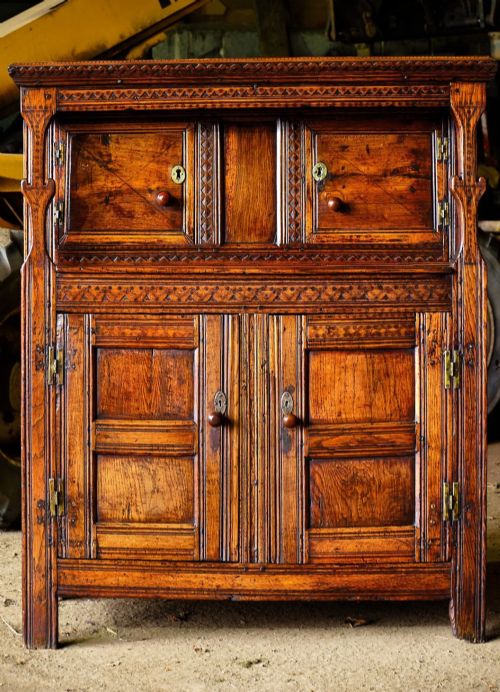
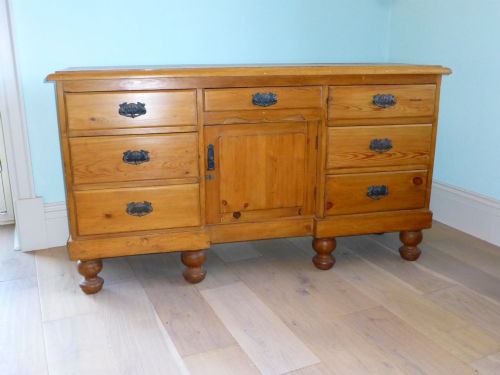
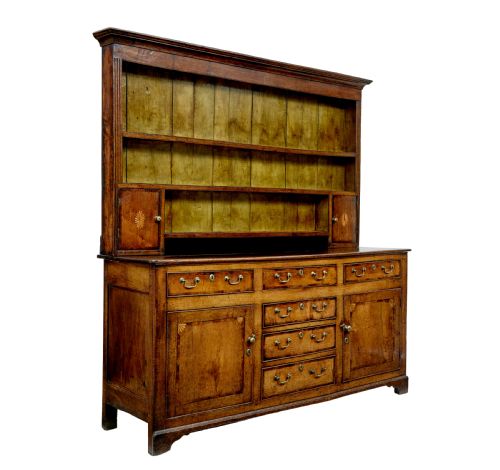
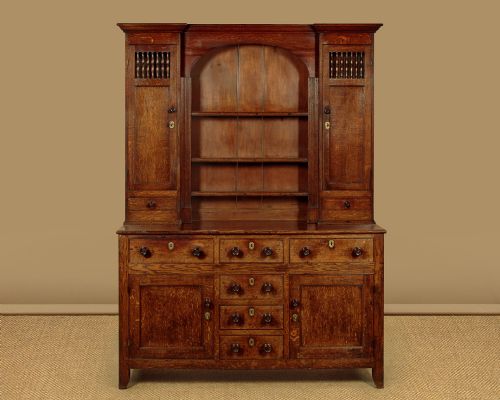
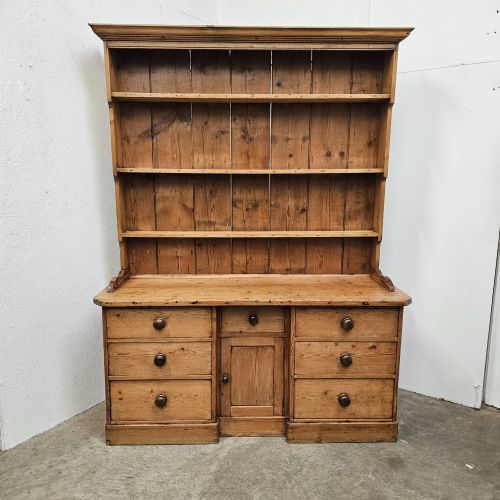
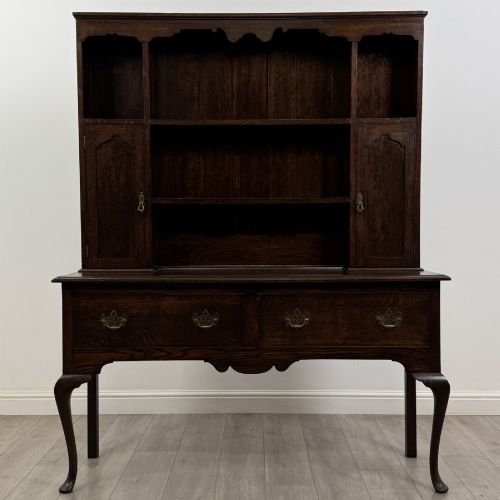
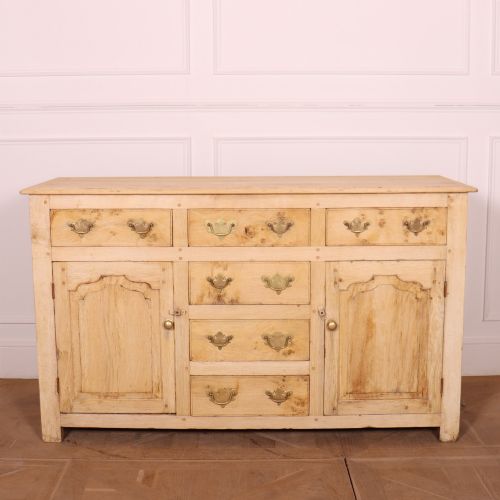
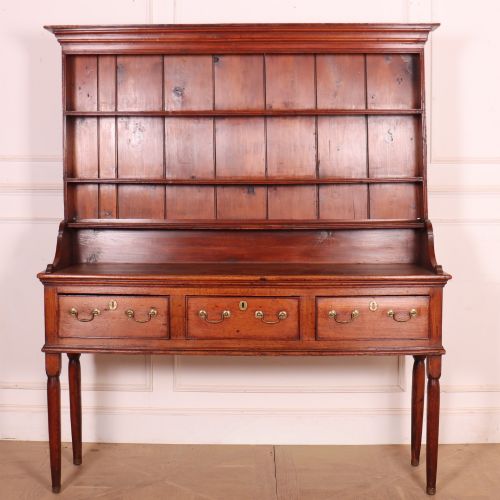
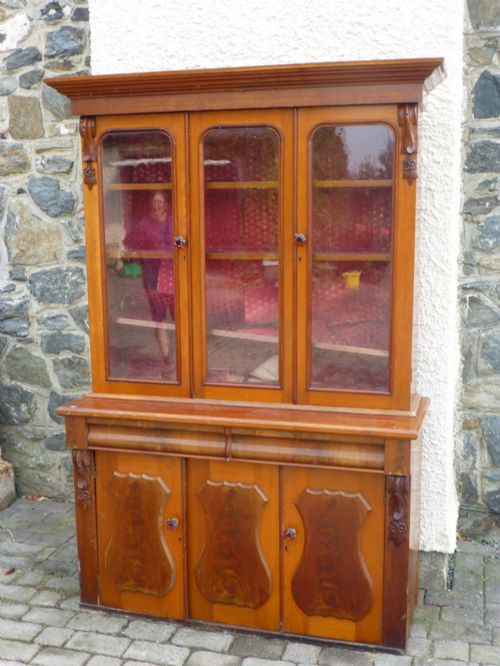
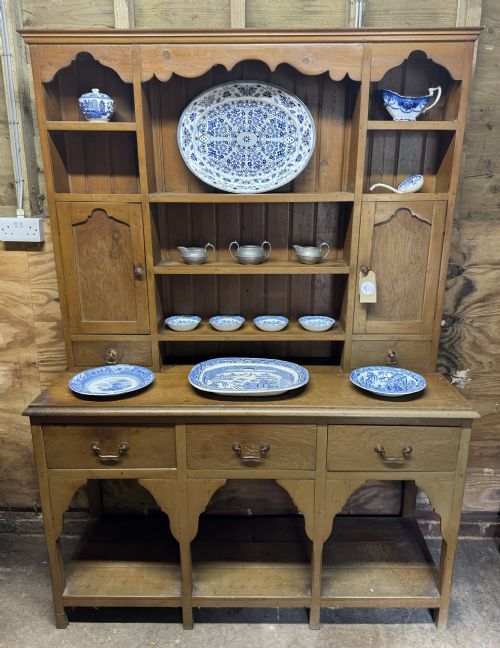
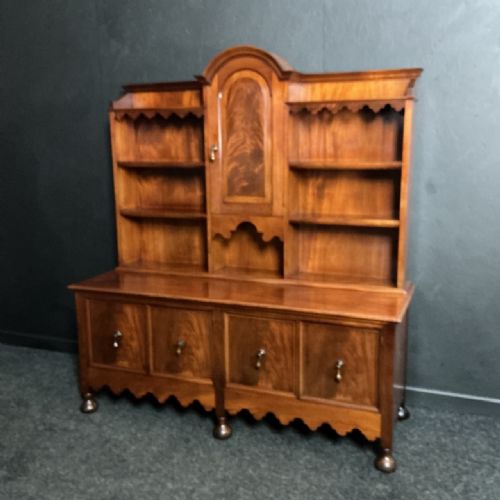
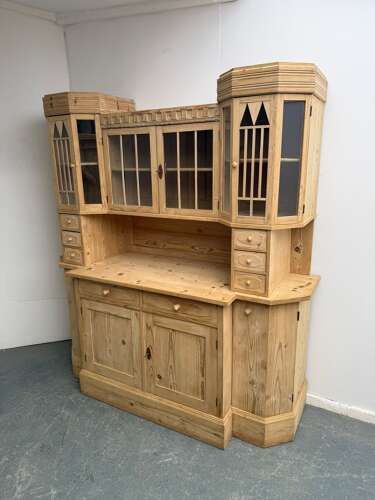
Welsh Sideboard Cabinet
These welsh sideboard cabinet pieces combine robust country utility with display shelving, offering generous storage for daily kitchenware and dining rooms.
Welsh Sideboard Cabinet
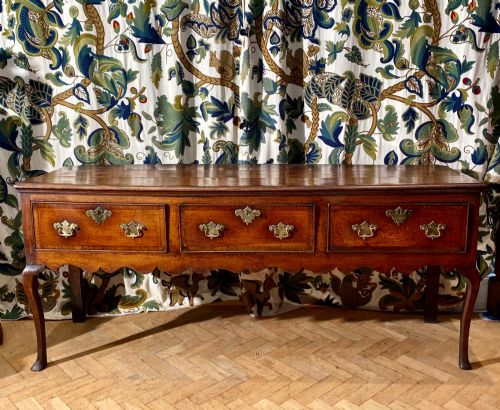
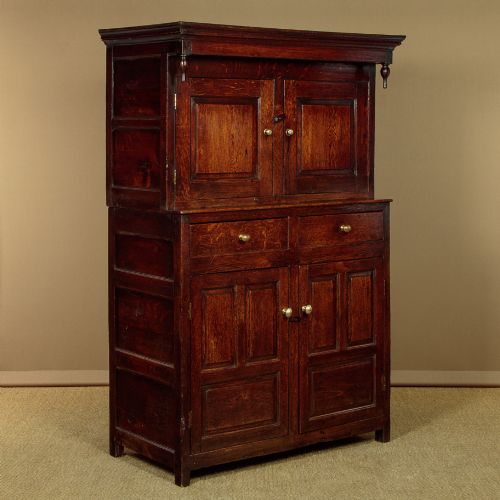
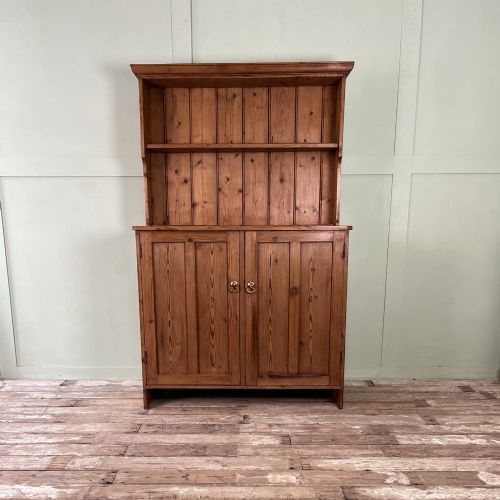
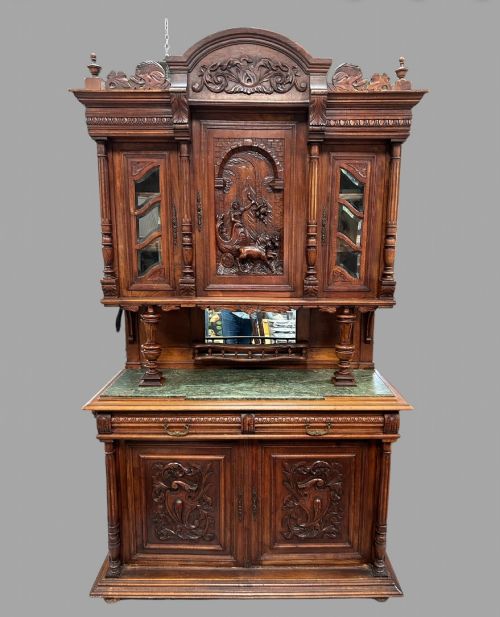
A welsh sideboard cabinet brings together a lower storage base of drawers and cupboards with an upper plate rack or glazed bookcase. These substantial pieces originate primarily from country workshops, designed to hold ceramics and provisions in everyday domestic settings.
The form ranges from open potboard bases to enclosed dresser bases paired with multi-tiered plate racks. Oak and pine dominate the surviving examples, reflecting the regional timber traditions of the eighteenth and nineteenth centuries.
Buyers encounter regional vernacular pieces alongside later revival styles such as Arts and Crafts or Jacobean variants. Each version serves the dual purpose of keeping household items secure while exhibiting pottery.
The lower section functions as a traditional sideboard, whilst the upper superstructure provides structural support for displaying crockery.
How they were made
Joiners relied on solid oak and pine for the main framework, often incorporating mahogany or walnut veneers in later or more refined iterations. Brass hardware, iron hinges and glass door panels complete the construction of these substantial items.
Traditional framing methods involved pegged mortise and tenon joints to ensure stability under heavy loads of crockery and provisions. Surfaces were typically waxed, polished or finished with traditional paint, preserving the natural grain and original patina of the timber.
Welsh Sideboard Cabinet Retail Price Guide 2026
Typical asking prices for welsh sideboard cabinet among the pieces listed under this phrase on Sellingantiques today, from the lower quarter to the upper quarter. They describe what is for sale here now, not the wider market.
Early Welsh dressers often reveal whimsical tool marks left by country joiners who carved secret initials hidden deep inside the dark drawer recesses.
What varies in quality
The integrity of the timber and the retention of original surface patination distinguish superior examples from heavily altered ones. Untouched wax finishes and period brasses elevate a piece, whereas extensive timber replacement alters historical value.
Proportion and scale dictate the visual success of the piece, with well-balanced cornice mouldings and original plate racks commanding greater attention. The crispness of carved details and the smooth operation of drawer runners also indicate superior cabinet-making skill.
The Welsh Sideboard Cabinet Glossary
- Potboard
- An open slatted lower shelf found on early dresser bases, traditionally used to store pots and pans.
- Cwpwrdd Deuddarn
- A traditional Welsh two-part press cupboard, featuring enclosed upper and lower storage sections.
- Plate rack
- The upper open-shelved superstructure attached to a dresser base, designed for displaying ceramic plates and platters.
- Breakfront
- A cabinet design where the central section projects forward from the flanking outer cupboards or drawers.
- Patina
- The surface sheen and colour acquired by wood through age, handling and regular waxing over decades.
Welsh Sideboard Cabinet: Frequently Asked Questions
How do I date an oak dresser?
Examine the construction methods, nail types and drawer dovetailing to determine the age of the timber frame. Hand-cut joints and pegged frames typically point to eighteenth or early nineteenth century origins.
Secondary woods used in drawer linings and backboards also help establish the chronological period. Compare the moulding profiles against known stylistic eras like Georgian or Victorian vernacular.
Are plate racks removable?
Many traditional dressers feature a two-piece construction where the upper plate rack simply rests upon or fixes lightly to the sideboard base. This modular design aided transport through narrow farmhouse doorways.
However, some later or larger glazed bookcase variants are integrated permanently into the lower cabinet structure.
What is the difference between a dresser and a sideboard?
A standard sideboard consists solely of a low cabinet base with cupboards and drawers for storage and serving. A welsh sideboard cabinet incorporates an upper plate rack or glazed bookcase for vertical display.
Both pieces serve dining and kitchen environments, but the dresser offers integrated wall display space.
How should I care for antique pine furniture?
Maintain antique pine and oak surfaces by applying occasional coats of bees-wax to nourish the dry timber. Avoid placing these pieces in direct sunlight or near heat sources to prevent wood splitting.
Dust regularly with a soft dry cloth and clean up spills immediately to protect the historic wax finish.