
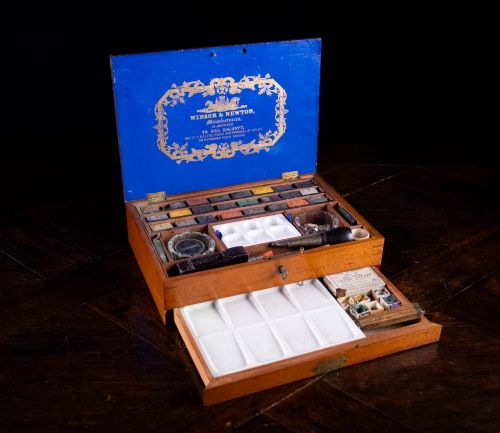
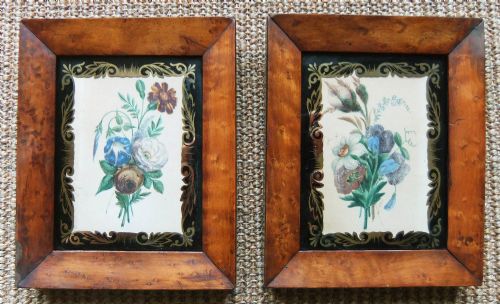
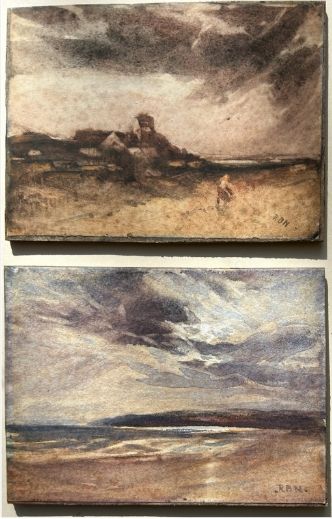
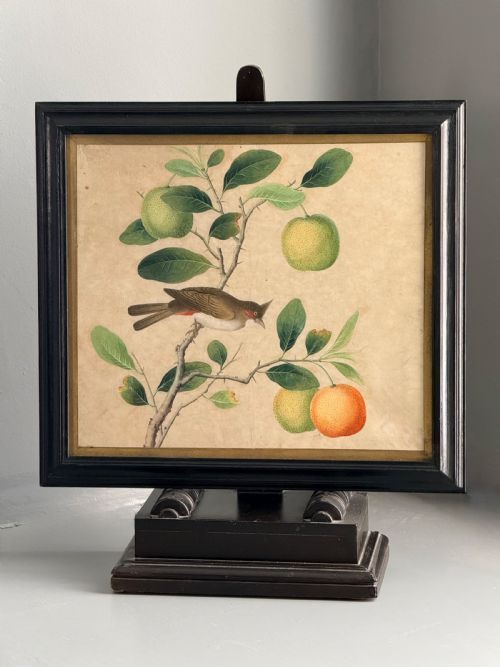
Watercolour Painting
When you collect a watercolour painting, you acquire a direct touch of the artist's hand upon paper, untouched by mechanical reproduction.
Watercolour Painting
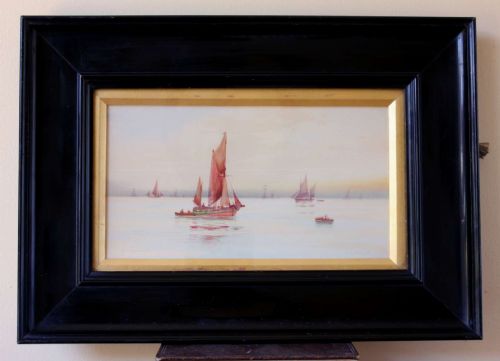
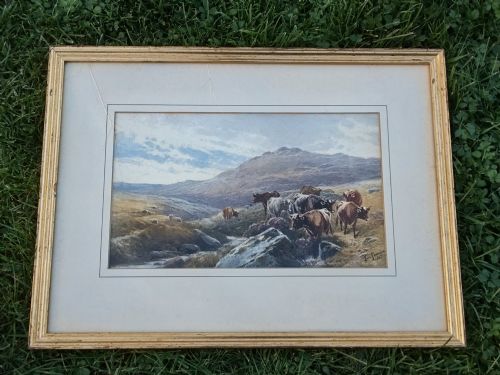
A watercolour painting on this page encompasses works executed on paper, pith paper, and occasionally fabric, spanning from the Georgian and Regency periods through the Victorian era and into the early twentieth century.
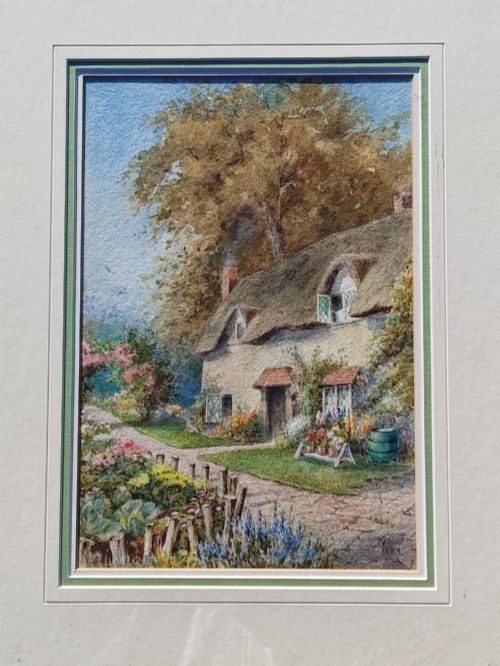
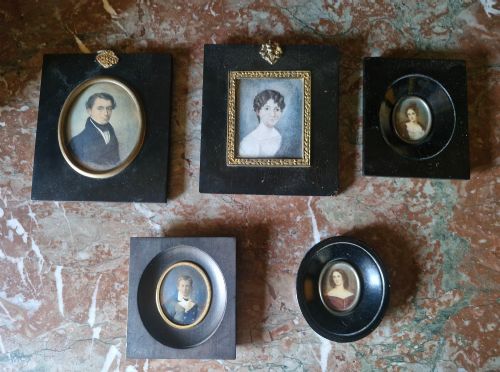
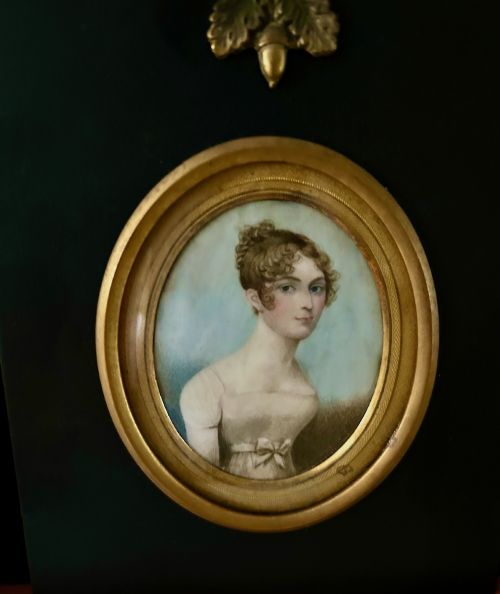
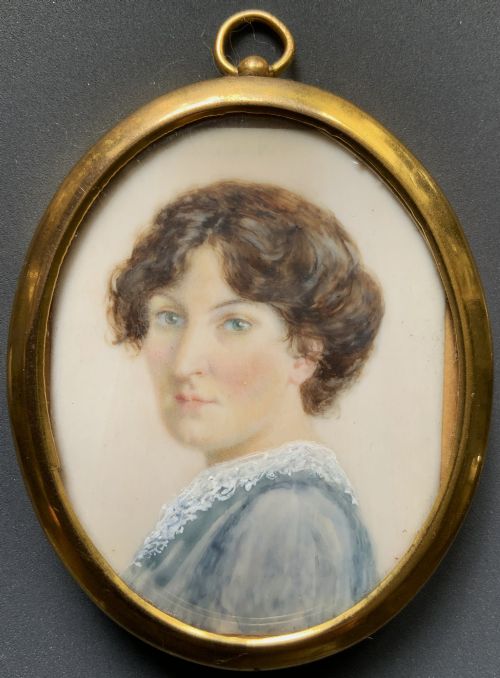
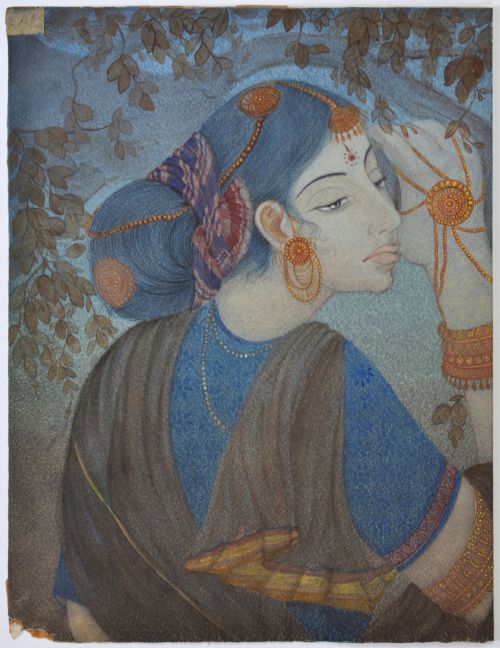
Buyers will encounter diverse subjects ranging from English country pastorals and Scottish landscapes to detailed portrait miniatures, floral studies, and Chinese export scenes.
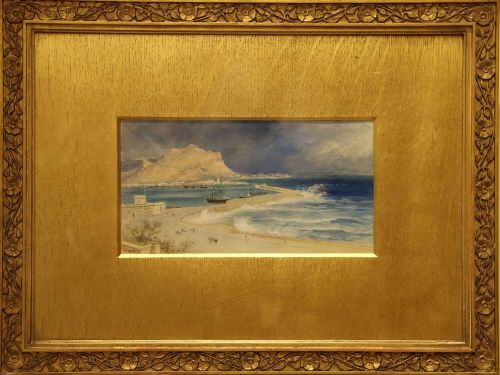
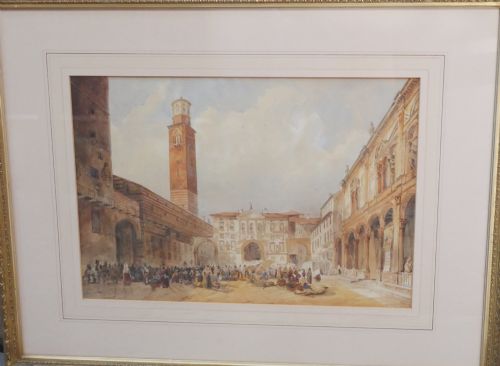
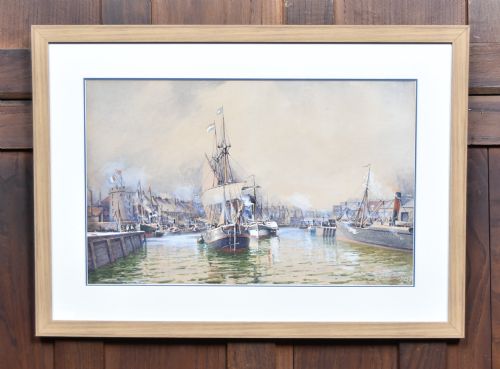
The selection reflects both named professional artists and skilled English school hands, capturing harbours, townscapes, and intimate character studies.
Materials and Techniques
Watercolour pigment mixed with water forms the primary medium, applied fluidly to absorbent paper or prepared pith paper surfaces.
Artists frequently utilised bodycolour and ink alongside standard washes to build opacity, texture, and fine linear detail within the composition.
Presentation relied on protective glass combined with frames fashioned from gilt wood, ebonised wood, or gold plated metal.
Listings feature works created across the nineteenth and early twentieth centuries, utilising paper, pith paper, and fabric.
Assessing Quality
Quality rests upon the sureness of the brushwork and the artist's ability to maintain luminosity and transparency across the paper without muddying the pigment.
The strength of the composition, atmospheric perspective, and precision in rendering finer elements such as architectural details or facial expressions distinguish master works from ordinary student pieces.
Original condition, including minimal fading of pigments and the integrity of the early framing, preserves the visual impact intended by the creator.
Robert Buchan Nisbet·Marjorie L Davies·Frederick Buck·William Woolard·Harry Bright·Stuart Lloyd·Alessandro Cittadini·Herbert Menzies Marshall·Robert George Talbot Kelly·William Taylor Longmire·David Law·George Sydney Shepherd·H Medlycott·Guido Bach·Bruce Bairnsfather·George Lorain Stampa·George Fotherly Hargitt·Thomas Miles Richardson Jnr·James Orrock·Henri Fradelle
The Watercolour Painting Glossary
- Watercolour pigment
- Finely ground colour particles suspended in a water-soluble binder, forming the core medium of these works.
- Bodycolour
- Watercolour mixed with a white pigment to create an opaque, gouache-like finish that highlights specific areas of a painting.
- Pith paper
- A delicate fibrous material derived from the pith of the Tetrapanax papyrifer plant, commonly used for nineteenth-century Chinese export paintings.
- Portrait miniature
- A small, highly detailed painting, often executed on ivory, paper, or vellum during the Georgian and Victorian periods.
- Chinese Export
- Works produced in China specifically for Western patrons, frequently depicting local figures, trades, and landscapes.
Watercolour Painting: Frequently Asked Questions
How should I display a watercolour painting?
Hang these works away from direct, harsh sunlight to prevent the delicate pigments from fading over time.
Ensure rooms maintain stable humidity levels to protect both the fragile paper support and the historical framing.
What is pith paper?
Pith paper is a delicate, spongy material made from plant stems that absorbs watercolour pigment with a unique, velvety depth.
Works created on this substrate typically originate from nineteenth-century Chinese export workshops.
How do I date an antique watercolour?
Examine the watermark within the paper stock, the framing style, and any inscriptions or signatures left by the artist.
Stylistic conventions of clothing, architecture, and landscape treatment also provide clear chronological markers.
Are portrait miniatures watercolours?
Many portrait miniatures from the Georgian and Victorian eras were painted using watercolour or gouache applied to paper, vellum, or thin slices of ivory.
These intimate pieces were designed to be held in the hand or worn as personal mementoes.