

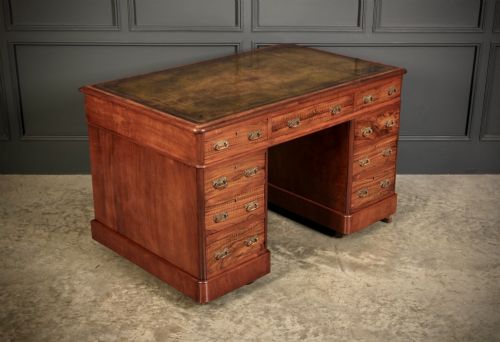
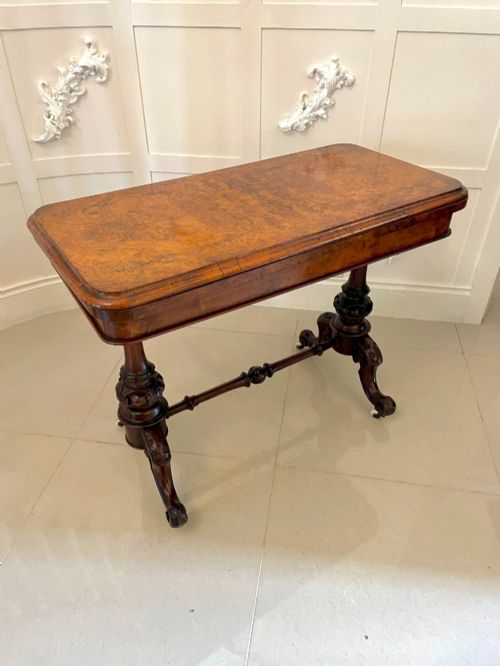


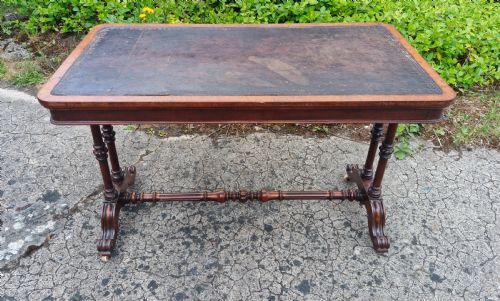


Walnut Twin Pedestal Table
A walnut twin pedestal table brings rich timber grain and commanding presence to any room, whether configured as a grand dining table or a substantial partner's desk.
Walnut Twin Pedestal Table
A walnut twin pedestal table relies on two supporting columns or drawer banks to hold a long, substantial top. When searching for a walnut twin pedestal table, expect to encounter forms spanning from Victorian library tables and partners desks to 1930s Art Deco dining tables.
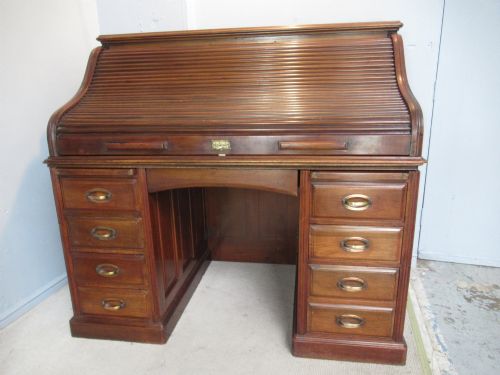
Beyond formal desks, the classification stretches to encompass dressing tables, roll top desks, and extending dining tables designed to seat multiple guests. Each piece employs the twin pedestal arrangement to balance structural heft with kneehole clearance.
Materials and construction methods
Cabinet makers constructed these tables using solid timber frames overlaid with highly figured walnut and burr walnut veneers to achieve striking grain patterns across large surfaces. Secondary woods such as oak appeared in drawer linings and structural carcases to provide internal rigidity.
Surface treatments incorporated inset tooled leather writing panels, hand-polished shellac French polish, and cast brass or ormolu mounts. Dining versions utilised extending runner mechanisms to accommodate multiple leaves without compromising the stability of the twin supports.
Walnut Twin Pedestal Table Retail Price Guide 2026
Typical asking prices for walnut twin pedestal table among the pieces listed under this phrase on Sellingantiques today, from the lower quarter to the upper quarter. They describe what is for sale here now, not the wider market.
Some nineteenth-century pedestal desks feature hidden secret compartments tucked behind false drawer panels for stabling private correspondence.
What determines quality
Quality rests heavily on the selection and matching of the veneer, where symmetrical burr walnut figuring across the top and pedestals denotes superior craftsmanship. The depth and clarity of the hand-applied finish further separate standard production pieces from exceptional workshops.
Structural integrity shows in the weight and stability of the pedestals, the smooth operation of drawer runners, and the original retention of brass hardware and leather inserts. Tables retaining their original extension mechanisms and uncompromised veneer surfaces command greater appreciation.
Betty Joel
The Walnut Twin Pedestal Table Glossary
- Twin pedestal
- A furniture configuration where the main top is supported by two distinct vertical columns, cabinets, or drawer stacks. This design allows for a central kneehole space whilst offering substantial storage or support beneath.
- Burr walnut
- A specialised timber cut from the growth warts or burls of walnut trees, producing highly swirling, knotty grain patterns. Cabinet makers prized this wood for decorative veneering on prominent table tops and drawer fronts.
- Partners desk
- A large double-sided pedestal desk designed to be used by two people sitting opposite each other. These pieces feature drawers and cupboards accessible from both sides.
- Roll top desk
- A desk featuring a flexible slatted wooden tambour shutter that pulls down to conceal the writing surface and pigeonholes. This mechanism became popular during the Victorian and Edwardian eras.
Walnut Twin Pedestal Table: Frequently Asked Questions
How do I care for a walnut surface?
Keep walnut furniture away from direct sunlight and radiator heat to prevent the underlying veneers from drying out or splitting. Dust regularly with a soft, dry cloth and apply occasional high-quality beeswax to maintain the sheen of the French polish.
Avoid using silicone-based polishes or placing damp items directly onto the wood or leather inserts. Using coasters and blotters preserves both the timber finish and any antique leather writing surfaces.
Are these tables suitable for daily dining?
Many examples designed as extending dining tables serve reliably for daily family meals when maintained with proper care. The robust twin pedestal structure provides excellent legroom and stability during use.
Protect the polished top with heat mats and tablecloths during meals to prevent water rings and heat damage. Regular use actually benefits the timber by keeping the polish conditioned through gentle handling.
How can I tell a Victorian table from a 1930s one?
Victorian and Edwardian versions typically display heavier carving, turned columns, brass ormolu mounts, and complex inlaid marquetry details. The timber choice leans heavily toward rich, dark burr walnut paired with traditional leather skivers.
Nineteen-thirties pieces, particularly those from the Art Deco period, favour clean geometric lines, streamlined waterfall edges, and minimal ornamentation that lets the natural grain speak for itself.