

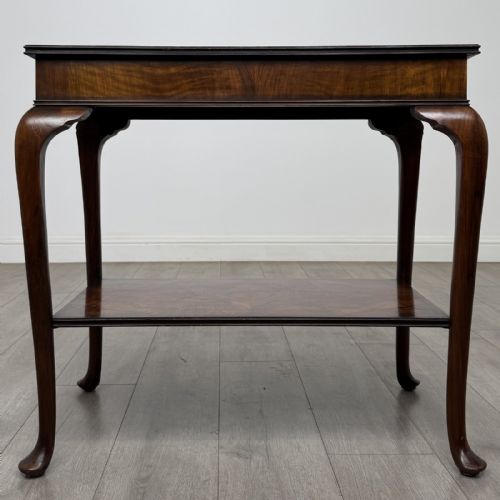
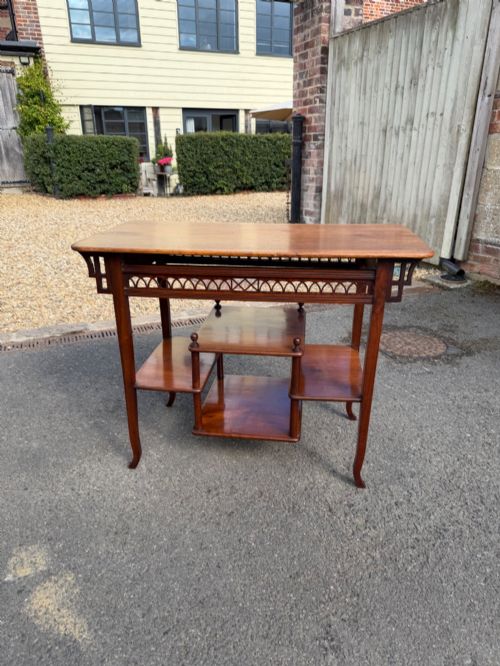
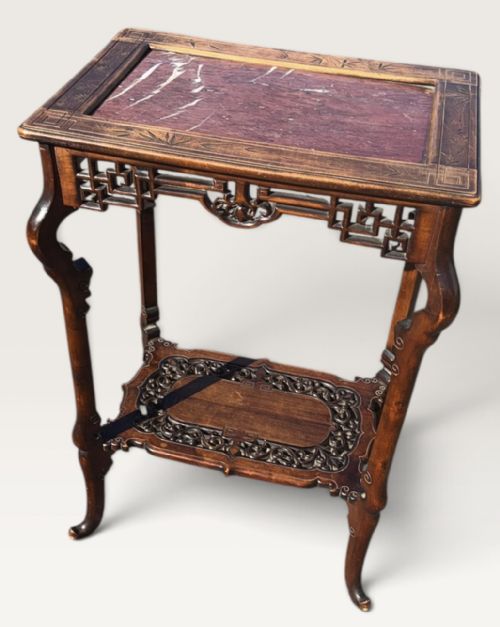
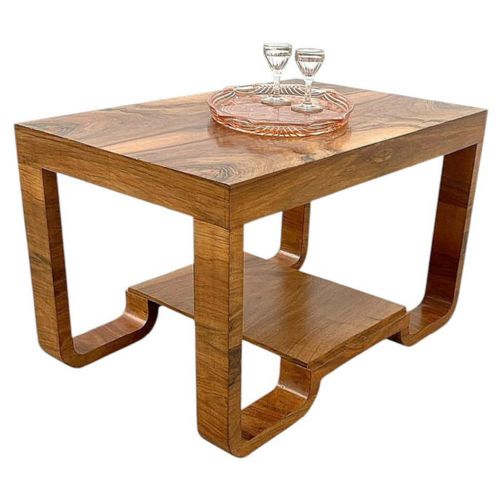

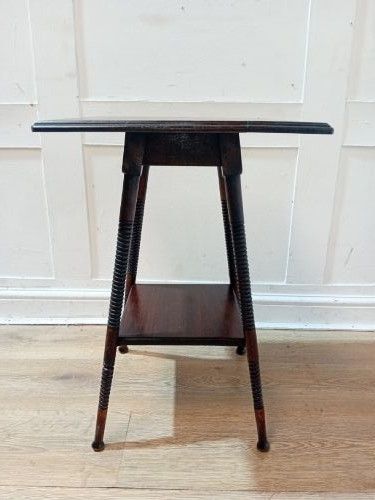

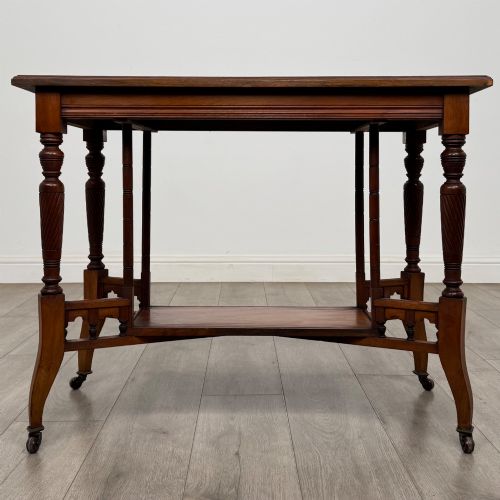
Walnut Tiered Occasional Table
A walnut tiered occasional table brings practical surface space and rich grain figures into a room.
Walnut Tiered Occasional Table
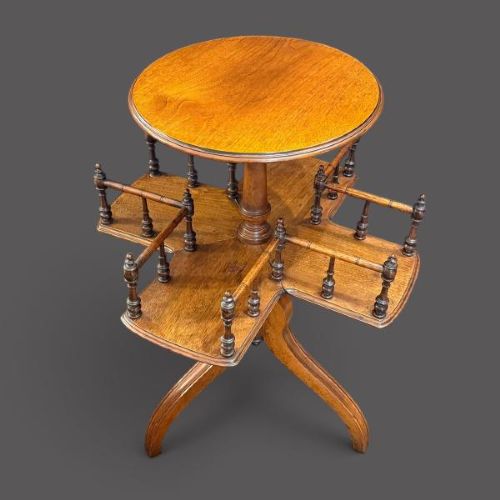
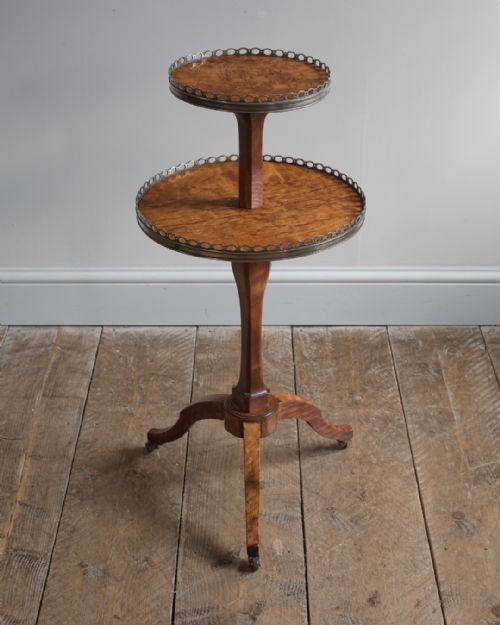
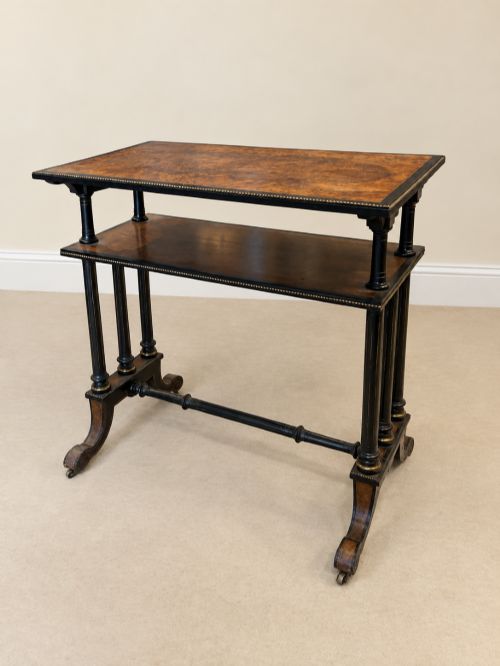
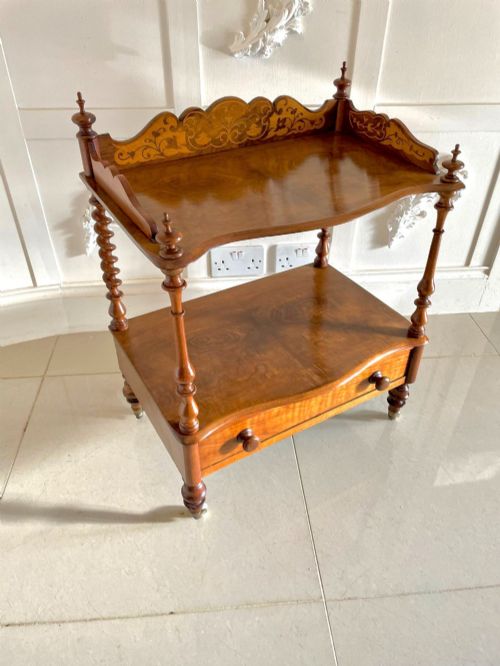
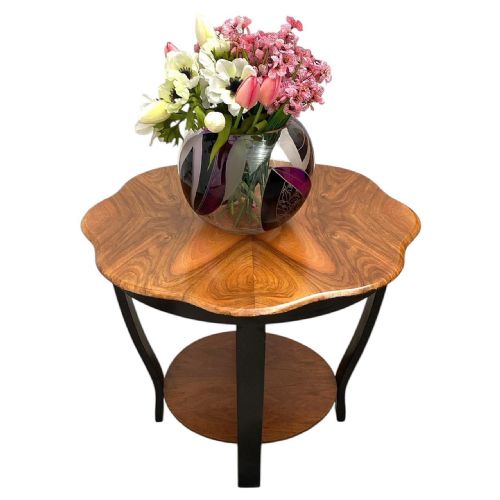
A walnut tiered occasional table is a compact piece designed for display and convenience, spanning periods from the Victorian era through the Edwardian years and into Art Deco designs. These pieces appear as side tables, coffee tables, etageres, and nests, offering multiple surfaces stacked vertically.
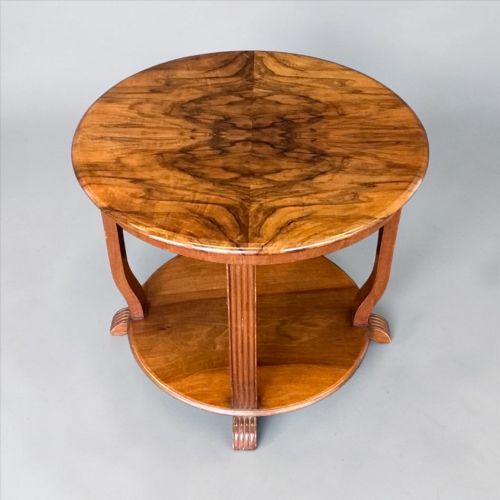
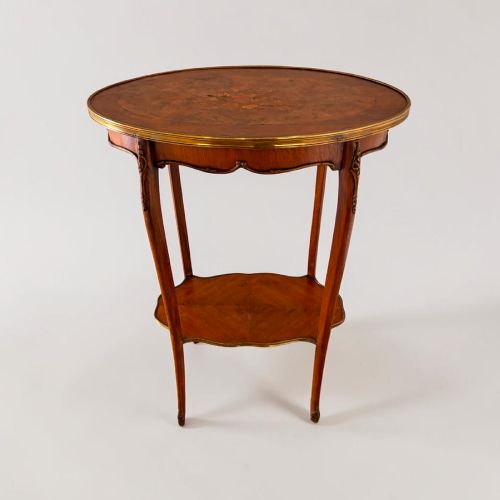
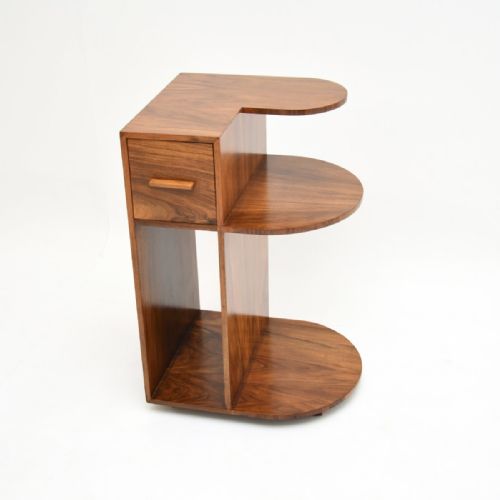
The most common examples encountered here date from the Art Deco period of the 1930s, utilising figured veneers and clean geometric lines across two or three tiers. Earlier Victorian and Edwardian iterations tend to incorporate turned legs, inlay, and brass castors for mobility.
Makers such as Liberty of London and workshops in the taste of Gabriel Viardot also contribute to the stylistic range, bringing Arts and Crafts principles or Chinoiserie details to the basic tiered form.
Materials and construction
Cabinet makers utilised solid walnut alongside decorative veneers like burr walnut and maple to achieve striking surface patterns across the tiers. Supporting structures frequently integrate turned legs, brass mounts, and ebonised wood accents.
Construction techniques combine traditional joinery with veneer pressing, allowing workshops to display the natural figuring of the timber on table tops and shelves. Additional elements such as marble inserts, ormolu, and original castors appear on specific regional and period pieces.
Walnut Tiered Occasional Table Retail Price Guide 2026
Typical asking prices for walnut tiered occasional table among the pieces listed under this phrase on Sellingantiques today, from the lower quarter to the upper quarter. They describe what is for sale here now, not the wider market.
Several tables include built-in magazine racks or newspaper slots, proving that nineteenth-century readers needed entertainment close at hand just as much as modern ones do.
Judging quality
Quality rests in the selection of the timber veneer and the crispness of the joinery connecting the tiers. Tables featuring book-matched burr walnut or detailed marquetry demonstrate a higher level of cabinet work than plain surfaces.
The integration of secondary materials, such as heavy brass fittings, solid turned supports, and well-fitted tiers, separates standard utility furniture from finer decorative examples.
Liberty of London·William Birch·Gabriel Viardot·Tehan
The Walnut Tiered Occasional Table Glossary
- Burr walnut
- A figured timber harvested from the growths of walnut trees, prized for its swirling grain patterns.
- Etagere
- A piece of furniture consisting of a set of open shelves for displaying small objects.
- Canterbury
- A low stand traditionally used for holding sheet music or magazines, often combined with tiers.
- Ormolu
- Gilded bronze ornamentation applied to furniture, popular in French-influenced design styles.
Walnut Tiered Occasional Table: Frequently Asked Questions
Where should I place a tiered table?
These compact pieces fit easily beside a sofa or chair, providing multiple surfaces for lamps, books, or decorative items without taking up excessive floor space.
Their tiered construction makes them particularly useful in corners or beside beds where vertical storage and display matter.
How do I identify an Art Deco tiered table?
Art Deco examples, typically dating around 1930, lean on geometric symmetry, waterfall edges, and highly figured walnut veneers across two or three levels.
They lack the elaborate carving or applied brass mounts seen on earlier Victorian and Edwardian pieces, focusing instead on the natural grain of the wood.
Are these tables suitable for daily use?
Built from sturdy hardwoods and veneers, these tables handle everyday placement of cups and books while serving as functional display furniture.
Care should be taken with moisture and direct heat to protect the polished walnut surfaces and delicate veneers.
What is the difference between an etagere and an occasional table?
An etagere specifically consists of multiple open shelves designed primarily for display, whereas an occasional table serves a general support function with one or more surfaces.
Many tiered designs overlap both categories, combining functional table tops with subordinate display shelves.