



Walnut Occasional Cabinet
A walnut occasional cabinet brings rich grain and practical surface area to a room, spanning Victorian utility and Art Deco geometry.
Walnut Occasional Cabinet
A walnut occasional cabinet is a versatile small furniture form designed for specific domestic tasks rather than central room placement. These pieces include bedside tables, side cabinets, sewing tables, and lamp tables created during the nineteenth and twentieth centuries.
The selection here encompasses Victorian examples alongside Art Deco and French styles. Makers utilised walnut solids and veneers to produce compact pieces that served as side tables, display surfaces, and storage stands.
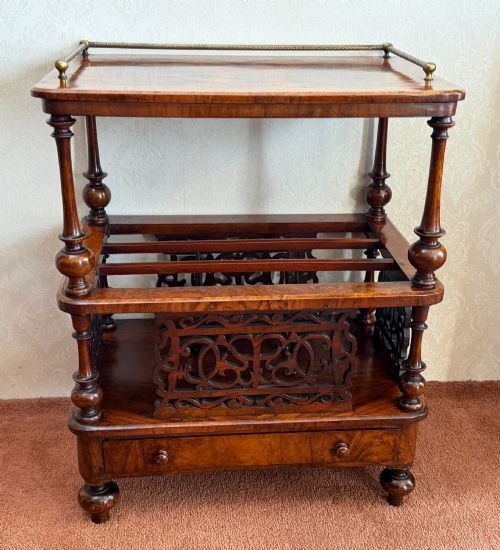
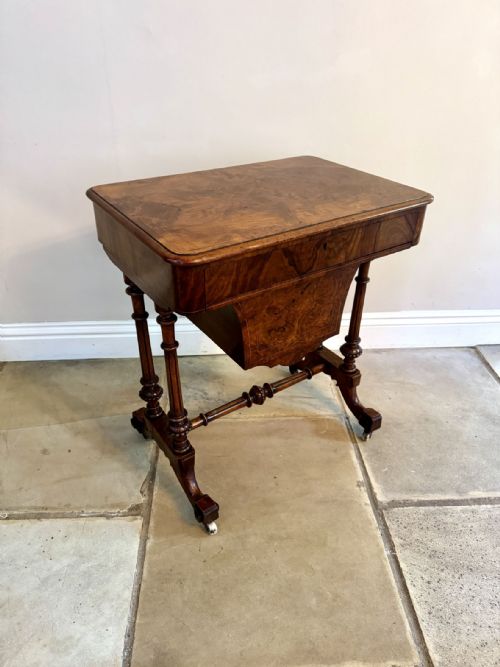
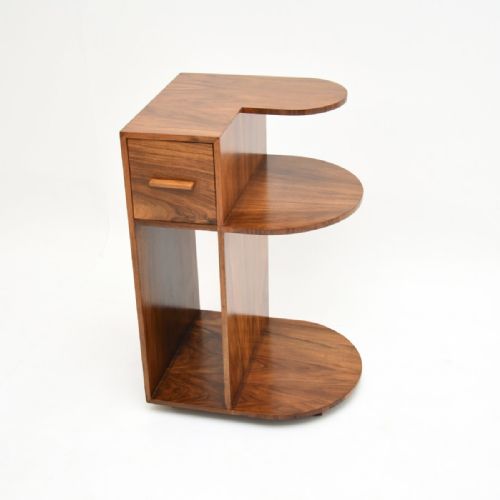
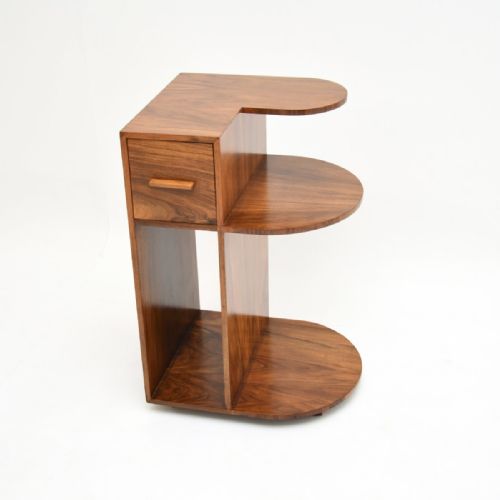
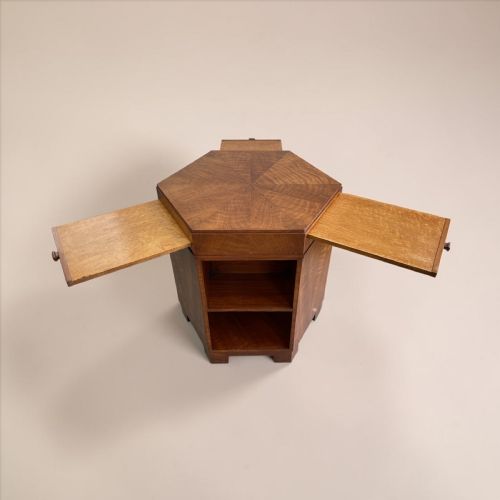
Victorian pieces tend to feature inlaid details, turned legs, and compartmentalised interiors for needlework or smoking accessories. Later twentieth-century versions lean towards streamlined modernist forms, tiered structures, and figured grain patterns.
Materials and construction
Construction relies heavily on walnut and burr walnut, valued for deep colour and decorative grain. Workshops applied walnut veneer over secondary timbers to create patterned surfaces on tabletops and cabinet doors.
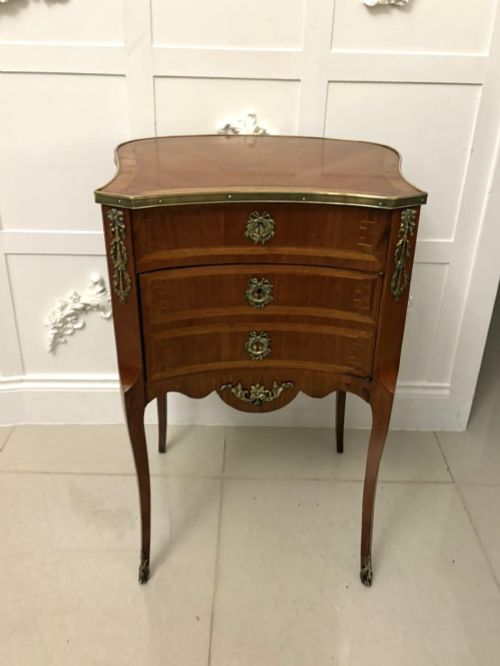
Many items incorporate contrasting elements such as brass mounts, ormolu, glass, ebonised wood, and satinwood stringing. These additions highlight the structural lines of side cabinets, etageres, and occasional tables.
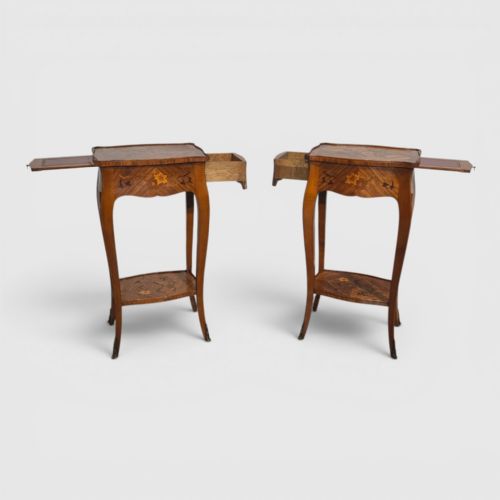
Cabinetmakers employed techniques like marquetry and parquetry to form geometric or floral patterns across table tops and drawer fronts. Turned legs, casters, and tambours complete the construction of these functional stands.
Walnut Occasional Cabinet Retail Price Guide 2026
Typical asking prices for walnut occasional cabinet among the pieces listed under this phrase on Sellingantiques today, from the lower quarter to the upper quarter. They describe what is for sale here now, not the wider market.
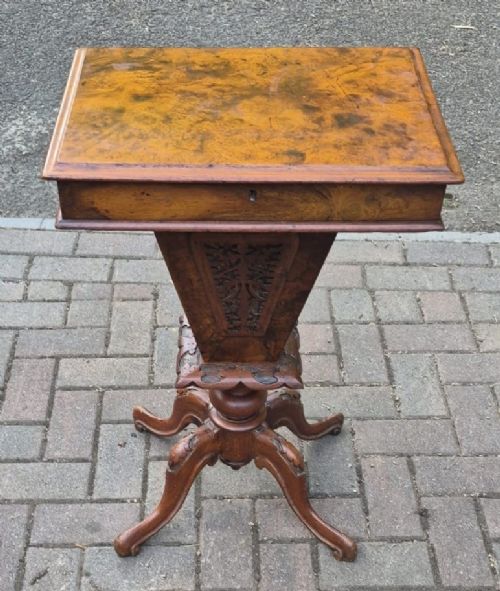
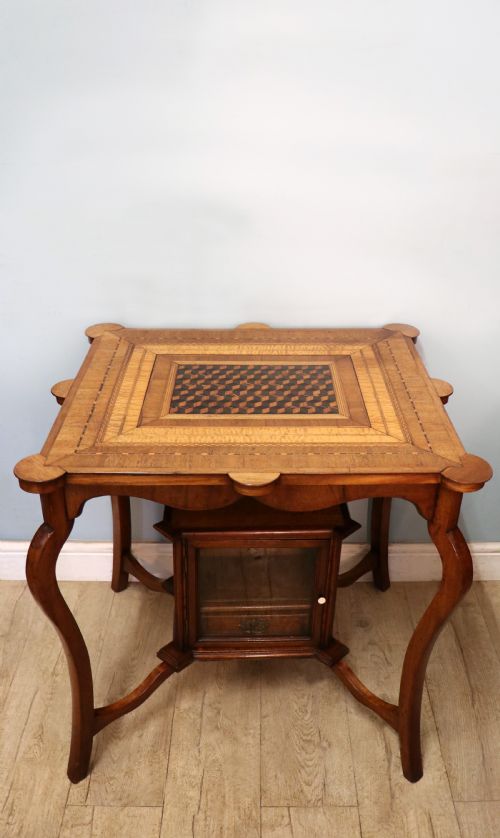
One late Victorian walnut table doubles as a smokers' cabinet, keeping pipes tucked safely beneath the writing surface.
Judging quality in walnut furniture
Quality rests primarily on the selection of the wood veneer and the precision of the joinery. Burr walnut with lively, matching grain commands attention, whereas plain timber yields a more subdued visual impact.
The integration of secondary materials dictates the overall finish. Fine brass mounts, crisp marquetry, and clean interior compartments distinguish ambitious workshop production from standard commercial output.
Proportion and structural integrity matter greatly in smaller furniture forms. Pieces that retain original casters, smooth-running drawers, and well-fitted doors demonstrate durable construction across Victorian and Art Deco periods.
Hille·Waring & Gillow
The Walnut Occasional Cabinet Glossary
- Burr walnut
- A prized veneer taken from the growth growths of the walnut tree, showing intricate swirling patterns. This timber was frequently selected for the top surfaces of decorative side cabinets and tables.
- Canterbury
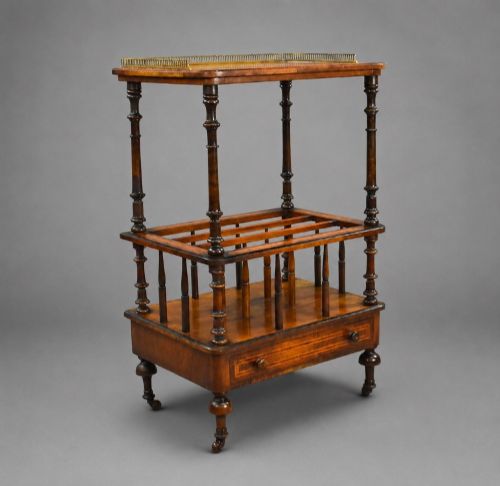
- A low stand featuring partitions, originally designed for sheet music or books. Victorian makers often combined this form with drawers and tabletop surfaces.
- Etagere
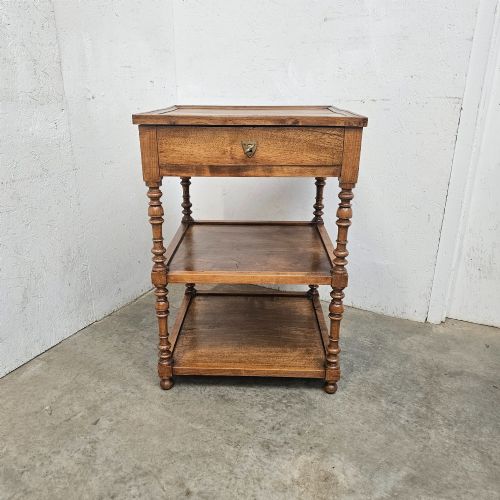
- A set of open shelves for displaying small objects or books. Examples in this category utilise turned walnut supports.
- Ormolu
- Gilded bronze mounts applied to furniture for decorative effect. French pieces from the nineteenth century frequently incorporate these metal ornaments.
- Marquetry
- Inlaid patterns formed from different coloured woods fitted into a veneer ground. This technique decorates the surfaces of French and English side tables.
Walnut Occasional Cabinet: Frequently Asked Questions
What is a walnut occasional cabinet used for?
These compact pieces provide convenient surface space and minor storage beside seating or beds.
They accommodate lamps, drinks, books, or specialist items like sewing materials depending on the internal configuration.
How do I identify Art Deco pieces?
Art Deco pieces from the 1920s and 1930s focus on geometric lines and figured walnut grain without heavy carving.
They often feature streamlined tiers, round or rectangular tops, and modernist forms stripped of Victorian ornamentation.
Are these cabinets made of solid walnut?
Most examples utilise a combination of solid timber frames and decorative walnut veneers applied to stable secondary woods.
This technique allowed makers to display dramatic burr patterns across large flat surfaces without risking major warping.
How do I care for antique walnut?
Protect the polished surface by keeping the wood away from direct heat sources and strong sunlight.
Regular dusting with a soft cloth preserves the natural lustre of the French polish or wax finish.