

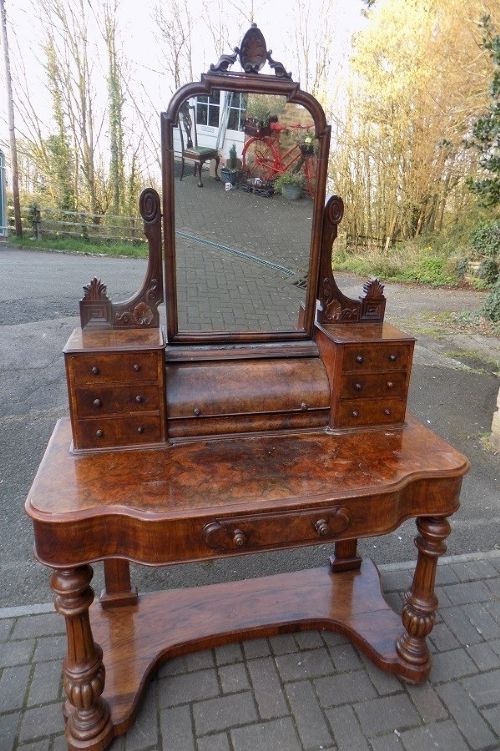
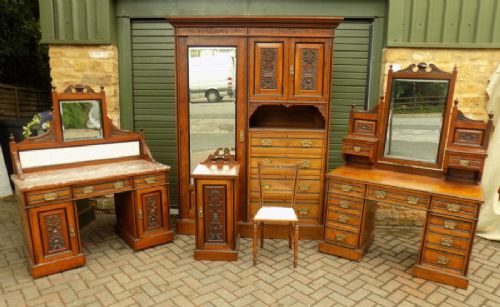


Walnut Duchess Table
These walnut duchess table pieces bring Victorian burr walnut and mirrored glass together for a functional centrepiece.
Walnut Duchess Table
A walnut duchess table is a Victorian bedroom piece designed for grooming, combining a central surface with a mirror and often smaller accessory tiers. These items appear across the Victorian period, including specific dates such as eighteen-fifty, eighteen-eighty, and eighteen-ninety, as well as the nineteenth century broadly.
The versions most commonly met on this page are Victorian burr walnut dressing tables and pedestal dressing tables. Variations also include broader bedroom suites and toilet mirrors influenced by the aesthetic movement.
The form is built around display and personal care, incorporating mirror glass and occasionally marble surfaces. Pieces range from large pedestal formats to more compact dressing table designs.
How they were made
Cabinet makers utilised burr walnut veneers to create rich, figured grain patterns across the main surfaces of each table. Solid walnut provides the structural framework, while brass fittings add functional detail to drawers and mounts.
Mirrored glass forms a central component, secured within carved wooden frames that reflect the aesthetic movement and Victorian design sensibilities. Selected pieces incorporate marble inserts alongside traditional timber construction.
Walnut Duchess Table Retail Price Guide 2026
Typical asking prices for walnut duchess table among the pieces listed under this phrase on Sellingantiques today, from the lower quarter to the upper quarter. They describe what is for sale here now, not the wider market.
Listings span the Victorian period, incorporating burr walnut, plain walnut, brass, marble, and mirrored glass across dressing tables and bedroom suites.
What varies in quality
The grade of burr walnut veneer dictates the visual depth of the surface, with tighter and more symmetrical grain patterns marking superior examples. Carving crispness around the mirror frames and structural supports also separates standard workshop output from finer productions.
The integration of secondary materials such as marble and brass hardware influences the overall presence of the dressing table. Better proportioned pedestals and substantial mirror supports demonstrate greater care in construction.
The Walnut Duchess Table Glossary
- Burr walnut
- A figured wood veneer taken from the wart-like growths on walnut trees, prized for its swirling grain patterns. It forms the primary decorative surface on Victorian dressing tables.
- Duchess dressing table
- A specific Victorian vanity table style featuring a large attached mirror, often swivelling, above a surface with smaller trinket drawers. This form defines the core pieces found within this category.
- Pedestal dressing table
- A configuration where the main table rests on two banks of drawers rather than simple legs. This layout provides substantial storage beneath the working surface.
- Aesthetic movement
- A late nineteenth-century design current emphasising visual beauty over narrative content. Pieces from this influence show refined decorative restraint.
Walnut Duchess Table: Frequently Asked Questions
What is a walnut duchess table?
A walnut duchess table is a Victorian vanity piece featuring a prominent swivelling mirror and integrated surface storage.
These dressing tables were central to nineteenth-century bedroom furniture suites.
How do I date a walnut duchess table?
Dating relies on stylistic markers from the Victorian period, spanning the mid to late nineteenth century.
Specific construction traits and aesthetic movement influences help narrow the manufacturing decade.
Where were these tables used?
They were designed for principal bedrooms as dedicated stations for personal grooming and hair styling.
Their substantial mirrors and surface space suited the domestic routines of Victorian households.
How do I care for burr walnut furniture?
Burr walnut requires stable indoor humidity levels and protection from direct sunlight to prevent veneer drying.
Regular dusting with a dry cloth maintains the polished finish of the timber.