

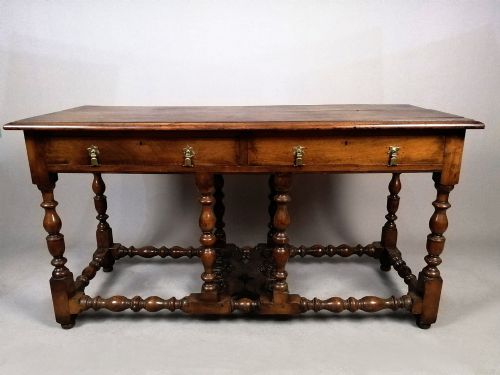

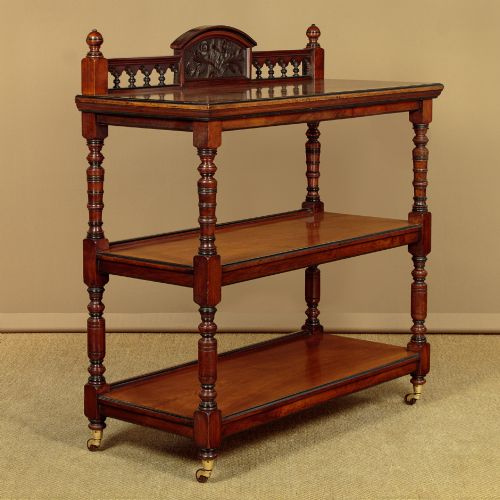


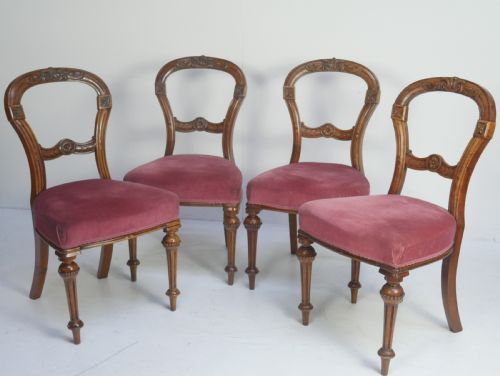
Walnut Dining Room Furniture
Walnut dining room furniture brings rich timber tones and striking grain patterns to the dining space, uniting practical serving pieces and dining chairs from the nineteenth and twentieth centuries.
Walnut Dining Room Furniture
Walnut dining room furniture encompasses a range of seating and serving pieces designed for the dining room, spanning from the nineteenth century to the Art Deco era. Buyers seeking walnut dining room furniture will encounter large sideboards, extending tables, and dining suites originating from Victorian, Edwardian, and later twentieth-century workshops.
Nineteenth-century examples often display deep carved details and mirror backs, while later 1930s pieces showcase figured burr veneers and streamlined silhouettes. The range accommodates formal dining suites as well as individual serving pieces like buffets and credenzas.
How they were made
Cabinet makers utilised solid timber and decorative walnut veneer, often selecting burr walnut for dramatic grain movement on cabinet doors and tabletops. Secondary materials such as brass fittings, glass panels, and velvet upholstery appear across various pieces to complement the primary wood.
Construction techniques evolved from nineteenth-century hand-carved timber frameworks to the smooth, curved surfaces characteristic of 1920s and 1930s Art Deco cabinet making. Makers applied polished finishes to accentuate the natural colour and figure of the walnut.
Walnut Dining Room Furniture Retail Price Guide 2026
Typical asking prices for walnut dining room furniture among the pieces listed under this phrase on Sellingantiques today, from the lower quarter to the upper quarter. They describe what is for sale here now, not the wider market.
Listings feature dining room pieces spanning the nineteenth century through to the 1930s, utilising solid walnut, burr walnut, and walnut veneer.
What varies in quality
Quality in these dining pieces rests upon the selection and matching of the walnut timber or veneer, with symmetrical grain patterns commanding greater attention. The crispness of carved ornamentation on Victorian or Gothic Revival pieces also indicates the maker's skill.
Structural integrity and the retention of original hardware, such as brass handles and glass doors, distinguish superior examples. Pieces bearing stamps or attribution to notable makers like Epstein reflect higher standards of design and execution.
Epstein·Hamptons of Pall Mall London·Harry and Lou Epstein
The Walnut Dining Room Furniture Glossary
- Burr walnut
- A highly figured wood veneer derived from the growth excrescences of walnut trees, prized for its swirling patterns. It appears frequently on cabinet doors and tabletops.
- Cellarette
- A lockable container used to hold bottles of wine and spirits near the dining table. They range from freestanding pieces to built-in compartments.
- Dumb waiter
- A tiered serving stand or trolley used to hold dishes and cutlery beside the dining table. These items allow for service without the need for attendants.
- Credenza
- A sideboard or buffet cabinet typically used for storing dining china and serving food. Victorian examples often incorporate glass doors or mirror backs.
- Veneer
- A thin layer of superior walnut wood applied to a base timber to create decorative surfaces. This technique allows cabinet makers to display striking grain formations.
Walnut Dining Room Furniture: Frequently Asked Questions
How do I choose the right sideboard?
Consider the scale of your dining space and your storage requirements for tableware and serving items. Sideboards range from compact cabinets to large Victorian mirror-back designs.
Match the period and wood tone to your existing dining table and chairs for a cohesive room scheme.
What is a dumb waiter used for?
A dumb waiter serves as a tiered helper beside the dining table to hold extra dishes, glasses, or bottles during a meal. Nineteenth-century examples often feature revolving or multi-tiered shelves.
Today they function effectively as display stands or corner serving tables in a dining room.
How do I care for walnut furniture?
Keep walnut pieces away from direct sunlight and heat sources to prevent the timber and veneer from drying out. Dust regularly with a soft, dry cloth and apply appropriate furniture wax sparingly.
Avoid using harsh chemical polishes that can damage the polished finish over time.
How do I date a walnut sideboard?
Examine the overall style, construction methods, and hardware to determine the period of manufacture. Victorian pieces often display heavy carving, whereas 1930s Art Deco items feature smooth burr veneers and clean lines.
Maker stamps or labels inside drawers can also provide specific chronological evidence.