



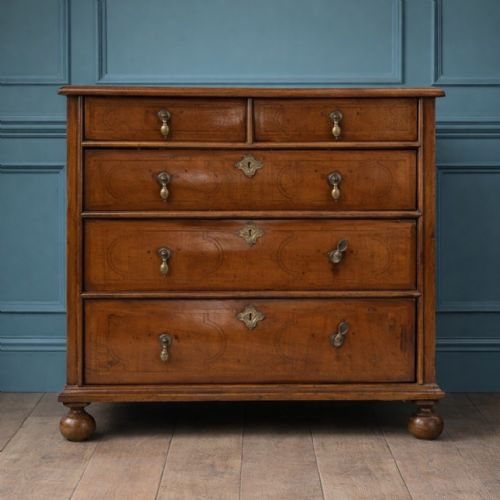


Walnut Chest Bun Feet
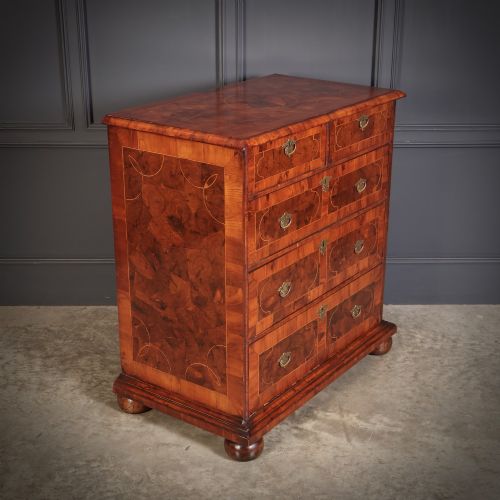
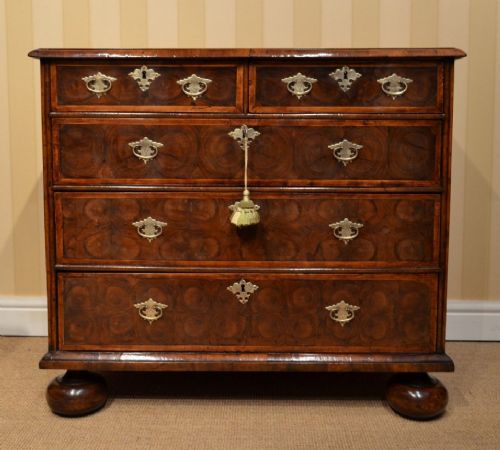
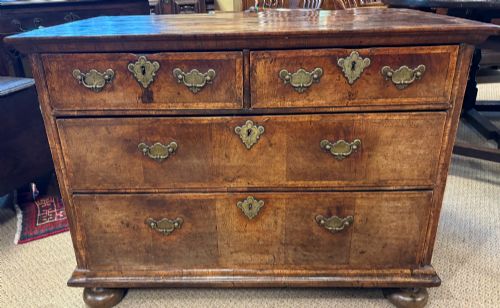
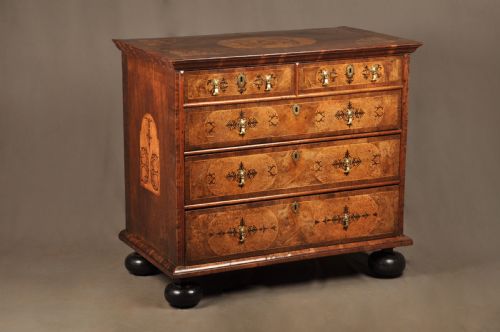
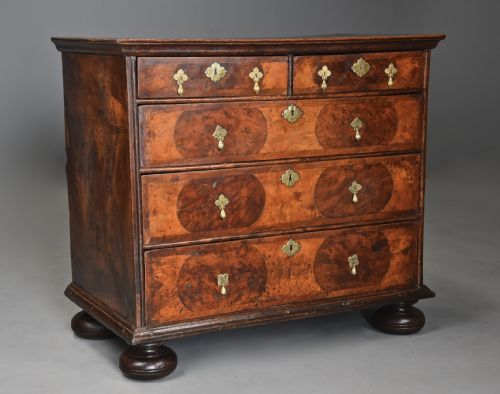
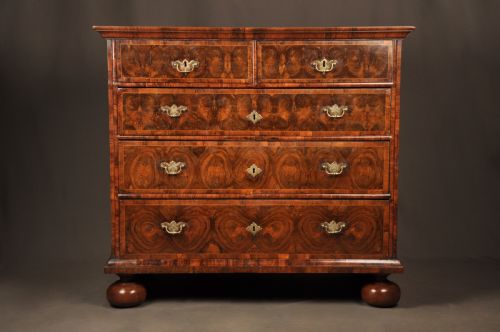
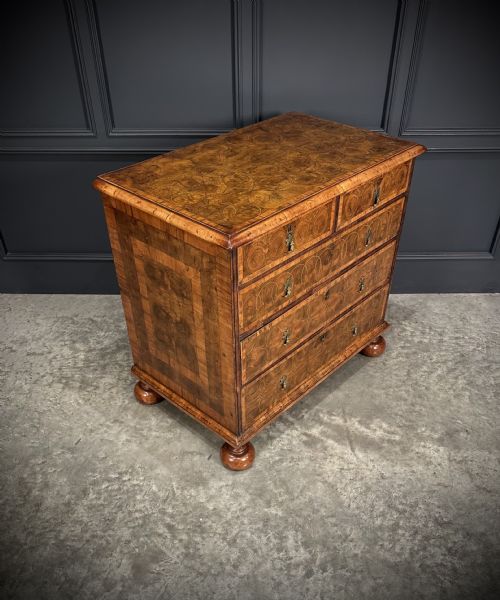
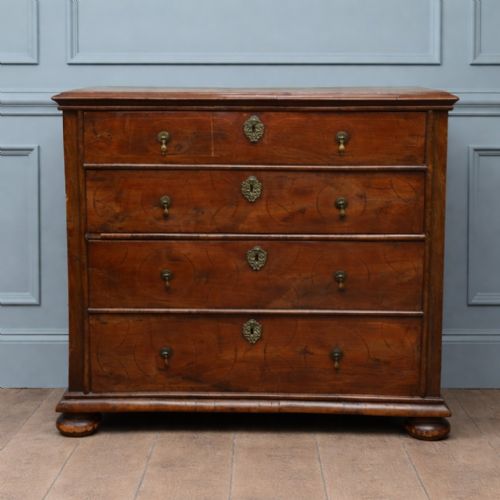
These walnut chest bun feet pieces are substantial early storage forms defined by richly figured veneers and raised on turning.
Walnut Chest Bun Feet
A walnut chest bun feet search brings up early forms primarily originating from the seventeenth century, the William and Mary period, and the Queen Anne era. Buyers encounter chests of drawers, bureaux, cabinets on chests, and miniature furniture built with these characteristic low turned supports.
The material palette spans standard walnut, burr walnut, and olivewood, often enhanced with marquetry inlay or geometric oyster veneers. Most examples date from the 17th century and early 18th century, though Victorian and Georgian interpretations also appear.
How they were made
Cabinetmakers constructed these carcases using primary woods such as walnut, oak, and fruitwood, frequently applying decorative veneers sliced into circular oyster patterns or arranged in elaborate arabesque and floral marquetry designs. Boxwood and other contrasting timbers provided delicate stringing lines to frame the drawer fronts and top panels.
Makers integrated brass drop handles and escutcheons to complement the dark wood tones while mounting the heavy carcases upon solid turned bun feet. Surface treatments relied on natural polishing techniques that highlighted the deep grain and contrasting growth rings of burr and figured timber.
Site listings demonstrate that these forms span from the 17th century through the Victorian era, utilising walnut, burr walnut, oak, and marquetry inlay.
What varies in quality
The ambition of the surface decoration dictates the standing of an individual piece, moving from plain figured walnut boards to complex floral marquetry and dense oyster veneering. The intricacy of the inlay work and the harmonious matching of grain across multiple drawers separate standard examples from exceptional ones.
Proportion and period integrity define the upper tier of the range, particularly where original bases and turned supports remain intact. The quality of the underlying construction in oak or fruitwood supports the stability of the veneered surfaces over centuries of use.
The Walnut Chest Bun Feet Glossary
- Bun feet
- Solid turned supports shaped like small spheres or flattened globes that elevate the carcase from the floor. They are typical of late seventeenth-century and early eighteenth-century case furniture.
- Oyster veneering
- The technique of slicing small branches diagonally to produce circular or oval motifs resembling oyster shells. This method creates repeating patterns across drawer fronts and top surfaces.
- Marquetry
- The art of applying decorative veneer pieces in floral, geometric, or arabesque designs onto a carcase. Craftsmen used contrasting woods such as boxwood and walnut to achieve striking visual depth.
- Burr walnut
- Timber harvested from walnut tree growths or burls, prized for its swirling, highly figured grain patterns. It provided elite cabinetmakers with dramatic surfaces for principal display pieces.
- Bureau
- A writing desk featuring a sloping fall-front that opens to reveal internal compartments and drawers. These forms frequently share the same underlying period construction and low supports as standard chests.
Walnut Chest Bun Feet: Frequently Asked Questions
What is a walnut chest bun feet?
It is an early form of case furniture, typically originating from the late seventeenth or early eighteenth century, featuring rich wood veneers and raised on distinct turned feet.
These pieces range from standard drawer chests to intricate marquetry bureaux and cabinets designed for domestic storage.
How do I date a walnut chest?
Dating relies on observing construction methods, timber choices, and decorative styles such as oyster veneering or floral marquetry associated with the William and Mary and Queen Anne periods.
Earlier examples often display dense grain patterns and specific brass hardware configurations that distinguish them from later Victorian revivals.
Were bun feet always original?
Many surviving early pieces have encountered alterations, and supports are sometimes replaced or restored to match the original seventeenth-century proportions.
Examining the underlying timber around the base helps determine whether the feet match the primary period of the carcase.
How should I clean walnut veneer?
Maintenance requires gentle dusting with a soft cloth and avoiding excessive moisture or modern chemical polishes that can damage historic surfaces.
Preserving the natural patina depends on maintaining stable room humidity and applying occasional traditional waxes suited to antique timbers.