





Walnut Bedroom Bench
A walnut bedroom bench brings rich timber grain and comfortable seating to the foot of the bed, shaped by periods from Victorian to Art Deco.
Walnut Bedroom Bench
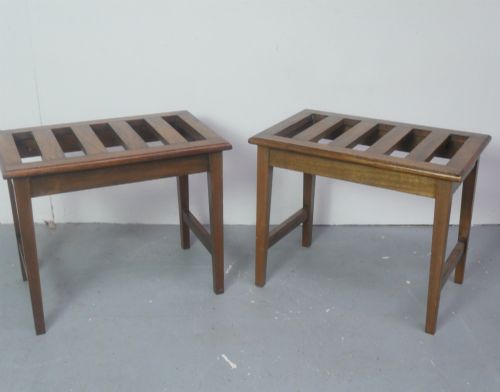
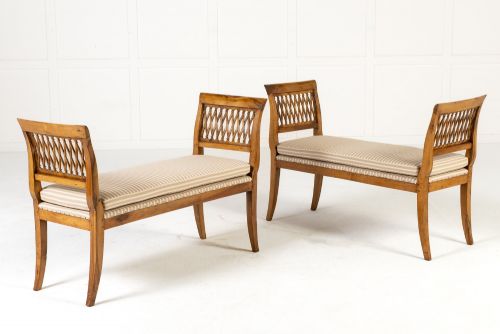
When you search for a walnut bedroom bench, you encounter various low seating forms including window seats, dressing table stools, luggage racks, and salon benches. These pieces originate from the nineteenth century, the Edwardian era, and the nineteen-thirties, with Victorian and nineteenth-century French examples appearing frequently.
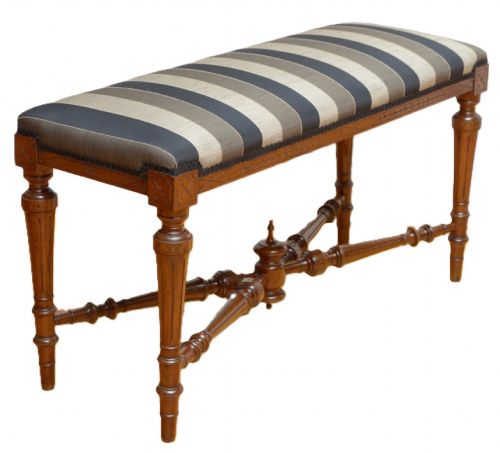
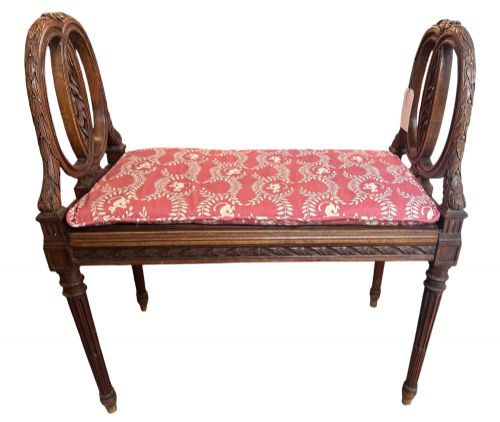
The objects take several distinct shapes, from long window seats and duet stools to compact dressing stools and hall benches. Forms range from English country house styles and Georgian revivals to French Louis XVI and Art Deco designs.
Makers and makers' circles such as Harry and Lou Epstein contribute to the twentieth-century selection, while unassigned maker pieces dominate the earlier periods. Buyers select these items for placement at the foot of a bed or beneath a window.
Materials and construction
Makers fashioned the frames primarily from solid walnut and oak, often adding hand-carved details or turned supports such as twisted rope legs and fluted legs. Brass fittings appear on functional pieces like luggage racks, providing structural accents.
Upholstery forms a vital component of the construction, utilising textiles, wool, velvet, and woven fabric alongside newer coverings like beige linen and needlepoint. Restorers frequently renew these fabric elements while preserving the original timber frames beneath.
Walnut Bedroom Bench Retail Price Guide 2026
Typical asking prices for walnut bedroom bench among the pieces listed under this phrase on Sellingantiques today, from the lower quarter to the upper quarter. They describe what is for sale here now, not the wider market.
The listings show walnut framing paired with textiles, velvet, wool, and brass across nineteenth-century, Edwardian, and nineteen-thirties periods.
Distinguishing quality in walnut bedroom bench items
The refinement of the timber carving and the integrity of the walnut frame separate standard examples from finer works. Crisp detailing on French carved window seats or distinct Art Deco lines reflect superior cabinet-making standards.
The execution of the upholstery and the choice of covering material also influence the standard of the piece. Items retaining period needlepoint or executed in quality velvet and linen demonstrate higher levels of original commissioning and subsequent care.
Harry and Lou Epstein
The Walnut Bedroom Bench Glossary
- Window seat
- A long, narrow upholstered bench designed specifically to fit within a window recess. These items often feature carved wooden frames and cushioned tops.
- Duet stool
- An extended seating form built to accommodate two people side by side at a piano or dressing table. They frequently date to the Victorian period.
- Luggage rack
- A low bench-height frame traditionally placed in guest bedrooms for resting suitcases. Examples often incorporate folding wooden supports and brass hardware.
- Needlepoint
- Hand-stitched canvas work utilising wool yarn to create patterned textile coverings. This technique appears on historic dressing table stools.
- Fluted leg
- A vertical column decorated with parallel shallow grooves. This classical woodworking detail adorns hall benches and stools.
Walnut Bedroom Bench: Frequently Asked Questions
Where do I put a walnut bedroom bench?
These benches sit comfortably at the foot of a bed, beneath a bedroom window, or beside a dressing table. Their compact footprint makes them practical for smaller spaces.
Longer window seats suit placement against walls or windows, while smaller dressing stools fit neatly under vanity tables.
Are these benches sturdy enough for daily seating?
Solid walnut and oak construction provides strong structural support for everyday use. Many pieces feature robust turned or carved legs built to bear weight.
Check that the frame joints remain tight and secure if you intend to use the bench for regular sitting rather than decorative display.
How do I care for the upholstery?
Care depends entirely on the specific textile used, whether it is wool, velvet, woven fabric, or needlepoint. Regular gentle brushing removes surface dust from older fabrics.
Pieces with newly recovered linen or fresh fabric require standard textile maintenance to preserve the clean appearance of the seat.
How can I tell a Victorian bench from an Art Deco one?
Victorian and nineteenth-century pieces display ornate carved woodwork, turned legs, and traditional silhouettes like French Louis XVI styles or Georgian revivals. Upholstery often involves patterned velvet or needlepoint.
Art Deco items, such as those by Harry and Lou Epstein from nineteen-thirty, exhibit streamlined geometries, smooth surfaces, and minimalist modern forms.