


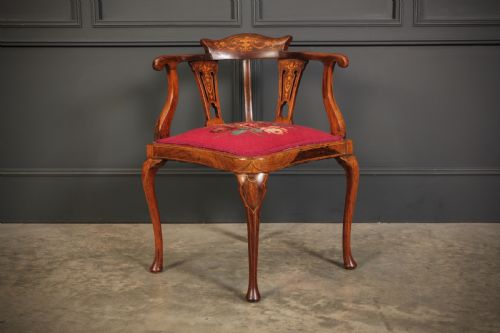


Vintage Writing Chair
These vintage writing chair examples bring functional desk seating to a study, blending mahogany or oak frames with supportive leather or caned seats.
Vintage Writing Chair
When you search for a vintage writing chair, you encounter seating designed for study and correspondence across multiple periods including the Georgian era, Victorian period, and Edwardian years. The forms range from standard desk chairs and library armchairs to corner chairs and variants featuring integrated writing slopes.
The versions most frequently met on this page span solid oak desk chairs from the late nineteenth century to mahogany corner armchairs originating in the eighteenth century. These pieces serve practical functions at a desk while displaying period styles such as Regency, William IV, and Queen Anne Revival.
How they were made
Makers constructed these chairs primarily using solid timbers like mahogany and oak, frequently enhanced with satinwood inlay or marquetry details. Structural integrity relies on traditional joinery methods suited to heavy daily use in studies and libraries.
Upholstery and comfort elements involve materials such as oxblood leather, cane, and brass fittings. Caned bergère seating and carved wooden frames demonstrate the varied techniques employed by period craftsmen.
Vintage Writing Chair Retail Price Guide 2026
Typical asking prices for vintage writing chair among the pieces listed under this phrase on Sellingantiques today, from the lower quarter to the upper quarter. They describe what is for sale here now, not the wider market.
One exceptional armchair includes a built-in writing slope, proving that nineteenth-century multitasking was taken very seriously indeed.
What varies in quality
The upper tier of these chairs is distinguished by refined timber selection, such as figured mahogany or rich oak, combined with intricate satinwood inlay and marquetry. Superior examples exhibit crisply carved details and well-preserved original materials like brass hardware and leather upholstery.
Lesser examples show simpler construction methods and plainer timber without decorative inlay or carving. The overall definition of the carving and the cohesion of the revival style dictate the standing of an individual piece.
The Vintage Writing Chair Glossary
- Corner chair
- A seat designed to fit into the corner of a room, featuring a diagonal orientation with a curved backrest supported by multiple columns.
- Bergère
- An enclosed upholstered armchair with wooden framing, often featuring cane work on the back and sides.
- Marquetry
- Decorative veneer work created by fitting together small pieces of wood, shell, or ivory to form geometric or pictorial patterns on the surface.
- Satinwood inlay
- Contrasting yellowish wood inserted into recesses within a darker primary timber to create decorative borders or motifs.
Vintage Writing Chair: Frequently Asked Questions
What is a vintage writing chair?
A vintage writing chair is a historic seat designed specifically for use at a desk or table while reading and writing. These pieces include specific forms like corner chairs, library armchairs, and desk chairs.
They date from various periods including the Georgian, Victorian, and Edwardian eras, utilising materials like mahogany, oak, and leather.
How do I identify the period?
Period identification relies on observing the timber choice, decorative motifs, and overall furniture style. Georgian and Victorian pieces exhibit distinct structural traits and revival influences.
Cabinetmakers used specific woods and construction techniques that correspond to the eighteenth and nineteenth centuries.
Where were these chairs used?
These chairs were primarily placed in studies, home offices, libraries, and parlours for administrative tasks and correspondence. Their robust construction accommodated long hours of sitting.
Library armchairs and corner chairs offered versatile seating options within domestic interiors of past centuries.
Are leather inserts original?
Leather upholstery on desk chairs and writing furniture can be original or replaced during later conservation work. Examining the wear patterns and attachment methods helps determine the age of the leather.
Oxblood and other coloured leathers provide durable writing surfaces that complement the timber frames.