



Vintage Wood Magazine Stand
A vintage wood magazine stand brings order to print, ranging from Regency canterburys to Edwardian music racks.
Vintage Wood Magazine Stand
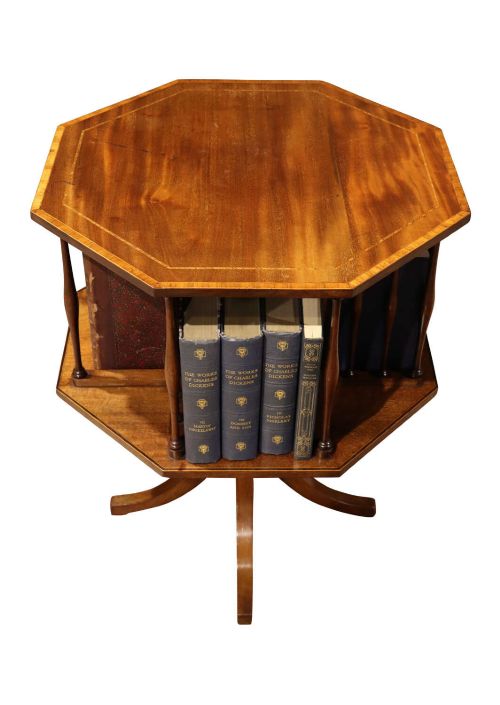
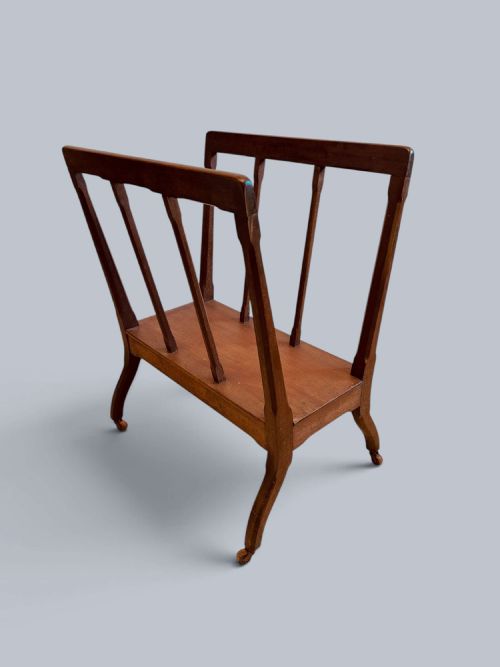
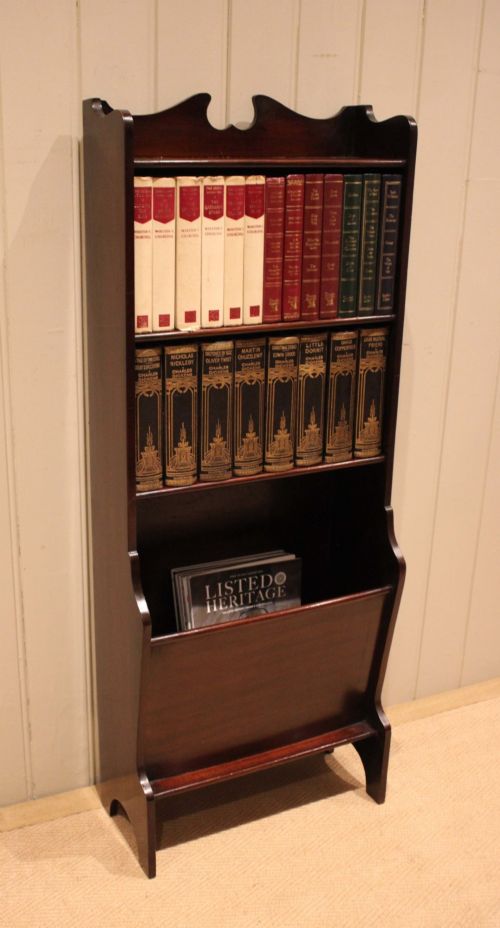
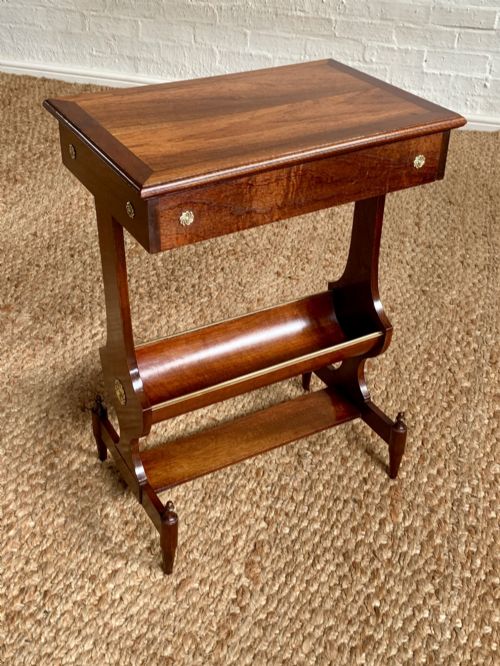
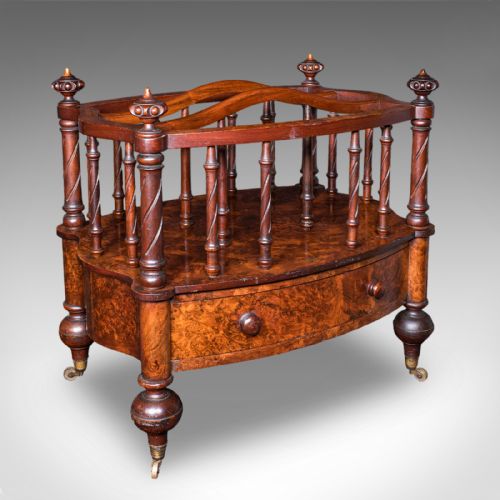
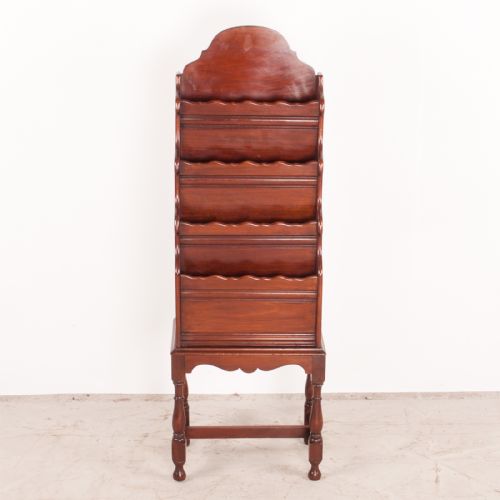
When you search for a vintage wood magazine stand, you encounter pieces designed to hold periodicals, folios, and sheet music. The listings here span numerous forms, including traditional canterburys, boat-shaped racks, folio displays, library book troughs, and music stands.
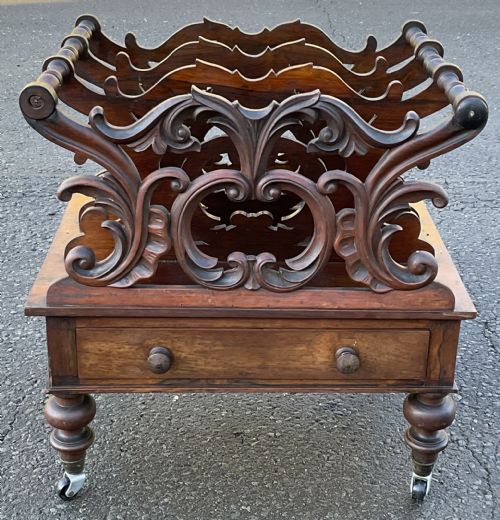
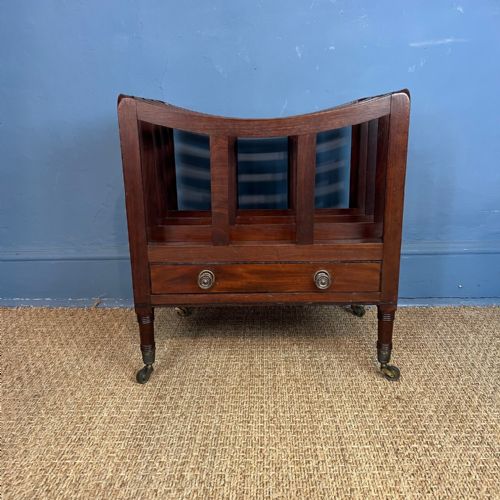
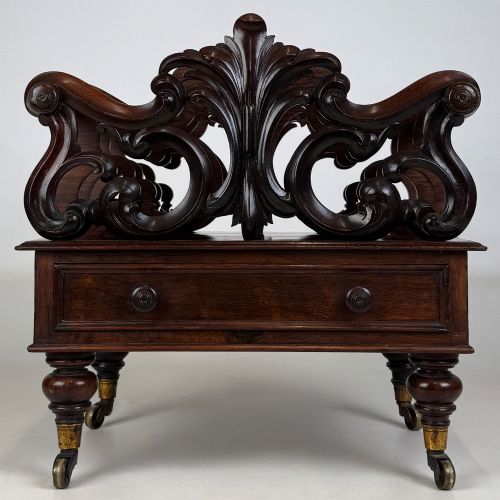
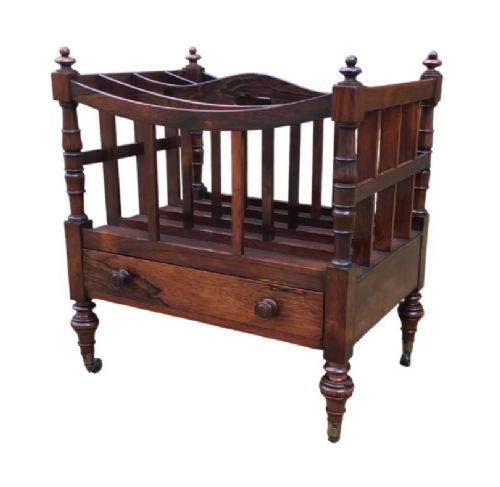
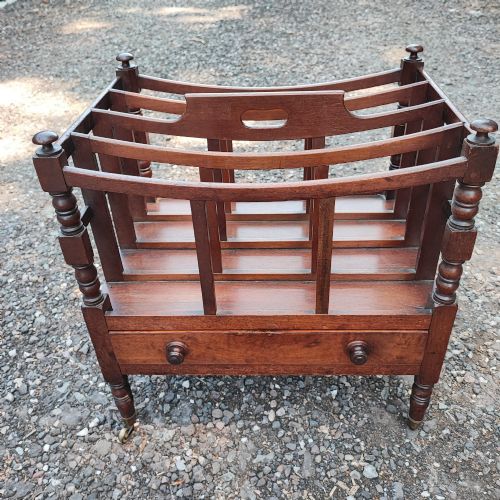
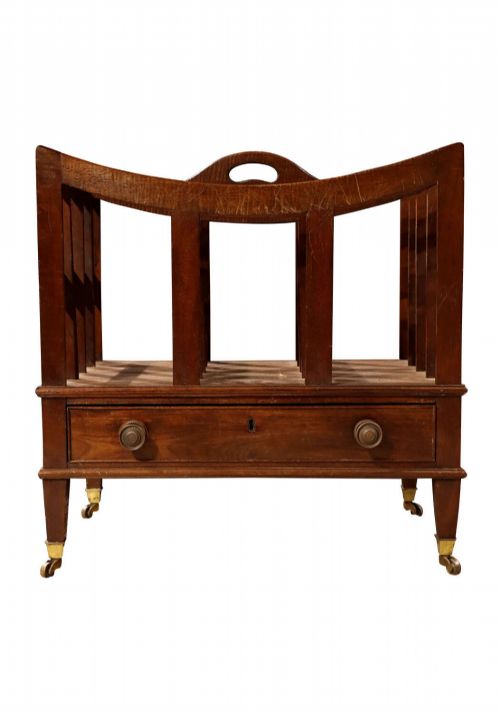
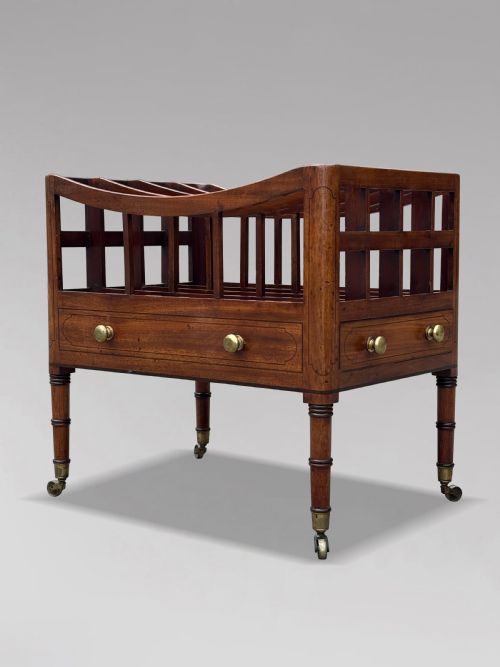
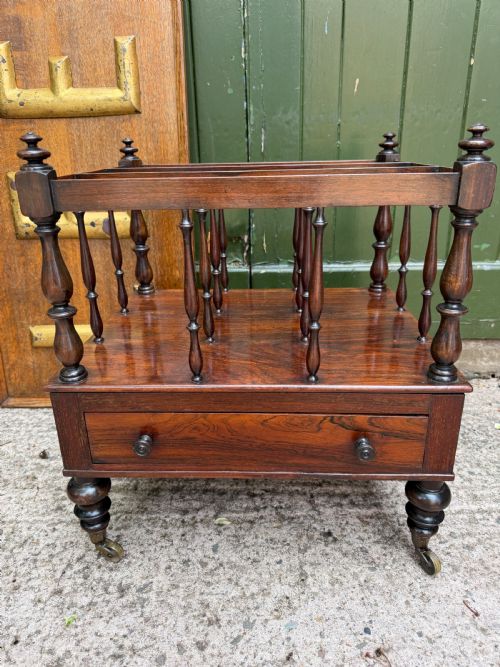
The most common versions met on this page are mahogany and rosewood canterburys from the Regency, Victorian, and Edwardian periods. These often feature partitioned sections for sorting newspapers and magazines, frequently accompanied by a lower drawer for smaller items.
Makers and designers of earlier examples utilised distinct regional aesthetics, moving from George III proportions through William IV weightiness to Edwardian refinement. The selection includes freestanding furniture pieces intended for domestic parlours, libraries, and sitting rooms.
How they were made
Cabinet makers built these stands using dense hardwoods such as mahogany, rosewood, and walnut, often selecting flame or burr veneers for visual depth. Satinwood and painted finishes appear in lighter Edwardian and revival pieces.
Construction techniques include slatted divisions, turned corner posts, and carved details like Prince of Wales feathers. Brass castors, inlaid mother of pearl, and small drawers demonstrate the functional detail applied to domestic paper storage.
Vintage Wood Magazine Stand Retail Price Guide 2026
Typical asking prices for vintage wood magazine stand among the pieces listed under this phrase on Sellingantiques today, from the lower quarter to the upper quarter. They describe what is for sale here now, not the wider market.
Listings feature woods including mahogany, rosewood, walnut, satinwood, and burr walnut across the 18th, 19th, and early 20th centuries.
What varies in quality
Quality rests in the choice of timber and the crispness of the joinery and carving across the divisions. Superior pieces exhibit well-figured mahogany or rosewood, balanced proportions, and integrated drawer construction that operates smoothly.
Lesser items show simpler pine or secondary woods beneath thinner veneers, alongside heavier, less refined turning on the uprights. The presence of original brass castors and uncompromised internal partitions elevates an individual stand.
The Vintage Wood Magazine Stand Glossary
- Canterbury
- A low, freestanding stand with partitioned sections for holding sheet music, newspapers, or periodicals. Named after the Archbishop of Canterbury, who supposedly commissioned the first one.
- Folio stand
- A piece of furniture designed to hold large books, prints, or unbound sheets of paper. These often feature adjustable or slanted uprights for display purposes.
- Book trough
- A compact open-topped container designed to sit on a desk or table to hold a small selection of books. Larger versions stand on the floor for library use.
- Prince of Wales feathers
- A carved decorative motif consisting of three ostrich feathers enclosed by a coronet. This motif frequently appears on Regency and Georgian furniture backs and rails.
- Flame mahogany
- A highly figured wood veneer displaying characteristic flame-like patterns. Cabinet makers achieved this effect by cutting diagonally across the branch-wood bough.
Vintage Wood Magazine Stand: Frequently Asked Questions
What is a canterbury?
A canterbury is a low stand featuring slatted divisions designed to hold sheet music, newspapers, or magazines. They typically include carrying handles and sometimes a base drawer.
Originally developed in the eighteenth century, they evolved into standard parlour furniture throughout the Regency and Victorian eras.
How do I date a wooden stand?
Dating relies on timber choices, construction methods, and stylistic cues such as Regency curves or Edwardian inlay. Examining secondary woods and hardware helps confirm the period.
Makers changed proportions and decorative motifs across the Georgian, Victorian, and Edwardian decades.
Were these stands only for magazines?
These pieces originally served as repositories for sheet music, unbound folios, newspapers, and letters before modern magazines existed. Victorian homes utilised them in drawing rooms and music rooms for daily reading material.
Over time, owners adapted them to hold contemporary periodicals.
How do I care for rosewood?
Rosewood benefits from minimal exposure to direct sunlight and stable indoor humidity to prevent timber movement. Gentle dusting with a dry cloth maintains the surface.
Avoid silicone-based polishes, which can build up on antique wood over the years.