



Vintage Wood Canterbury
A vintage wood canterbury is a compartmentalised stand for papers and music that brings distinct period character to a sitting room.
Vintage Wood Canterbury
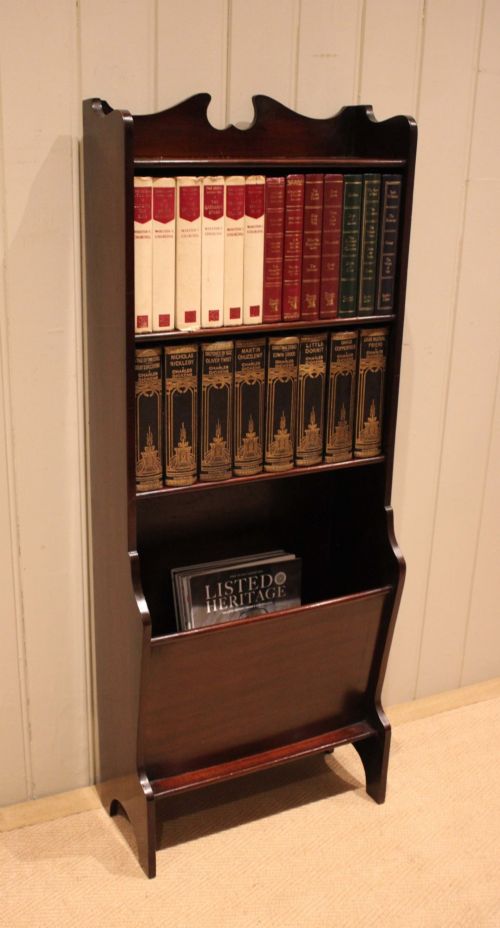
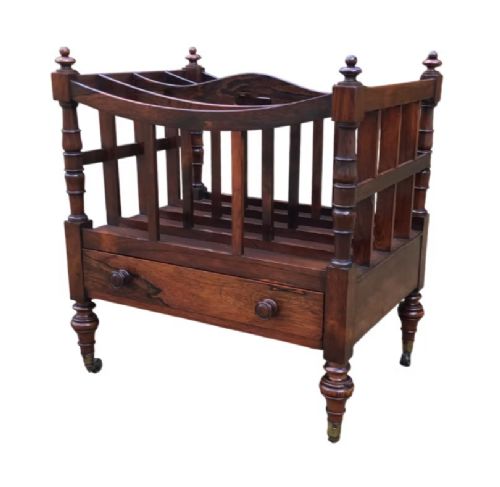
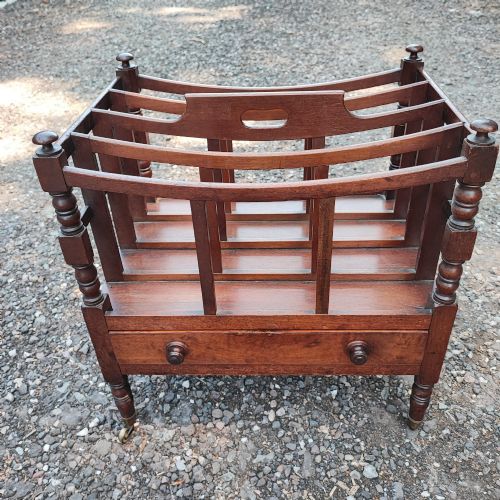
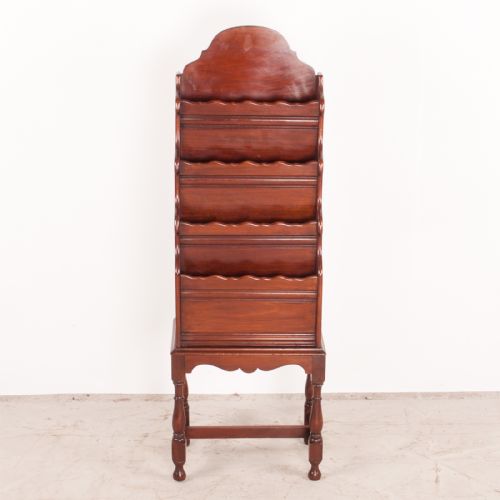
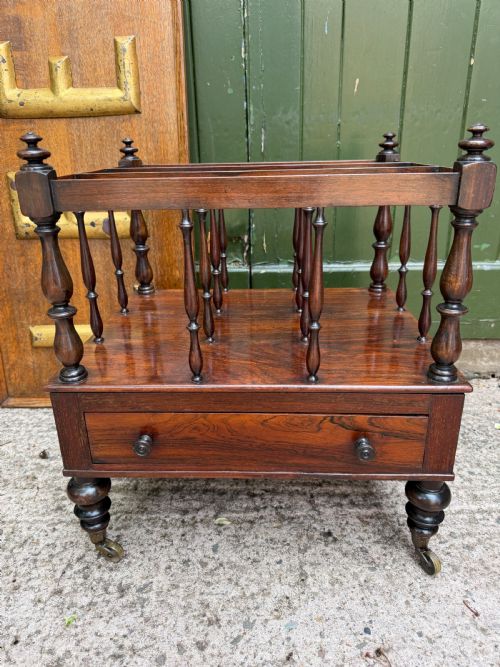
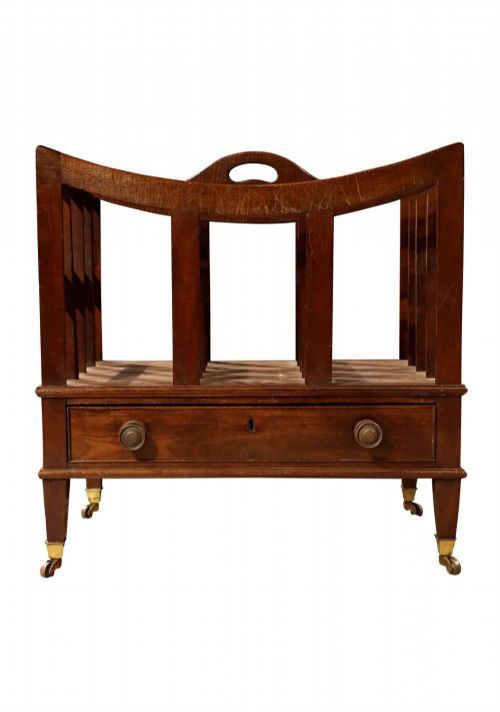
A vintage wood canterbury is a compartmentalised stand designed to hold newspapers, magazines, sheet music, and folios close to hand in a parlour or sitting room. The most common version met on this page is a low, freestanding table frame divided into upright partitions above a single small drawer.
The form developed during the late eighteenth century and continued through the Regency, Victorian, and Edwardian periods in various woods and configurations. Makers adapted the traditional music stand into multi-use racks that functioned as side tables, newspaper tidies, and folio holders.
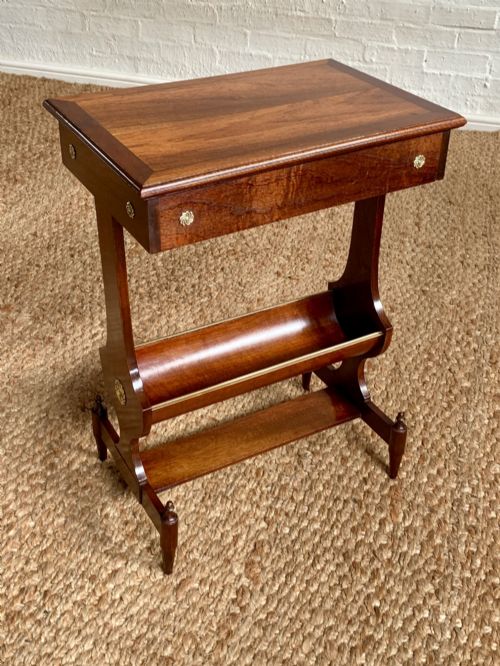
Pieces span several historic eras, including Georgian, Regency, William IV, and Edwardian periods, reflecting changing domestic habits. Whether formed as a boat-shaped rack or a cabinet with a door, each example serves to organise loose papers with architectural grace.
How they were made
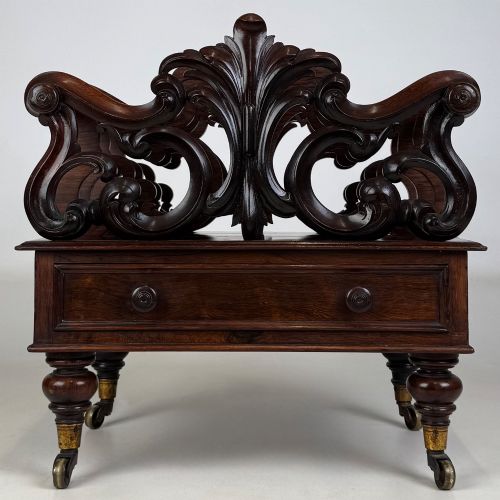
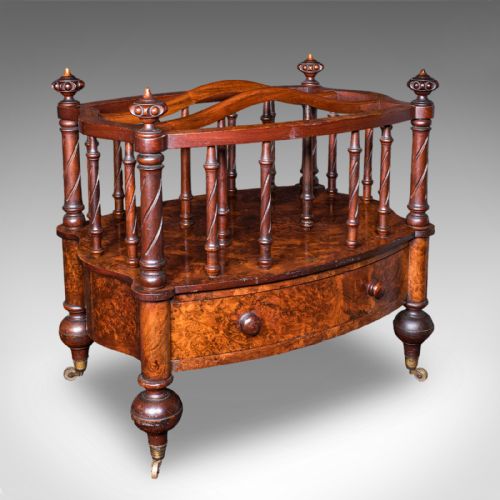
Cabinet makers utilised dense timber stocks such as mahogany, rosewood, walnut, and satinwood to construct the slatted divisions and turned uprights. Selected pieces incorporate burr walnut veneers, brass castors, and fabric linings within the lower drawers.
Joinery techniques combined frame-and-panel construction with finely turned spindles, delicate fretwork, and hand-carved details like Prince of Wales feathers. Individual divisions were securely jointed to withstand the weight of heavy folios and bound volumes.
Materials span mahogany, rosewood, walnut, satinwood, burr walnut, oak, and brass, alongside fabric and metal elements.
What varies in quality
The degree of refinement in the timber figure and the crispness of turned or carved decoration separate standard production from master craftsmanship. Dense rosewood grain, finely figured mahogany, and intricate fret-cut partitions demonstrate superior material selection.
Structural integrity depends on the rigidity of the slatted divisions and the smooth operation of any integrated drawer. Proportion and scale dictate visual success, with compact, balanced frames holding greater design interest than utilitarian racks.
Charles Dowsett·Melissa White
The Vintage Wood Canterbury Glossary
- Canterbury
- A low stand with upright partitions designed for holding sheet music, newspapers, and magazines. The name derives from the Archbishop of Canterbury, who supposedly commissioned the first such rack.
- Folio stand
- A larger rack designed for holding unbound maps, prints, and large sheets of music. These often feature folding frames or heavy timber supports.
- Boat-shaped
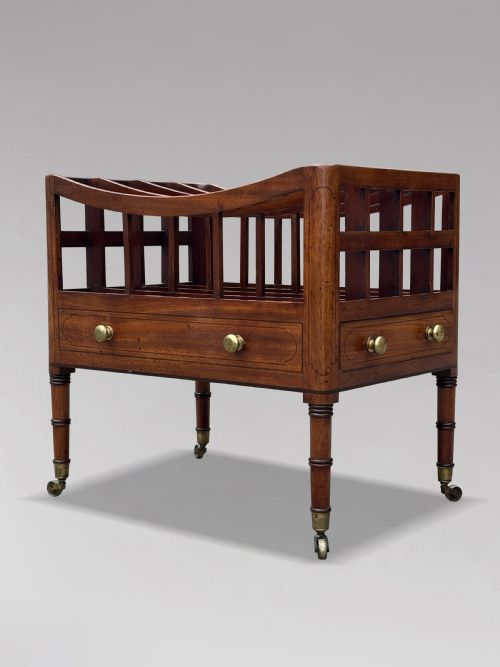
- A descriptor for a canterbury whose partitions curve downward at the centre, resembling the hull of a boat. This profile is frequently encountered on Regency period examples.
- Division
- An individual vertical partition that creates the internal compartments of a rack. They keep papers upright and separated.
- Castor
- A small wheel attached to the base of furniture legs for ease of movement. Many period pieces utilise brass castors to allow the stand to be repositioned across carpets.
Vintage Wood Canterbury: Frequently Asked Questions
What was a canterbury originally used for?
These stands were created to hold musical scores near a piano or harp in fashionable drawing rooms. As domestic habits shifted during the Victorian era, owners repurposed them to store daily newspapers and periodicals.
Their open compartments kept reading material tidy yet immediately accessible for household residents and guests sitting nearby.
How do I distinguish Regency from Victorian pieces?
Regency models tend to feature lighter mahogany or rosewood timbers with delicate brass inlays, crisp reeded legs, and boat-shaped profiles. They often date from the early nineteenth century and display restrained classical proportions.
Victorian versions frequently employ darker rosewood or walnut with heavier carvings, bolder turned spindles, and more robust construction suited to later eclectic interiors.
Can I use a canterbury as a side table?
Many examples include an integrated drawer at the base and a flat top surface originally intended for small decorative objects or writing materials. Their modest height makes them suitable for positioning beside an armchair or sofa.
While the slatted top sections are designed for paper storage, the overall surface functions effectively for lamps and cups.
Where should I place a canterbury in a room?
These freestanding pieces look best positioned near seating areas where their compartment dividers remain visible and accessible. Placing them beside a desk or reading chair highlights their original purpose as tidy storage.
Because finished timber appears on all sides in better examples, they sit comfortably away from walls rather than needing strict placement against a surface.