
Vintage Tub Chair
A vintage tub chair wraps around you in a curved, enclosing embrace that suits both quiet reading corners and working desks.
Vintage Tub Chair
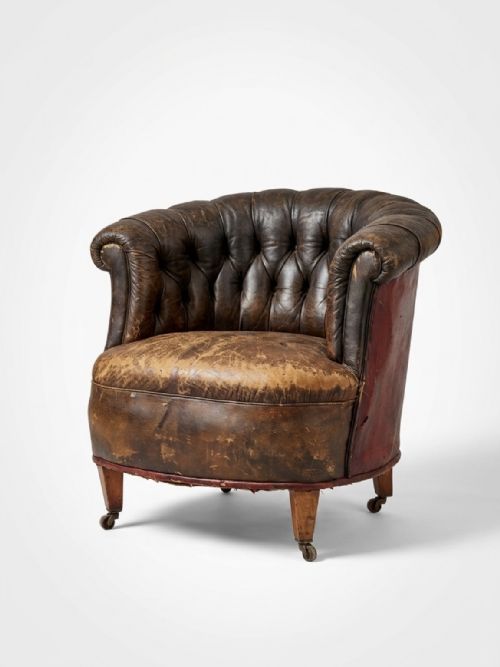
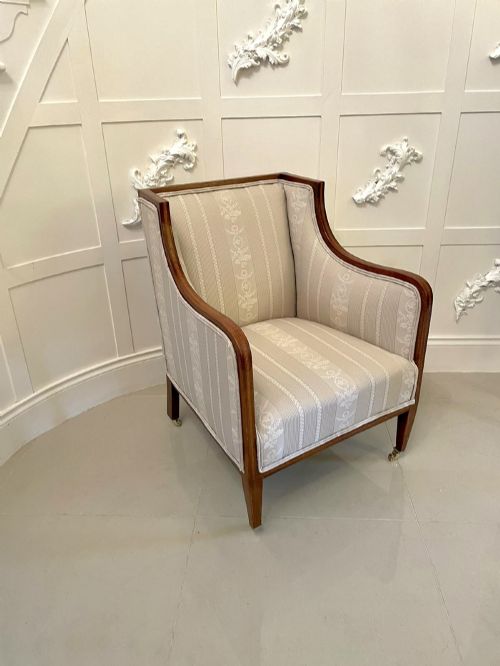
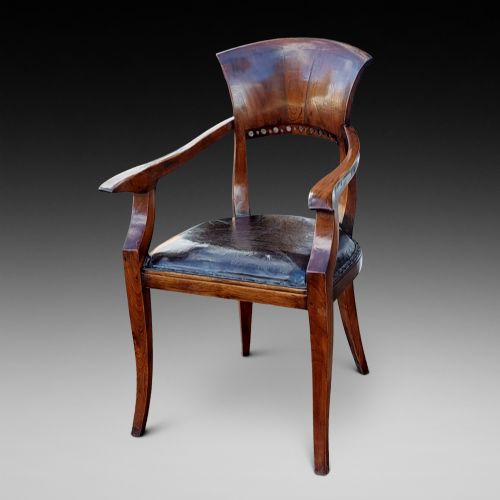
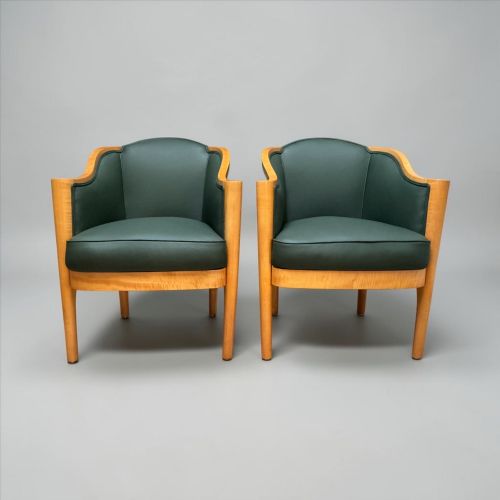
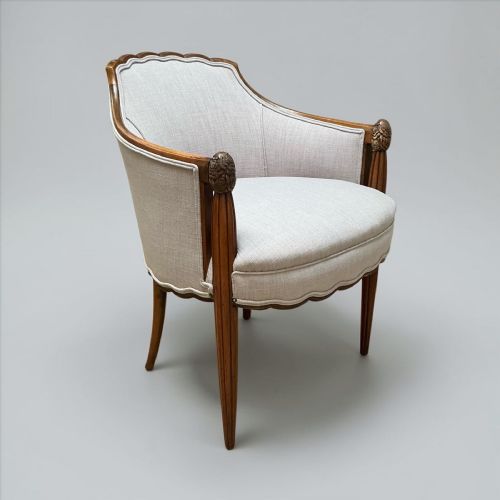
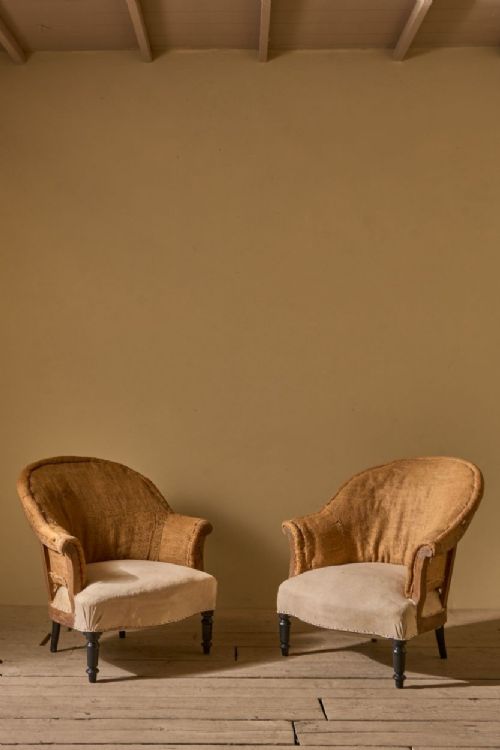
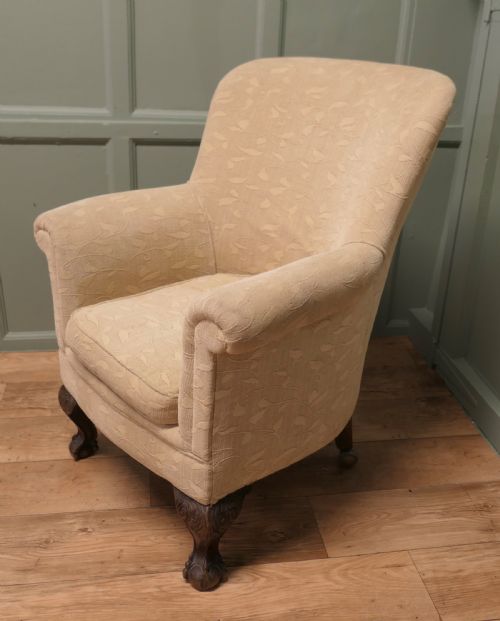
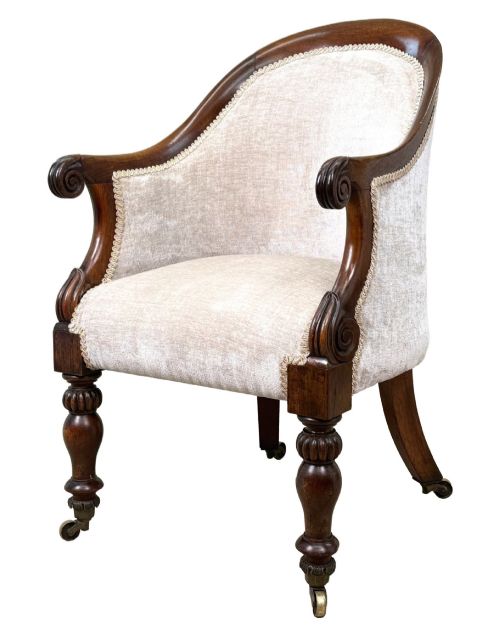
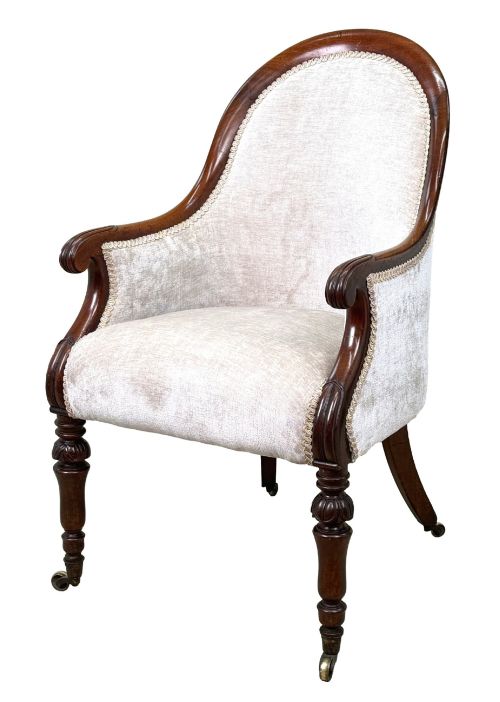
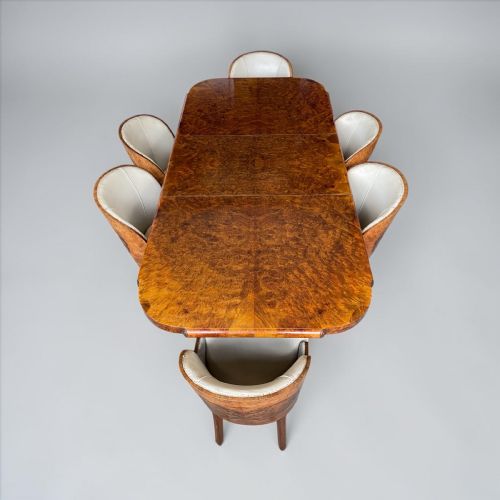
A vintage tub chair is defined by its rounded back and arms formed in a single continuous curve, creating a deeply enclosed seat. The pieces gathered here span from the nineteenth century through the Edwardian period and the Art Deco era, drawing on Victorian, Regency, and French designs.
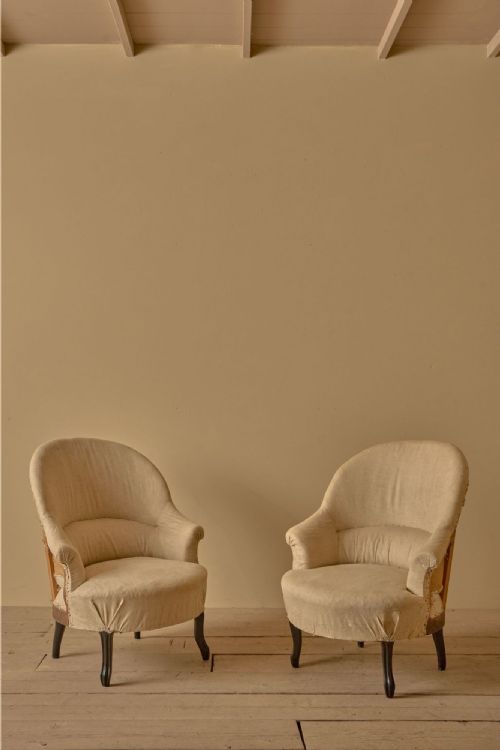
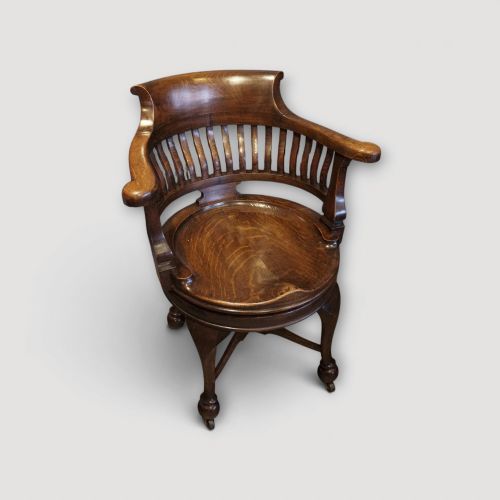
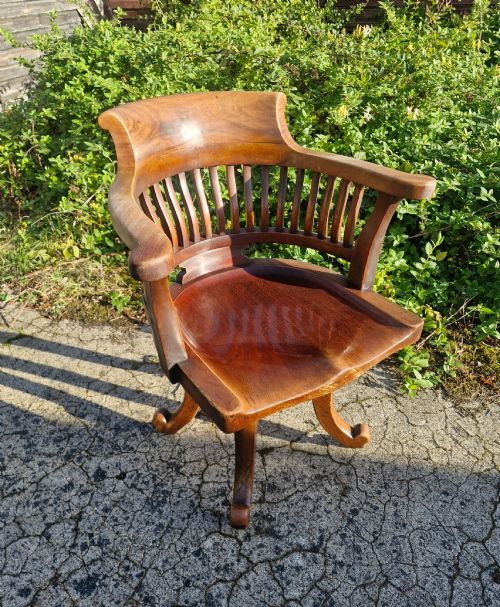
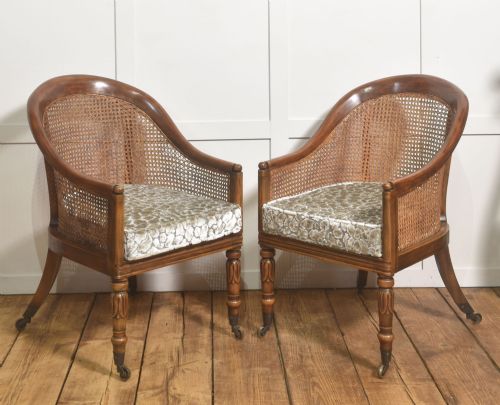
You will encounter standard occasional seating alongside specialised forms, including revolving desk chairs, library armchairs, and matching pairs. The materials shift from traditional timbers such as mahogany, elm, and beech to leather, cane, and woven fabric upholstery.
Materials and Construction
Cabinet makers constructed the frames of these chairs from sturdy hardwoods like mahogany, oak, walnut, and elm, often utilising steam-bending techniques to achieve the characteristic curved tub shape. Joinery relied on traditional methods, ensuring the structural integrity of the continuous backrail.
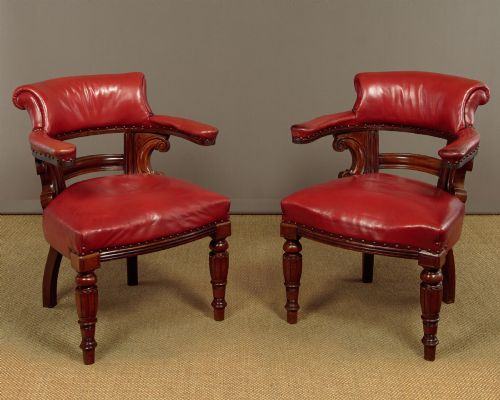
Surface treatments vary widely according to the period and origin, ranging from polished mahogany and original paint to woven cane panels and leather upholstery secured with brass tacks.
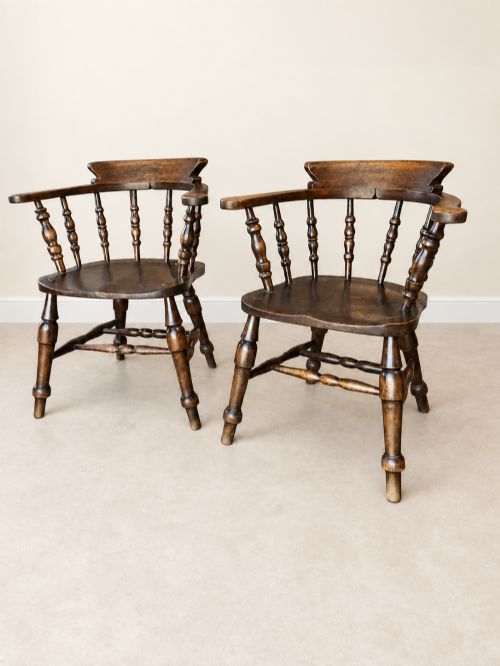
Several sturdy wooden captains chairs preserve the marks of quiet smoke-filled nineteenth-century rooms.
Assessing Quality and Execution
Quality rests primarily on the integrity of the timber frame and the skill involved in executing the continuous curve of the back. Superior examples display thoughtful proportions and careful joinery that conceals stress points where the arms meet the seat.
The choice of secondary materials also dictates the standard of the piece, from finely grained mahogany and supple leather to tightly woven cane and well-preserved original paintwork.
Maurice Adams·Hille
The Vintage Tub Chair Glossary
- Tub chair
- A seating form characterised by a low, curved back that wraps continuously around to form arms. This design offers a compact footprint while maintaining enclosed comfort.
- Bergere
- An enclosed armchair with upholstered sides set into a wooden frame. These French-inspired seats often feature exposed painted or polished timber.
- Caned
- A technique using woven rattan or cane panels for seats or backrests. It provides lightweight flexibility and visual lightness.
- Captain's chair
- A sturdy wooden armchair, often featuring a low curved back supported by spindles. These frequently double as desk or smokers chairs.
- Napoleon III
- A French design period spanning the mid-to-late nineteenth century. It is known for eclectic revivals and comfortable, upholstered occasional seating.
Vintage Tub Chair: Frequently Asked Questions
What is a tub chair?
A tub chair is an armchair featuring a rounded, semi-circular back that flows directly into the arms. This creates a deep, enveloping seat.
Originally designed for drawing rooms and libraries, these chairs offer a compact profile compared to bulky club chairs.
Where should I place a vintage tub chair?
These chairs fit well in home offices as revolving desk seating or in sitting rooms as paired occasional chairs. Their curved backs allow them to sit comfortably in corners or float within a room.
S Smaller examples work effectively as bedroom chairs or supplementary seating in dining spaces.
How do I care for leather and wood?
Maintain wooden frames with gentle dusting and occasional polishing suited to the specific finish. Leather upholstery benefits from regular conditioning to keep the hide supple.
Avoid placing antique seating in direct sunlight or near heat sources to prevent the materials from drying out.
How can I date my chair?
Dating relies on observing construction methods, timber choices, and stylistic cues from specific eras like the Victorian or Art Deco periods. Mahogany and heavy turned legs often point to the nineteenth century, while streamlined forms suggest the 1930s.
Examining fixings and underneath joinery can also reveal the age of the piece.