




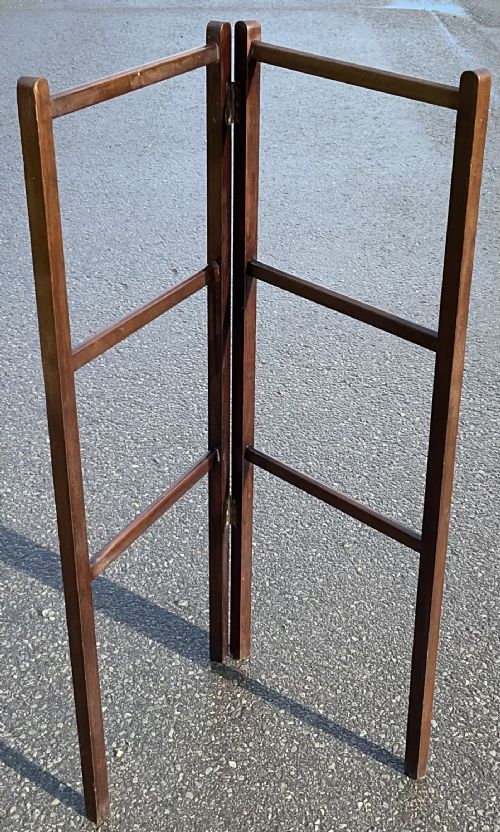


Vintage Towel Rail
A vintage towel rail brings practical warmth and solid timber construction to a bathroom or dressing room.
Vintage Towel Rail
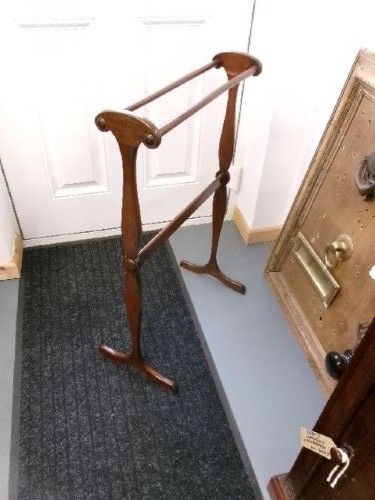
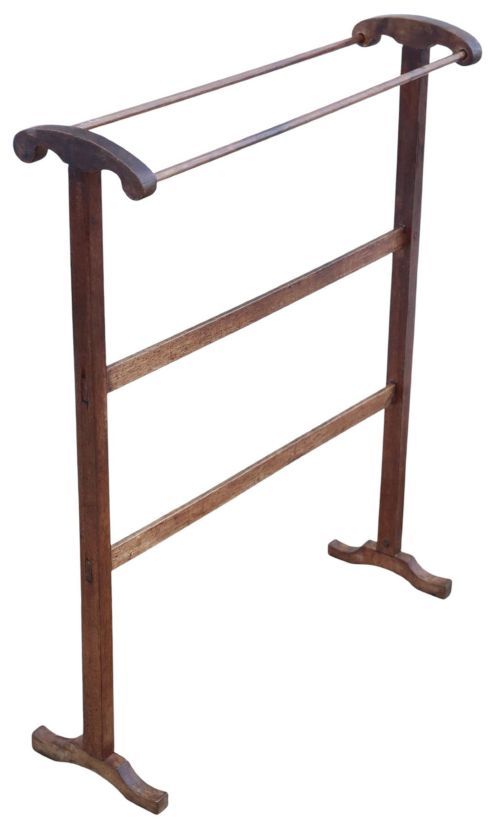
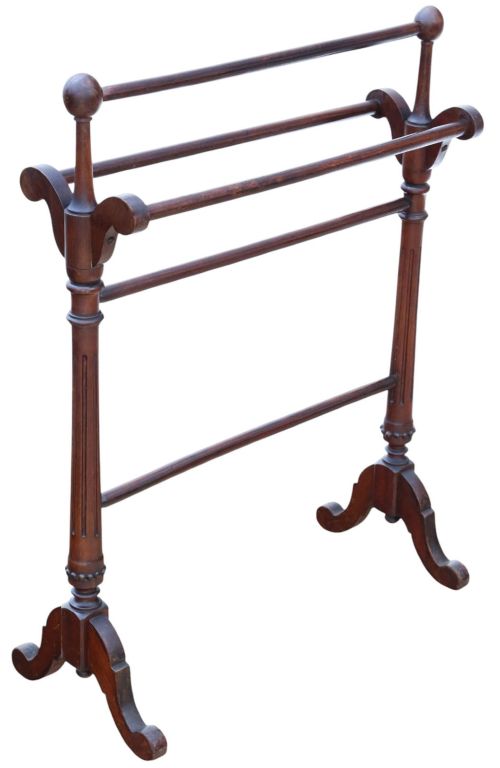
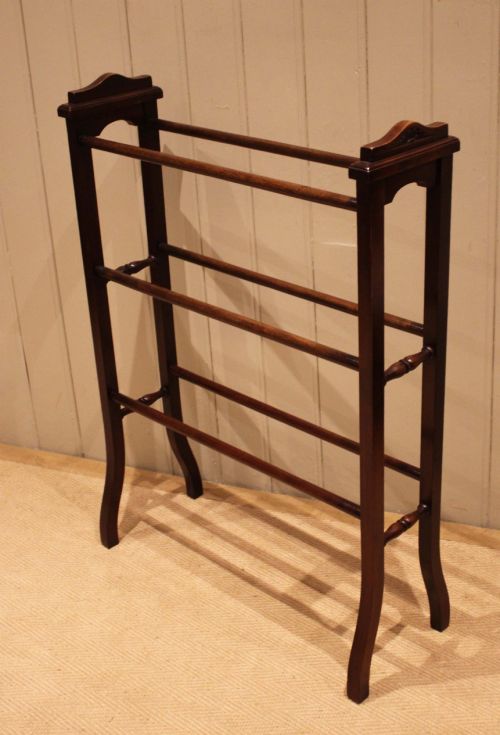
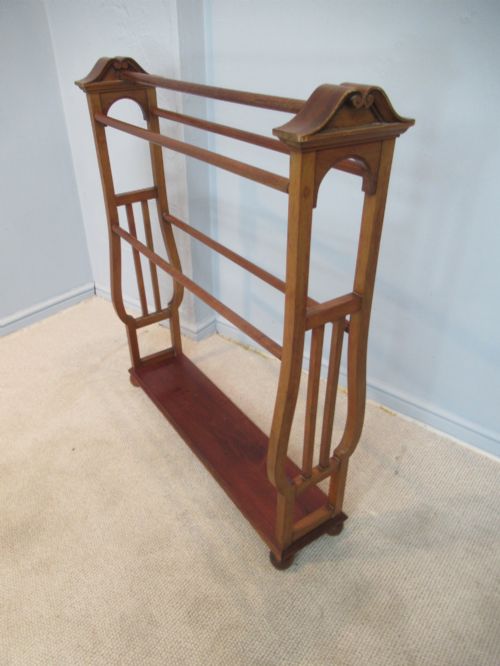
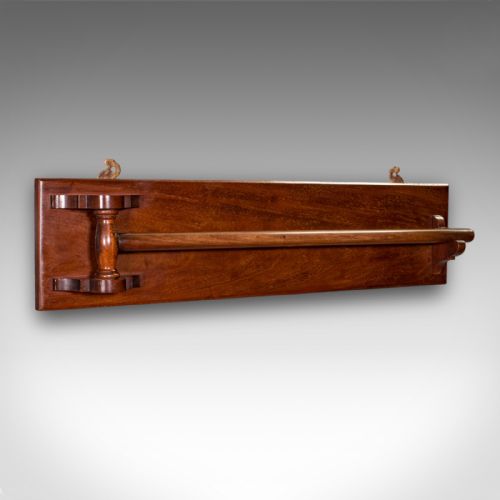
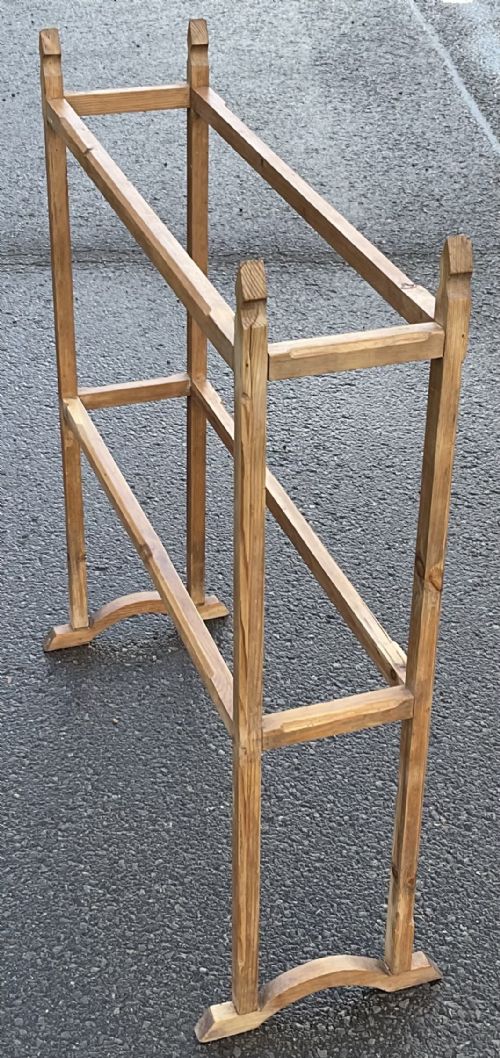
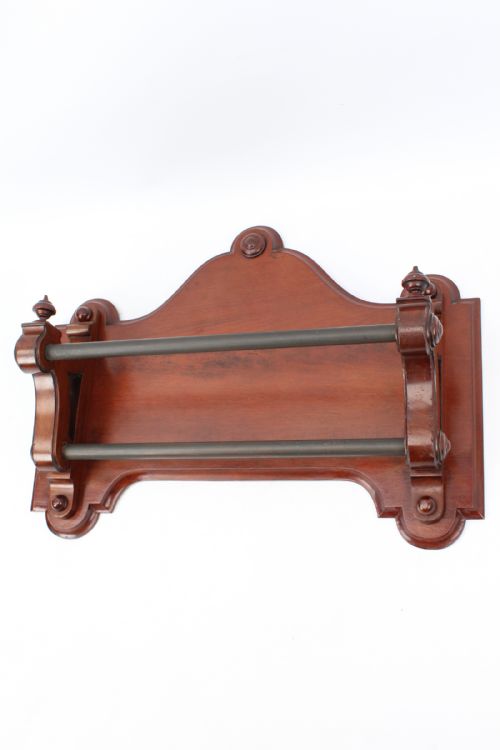
A vintage towel rail is a functional frame designed for drying and displaying textiles, appearing frequently in standing, folding, and hanging formats across this selection. These pieces serve domestic spaces with generous proportions and portable designs that span from the nineteenth century into the twentieth century. Mahogany and pine dominate the standing forms, whilst later examples introduce glass and chrome.
Buyers encounter folding cheval frames and multi-bar stands most often amongst these listings, alongside occasional wall-mounted glass rails. The nineteenth-century pieces lean towards substantial timber construction, whereas Edwardian and later variants offer lighter frames or specialised bathroom mountings. Each configuration reflects the domestic habits of its period, from country house drying rooms to compact Victorian dressing spaces.
Materials and construction
Carpenters built these frames predominantly from solid timbers such as mahogany, oak, walnut, and pine, utilising traditional joinery to withstand daily folding and weight. Many nineteenth-century examples feature turned uprights and sturdy crossbars secured by pegged or screwed joints. Ebonising and lacquering appear on specific decorative items, adding a uniform dark finish to the wood.
Twentieth-century production introduced metal and glass elements, pairing chrome mountings with glass rods for modern bathroom settings. Brass details occasionally reinforce structural joints or provide hanging hooks on maritime and domestic variants. The combination of dense hardwoods and metal fittings ensures durability across decades of active service.
Vintage Towel Rail Retail Price Guide 2026
Typical asking prices for vintage towel rail among the pieces listed under this phrase on Sellingantiques today, from the lower quarter to the upper quarter. They describe what is for sale here now, not the wider market.
Listings feature woods spanning mahogany, pine, oak, walnut, and elm, alongside Edwardian, Victorian, and Regency periods.
What distinguishes finer examples
Quality in these pieces rests upon timber selection and the retention of original structural rigidity through repeated folding. Better examples display carefully turned rails, well-matched mahogany grains, and stable proportions that support multiple garments without listing. Finer nineteenth-century pieces often show thoughtful proportioning and substantial weight in the base.
The degree of decorative detail separates utilitarian items from more ambitious pieces, such as inlaid Edwardian bars or Gothic Revival walnut carving. Whilst simpler pine and oak variants served everyday country house utility, superior standing rails incorporate intelligent hinging systems and refined mouldings. Original surface patination also marks the distinction between untouched period items and heavily altered pieces.
The Vintage Towel Rail Glossary
- Cheval towel rail
- A standing rail featuring a pivoting or swinging frame, allowing multiple sections to angle outwards for efficient drying. This design resembles a cheval glass mirror stand.
- Gothic Revival
- A nineteenth-century style drawing on medieval architectural motifs, identifiable here through pointed arches, heavy mouldings, and structural seriousness in walnut or oak. It reflects a Victorian taste for historical ecclesiastical design in domestic furniture.
- Arts and Crafts
- A design movement prioritising honest construction, visible joinery, and local woods like oak, often seen in unpretentious country house pieces from around nineteen hundred. It rejects mass-produced ornament in favour of straightforward craftsmanship.
- Ebonising
- A finishing process where timber is treated to resemble ebony, creating a dense, black surface seen on specific turn-of-the-century frames. This technique provides a stark, formal appearance distinct from natural wood grains.
Vintage Towel Rail: Frequently Asked Questions
How do I care for a wooden towel rail?
Keep timber rails away from direct, constant moisture by ensuring damp towels are wrung out before hanging. Occasional application of a suitable wax polish maintains the polished surface of mahogany and oak.
Check the stability of folding hinges periodically and tighten any visible screws gently to prevent strain on the surrounding wood.
Were these rails used only in bathrooms?
These items served various domestic spaces including bedrooms, dressing rooms, and halls, functioning as clothes racks and robe stands as well as drying frames. Maritime examples were specifically adapted for shipboard use where space and stability were paramount.
Larger multi-fold pieces often stood near fires or in dedicated utility areas to air household linens.
How do I distinguish Victorian from Edwardian rails?
Victorian pieces typically employ heavier timbers like walnut and dense mahogany with deep mouldings and robust turning, sometimes incorporating Gothic Revival details. They carry a sense of substantial weight and darker finishes.
Edwardian examples frequently present lighter mahogany frames, sometimes featuring fine inlay work or simpler standing profiles that suit more modest room dimensions.
Are glass and chrome rails authentic to the early twentieth century?
Glass and chrome bathroom fittings emerged strongly in the early decades of the twentieth century alongside modern plumbing developments. These items use metal mountings to secure glass rods, offering a clean aesthetic for contemporary washrooms.
They represent a direct shift from traditional wooden stands towards specialised bathroom hardware.