


Vintage Tier Ceiling Fitting
A vintage tier ceiling fitting brings layered illumination and remarkable glass work to a room, drawing the eye upward with multi-tiered crystal arrangements.
Vintage Tier Ceiling Fitting
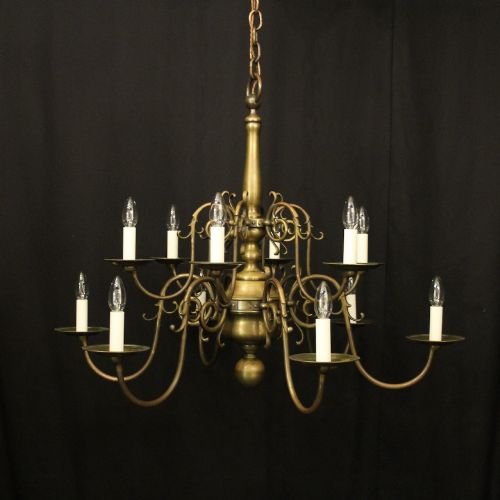
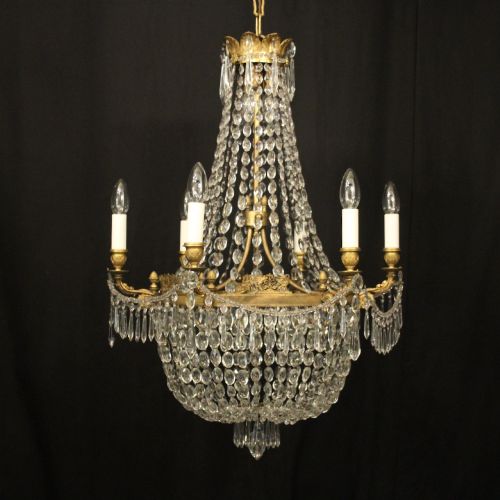
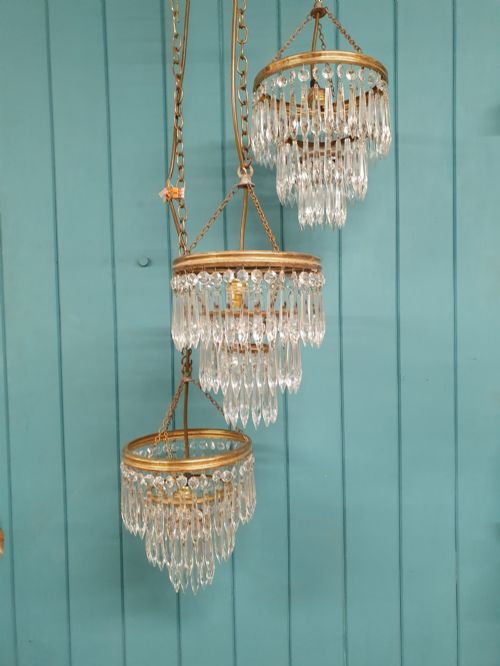
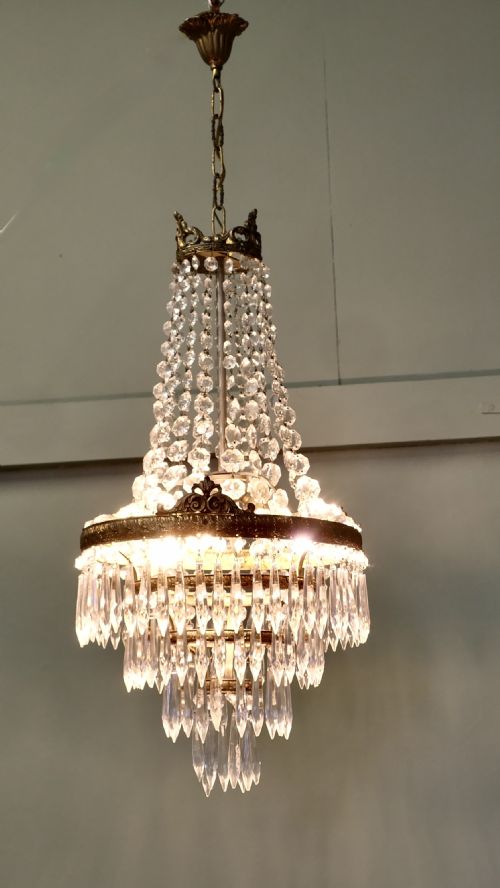
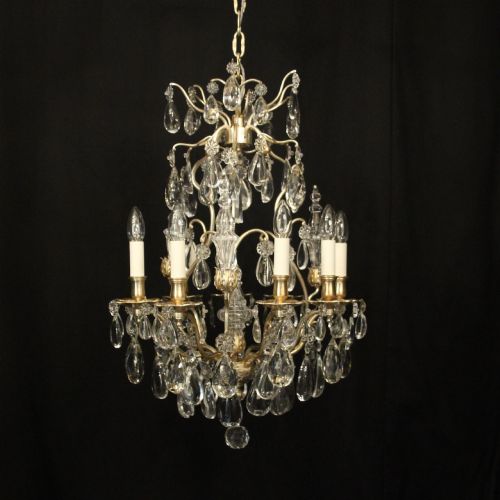
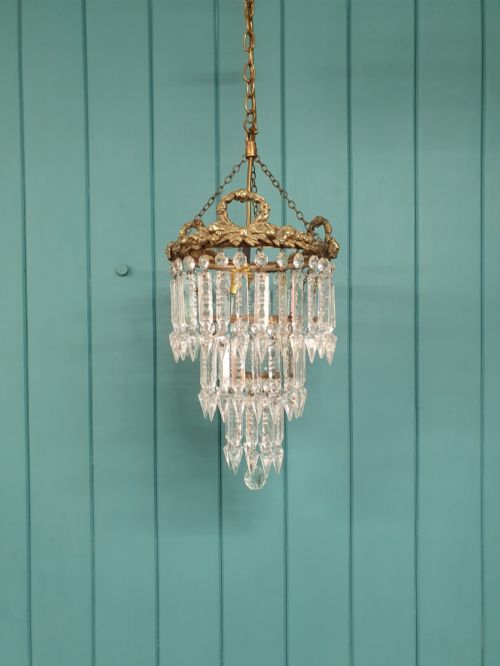
A vintage tier ceiling fitting encompasses multi-level chandeliers, pendant lights, and ceiling lighting spanning from the nineteenth century through the early decades of the twentieth century. These fixtures organise glass and metal into stacked tiers, drop arrangements, and waterfall configurations designed to cast layered illumination across a space.
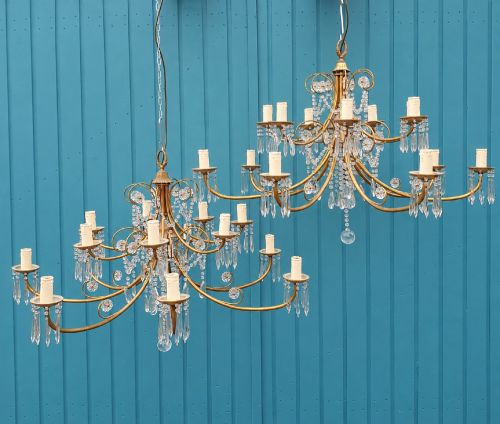
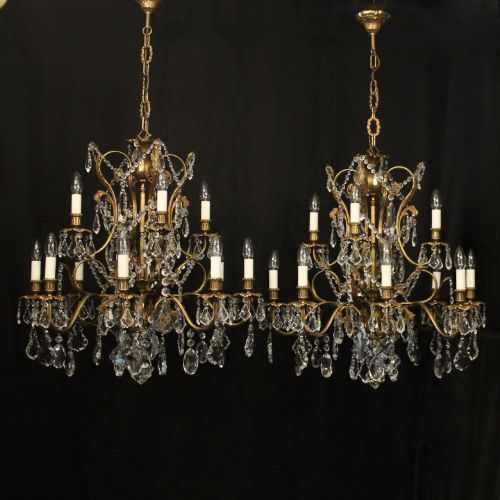
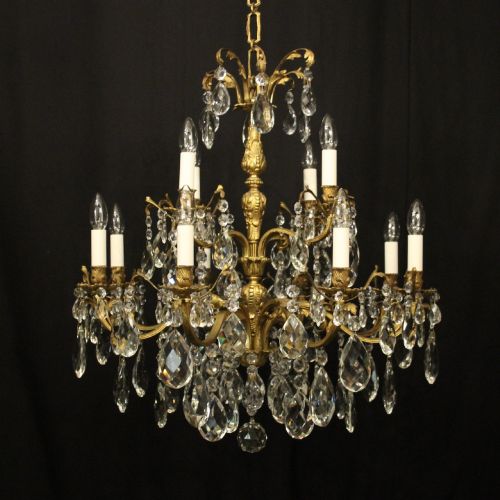
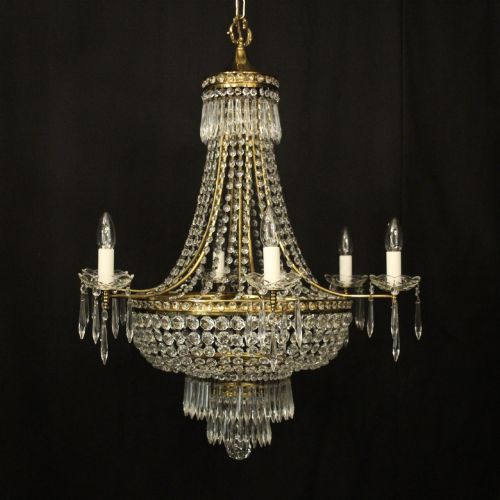
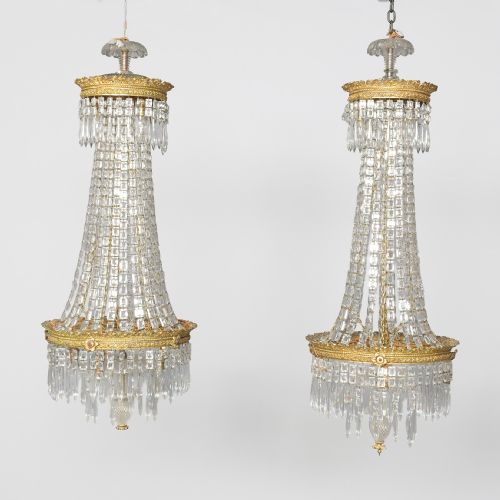
The selections available here lean heavily into early twentieth-century and Edwardian pieces, alongside French Empire style, Art Deco, and Florentine designs. Buyers frequently encounter multi-tiered brass, bronze, and gilt metal structures laden with crystal glass drops and beads.
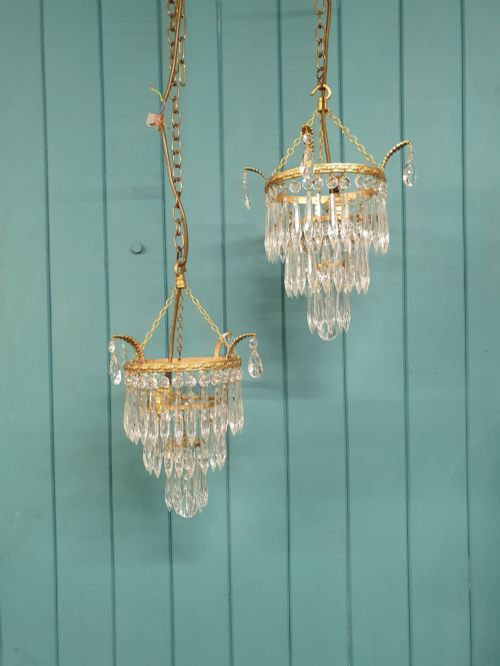
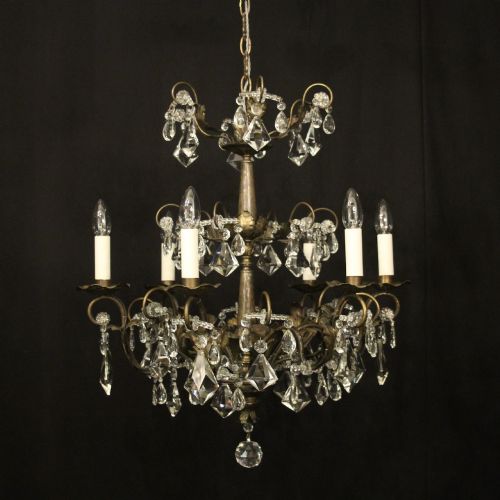
Forms range from compact spike and drip chandeliers measuring under a foot to grand ballroom fixtures carrying dozens of lights across multiple tiers. Origin influences form significantly, with French, English, Italian, and Swedish workshops dominating the selection.
Materials and construction
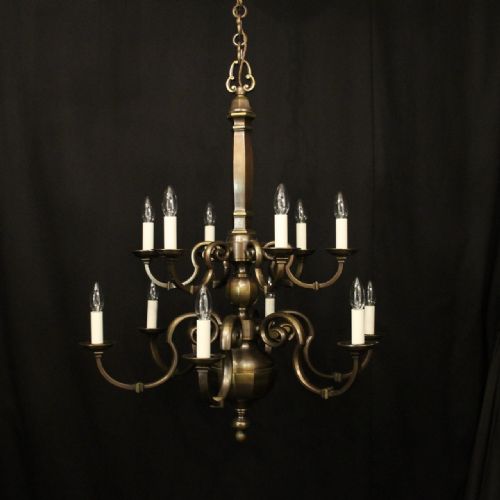
Makers constructed these fixtures primarily using brass, bronze, copper, and gilt metal frames to support heavy glass elements. Metal components were cast, gilded, or silvered before workers wired them to hold multiple candle or bulb arms.
Cut glass, lead crystal, and plain glass form the reflective elements, shaped into beads, pendants, drops, and tent-and-waterfall assemblies. Wire or pin connections secure thousands of individual glass pieces to the metal tiers, allowing the chandelier to catch and refract light from every angle.
Vintage Tier Ceiling Fitting Retail Price Guide 2026
Typical asking prices for vintage tier ceiling fitting among the pieces listed under this phrase on Sellingantiques today, from the lower quarter to the upper quarter. They describe what is for sale here now, not the wider market.
Ballroom chandeliers in this collection carry up to forty-one lights, ensuring nobody ever dances in the dark.
Indicators of quality
Quality rests heavily on the purity and cut of the crystal, where sharp facets and clear lead content create superior light refraction compared to plain pressed glass. The density and intricacy of the glass drops - such as extensive beadwork and complex waterfall drapes - distinguish finer examples.
Metalwork execution defines the structural standard, visible in the weight of the cast bronze or brass, the precision of the arm joints, and the durability of the gilding or silvering. Multi-tiered frames require robust internal engineering to support the considerable weight of extensive glass assemblies over decades of suspension.
The Vintage Tier Ceiling Fitting Glossary
- Waterfall chandelier
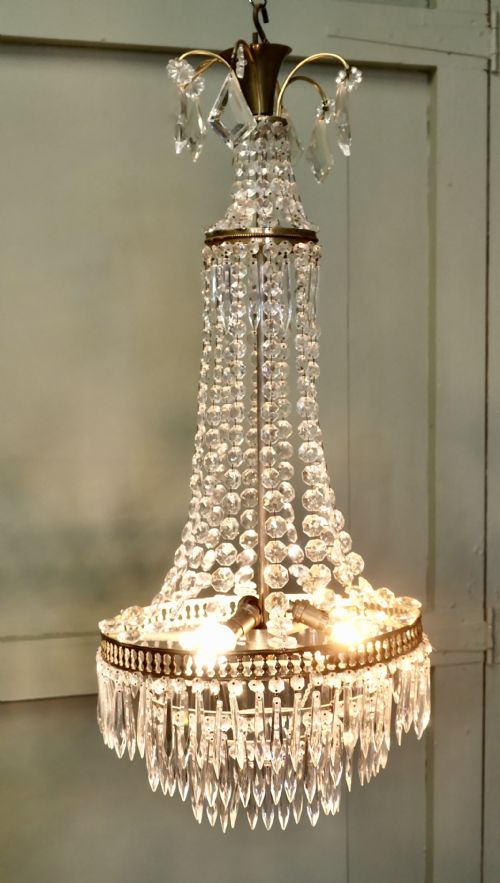
- A lighting fixture where crystal strands cascade downwards from a wide upper tier to a narrower lower point, resembling falling water. This style gained immense popularity during the early twentieth century.
- Tent and bag
- A configuration featuring an upper triangular tent of glass beads leading down to a gathered bag-like arrangement of crystal drops at the base. It directs light through layered geometric planes.
- Spike chandelier
- A fixture characterised by a central vertical spike or spindle from which arms and glass drops radiate outward. These often appear in compact early twentieth-century formats.
- Gilt metal
- Base metal treated with a thin layer of gold leaf or gilt paint to simulate solid gold construction. It provides the decorative warmth seen in French Empire and Florentine pieces.
- Lead crystal
- Glass containing metal oxide that increases weight, brilliance, and clarity. It allows for deep, sharp cutting that enhances light dispersion.
Vintage Tier Ceiling Fitting: Frequently Asked Questions
How do I clean a crystal chandelier?
Cleaning requires a specialised glass cleaner applied gently by hand to each individual drop and crystal strand while the fixture remains supported. Technicians often work in place using soft cloths to avoid stressing the delicate wire connections.
Harsh chemical immersion can strip gilding from the metal frame or damage historic wiring. Regular dusting helps maintain the refractive quality between deeper cleans.
Can these vintage fittings be rewired?
Most vintage chandeliers and ceiling lights can be adapted to modern electrical standards by a qualified professional. Rewiring replaces perished internal cables while preserving the external brass, bronze, or crystal components.
Ceiling weight capacities must be checked independently, as multi-tiered fixtures require secure joist fixings rather than standard plaster anchors.
What defines French Empire style?
French Empire style draws heavily on classical neoclassical motifs, featuring symmetrical metal frames, urn or tent shapes, and dense arrangements of cut-glass drops. These fixtures emphasise grand scale and architectural presence.
They frequently incorporate gilded bronze and structured tiers designed to project formal elegance in high-ceilinged reception rooms.
How do I date an early twentieth-century fitting?
Dating relies on examining the construction methods of the metal frame, the style of the electrical wiring ports, and the cut of the glass drops. Edwardian and 1920s pieces often combine traditional brass casting with early electrical adaptations.
Design markers such as Art Deco geometric stepping or Florentine giltwood carving help narrow the period alongside stylistic hallmarks recorded in period makers' output.