

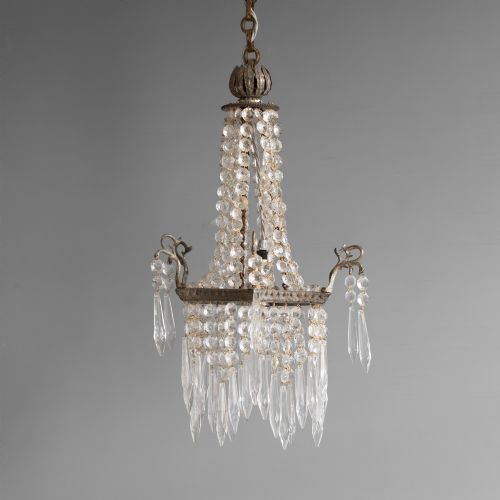
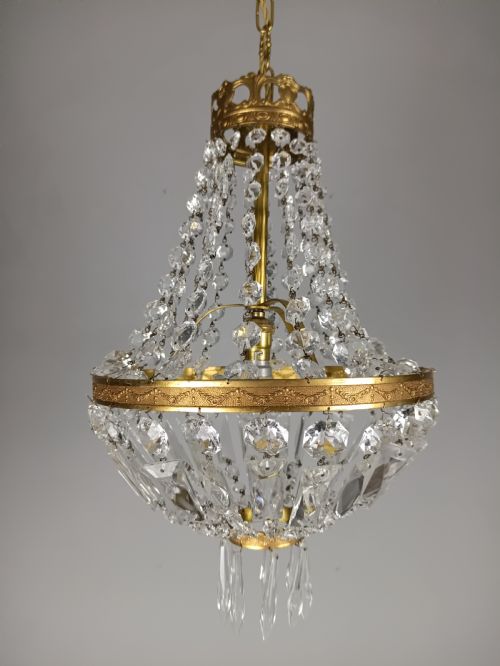
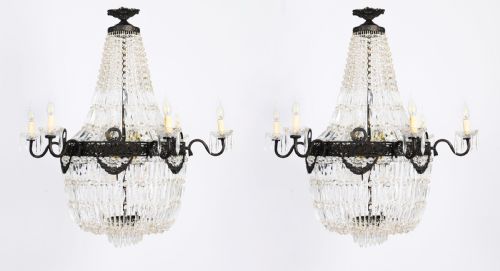


Vintage Tent Bag Chandelier
A vintage tent bag chandelier brings brilliant tiers of cut crystals and fine brasswork directly into your room.
Vintage Tent Bag Chandelier
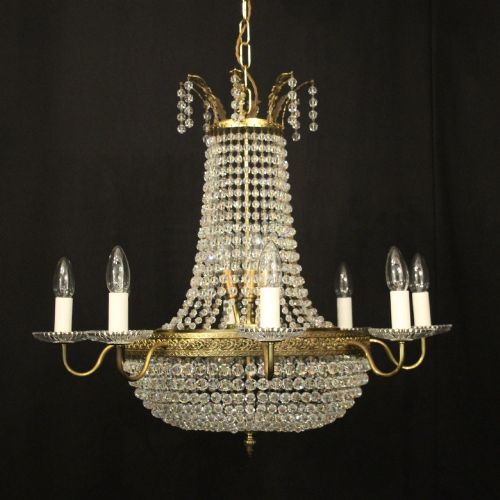
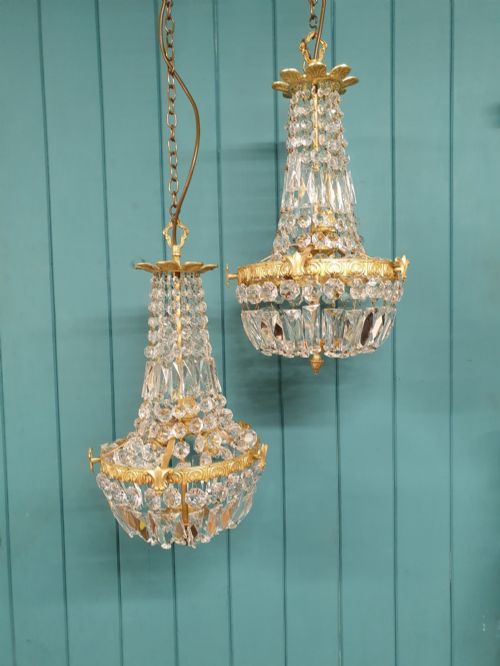
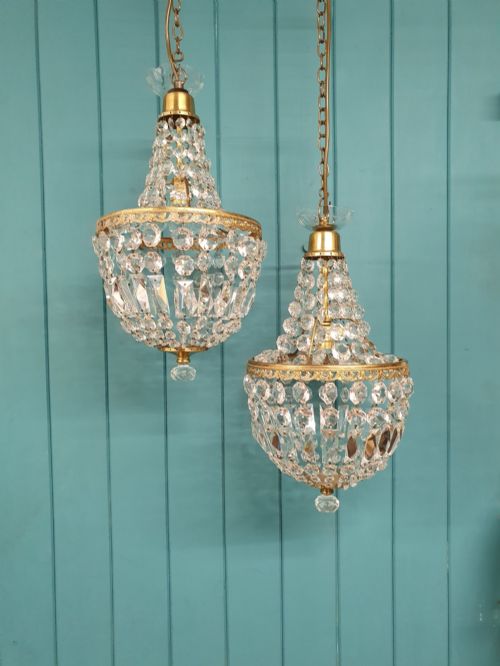
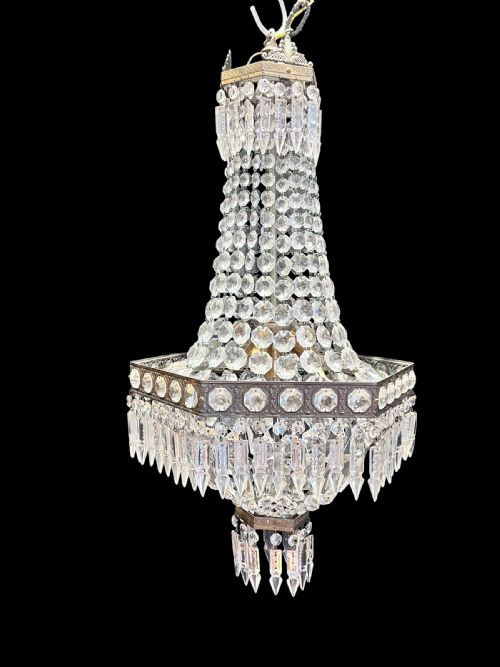
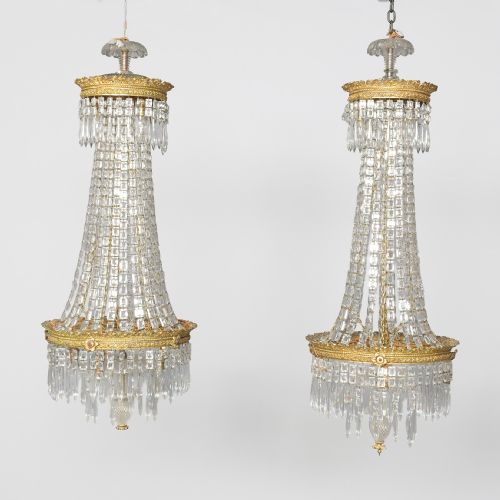
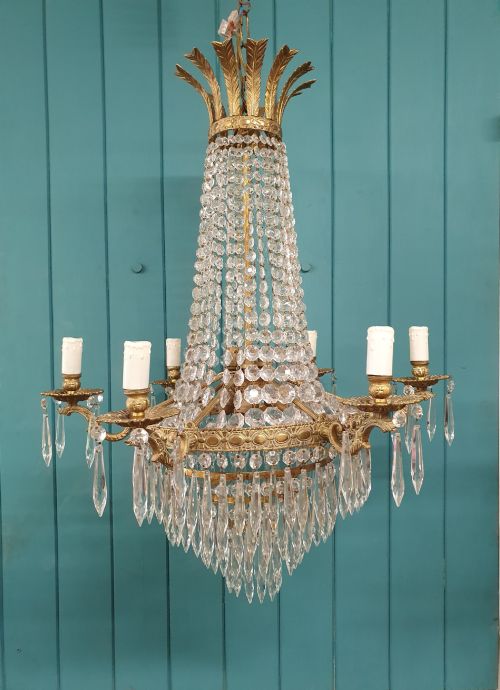
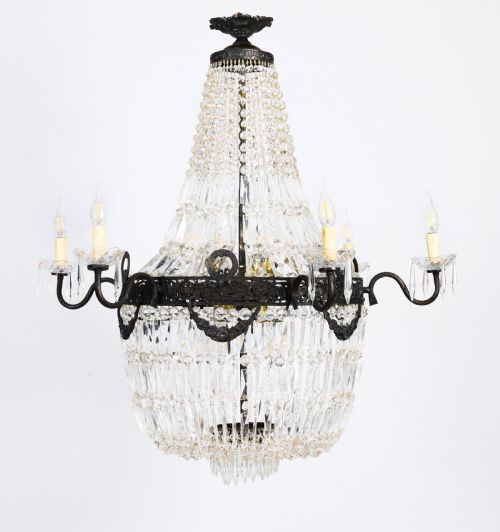
A vintage tent bag chandelier combines an upper canopy of strung crystals forming a tent shape with a lower gathered bag of drops. These decorative light fixtures span several periods, reaching from the eighteenth century through the nineteenth century and into the early twentieth century.
Most examples found on this page lean heavily into French Empire, Regency, and Louis Revival styles. You will encounter pieces featuring decorative leaf work, cherubs, and patinated bronze mounts alongside simpler brass frameworks.
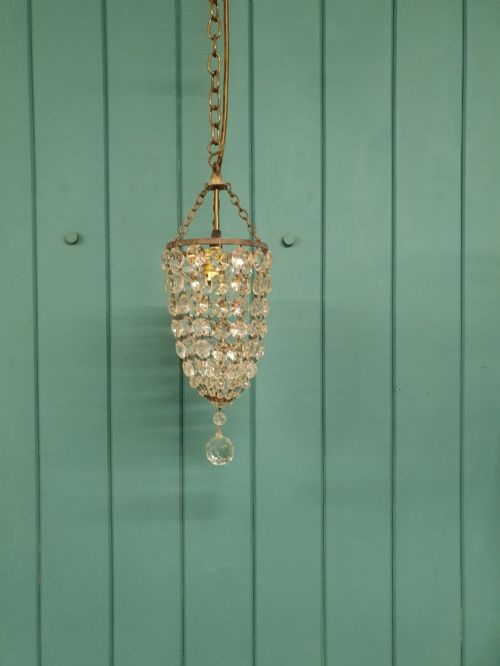
Sizes range widely from compact five-inch designs up to fourteen-light ballroom fixtures. They function primarily as striking pendant lights that cast intricate patterns across walls and ceilings.
Materials and construction
Makers constructed the structural frames primarily from brass, metal, and bronze, often applying a patinated bronze finish for depth. These durable metals support the considerable weight of the suspended glass components.
Cut glass and crystal form the signature visual elements, threaded and wired into complex upper tents and lower bag formations. Individual elements such as spikes and leaf decorations complete the ornate compositions.
Vintage Tent Bag Chandelier Retail Price Guide 2026
Typical asking prices for vintage tent bag chandelier among the pieces listed under this phrase on Sellingantiques today, from the lower quarter to the upper quarter. They describe what is for sale here now, not the wider market.
Keep an eye out for hidden cherubs peering out from the metalwork, ready to supervise your dining room.
Variations in quality
The sophistication of the metalwork largely dictates the calibre of a piece, with finely cast bronze mounts and detailed leaf decoration standing apart from simpler constructions. Heavier brass frames and substantial hardware provide better structural integrity for large multi-light fixtures.
The clarity and depth of the cut glass or crystal components create distinct visual tiers. Pieces featuring deeply faceted drops and precisely strung tents refract light more brilliantly than plain glass alternatives.
The Vintage Tent Bag Chandelier Glossary
- Tent and bag
- A lighting configuration featuring an upper conical section of strung crystal beads paired with a lower gathered cluster of drops. This dual structure defines the classic profile of these chandeliers.
- French Empire
- A classical style drawing on Roman and Greek motifs, frequently interpreted in bronze and brass light fittings. Pieces from this tradition often incorporate laurel leaves and formal symmetry.
- Cut crystal
- High-lead glass shaped with precision facets to maximise light refraction. It forms the shimmering drops and beads characteristic of better chandeliers.
- Louis Revival
- A decorative movement looking back to the ornate court styles of seventeenth and eighteenth century France. It brings scrolling arms, cherubs, and extravagant ornamentation to Edwardian and twentieth-century pieces.
- Patinated bronze
- Metal treated to develop a rich, darkened surface layer over time. This finish adds warmth and historical character to the structural mounts.
Vintage Tent Bag Chandelier: Frequently Asked Questions
How do I hang a heavy chandelier safely?
Suspension requires securing the fixture directly into a ceiling joist using appropriate steel fixings. Professional electrical installation ensures the weight is adequately supported.
Because many examples incorporate heavy brass and crystal components, checking the ceiling load capacity beforehand prevents structural damage.
What rooms suit a tent bag chandelier?
Compact twelve-inch versions fit comfortably in hallways or smaller sitting rooms where ceiling height is modest. Larger ballroom fixtures require high ceilings to accommodate their dramatic drop.
Placing them centrally allows the cut crystals to cast maximum light reflections across the space.
How do I date a chandelier?
Dating relies on examining the wiring methods, metal casting techniques, and fastener types used in the construction. Earlier pieces often display hand-cut crystals and heavier bronze framing.
Stylistic cues such as Edwardian proportions or French Empire motifs help place the piece within its historical era.