

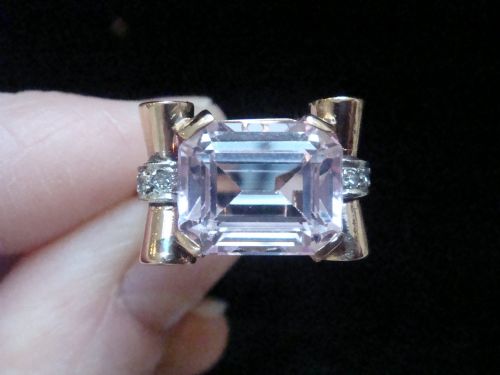


Vintage Tank Ring
A vintage tank ring delivers the bold architectural geometry of mid-century design, bringing substantial gold and platinum weight straight to the finger.
Vintage Tank Ring
A vintage tank ring is a striking cocktail piece defined by bulky, volumetric metalwork that recalls wartime machinery and architecture. These bold designs emerge primarily from the 1930s, 1940s, and 1950s under Retro Modern and Art Deco influences, though Edwardian examples also appear.
How they were made
Goldsmiths constructed these substantial rings using 18ct gold, 18ct yellow gold, 18ct white gold, and platinum as the primary structural metals. This heavy use of precious metal provided the solid framework necessary for the voluminous, dimensional shapes characteristic of the style.
Makers integrated diamonds alongside coloured stones such as emeralds, rubies, kunzite, aquamarine, and blue topaz. Stones were frequently pave set into the sweeping shoulders to create dense fields of sparkle that contrast with the heavy metal surrounds.
Vintage Tank Ring Retail Price Guide 2026
Typical asking prices for vintage tank ring among the pieces listed under this phrase on Sellingantiques today, from the lower quarter to the upper quarter. They describe what is for sale here now, not the wider market.
Listings span four distinct periods: Edwardian, 1930, 1940, and 1950, capturing the transition from Art Deco to Retro Modern design.
What varies in quality
The distinction at the upper end rests on the weight of the precious metal and the choice of gemstones. Heavier gram weights in the 18ct gold or platinum chassis combined with natural emeralds, rubies, and kunzite separate finer examples from standard production.
Design complexity and stone integration also divide the range, particularly where intricate pave setting of diamonds meets bold architectural contours. Superior execution displays seamless transitions between the central stone and the heavy metal shoulders.
The Vintage Tank Ring Glossary
- Tank ring
- A bold, volumetric ring style originating in the mid-twentieth century, named for its resemblance to heavy military machinery. These pieces feature substantial gold or platinum work.
- Retro Modern
- A design period spanning the 1930s to the 1950s characterised by oversized, sculptural jewellery. This aesthetic embraces heavy yellow and rose gold alongside geometric motifs.
- Pave set
- A technique where small gemstones are set closely together with minimal visible metal. This method creates a continuous surface of stones across the shoulders of the ring.
- Cocktail ring
- A large, showy ring designed to catch the eye during evening wear. These substantial pieces frequently combine diamonds with large coloured gemstones.
Vintage Tank Ring: Frequently Asked Questions
What is a tank ring?
A tank ring is a bold piece of jewellery featuring heavy, sculptural metalwork inspired by military hardware and machinery. These substantial designs emerged prominently during the Retro period.
The style prioritises volumetric gold or platinum forms, often stepped or curved to create a powerful architectural presence on the hand.
How do I date a tank ring?
Dating relies on examining the metal combinations, stone cuts, and overarching stylistic traits recorded across the 1930s, 1940s, and 1950s. Heavy yellow gold paired with synthetic or natural stones typically points towards the mid-century.
Earlier examples from the 1930s frequently incorporate platinum and French Art Deco geometric discipline into the heavy shoulders.
What stones are used in tank rings?
These rings utilise diamonds alongside a variety of prominent coloured gemstones set directly into the heavy metal body. Common central stones include emeralds, rubies, kunzite, aquamarine, and blue topaz.
Both natural and synthetic stones appear within the inventory, reflecting the manufacturing practices of the mid-century period.
How heavy are these rings?
Tank rings are notably heavy and substantial due to the generous quantities of 18ct gold and platinum used in their construction. Gram weights frequently sit higher than standard fine jewellery to achieve the required volumetric shape.
This solid construction gives them a noticeable physical presence and weight when worn on the hand.