



Vintage Spelter Lighting
These vintage spelter lighting pieces bring character and period charm into a room through sculptural metalwork and decorative design.
Vintage Spelter Lighting
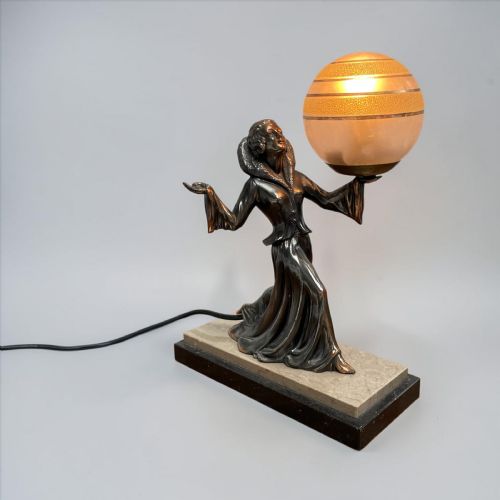
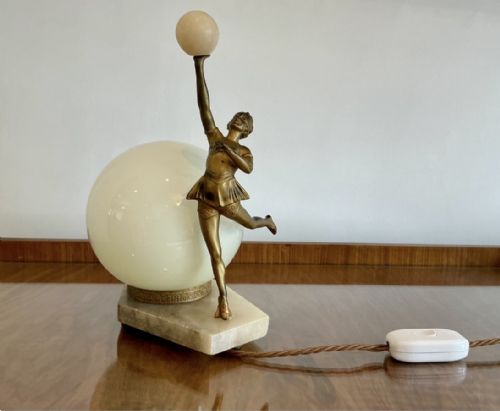
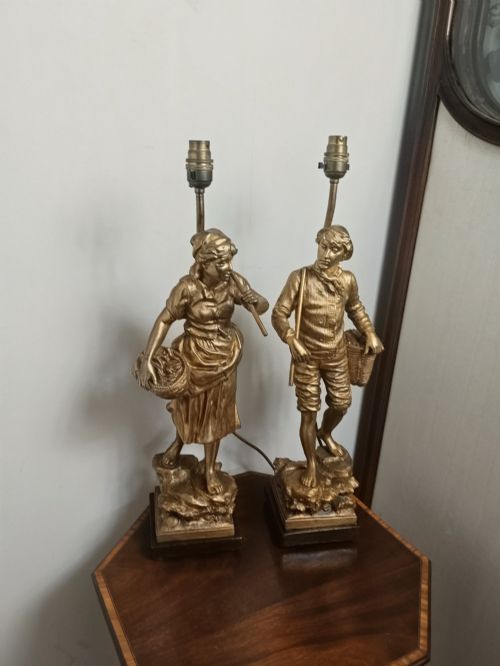
Vintage spelter lighting encompasses sculptural lamps, candelabra, and ceiling lights shaped from a zinc-based alloy, often taking the form of figural subjects such as ladies, cherubs, and animals. These pieces span periods from the late nineteenth century through to the Art Deco era of the 1920s and 1930s.
The most common examples you will encounter are table lamps and mood lights from the 1920s and 1930s, heavily influenced by Art Deco and Art Nouveau styles. Many of these figures are mounted on marble bases and paired with glass or fabric shades.
How vintage spelter lighting was made
Makers cast spelter, an inexpensive alloy primarily of zinc, into detailed moulds to create intricate figural and decorative components. Because spelter is softer than bronze, manufacturers applied patinated metal, bronze finishes, or gilt metal coatings to imitate more costly materials.
Makers combined the cast metal elements with marble bases, brass fittings, and cut glass crystal or fabric elements to complete the lamps and candelabra.
Vintage Spelter Lighting Retail Price Guide 2026
Typical asking prices for vintage spelter lighting among the pieces listed under this phrase on Sellingantiques today, from the lower quarter to the upper quarter. They describe what is for sale here now, not the wider market.
Listings feature items spanning the Victorian era through to the 1930s, with a strong concentration of Art Deco pieces.
What varies in quality
Quality is determined by the crispness of the casting detail in the figures and the integrity of the surface finish, whether patinated metal or gilding. Finer pieces retain intricate facial expressions and garment folds rather than soft, worn contours.
The choice of complementary materials elevates a piece, such as substantial solid marble bases and high-grade glass shades, distinguishing standard production items from finer studio or named works.
E Rousseau·P.Sega·Moreau
The Vintage Spelter Lighting Glossary
- Spelter
- A zinc-based alloy used as an economical alternative to bronze for decorative castings. It is softer and melts at a lower temperature than bronze.
- Patinated metal
- Metal treated with chemicals or heat to produce a coloured surface finish, often imitating aged bronze. This treatment protects the underlying alloy and defines the decorative contours.
- Art Deco
- A design style popular in the 1920s and 1930s characterised by sleek geometric shapes, stylised human forms, and modern industrial motifs. It heavily influences the majority of these lamps.
- Candelabra
- A branched candlestick holder designed to hold multiple candles or, in later adaptations, wired electric lights. These often feature figural spelter stems.
- Torchere shade
- An uplighter shade designed to direct light towards the ceiling, frequently paired with tall figural spelter lamp bases.
Vintage Spelter Lighting: Frequently Asked Questions
How do I clean spelter lighting?
Dust gently with a soft, dry cloth to protect the delicate patinated metal or gilt finish.
Avoid using water, chemical solvents, or abrasive polishes, as these will strip away the surface coating.
What is the difference between spelter and bronze?
Spelter is a softer, lighter zinc-based alloy, whereas bronze is a durable copper and tin mixture.
Spelter was used as a budget-friendly substitute for bronze in decorative figures.
How do I date an Art Deco lamp?
Examine the styling of the figure, the presence of geometric motifs, and materials like synthetic marble or early plastics.
Pieces from the 1920s and 1930s typically feature stylised clothing and hair designs characteristic of the period.