



Vintage Silver Mixer
A vintage silver mixer is a barware essential designed for mixing drinks, offering both practical utility and distinct period character for your home.
Vintage Silver Mixer
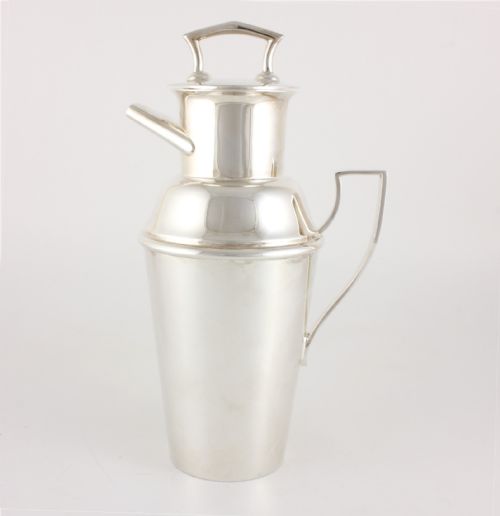
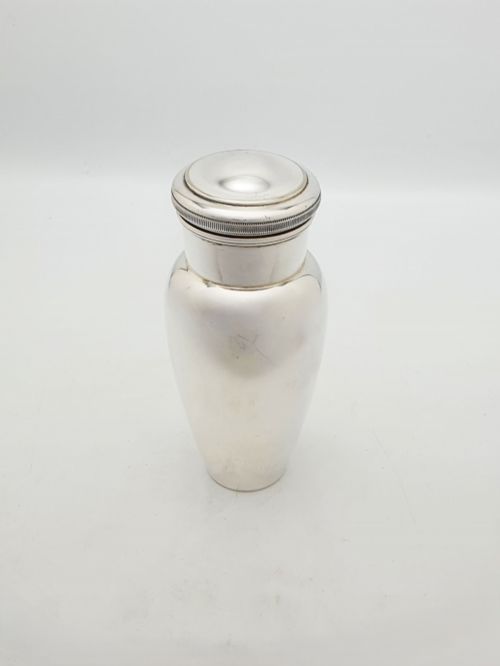
When you search for a vintage silver mixer, you are looking at cocktail shakers, barware, and pitchers originating predominantly from the twentieth century. These vessels range from straightforward cylindrical bodies to novelty forms like milk churns and bullets.
The version you are most likely to meet on this page is the silver plated Art Deco cocktail shaker from the nineteen-thirties. These pieces frequently incorporate practical additions such as integral lemon squeezers, ice breakers, or rotating recipe mechanisms.
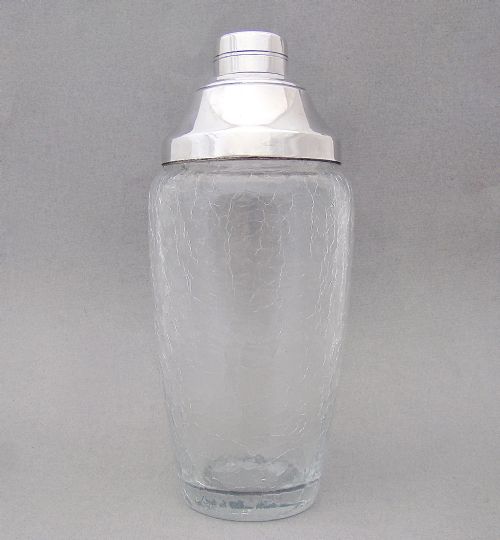
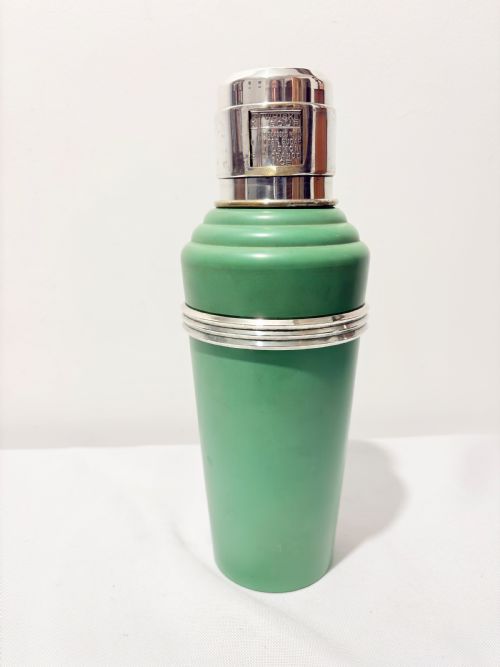
Beyond standard silver plating, designs often integrate contrasting elements including crackle glass, green Bakelite, brass accents, and colourful enamel. Pieces span English, French, Italian, and American origins, reflecting diverse modernist aesthetics.
Materials and Construction
Manufacturers built these vessels using silver plate, electroplated nickel silver (EPNS), and sterling silver over a metal or brass base. Many examples combine metalwork with blown or crackle glass bodies to create visual contrast.
Techniques such as engine turning add geometric texture to the metal surfaces, while integral components like cork stoppers and mechanical recipe rings demonstrate precise manufacturing integration.
Distinctions in Craftsmanship
Quality rests upon the weight of the metal, the durability of the plating, and the crispness of decorative details like engine turning or maker marks. Well-executed pieces maintain smooth mechanical action in rotating recipe bands and tightly fitted lids.
The involvement of notable design houses or specific designers introduces higher levels of sculptural refinement and stylistic coherence that elevate the object beyond standard mass production.
Asprey & Co·Hukin & Heath·James Dixon & Sons·William Suckling·C S Green & Co·Adie Brothers·Christofle
The Vintage Silver Mixer Glossary
- Silver Plate
- A thin layer of silver applied to a base metal such as copper or nickel brass. This technique allowed makers to achieve the appearance of solid silver at a lower production cost.
- Electroplated Nickel Silver
- Commonly abbreviated as EPNS, this denotes an alloy of copper, nickel, and zinc coated with silver through an electrolytic process. It serves as a durable foundation for twentieth-century barware.
- Engine Turned
- A decorative technique involving precise geometric patterns mechanically engraved into metal surfaces. This method creates light-reflecting textures popular in modernist design.
- Bakelite
- An early synthetic thermosetting plastic frequently utilised for handles, knobs, and decorative accents on barware. Its presence often indicates a nineteen-thirties or Art Deco origin.
- Art Deco
- A design style characterised by sleek geometric shapes, stylised motifs, and streamlined forms. It dominates the aesthetic of twentieth-century cocktail shakers.
Vintage Silver Mixer: Frequently Asked Questions
What is a vintage silver mixer used for?
These vessels function primarily as cocktail shakers designed for combining and chilling alcoholic ingredients with ice before serving.
Many examples include built-in strainers, juicers, or recipe charts to assist with drink preparation.
How do I clean a silver plated cocktail shaker?
Wash the interior with warm soapy water and dry thoroughly to protect any internal metal components or glass linings.
Apply a mild silver polish gently to the exterior metal surfaces, avoiding abrasive pads that could damage the plating.
Are these cocktail shakers waterproof?
Most pieces rely on snug metal friction fits or cork seals to prevent liquid from escaping during vigorous shaking.
Older cork linings may shrink over decades, so testing with cold water before use helps prevent unexpected leaks.
How can I tell an Art Deco mixer apart?
Art Deco models typically display clean geometric lines, stepped details, engine-turned patterns, or distinctive Bakelite handles.
These characteristics separate them from simpler mid-century designs or earlier, more ornate styles.