




Vintage Silver Ladle
A vintage silver ladle serves soup, sauce, punch, or sugar with weight and grace.
Vintage Silver Ladle
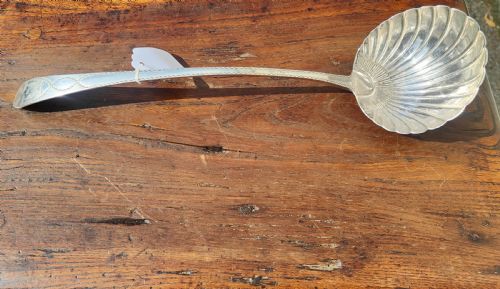
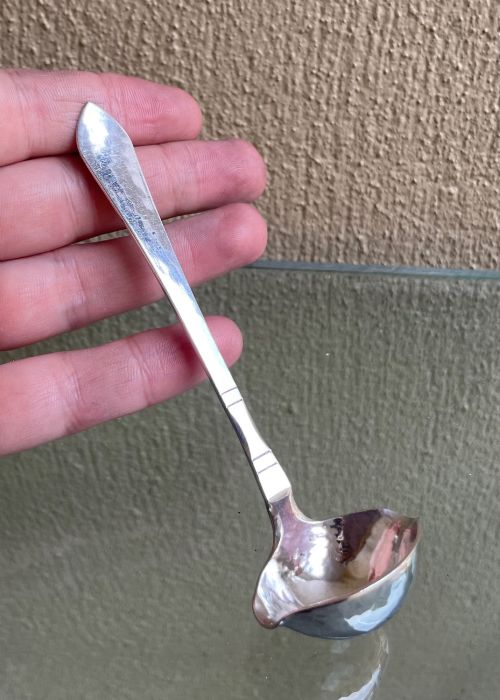
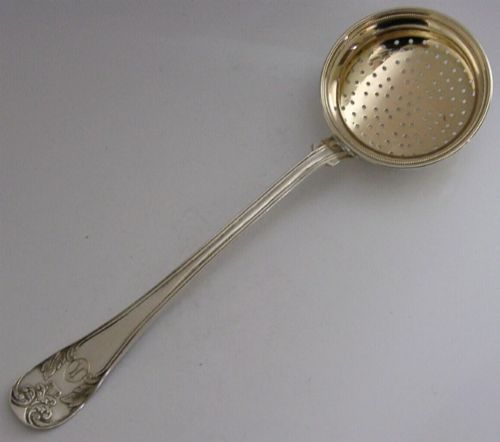
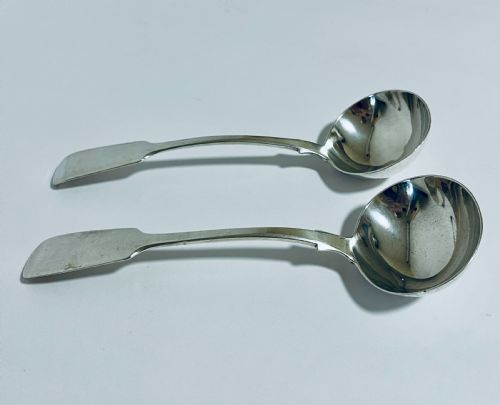
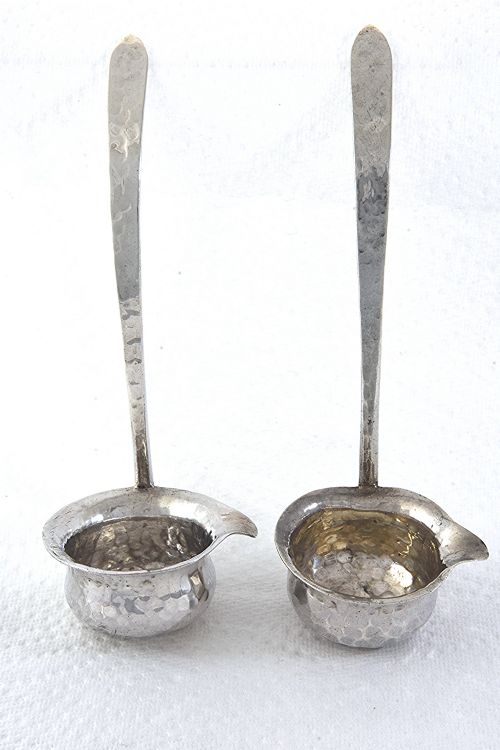
When you search for a vintage silver ladle, you encounter serveware designed for soups, sauces, gravies, punch, and sugar sifting spanning from the eighteenth century through the twentieth century. These utensils appear in various forms, including large soup ladles, sauce ladles, straining spoons, and toddy ladles.
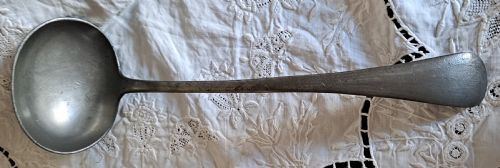
The pieces on this page originate from diverse traditions, encompassing Georgian, Victorian, and Edwardian British examples alongside Continental, Scandinavian, and Chinese export styles. Materials range from solid sterling silver and silver gilt to silver plate, pewter, and combinations involving coquilla nut and treen.
Buyers meet everything from hefty soup ladles to delicate sugar sifters and cruet salt ladles. Each piece reflects the dining habits and metalworking standards of its specific period, whether produced in a provincial British workshop or by an international maker.
How they were made
Metalsmiths formed these ladles through traditional silversmithing techniques, shaping solid silver, silver plate, or pewter into bowls and handles. Some pieces utilise casting for structural weight, while others involve hammering, piercing, or chasing to create strainer patterns and decorative surfaces.
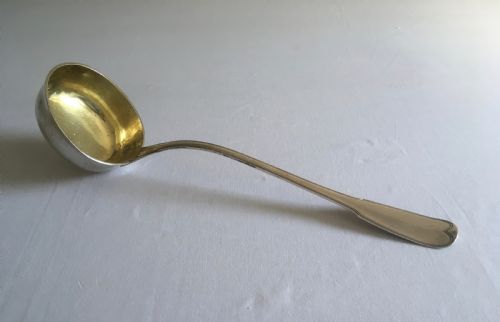
Designers incorporated mixed materials in specific serving pieces, combining silver with organic elements such as coquilla nut and wood for treen handles. Gilding appeared on silver gilt items, adding a layer of gold to the silver base for rich colour and protection against tarnish.
Styles span from Georgian and Victorian to Scandinavian Art Nouveau and Chinese export designs.
What varies in quality
The standard of a ladle rests upon the gauge of the metal, the crispness of any chased or engraved decoration, and the integrity of the construction. Heavier solid silver pieces offer substantial balance in the hand, whereas plated or lighter items rely entirely on the preservation of their surface finish.
Makers' marks and assay hallmarks provide evidence of origin and metal purity, influencing how a piece is judged by collectors. The harmony of design between the bowl and the handle, along with any specialised function like straining or sifting, distinguishes standard utility items from finer workshop output.
Georg Jensen·John Yates·Mappin and Webb·Tiffany and Co·Dansk Guldindustri Randers
The Vintage Silver Ladle Glossary
- Toddy ladle
- A small ladle used for serving hot punch or toddy, often featuring a twisted whalebone, horn, or wooden handle. These pieces date frequently from the eighteenth and nineteenth centuries.
- Silver gilt
- Silver that has been coated with a thin layer of gold on its surface. This technique imparts a warm golden hue and prevents the underlying silver from tarnishing.
- Pewter
- A malleable metal alloy consisting primarily of tin, historically used for domestic tableware and utilitarian ladles. It offers a duller, softer grey appearance compared to sterling silver.
- Treen
- Small handmade wooden household objects and utensils. In ladle construction, wood frequently forms the handle portion joined to a metal bowl.
Vintage Silver Ladle: Frequently Asked Questions
What is the difference between a soup ladle and a sauce ladle?
Soup ladles are substantially larger utensils designed with deep bowls for transferring soup or punch from a tureen into individual bowls.
Sauce ladles are scaled down significantly for gravy, cream, or melted butter, matching the smaller capacity of a boat or tureen.
How do I use a straining ladle?
A straining ladle contains a pierced or slotted bowl that separates liquids from solid ingredients during serving. They appear in contexts like punch bowls or broth service where pulp or herbs need exclusion.
Collectors encounter these configured as sugar sifters or specific gravy spoons with built-in guards.
What periods do these ladles come from?
The listings encompass items produced across several centuries, beginning with eighteenth-century and Georgian pieces through Victorian and Edwardian examples.
Twentieth-century production is also represented by items from the nineteen-hundreds, nineteen-twenties, and nineteen-thirties.
Can I use solid silver ladles for everyday dining?
Solid silver and sterling silver ladles withstand regular use provided they receive proper hand washing and careful storage to prevent scratching. Avoid abrasive cleaners that wear down the surface metal over time.
Plated or pewter items require similar gentle maintenance to preserve their finish and structural integrity.