

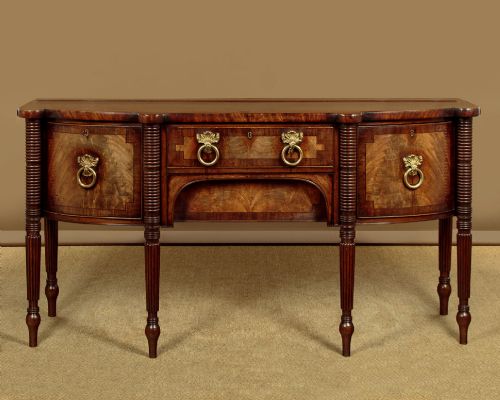
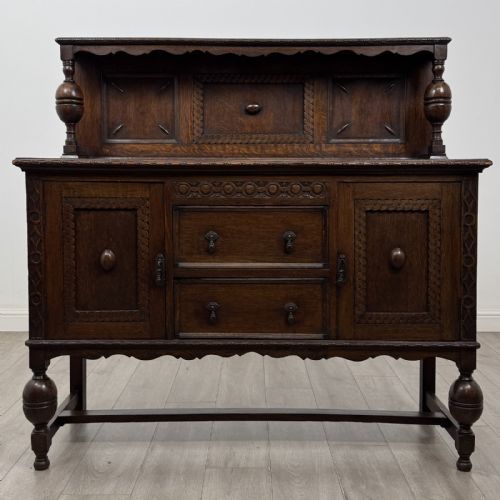
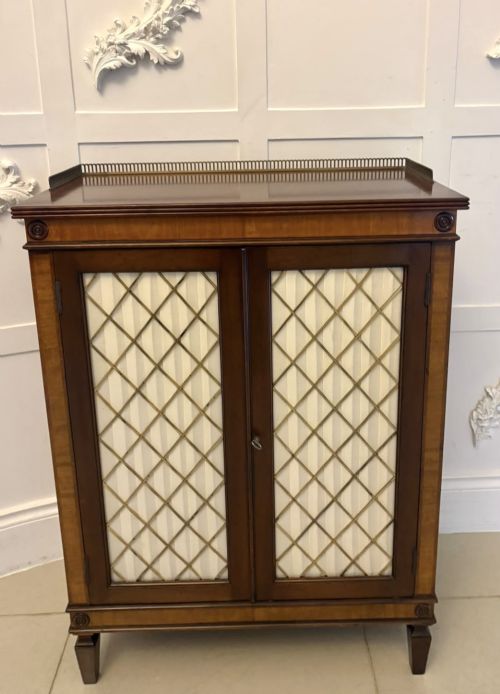
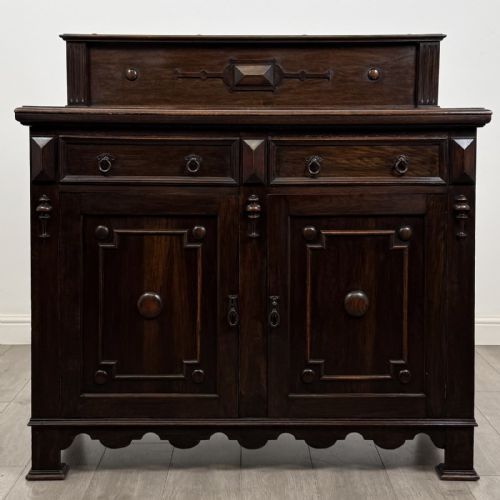
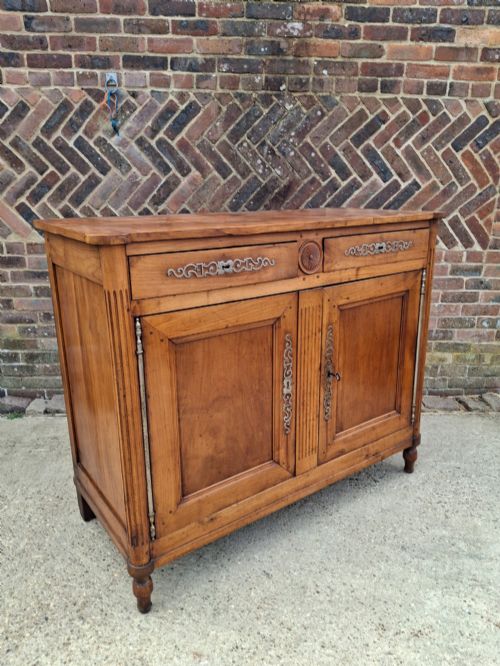
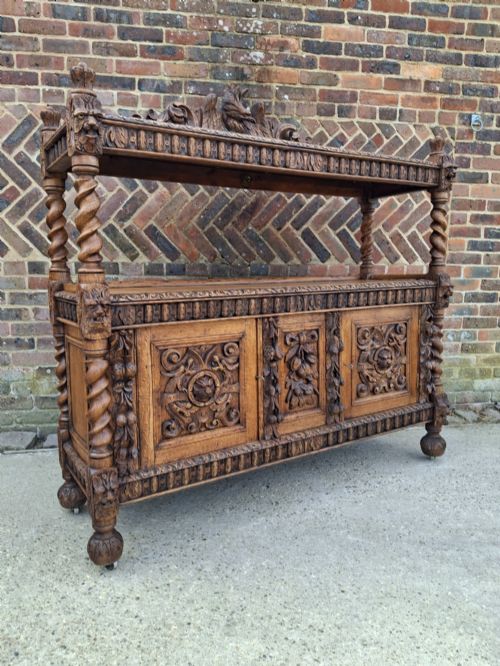
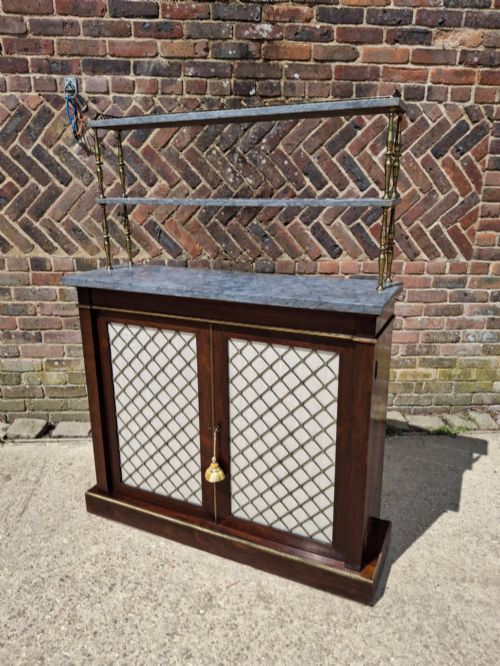
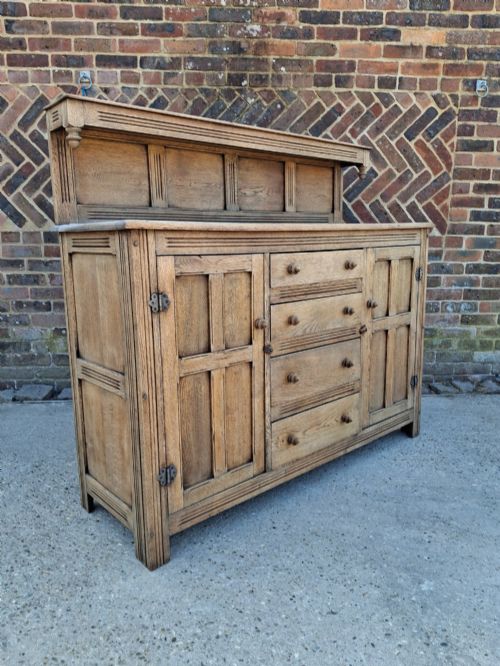
Vintage Sideboard Credenza
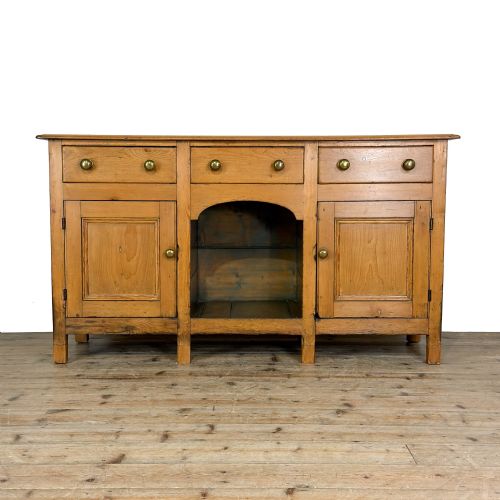
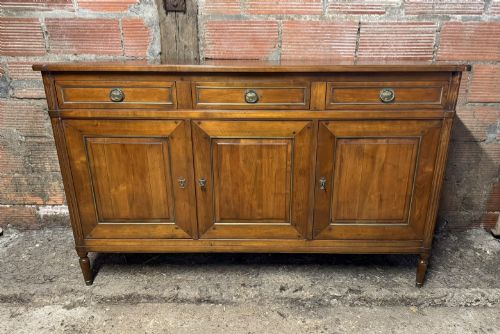
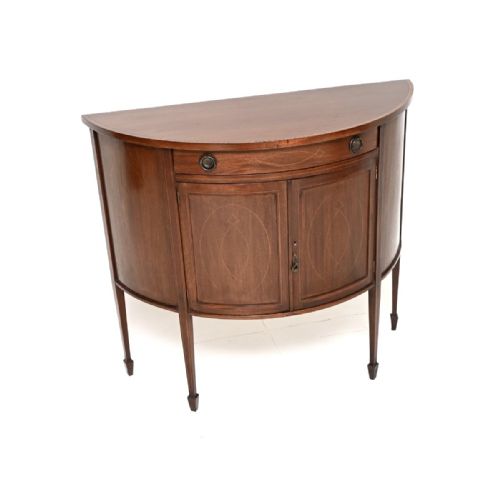
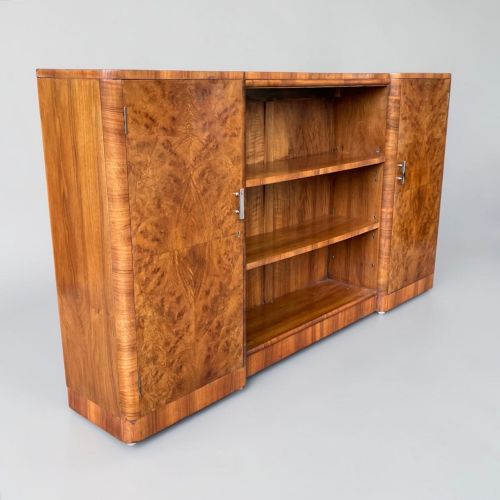
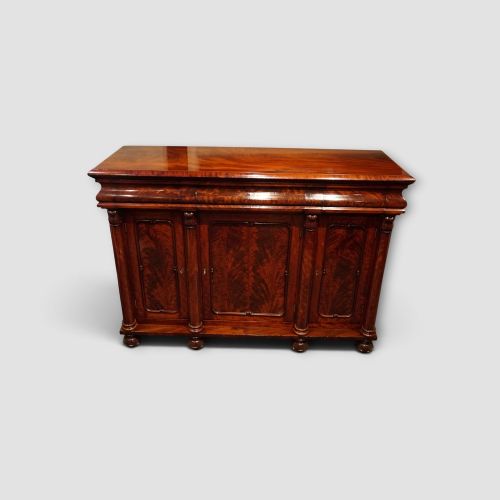
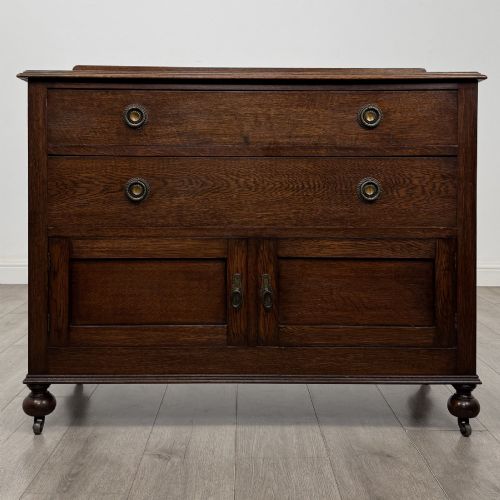
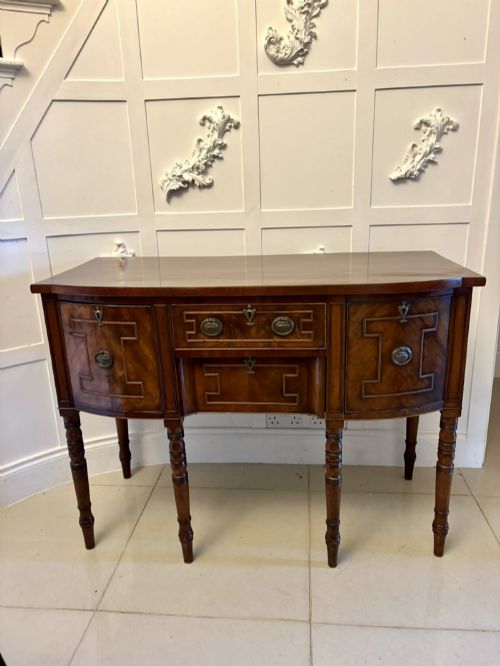
These vintage sideboard credenza designs span robust oak dressers, inlaid mahogany servers and geometric Art Deco cocktail cabinets.
Vintage Sideboard Credenza
A vintage sideboard credenza represents a broad category of storage furniture, appearing frequently in Edwardian mahogany, 1920s carved oak, and 1930s walnut or golden oak finishes.
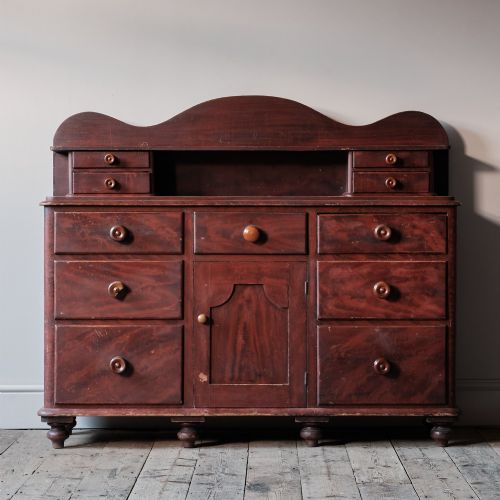
The pieces on this page range from French enfilades and housekeepers cupboards to bow-front servers, cocktail cabinets, and breakfront sideboards.
Makers from the early twentieth century utilise styles from Jacobean Revival to Art Deco, reflecting shifting domestic habits towards specialised drinks storage and display.
Materials and Construction
Cabinet makers relied predominantly on solid oak, mahogany, and walnut timbers, often accented with boxwood inlay, satinwood, or pollard oak veneers.
Metalwork details such as brass ring pulls, iron handles, and glass doors complement carved wooden elements like geometric panels, linenfold motifs, and claw and ball feet.
Marble tops appear on French walnut pieces, while painted finishes feature on nineteenth-century pine dresser bases and demi-lune cabinets.
Vintage Sideboard Credenza Retail Price Guide 2026
Typical asking prices for vintage sideboard credenza among the pieces listed under this phrase on Sellingantiques today, from the lower quarter to the upper quarter. They describe what is for sale here now, not the wider market.
The listings span from 18th-century French oak dresser bases to 1930s Art Deco walnut cocktail cabinets.
Design and Execution
The division between standard and superior pieces rests on the ambition of the timber selection and the crispness of the carving, such as foliate marquetry or cup and cover legs.
Makers who integrated architectural proportions, breakfront configurations, or labeled workshop origins elevate certain oak dressers and cocktail cabinets above simpler utilitarian cupboards.
Harry and Lou Epstein·Heals of London
The Vintage Sideboard Credenza Glossary
- Demi-lune
- A half-moon shape used for the footprint and top of smaller cabinets and servers. It allows pieces to sit flush against a wall while maintaining curved corners.
- Enfilade
- A long dining room sideboard or buffet of French origin, typically featuring multiple doors in a row. These pieces offer substantial interior storage.
- Breakfront
- A piece of furniture where the central section projects forward from the flanking outer sections. This creates depth and architectural presence on larger sideboards.
- Chiffonier
- A compact Victorian side cabinet equipped with drawers and enclosed shelving. It served as a functional serving surface in nineteenth-century parlours.
Vintage Sideboard Credenza: Frequently Asked Questions
What is a vintage sideboard credenza used for?
These items provide substantial surface space and interior storage for dining rooms, hallways, and living spaces. They accommodate dinnerware, linens, and bottles.
Specific variants like cocktail cabinets and drinks display chests house glassware and beverages behind dedicated doors.
How do I identify an Edwardian sideboard?
Edwardian pieces often feature inlaid mahogany, tapered legs, or flame mahogany veneers. They lean towards lighter, refined proportions compared to heavier Victorian designs.
Look for foliate marquetry, brass ring pulls, and raised galleries that define the aesthetic of the period.
Are Art Deco sideboards different from oak pieces?
Art Deco sideboards from the 1930s introduce streamlined geometry, golden oak, or walnut surfaces, and specialised compartments for entertaining. Jacobean and Edwardian oak designs lean towards traditional carving.
Cabinets from the later period frequently incorporate mirrored interiors and drop-down cocktail flaps.
How do I fit a large sideboard into a room?
Measure the available wall space carefully, accounting for the projection of breakfront designs, bow fronts, and swinging cupboard doors. Ensure clearance for drawers.
Pairing a large oak dresser base or enfilade with neutral walls allows the carved details and timber grain to become the focal point.