
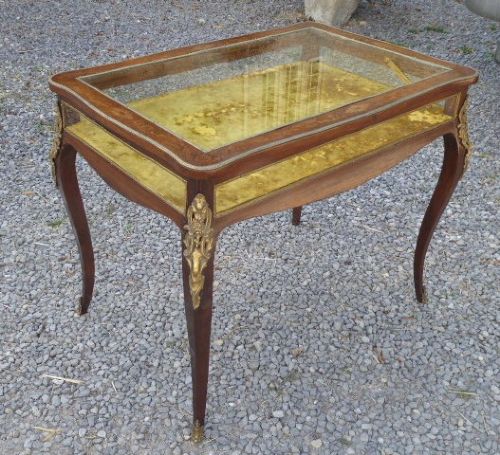


Vintage Shadow Box Table
These vintage shadow box table pieces are glazed display cabinets raised on legs, offering a neat way to show off small treasures.
Vintage Shadow Box Table
A vintage shadow box table takes the form of a glazed display table, often known as a bijouterie table or cabinet. These pieces give you a secure, glass-topped surface to exhibit small collections while keeping them free from dust.
Most examples you meet on this page date from the Edwardian period or the early twentieth century, alongside a few mid nineteenth century pieces. They stand on slender legs and usually combine a timber frame with a glazed top and sides.
How they were made
Cabinet makers built the structural frames primarily from mahogany, kingwood, and satinwood, applying marquetry and inlay for surface pattern. Glass panels fitted securely into the timber framework to form the display compartment.
Interiors were typically lined with velvet or fabric to cushion the objects placed inside. Brass fittings and ormolu mounts added decorative detail and structural support to the table edges and legs.
Object types include display tables, bijouterie tables, and bijouterie cabinets reflecting French Rococo and Chippendale revival styles.
What varies in quality
Quality rests in the choice of timbers and the precision of the cabinetwork, from plain mahogany frames to richly figured kingwood with intricate marquetry. Finer examples display meticulous inlay and sophisticated revival styling.
The integration of the glass panels and the refinement of the leg mounts also divide standard production from more ambitious pieces. Interior detailing, such as the quality of the fabric lining and brass hardware, signals the original tier of manufacture.
The Vintage Shadow Box Table Glossary
- Bijouterie table
- A small display table with a glazed top and sides designed for showing trinkets and jewellery. These pieces became popular in the nineteenth and early twentieth centuries.
- Marquetry
- Decorative veneer work arranged in geometric or pictorial patterns on furniture surfaces. Craftsmen used contrasting timbers to create detailed pictures or borders.
- Ormolu
- Gilt bronze mounts applied to furniture for decoration. This technique was frequently utilised in French revival pieces.
- Satinwood
- A durable exotic hardwood with a lustrous yellowish sheen. It appears often as a veneer or inlay on Edwardian cabinets.
Vintage Shadow Box Table: Frequently Asked Questions
What is a bijouterie table?
A bijouterie table is a glazed display case on legs designed for holding small collectables and personal ornaments. The glass top allows items to be viewed from above without handling them.
These pieces were popular in drawing rooms for exhibiting medals, fans, and small trinkets.
How do I date an Edwardian display table?
Edwardian display tables date from the reign of Edward VII between 1901 and 1910, though the style continued slightly past this decade. They often feature light mahogany frames and delicate inlay work.
Checking construction methods and timber characteristics helps confirm this early twentieth century origin.
What is kingwood used for?
Kingwood is a dense, heavily figured timber used primarily as a veneer on high quality furniture. Its rich brown tones and distinct markings suited decorative marquetry.
Cabinet makers deployed it on pieces where visual impact was paramount.
Can I use these tables for modern displays?
These tables suit the display of small modern collections just as well as historical objects. The enclosed glass space protects delicate items from dust and handling.
Placing them in a living room or hallway creates a focal point for personal treasures.